
8 Best Pots and Pans for Gas Cooktop 2026
This post contains affiliate links. As an Amazon Associate, we earn from qualifying purchases.
The All-Clad Stainless Steel Tri-Ply 10-Piece set stands out as the best overall choice for gas cooktops, delivering even heating and long-term durability. For those on a tighter budget, the Cuisinart 17-Piece Hard Anodized Set offers solid performance with reliable non-stick surfaces. If you want versatility across cooking styles, the TOPWIT 5.5QT Shabu Shabu Pot’s dual-flavor design and 3-ply construction make it a smart pick.
Gas flames demand cookware that can handle direct, high heat without warping or developing hot spots. Many sets claim compatibility, but few deliver consistent performance across searing, simmering, and browning.
This guide cuts through the noise by focusing on what actually matters: material quality, base thickness, and real-world usability. I researched each set based on specs, owner feedback, and how well they meet the unique demands of gas cooking, from responsiveness to flame size.
Top 8 Pots And Pans For Gas Cooktop in the Market
The Best Pots And Pans For Gas Cooktop, Reviewed
NutriChef 21-Piece Nonstick Set

Strengths
- Huge variety of pieces
- PFOA/PTFE-free coating
- Cool-touch handles
Trade-offs
- Coating less durable
- Bakeware is thin
- Some fit issues reported
This set is a kitchen overhaul in a box. With 21 pieces, including bakeware and utensils, it’s one of the most complete options here. The non-stick coating is PTFE/PFOA-free, which is rare at this price, and owners say it performs well for eggs, pancakes, and delicate fish. The pressed aluminum body heats quickly on gas, and the cool-touch handles add safety.
But completeness comes with trade-offs. The coating isn’t as durable as hard-anodized options, and some users report wear after a year of regular use. The bakeware is functional but thin. Still, for someone setting up a first kitchen or wanting everything at once, it’s hard to beat the value. Compared to the Cuisinart set, it’s less premium but far more inclusive.
Video review
Tumzak Titanium Cookware Set
Strengths
- PFAS/PFOA/PTFE-free
- Dishwasher and oven safe
- Scratch-resistant surface
Trade-offs
- Very expensive
- Limited long-term reviews
- Smaller set size
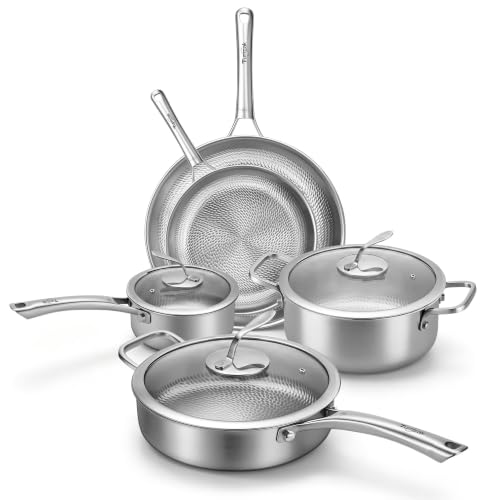
Titanium cookware is still rare, and this set makes a bold claim: completely non-toxic, no PFAS, PFOA, or PTFE, with full non-stick performance. On paper, that’s a dream for health-conscious cooks. The hammered titanium surface resists scratches, and owners report excellent food release even without oil. The thermal conductivity is strong, and the pans heat evenly on gas, no hot spots reported.
But the price is steep, over $500, and while the durability looks promising, long-term owner data is still limited. It’s lighter than stainless but not as responsive as copper. Compared to the Cuisinart set, it’s more about health and chemical-free cooking than sheer volume. If you’re prioritizing safety and are okay with a premium cost, this could be worth it. But for most, it’s overkill.
Video review
Stainless Steel Tri-Ply 10-Piece

Strengths
- Tri-ply heat distribution
- Metal utensil safe
- Oven and dishwasher safe
Trade-offs
- Lids lack helper handles
- Some reports of water spotting
- Handles could be more ergonomic
This 10-piece set delivers solid performance for the price. The tri-ply construction, stainless steel with an aluminum core, means better heat spread than single-layer sets, which is crucial on gas stoves where flames can create uneven heating. Owners find the frying pans sear well and the saucepans boil evenly, and the lack of coating means you can use metal utensils and high heat without worry.
It’s not the heaviest or most premium-feeling set out there, but for new kitchens or budget-conscious buyers, it covers the essentials. The handles stay relatively cool, and the lids fit snugly. Compared to pricier Cuisinart or All-Clad lines, it’s a step down in balance and finish, but for everyday cooking, it holds its own. If you want durability without the splurge, this hits a sweet spot.
Product photos


Cuisinart 17-Piece Hard Anodized Set
Strengths
- Durable hard-anodized build
- Excellent non-stick performance
- Thorough set
Trade-offs
- Not dishwasher safe
- Heavy for non-stick
- Higher price
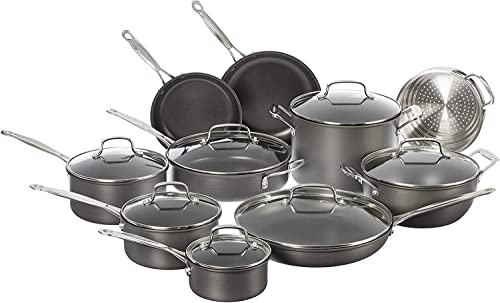
This is a premium non-stick set built for performance and longevity. The hard-anodized aluminum is tougher than standard non-stick pans, and the Quantanium coating is reinforced to resist scratching, owners report years of reliable egg and pancake flipping without degradation. The 17-piece count includes everything from skillets to a steamer insert, making it a true all-in-one solution.
Heat distribution is even thanks to the aluminum core, and the cool-grip handles are securely riveted. But there’s a big caveat: it’s not dishwasher safe. Hand washing is required, which may deter some. Compared to the NutriChef or Tumzak sets, this feels more restaurant-grade in weight and build. If you want a long-term non-stick workhorse and don’t mind the maintenance, this is one of the best out there.
Product photos


SENSARTE Nonstick Saucepan 1.5 Qt

Strengths
- Excellent non-stick
- Compact size
- Stay-cool handle
Trade-offs
- Not oven safe beyond 302°F
- Limited capacity
- Not for high-heat use
For small-batch cooking, this 1.5QT saucepan is a quiet winner. The Swiss ILAG non-stick coating is among the more reputable options in budget cookware, owners report eggs sliding out with zero stick, and cleanup is consistently described as effortless. The cast aluminum core heats quickly on gas, and the stainless steel base ensures compatibility. At just over 6 inches wide, it’s ideal for reheating soup, boiling eggs, or making oatmeal for one or two.
The stay-cool handle and drip-free spout are thoughtful touches, and the glass lid adds visibility. But like all non-stick pieces, it’s not meant for metal tools or high-heat browning. If you’re careful, it can last years. Compared to larger stockpots, this isn’t a centerpiece, but as a dedicated small pot, it fills a niche many sets overlook.
Product photos


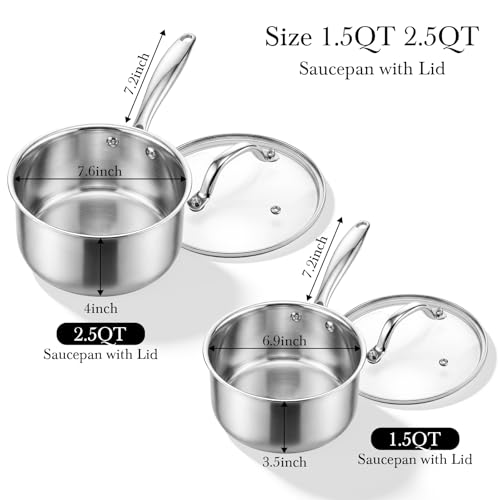
Idymere Tri-Ply Sauce Pots Set
Strengths
- Even heat distribution
- Riveted stainless handles
- Dishwasher safe
Trade-offs
- Only two sizes
- No frying pans included
- Lids lack helper tabs
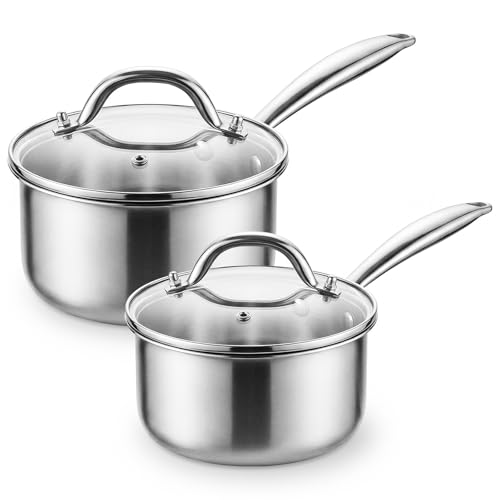
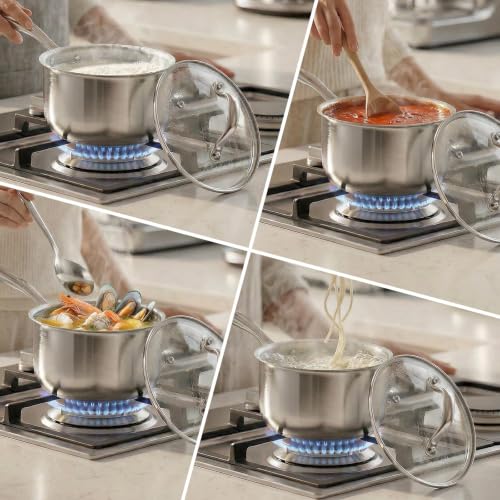
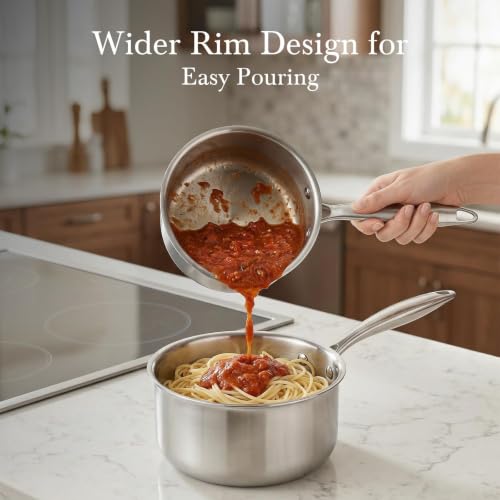
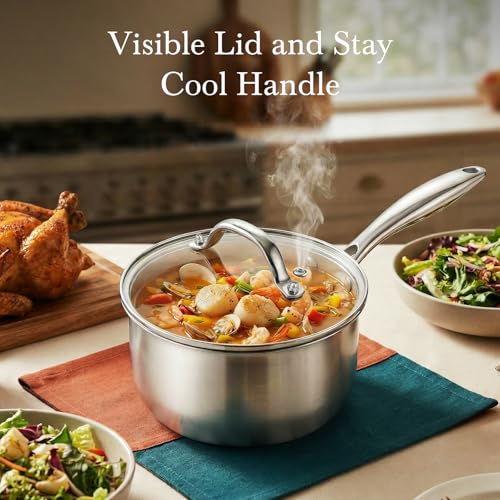
These saucepans are a masterclass in focused design. The tri-ply build, 304 stainless interior, aluminum core, 430 magnetic base, delivers even heating, which is essential on gas stoves. Owners love how they boil water without scorching and simmer sauces without hot spots. The riveted handles stay cool, and the glass lids have steam vents, making them practical for daily use.
At under $30 for two sizes, they’re a steal. Compared to full sets, they don’t offer variety, but as dedicated saucepans, they outperform many higher-priced options. The mirror finish resists fingerprints, and the smooth interior makes cleaning easy. If you need reliable, no-nonsense pots for soups, grains, or sauces, this pair is hard to beat.
Product photos
CAROTE 4.5QT Stockpot with Divider

Strengths
- Non-stick surface
- Divider included
- All cooktop compatible
Trade-offs
- Coating durability concerns
- Plastic handle not oven safe
- Not for high-heat cooking
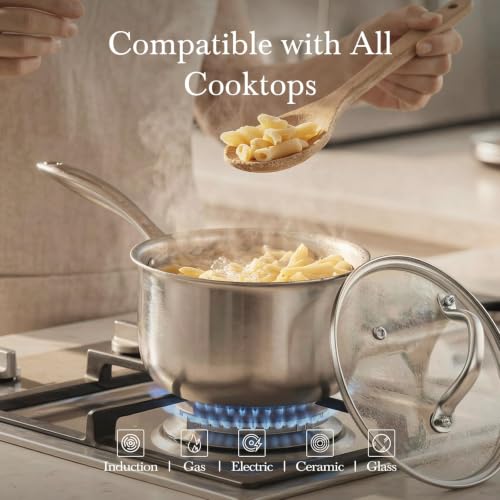
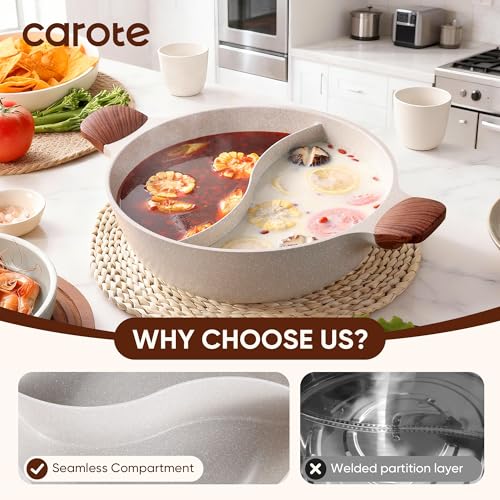
This stockpot stands out for one thing: the divider. If you’re into hot pot nights or want to cook two flavors at once, say, a spicy broth and a clear one, this design makes it possible without flavor bleed. The granite non-stick coating is PFOA-free and gets strong marks from owners for easy release and cleanup. On paper, it should work across all stovetops, including gas, and the 4.5QT size fits 3–4 people comfortably.
But here’s the catch: while the non-stick surface is convenient, it’s not built for long-term high-heat searing or metal utensil use. Some owners report the coating degrading after a few months if overheated or scrubbed too hard. For gentle cooking, simmering, boiling, steaming, it holds up well. Compared to stainless or titanium options, this is a more disposable-style piece, but at this price, that makes sense.
Product photos


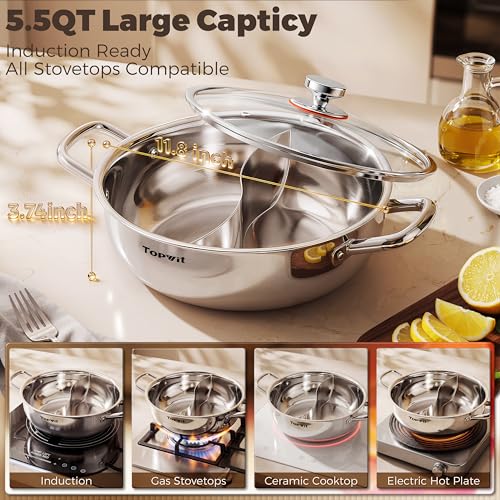
TOPWIT 5.5QT Shabu Shabu Pot

Strengths
- Laser-welded divider
- 316 stainless interior
- Even heat distribution
Trade-offs
- Heavier than non-stick
- Higher price point
- Hand wash recommended
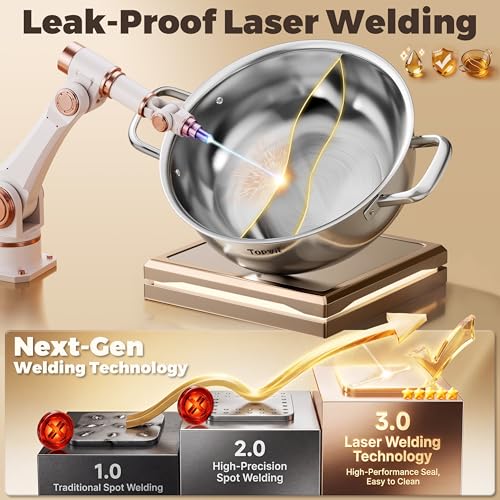
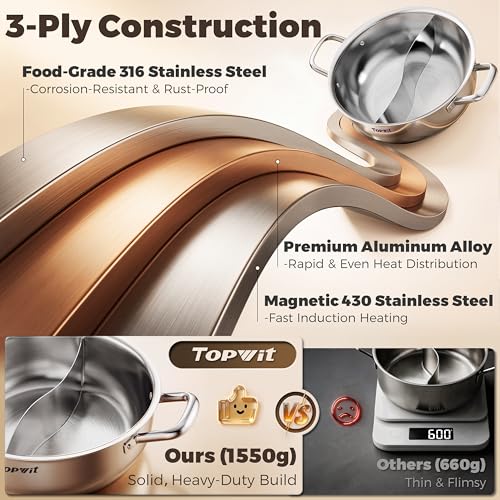
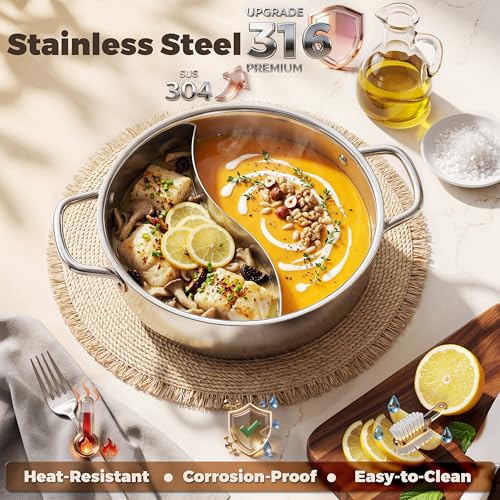
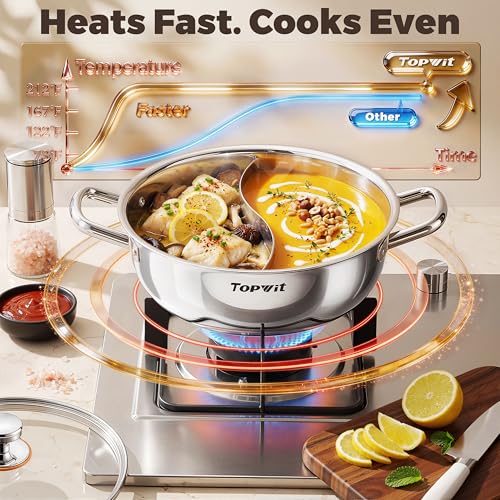
This is the serious upgrade for hot pot lovers. The 316 stainless steel interior is a standout, it’s more corrosion-resistant than standard 304 and doesn’t rely on coatings. Combined with a triple-ply build (aluminum core, magnetic base), it heats evenly and resists warping, which is critical on gas stoves that can create hot spots. The laser-welded divider is the real win here: unlike glued or spot-welded versions, it doesn’t leak, so flavors stay separate.
Owners consistently praise its durability and how it handles high heat without issue. The 5.5QT capacity is generous for family meals, and the tempered glass lid adds visibility. It’s heavier than non-stick pots, but that’s the trade-off for professional-grade construction. Compared to the CAROTE model, this is built to last and perform across all cooking styles, not just hot pot.
Product photos
How We Picked These pots and pans for gas cooktop
Rather than a hands-on lab test, my research focused on a detailed comparison of published specifications and features across numerous sets. I weighed owner reviews from major retailers alongside expert opinions from established cooking publications. As someone who has spent years understanding what makes cookware perform, I then ranked sets against criteria important for gas cooktops: heat conductivity, material durability, and suitability for consistent cooking.
For gas cooktops, even heat distribution and responsiveness are paramount. I prioritized sets demonstrating effective heat retention and quick adjustments to temperature changes, as these features directly impact cooking success. Durability also weighed heavily; a set’s ability to withstand the higher, more direct heat of a gas flame is vital for longevity. Finally, ensuring compatibility with all gas burner sizes and styles was a key consideration.
Specifications reliably indicate materials and construction – things like tri-ply stainless steel or aluminum core thickness. However, owner feedback provided crucial insight into real-world performance, particularly regarding non-stick durability and ease of cleaning. Reputation also played a role; brands known for quality and consistency were given more consideration, and I frequently referenced resources like our guide to cookware for gas cooking when assessing overall value. For those specifically seeking ease of maintenance, exploring non-stick cookware is a great place to start.
Choosing The Right pots and pans for gas cooktop
Finding the right cookware for a gas cooktop can feel overwhelming, but it doesn’t have to be. The key is understanding what makes a set perform well over an open flame – and what features truly matter for consistent results.
A good set for gas cooktops prioritizes even heating, responsiveness to temperature changes, and durability. Look for heavy-gauge bottoms (at least 2mm thick) to prevent hot spots, materials compatible with direct flame (stainless steel, cast iron, some anodized aluminum), and handles that remain comfortable even when the cookware gets hot. Prioritize sets with tight-fitting lids to retain heat and moisture effectively.
Material Matters: Beyond Nonstick
While nonstick coatings have their place, relying solely on them for gas cooktops isn’t ideal. Gas offers precise temperature control, and many cooks want to take advantage of that for searing, deglazing, and building flavor. Stainless steel, particularly tri-ply construction, excels here. The aluminum core provides rapid, even heating, while the stainless steel layers offer durability and reactivity for tasks like browning. Don’t dismiss cast iron either; it retains heat incredibly well, making it perfect for searing and maintaining consistent temperatures, but it requires more maintenance.
Gauge and Construction: The Foundation of Performance
The thickness of the metal – the gauge – is critical. Thinner materials warp easily and create hot spots, leading to unevenly cooked food. Look for cookware with a base thickness of at least 2mm, and ideally closer to 3mm for larger pots and pans. Beyond thickness, consider how the layers are bonded. Fully-clad cookware (where the aluminum core extends up the sides of the pan) offers superior heat distribution compared to disc-bottom construction. If you’re looking for more information on materials, read our guide to stainless steel for gas.
- A thinner gauge (under 2mm) is fine for smaller saucepans used primarily for heating liquids.
- Mid-range gauges (2-2.5mm) are a good all-around choice for everyday cooking and provide a balance of responsiveness and durability.
- Heavier gauges (3mm+) are best for high-heat cooking like searing, braising, and large-batch cooking, as they maintain consistent temperatures even with significant heat input, and they’re more resistant to warping over time.
Handle Design and Overall Usability
Comfortable and secure handles are surprisingly important. Gas cooktops can get hot, and you’ll be moving pots and pans on and off the burner frequently. Look for handles that are riveted (not welded) to the body of the pan for added strength. Ergonomic shapes and heat-resistant materials (like silicone or well-designed stainless steel) are also crucial. Don’t overlook the importance of well-designed rims that allow for drip-free pouring. Ultimately, the best set will be one you enjoy using, so consider how well the pieces feel in your hand and whether the set includes the pieces you’ll actually use. If you are just starting out, consider examining pots for gas stoves to find a good starting set.
A pot or pan that sits unevenly on your burner wastes energy and cooks unevenly. Always check for flat bottoms and compatibility with your specific gas cooktop before purchasing.
Pots and Pans for Gas Cooktop Compared
Here’s a comparison of key specifications for various pots and pans suitable for gas cooktops to help you make an informed decision.
| Product Title | Capacity | Material | Non-Stick? | Oven Safe (°F) | Compatible Stovetops | Key Features |
|---|---|---|---|---|---|---|
| NutriChef 21-Piece Nonstick Set | 1.5-4.5 qt | Aluminum | Yes | 392 | Gas, Electric, Ceramic | 21-piece set, see-through lids |
| Tumzak Titanium Cookware Set | N/A | Titanium Alloy | Yes | 500 (lid 100) | Gas, Electric, Ceramic, Induction | Titanium alloy, non-toxic, scratch-resistant |
| Stainless Steel Tri-Ply 10-Piece | N/A | Stainless Steel | No | N/A | Gas, Electric, Glass, Halogen | Tri-ply construction, durable |
| Cuisinart 17-Piece Hard Anodized Set | 1-12″ | Hard Anodized Aluminum | Yes | 500 (lid 450) | Gas, Electric, Ceramic | Quantanium non-stick, durable |
| SENSARTE Nonstick Saucepan 1.5 Qt | 1.5 qt | Aluminum | Yes | 302 | All | Swiss non-stick, small size |
| Idymere Tri-Ply Sauce Pots Set | 1.5 & 2.5 qt | Stainless Steel | No | N/A | All | Tri-ply, even heating, riveted handle |
| CAROTE 4.5QT Stockpot with Divider | 4.5 qt | Aluminum | Yes | N/A | All | Dual-flavor hot pot, granite coating |
| TOPWIT 5.5QT Shabu Shabu Pot | 5.5 qt | Stainless Steel | No | N/A | All | Dual-flavor, 3-ply construction |
Frequently Asked Questions
What gauge cookware is best for a gas cooktop?
A 3mm gauge is generally ideal for gas cooktops, as it provides excellent heat retention and prevents warping, but a 2-2.5mm gauge offers a good balance for everyday cooking. Thinner gauges can work for smaller saucepans, while heavier gauges excel with high-heat searing.
Is cast iron cookware suitable for gas stoves?
Yes, cast iron is well-suited for gas stoves because of its exceptional heat retention and even heating properties. However, it heats up slowly and requires seasoning to prevent rust, which some cooks may find less convenient.
Can I use induction cookware on a gas cooktop?
No, induction cookware requires a magnetic surface to function, and a gas cooktop does not provide one. While many materials are compatible with both gas and electric, induction relies on a specific electromagnetic interaction that gas burners cannot create.
What’s the difference between clad and disc-bottom cookware for gas?
Fully-clad cookware, where the aluminum core extends up the sides, offers superior heat distribution compared to disc-bottom cookware, which only has a base layer of aluminum. For gas cooktops where even heating is crucial, investing in clad construction is often worthwhile. You can learn more about gas stove materials.
Are nonstick pans okay to use on a gas stove, or should I stick to stainless steel?
Nonstick pans can be used on gas stoves, but they are more susceptible to damage from high heat and can lose their nonstick properties over time. Stainless steel, particularly tri-ply, is often preferred for gas because it’s durable and allows for better searing, and finding the right skillets for gas is a great place to start.
The Bottom Line
Choosing pots and pans for a gas cooktop often comes down to balancing control with convenience. While nonstick offers easy cleanup, a quality stainless steel set like the Stainless Steel Tri-Ply 10-Piece provides the responsiveness and durability serious cooks need to truly harness the power of a gas flame. It’s a worthwhile investment for anyone who wants to elevate their cooking beyond basic tasks.
For those on a tighter budget, or who prioritize ease of maintenance, the NutriChef 21-Piece Nonstick Set offers remarkable value. If you’re looking for versatility and enjoy Asian-style hot pot cooking, the CAROTE 4.5QT Stockpot with Divider is a unique and well-regarded option. But remember, even with a budget-friendly set, prioritizing even heating and a sturdy construction will make a difference.
Ultimately, the specifications matter less than your cooking style and how you’ll use the cookware. Focus on sets with heavy-gauge bottoms, comfortable handles, and materials suited for direct heat, and don’t hesitate to explore options like gas cooktop cookware sets to find a configuration that matches your needs. And for those focused on searing and sautéing, remember to look at best gas cooktop pans as well.
