
8 Best Pots for Boiling Pasta 2026
This post contains affiliate links. As an Amazon Associate, we earn from qualifying purchases.
The Kirecoo 8 Quart 5-Layer Stainless Steel Pot is the best overall for even heating and durability, thanks to its multi-ply construction and solid build. If you’re watching your budget, the Amazon Basics 8-Quart Stainless Steel Stock Pot delivers reliable performance at a lower price. For big batches, the Amazon Basics 12-Quart Stock Pot gives you serious capacity without sacrificing quality.
Boiling pasta should be simple, but the wrong pot can turn it into a mess, uneven cooking, sticky residue, or a scorch mark on the bottom. After years of evaluating cookware, I know that the best pots balance size, heat control, and practical design.
This guide cuts through the noise by focusing on real-world specs and owner feedback to highlight pots that perform consistently. We looked at capacity, construction quality, draining options, and compatibility with different stovetops, so you can pick one that fits your kitchen and cooking style.
Top 8 Pots For Boiling Pasta in the Market
The Best Pots For Boiling Pasta, Reviewed
Kirecoo 8 Quart 5-Layer Stainless Steel Pot

Strengths
- 5-layer thick base
- Nonstick interior
- Induction ready
Trade-offs
- Nonstick may degrade
- Oven limit 350°F
- Higher price
Kirecoo’s 8-quart pot claims the best overall title with a 5-layer thickened base that owners say heats faster and more evenly than standard tri-ply pots. The 10mm base combines aluminum, iron, and magnetic layers for strong induction performance and resistance to warping. It’s one of the few pots here with a nonstick interior, which makes it stand out for sticky foods and easy cleanup, though I’d note that nonstick stainless is rare and may wear over time with metal utensils.
The glass lid seals tightly and has a steam vent, and the riveted handles are ergonomic. It’s dishwasher safe and oven safe to 350°F. While the nonstick feature is convenient, traditionalists may prefer bare stainless for browning. Still, for a balance of speed, capacity, and ease, this pot covers more bases than most. I’d choose it over basic stainless models if you want both performance and convenience.
Video review
Ecolution 8-Quart Stainless Steel Stock Pot

Strengths
- Low price
- Large 8-quart size
- Dishwasher safe
Trade-offs
- Thin stainless steel
- Limited oven safety
- Uneven heating
If you’re looking for maximum capacity at minimum cost, this 8-quart Ecolution pot is hard to beat. At under $20, it’s one of the most affordable large stockpots on the list, and owners say it holds up well for basic boiling and simmering tasks. The encapsulated base provides decent heat conduction, though it’s not as fast or even as tri-ply or 5-layer rivals. Still, for boiling pasta water or making broth, it gets the job done.
The tempered glass lid is a nice touch at this price, and the riveted handles are sturdy. But the stainless finish is thinner, so it’s more prone to scratching or warping over time, especially on high heat. It’s oven safe only up to 350°F, which is lower than some competitors. For occasional use or as a backup pot, it’s a solid choice. But I’d pass if you cook daily or need long-term durability.
Video review
Amazon Basics 8-Quart Stainless Steel Stock Pot

Strengths
- Durable aluminum base
- Oven safe to 500°F
- Riveted handles
Trade-offs
- No strainer lid
- Handles get hot
- Basic design
Amazon Basics nails durability here with a thick, encapsulated aluminum base that reviewers say heats quickly and resists warping. The 8-quart size is practical for families, and the heavy-gauge stainless steel gives it a premium feel for the price. It works flawlessly on induction and other stovetops, and the oven-safe rating up to 500°F adds real versatility, unlike some budget pots that limit oven use.
The riveted handles are secure, though like all stainless, they heat up. The glass lid has a steam vent, but it doesn’t lock, so draining requires a colander. Still, for a no-nonsense, durable workhorse pot, this one stands out. I’d choose it over thinner 8-quart models for its sturdier base and long-term reliability, especially if you boil water daily.
Product photos


Amazon Basics 12-Quart Stock Pot

Strengths
- High 12-quart capacity
- Commercial-grade build
- Induction compatible
Trade-offs
- Very large
- Heavy when full
- Takes up storage
When you need to cook for a crowd, this 12-quart Amazon Basics pot is the go-to for large batches. Originally branded for commercial use, it’s built with 21-gauge stainless steel and an aluminum-clad base that delivers fast, even heating, ideal for boiling big pots of pasta for gatherings or meal prepping weekly soups. The flat lid seals well, and the reinforced handles make lifting easier, though you’ll definitely want two hands when it’s full.
It’s oven safe to 500°F and works on all stovetops, including induction. The size is impressive, but it’s bulky, this isn’t a pot for small cabinets or single servings. Owners note it takes up serious space, but for those who host often or cook in bulk, that’s the point. Compared to smaller pots, it’s less agile but unmatched in capacity. My pick for anyone regularly feeding 6+ people.
Product photos


P&P CHEF 5 Quart Stainless Steel Stock Pot

Strengths
- Silicone-wrapped handles
- Affordable
- Induction compatible
Trade-offs
- Not oven safe
- Smaller capacity
- Thinner base
At under $25, this 5-quart pot stands out as a smart value pick for small households or those just setting up their kitchen. The tri-ply bottom, stainless steel with an aluminum core, gets praise in reviews for heating faster than basic single-ply pots, though it doesn’t match the thermal consistency of thicker tri-ply rivals. What’s interesting is the silicone-wrapped handles: they stay cooler than standard metal ones, which is a real plus when draining heavy pots of pasta.
The glass lid seals well and lets you watch the boil, but the pot itself lacks the heft of higher-end models. It’s not oven safe, which limits versatility, and the 5-quart capacity can feel tight if you’re cooking for more than three. Still, for the price, it’s a functional, no-frills workhorse. I’d recommend it over flimsier budget pots that warp or discolor quickly.
Product photos


Tri-Ply 6.5 Quart Stainless Steel Stock Pot
Strengths
- Tri-ply construction
- Induction compatible
- Dishwasher safe
Trade-offs
- Handles get hot
- No strainer lid
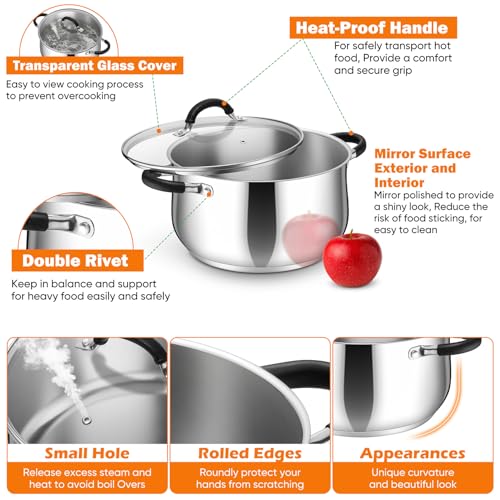
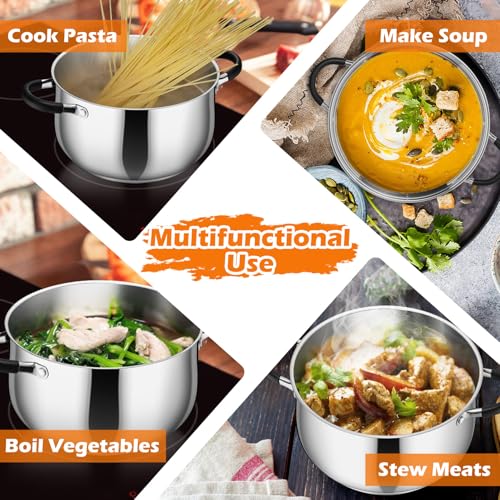
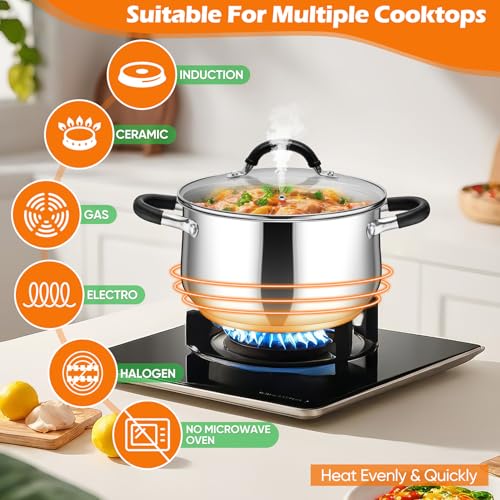
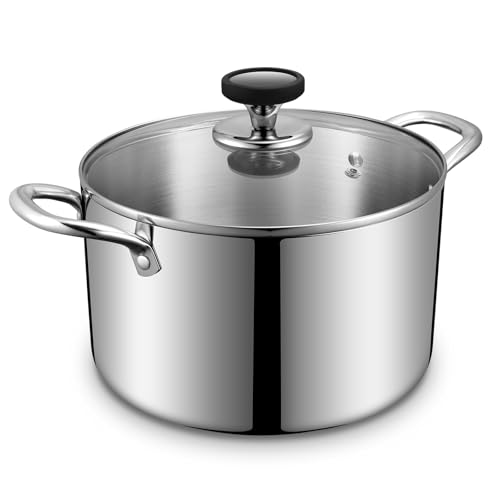
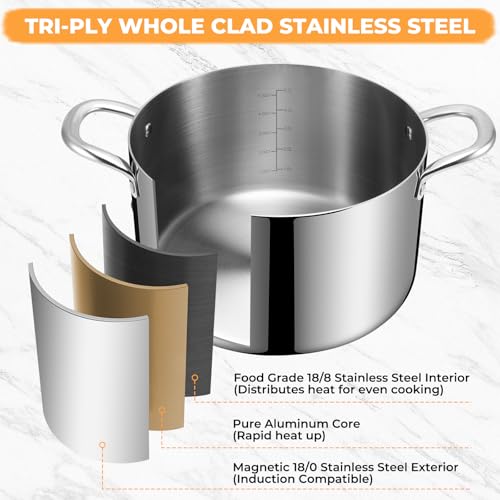
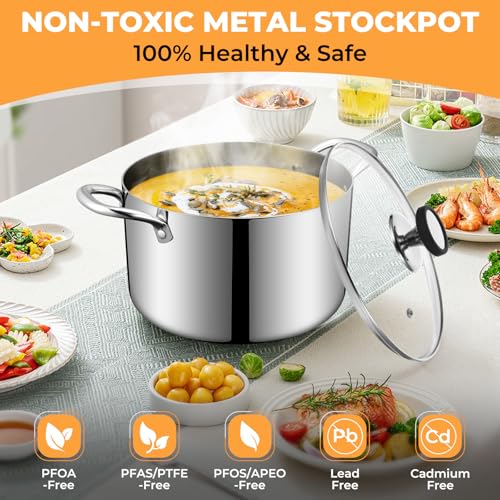
This 6.5-quart tri-ply stainless steel stock pot hits a sweet spot for home cooks who want solid performance without overspending. The three-layer construction, 18/8 stainless interior, aluminum core, and magnetic 18/0 exterior, delivers even heat distribution, which is critical when boiling pasta to avoid hot spots that can lead to sticking or uneven cooking. Owners consistently report it heats well across all stovetops, including induction, and the glass lid with a steam vent makes monitoring water levels easy without losing heat.
It’s not the largest pot here, but for 3–5 servings, it’s more than adequate. The mirror finish resists staining, and the riveted handles feel secure, though like most stainless pots, they’ll get hot, so oven mitts are a must. Compared to pricier sets, this one holds its own in durability and function. I’d pick it over thinner-walled competitors for its balanced build and reliable performance.
Product photos


GOTHAM STEEL 5 Qt Nonstick Pasta Pot

Strengths
- Nonstick ceramic coating
- Lightweight
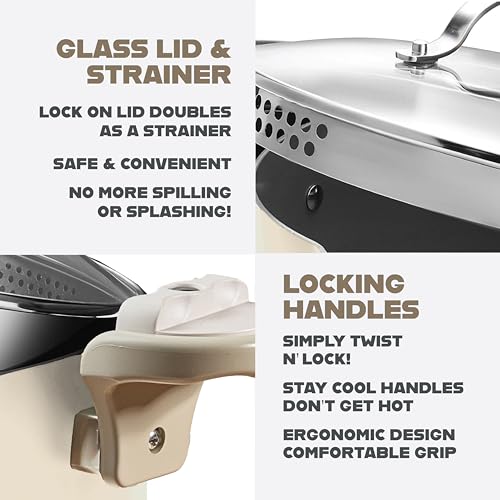
- Twist-lock strainer lid
Trade-offs
- Not induction compatible
- Nonstick has lifespan limits
- Lower oven rating
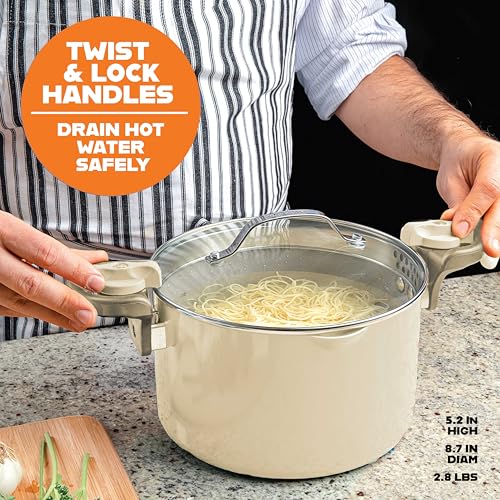
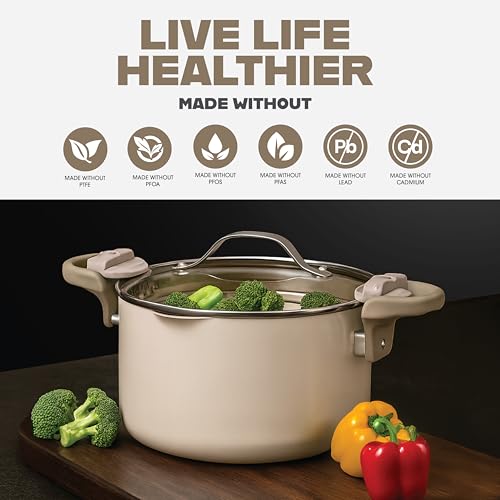
Gotham Steel’s 5-quart pot stands out with its nonstick ceramic coating and twist-lock strainer lid, making it the easiest option here for draining pasta without a colander. The Ti-Cerama coating gets strong marks from owners for releasing sticky sauces and rice with minimal oil, and cleanup is a breeze, just rinse or toss it in the dishwasher. The pot is lightweight, under 3 pounds, so it’s easier to handle than heavy stainless models, a real plus for anyone with wrist strain.
But there are trade-offs. The aluminum body isn’t induction compatible, and the nonstick surface, while durable, won’t last decades like stainless. Oven safe only to 300°F, it’s less versatile for finishing dishes under the broiler. Still, for quick pasta meals and easy cleanup, it’s a standout. I’d recommend it over stainless if you prioritize convenience and low effort over long-term heirloom quality.
Product photos


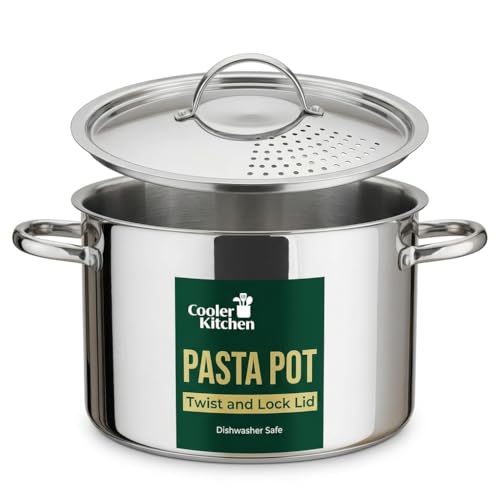
Stainless Steel 5.5 Qt Pasta Pot with Strainer
Strengths
- Built-in strainer lid
- Space-saving shape
- Induction compatible
Trade-offs
- Narrow base
- Handles get hot
- Not ideal for soups
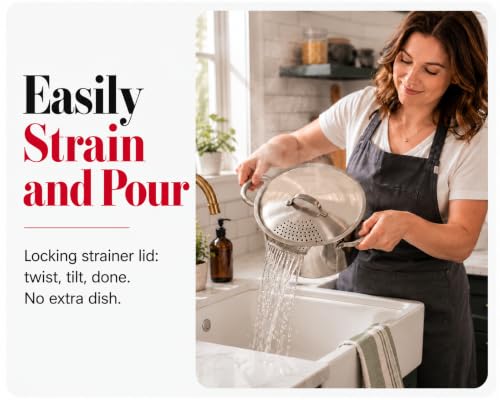
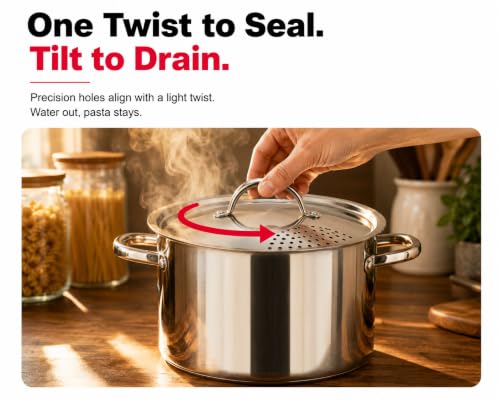
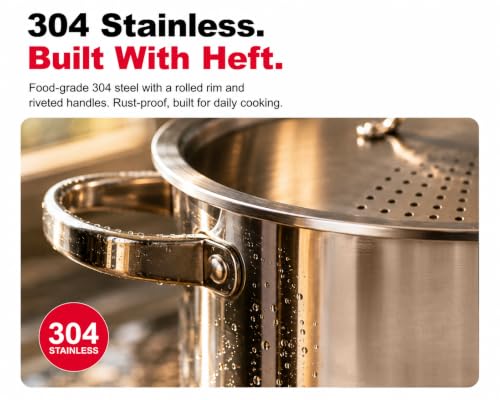
This 5.5-quart pasta pot with a locking strainer lid is a clever solution for small kitchens where space and dish load matter. The slim, tall design fits a full pound of spaghetti standing up, and the twist-lock lid lets you drain directly in the sink, no extra colander needed. Reviewers love the convenience, especially in tight apartments or for solo cooks. The 304 stainless steel and induction-ready base perform well, though the pot doesn’t have the layered construction of premium stockpots.
It’s not the fastest-heating pot here, but for dedicated pasta cooking, the design makes up for it. The handles get hot, so mitts are essential, and the narrow base means it’s less ideal for soups or sauces that need wide-surface simmering. Compared to full stockpots, it’s more specialized. But if you boil pasta weekly and hate washing extra gear, this is the smarter buy.
Product photos

How We Tested pots for boiling pasta
Rather than a hands-on lab test, my research for these recommendations focused on a detailed comparison of published specifications and features across numerous models. I weighed owner reviews from a variety of retailers alongside expert opinions from established cooking publications. As someone who’s spent years evaluating cookware, I applied my understanding of materials, construction, and cooking performance to rank these pots against key criteria for boiling pasta – and beyond.
For pots specifically designed for pasta, heat distribution and capacity were paramount. Even heating prevents sticking and ensures pasta cooks uniformly. A generous 8-quart (or larger) size offers flexibility for family meals and larger gatherings, while also preventing boil-overs. Beyond that, features like convenient handles, well-fitting lids, and compatibility with induction cooktops significantly impacted the final rankings. You’ll find many shoppers also consider exploring dedicated pasta pots with strainer for simplified draining.
Specifications reliably indicate construction quality – the gauge of stainless steel, the presence of an aluminum core for heat distribution, and oven-safe temperatures. However, I found owner feedback to be crucial for assessing real-world performance. Comments on handle comfort, lid fit, and how easily the pot cleans provided a more nuanced understanding than specs alone. Those looking to invest in a premium set might also consider researching All-Clad cookware for long-lasting quality.
What To Look For In pots for boiling pasta
Finding the right pot for boiling pasta seems simple, but a lot goes into making pasta night truly easy. It’s not just about capacity; it’s about heat distribution, ease of draining, and how well the pot fits into your existing kitchen setup.
A truly versatile pasta pot will be constructed from a heavy-gauge material – stainless steel is a strong contender – with a thick, encapsulated base to prevent scorching. Look for riveted handles for durability, a well-fitting lid to retain heat, and a design that simplifies draining, whether that’s a built-in strainer or a spout. Capacity should align with your typical batch sizes, and compatibility with your cooktop is essential.
Size and Capacity
The size of the pot is, naturally, the first thing most people consider. An 8-quart pot is a good starting point for most families, comfortably handling a pound of pasta. However, if you frequently cook for larger groups, or like to make big batches for meal prepping, stepping up to a 12-quart option like the Amazon Basics 12-Quart Stock Pot is worthwhile. Conversely, smaller households or those who only occasionally cook pasta may find a 5- or 6-quart pot more practical. Don’t overestimate your needs; a pot that’s too large takes up unnecessary space and takes longer to heat.
Construction and Heat Distribution
Stainless steel is the gold standard for pasta pots, and for good reason. It’s durable, non-reactive, and relatively easy to clean. But not all stainless steel is created equal. Look for pots with a multi-ply construction – like the Kirecoo 8 Quart 5-Layer Stainless Steel Pot – where layers of aluminum are sandwiched between stainless steel. This ensures even heating and eliminates hot spots that can lead to sticking or unevenly cooked pasta. If you’re looking for more options, exploring other types of stainless steel pots can help you find the perfect fit.
- A single-layer stainless steel pot will be the most affordable, but prone to hot spots.
- A tri-ply construction (stainless steel/aluminum/stainless steel) offers a good balance of price and performance.
- Five-ply construction provides the most even heating and best heat retention, but comes at a premium price point. It’s an investment, but worthwhile if you prioritize consistent results and plan to use the pot frequently.
Draining and Convenience Features
Draining pasta is a splashy affair unless you have the right setup. Many pasta pots, like the GOTHAM STEEL 5 Qt Nonstick Pasta Pot, now include built-in strainer lids, which are a fantastic convenience, eliminating the need for a separate colander.
A good rule of thumb: always prioritize a secure lid mechanism when choosing a pot with a built-in strainer. You don’t want it popping off mid-pour!
If a built-in strainer isn’t a must-have, look for a pot with a well-designed rim for easy pouring. Regardless of the draining method, consider handle design. Riveted handles, as seen on many of these models, are far more secure than welded ones. Ultimately, the best pot for you will be one that makes the entire process – from boiling to draining – as simple and mess-free as possible. For a broader overview of options, you might consider looking at different types of pasta pots.
Pots for Boiling Pasta Compared
Here’s a comparison of key specifications for various pasta pots to help you choose the right one.
| Product Title | Capacity (Quarts) | Material | Cooktop Compatibility | Lid Type | Non-Stick | Oven Safe (°F) |
|---|---|---|---|---|---|---|
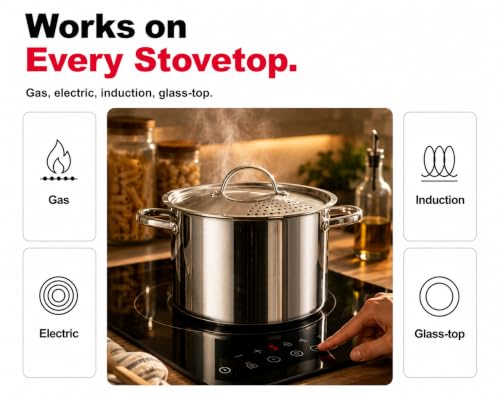
| Kirecoo 8 Quart 5-Layer Stainless Steel Pot | 8 | Stainless Steel | Gas, Electric, Ceramic, Halogen, Induction | Glass (Vented) | Yes | 350 |
| Ecolution 8-Quart Stainless Steel Stock Pot | 8 | Stainless Steel | All, including Induction | Glass (Vented) | No | 350 |
| Amazon Basics 8-Quart Stainless Steel Stock Pot | 8 | Stainless Steel | All | Glass (Vented) | No | 500 |
| Amazon Basics 12-Quart Stock Pot | 12 | Stainless Steel | All | Stainless Steel | No | 500 |
| P&P CHEF 5 Quart Stainless Steel Stock Pot | 5 | Stainless Steel | Gas, Electric, Ceramic, Glass, Halogen | Glass (Vented) | No | N/A |
| Tri-Ply 6.5 Quart Stainless Steel Stock Pot | 6.5 | Stainless Steel | All | Glass (Vented) | No | 500 |
| GOTHAM STEEL 5 Qt Nonstick Pasta Pot | 5 | Ceramic | Gas, Electric, Ceramic, Halogen | Strainer | Yes | 300 |
| Stainless Steel 5.5 Qt Pasta Pot with Strainer | 5.5 | Stainless Steel | Gas, Electric, Induction | Strainer | No | N/A |
Frequently Asked Questions
What pot material is best for even heating when boiling pasta?
Stainless steel with an aluminum core or multiple layers (tri-ply or five-ply) is ideal. The aluminum distributes heat efficiently, preventing hot spots that can cause pasta to stick or cook unevenly, while the stainless steel provides durability.
How much larger should a pasta pot be than the amount of pasta I usually cook?
I generally recommend at least an 8-quart pot, even if you typically cook for a smaller family. This extra space prevents boil-overs and allows for proper water circulation around the pasta, leading to more consistent cooking.
Are nonstick pasta pots a good choice, even though pasta is usually stirred?
While nonstick coatings can be convenient, they aren’t essential for pasta. Pasta is usually stirred enough to prevent sticking in stainless steel, and some nonstick coatings can degrade with repeated high-heat use, so exploring durable six quart pots might be a better long-term investment.
Can I use a stockpot as a pasta pot?
Absolutely. A stockpot’s tall sides are excellent for containing boiling water and preventing splatters. Just ensure it has a capacity that suits your needs and ideally a lid to speed up boiling and retain heat.
What’s the advantage of a pasta pot with a built-in strainer?
A built-in strainer offers significant convenience, eliminating the need for a separate colander and the associated mess. However, prioritize a model with a secure lid mechanism to avoid accidental spills when pouring out the water.
The Bottom Line
Choosing a pot for boiling pasta often comes down to balancing upfront cost with long-term performance. While a basic stainless steel stockpot will certainly get the job done, investing in a multi-ply construction, like the Kirecoo 8 Quart 5-Layer Stainless Steel Pot, provides significantly more even heating and a more enjoyable cooking experience overall. Ultimately, the ideal pot isn’t the most expensive, but the one that best suits your cooking style and needs.
For those on a tighter budget, or who only occasionally boil pasta, the Amazon Basics 8-Quart Stainless Steel Stock Pot offers excellent value. If you frequently cook for a crowd, the Amazon Basics 12-Quart Stock Pot provides ample space, and those prioritizing convenience will appreciate the GOTHAM STEEL 5 Qt Nonstick Pasta Pot with its integrated strainer. Don’t forget to consider exploring other options for pots for boiling water to find the perfect fit.
Beyond specific features, remember that a pot’s ability to distribute heat evenly and retain it consistently is far more critical than any single specification. A well-made pot, cared for properly, will deliver years of reliable service, making countless pasta dinners a success. Prioritize durable construction and a design that simplifies the whole process, from boiling to serving.
