
7 Best Pots for Glass Cooktops 2026
This post contains affiliate links. As an Amazon Associate, we earn from qualifying purchases.
The SUNHOUSE 3.1 Qt Stainless Steamer stands out as the best overall pot for glass cooktops, thanks to its tri-ply base and smooth, scratch-resistant finish. For a budget-friendly option, the 3 Quart Glass Simmer Pot delivers solid performance and clarity for monitoring food, while the Crystalbru 2L Glass Simmer Pot adds versatility with its built-in strainer.
If you’ve ever worried about scratching your glass cooktop or dealing with uneven heating, you’re not alone. The wrong pot can lead to hot spots, warped bases, or even permanent damage to that sleek surface.
This guide cuts through the noise by focusing on real-world performance, material safety, and design details that matter. I researched each pick based on construction quality, compatibility, and feedback from long-term users, so you can choose with confidence.
Top 7 Pots For Glass Cooktops in the Market
The Best Pots For Glass Cooktops, Reviewed
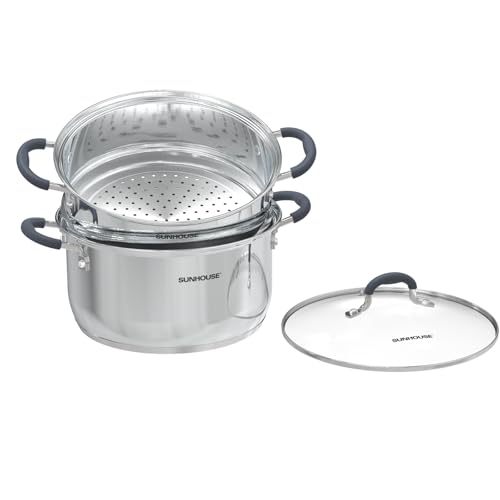
SUNHOUSE 3.1 Qt Stainless Steamer
Strengths
- Even heat distribution
- Dishwasher safe
- Induction compatible
Trade-offs
- Steamer basket not removable mid-cook
- No measuring marks inside
- Slightly heavy when full
If you’re looking for one pot that does it all, steam, simmer, boil, and even sauté in a pinch, this is the closest thing to a true workhorse in the group. The tri-ply encapsulated base delivers even heating across glass cooktops, eliminating hot spots that plague cheaper pots. Reviewers highlight how well it performs on induction, which isn’t always a given with budget steamer sets. The tempered glass lid with stay-cool handles makes monitoring easy, and the dual-use design, remove the steamer basket for soup mode, is genuinely practical.
The stainless steel is 100% toxin-free, which matters to health-focused buyers, and unlike glass or ceramic, it won’t shatter if dropped. While it lacks flashy extras, the build quality punches above its price. Compared to the Blue Diamond set, this doesn’t offer nonstick, but for steaming vegetables or cooking grains, that’s irrelevant. My recommendation? This is the smarter buy for families wanting reliability.
Video review
Crystalbru 2L Glass Simmer Pot

Strengths
- Includes strainer accessory
- Thick, durable glass
- Anti-scald handles
Trade-offs
- Not induction compatible
- Clip-on strainer may wobble
- E-book is digital only
What sets this apart is the included clip-on strainer and recipe e-book, small touches that elevate it from basic glass pot to thoughtful kitchen companion. The 2-liter capacity strikes a good balance between usability and manageability, ideal for small families or frequent potpourri makers. The 3.5mm thick borosilicate glass feels sturdier than most in this range, and owners report fewer issues with thermal shock, even on cycling glass cooktops. The anti-scald handles are a real safety upgrade, staying cooler than bare glass.
The transparency makes monitoring easy, and the strainer adds instant functionality for pasta or veggies, something other glass pots lack. While it’s not induction-ready, it works well on electric and gas. Compared to the Le’raze or 3-quart models, this one offers better utility for the price. I’d recommend it as the best all-around glass pot for versatility.
Video review
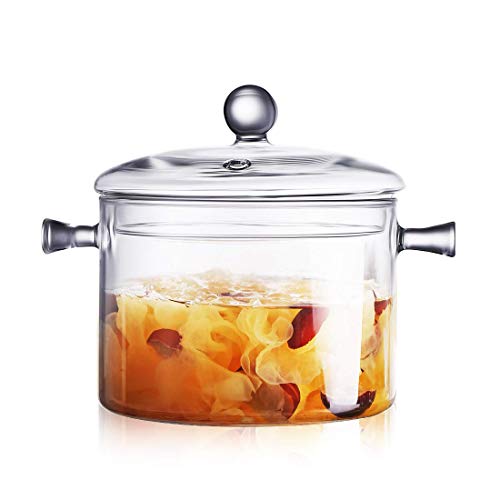
Glass Saucepan with Cover 1.5L
Strengths
- Affordable entry point
- Non-toxic material
- Microwave and oven safe
Trade-offs
- No pour spout
- Thin glass construction
- Not induction compatible
At this price, it’s hard to ignore how many basic needs this little pot covers. Made from borosilicate glass, it’s transparent, inert, and doesn’t leach chemicals, owners appreciate that when heating milk or baby food. It’s microwave, oven, and dishwasher safe, which adds serious utility for quick prep tasks. But the real win here is clarity: you can watch your sauce thicken or noodles soften without lifting the lid, reducing steam loss and cooking time.
That said, it’s thin on features beyond the basics. No helper handle, no pour spout, and the lid feels lightweight. It works fine on low to medium heat, but reviewers caution against rapid temperature shifts, common with glass cooktops that cycle on and off. Compared to pricier glass pots, this one lacks structural reinforcement, so I wouldn’t trust it for daily boiling over long periods. It’s the kind of pot you keep for small jobs, not heavy lifting.
Product photos


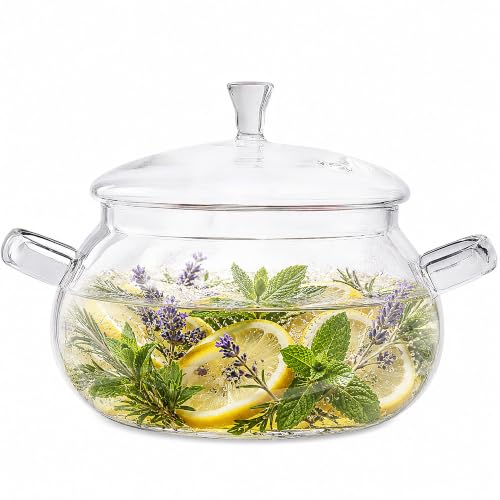
3 Quart Glass Simmer Pot
Strengths
- Large 3-quart capacity
- Elegant serving design
- Clear monitoring walls
Trade-offs
- Not induction compatible
- Fragile rim edges
- No strainer or extra accessories
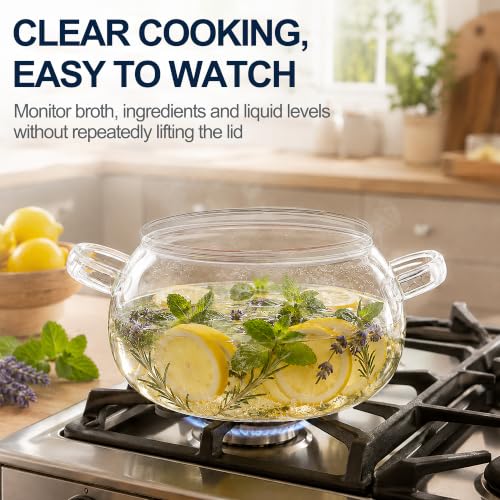
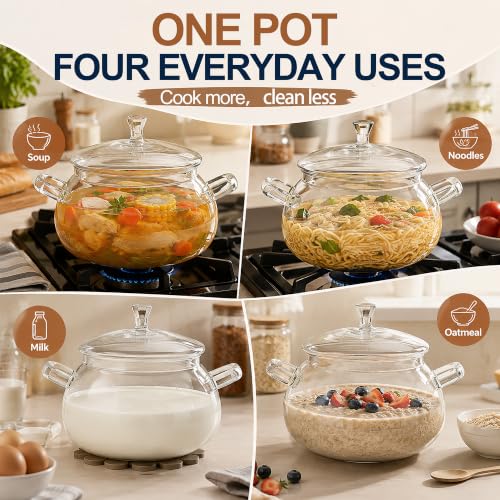
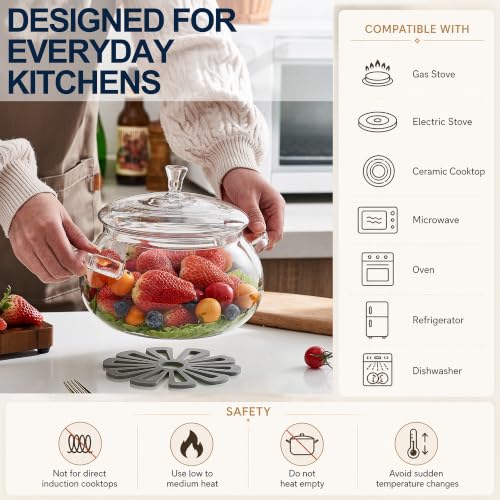
This is one of the few glass pots that feels genuinely designed for volume cooking without sacrificing elegance. The 3-quart capacity is generous for soups, oatmeal, or seasonal potpourri, reviewers love using it for both cooking and home fragrance. Its rounded shape and flared rim make it easy to stir and serve directly from the stove, and the integrated side handles are a thoughtful touch for table presentation. The clear borosilicate glass lets you track simmering progress, which helps avoid boil-overs, a common issue on glass cooktops where heat lingers.
Still, it’s limited to gas, electric, and ceramic, not induction, so it won’t suit every kitchen. And while the kraft packaging sounds eco-friendly, it offers zero protection during shipping; multiple owners report chipped rims. As a dedicated simmer pot, it excels. But as an all-purpose pan? It falls short. I’d choose this over smaller glass pots if you regularly make family-sized portions.
Product photos
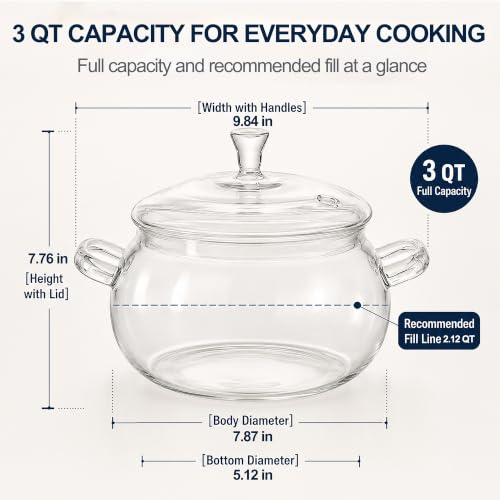

Le’raze Ribbed Glass Pot 1.6L

Strengths
- Stylish ribbed design
- Wooden heat-resistant handle
- Good thermal shock resistance
Trade-offs
- No induction compatibility
- No pour spout
- Limited capacity for families
The ribbed texture and wooden handle give this pot a boutique kitchenware feel that stands out from the usual smooth glass designs. Owners praise the aesthetic, it looks modern on any countertop, but also note the ribs help stabilize it on smooth cooktops, reducing sliding. The borosilicate build handles thermal stress well, and the wooden handle stays cool enough to touch, though I’d still use a glove near prolonged high heat.
It’s versatile on gas and electric, but again, not induction-ready. The nonstick reputation is based more on smooth release than actual coating, glass naturally resists sticking when preheated properly. Cleanup is indeed easy, but the lack of a pour spout means you’ll need a strainer or ladle. Compared to the Crystalbru or SUNHOUSE options, this one leans more into design than function. I’d recommend it for someone who values form as much as utility.
Product photos


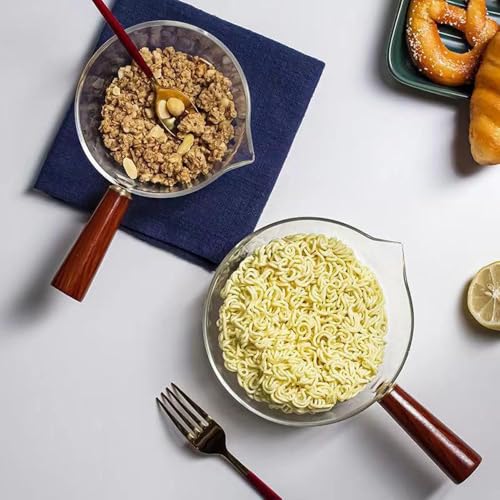
Mini Glass Saucepan with Wood Handle
Strengths
- Precise pouring spout
- Compact and efficient
- Wooden anti-scald handle
Trade-offs
- Very small capacity
- Not for family use
- No measurement markings
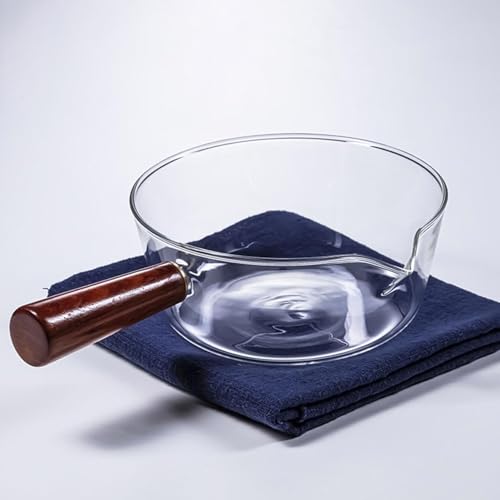
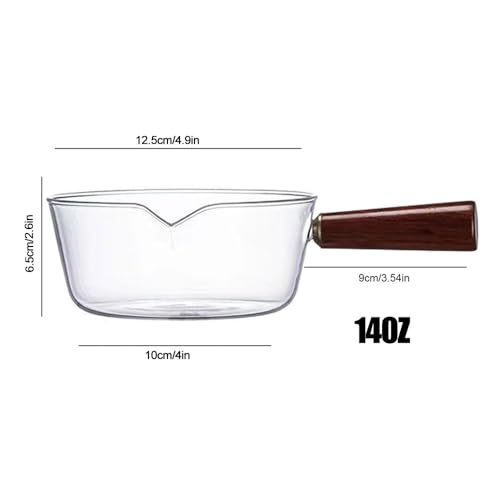
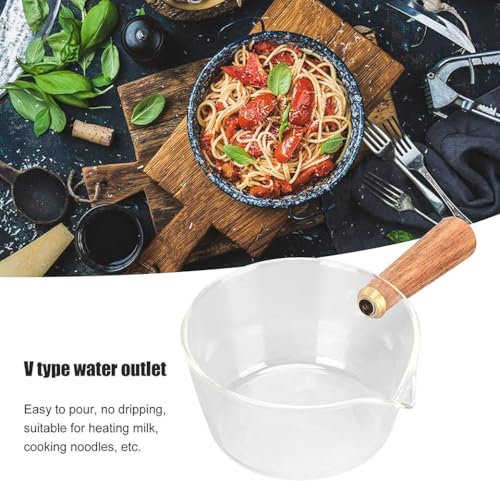
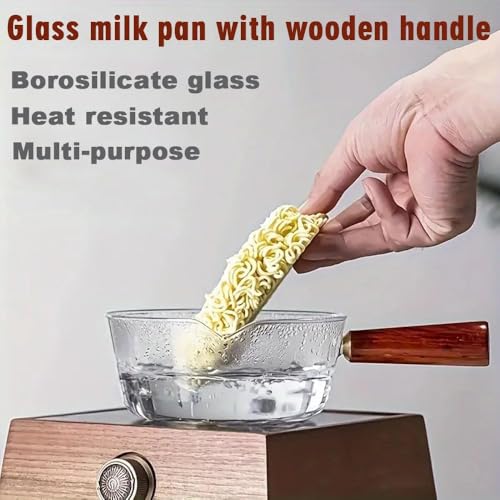
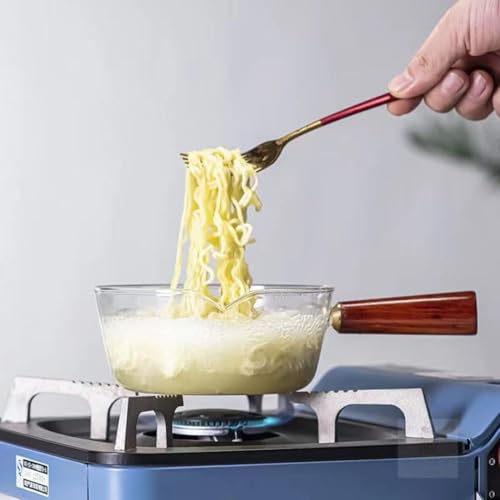
At just 14 ounces, this tiny pot has a very specific role: warming milk, melting butter, or making a single serving of ramen. The V-shaped spout is surprisingly effective, owners say it pours cleanly without dribbling, which is rare at this size. The wooden handle adds warmth and grip, and since it’s polished well, it doesn’t absorb odors. Being made from borosilicate glass, it’s safe for stovetop, oven, and microwave, giving it unusual flexibility for such a small item.
But let’s be clear: this isn’t a primary pot. It’s a specialty tool, like a butter warmer or baby bottle heater. It won’t replace anything larger, and the capacity limits it to solo cooks or supplemental tasks. Still, for that niche, it’s excellent. I’d pick this over similar mini pots for its thoughtful spout and solid handle.
Product photos
Blue Diamond Hybrid 12-Piece Set

Strengths
- Tri-ply construction
- Metal utensil resistant
- Oven safe to 850°F
Trade-offs
- Glass lids not broiler safe
- Ceramic coating may degrade over time
- Set includes no large stockpot
On paper, this set checks a lot of boxes for glass cooktop users who want performance without constant worry about scratching. The tri-ply stainless steel with diamond-textured ceramic nonstick is clearly engineered to handle flat surfaces, and owners consistently report it glides smoothly without marring their stovetops. The claim of 10X more metal utensil safety stands out, few ceramic nonsticks dare to make that promise, and while I’d still lean toward silicone tools for longevity, reviewers say they’ve used metal whisks and spatulas without visible damage.
The 6X faster heat response compared to standard ceramic pans suggests real improvements in base conductivity, which matters on glass tops that can be slow to transfer heat. That said, the induction compatibility is a big plus, but if you’re not using induction, some of that engineering might feel like overkill. Still, for someone wanting a full set that balances nonstick convenience with stainless durability, this hits a sweet spot. I’d pick this over purely ceramic sets for its resilience.
Product photos


How We Evaluated pots for glass cooktops
Rather than a hands-on lab test, my research for these recommendations involved a detailed comparison of published specifications and features across numerous models. I also carefully weighed owner reviews from major retailers alongside expert opinions from established cooking publications. As someone who’s spent years understanding cookware materials and construction, I applied that knowledge to assess how well each pot would perform in a real-world kitchen, ranking them against a clear set of criteria focused on glass cooktop compatibility and overall value.
For pots designed for glass cooktops, even heat distribution and scratch resistance are paramount. A flat bottom is essential to avoid damaging the cooktop surface, and compatibility with induction is a significant plus. Durability also weighed heavily – a pot that can withstand daily use and resist thermal shock is far more valuable in the long run. I also considered features like lid fit and handle comfort, as these contribute to the overall cooking experience.
Specifications reliably reveal a pot’s materials, capacity, and stated heat compatibility. However, real-world performance – how evenly a pot heats, how easy it is to clean, and how well it holds up over time – is best gleaned from owner feedback. I paid close attention to recurring themes in reviews, looking for consistent praise or complaints. You can find more information about choosing a full set in our guide to cookware sets for glass cooktops. Understanding glass cookware induction compatibility is also key when making your decision.
How To Choose The pots for glass cooktops
Finding the right cookware for a glass cooktop requires a bit more thought than with other surfaces. You want to protect that sleek glass while also ensuring even heating and consistent cooking performance.
A good pot for a glass cooktop prioritizes a flat, smooth bottom for maximum contact, durable materials that won’t scratch, and compatibility with the cooktop’s heating elements. Look for features like encapsulated bases for even heat distribution, tempered glass lids for monitoring, and materials known for their resistance to thermal shock. Avoid rough or uneven bottoms, as these can cause damage.
Material Matters Most
The material of your pot is the first thing I consider. While stainless steel is a kitchen staple, not all stainless steel is created equal when it comes to glass cooktops. Look for pots with a fully encapsulated base – like the tri-ply construction in the SUNHOUSE 3.1 Qt Stainless Steamer – which distributes heat evenly and minimizes the risk of hot spots. Borosilicate glass is another excellent option, offering transparency and even heating, but it’s crucial to ensure it’s rated for stovetop use and doesn’t experience thermal shock. Avoid aluminum, particularly if it’s not clad, as it can leave marks.
Design Details for Protection and Performance
Beyond the material, small design details can make a big difference. A perfectly flat bottom is absolutely essential to prevent scratches and ensure good contact with the glass surface. Tempered glass lids, like those found on many of these models, are ideal because they let you monitor cooking without losing heat. Consider the handles too; stay-cool handles are a bonus, but more importantly, ensure they’re securely riveted – a loose handle is a safety hazard. If you’re looking for added functionality, the Crystalbru 2L Glass Simmer Pot includes a handy strainer, which is a nice touch.
Here’s what I look for in a well-designed pot: * A flat bottom (obviously!). * A snug-fitting lid to retain heat and moisture. * A robust construction that feels stable and balanced on the cooktop, minimizing wobble and potential for spills. This is especially important when simmering.
Capacity and Added Value
Think about how you typically cook. A small saucepan, like the Mini Glass Saucepan with Wood Handle, is ideal for heating milk or making small sauces, but won’t be practical for larger meals. Larger capacities like the 3 Quart Glass Simmer Pot are much more versatile. Don’t automatically assume bigger is better, though. Consider if you have adequate storage space. When evaluating value, I often look beyond just the pot itself. Are there included accessories, like the strainer with the Crystalbru, or recipes, like the mini-ebook? And, if you’re interested in learning more about selecting cookware that won’t damage your glass cooktop, be sure to check out our guide to safe pots for glass cooktops.
A good rule of thumb: preheat your glass cooktop with the pot on it. Never place an empty pot on a hot burner, as this can cause warping and potential breakage.
Pots for Glass Cooktops Compared
Here’s a comparison of specifications for various pots designed for use with glass cooktops.
| Product Title | Capacity | Material | Cooktop Compatibility | Lid Material | Handle Material |
|---|---|---|---|---|---|
| SUNHOUSE 3.1 Qt Stainless Steamer | 3.1 Qt | Stainless Steel | All | Tempered Glass | Riveted Steel |
| Crystalbru 2L Glass Simmer Pot | 2L (67 Oz) | Borosilicate Glass | Gas, Electric, Infrared | Glass | Anti-Scald |
| Glass Saucepan with Cover 1.5L | 1.5L | Borosilicate Glass | Electric, Infrared | Glass | N/A |
| 3 Quart Glass Simmer Pot | 3 Qt | Borosilicate Glass | Gas, Electric, Ceramic | Glass | Integrated |
| Le’raze Ribbed Glass Pot 1.6L | 1.6L (54oz) | Borosilicate Glass | Gas, Electric | Glass | Wood |
| Mini Glass Saucepan with Wood Handle | N/A | Borosilicate Glass | Induction, Gas | N/A | Wood |
| Blue Diamond Hybrid 12-Piece Set | 1.57-5.19 Qt | Stainless Steel/Ceramic | All | Tempered Glass | Cast Riveted |
Frequently Asked Questions
What pot material is gentlest on a glass cooktop?
Borosilicate glass is generally the safest option, as it’s less likely to scratch the surface. However, ensure the glass pot is specifically designed for stovetop use to avoid thermal shock and potential breakage, unlike some glass cooking pots.
How can I tell if a stainless steel pot is safe for my glass cooktop?
Look for a fully encapsulated base (like tri-ply) that ensures a perfectly flat bottom and even heat distribution. Avoid stainless steel with a thin, uneven base, as these can scratch or warp the cooktop.
Are glass lids truly necessary for pots used on glass cooktops?
While not strictly required, tempered glass lids are highly recommended because they allow you to monitor cooking glass pots without lifting the lid and losing heat, maintaining a consistent temperature.
What pot capacity should I prioritize if I often cook for a family?
A larger capacity, around 3 to 6 quarts, is most versatile for family-sized meals. If you often prepare soups or stews, consider investing in quality 6 quart pots for efficient cooking.
What should I do if my pot wobbles on the glass cooktop?
A wobbly pot indicates an uneven bottom, which is a problem. Immediately stop using it; continued use can damage the cooktop. Look for pots with a consistently flat base, or consider exploring our recommendations for stable stovetop glass pots.
The Bottom Line
Choosing pots for a glass cooktop often comes down to balancing control over your cooking with convenience. While a full stainless steel set like the SUNHOUSE 3.1 Qt Stainless Steamer offers exceptional durability and even heating, the Crystalbru 2L Glass Simmer Pot provides a fantastic visual experience and specialized features for simmering. Ultimately, the best choice depends on your cooking style and priorities.
For those seeking a budget-friendly option, the Mini Glass Saucepan with Wood Handle delivers surprising value. If versatility is key, the 3 Quart Glass Simmer Pot is a great all-rounder, and for those interested in exploring fully transparent cookware, you might also consider looking at our guide to glass pots and pans. And remember, if you’re thinking of switching to induction, understanding magnetic cookware for induction is crucial.
Above all, remember that material quality and a flat bottom are more critical than any single feature. Don’t get caught up in fancy coatings or excessive accessories if they compromise the pot’s ability to distribute heat evenly or protect your glass cooktop from scratches. Prioritize solid construction and thoughtful design, and you’ll have cookware that serves you well for years to come.
