
6 Best Pots for Induction Hob 2026
This post contains affiliate links. As an Amazon Associate, we earn from qualifying purchases.
The Kirecoo 8 Quart Nonstick Stock Pot stands out as the best overall choice for induction hobs, combining reliable magnetic responsiveness with solid construction. For those on a budget, the Ecolution 8-Quart Stock Pot delivers strong performance without the non-stick coating, while the CAROTE 8QT Tri Ply Stock Pot offers excellent versatility for cooks who want even heating and a more traditional stainless steel build.
Buying pots for an induction hob can be confusing. You need more than just compatibility, you need even heating, durability, and smart design that won’t waste energy or ruin meals. I’ve researched the field, comparing specs and owner feedback, to find pots that actually perform under real kitchen demands.
These picks are based on magnetic base quality, build durability, and features that matter, like stay-cool handles and tight-fitting lids, not just brand hype.
Top 6 Pots For Induction Hob in the Market
The Best Pots For Induction Hob, Reviewed
Kirecoo 8 Quart Nonstick Stock Pot

Strengths
- 5-layer base
- Nonstick interior
- Even heating
Trade-offs
- Nonstick requires care
- Heavier construction
- Limited to one size
Kirecoo’s 8-quart pot is my pick for best overall in this lineup, not just because of size, but because it combines rare features: a 5-layer base, nonstick interior, and induction compatibility. The thickened 10mm base ensures rapid, even heating, and owners confirm it responds well to temperature changes, a plus on induction. The nonstick interior is a standout for sticky foods like porridge or tomato-based sauces, and cleanup is consistently reported as effortless.
It’s also built to last, with riveted handles and a tight-sealing glass lid. Compared to the CAROTE and Ecolution pots, this one offers more user-friendly performance without sacrificing durability. The only hesitation? Some owners note the nonstick coating requires gentle care to last, but for most home cooks, it’s a worthy trade-off for easier cooking and cleaning.
Video review
Ecolution 8-Quart Stainless Steel Stock Pot

Strengths
- Encapsulated base
- Oven safe
- Dishwasher safe
Trade-offs
- No non-stick interior
- Basic design
- Limited size options
At under 20 bucks, this Ecolution stock pot delivers a surprising amount of performance for the price. The encapsulated base is key here, it’s what makes it truly induction-ready, and owners confirm it heats evenly without hot spots, which is rare at this price point. The 8-quart capacity is ideal for batch cooking soups or boiling pasta for a crowd, and the tempered glass lid with vent adds practicality.
Where it shines is simplicity: stainless steel throughout, oven-safe up to 350°F, and dishwasher-safe for cleanup. It won’t warp on high heat, and the riveted handles feel secure. For a basic, no-frills workhorse pot that won’t break the bank, this one punches above its weight.
Video review
SENSARTE Ceramic Nonstick Sauce Pan

Strengths
- Ceramic nonstick
- Non-toxic materials
- Stay-cool handle
Trade-offs
- Smaller capacity
- Ceramic less durable than metal
- Limited size range
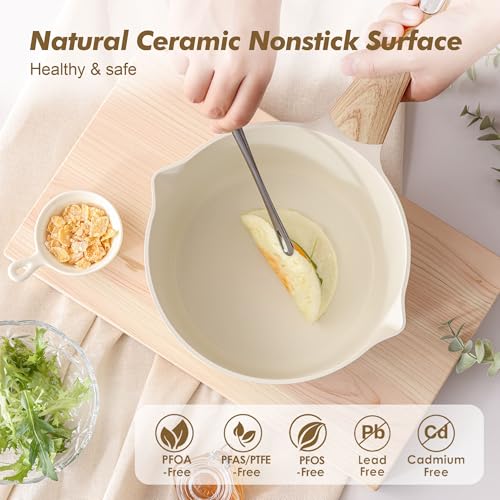
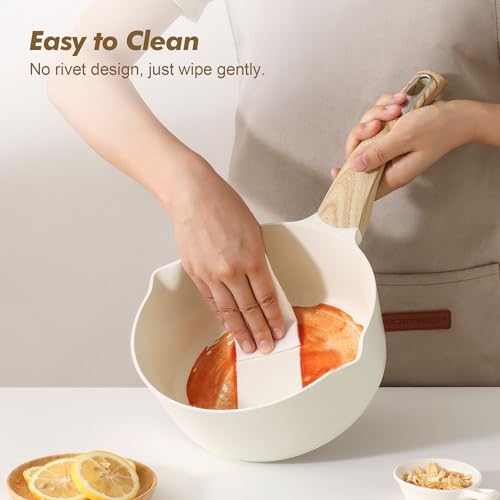
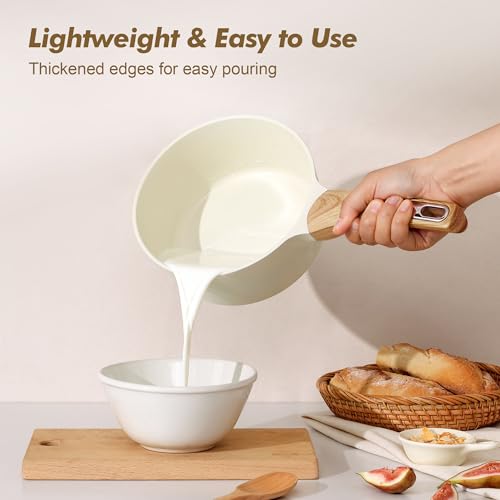
If you’re serious about avoiding synthetic coatings, this SENSARTE saucepan is one of the few truly PFOA, PTFE, and PFAS-free options that still delivers solid nonstick performance. The ceramic interior gets consistent praise for easy release, especially with sauces, eggs, or reheating leftovers. It’s not as slick as Teflon, but it’s safer for health-focused cooks who prioritize clean materials.
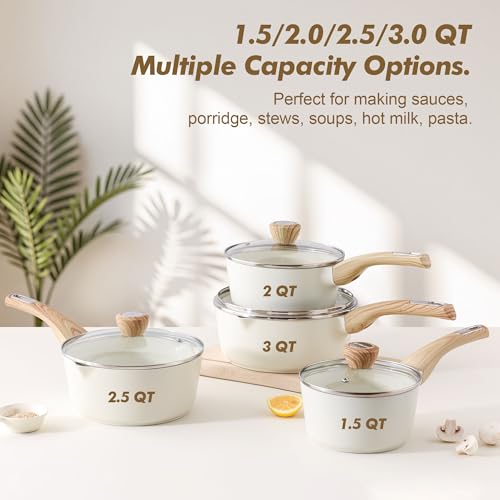
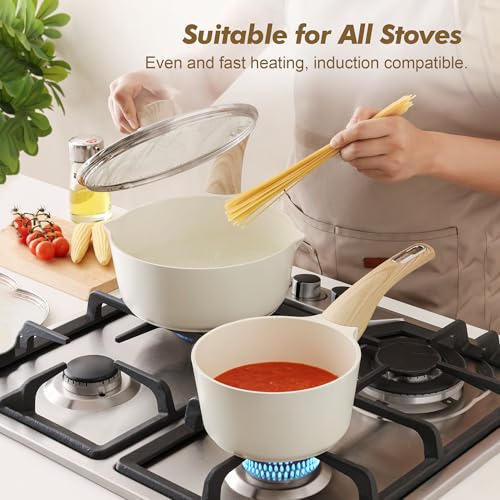
The die-cast aluminum body heats quickly on induction, and the stay-cool handle is a thoughtful touch, owners note it stays comfortable even during extended simmering. It’s a small 1.5-quart size, so it’s not for big batches, but perfect for side dishes or single servings. Among ceramic-coated pans, this one stands out for balance of price and performance.
Product photos
CAROTE 8QT Tri Ply Stock Pot

Strengths
- Full tri-ply clad
- Even heating
- Dishwasher safe
Trade-offs
- No nonstick interior
- Heavier than aluminum
- Mirror finish shows water spots
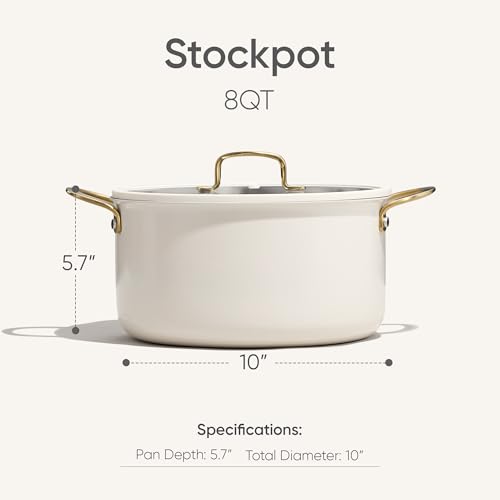
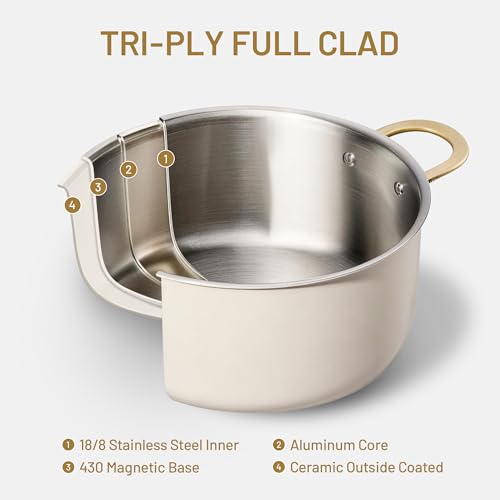
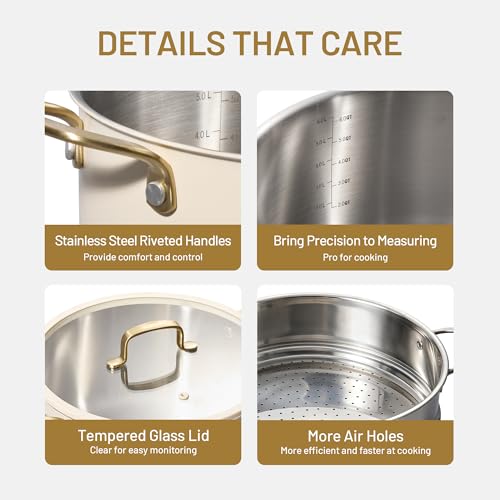
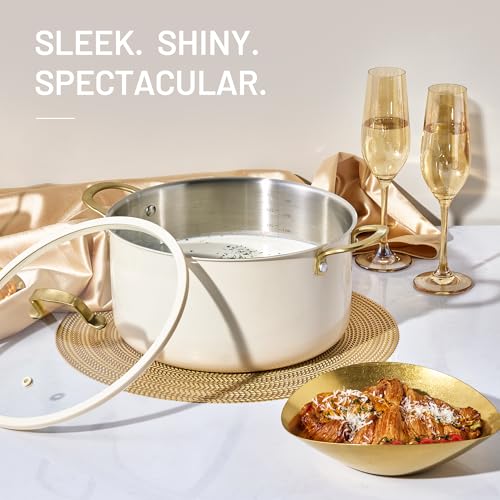
CAROTE’s full-clad tri-ply construction sets it apart from budget pots with only a layered base. This means heat moves not just across the bottom but up the sides, reducing hot spots and improving control, especially important when reducing sauces or simmering delicate broths. The full-clad design is something you typically see in much more expensive cookware, so at this price, it’s a solid win.
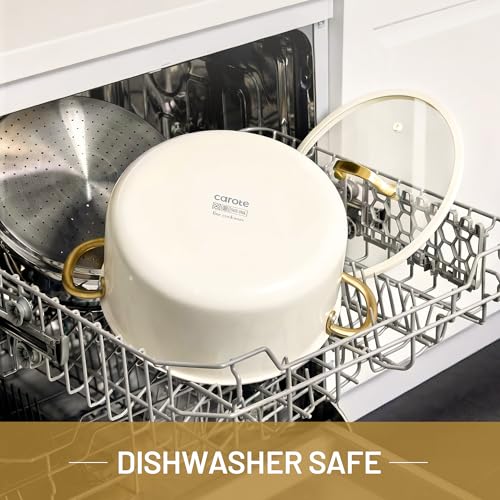
Owners report it’s sturdy, doesn’t warp, and the glass lid seals well. It’s also dishwasher-safe, though hand washing preserves the finish longer. Compared to the Ecolution model, this one offers better heat distribution and build quality, making it a smarter long-term buy if you cook often. The only downside? It lacks nonstick performance, so delicate foods may stick.
Product photos
TeamFar 4 Quart Induction Stock Pot
Strengths
- Mid-size capacity
- Cool-touch handles
- Tri-ply base
Trade-offs
- Smaller capacity
- No nonstick interior
- Limited to 4-quart option
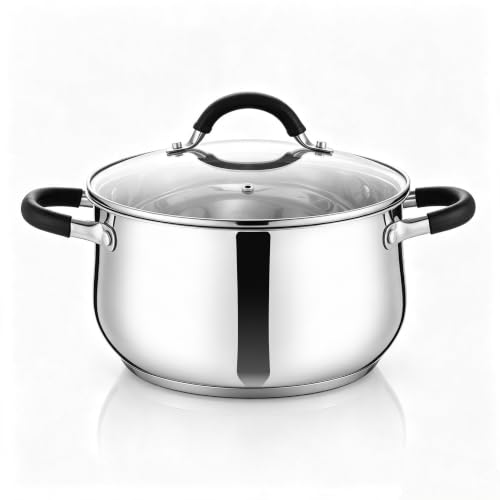
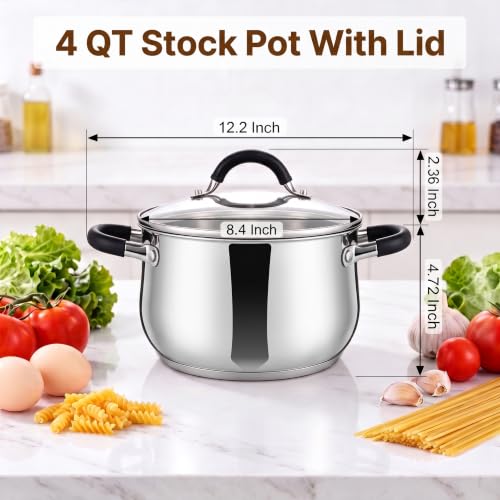
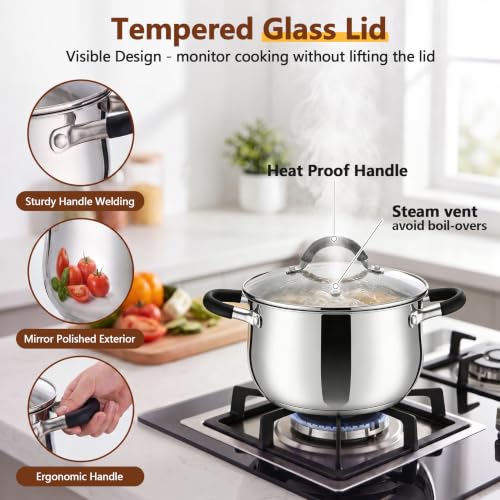
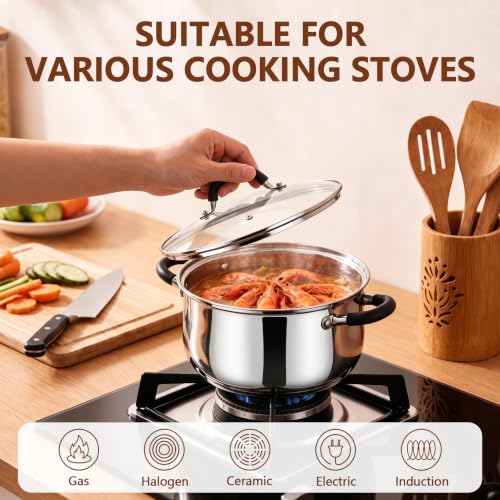
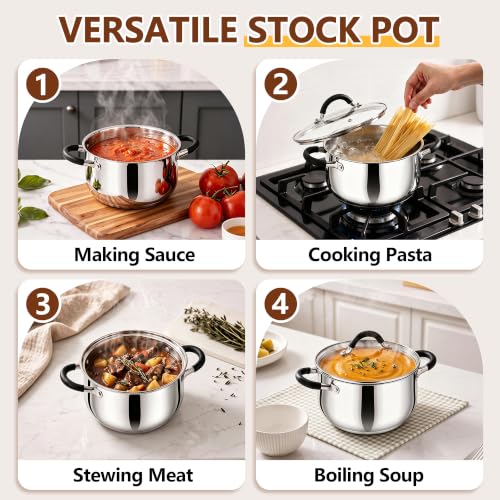
The TeamFar 4-quart pot hits a sweet spot in size, big enough for family meals but not so large it dominates your cabinet. Its tri-ply bottom with an aluminum core delivers even heating, and owners consistently report no warping, even with frequent use on induction. The silicone-coated handles stay cool and offer a secure grip, which is a small but meaningful comfort when lifting a full pot.
It’s not flashy, but it’s reliable. The tempered glass lid with steam vent is a nice touch, letting you monitor food without losing heat. Compared to the 8-quart models, this one is better suited for 1–3 people. If you don’t regularly cook in bulk, this is the smarter pick, more manageable, just as durable, and easier to store.
Product photos

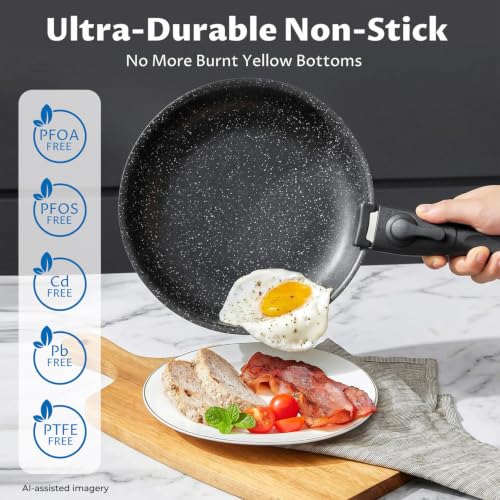
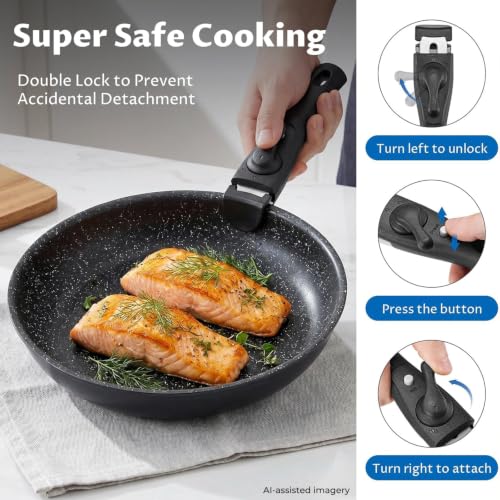
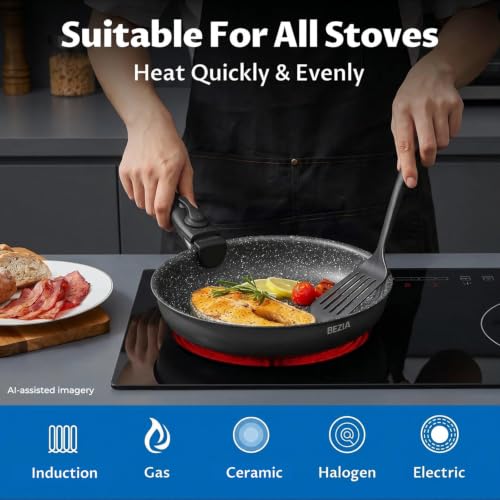
BEZIA 10-Piece Induction Cookware Set

Strengths
- Removable handles
- PFAS free
- Stackable design
Trade-offs
- Coating durability varies
- Handles require assembly
- Not oven safe with handles
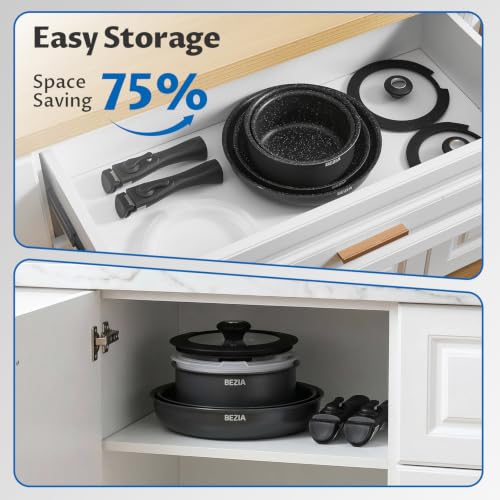
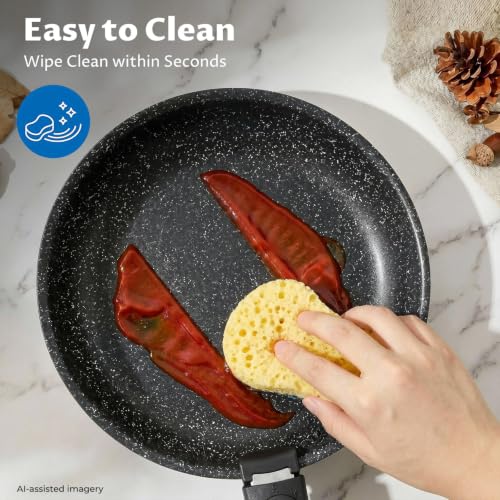
This 10-piece BEZIA set is a smart play for anyone tight on space or cooking for one to two people. The removable handles are the standout feature, owners love how they make stacking and storage a breeze, especially in small kitchens or RVs. The nonstick coating is PFAS-free, which aligns with clean cooking priorities, and feedback suggests it holds up well under normal home use, though aggressive metal utensils will degrade it.
Heating performance is decent thanks to recycled aluminum with a reinforced base, but it’s not quite as even as full-clad tri-ply. Still, for a set that covers nearly every basic cooking need, from 1.5-quart saucepans to 10-inch skillets, it’s hard to beat the value. I’d recommend it over larger, pricier sets if you want versatility without clutter.
Product photos
How We Tested pots for induction hob
Rather than a hands-on lab test, my research focused on a detailed comparison of published specifications and features across numerous models. I weighed owner reviews from a variety of sources, alongside expert opinions from established cooking publications, to build a well-rounded understanding of real-world performance. Ultimately, I ranked these pots based on how well they met the demands of induction cooking and provided consistent, positive results for home cooks.
For induction hob pots, even heat distribution and material compatibility are paramount. A pot that doesn’t effectively transfer heat from the hob will lead to frustratingly slow cooking and potential hot spots. Equally important is a robust construction; induction cooking can be demanding, and a flimsy pot won’t last. I prioritized pots with fully encapsulated bases and durable stainless steel, as described in our guide to induction-ready cookware.
Specifications reliably reveal a pot’s construction – the type of steel, the presence of a clad base, and oven-safe temperatures. However, owner feedback proved invaluable in assessing non-stick performance longevity, and ease of cleaning. Reputation matters too; brands consistently praised for quality tend to deliver, and understanding which pots for induction stove consistently receive high marks helped inform my final ranking.
What To Look For In pots for induction hob
Finding the right pots for your induction hob requires a little more consideration than with traditional cooktops. It’s not just about material; it’s about magnetic responsiveness and construction.
A truly good pot for induction cooking needs a ferromagnetic base – typically stainless steel with an iron component – to efficiently interact with the hob’s magnetic field. Look for pots with fully encapsulated bases for even heating, durable construction (riveted handles are a plus), and features that align with your cooking style, like precise pouring spouts or well-fitting lids. Consider the material of the pot itself, and how it will affect flavor and ease of cleaning.
Understanding Magnetic Responsiveness
The most crucial factor is whether a pot will actually work on an induction hob. Not all stainless steel is created equal. Pots must have a base containing a ferromagnetic metal – iron is common – to respond to the induction field. A simple test, though not foolproof, is to see if a magnet firmly sticks to the base. Beyond just working, the quality of the magnetic connection matters. Cheaper pots might have a thin magnetic layer that doesn’t distribute heat evenly, leading to hotspots. Look for “fully clad” construction, meaning the magnetic layer extends up the sides of the pot, for more consistent performance. Many shoppers also find themselves looking at complete sets of induction pots for cost savings.
Prioritizing Construction & Durability
Once you’ve confirmed magnetic compatibility, think about how the pot is built. Riveted handles are significantly more secure than welded ones, which can loosen over time. A heavy-bottomed pot, particularly one with a tri-ply or 5-ply construction, will distribute heat more evenly and resist warping. Don’t underestimate the importance of a well-fitting lid; a tight-sealing lid retains heat and moisture, speeding up cooking times and improving results.
- A tempered glass lid with a steam vent is a good sign of quality.
- Avoid pots with thin, flimsy stainless steel as they are prone to denting and uneven heating.
- Consider the handle material: silicone or stay-cool handles are essential for safety and comfort, especially with heavier pots.
Balancing Features and Value
You can find excellent stock pots across a wide price range, but more expensive isn’t always better. Non-stick coatings offer convenience, but many home cooks prefer the durability and flavor neutrality of stainless steel or enameled cast iron. If you do opt for non-stick, research the coating carefully – look for PFOA-free options and be aware that even the best non-stick surfaces will eventually degrade.
A good rule of thumb: don’t spend more on a single pot than you’d be willing to spend on replacing your entire set if something happens.
Pots for Induction Hob Compared
This table provides a specification comparison of various pots designed for use with induction hobs.
| Product Title | Capacity | Material | Non-Stick | Oven Safe (°F) | Dishwasher Safe |
|---|---|---|---|---|---|
| Kirecoo 8 Quart Nonstick Stock Pot | 8 Quart | Stainless Steel | Yes | 350 | Yes |
| Ecolution 8-Quart Stock Pot | 8 Quart | Stainless Steel | No | 350 | Yes |
| SENSARTE Ceramic Sauce Pan | 1.5-3 Qt | Ceramic | Yes | N/A | No |
| CAROTE 8QT Tri Ply Stock Pot | 8 Quart | Stainless Steel | Yes | N/A | Yes |
| TeamFar 4 Quart Stock Pot | 4 Quart | Stainless Steel | No | N/A | Yes |
| BEZIA 10-Piece Cookware Set | 1.5-10″ | Aluminum/S. Steel | Yes | N/A | Yes |
Frequently Asked Questions
What size stock pot should I buy for induction cooking?
An 8-quart stock pot is a versatile choice for most home cooks, offering enough capacity for soups, stews, and pasta. However, if you frequently cook for a large family or enjoy batch cooking, consider a 12-quart option for added convenience.
Are enameled cast iron pots good for induction hobs?
Yes, enameled cast iron pots work very well on induction hobs because the cast iron base is ferromagnetic. They provide excellent heat retention and are ideal for slow simmering, though they can be heavier to handle than stainless steel alternatives.
Can I use my existing stainless steel pots on an induction hob?
You can, but only if they have a magnetic base. Test with a magnet; if it sticks firmly to the bottom, the pot is likely induction-compatible. If you’re looking to upgrade, explore options for induction pots and pans to ensure optimal performance.
What’s the difference between tri-ply and 5-ply cookware for induction?
Both tri-ply and 5-ply cookware feature layers of different metals (typically stainless steel and aluminum) bonded together. 5-ply generally offers more even heat distribution and resistance to warping due to the additional layer, but tri-ply remains a solid choice and is often more affordable.
Where can I find durable, affordable induction stock pots for everyday use?
Stainless steel stock pots from brands like Ecolution or TeamFar offer a good balance of durability and price. These are often dishwasher safe and provide consistent performance for boiling, simmering, and making stocks, though they may not have all the features of higher-end options.
The Bottom Line
Choosing pots for an induction hob often comes down to balancing upfront cost with long-term performance. While there are excellent budget options, investing in fully clad stainless steel, like the CAROTE 8QT Tri Ply Stock Pot, provides the most consistent heating and durability – a worthwhile investment if you cook frequently. Ultimately, a pot’s ability to deliver even heat and withstand daily use is more important than flashy features.
For specific needs, the Kirecoo 8 Quart Nonstick Stock Pot is a standout for those prioritizing easy cleanup, while the SENSARTE Ceramic Sauce Pan offers a healthy, non-stick option for smaller tasks. If you’re looking to equip your entire kitchen at once, the BEZIA 10-Piece Cookware Set provides a broad range of induction-ready pots at a competitive price.
At the end of the day, the best pots aren’t necessarily the most expensive or the most heavily marketed. Focus on finding cookware constructed with compatible cookware – solid stainless steel with a fully encapsulated base – and prioritize construction details like riveted handles. Those fundamentals will contribute far more to your cooking success than any single specification.
