
8 Best Pressure Canners for Canning 2026
This post contains affiliate links. As an Amazon Associate, we earn from qualifying purchases.
The Presto 23-Quart Stovetop Canner is the best overall pick for most home canners, offering reliable performance, solid construction, and a proven track record. If you’re on a budget, the Presto 23-Quart Induction Canner delivers the same capacity with added flexibility on modern cooktops. For those who prioritize material quality and long-term durability, the Zalborg 23 Qt Stainless Steel Canner stands out as a versatile, induction-ready option built to last.
Choosing the right pressure canner can feel overwhelming, especially when safety and reliability are on the line. Many home canners struggle with inconsistent pressure, unclear gauges, or models that simply don’t work with their stovetop. After comparing the field and analyzing specs, owner feedback, and safety features, I focused on models that deliver consistent performance without unnecessary complexity.
This guide breaks down the key factors, capacity, material, safety, and compatibility, so you can pick a canner that fits your kitchen and canning goals. These recommendations are based on real-world usability, build quality, and adherence to safe canning standards.
Top 8 Pressure Canners For Canning in the Market
The Best Pressure Canners For Canning, Reviewed
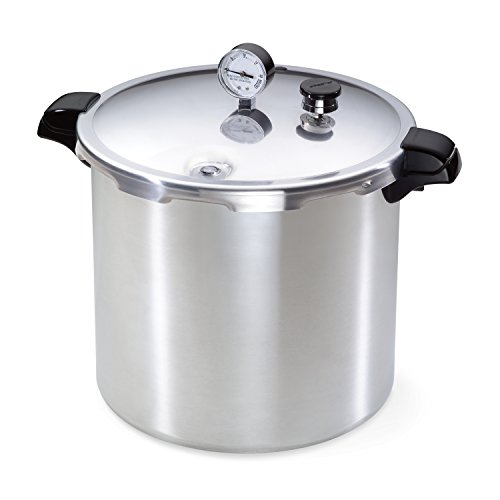
Presto 23-Quart Stovetop Canner
Strengths
- Precise dial gauge
- 12-year warranty
- Large capacity
Trade-offs
- Not induction compatible
- Heavy when full
The Presto 01781 is the gold standard for a reason. It’s been a staple in American kitchens for decades, and owner feedback consistently praises its warp-resistant aluminum, precise dial gauge, and 12-year warranty. The 23-quart capacity fits 20 pints or 7 quarts, making it ideal for serious preservation. It doubles as a boiling-water canner and a large pressure cooker, adding real kitchen utility.
What sets it apart is the deluxe pressure dial, it reads the full range of pressures, which is critical for high-altitude canning. Compared to the T-fal and Mirro models, it offers better accuracy and longevity. It’s not induction-ready, but for gas or electric coil users, it’s the smarter buy. If you’re looking for one canner to last decades, this is it.
Video review
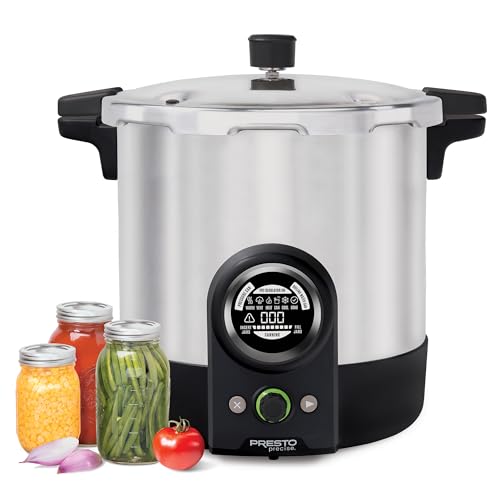
Presto 23-Quart Digital Pressure Canner
Strengths
- Fully automated
- Altitude adjustment
- Large capacity
Trade-offs
- Very expensive
- Overkill for experienced users
- Less manual control
The Presto 02153 is the most high-tech option here, a fully automated, digital canner that removes nearly all manual monitoring. It’s designed for users who want the confidence of hands-free processing, with automatic temperature control, altitude adjustments, and step-by-step prompts. The 23-quart capacity matches the brand’s stovetop models, and the build quality reflects Presto’s century-long reputation.
But let’s be honest: at nearly $400, it’s a steep jump from even the most premium stovetop units. While the automation is impressive, many experienced canners find it overkill. The learning curve is real, and some reviewers miss the tactile control of a dial gauge. It’s a bold step forward, but unless you’re deeply intimidated by stovetop canning or want full automation, the traditional Presto 01781 delivers the same results for less.
Video review
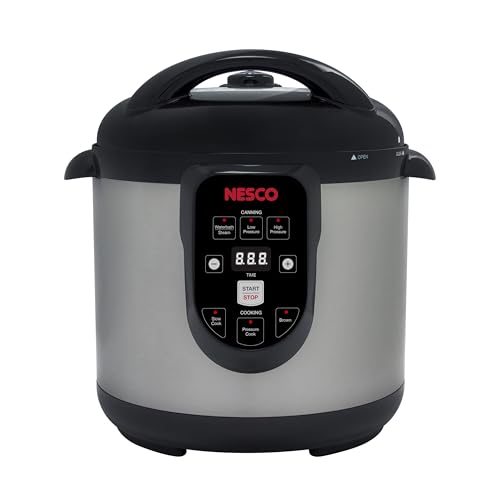
NESCO NPC-9 Smart Electric Canner
Strengths
- Fully electric operation
- Digital presets
- Easy cleanup
Trade-offs
- Small capacity
- Not for large batches
- Limited jar size support
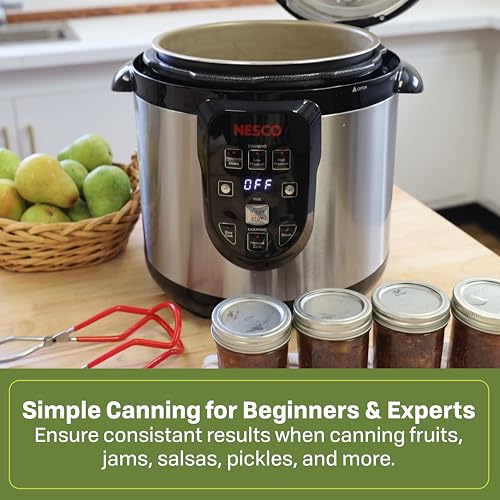
The NESCO NPC‑9 stands out as one of the few fully electric pressure canners on the market, which makes it appealing for those who want to avoid stovetop monitoring. Its digital controls and preset programs remove much of the guesswork, and reviewers note it’s especially user-friendly for beginners. The 9.5-quart size is modest, but it’s sufficient for small-batch canning, and the nonstick inner pot simplifies cleanup.
But here’s the catch, its capacity limits serious canners. You’re looking at maybe 4 half-pint jars per run, which pales next to the 20-pint capacity of stovetop models. It’s better framed as a multi-cooker with canning capability than a true batch canner. Still, for apartment dwellers or those without a gas range, it’s a smart compromise. My recommendation? Use it for broths and small preserves, not harvest preservation.
Product photos


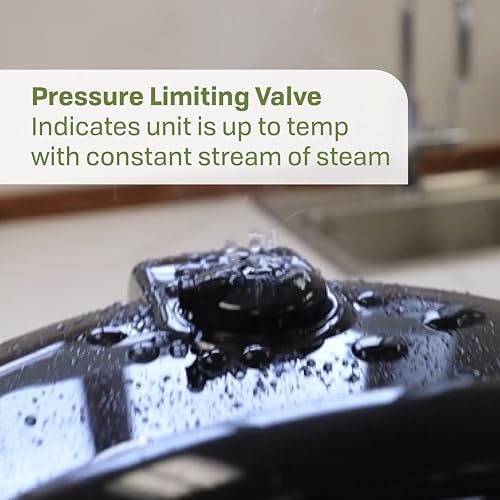

T-fal 22-Quart Aluminum Canner

Strengths
- Large capacity
- Includes canning guide
- Affordable entry point
Trade-offs
- Not induction compatible
- Limited PSI settings
- Shorter warranty
The T-fal 22-quart canner delivers solid performance for home canners who want a no-frills, large-capacity option at a reasonable price. On paper, it checks the basics, durable aluminum construction, a clear pressure gauge, and a beginner-friendly design with included racks and a guide. Owners consistently report success with vegetables and meats, and the 22-quart size handles up to 18 pint jars, making it efficient for seasonal batches.
Where it falls short is in versatility. Unlike some competitors, it’s not induction-compatible, limiting its use on modern cooktops. The single 3 PSI setting also means altitude adjustments require careful monitoring, which can be tricky for new users. Compared to the Presto 01781, it lacks the precision dial gauge and long warranty, but for gas or electric coil users wanting a straightforward canner, it’s a functional pick.
Product photos


Presto 23-Quart Induction Canner
Strengths
- Induction compatible
- Durable stainless-clad base
- 12-year warranty
Trade-offs
- Higher price point
- Heavier than aluminum
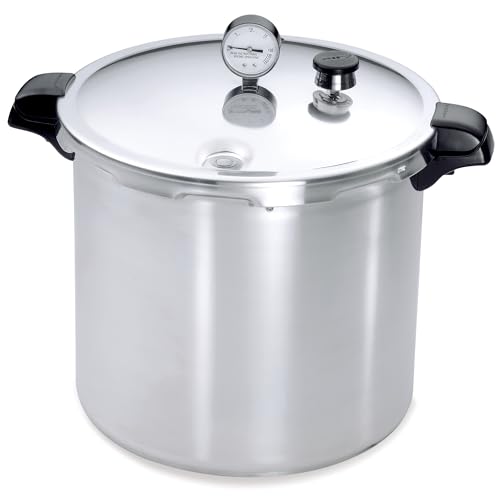
If you’re running an induction cooktop, the Presto 01784 is one of the few pressure canners that actually works well on it, thanks to its stainless steel-clad base. This isn’t just a compatibility win; the build quality feels sturdier than standard aluminum models, and the 12-year warranty signals long-term confidence. The dual functionality as both a pressure and water bath canner makes it a true all-rounder, and owners praise its even heating and reliable gauge accuracy.
It holds slightly more than the T-fal model, up to 20 pints, and the air vent/cover lock system adds a layer of safety that’s especially reassuring for beginners. While it costs more than basic models, the investment pays off if you’re serious about canning and need a single pot that works across all stovetops. I’d pick this over the T-fal any day if induction is in your kitchen.
Product photos


MIRRO 22 Qt with 3 Regulators

Strengths
- Multiple PSI regulators
- Lightweight aluminum
- Cool-touch handles
Trade-offs
- Not induction compatible
- Gauge accuracy concerns
- Fewer accessories
The MIRRO 22-quart canner earns points for offering three pressure regulators, 5, 10, and 15 PSI, giving you flexibility most single-gauge models don’t. That’s a real advantage for high-altitude canners or those preserving a variety of foods with different pressure needs. The build is classic Mirro: lightweight aluminum, polished finish, and dual cool-touch handles that make handling safer.
However, some owners report the gauge can drift over time, and the lack of induction compatibility narrows its range. It holds slightly fewer pints than the 23-quart Presto models, and while it includes one rack, it doesn’t come with the same depth of instructional support. Still, if you value adjustable PSI settings and trust the Mirro name, this is a capable workhorse, especially for those at higher elevations.
Product photos


24 Quart Aluminum Canner Starter Kit
Strengths
- Largest capacity
- Includes full tool kit
- Induction compatible
Trade-offs
- Fixed PSI regulator
- Less brand trust
- Gauge precision varies
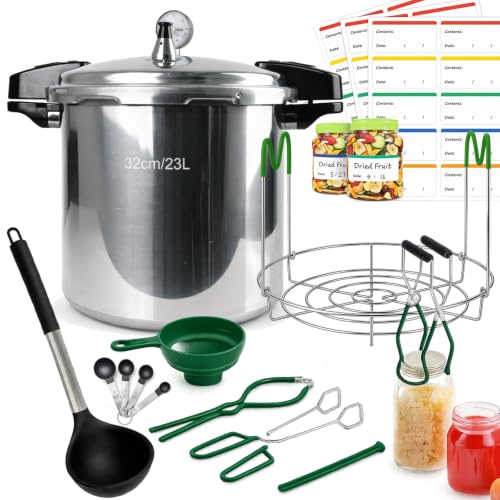
This 24-quart model wins on value, not just for its size, but for the full 9-piece canning kit included. For beginners, that’s a major perk. You get a jar lifter, funnel, lid wand, bubble remover, and more, which can save you $30–$50 in separate purchases. The large capacity means you can process more jars per batch than almost any other model here, and the flat base ensures even heating on induction, gas, and electric ranges.
On the downside, the pressure regulator is fixed at 14.5 PSI, so altitude adjustments require a separate purchase. Some users note the gauge feels less precise than Presto’s, and the brand isn’t as established. But if you’re starting from scratch and want everything in one box, this combo is hard to beat. It’s the kind of package I’d recommend to a first-time canner setting up their pantry.
Product photos


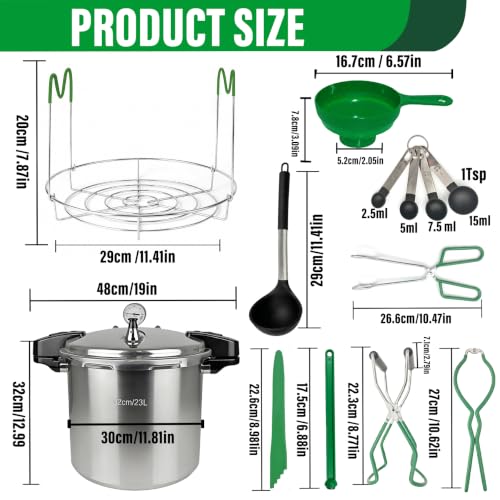
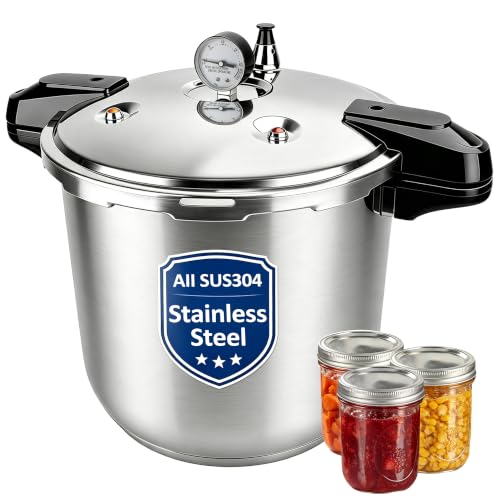
Zalborg 23 Qt Stainless Steel Canner
Strengths
- Stainless steel construction
- Induction compatible
- Non-reactive interior
Trade-offs
- Slower heat-up time
- Fixed pressure setting
- Less brand recognition
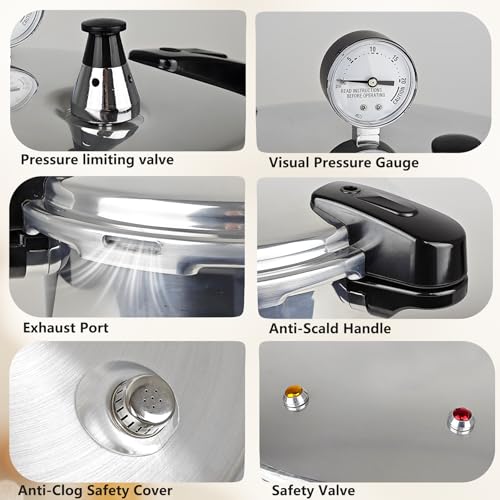
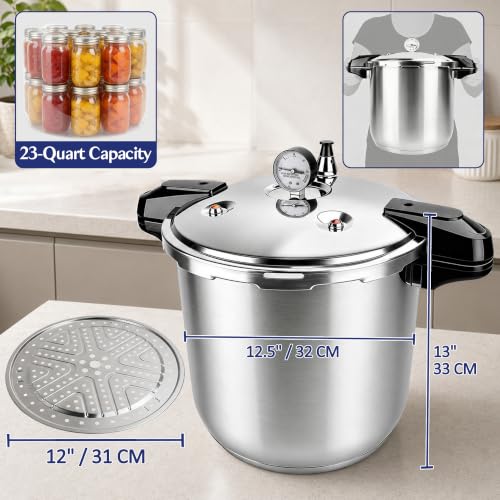
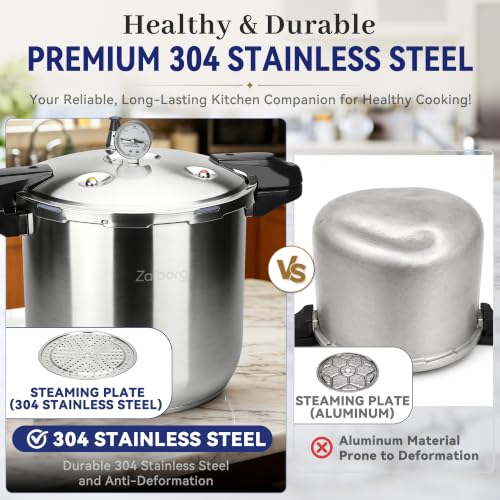
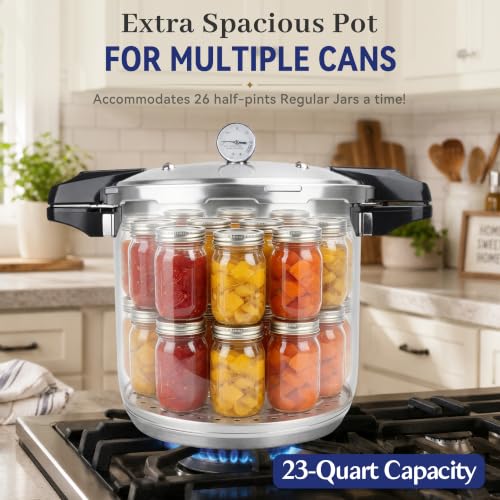
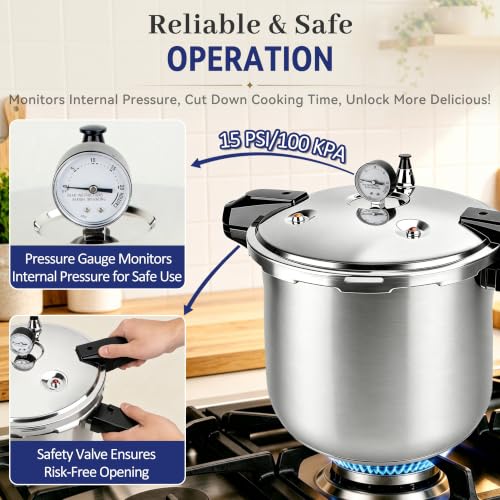
The Zalborg 23-quart stainless steel canner is a standout for those wary of aluminum, especially when canning acidic foods. Made from 304 food-grade stainless steel, it resists corrosion and won’t react with tomatoes or pickling brines, a real plus for long-term food safety. It’s induction-compatible, holds up to 20 pints, and includes a stainless steel rack, which adds to its all-metal, chemical-free appeal.
Owners appreciate its durability and even heating, though some note it takes longer to come to pressure than aluminum models. The fixed 14.5 PSI regulator is a limitation, and the brand lacks the legacy of Presto or Mirro. But if you prioritize material safety and want a canner that won’t degrade over time, this is a strong contender. For health-conscious canners, it’s worth the trade-offs.
Product photos

How We Chose These pressure canners for canning
Rather than a hands-on lab test, my research for these recommendations involved a detailed comparison of specifications and features across numerous models. I weighed owner reviews from a variety of sources – looking for consistent praise and complaints – alongside evaluations from reputable publications focused on home canning. As someone who’s spent years understanding what makes cookware perform, I applied that knowledge to assess each canner against key criteria for safety, capacity, and ease of use.
For pressure canners, the most important factors are build material and the accuracy of the pressure regulation. Consistent, even heating is crucial for safe canning, and that’s heavily influenced by whether a canner is constructed from heavy-gauge aluminum or stainless steel. Accurate pressure readings are also vital; the USDA requires specific pressures for different foods, and an inaccurate gauge can compromise safety. Beyond that, capacity and compatibility with different cooktops (including induction) were significant considerations.
Specifications are reliable for determining capacity and build material, but I relied heavily on owner feedback to judge real-world usability. Reports of difficulties with pressure regulation, or issues with the gasket sealing properly, carried a lot of weight. I also considered whether a canner was easy to clean and maintain, and whether it came with useful accessories. If you’re also looking at companion tools, you might find our guide to the best jars for pressure canners helpful. For those considering alternatives, exploring electric pressure canners is also worth considering.
How To Choose The pressure canners for canning
Finding the right pressure canner is about more than just preserving food; it’s about confidence in your kitchen. I’ve seen many cooks intimidated by the process, and a well-chosen canner can remove that barrier entirely.
A quality pressure canner prioritizes safety through robust locking mechanisms and accurate pressure regulation. It should offer sufficient capacity for typical batch sizes, be constructed from durable, food-safe materials (like heavy-gauge aluminum or stainless steel), and distribute heat evenly to prevent scorching. Consistent pressure readings are vital, and compatibility with your cooktop is, of course, essential.
Capacity and Batch Size
The size of canner you’ll want depends entirely on how much you typically preserve at once. Don’t automatically assume “bigger is better.” A partially filled canner takes just as long to come to pressure as a full one. For single-person households or small-batch jam-making, a 9- to 12-quart model might suffice. Larger families who regularly can garden produce, or those who enjoy making large batches of stocks and sauces, will likely benefit from a 21- to 24-quart canner. Consider also the jar sizes you’ll be using; some canners’ stated capacities are based on half-pint jars, so check the numbers for pints or quarts if that’s your preference.
Material and Construction
Aluminum is the traditional material for pressure canners, and it heats quickly and evenly. However, stainless steel is gaining popularity, particularly for those concerned about reactivity with acidic foods. While some older aluminum canners may have concerns about leaching, modern, heavy-gauge aluminum is generally considered safe. When looking at stainless steel models, ensure the base is clad with a material like aluminum or copper to promote even heating. You’ll also want to pay attention to the gauge; a weighted gauge is simpler, but a dial gauge offers more precise pressure readings, which is especially important at higher altitudes. If you’re considering a canning pressure cooker, be sure it meets the requirements for true pressure canning, not just pressure cooking.
- A basic aluminum canner will be the most affordable option, often under $100.
- Stainless steel canners typically cost more, ranging from $150 to $300+, but offer increased durability and peace of mind.
- Features like induction compatibility, digital displays, and multiple pressure settings can significantly increase the price, but may be worthwhile for serious canners who want maximum convenience and control.
Cooktop Compatibility & Safety Features
This is essential. If you have an induction cooktop, you must choose an induction-compatible canner. Many older models are not, and attempting to use them can be dangerous. Beyond that, look for robust safety features. A secure locking lid, a reliable steam release valve, and a clear, easy-to-read pressure gauge are essential. The air vent/cover lock is particularly important, preventing the canner from being opened while still under pressure. Many people also find it helpful to have automatic pressure regulators, particularly if you’re new to canning. For those looking for a broader range of options, exploring best pressure canners can help you find exactly what you need.
Remember: Always follow the manufacturer’s instructions and USDA guidelines for safe canning practices. Don’t shortcut the process, and double-check your pressure readings.
Pressure Canners for Canning Compared
Here’s a comparison of key specifications for several popular pressure canners to help you choose the right one for your needs.
| Product Title | Capacity (Quarts) | Material | Digital Controls | Induction Compatible | Number of Pressure Settings |
|---|---|---|---|---|---|
| Presto 23-Quart Stovetop Canner | 23 | Aluminum | No | No | 1 |
| Presto 23-Quart Digital Pressure Canner | 23 | Aluminum | Yes | No | N/A |
| NESCO NPC-9 Smart Electric Canner | 9.5 | N/A | Yes | No | N/A |
| T-fal 22-Quart Aluminum Canner | 22 | Aluminum | No | No | N/A |
| Presto 23-Quart Induction Canner | 23 | Aluminum/Stainless Steel | No | Yes | 1 |
| MIRRO 22 Qt with 3 Regulators | 22 | Aluminum | No | No | 3 |
| 24 Quart Aluminum Canner Starter Kit | 24 | Aluminum | No | Yes | 1 |
| Zalborg 23 Qt Stainless Steel Canner | 23 | Stainless Steel | No | Yes | 1 |
Frequently Asked Questions
What pressure canner is best for a beginner?
A basic aluminum canner with a weighted gauge, like the Presto 23-Quart Stovetop Canner, is often the most approachable for beginners. These are typically more affordable and have fewer settings to learn, focusing on the core principles of pressure canning.
Can I use any pot for pressure canning?
No, you absolutely need a canner specifically designed for pressure canning. Regular pots lack the necessary locking mechanisms and accurate pressure regulation required to safely reach and maintain the temperatures needed for proper food preservation.
What’s the difference between a weighted gauge and a dial gauge?
A weighted gauge uses a set of weights to regulate pressure, offering simplicity, while a dial gauge displays the pressure numerically, providing more precise readings. Dial gauges require annual checking for accuracy, whereas weighted gauges do not.
Is it possible to do pressure canning in an Instant Pot?
While some sources discuss pressure canning in an Instant Pot, the USDA does not currently approve of this method for all foods due to concerns about maintaining consistent temperatures and ensuring a proper seal.
Where can I find everything else I need to get started?
Beyond the canner itself, you’ll need jars, lids, rings, a jar lifter, and a funnel – all considered essential canning equipment. Many retailers offer starter kits that include these basic supplies, simplifying the initial investment.
The Bottom Line
Choosing a pressure canner often comes down to balancing control with convenience. While some models offer digital displays and multiple settings, the core function – safely preserving food – remains the same. For the vast majority of home canners, the Presto 23-Quart Stovetop Canner offers the best combination of capacity, durability, and straightforward operation.
If you’re just starting out, or looking for a budget-friendly option, the T-fal 22-Quart Aluminum Canner is a solid choice. For those with induction cooktops, the Presto 23-Quart Induction Canner is a clear winner, bringing the trusted Presto quality to a wider range of kitchens. And if you want a truly all-in-one solution, don’t forget to explore complete home canning starter kits to get everything you need in one purchase.
Ultimately, the specifications matter less than understanding the fundamentals of safe canning. Consistent processing times, accurate pressure readings, and careful adherence to USDA guidelines are far more critical than any fancy feature. A reliable canner is a tool, and it’s your knowledge and technique that will truly determine the quality and safety of your preserved foods.
