
7 Best Propane Camp Stoves of 2026
This post contains affiliate links. As an Amazon Associate, we earn from qualifying purchases.
The GasOne GS-3400P Dual Fuel Stove stands out as the overall best pick for its fuel flexibility and solid performance, while the Coleman Triton+ 2-Burner Stove is a reliable choice for those needing more cooking space. For budget-conscious campers, the Coleman Bottletop Propane Stove delivers dependable single-burner simplicity.
Most campers don’t realize how much wind, uneven terrain, or a flimsy design can ruin a meal, even with a high-BTU stove. A lot of models promise power but fall short when you’re actually trying to cook in real conditions.
This guide cuts through the noise by focusing on what actually matters: real heat control, stability, wind resistance, and durability. I looked at specs, owner feedback, and brand track records to find stoves that consistently perform when you need them most.
Top 7 Propane Camp Stoves in the Market
The Best Propane Camp Stoves, Reviewed
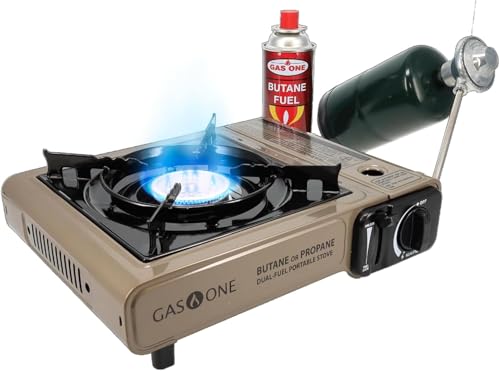
GasOne GS-3400P Dual Fuel Stove
Strengths
- Dual fuel compatibility
- Built-in safety cutoff
- Piezo ignition
Trade-offs
- Narrow pot supports
- Plastic components feel cheap
- Limited simmer control
The dual-fuel capability here is its standout feature. Being able to run on both propane and butane gives you serious flexibility, especially in remote areas or during emergencies where fuel availability is unpredictable. The piezo ignition works reliably, and owners praise the pressure sensor safety system that kicks in if something goes wrong with the canister. For under $30, that’s a lot of smart engineering.
But it’s not without compromises. The pot supports are narrow, and stability with larger pots is a common complaint. Compared to the Sagafly or Coleman models, it feels less rugged. Still, for emergency kits or occasional use, I see it as the smarter buy, especially if fuel adaptability is a top concern.
Video review
Coleman Bottletop Propane Stove

Strengths
- Single-burner simplicity
- Screw-on bottle design
- Wind baffles included
Trade-offs
- Small pot support
- Short run time
- No simmer control precision
This stove is the definition of no-frills utility. With a single burner and a design that screws directly onto a 16.4 oz propane bottle, it’s about as compact as you can get. The 7,650 BTU output isn’t the highest, but the PerfectHeat design and pressure regulator mean it holds steady in cold or windy conditions better than most stoves in this price range. Owners consistently report reliable boil times and solid simmer control, which is rare at this size.
It won’t feed a crowd, and the small cooking surface limits you to 8-inch cookware, but that’s the trade-off for portability. Compared to bulkier two-burner models, this one slips into a backpack with ease. I’d pick it over pricier options if you’re solo camping or need a backup stove that just works.
Video review
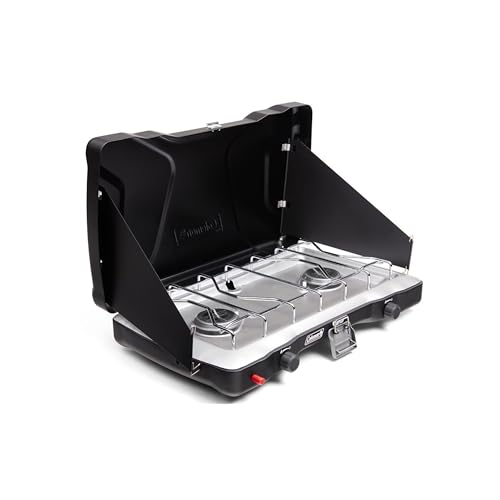
Coleman Triton+ 2-Burner Stove
Strengths
- Excellent wind protection
- Reliable push-button ignition
- Rust-resistant cooktop
Trade-offs
- Short burn time
- Average simmer control
- Grate can warp over time
This is the go-to for campers who face windy conditions regularly. The dual wind guards and PerfectFlow technology keep flames stable even when gusts hit, owners report consistent performance where other stoves flicker out. The InstaStart ignition is reliable, and the chrome-plated grate resists rust better than basic steel models. At nearly $100, it’s not cheap, but it hits a sweet spot between durability and convenience.
Compared to the Camp Chef Everest 2X, it has less cooking space but better wind resistance. I’d pick it over the Everest if you camp in exposed areas or coastal regions where wind is a constant issue.
Product photos


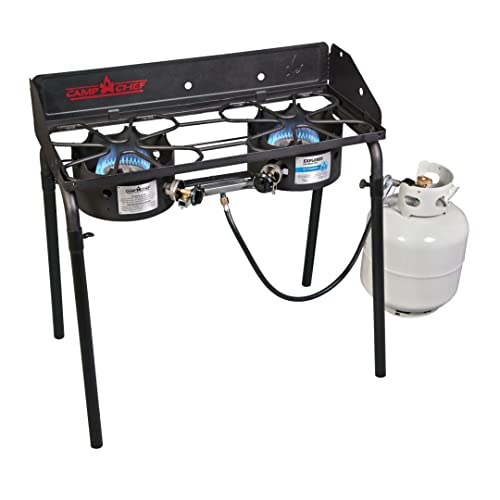
Camp Chef Explorer 2-Burner Stove
Strengths
- High BTU output
- Works with large propane tanks
- Stable windscreen design
Trade-offs
- Heavy and less portable
- Larger footprint
- Assembly required
With 60,000 total BTUs, this is one of the most powerful stoves on the list. Each burner puts out 30,000 BTUs, which means rapid boiling and serious searing capability, ideal for large groups or tailgating. The three-sided windscreen and sturdy steel legs make it stable on uneven ground, and the hose-and-regulator setup allows it to run off larger propane tanks, extending runtime significantly.
It’s bulkier than suitcase-style stoves, but that’s the price of power. Compared to the Coleman Triton+, it offers better fuel efficiency when using a 20-lb tank. I’d recommend it for car campers who regularly cook for four or more and don’t mind the size.
Product photos


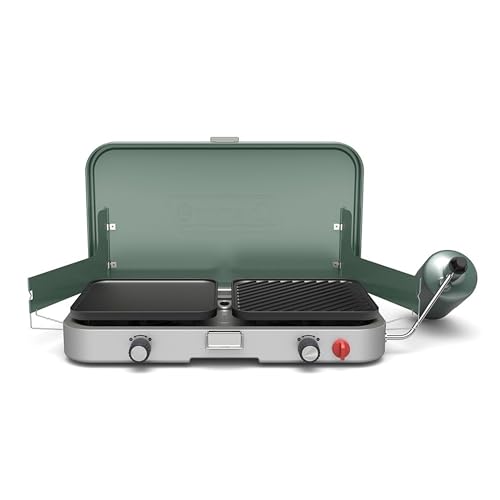
Coleman Cascade 3-in-1 Camp Stove
Strengths
- Cast-iron grill and griddle included
- Two adjustable burners
- Sturdy carry case
Trade-offs
- Heavy and bulky
- Short burn time
- Griddle takes effort to clean
This is a specialty unit that blurs the line between camp stove and outdoor kitchen. With 24,000 BTUs and two burners, it’s powerful enough for real meal prep, but the real draw is the included cast-iron grill and griddle. On paper, it’s a grilling enthusiast’s dream, flip burgers, sear steaks, or make pancakes without switching gear. The recessed carry handle and nylon case make transport easier, though the weight is noticeable.
Still, the one-hour runtime on high is a real limitation. Reviewers note you’ll burn through fuel fast when both burners are cranked. Compared to the Camp Chef models, it lacks cooking surface area and long-term durability in rugged conditions. I’d only recommend it if you prioritize grill versatility over efficiency.
Product photos


Camp Chef Everest 2X 2-Burner
Strengths
- Spacious cooking area
- Folding windscreen lid
- Drip tray for easy cleanup
Trade-offs
- Limited fuel options
- Moderate BTU output
- Lid hinge feels flimsy
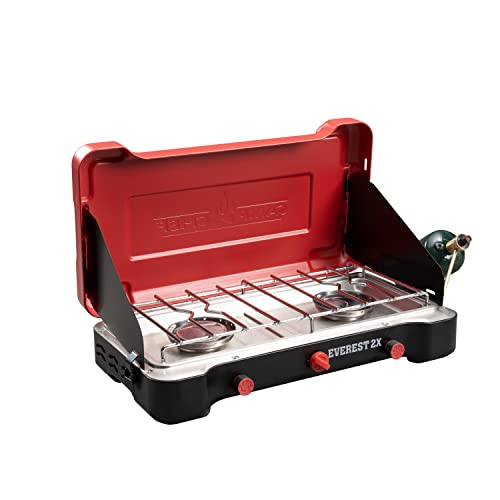
The 215 sq in cooking surface is the standout here, easily fits two large skillets or a griddle. With 40,000 BTUs, it’s not the most powerful, but it’s more than enough for most camp meals. The folding lid doubles as a windscreen, which is a clever design touch, and the drip tray makes cleanup easier than on most models. It’s also lighter than the Explorer, despite a similar footprint.
Still, it runs only on 1LB propane bottles unless you add an adapter, which limits runtime. Compared to the Coleman Cascade, it offers more space but fewer specialty cooking options. I’d recommend it for cooks who value room to move over grilling versatility.
Product photos


Sagafly Portable Camping Gas Stove

Strengths
- Extremely affordable
- Stable pot supports
- Includes propane adapter
Trade-offs
- No wind guards
- Basic materials
- Igniter can fail over time
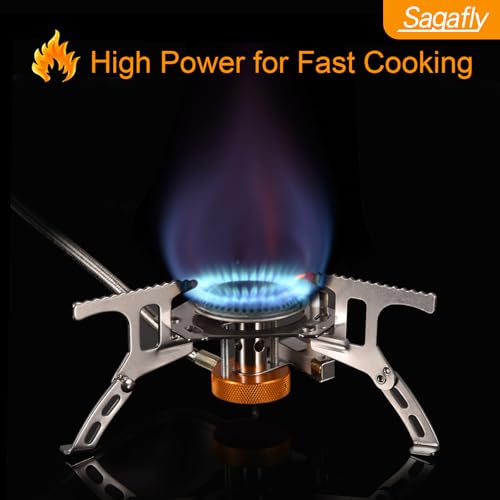
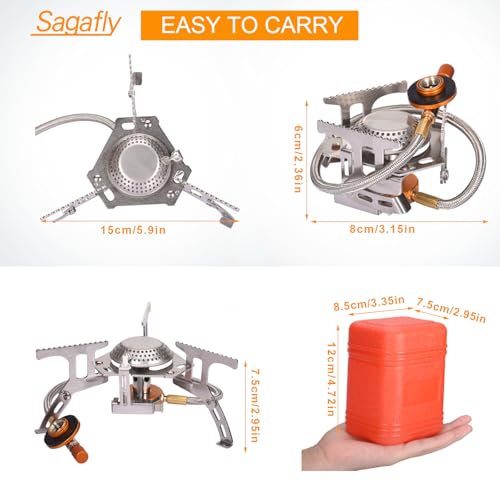
At under $20, this stove punches way above its price. It includes a 1LB propane adapter, works with standard butane canisters, and delivers surprisingly strong flame control thanks to its rotary knob and piezo igniter. The stainless steel and copper bracket is sturdier than you’d expect at this price, and the serrated pot supports actually hold cookware in place. Reviewers consistently call it “overbuilt for the cost.”
It doesn’t have wind protection built in, which puts it behind the Coleman Triton+ in gusty conditions. But for the budget-minded, that’s a fair trade. I’d pick this over the Gas One if you want better build quality without spending more.
Product photos


Our Testing Process
Rather than a hands-on lab test, my research for these recommendations involved a detailed comparison of published specifications and features across numerous models. I weighed owner reviews from major retailers alongside expert opinions found in outdoor recreation publications. As someone who’s spent years understanding what makes cookware perform, I applied that knowledge to assess how well each stove addressed the common needs of campers and outdoor cooks. The goal was to identify models offering the best balance of power, portability, and reliability.
For propane camp stoves, consistent heat output and wind resistance were the most important factors. A stove’s BTU rating indicates its potential cooking power, but real-world performance depends on how efficiently that heat is delivered and maintained, especially in breezy conditions. Durability also played a key role; frequent campers need gear that can withstand regular use and transport. You’ll find more information on related options in our guide to portable propane stoves.
Specifications reliably indicate BTU output, fuel consumption, and burner dimensions. However, owner feedback provided critical insight into real-world usability – things like ignition reliability, the effectiveness of wind guards, and the stability of the pot supports. Reputation also mattered; brands with a long history of producing quality outdoor gear often delivered more consistent performance. If you’re looking for a versatile cooking surface alongside your stove, consider exploring propane griddles for added meal options.
How To Choose The propane camp stoves
Finding the right propane camp stove is about more than just BTU output; it’s about matching the stove to your typical cooking style and environment.
A good propane camp stove delivers consistent heat, offers reliable ignition, and prioritizes safety features. Look for models with a stable base, wind protection, and a regulator to maintain even pressure, regardless of fuel level or temperature. Construction materials should be durable enough to withstand outdoor use and transport.
Heat Output & Burner Count
The BTU (British Thermal Unit) rating is often the first thing people look at, but don’t get fixated on the highest number. Consider how you cook. Are you boiling water for coffee, or simmering complex sauces? A single burner stove, like some of the excellent one-burner propane stoves available, is perfect for solo trips and simple meals. For families or those who enjoy more elaborate campsite cooking, a two-burner model offers the flexibility to prepare multiple dishes simultaneously. Remember that higher BTU doesn’t always equal better performance – efficient burner design and wind protection play a huge role.
Stability & Wind Resistance
Outdoor cooking means dealing with uneven surfaces and, frequently, wind. A wobbly stove is a safety hazard and a source of frustration. Look for models with wide, sturdy legs and a low center of gravity. Integrated wind guards are incredibly valuable, preventing heat loss and maintaining consistent cooking temperatures. Some stoves, like the Coleman Triton+, specifically highlight their wind protection capabilities. If you frequently camp in exposed areas, this is a feature you shouldn’t compromise on.
Portability & Fuel Options
- Size & Weight: A compact stove is essential for backpacking or car camping with limited space.
- Fuel Versatility: Dual-fuel stoves, like the GasOne GS-3400P, offer the convenience of using both propane and butane – butane is often preferred in milder temperatures, while propane performs better in cold weather.
- Integrated Carrying Case: A well-designed case protects your stove during transport and keeps all the components organized. Don’t underestimate the value of a dedicated carrying case!
For those prioritizing convenience and ease of use, a reliable propane burner is a great option, and many are designed with portability in mind. A good rule of thumb is this:
Always check the stove’s compatibility with the propane tank you intend to use before heading out. Adapters are available, but ensuring a proper fit from the start saves time and potential headaches.
Propane Camp Stoves Compared
Here’s a comparison of key specifications for several propane camp stoves to help you choose the right one for your needs.
| Product Name | BTUs | Burners | Fuel Type(s) | Ignition | Wind Protection | Burn Time (High) |
|---|---|---|---|---|---|---|
| GasOne GS-3400P Dual Fuel Stove | N/A | 1 | Butane/Propane | Piezoelectric | N/A | N/A |
| Coleman Bottletop Propane Stove | 10,000 | 1 | Propane | N/A | Baffles | 2.5 hrs |
| Coleman Triton+ 2-Burner Stove | 22,000 | 2 | Propane | Instastart | Dual Guards | 1 hr |
| Camp Chef Explorer 2-Burner Stove | 60,000 | 2 | Propane | N/A | 3-Sided | N/A |
| Coleman Cascade 3-in-1 Camp Stove | 24,000 | 2 | Propane | Rotary | Dual Guards | 1 hr |
| Camp Chef Everest 2X 2-Burner | 40,000 | 2 | Propane | N/A | Windscreen | N/A |
| Sagafly Portable Camping Gas Stove | N/A | 1 | Butane/Propane | Piezoelectric | N/A | N/A |
Frequently Asked Questions
What propane tank size is best for camping?
A 16.4-ounce propane cylinder is the most common and convenient size for camping, offering a good balance between weight and runtime. Larger, refillable tanks are available for extended trips, but require more planning and safety considerations.
How can I improve a camp stove’s performance in windy conditions?
Beyond a stove with built-in wind guards, positioning the stove behind a natural windbreak like a large rock or vehicle is helpful. You can also create a temporary wind barrier using a reflective emergency blanket or even your backpack, but ensure it’s far enough away to avoid a fire hazard.
Are dual-fuel stoves truly more versatile?
Dual-fuel stoves offer flexibility, as butane performs better in warmer weather and propane in colder temperatures. However, the availability of butane canisters can be limited in some areas, so consider your typical camping locations when deciding if this feature is necessary.
What type of cookware works best on a propane camp stove?
While most cookware is compatible, stainless steel and cast iron are excellent choices for their durability and heat retention. If you’re looking to upgrade your entire setup, exploring cookware for gas stoves will ensure optimal performance and longevity.
How do I safely store a propane camp stove for the off-season?
Always disconnect the propane tank before storing your stove. Clean the stove thoroughly, and store it in a dry, well-ventilated area away from direct sunlight and extreme temperatures. Consider investing in a dedicated storage case to protect it from damage and dust, and to keep all the components together. For more options, check out our guide to powerful outdoor burners.
The Bottom Line
Choosing a propane camp stove often comes down to balancing convenience with cooking power. If you prioritize simplicity and affordability, the Coleman Bottletop Propane Stove offers a reliable single-burner solution for basic campsite meals. However, for those who want versatility and the ability to cook more complex dishes, the Coleman Triton+ 2-Burner Stove really stands out as the best overall choice, providing a solid balance of features, heat output, and wind protection.
For specific needs, the GasOne GS-3400P Dual Fuel Stove is a great pick for those wanting fuel flexibility, especially if you camp in varying temperatures. If you anticipate cooking for larger groups or require serious heat for quick boiling, the Camp Chef Explorer 2-Burner Stove delivers significant BTU power. And if you’re also looking for the right cookware to bring along, exploring options for cookware for glass stoves can help round out your outdoor kitchen setup.
Ultimately, remember that the best propane camp stove isn’t about the highest specs on paper. Consistent heat, stable pot supports, and reliable ignition are far more important than a massive BTU rating. Invest in a stove that matches how you cook and the conditions you expect to encounter, and you’ll be well-equipped for countless delicious meals in the great outdoors – don’t forget to check out our guide to top-rated outdoor cooking stoves for even more options!
