
8 Best Quality Cooking Pots of 2026
This post contains affiliate links. As an Amazon Associate, we earn from qualifying purchases.
The CAROTE 8QT Tri-Ply Stainless Steel Pot stands out as the best overall for its even heating and durable construction, while the SENSARTE 1.5QT offers solid performance at a lower price for smaller tasks. For high-volume cooking, the HOMICHEF 20QT is a sturdy, spacious option that handles large batches without warping.
Most home cooks don’t realize how much a pot’s build affects everyday results, poor heat distribution leads to scorching, thin walls mean uneven cooking, and flimsy lids let moisture escape. After comparing the field, I focused on pots that deliver consistent performance based on specs and owner feedback, not just brand hype.
This guide highlights models that balance material quality, construction, and real-world usability. I looked at gauge, heat responsiveness, stovetop compatibility, and how well each holds up over time, all through the lens of someone who’s spent years evaluating what actually works in a busy kitchen.
Top 8 Quality Cooking Pots in the Market
The Best Quality Cooking Pots, Reviewed
SENSARTE 1.5QT Swiss Granite Saucepan

Strengths
- Excellent nonstick
- Stay-cool handle
- Induction compatible
Trade-offs
- Very small capacity
- Not for large batches
Don’t let the size fool you, this little 1.5-quart saucepan punches above its weight. The Swiss ILAG granite coating is among the best in the budget nonstick category: SGS-certified, PFOA-free, and impressively slick, even with delicate foods like eggs or oatmeal. It heats quickly thanks to the cast aluminum core, and the stay-cool bakelite handle truly performs, staying comfortable during extended simmering. For single servings or side dishes, it’s nearly perfect.
What surprises me is how well it compares to far more expensive sets. It’s induction-safe, oven-rated to 302°F, and cleans up with just a wipe. The only real limitation is capacity, this isn’t meant for family meals. But as a dedicated small pot for sauces, reheating, or solo cooking, it’s hard to beat. My recommendation? Keep one of these near the coffee maker for quick oatmeal or milk-based drinks.
Video review
Ecolution 8QT Induction Stock Pot

Strengths
- Encapsulated base
- Oven safe
- Riveted handles
Trade-offs
- Shows water spots
- Basic interior finish
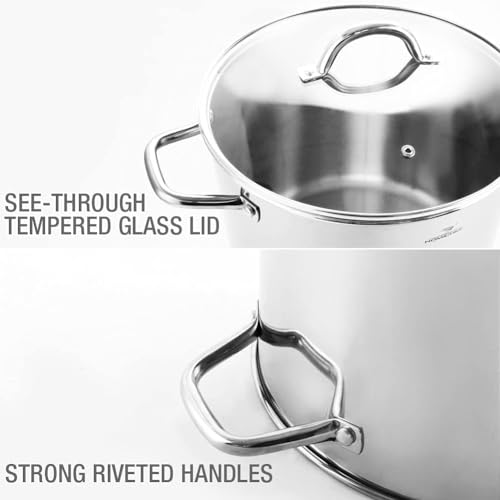
This 8-quart stainless steel stock pot checks the right boxes for durability and versatility without breaking the bank. The encapsulated base is a standout, on paper, it means even heating across induction and other stovetops, which owners confirm translates to reliable performance with soups and pasta water that doesn’t scorch at the edges. I appreciate that it’s oven safe up to 350°F and built with fully stainless steel handles riveted securely, a detail that adds long-term confidence over glued or welded alternatives.
Still, while the tempered glass lid is vented and useful, some reviewers note the finish shows water spots easily, a small gripe, but one that matters if you care about presentation. It’s not the most refined piece in its class, but for straightforward, no-nonsense cooking tasks, it holds its own. Compared to pricier tri-ply options, this is simpler construction, but for basic boiling and simmering, that may be all you need.
Video review
BEZIA 8QT Ceramic Non Stick Pot

Strengths
- Ceramic nonstick
- Cool-touch handles
- Induction compatible
Trade-offs
- Coating longevity concerns
- Heavier than aluminum
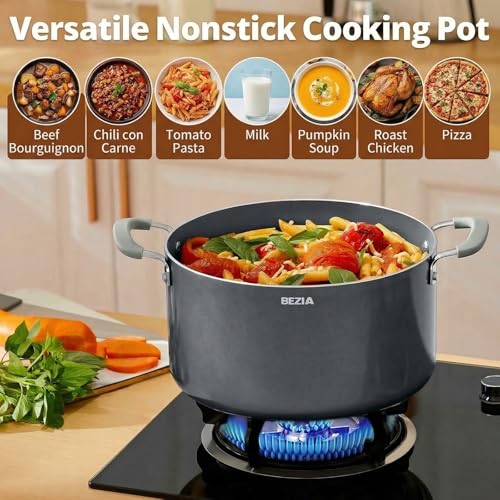
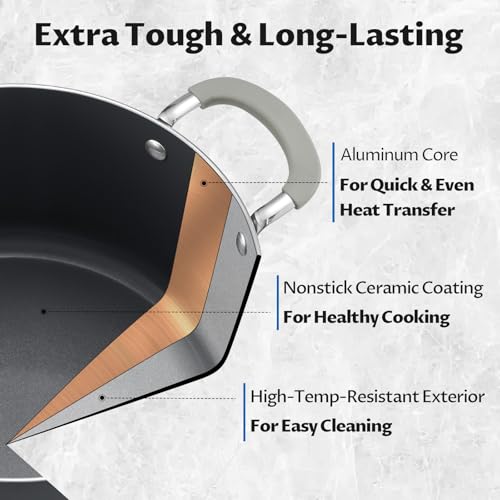
If you’re looking for a healthy nonstick option that doesn’t sacrifice capacity, this BEZIA pot stands out. Its ceramic coating is reinforced to resist sticking and scratching, and owner feedback confirms food slides out easily, even caramelized onions or reduced tomato sauce. More importantly, it’s verified free of PTFE, PFAS, PFOA, lead, and cadmium, which aligns with what I recommend for families avoiding chemical coatings. The silicone-wrapped handles stay cool during stovetop use, a practical touch that fewer budget nonstick pots include.
It’s also induction-ready thanks to a magnetic base, and the tempered glass lid offers good visibility. However, ceramic nonstick still doesn’t match the longevity of stainless steel, some users report performance fading after a year of regular use. But for those transitioning from traditional nonstick and wanting a safer, easier alternative, this hits a sweet spot between function and wellness.
Product photos


VEVOR 42QT Commercial Stock Pot
Strengths
- Extreme capacity
- Commercial durability
- Includes strainer
Trade-offs
- Too large for homes
- Single-layer base
- Bulky storage
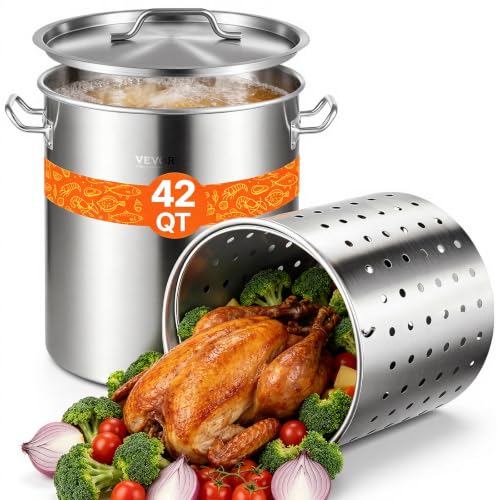
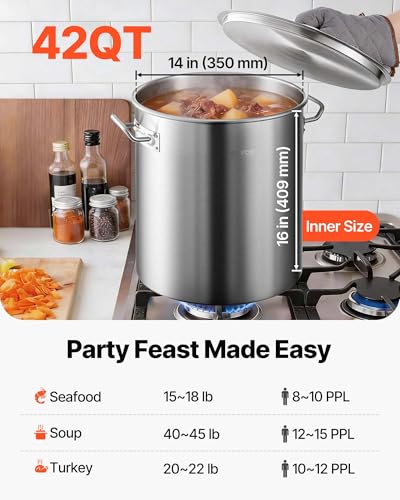
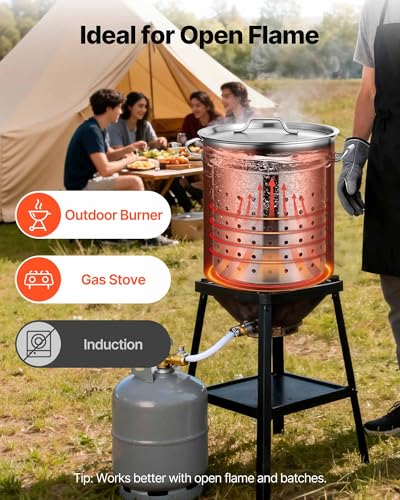
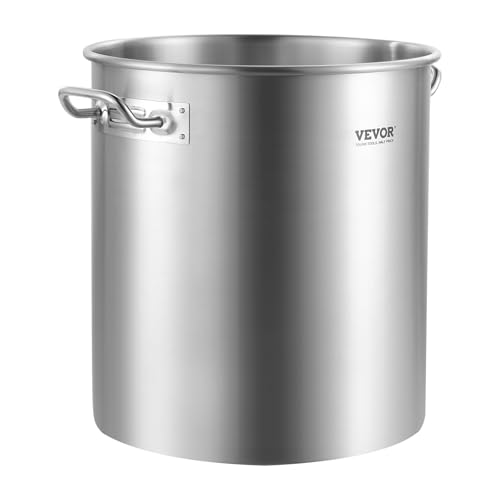
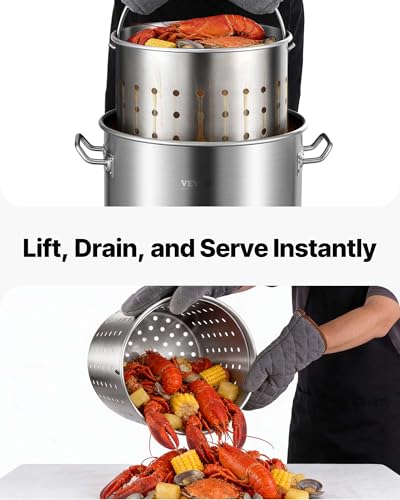
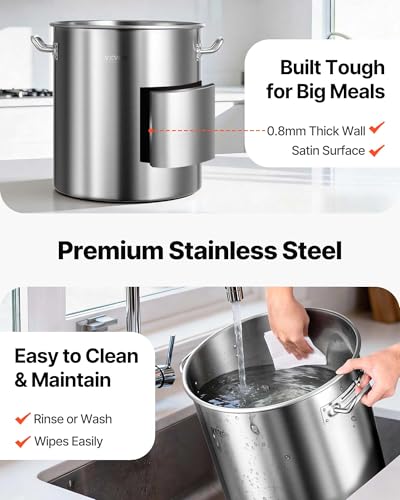
Let’s be clear: this 42-quart beast isn’t for your average kitchen. It’s commercial-grade, designed for caterers, church halls, or backyard boil enthusiasts. The sheer size means you can cook a whole turkey or 20 pounds of crawfish at once, and the single-layer stainless construction allows fast heat transfer on high-output burners. It comes with a strainer insert and heavy-duty riveted handles, both practical for large-scale use.
But it’s not subtle. Without cladding, it’s prone to hot spots on home stoves, and the weight, especially when full, makes it unwieldy without two people. This isn’t a daily driver. However, if you regularly host big gatherings or run a small food business, the build quality and rugged packaging (tested for drops and vibration) inspire confidence. For most home users, though, it’s massive overkill.
Product photos
Kirecoo 8QT 5-Layer Stainless Pot

Strengths
- 5-layer base
- Large capacity
- Affordable price
Trade-offs
- Mild nonstick effect
- Interior not fully clad
Kirecoo packs a lot into this price: an 8-quart pot with a 5-layer base, induction compatibility, and a nonstick interior, all under $30. The multi-layer construction includes aluminum and iron layers designed for even heat spread, and owners say it performs noticeably better than single-ply pots on electric and induction ranges. The riveted handles feel secure, and the tempered glass lid seals well, helping retain moisture during long simmers.
But here’s the catch: calling it ‘nonstick’ is generous. It’s smoother than standard stainless, but not on par with ceramic or PTFE coatings. You’ll still need oil for sticky foods, and while it’s easier to clean than raw stainless, it’s not effortless. Still, for someone wanting near-premium build quality at a budget price, this is a solid compromise. I’d pick it over thinner pots if you do a lot of batch cooking but aren’t ready to invest in full-clad tri-ply.
Product photos


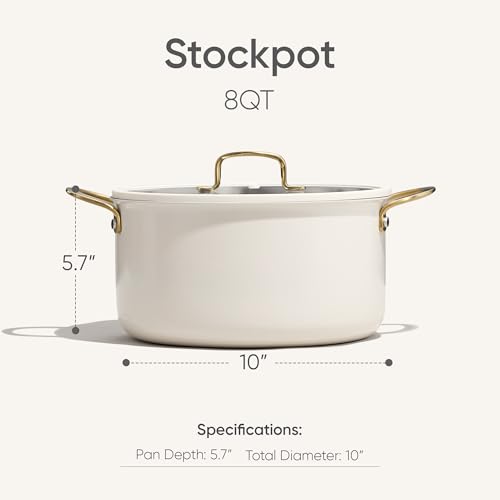
CAROTE 8QT Tri-Ply Stainless Steel Pot

Strengths
- Full tri-ply clad
- Flared pouring rim
- Dishwasher safe
Trade-offs
- Short warranty
- No helper handle
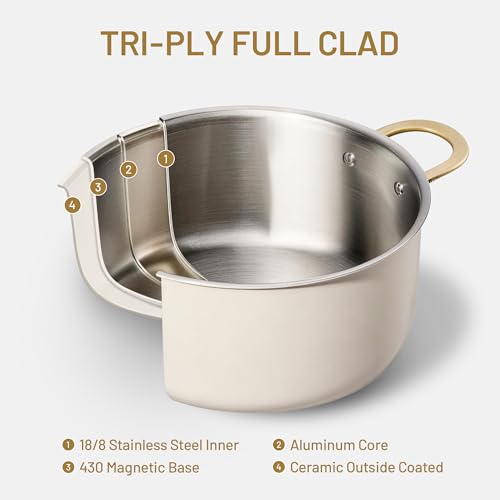
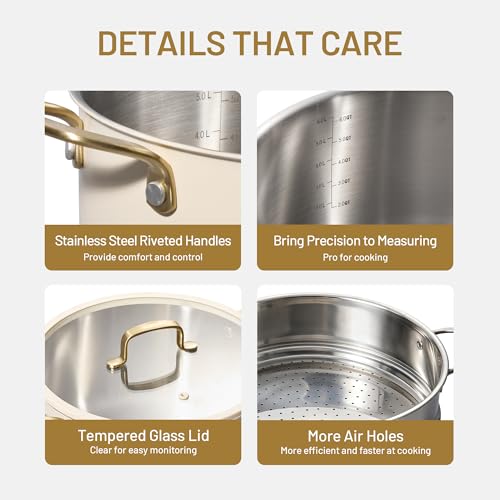
This is the kind of pot I’d recommend to someone upgrading from basic cookware but not ready to splurge on All-Clad. The full tri-ply construction means both the body and sides are layered with aluminum core, delivering even heating edge-to-edge, something cheaper pots with only disk bases can’t match. Owners consistently praise its stability on induction and resistance to warping, even with rapid temperature shifts. The flared rim allows drip-free pouring, a small but meaningful detail often missing at this price.
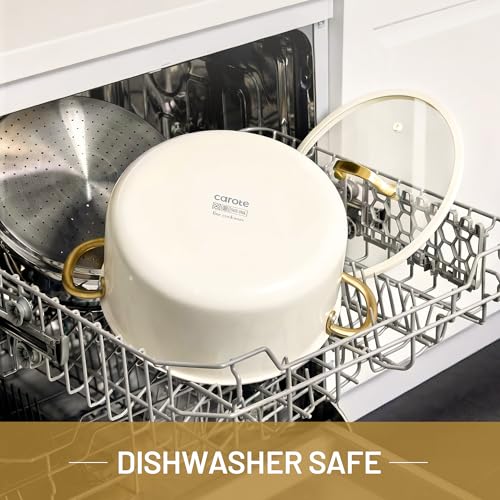
It’s also dishwasher safe and made with PFAS-free 18/8 stainless steel, ticking safety and convenience boxes. While the included warranty is only 12 months, shorter than some competitors, the overall value is strong. Compared to the Kirecoo, this has superior cladding; versus the Ecolution, it offers fuller coverage. If you want premium performance without the luxury markup, this is the smarter buy.
Product photos
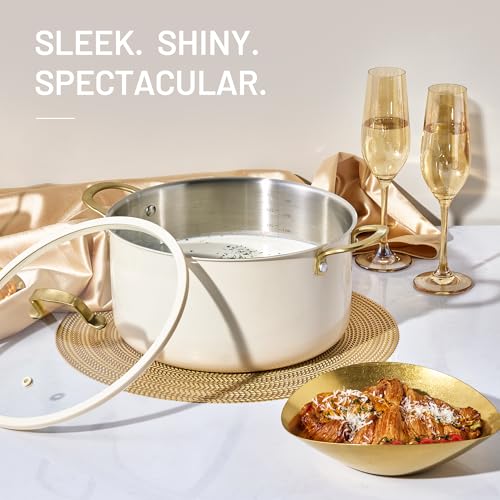
HOMICHEF 20QT Nickel-Free Stock Pot

Strengths
- Nickel-free steel
- Thick 3-ply base
- Long warranty
Trade-offs
- Very large size
- Heavy when full
- Overbuilt for small kitchens
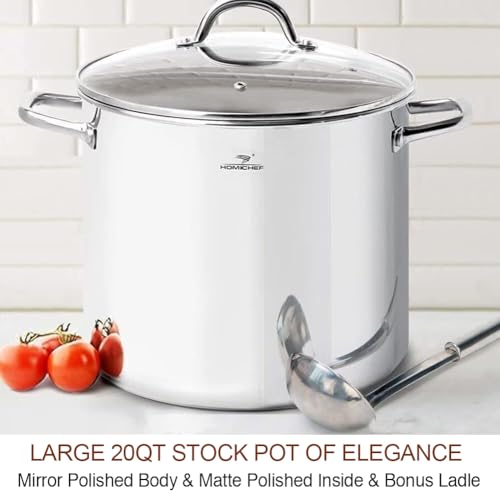
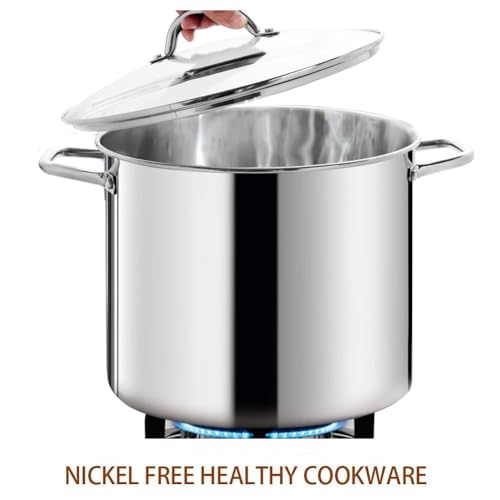
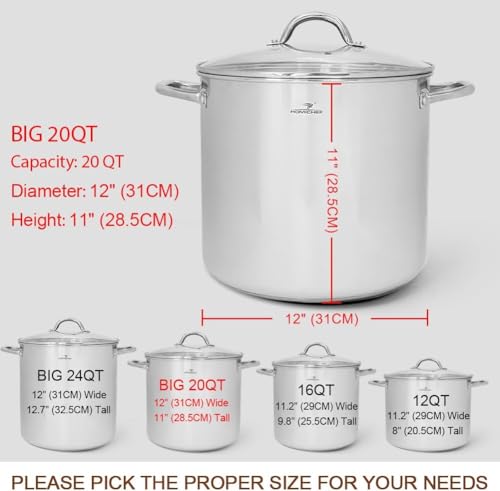
At 20 quarts, this pot is built for events, holiday boils, or serious batch cooking, not everyday dinners. The nickel-free stainless steel is its defining trait, appealing to those sensitive to nickel or wary of leaching from traditional 18/10 steel. HOMICHEF uses Japanese-standard 21/0 SS, which is less common but praised in niche circles for purity and conductivity. The 4.2mm base helps prevent warping, and the mirror-polished exterior looks sharp on any stove.
Owners note it’s heavy, nearly 8 pounds empty, but that’s expected at this scale. What’s less expected is the 6-year warranty and lifetime support, which signals real confidence in durability. Still, it’s overkill for most households. I wouldn’t recommend it unless you regularly cook for 8+ people or host crawfish boils. For smaller needs, it’s simply too big and cumbersome.
Product photos

GOTHAM STEEL 5QT Strainer Lid Pot

Strengths
- Strainer lid with lock
- Lightweight design
- Toxin-free coating
Trade-offs
- Not induction compatible
- Limited capacity
- Thinner base
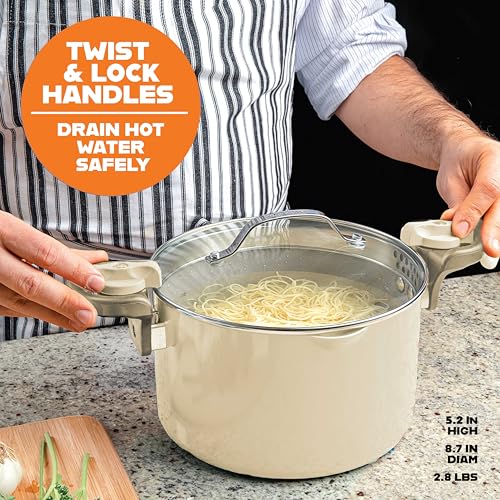
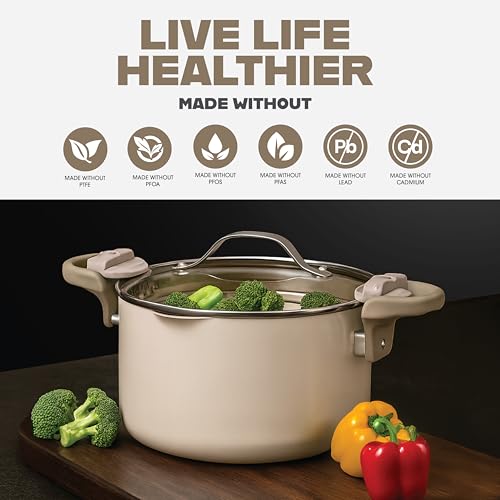
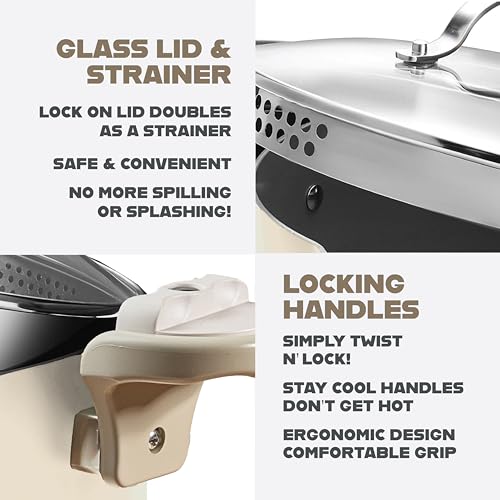
The twist-lock strainer lid is the real story here, and it works exactly as advertised. Owners consistently report that draining pasta directly in the sink, without lifting a separate colander, saves time and reduces mess. That feature alone makes this pot a smart pick for anyone tired of juggling hot pots and slippery noodles. The Ti-Cerama nonstick coating gets strong marks for release, especially with sticky rice or thick sauces, and being free of PFOA, PFOS, lead, and cadmium adds peace of mind for health-focused buyers.
But there are trade-offs. At only 5 quarts, it’s too small for big batches, and the aluminum body, while lightweight, lacks the thermal mass of heavier pots, meaning it heats fast but can develop hot spots. It’s also not induction-ready, which knocks it out for many modern kitchens. Still, for quick weeknight meals where easy cleanup and simple draining matter most, this pot delivers where it counts.
Product photos


How We Picked These quality cooking pots
My approach to recommending cookware always begins with a detailed comparison of specifications and features. Rather than a hands-on lab test, this is a research-led comparison of specs and owner feedback across a range of models. I weigh published details, materials, construction, capacity, stovetop compatibility, against what current owners are saying about real-world performance. I also draw on my decade of experience exploring what truly makes cookware valuable in a home kitchen. Ultimately, I aim to identify pots that consistently deliver on their promises.
For quality cooking pots, several factors stood out as most crucial. Heat distribution is paramount; a pot that cooks unevenly frustrates even the most skilled cook. Durability is also key – you want a pot that will withstand years of use without warping or showing excessive wear. Finally, ease of cleaning significantly impacts everyday usability, and a non-stick surface or thoughtful design can make a real difference. Finding the right balance of these features is what separates a good pot from a great one, and it’s where I focused my attention when researching durable pots and pans.
Specifications reliably tell you about construction, the types of stainless steel, the thickness of the base, or the presence of aluminum cores. However, owner feedback provides vital insights into how those specs translate into actual performance. I paid close attention to comments regarding sticking, ease of cleaning, and how well the pot retained heat. Reputation also plays a role; brands consistently praised for quality and customer service factored into my evaluations. Understanding the nuances of different kinds of pots is also vital, as the ideal choice depends heavily on cooking style and needs.
How To Choose The quality cooking pots
Finding the right cooking pots is more than just picking a size; it’s about understanding how materials and construction impact your everyday cooking. I’ve spent years looking at what truly separates a reliable pot from one that’ll end up gathering dust in a cabinet.
A quality cooking pot balances heat distribution, durability, and usability. Look for fully-clad construction for even heating, stainless steel or ceramic for longevity and food safety, and features like comfortable handles and well-fitting lids. Consider your stovetop type (gas, electric, induction) and oven compatibility when making your decision.
Material Matters Most
The core material of a pot determines how evenly it heats and how well it retains that heat. Stainless steel is a workhorse, particularly if it’s clad (meaning layers of different metals are bonded together). A tri-ply or five-ply construction, like you see in the CAROTE 8QT Tri-Ply Stainless Steel Pot, offers excellent heat distribution and responsiveness. While ceramic nonstick, like in the BEZIA pot, is convenient for delicate foods, it generally doesn’t hold heat as well and the coating will degrade over time. Don’t fall for marketing about “lifetime” nonstick; expect to replace it eventually.
Gauge and Construction Details
Don’t underestimate the importance of the pot’s thickness, or gauge. A heavier gauge (measured in millimeters) generally indicates a more durable pot with better heat retention. Beyond thickness, pay attention to how the handles are attached. Riveted handles, as seen in many higher-end models, are far more secure than welded ones. A tight-fitting lid is also essential; it traps heat and moisture for faster cooking and more flavorful results. If you are looking to upgrade multiple pieces at once, exploring cooking pot sets can offer value and consistency.
- A thin-walled pot (1.5-2mm) heats up quickly but can develop hot spots. Ideal for boiling water or quick sauces.
- A medium-weight pot (2.5-3mm) offers a good balance of responsiveness and heat retention, suitable for most everyday cooking tasks.
- A heavy-gauge pot (3.5mm+) is best for braising, simmering, and tasks where consistent heat is crucial – these will last for years but can be cumbersome to handle.
Capacity and Intended Use
Think about what you typically cook and for how many people. A 1.5-quart saucepan (like the SENSARTE model) is perfect for sauces or cooking for one or two. An 8-quart stockpot is versatile for soups, stews, pasta, and even canning. For larger families or frequent entertaining, a 20-quart pot (like the HOMICHEF) might be necessary.
Never buy a pot bigger than your biggest cooking need. Extra capacity just means longer preheating times and wasted energy.
Ultimately, the best cooking pots are those that align with your cooking style and needs. Don’t be afraid to invest in a few high-quality pieces that will become staples in your kitchen for years to come. And if you’re just starting out, researching best cooking pots can help you narrow down your options.
Quality Cooking Pots Compared
Here’s a comparison of key specifications for various quality cooking pots to help you make an informed decision.
| Product | Capacity | Material | Non-Stick | Lid Type | Stove Compatibility | Oven Safe (°F) |
|---|---|---|---|---|---|---|
| SENSARTE 1.5QT | 1.5 QT | Stainless Steel/Aluminum | Yes | Tempered Glass | All | 302 |
| Ecolution 8QT | 8 QT | Stainless Steel | No | Tempered Glass | All | 350 |
| BEZIA 8QT | 8 QT | Ceramic/Aluminum | Yes | Tempered Glass | All | N/A |
| VEVOR 42QT | 42 QT | Stainless Steel | No | N/A | All | N/A |
| Kirecoo 8QT | 8 QT | Stainless Steel | Yes | Tempered Glass | All | 350 |
| CAROTE 8QT | 8 QT | Stainless Steel | No | Tempered Glass | All | N/A |
| HOMICHEF 20QT | 20 QT | Stainless Steel | No | Tempered Glass | All | N/A |
| GOTHAM STEEL 5QT | 5 QT | Aluminum | Yes | Strainer/Tempered | Gas, Electric, Ceramic | 300 |
Frequently Asked Questions
What pot material is the most durable?
Stainless steel is generally the most durable option. While ceramic nonstick is convenient, even the best coatings will degrade over time, whereas a well-maintained stainless steel pot can last for decades. Look for fully clad construction for maximum longevity.
Are expensive pots always better?
Not necessarily. Price often reflects brand name and features, but a higher price doesn’t guarantee superior performance. Focusing on construction quality, like a thick gauge and fully-clad design, is more important than simply spending more. You can find excellent quality stainless steel pots without needing to invest in a curated All-Clad selection.
How can I tell if a pot has good heat distribution?
A fully-clad pot, with layers of different metals bonded together, will offer the most even heating. Thicker bases and walls also contribute to better heat distribution and help prevent hot spots. Many shoppers look for quality stainless steel pots for this reason.
What does “induction compatible” mean?
Induction cooktops require cookware with a magnetic base. Stainless steel pots with a magnetic stainless steel or cast iron core will work on induction, while aluminum or copper alone will not. Always check the product description to confirm compatibility before purchasing.
Is it okay to put stainless steel pots in the dishwasher?
While many stainless steel pots are dishwasher safe, handwashing is always recommended to preserve their shine and prevent potential discoloration. Harsh detergents and prolonged exposure to water can dull the finish over time.
The Bottom Line
Choosing quality cooking pots often comes down to balancing upfront cost with long-term performance. While non-stick options offer convenience, a fully-clad stainless steel pot like the CAROTE 8QT provides superior heat distribution and durability, characteristics that will truly elevate your cooking over time. It represents a solid investment for cooks who prioritize consistent results and lasting quality.
For those on a tighter budget, or who need specific features, there are excellent alternatives. The SENSARTE 1.5QT is a great choice for smaller tasks and sauces, while the BEZIA 8QT delivers convenient non-stick performance if you’re also considering best non-stick pots. If you’re looking to equip an entire kitchen at once, exploring quality cookware sets can be a more economical route.
Ultimately, remember that the most expensive pot won’t make you a better cook. Focus on finding pieces that feel comfortable to use, match your cooking style, and are made from materials that will withstand regular use. Prioritize even heating, solid construction, and a good fit for your stovetop, those fundamentals matter far more than any flashy feature.
