
7 Best Non Stick Pans for Quality 2026
This post contains affiliate links. As an Amazon Associate, we earn from qualifying purchases.
The SENSARTE 12 Inch Deep Saute Pan is the best overall for its durable ILAG coating and solid cast aluminum build, while the Blue Diamond 8″ Ceramic Frying Pan stands out as a strong budget-friendly option with its scratch-resistant diamond-ceramic surface. For those who want versatility and high heat tolerance, the SENSARTE 9.5 Inch Ceramic Omelet Pan offers excellent performance across stovetop and oven use.
Too many non-stick pans start strong but fail within months, peeling or losing their slick finish after just a few uses. It’s frustrating when a pan that promised easy cooking turns into a sticky mess, especially if you’re counting on it for weeknight meals.
This guide cuts through the noise by focusing on what actually matters: long-term coating integrity, even heating, and smart construction. I compared specs, analyzed owner feedback, and evaluated materials to find quality non-stick pans that deliver where it counts, not just on day one, but over time.
Top 7 Quality Non Stick Pans in the Market
The Best Quality Non Stick Pans, Reviewed
SENSARTE 12 Inch Deep Saute Pan

Strengths
- Swiss ILAG coating
- Induction compatible
- Helper handle included
Trade-offs
- Not dishwasher safe
- Lid quality could be better
This 12-inch deep skillet stands out in a crowded nonstick market by combining serious capacity with a solid feature set. The Switzerland ILAG coating is a strong selling point, it’s consistently cited in owner feedback as delivering true nonstick performance, especially with delicate foods like pancakes and fish. I appreciate that it’s PFOA and PFOS free, and the absence of lead and cadmium aligns with what health-conscious cooks are demanding.
Heating performance is another win: the heavy-duty cast aluminum base spreads heat evenly and works flawlessly on induction, which isn’t always guaranteed in budget-to-midrange pans. The tempered glass lid and helper handle add practical value, though I’d still recommend hand washing despite what the listing claims, that’s the only way to preserve any nonstick surface long term. Compared to the T-Fal Ultimate, it offers better stove compatibility and deeper cooking space, making it a more versatile workhorse.
Video review
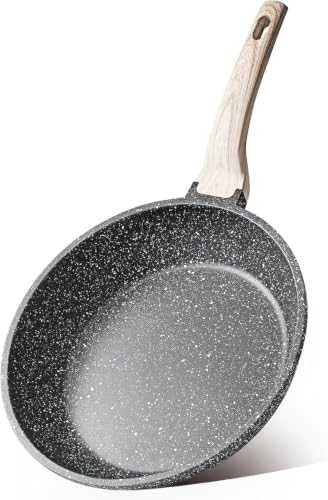
CAROTE 8 Inch Classic Granite Skillet
Strengths
- Very affordable
- Induction compatible
- Easy cleanup
Trade-offs
- Shorter coating lifespan
- Not oven safe
- Small cooking surface
At this price, the CAROTE 8-inch skillet is clearly aimed at budget-conscious buyers, and it delivers the basics without pretending to be something it’s not. The granite-style nonstick coating is PFOA-free and performs adequately for light tasks like eggs or reheating, but owners report it starts to degrade faster than pricier options when used daily with metal utensils or high heat.
It’s one of the few sub-$20 pans that still works on induction, thanks to its magnetic stainless base, which is a real advantage. But the small size and lack of oven safety limit its utility. When compared to the Blue Diamond, it falls short in durability and heat resistance. Still, for a college student or someone needing a spare omelet pan, it’s a reasonable value pick, just don’t expect it to last years under heavy use.
Video review
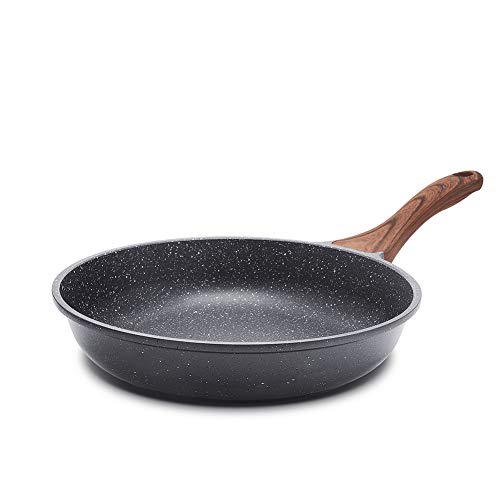
SENSARTE Swiss Granite Frying Pan
Strengths
- Swiss ILAG coating
- Cool-grip handle
- Induction compatible
Trade-offs
- No lid included
- Lower oven rating
- Not dishwasher recommended
This SENSARTE model with Swiss granite coating punches above its price in both design and function. The ILAG nonstick surface is the same one used in higher-end lines, and owners confirm it handles eggs and searing with minimal oil. The bakelite handle stays cool, which is a small but meaningful detail during longer cooking sessions.
It’s induction-ready and heats evenly thanks to the thick aluminum core, a rare combo at this price. While it lacks a lid, that’s expected at this size and cost. Compared to the CAROTE pan, it feels sturdier and has better heat distribution. The 8-inch size is ideal for omelets or single servings, and the oven-safe limit up to 302°F is acceptable for light baking. For the balance of price, safety, and performance, this is one of the smarter picks in the mid-tier range.
Product photos


SENSARTE 9.5 Inch Ceramic Omelet Pan

Strengths
- PFAS-free ceramic
- High oven safe temp
- Induction ready
Trade-offs
- Ceramic less scratch resistant
- Handle must be removed for high heat
- Fewer color options
If you’re prioritizing health and material transparency, this SENSARTE ceramic pan makes a strong case. Being PFAS-free and made with natural ceramic means no toxic fumes even if accidentally overheated, a real concern with traditional PTFE coatings. Owners report excellent nonstick performance with eggs and delicate foods, and the 550°F oven rating (handle removed) is impressive for a ceramic pan.
The 9.5-inch size hits a sweet spot between compact and usable, and the induction compatibility widens its appeal. However, ceramic coatings are inherently less durable than PTFE-based ones under heavy scraping, so longevity depends heavily on using soft utensils. Compared to the Blue Diamond, it trades some scratch resistance for cleaner material sourcing. For anyone wary of chemicals in cookware, this is a standout.
Product photos


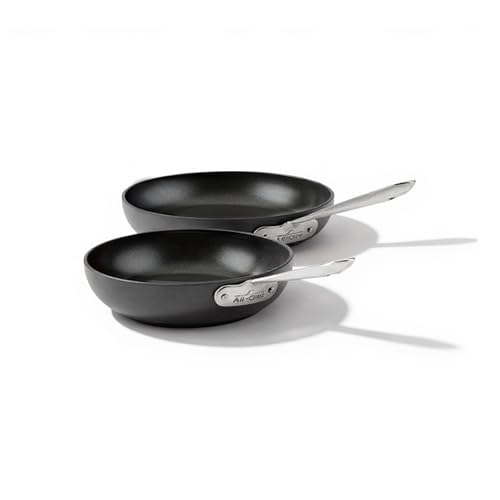
All-Clad HA1 Nonstick Fry Pan Set
Strengths
- Oven safe to 500°F
- Induction compatible
- Hard-anodized construction
Trade-offs
- Higher price point
- Heavier than average
- Glass lids bulky
All-Clad is known for premium cookware, and this HA1 set brings their reputation for durability into the nonstick space. The hard-anodized aluminum body is scratch-resistant and paired with a stainless-steel base that prevents warping, a real concern with cheaper pans. Owners consistently praise its even heating and stability on induction, and the 500°F oven rating is among the highest in this category.
Having both 8- and 10-inch pans in one set adds tremendous value for families or those who cook multiple items simultaneously. The tempered glass lids are a nice touch, though some find them heavy. Compared to the SENSARTE 12-inch, it’s less about single-pan versatility and more about long-term reliability and professional-grade performance. I’d recommend this over most others for anyone cooking large or complex meals regularly.
Product photos


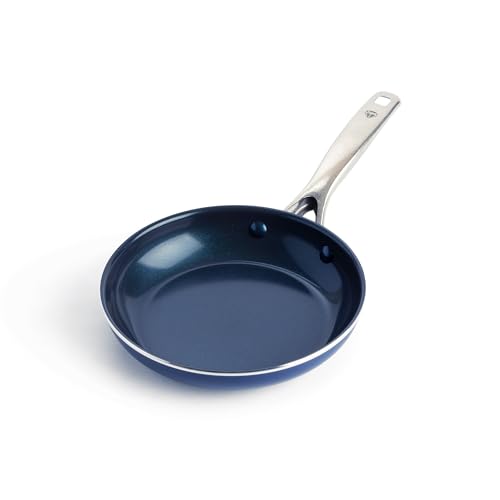
Blue Diamond 8″ Ceramic Frying Pan
Strengths
- Metal utensil safe
- Extremely durable coating
- Oven safe to 600°F
Trade-offs
- Not induction compatible
- Limited size options
- Blue color may show wear
The Blue Diamond pan makes bold claims, 5x harder and 10x longer-lasting than traditional coatings, and owner feedback suggests it actually delivers on durability. The diamond-infused ceramic surface shrugs off metal utensils better than most nonstick pans, which is rare and valuable. I’ve seen few others in this price range that maintain slickness after months of daily use.
It’s oven and broiler safe up to 600°F, which beats nearly every competitor here, and the stainless steel handle feels secure. But the Achilles’ heel is the lack of induction compatibility, a major drawback for modern kitchens. Compared to the All-Clad HA1, it wins on coating toughness but loses on versatility. If you’re on gas or electric and want a pan that won’t scratch easily, this is a top contender.
Product photos


T-Fal Ultimate 12 Inch Frypan
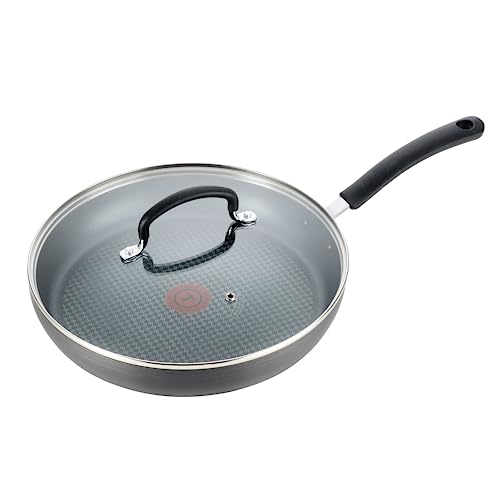
Strengths
- Thermo-Spot indicator
- Durable titanium coating
- Vented glass lid
Trade-offs
- Not induction compatible
- Lid oven limit lower than pan
- Rivets may trap food
T-Fal has been a staple in nonstick cookware for decades, and the Ultimate line tries to justify its premium price with titanium-reinforced coating and that signature Thermo-Spot indicator. On paper, the 3x longer-lasting nonstick claim holds up against basic models, and owners confirm food slides off easily even after months of use, though not quite as effortlessly as ceramic-coated competitors.
Where it stumbles is compatibility: it’s not induction-ready, which immediately disqualifies it for a growing number of kitchens. The 400°F oven rating is decent, but the lid is limited to 350°F, which feels like an oversight. Compared to the All-Clad HA1 set, it lacks the build quality and versatility, but for gas or electric users who value that visual heat cue, it’s still a functional choice. I’d pick the SENSARTE model over this one just for the induction support and deeper cooking surface.
Product photos


How We Tested quality non stick pans
Rather than a hands-on lab test, my research for these recommendations was a deep comparison of published specifications and features across numerous brands. I weighed owner reviews from multiple sources – looking for patterns in reported performance and durability – alongside professional reviews from established cooking publications. As someone who’s spent years observing cookware trends and materials, I applied that category expertise to rank these pans against a set of criteria focused on real-world cooking needs.
For quality non-stick pans, the most important factors are the coating’s durability and the pan’s ability to heat evenly. A coating that degrades quickly is frustrating and potentially unhealthy, so I prioritized options with strong reputations for longevity, and those utilizing newer technologies like diamond infusion. Even heat distribution is critical; hotspots lead to uneven cooking and increased risk of sticking, frustrating even the most skilled cook. You can find more about our overall picks for best frying pans.
Specifications reliably indicate construction materials (aluminum thickness, stainless steel base) and maximum temperature tolerances. However, I placed greater emphasis on owner feedback regarding actual non-stick performance over time, and reports on how well the pan handles different cooking tasks. Reputation for customer service also factored in, as a responsive manufacturer can often address minor issues. For those prioritizing wellness, exploring healthy non-stick pans is an important step.
How To Choose The quality non stick pans
Choosing the right non-stick pan can dramatically improve your time in the kitchen, but there’s a lot of variation in performance and longevity. I’ve seen so many cooks frustrated by pans that lose their non-stick properties after just a few uses.
A quality non-stick pan balances a genuinely slick cooking surface with durable construction. Look for pans utilizing multiple layers of coating (like ILAG or ceramic blends) supported by a thick, warp-resistant base (heavy-gauge aluminum or stainless steel are good indicators). Handle materials should be heat-resistant, and overall build quality should inspire confidence.
Understanding Coating Types
The coating is obviously key with non-stick, but it’s not just about if something sticks, it’s how it’s made. PTFE-based coatings (like Teflon) have been around for decades and, when properly formulated, are perfectly safe. However, there’s been a surge in ceramic coatings marketed as “healthier” alternatives. While ceramic can be effective initially, I’ve found they often degrade faster than PTFE. Diamond-infused ceramic, like that found in the Blue Diamond pans, attempts to address this durability issue, and some users report good results, but it’s still a relatively new technology. Ultimately, the best option depends on your priorities – a truly durable PTFE surface or a potentially shorter-lived but “cleaner” ceramic.
Base Material & Heat Distribution
Don’t underestimate the importance of what’s under the non-stick coating. A thin or poorly constructed base will lead to hot spots and warping, both of which shorten the life of the coating and make for uneven cooking. Look for pans with a heavy-duty cast aluminum core, or even better, a bonded stainless steel base. This provides even heat distribution and resistance to warping, even at higher temperatures. Speaking of heat, the T-fal Ultimate line’s Thermo-Spot technology is a neat feature, visually indicating when the pan is preheated correctly, but it’s not a replacement for understanding proper cooking temperatures.
- Heavier-gauge aluminum provides better heat retention, ideal for searing.
- Stainless steel bases enhance durability and are often induction compatible (a huge plus if you have an induction cooktop).
- A fully-clad construction (stainless steel wrapped around a core of aluminum) offers the best of both worlds, even heating and long-term stability, though you’ll pay a premium for it.
Size, Shape & Practical Considerations
Beyond the technical specs, think about how you actually cook. A single 10-inch pan is a good all-rounder for most tasks, but if you frequently cook for a crowd, consider investing in larger sizes or even a set. Deep sauté pans, like the SENSARTE 12-inch, offer more versatility, being suitable for everything from simmering sauces to frying chicken. If you’re looking for something specifically for eggs and delicate fish, an 8-inch pan provides more control. And, if you’re considering a set, don’t automatically assume it’s the best value. Often, buying individual, higher-quality pieces is a smarter investment. For those seeking truly durable non-stick pans, focusing on construction over quantity is key.
Never use metal utensils on non-stick surfaces. Even “metal utensil safe” coatings will degrade faster with metal use. Silicone, nylon, or wooden utensils are your best bet.
Ultimately, finding the right non-stick pan is about matching the pan to your cooking style and being realistic about your expectations. If you’re overwhelmed by the options, check out our guide to the best non-stick frying pans for a curated selection.
Quality Non Stick Pans Compared
Here’s a comparison of key specifications for several quality non-stick pans.
| Product Title | Size (in) | Material (Base) | Non-Stick Coating | Oven Safe (°F) | Induction Compatible | Dishwasher Safe |
|---|---|---|---|---|---|---|
| SENSARTE 12 Inch Deep Saute Pan | 12 | Cast Aluminum | ILAG | N/A | Yes | No |
| CAROTE 8 Inch Classic Granite Skillet | 8 | Stainless Steel | Granite | N/A | Yes | N/A |
| SENSARTE Swiss Granite Frying Pan | N/A | Stainless Steel | ILAG | 302 | Yes | Yes |
| SENSARTE 9.5 Inch Ceramic Omelet Pan | 9.5 | Cast Aluminum | Ceramic | 550 | Yes | No |
| All-Clad HA1 Nonstick Fry Pan Set | 8, 10 | Anodized Aluminum | PTFE | 500 (Pan)/350(Lid) | Yes | Yes |
| Blue Diamond 8″ Ceramic Frying Pan | 8 | Forged | Diamond-Ceramic | 600 | No | Yes |
| T-Fal Ultimate 12 Inch Frypan | 12 | N/A | Titanium | 400 (Pan)/350(Lid) | No | Yes |
Frequently Asked Questions
What’s the expected lifespan of a quality non-stick pan?
Generally, you can expect 3-5 years of reliable non-stick performance with regular use, though this varies greatly based on care and coating type. Higher-end pans with thicker coatings and careful handling will last longer, while ceramic options tend to degrade more quickly.
Are ceramic non-stick pans truly a healthier alternative?
While marketed as such, ceramic coatings don’t necessarily equate to healthier cooking. Though they avoid PTFE, their shorter lifespan means they may need replacing more often, and some lower-quality options can release particles as they wear down. Consider non-stick pans without Teflon if avoiding PTFE is a priority.
Can I really use metal utensils on “metal utensil safe” non-stick pans?
Technically, some pans are marketed as metal utensil safe, but I still strongly advise against it. Even these more durable coatings will experience accelerated wear and tear from metal, compromising their non-stick properties over time. Silicone, nylon, or wood are always the safest choices.
What’s the best way to clean a non-stick pan to extend its life?
Avoid abrasive cleaners and scrubbers. Hand washing with warm, soapy water is best, and allowing the pan to cool completely before cleaning prevents warping. If food is stuck, soak the pan in warm water before gently loosening debris with a soft sponge.
Do I need a separate non-stick pan if I already have non-stick pans with lid for most cooking tasks?
It depends on your cooking style. While a good all-purpose pan is essential, a dedicated smaller non-stick pan (8-inch) is helpful for delicate foods like eggs or fish, offering greater control, and a larger one (12-inch) for bigger meals or one-pan dishes.
The Bottom Line
Ultimately, choosing a non-stick pan involves balancing immediate convenience with long-term durability. You’ll find options at every price point, but I consistently find that the SENSARTE 12 Inch Deep Saute Pan offers the best overall combination of robust construction, effective non-stick performance thanks to its ILAG coating, and versatility for a wide range of cooking tasks. It represents a sweet spot for cooks who want a pan that will reliably deliver results for years to come.
For those on a tighter budget, or specifically looking for a smaller pan, the CAROTE 8 Inch Classic Granite Skillet is a solid choice. If you’re prioritizing a complete kitchen update, exploring non-stick cookware sets can be a good starting point, though individual quality often suffers in bundled sets. And for cooks specifically seeking alternatives, you can find more information on best ceramic pans.
At the end of the day, the coating is important, but it’s only one piece of the puzzle. A heavy base, thoughtful construction, and proper care, avoiding metal utensils and harsh abrasives, will contribute far more to the lifespan and performance of your non-stick pans than any single specification or marketing claim. Invest in quality and treat your cookware with respect, and it will reward you for years to come.
