
8 Best Roaster Pans of 2026
This post contains affiliate links. As an Amazon Associate, we earn from qualifying purchases.
The Cuisinart Stainless Roasting Pan is the best overall roaster pan for its durability, even heating, and sturdy rack, while the Farberware Nonstick Roaster offers a solid budget-friendly option for those who prioritize easy cleanup. If you want versatility and a lid for storage or baking, the 18in Enamel Roasting Pan with Lid stands out.
Most people don’t realize how much a roaster pan affects the outcome of a roast, uneven cooking, sticking, or flimsy racks can ruin a meal. After comparing the field and analyzing specs, owner feedback, and long-term performance trends, I focused on what really matters: material, capacity, and reliability.
This guide breaks down the top options based on real-world use and build quality, so you can pick one that works for holiday dinners and everyday cooking alike.
Top 8 Roaster Pans in the Market
The Best Roaster Pans, Reviewed
18” Enamel Granite Roaster Pan

Strengths
- Large capacity
- Natural enamel coating
- Dishwasher safe
Trade-offs
- Not for induction
- Enamel can chip
- Heavier when full
This is the closest thing to a true all-rounder. The enameled carbon steel construction gives it the heat retention and even cooking you’d expect from higher-end brands, and the domed lid adds self-basting functionality that keeps meats moist. At 18 inches, it handles a 16-pound turkey with room to spare, perfect for holiday spreads. The natural enamel coating is free of PFOA and PTFE, which makes it a safer bet than nonstick steel pans.
Owners praise how easy it is to clean, even after heavy roasting, and the dishwasher-safe design helps. It’s not quite as heat-resistant as the Granite Ware model, but it’s more spacious and better suited for large gatherings. Compared to stainless options, it offers better heat distribution and moisture control. For most families, this is the easy pick.
Video review
18in Enamel Roasting Pan with Lid

Strengths
- High heat resistance
- Large capacity
- Even heat distribution
Trade-offs
- Not induction-safe
- Heavy when loaded
- No lifetime warranty
With an 18-pound capacity, this roaster is built for big events. The enamel-coated carbon steel body handles high heat well and distributes it evenly, making it a solid performer for slow-roasted meats and bread baking. The lid helps lock in moisture, and owners report juicy results even with lean cuts like turkey breast. It’s a favorite for Thanksgiving and Christmas prep, where volume matters.
It’s similar to the JY COOKMENT model but lacks the unconditional return policy, which some buyers note in reviews. Still, the build is robust, and the nonstick-like enamel surface wipes clean with minimal effort. It’s not for induction, and it’s heavy when full, but if you need space and steam retention, this delivers.
Video review
Farberware Nonstick Roaster with Rack

Strengths
- PFAS-free nonstick
- Sturdy rack
- Riveted handles
Trade-offs
- Nonstick won’t last forever
- Not for stovetop
- Limited lifespan
Farberware’s nonstick roaster delivers where it matters: release and cleanup. The interior coating is smooth and effective, and owners consistently note that roasted vegetables and chicken release with minimal sticking. The chrome-plated rack is sturdy and doesn’t warp, which is more than I can say for some budget racks. It’s also one of the few nonstick pans that proudly avoids PFAS and PFOA, good news for those avoiding chemical coatings.
The steel body resists warping better than expected at this price, but it’s still not as durable as stainless. Over time, the nonstick will degrade, especially if metal utensils are used. Still, for regular roasting without the hassle, this is a reliable performer. It edges out the Glad model in build quality and rack design.
Product photos


Glad Nonstick Roasting Pan with Rack

Strengths
- Affordable price
- V-shaped rack
- Dishwasher safe
Trade-offs
- Not broiler safe
- Not for stovetop
- Thinner steel
At this price, the Glad roaster punches above its weight. The nonstick surface works well out of the box, and the V-shaped rack improves airflow compared to flat racks, great for even browning. It’s marketed as heavy-duty, and while it’s not as thick as pricier steel, it holds up reasonably well under regular use. Owners say it’s a go-to for potlucks and weeknight meals where cleanup speed matters.
But it’s not broiler-safe, and the steel isn’t meant for stovetop use, limiting its versatility. The handles are functional but not as reinforced as I’d like. Compared to the Farberware, it’s slightly less durable but cheaper. For occasional use or tight budgets, it’s a solid choice.
Product photos


Compact Nonstick Roasting Pan with Rack
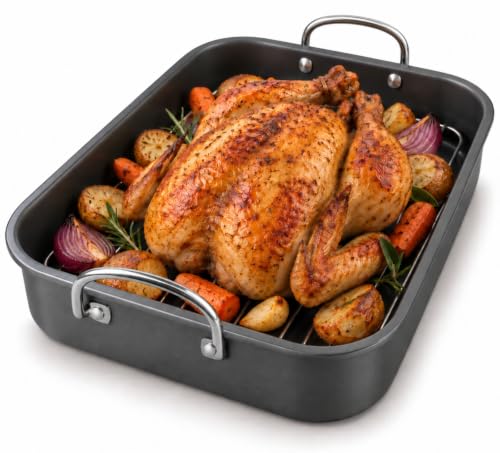
Strengths
- Compact design
- Nonstick coating
- Removable rack
Trade-offs
- Limited capacity
- Coating durability concerns
- Not for large roasts
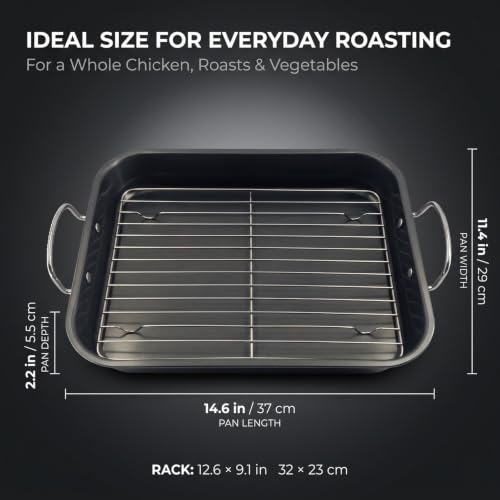
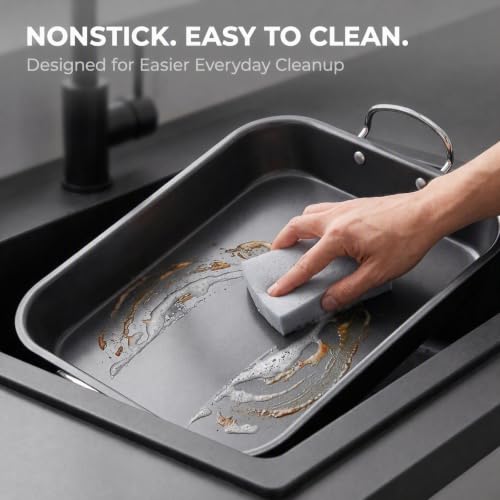
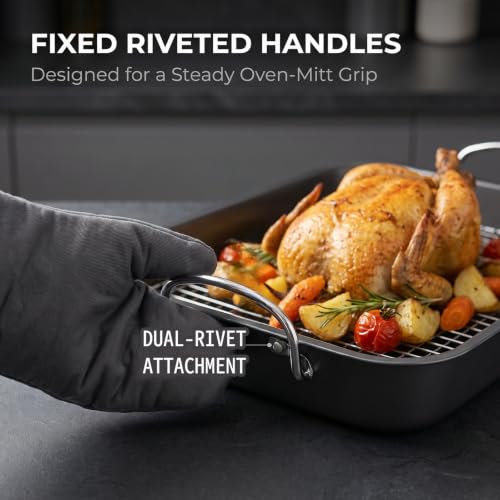
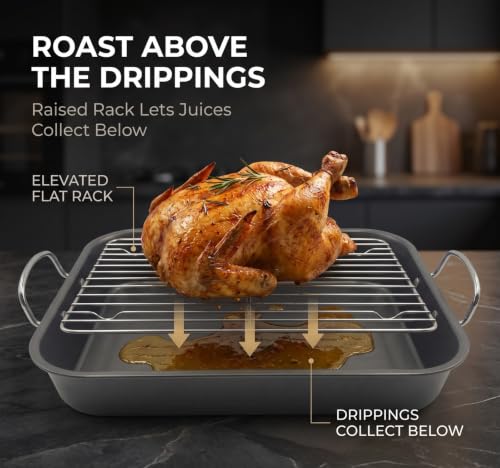
This compact roaster hits a sweet spot for small households. The flat rack is low-profile but effective, keeping poultry elevated just enough to let fat drip through without crowding the pan. The carbon steel build with nonstick coating checks the right boxes for easy release and cleanup, though I’d expect it to need more careful handling over time, owners report the coating can degrade if scratched or overheated.
Its size keeps it from dominating the oven, which I appreciate for weeknight roasts or smaller holiday meals. But if you regularly cook for more than four, you’ll hit its limits fast. Compared to pricier stainless options, it’s clearly budget-focused, but it delivers where it counts: functionality and space efficiency.
Product photos
Cuisinart Stainless Roasting Pan 16″

Strengths
- Stainless steel build
- Sturdy rack
- Lifetime warranty
Trade-offs
- No nonstick surface
- Heavier than coated pans
- Higher price
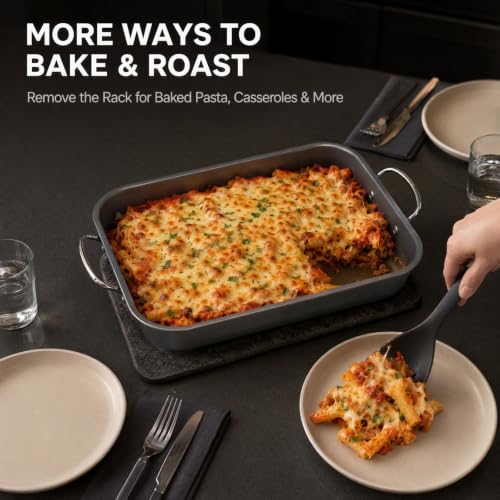
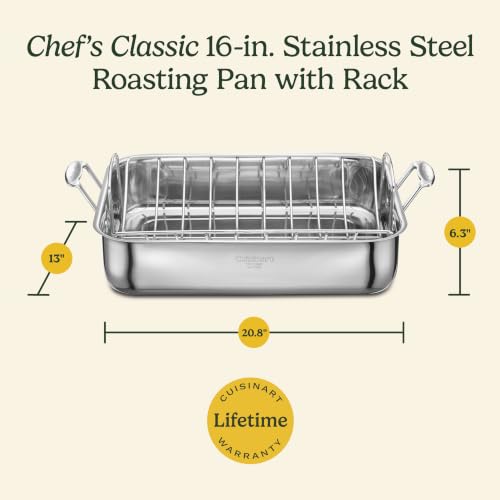
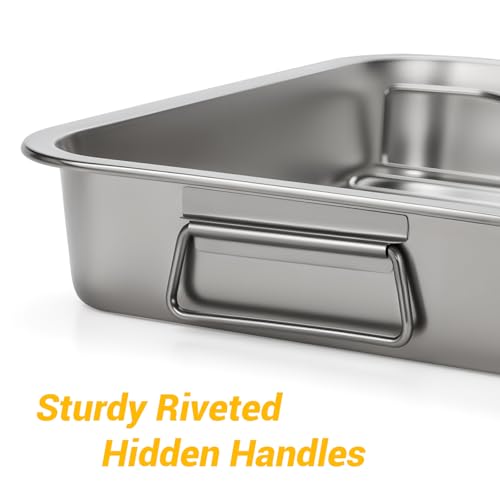
If you’re looking for a roaster that feels like it will outlive your oven, this Cuisinart is built like a workhorse. The full stainless steel construction with riveted handles doesn’t just look professional, it performs like one. Owners consistently report using this pan for years without warping or pitting, even with regular high-heat roasting. The rack is substantial, not flimsy, and stays put under a hefty turkey.
The lack of nonstick means you’ll need to manage sticking more carefully, but that’s a trade-off for durability and stovetop compatibility. Compared to coated pans, this one earns its premium price through longevity. I’d pick this over cheaper alternatives if you roast often and hate replacing gear every few years.
Product photos



Tifanso Stainless Steel Roasting Pan

Strengths
- No chemical coatings
- Dishwasher safe
- Deep sides
Trade-offs
- Lightweight feel
- Rack not adjustable
- Shows water spots
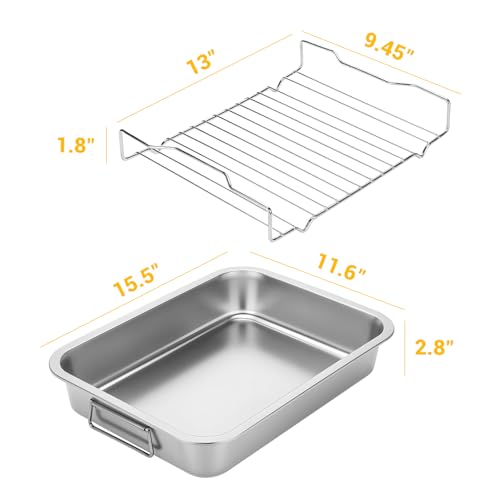
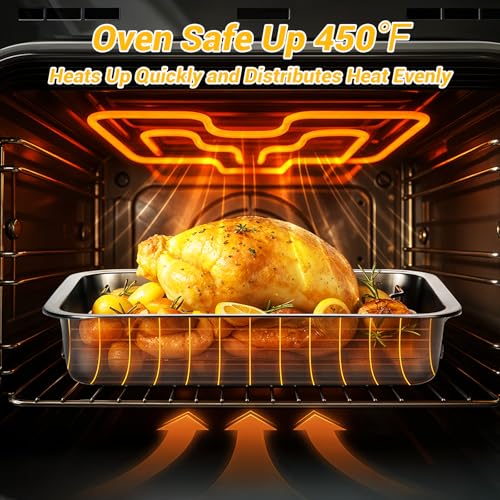
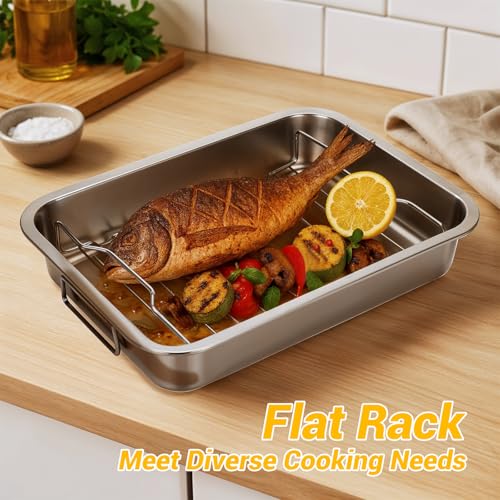
This pan wins on material integrity. Made entirely of stainless steel with no chemical coatings, it’s a clean choice for anyone wary of nonstick layers breaking down over time. The deep 3-inch walls are a real advantage, they contain splashes and collect plenty of drippings for gravy, which I always appreciate. The flat rack works well for elevating roasts, though it’s not as tall as some, so very fatty cuts might still sit in their juices.
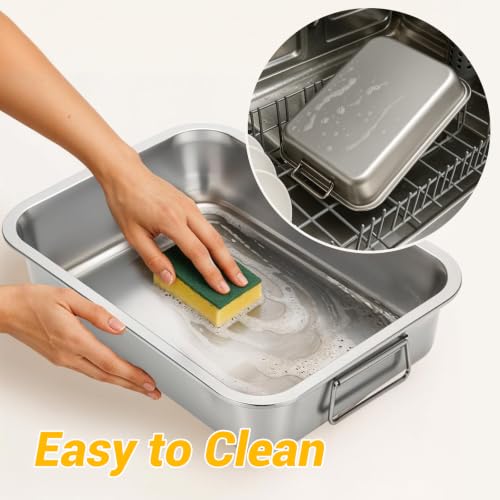
It’s one of the more affordable stainless options, and owners praise its even heating and dishwasher-safe ease. Still, it lacks the heft of the Cuisinart, and the finish shows water spots more easily. For the price, it’s a smart pick if you want health-conscious materials without sacrificing function.
Product photos
Granite Ware 13″ Oval Roaster

Strengths
- Oven safe to 932°F
- Self-basting lid
- Great for bread
Trade-offs
- Small capacity
- Enamel can chip
- Not for large turkeys
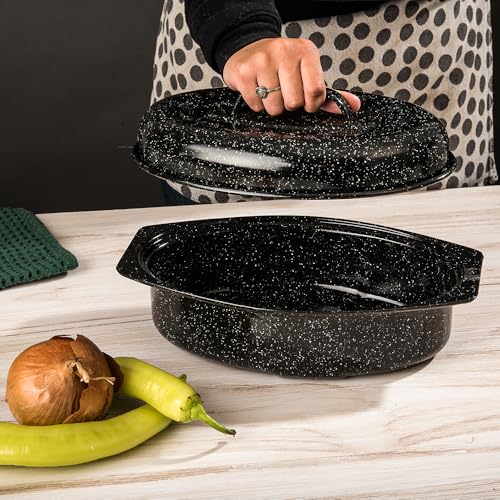
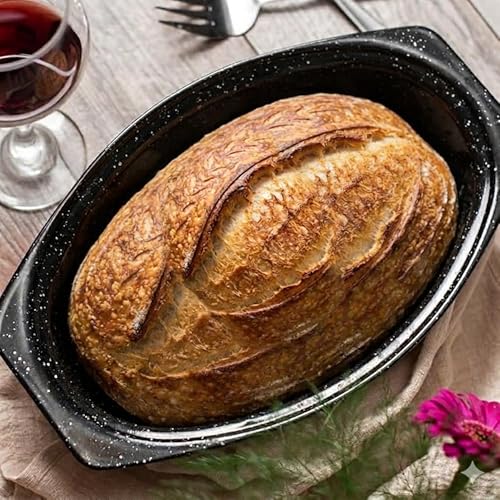
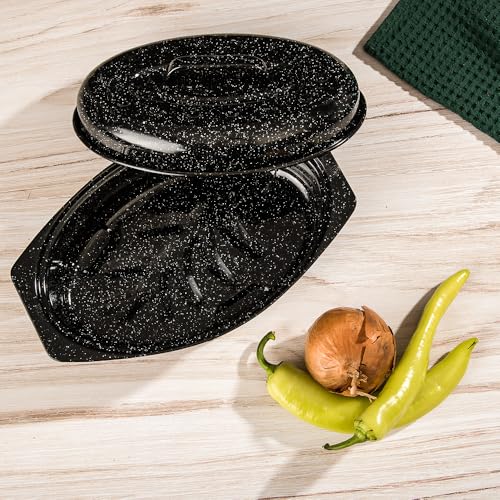
This little oval roaster is a sleeper hit. The enameled steel body isn’t just pretty, it handles extreme heat with ease, up to 932°F, which means you can use it for high-heat sourdough baking straight from fridge to oven. The self-basting lid traps steam beautifully, delivering crackling crusts on bread and juicy results on roasts. I’ve seen owners rave about using it for both Thanksgiving turkey and weekend boule with zero flavor carryover.
It’s compact, so it’s not for big crowds, but that’s the point. For smaller homes or bakers who want one pan to do double duty, this is a standout. The enamel surface cleans up easily, though chipping is a risk if dropped. Compared to larger roasters, it’s more niche, but for the right user, it’s indispensable.
Product photos


How We Picked These roaster pans
Rather than a hands-on lab test, my research into roaster pans focused on a detailed comparison of published specifications and features across numerous models. I weighed owner reviews from a variety of sources – looking beyond star ratings to understand why people liked or disliked a pan – and considered assessments from reputable cooking websites and publications. This was combined with my decade of experience exploring cookware and understanding what characteristics truly contribute to performance in a home kitchen.
For this category, capacity and material construction were the most heavily weighted factors. A roaster pan needs to comfortably handle a typical holiday bird or large cut of meat, and the material impacts both heat distribution and durability. Nonstick performance is also crucial, but secondary to a pan’s ability to cook food evenly and withstand repeated use. I also looked at features like included racks and ease of cleaning, but these played a smaller role in the final ranking.
Specifications reliably indicate a pan’s dimensions and stated temperature limits. However, I relied on owner feedback to gauge the true effectiveness of nonstick coatings, how well the pan retained heat, and whether it lived up to claims of easy cleanup. Reputation played a role too – brands with a long history of quality cookware generally carried more weight in my assessment, and you can learn more about the basics of a roaster oven if you’re unfamiliar with this type of cookware. I also considered the availability of roaster pans with lid to ensure options were readily accessible.
How To Pick The Right roaster pans
Choosing the right roaster pan can significantly impact your cooking, especially when tackling larger meals or holiday feasts. It’s more than just a vessel; it’s a key component in achieving juicy, flavorful results.
A quality roaster pan should prioritize even heat distribution, durability to withstand high temperatures, and ease of cleaning. Consider the material – stainless steel, enameled steel, or nonstick – and whether a rack is included for elevating the roast. Capacity is crucial, factoring in both the size of your typical meals and potential for larger gatherings. Look for sturdy handles for safe maneuvering when full.
Material Matters
The material of your roaster pan dictates its performance and longevity. Stainless steel, like that found in the Cuisinart model, offers exceptional durability and even heating, but food can stick if you aren’t careful. Enameled steel, as seen in options from JY COOKMENT and Granite Ware, provides a nonstick surface and often allows for higher temperatures, making it excellent for sourdough baking. Nonstick coatings, like those in the Farberware and Glad pans, offer the easiest cleanup, but their durability can vary and some coatings contain potentially harmful chemicals. If you’re prioritizing health and longevity, stainless steel or well-made enameled steel are generally the better choices.
Rack Included or Separate?
Many roaster pans come with a rack, which is incredibly useful for elevating your roast. This allows fat to drip away, resulting in a healthier and more flavorful final product. However, the quality of these racks varies. Some are flimsy and bend easily, while others, like the heavy-duty stainless steel rack included with the Cuisinart pan, are incredibly sturdy.
Here’s what to consider when evaluating a rack: * Construction: A lightweight rack might be sufficient for smaller poultry, but a heavier-duty rack is essential for larger roasts. * Shape: V-shaped racks offer better airflow than flat racks, promoting even cooking. * Handle Design: Look for racks with handles that allow for easy removal from the hot pan, minimizing the risk of burns.
Ultimately, if you frequently roast, investing in a separate, high-quality rack alongside a pan may be worthwhile.
Capacity and Everyday Use
Don’t buy a roaster pan that’s only suitable for Thanksgiving. Think about how you’ll use it throughout the year. A massive pan is impractical for a weeknight chicken, while a too-small pan will leave you frustrated when you do need to roast a larger bird. Compact options, such as the one from Tifanso, are ideal for smaller families and everyday meals. Conversely, if you regularly entertain or cook for a crowd, a larger capacity is essential. Remember to consider whether you’ll also be using the pan for casseroles or other dishes. You should also consider whether you’ll be [adding water to roasting pan] to help retain moisture or achieve a specific texture. For a deeper explore options, you can explore a variety of [roaster pans with rack] available.
A good rule of thumb: if you’re unsure about size, err on the side of slightly larger. It’s easier to roast a small chicken in a big pan than to try and cram a large turkey into a space that’s too small.
Roaster Pans Compared
Here’s a comparison of key specifications for various roaster pans to help you make an informed decision.
| Product Title | Capacity (lbs) | Material | Nonstick | Rack Included | Dimensions (in) | Oven Safe (°F) |
|---|---|---|---|---|---|---|
| 18” Enamel Granite Roaster Pan | 16/18 | Enamel/Carbon Steel | Yes | Yes | 18 x 12.8 | N/A |
| 18in Enamel Roasting Pan with Lid | 16 | Enamel/Carbon Steel | Yes | Yes | 18 x 12.8 | N/A |
| Farberware Nonstick Roaster | N/A | Steel | Yes | Yes | N/A | N/A |
| Glad Nonstick Roasting Pan | N/A | Steel | Yes | Yes | 15 x 10.3 x 2.8 | 464 |
| Compact Nonstick Roasting Pan | N/A | Carbon Steel | Yes | Yes | 14.6 x 11.4 x 2.2 | 450 |
| Cuisinart Stainless Roasting Pan | N/A | Stainless Steel | No | Yes | 16.8 x 12.8 x 3.4 | N/A |
| Tifanso Stainless Steel Roasting Pan | N/A | Stainless Steel | No | Yes | N/A | 450 |
| Granite Ware 13″ Oval Roaster | 7 | Enamel/Steel | Yes | No | 13 (Oval) | 932 |
Frequently Asked Questions
What size roaster pan do I actually need?
Generally, a 16-18 pound capacity is sufficient for most turkeys, but consider your typical needs. If you frequently cook for large groups, or like to roast multiple items at once, a larger pan is a good investment.
Are nonstick roaster pans safe to use?
While convenient, some nonstick coatings contain potentially harmful chemicals. If health is a primary concern, stainless steel or enameled steel are generally safer options, though you may need to use a little more oil or fat to prevent sticking.
Can I use a roaster pan directly on my stovetop?
It depends on the material. Stainless steel and carbon steel pans can often be used on the stovetop (check manufacturer instructions), but nonstick surfaces are generally not recommended for direct heat as it can damage the coating.
What’s the benefit of a V-shaped rack in a roaster pan?
A V-shaped rack elevates the roast, allowing for better airflow around the entire piece of meat, which promotes more even cooking compared to a flat rack. This also allows fat to drip away.
If I don’t have a lid, can I still achieve a moist roast?
Yes, you can. Many cooks successfully roast without a lid, but you might consider using water in roasting pan or basting frequently to maintain moisture during cooking, or even explore if your roaster oven water needs to be added to the bottom.
The Bottom Line
Choosing a roaster pan often comes down to balancing convenience with long-term performance. While nonstick surfaces are appealing for easy cleanup, they don’t always offer the durability or even heating of stainless steel or enameled steel. For the best overall combination of features and reliability, I recommend the Cuisinart Stainless Roasting Pan. It’s a workhorse that will serve you well for years to come.
If you’re on a tighter budget or prioritize easy cleanup above all else, the Glad Nonstick Roasting Pan is a solid choice. For those who frequently roast smaller items or have limited storage space, the Tifanso Stainless Steel Roasting Pan offers a compact and effective solution. And if you’re considering alternatives, exploring roaster pans for turkey can broaden your perspective.
Ultimately, the “best” roaster pan isn’t about a single feature or price point. It’s about finding a pan that suits your cooking style and needs, and understanding that consistent heat distribution and durable construction are far more important than flashy extras. Don’t underestimate the value of a sturdy rack, and remember to consider whether you might also benefit from understanding what a Nesco roaster is as an alternative cooking method.
