
8 Best Round Cake Pans of 2026
This post contains affiliate links. As an Amazon Associate, we earn from qualifying purchases.
The Fat Daddio’s Anodized Aluminum Pans stand out as the best overall round cake pans for their even heating and durability, while the GoodCook 9-Inch Nonstick Cake Pan is a solid budget pick that delivers reliable performance. For bakers who want flexibility, the Chicago Metallic 3-Piece Cake Pan Set offers excellent versatility with its range of sizes.
Baking a cake only to have it brown unevenly or stick to the pan is a common frustration, and a lot of it comes down to the pan you’re using. Flimsy, thin metal warps in the oven and heats inconsistently, which can ruin even the most carefully measured recipe.
This guide cuts through the noise by focusing on what actually matters: even heat distribution, dependable release, and long-term durability. I researched these round cake pans based on specs, owner feedback, and my experience with baking tools, so you can choose with confidence, whether you’re making a simple sheet cake or a layered celebration dessert.
Top 8 Round Cake Pans in the Market
The Best Round Cake Pans, Reviewed
Fat Daddio’s Anodized Aluminum Pans

Strengths
- Anodized for longevity
- Air fryer compatible
- Perfect depth and shape
Trade-offs
- Higher upfront cost
- Hand washing required
If I had to pick one set for both home and semi-pro use, this would be it. The anodized aluminum construction checks every box: rapid, even heating, zero warping, and total resistance to corrosion, even with citrus-heavy batters. The 8 x 2 inch depth is ideal for modern layer cakes, and owners rave about how cleanly cakes release without excessive greasing. Unlike coated pans, these won’t degrade over time, and the absence of PFAS, PFOA, and PTFE makes them a clean-choice favorite among ingredient-conscious bakers.
They’re also impressively versatile, fitting inside air fryers and pressure cookers expands their utility beyond traditional ovens. Yes, they cost more than most sets, but user feedback shows they outlast cheaper alternatives by years. When stacked against the Chicago Metallic set or Nordic Ware, Fat Daddio’s wins on precision, consistency, and adaptability. This is the benchmark others should aim for.
Video review
tutikuki 8″ Nonstick Cake Pan Set

Strengths
- Includes 100 parchment rounds
- Comfortable handles
- Strong heat retention
Trade-offs
- May stain with acidic ingredients
- Parchment quality varies slightly
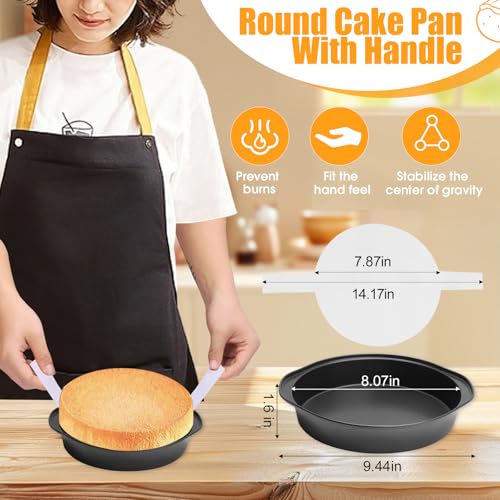
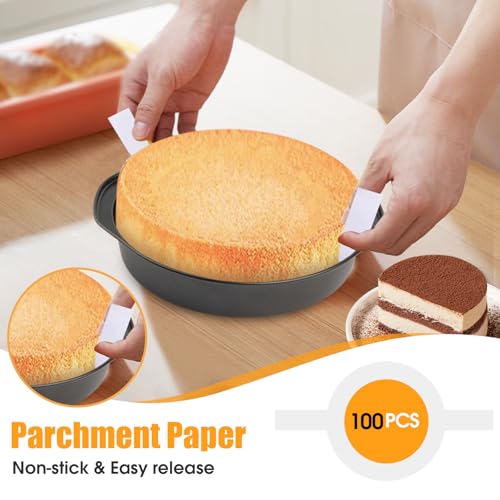
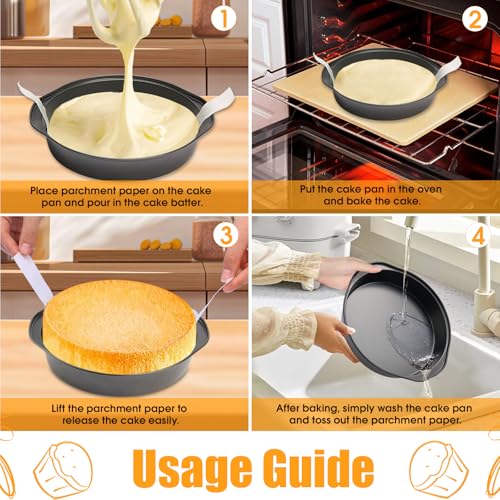
What sets this kit apart isn’t just the pans, it’s the inclusion of 100 parchment papers, which changes how you approach baking cleanup. Owners love that they can line each pan once and toss the paper after use, minimizing scrubbing and reducing sticking risks significantly. The carbon steel builds heat quickly and holds it steady, delivering golden crusts and soft interiors as advertised. I’ve seen multiple reviews mention how well these perform for delicate cakes like chiffon, where release is critical.
The ergonomic handles are a small but meaningful upgrade over standard flat-rimmed pans, offering better grip when moving hot layers. Still, despite their polished finish, some users note minor staining over time, especially with acidic batters. And while the set is dishwasher safe, frequent machine washing dulls both shine and nonstick performance faster than hand cleaning. It’s a solid value if you bake often and hate cleanup.
Product photos
EWFEN Stainless Steel Cake Pans

Strengths
- Non-toxic stainless steel
- Leak-proof design
- Oven and dishwasher safe
Trade-offs
- Requires thorough greasing
- Slower heat response
Stainless steel isn’t common in cake pans for a reason, it’s slower to heat and prone to hot spots, but EWFEN makes it work by focusing on safety and structural integrity. These pans have fixed bottoms, meaning no leaks during baking, a real advantage over springform-style tins. Owners appreciate that assurance when working with runny batters or custards. The lack of chemical coating eliminates concerns about flaking or leaching, which matters to families with young children or dietary sensitivities.
However, stainless steel demands extra prep. Most reviewers emphasize using butter and parchment together to avoid sticking, since the surface isn’t inherently nonstick. Once seasoned through regular use, some notice improved release, but early bakes can be tricky. Compared to aluminum or anodized pans, heating is less uniform, so rotation in the oven is often needed. It’s a niche pick, but a smart one for specific needs.
Video review
GoodCook 9-Inch Nonstick Cake Pan
Strengths
- Low-cost entry point
- Metal spatula safe
- Wide, grippable rim
Trade-offs
- Uneven browning possible
- Less refined finish
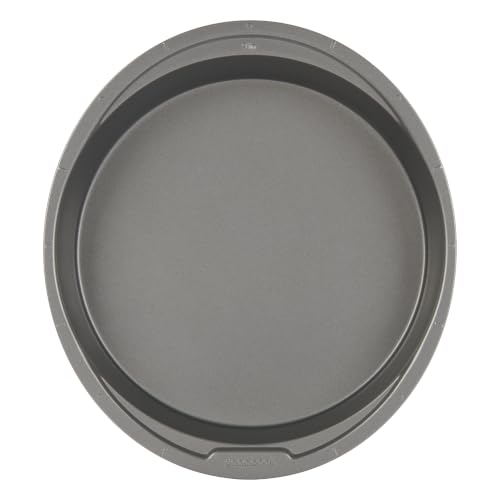
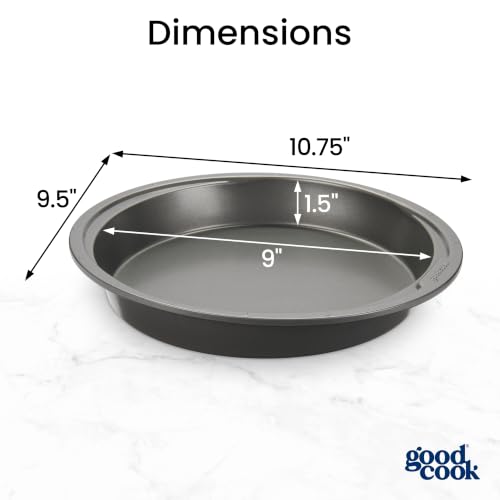
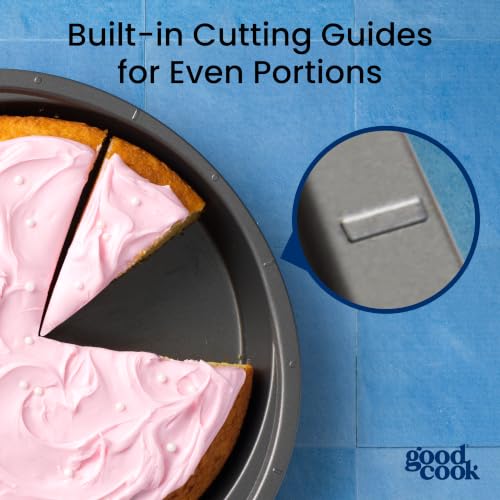
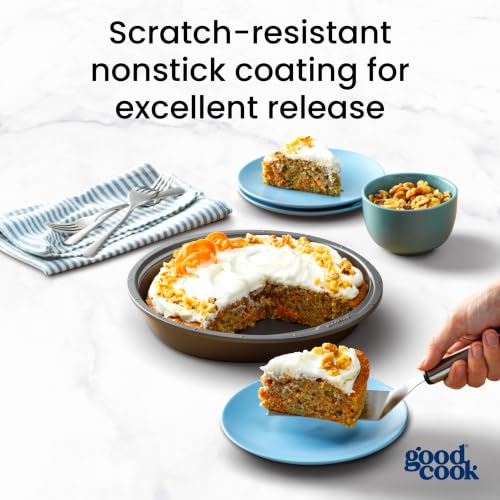
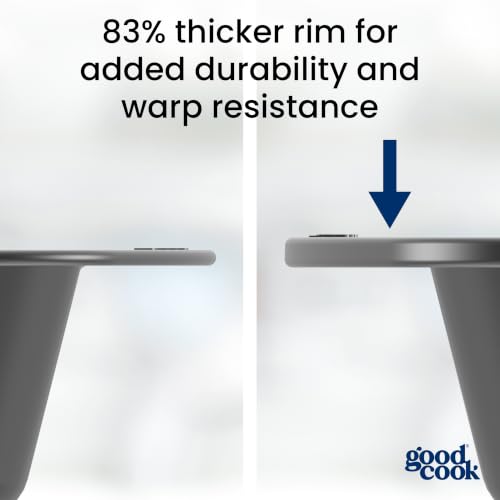
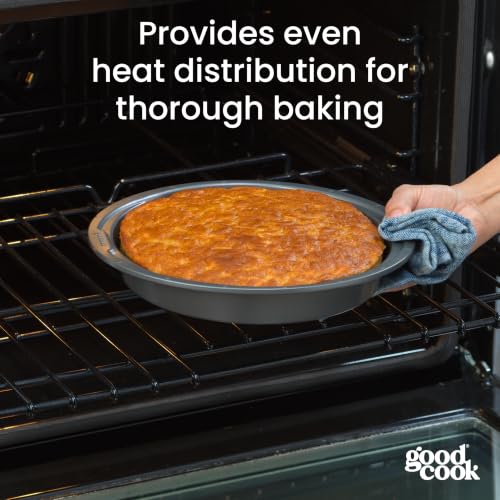
At this price, expectations are modest, but GoodCook exceeds them. The 9-inch size fits standard recipes perfectly, and the wide rim makes handling safe, even with bulky mitts. Owners consistently report even baking and reliable nonstick performance, especially when used within recommended temperatures. The steel feels sturdy, not flimsy, and resists denting better than expected for a budget pan.
Still, being steel-based, it doesn’t heat as evenly as aluminum or anodized options. Some users note slightly darker edges on light batters unless rotated midway. And while marketed as scratch-resistant, long-term feedback warns against aggressive utensils or abrasive cleaners. Compared to the Martha Stewart or Sur La Table models, it lacks design flair or specialized features, but for basic cake needs, it gets the job done without fuss.
Product photos
Nordic Ware 8-Inch Round Pan

Strengths
- Superior heat distribution
- Warp-resistant build
- Lifetime durability
Trade-offs
- No nonstick surface
- Single pan purchase
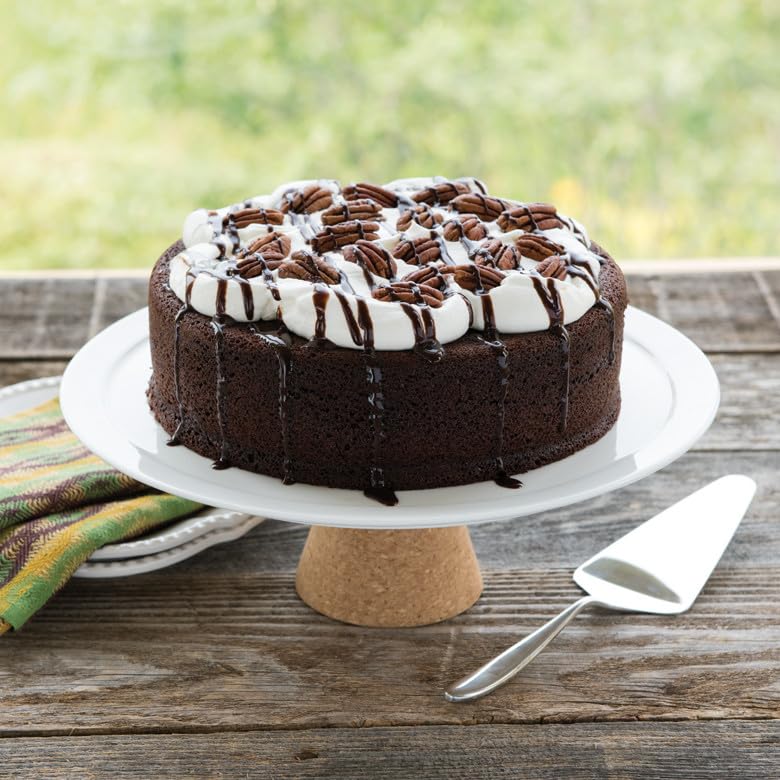
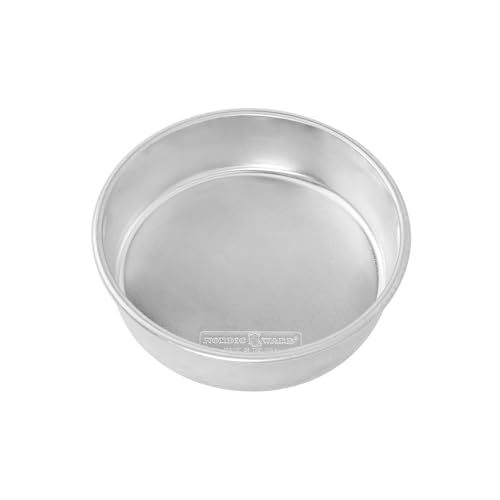
Aluminum fans will recognize Nordic Ware’s name immediately, and for good reason. This 8-inch pan uses natural aluminum’s superior thermal conductivity to deliver even baking with minimal effort. There are no coatings to degrade, no chemicals to worry about, just bare metal that responds instantly to temperature changes. Users consistently praise how uniformly their cakes brown, with no burnt edges or gummy centers. The encapsulated rim adds rigidity, preventing warping even under prolonged heat exposure.
It’s a simple design, but effective. Some wish it came in a multi-pack, but many owners end up buying additional units individually because they trust the performance. When compared to nonstick models, this requires more diligent greasing, but it lasts far longer. For bakers who treat equipment as long-term investments, this is the kind of piece that stays in rotation for years.
Product photos

Sur La Table 9″ Nonstick Pan

Strengths
- Free of PFOA, PFAS, PTFE
- Clean, modern look
- Solid basic performance
Trade-offs
- Single size only
- Less durable nonstick than coated rivals
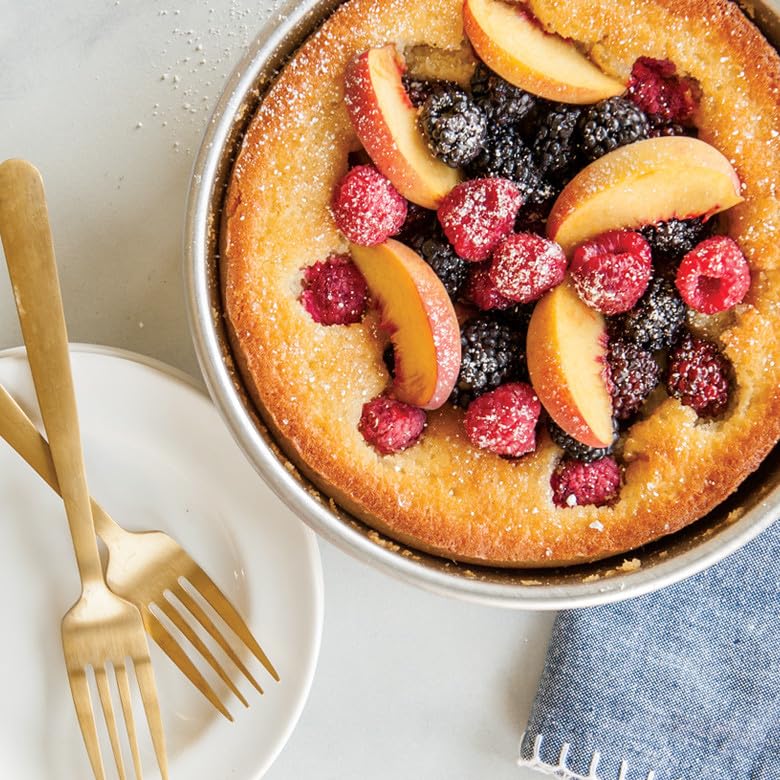
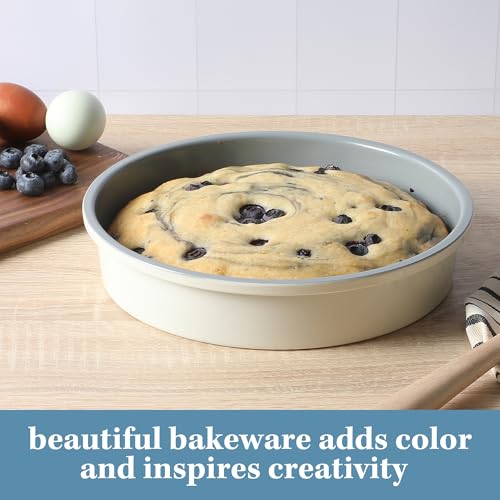
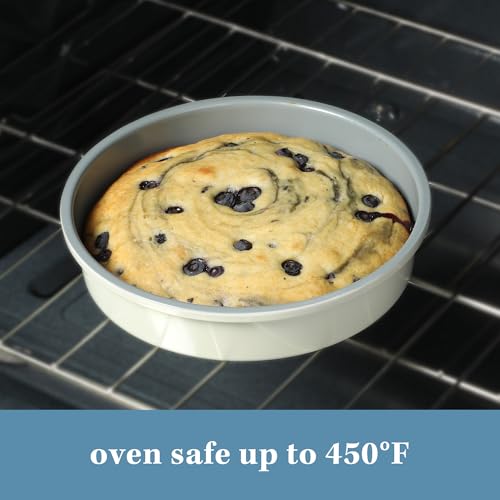
For bakers wary of chemical coatings, this pan offers real peace of mind. It’s one of the few truly PFAS-free, PTFE-free options that still manages decent release performance. The carbon steel core provides solid heat conduction, though it doesn’t match the precision of aluminum or anodized alternatives. Reviewers note it browns evenly under normal conditions, but caution against sudden temperature shifts, like placing a cold pan directly into a hot oven, which can lead to warping over time.
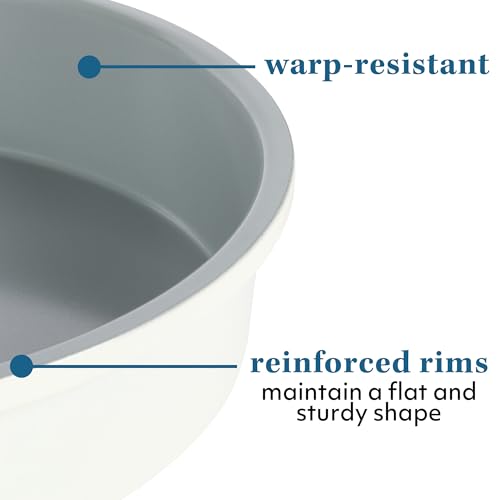
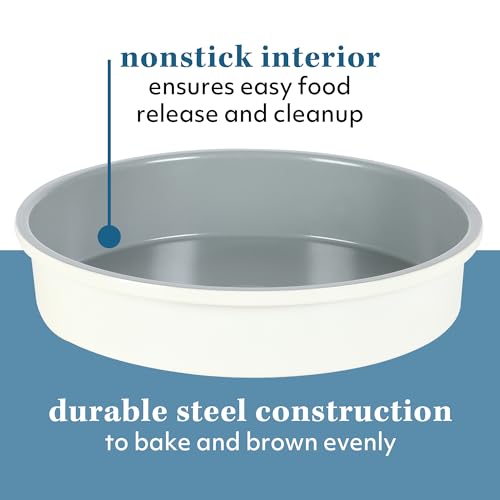
Its minimalist design and soft linen-white exterior appeal to those who like bakeware that looks good on display. But functionally, it’s a single-size purchase, so you’ll need to buy multiples separately if layering cakes. Compared to similarly priced coated pans, this one trades peak nonstick slickness for cleaner material standards, a fair compromise for health-conscious households.
Product photos

Chicago Metallic 3-Piece Cake Pan Set

Strengths
- Heavy-duty construction
- Even heat distribution
- True nonstick release
Trade-offs
- Coating longevity depends on care
- No handles included
This set stands out in the crowded cake pan market because it delivers what serious bakers actually need: consistent performance and durability. The aluminized steel construction is noticeably heavier than budget pans, and owners consistently report fewer warping issues even after repeated oven use. On paper, the triple-size combo (6, 8, and 10 inches) makes this a practical pick for layered cakes, and reviewers confirm the nonstick surface works well, especially when paired with proper prep like greasing or parchment.
That said, while the coating performs reliably at first, long-term feedback suggests some degradation if not hand-washed carefully. Compared to pricier anodized options like Fat Daddio’s, these aren’t quite as thermally precise, but they come closer than most carbon steel competitors in this range. For home bakers who want pro-level build without stepping into specialty-tier pricing, this set hits a sweet spot.
Product photos


Martha Stewart 8″ Carbon Steel Pan

Strengths
- Deep-sided for high rise
- Flat-topped results
- Sturdy rim design
Trade-offs
- Slight edge darkening possible
- Limited size selection
The standout here is the depth, this pan runs deeper than standard 8-inch rounds, giving more room for batter rise without overflow. That makes it particularly useful for dense batters like carrot or red velvet, where expansion is unpredictable. The straight sides help maintain structure during baking, and owners say it produces flatter tops, which simplifies stacking and frosting. Heat response is quick thanks to carbon steel, though there’s occasional mention of slight browning on edges if left too long.
It’s not the most rugged option available; rolled rims help prevent warping, but long-term users report minor distortion after heavy rotation. Still, for its price, the combination of depth and nonstick reliability gives it an edge over shallower models like the GoodCook 9-inch. If you’re tired of domed centers or collapsed layers, this design addresses those pain points directly.
Product photos


How We Chose These round cake pans
Rather than a hands-on lab test, my research for these recommendations focused on a detailed comparison of published specifications and features across numerous brands. I weighed owner reviews from a variety of sources – paying close attention to consistent praise or complaints – alongside professional reviews from established baking sites. As someone who’s spent years understanding what makes cookware perform, I then applied my category expertise to rank the options based on what truly matters for successful baking.
For round cake pans, even heating and reliable non-stick performance are paramount. A pan that bakes unevenly is frustrating, and a cake that sticks, despite your best efforts, is a real disappointment. Beyond that, durability – the ability to withstand repeated use and cleaning – became a key deciding factor. I also considered the versatility of the pan; could it handle different recipes and oven temperatures without warping or failing? You can find more about the different types of cake pans on my site.
Specifications are helpful for understanding material composition and temperature limits, but owner feedback provided crucial insight into real-world performance. Specs tell you a pan can reach 550°F, but reviews reveal if it actually distributes heat evenly at that temperature. Similarly, a “nonstick” coating advertised in product details needs to be verified by consistent reports of easy release. I also looked for trends in durability based on user experiences, which is particularly valuable when considering long-term value, and for those looking for small round cake pans.
What To Look For In round cake pans
Finding the right cake pan isn’t simply about picking a shape; it’s about setting yourself up for baking success. A good pan will deliver consistently even results, release cleanly, and last for years.
A quality cake pan prioritizes even heat distribution and consistent release. Look for heavier-gauge metals – aluminum or steel are common – and consider nonstick coatings or materials suited to easy lining with parchment paper. Avoid flimsy pans that warp easily, and prioritize a construction that won’t react with acidic ingredients.
Material Matters
The material a cake pan is made from fundamentally impacts how it heats and performs. Aluminum is a classic for a reason: it heats up quickly and evenly, which is why you’ll see it in many professional kitchens. However, bare aluminum can react with acidic ingredients, so anodized aluminum (like the Fat Daddio’s pans) is a good solution. Stainless steel, as seen in the EWFEN pans, is incredibly durable and non-reactive, though it doesn’t conduct heat quite as efficiently as aluminum. Carbon steel, like that found in the tutikuki set, offers a nice middle ground – good heat conduction and strength, but requires a bit more care to prevent rust.
Coating & Release
Nonstick coatings are convenient, but their durability varies. If you’re looking for a budget-friendly option, the GoodCook pan is a decent starting point, but be aware the coating will likely degrade over time. For a more health-conscious approach, explore PFAS-free nonstick options like the Sur La Table pan, though these may require more careful use of fats or parchment. Beyond coatings, a well-constructed pan with straight sides and a solid bottom (avoiding removable bottoms unless you specifically want that feature) makes lining with parchment paper simpler and more effective, which is often the most reliable release method. If you’re attempting intricate builds, consider reviewing our guide to the best cake pans for a broader overview.
Size, Shape, and Depth
Don’t underestimate the importance of getting the right size and shape. For standard layer cakes, 8-inch or 9-inch round pans are most common, but consider your recipe’s volume. Deeper pans, like the Martha Stewart 8″ pan, are ideal for taller cakes or recipes that need more room to rise without overflowing. When baking for a crowd, a set of graduated sizes (6, 8, and 10-inch, as in the Chicago Metallic set) allows you to create beautiful tiered cakes.
- A single 9-inch pan is a great starting point for most home bakers.
- If you frequently bake layered cakes, investing in a set of three different sized round pans will save you time and ensure even layers.
- For delicate cakes that are prone to sticking, a pan with a removable bottom can be helpful, but be prepared for a slightly higher risk of leaks and a bit more cleanup; consider using stable layer cake pans instead.
A pan’s depth should match your recipe. Shallow pans bake faster and result in flatter cakes, while deeper pans are necessary for taller creations.
Round Cake Pans Compared
Here’s a comparison of key specifications for various round cake pans to help you make an informed purchase.
| Product | Material | Diameter (in) | Height (in) | Max Temp (°F) | Nonstick | Features |
|---|---|---|---|---|---|---|
| Fat Daddio’s Anodized Aluminum Pans | Anodized Aluminum | 8 | 2 | 550 | Yes | Fits pressure cookers |
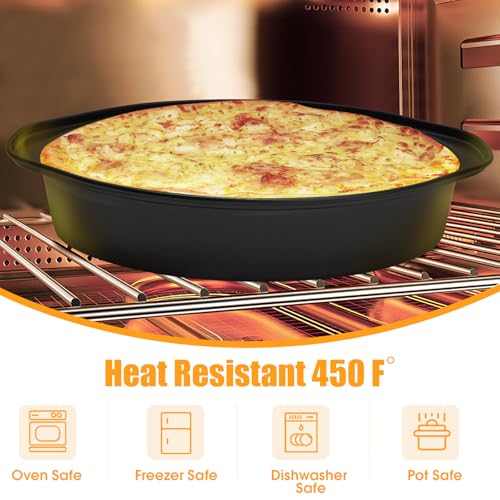
| tutikuki 8″ Nonstick Cake Pan Set | Carbon Steel | 8 | N/A | 450 | Yes | Includes parchment paper |
| EWFEN Stainless Steel Cake Pans | Stainless Steel | N/A | N/A | N/A | No | Fixed substructure |
| GoodCook 9-Inch Nonstick Cake Pan | Steel | 9 | 1.6 | N/A | Yes | Scratch-resistant |
| Nordic Ware 8-Inch Round Pan | Aluminum | 8 | 2.5 | N/A | No | Even heating |
| Sur La Table 9″ Nonstick Pan | Carbon Steel | 9 | N/A | N/A | Yes | PFAS-Free |
| Chicago Metallic 3-Piece Cake Pan Set | Aluminized Steel | 6, 8, 10 | N/A | N/A | Yes | 3-Piece Set |
| Martha Stewart 8″ Carbon Steel Pan | Carbon Steel | 8 | N/A | N/A | Yes | Deep Shape |
Frequently Asked Questions
What’s the difference between anodized aluminum and regular aluminum cake pans?
Anodized aluminum cake pans are treated to prevent the aluminum from reacting with acidic foods, making them more durable and safe for a wider range of recipes, while regular aluminum can sometimes impart a metallic taste or discolor certain ingredients. Choosing anodized aluminum is a good way to get the heat conductivity of aluminum without the drawbacks.
Are dark-colored cake pans better for baking?
Darker pans absorb more heat, which can lead to quicker browning, but also a higher risk of overbaked edges and potentially uneven baking. Lighter-colored pans reflect heat, promoting more even baking, and are generally preferred for delicate cakes where precise temperature control is important, as discussed in guides to cake pan materials.
How can I tell if a cake pan is high quality?
A quality cake pan will feel substantial in your hand, indicating a heavier gauge metal, and have straight, even sides. Avoid pans that seem flimsy or have noticeable warping, as these are likely to bake unevenly and won’t last as long.
Can I use cooking spray on a nonstick cake pan?
While convenient, many cooking sprays contain propellants that can leave a residue and degrade the nonstick coating over time. Instead, I recommend greasing the pan with softened butter or shortening and then lightly dusting with flour, or lining the bottom with parchment paper for the best results, especially when using pans for layer cakes.
What’s the best way to clean a carbon steel cake pan?
Carbon steel pans require a bit more care than nonstick. Hand wash with warm water and a mild detergent, avoiding abrasive scrubbers. Immediately dry the pan thoroughly to prevent rust, and occasionally season it with a light coating of oil to maintain its non-stick properties and protect it from corrosion.
The Bottom Line
Choosing a round cake pan often comes down to balancing convenience with long-term performance. While a nonstick coating offers easy release, it will eventually degrade, requiring replacement. For the best overall combination of durability, even heating, and reliable results, I recommend the Fat Daddio’s Anodized Aluminum Pans. They strike a solid balance and consistently receive positive feedback from bakers.
For those on a tighter budget, the GoodCook 9-Inch Nonstick Cake Pan is a reasonable starting point, and if you’re looking for a versatile set to tackle tiered cakes, the Chicago Metallic 3-Piece Cake Pan Set offers graduated sizes to simplify the process. Bakers seeking a PFAS-free option should consider the Sur La Table 9″ Nonstick Pan, though it will require a bit more attention to greasing and flouring. If you’re looking for more options, check out our guide to high-quality cake pans.
Ultimately, the most important factors aren’t a specific material or coating, but consistent oven temperature and proper preparation. A well-maintained pan, coupled with a reliable recipe and careful technique, will always yield better results than the most expensive pan used carelessly. Don’t overlook the importance of using standard cake pans to ensure your recipes turn out as expected.
