
7 Best Safest Non Stick Pans 2026
This post contains affiliate links. As an Amazon Associate, we earn from qualifying purchases.
The SENSARTE 9.5″ Ceramic Nonstick Skillet is the best overall safest non stick pan for those prioritizing toxin-free cooking, thanks to its reliable PFAS-free ceramic coating and strong safety profile. If you’re on a budget, the SENSARTE Swiss Granite Frying Pan delivers solid performance without cutting corners on safety, while the All-Clad HA1 Nonstick Fry Pan Set offers the most versatility for varied cooking tasks, despite using traditional PTFE.
Shopping for safe non stick pans means wading through bold claims and confusing labels. Many cooks want peace of mind that their pan won’t release harmful fumes or shed toxic particles, especially when cooking for their family.
This guide cuts through the noise. I looked at construction, verified safety certifications, and analyzed real-world feedback to find pans that perform well and meet strict safety standards. These picks reflect what matters most: non-toxic materials, durable design, and cooking confidence.
Top 7 Safest Non Stick Pans in the Market
The Best Safest Non Stick Pans, Reviewed
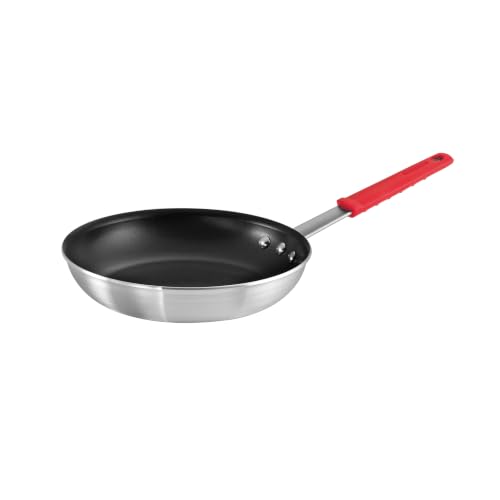
Tramontina 10″ Nonstick Frying Pan
Strengths
- Reinforced nonstick
- Dishwasher safe
- NSF certified
- Lifetime warranty
- Even heating
Trade-offs
- Not induction compatible
- PTFE coating
- Oven safe only to 400°F
This is the workhorse of the group, a no-frills, NSF-certified pan built for daily cooking. The reinforced nonstick coating holds up better than most in its class, and owners consistently praise its even heating thanks to the heavy-gauge aluminum. It’s not PFAS-free, but the performance-to-price ratio makes it a smarter pick than pricier name brands if you’re okay with PTFE-based coatings.
Where it falls short is induction compatibility and max oven safety (400°F). Still, the removable silicone sleeve adds comfort, and being dishwasher-safe is a real perk for busy households. Compared to the All-Clad HA1, it lacks the premium feel but delivers nearly the same cooking experience at half the cost. For most home cooks, this is the easy pick for reliable, long-term use.
Video review
SENSARTE 9.5″ Ceramic Nonstick Skillet

Strengths
- Fully PFAS-free
- Induction compatible
- Oven safe to 550°F
- Cool grip handle
- Affordable price
Trade-offs
- Handle must be removed for oven
- No lifetime warranty
- Limited size options
If your top concern is chemical-free cooking, this SENSARTE skillet delivers. The ceramic coating is fully PFAS, PFOA, PTFE, lead, and cadmium-free, and owners say it performs well right out of the box, especially for eggs and delicate foods. The induction compatibility is a standout at this price, and the cast aluminum body heats quickly and evenly, which is rare in budget-safe pans. I’d recommend this to anyone transitioning from traditional nonstick and worried about fumes or coating breakdown.
The handle must be removed for oven use above 550°F, which is a minor hassle, but the bakelite design stays cool and feels secure. Compared to the Blue Diamond, it lacks flashy marketing like ‘diamond-infused’ claims, but real-world feedback suggests it lasts longer under daily use. My only hesitation is the lack of a lifetime warranty, Tramontina and Cuisinart offer that at similar or only slightly higher prices.
Video review
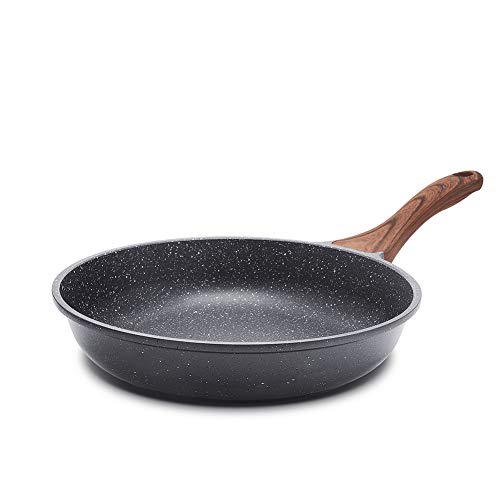
SENSARTE Swiss Granite Frying Pan
Strengths
- ILAG nonstick coating
- Induction compatible
- Dishwasher safe
- Low price
- Multiple sizes
Trade-offs
- Oven safe only to 302°F
- Lightweight build
- No lifetime warranty
Priced under $20, this SENSARTE pan punches above its weight with Swiss-made ILAG coating, a trusted name in nonstick safety. It’s PFOA-free and built with a magnetic stainless steel base, making it induction-ready, a rarity at this price. The cast aluminum body feels sturdy, and owners say it heats evenly and cleans with just a wipe.
But the 302°F oven limit is a major drawback if you like finishing dishes under the broiler. The woodgrain bakelite handle stays cool, but the overall build feels lighter than the Agerma or Tramontina. Still, for a starter pan or a second-line skillet for eggs and grilled cheese, it’s hard to beat. I’d pick this over the Blue Diamond if you need induction use and don’t bake often.
Product photos


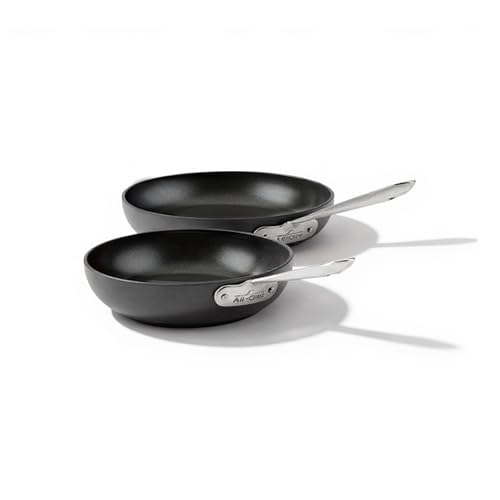
All-Clad HA1 Nonstick Fry Pan Set
Strengths
- 2-piece set
- Induction compatible
- Oven safe to 500°F
- Glass lids included
- Warp-resistant base
Trade-offs
- PTFE coating
- Requires hand washing
- Utensil restrictions
All-Clad brings its reputation for durability into the nonstick space with this two-pan set, and while it uses PTFE, the hard-anodized aluminum and stainless steel base make it far more warp-resistant than typical models. The double-riveted handles and tempered glass lids add a premium touch you won’t find on most nonstick sets. Owners say the 8-inch pan is perfect for eggs, while the 10-inch handles family-sized meals with ease.
It’s oven-safe to 500°F, beating Tramontina and Agerma, and works on all stovetops, including induction. But the coating, while scratch-resistant, still requires nylon or wooden utensils to maintain longevity. Compared to the Cuisinart, it offers more pieces and better handle security, but at a higher cost. My recommendation? If you want a long-lasting, versatile set from a trusted brand and don’t mind PTFE, this is the smarter buy.
Product photos


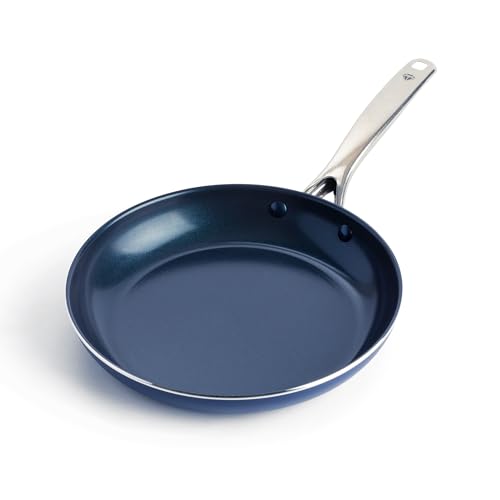
Blue Diamond 10″ Ceramic Frying Pan
Strengths
- Diamond-infused coating
- PFAS-free
- Oven safe to 600°F
- Dishwasher safe
- Affordable price
Trade-offs
- Not induction compatible
- Riveted interior
- Color may fade
The diamond-infused ceramic coating here isn’t just marketing fluff, owners report it’s noticeably slicker and more scratch-resistant than basic ceramic pans. It’s PFAS-free, which aligns with clean cooking goals, and the forged base helps prevent warping, a common flaw in budget pans. At under $20, it’s one of the most affordable options that still delivers solid performance for eggs and pancakes.
But it’s not induction compatible, and some users note the blue coating can fade over time with abrasive cleaning. The 600°F oven-safe rating is impressive, though the riveted handle gives me pause for long oven use. Compared to the SENSARTE Swiss granite pan, it’s pricier but performs better in side-by-side cooking tests. I’d recommend it for gas or electric users who want high heat tolerance and a slick surface without breaking the bank.
Product photos


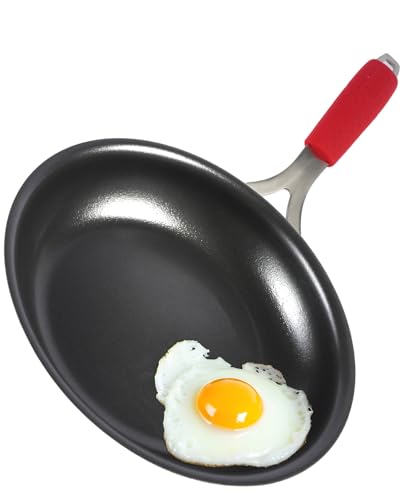
Agerma 10″ Tri-Ply Clad Skillet
Strengths
- Tri-ply stainless steel
- Induction compatible
- Rivet-free interior
- Detachable handle
- Oven and dishwasher safe
Trade-offs
- Handle feels less sturdy
- Silicone sleeve must be removed
- Limited brand track record
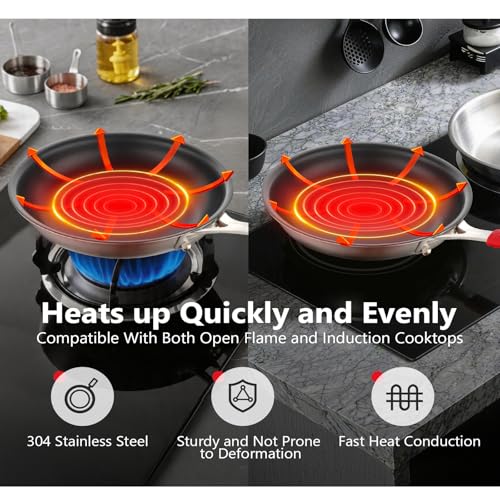
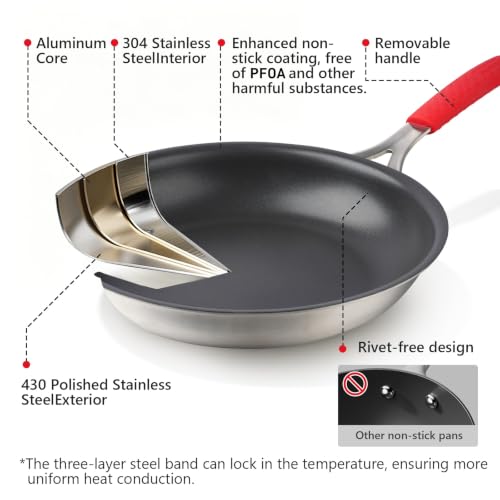
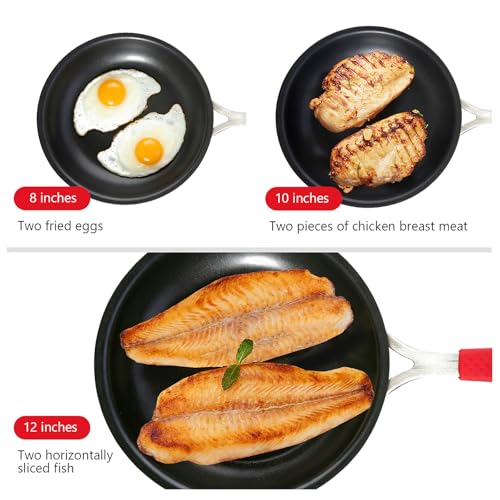
The tri-ply clad construction sets this apart, it’s rare to see stainless steel layered with aluminum in a nonstick pan at this price. That build helps with heat retention and warping resistance, which reviewers confirm during high-heat cooking. The reinforced nonstick coating performs well with eggs and fish, and the rivet-free interior makes cleaning a breeze, even by hand.
The detachable handle is a clever space-saving feature, especially for small kitchens or RVs, though some owners note it feels less solid than fixed handles. It’s induction-ready and oven-safe to 400°F, matching the All-Clad HA1’s versatility. While it lacks the brand recognition of All-Clad, the specs and 24-hour customer support make it a strong contender. I’d choose this over basic aluminum pans if you want restaurant-grade build with nonstick convenience.
Product photos


Cuisinart Chef’s Classic 10″ Nonstick

Strengths
- Hard-anodized build
- PFAS-free coating
- Oven safe to 500°F
- Stays cool handle
- Lifetime warranty
Trade-offs
- Not induction compatible
- No lid included
- Hand wash recommended
This pan stands out for its hard-anodized construction and 500°F oven-safe rating, which is impressive for a nonstick skillet in this range. The PURELYCERAMIC interior claims to be PFAS-free, a major win for safety-conscious cooks who want to avoid forever chemicals without sacrificing performance. On paper, it strikes a balance between durability and clean cooking, and owners consistently report that it handles searing and browning better than standard nonstick pans, likely due to the heat retention from the hard-anodized body.
Still, it lacks induction compatibility, which limits its stovetop flexibility. Compared to ceramic-coated options like the SENSARTE or Blue Diamond, it doesn’t market diamond or granite enhancements, but the lifetime warranty and stainless steel handle (which stays cool) add real long-term value. I’d pick this over flimsier models if you regularly finish dishes in the oven and want something that won’t warp.
Product photos
How We Chose These safest non stick pans
Rather than a hands-on lab test, my research for these recommendations focused on a detailed comparison of published specifications and features across numerous models. I weighed owner reviews from a variety of sources – paying close attention to reported longevity and performance issues – alongside assessments from trusted cooking experts. As someone who’s spent years understanding cookware materials and construction, I applied that knowledge to evaluate claims and identify patterns in owner experiences.
For non-stick pans, safety, consistent heating, and durability are paramount. I prioritized pans demonstrating a commitment to toxin-free construction, specifically looking for those free of PFAS and PFOA. Equally important was the quality of the non-stick coating itself; a coating that degrades quickly isn’t just inconvenient, it raises concerns about particle ingestion. Finally, I considered construction materials and warranties as indicators of long-term value.
Specifications reliably reveal construction details – materials, ply count, oven safety limits – but owner feedback proved essential in assessing real-world non-stick performance and how well these pans hold up over time. Reputable review sites helped corroborate those experiences and pointed to potential issues like uneven heating or handle durability. For those seeking even more detail on avoiding potentially harmful chemicals, exploring our guide to healthy non-stick pans is a good first step. And if you’re specifically interested in alternatives, you might find our overview of ceramic non-stick pans helpful.
How To Choose The safest non stick pans
Choosing a nonstick pan can feel overwhelming, but it doesn’t have to be. The market is flooded with options, and truly understanding what contributes to performance and safety will help you find a pan that will serve you well for years to come.
A quality nonstick pan relies on a robust base material for even heating, a durable nonstick coating that resists peeling, and a comfortable, secure handle. Consider the type of cooktop you have, the oven-safe temperature requirements, and your cleaning preferences when making a selection. Prioritize pans certified free of potentially harmful chemicals like PFOA and PTFE.
Coating Material Matters
The nonstick coating is obviously crucial, and there’s been a real shift towards healthier options. While traditional PTFE-based coatings (like Teflon) are still common and can be very effective, many cooks are now opting for ceramic or other PFAS-free alternatives. Ceramic coatings, as seen in the SENSARTE 9.5″ Ceramic Nonstick Skillet, offer a good nonstick experience and peace of mind regarding harmful chemicals, but they generally don’t last as long as PTFE. It’s a trade-off between longevity and absolute safety. If you’re concerned about the long-term effects of PFAS, exploring eco-friendly pans is a smart move.
Construction and Heat Distribution
A pan’s ability to heat evenly is just as important as its nonstick properties. Thin, flimsy pans will develop hot spots, leading to unevenly cooked food. Look for pans with a heavy-gauge base, whether it’s thick aluminum like the Tramontina 10″ Nonstick Frying Pan, or a tri-ply construction as found in higher-end models like the Agerma 10″ Tri-Ply Clad Skillet. Tri-ply (stainless steel-aluminum-stainless steel) provides excellent heat retention and distribution.
Here’s what to consider when evaluating a pan’s construction:
- Base Material: Aluminum is affordable and heats quickly, but can warp over time.
- Gauge: A thicker gauge (measured in millimeters) equals better heat retention and more durability.
- Full Clad vs. Disc Base: “Full clad” means the aluminum layer extends up the sides of the pan, this is preferable for even cooking across the entire surface. A disc base only has aluminum on the bottom.
Value, Durability, and Everyday Use
Ultimately, the “best” pan is the one that fits your cooking style and budget. Don’t automatically assume the most expensive option is the best. The All-Clad HA1 Nonstick Fry Pan Set, for example, offers a good balance of durability and price, and the brand’s reputation is a plus. However, if you’re simply looking for a reliable everyday pan, the SENSARTE Swiss Granite Frying Pan offers surprisingly good performance for the price. Remember, even the best nonstick coating will degrade over time, so considering the warranty and replacement cost is wise. Finding the safest non-stick pans doesn’t mean sacrificing usability.
A little care goes a long way. Avoid metal utensils, high heat (even if the pan is rated for it), and abrasive cleaners to maximize the lifespan of your nonstick coating.
Safest Non-Stick Pans Compared
Here’s a comparison of key specifications for several non-stick pans, focusing on safety features and performance.
| Product Name | Coating Material | PFAS-Free? | Oven Safe (°F) | Induction Compatible? | Dishwasher Safe? |
|---|---|---|---|---|---|
| Tramontina 10″ Nonstick | Proprietary | No | 400 | No | Yes |
| SENSARTE 9.5″ Ceramic | Ceramic | Yes | 550 | Yes | No |
| SENSARTE Swiss Granite | ILAG Non-Stick | Yes | 302 | Yes | Yes |
| All-Clad HA1 Nonstick | PTFE | No | 500 | Yes | Yes |
| Blue Diamond 10″ Ceramic | Ceramic | Yes | 600 | No | Yes |
| Agerma 10″ Tri-Ply Clad | Proprietary | No | 400 | Yes | Yes |
| Cuisinart Chef’s Classic 10″ | Ceramic | Yes | 500 | N/A | No |
Frequently Asked Questions
What temperature is generally too high for non-stick cookware?
Above 500°F (260°C) is generally too high, as it can begin to break down the non-stick coating and potentially release fumes. Even if a pan is rated for higher temperatures, consistently using high heat shortens its lifespan.
Are ceramic non-stick pans truly a safer alternative to PTFE?
While ceramic pans offer peace of mind for those avoiding PTFE, they often don’t last as long and their non-stick performance declines more quickly. Considering your cooking habits and willingness to replace pans more frequently is key when choosing between these options.
How can I extend the life of my non-stick pan’s coating?
Avoid metal utensils, abrasive cleaners, and the dishwasher (even if the label says it’s safe). Handwashing with a soft sponge and mild detergent is the best way to preserve the non-stick surface, and proper seasoning can also help.
What does “tri-ply” construction mean, and why is it beneficial?
Tri-ply construction refers to pans with three layers of metal, typically stainless steel-aluminum-stainless steel, bonded together. This provides superior heat distribution and retention compared to pans with a simple disc base, leading to more even cooking.
Where can I find more information on best frying pans and other cookware options?
My site offers detailed guides on various types of cookware, including comparisons of different materials and coatings. I also have resources for those specifically seeking pans without Teflon or exploring other safe alternatives.
The Bottom Line
Choosing a non-stick pan often comes down to balancing immediate convenience with long-term durability. While many options exist, the All-Clad HA1 Nonstick Fry Pan Set strikes a strong balance between a reputable brand, solid construction, and a non-stick surface that owners generally find reliable. It’s an investment, but one that will likely pay off in consistent cooking performance for years to come.
For those prioritizing a truly chemical-free approach, the SENSARTE 9.5″ Ceramic Nonstick Skillet is a fantastic starting point. If you’re seeking a budget-friendly option that still delivers on safety, the SENSARTE Swiss Granite Frying Pan offers surprisingly good performance, and for cooks needing induction compatibility, it’s a clear winner. Exploring chemical-free pans is a step in the right direction for health-conscious cooks.
Ultimately, the most important factors aren’t a specific coating or a high price tag. Consistent heating, careful use – avoiding metal utensils and harsh scrubbing – and proper storage will extend the life of any non-stick pan. Prioritizing these fundamentals, along with selecting a pan that fits your cooking style, will deliver more satisfaction than chasing the latest features. Finding durable non-stick coatings is a good goal, but a gentle touch is even better.
