
7 Best Saucier Pans of 2026
This post contains affiliate links. As an Amazon Associate, we earn from qualifying purchases.
The Made In 3 Qt Stainless Saucier is the best overall, combining excellent heat control with a smart, comfortable design. For a budget-friendly option that still performs well, the Cuisinart 1 Qt Pour Saucier stands out, while the Le Creuset 3.5 Qt Saucier offers a larger capacity for family cooking without sacrificing quality.
Saucier pans are one of those tools that seem niche until you use one – then you wonder how you ever made sauces in a regular saucepan. The curved sides make stirring effortless, and the wide surface area helps with quick reductions. But not all sauciers deliver on that promise, and some are overpriced for what they offer.
This guide cuts through the noise, highlighting models that deliver real performance based on construction, owner feedback, and design details that matter in daily use. I looked at heat distribution, handle comfort, durability, and value – because a good saucier should last for years and make cooking easier, not just look good on the stove.
Top 7 Saucier Pans in the Market
The Best Saucier Pans, Reviewed
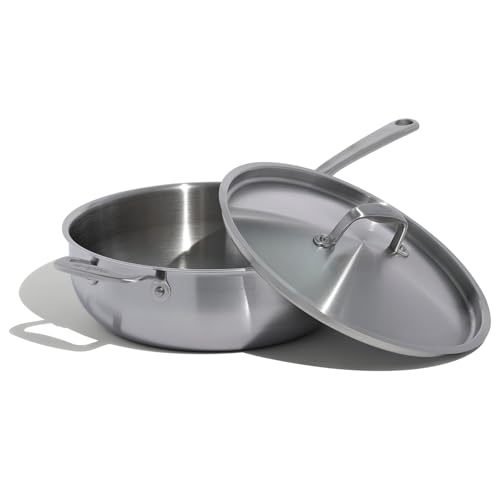
Made In 5 Qt Stainless Saucier
Strengths
- 5-ply even heating
- Large 5-quart capacity
- Stay-cool handle
Trade-offs
- Heavy when full
- Bulky for small kitchens
- Higher price
This 5-quart saucier stands out for its generous capacity and professional-grade 5-ply construction, making it a top pick if you regularly cook for a crowd or want one pan to handle everything from chowders to polenta. The Italian craftsmanship shows in the even heat response and solid riveted handle, which owners say stays cool and feels secure during long stirs. The depth and curved walls give you room to reduce large volumes without splatter, and the 430 stainless top layer guarantees induction compatibility.
Compared to the 3-quart version from the same line, this one trades some maneuverability for serious utility. It’s heavier, yes, but that mass helps with heat retention. I’d recommend this over the smaller models if you’re doing batch cooking or want a single pan that can double as a small Dutch oven. The price reflects its premium tier, but the performance justifies it for serious home cooks.
Video review
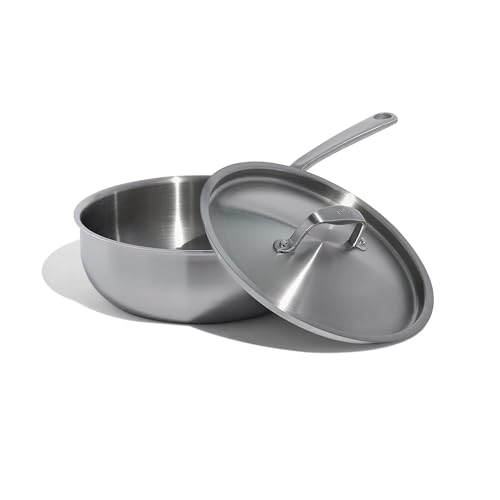
Made In 3 Qt Stainless Saucier
Strengths
- 5-ply even heating
- Induction compatible
- Solid riveted handle
Trade-offs
- Handle heats slightly
- No helper handle
- Oven safe only to 600°F
This 3-quart saucier from Made In is a well-rounded performer with the same 5-ply construction as their larger model, offering excellent heat distribution and responsiveness. The Italian craftsmanship shows in the solid riveted handle and induction-ready base, and owners report it heats evenly and resists warping. It’s a great size for everyday use, large enough for sauces and sides, compact enough for storage.
Compared to the Misen 3-quart, it lacks the higher oven rating and ergonomic handle refinement, but it’s slightly more affordable and still delivers pro-level performance. I’d recommend this as a strong mid-tier option, better than budget picks, not as ambitious as the All-Clad or Le Creuset. For most home cooks, this is where quality meets practicality.
Video review
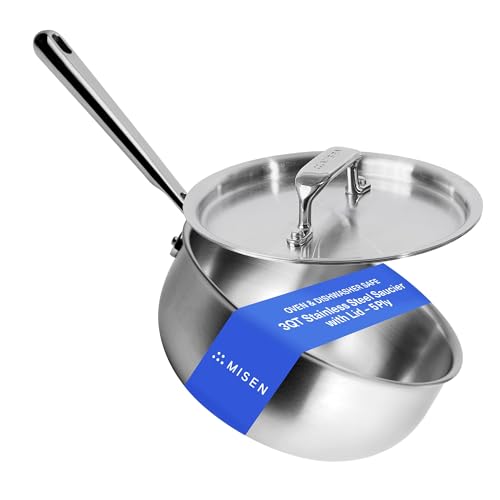
Misen 3 Qt 5-Ply Saucier
Strengths
- Oven safe to 800°F
- 5-ply even heating
- Ergonomic cool handle
Trade-offs
- Lid knob not oven-safe
- Slightly heavy
- No helper handle
Misen’s 3-quart saucier hits a sweet spot between performance and price, offering 5-ply construction and an oven-safe rating up to 800°F, higher than most competitors. The thick 3.0mm base delivers excellent heat retention, and owners report it transitions smoothly from boil to simmer, a key trait for delicate sauces. The ergonomic handle is a standout, designed to stay cool and offer a secure grip, which makes stirring risotto or polenta less of a wrist workout.
When stacked against All-Clad or Le Creuset, it holds its own on specs while costing less. The curved interior prevents scorching in the corners, and the lid fits well. I’d pick this over the Made In 3-quart model for the better handle design and higher oven rating, especially if you plan to finish dishes under the broiler. For the price, it’s the smarter buy in the premium mid-range.
Product photos


Le Creuset 3.5 Qt Saucier

Strengths
- Full aluminum core
- Steam-venting lid
- Stylish finish
Trade-offs
- Not oven-safe above 500°F
- Heavy when full
- Very expensive
Le Creuset’s 3.5-quart saucier brings their signature durability and thoughtful design to stainless steel, with a full aluminum core that extends to the rim for unmatched heat distribution. The pan heats evenly and holds temperature well, making it ideal for slow-simmered dishes like risotto or creamy chowders. The three-ring lid with steam vent is a standout feature, owners love how it locks in moisture without boiling over.
The ergonomic handles stay cool, and the mirror-polish exterior resists discoloration, even at high heat. At this size, it bridges the gap between small and large, offering more room than a 3-quart without the bulk of a 5-quart. Compared to the Made In 5-quart, it’s lighter and more agile, though not quite as deep. I’d pick this for its balance of capacity, control, and premium build, especially if you already own Le Creuset and value matching pieces.
Product photos


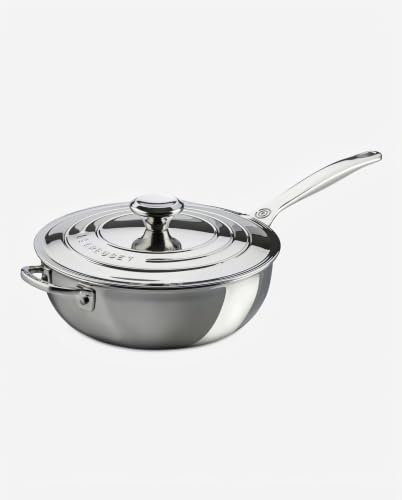
Restaurantware 3 Qt Stainless Saucier
Strengths
- Affordable
- Induction compatible
- Wide curved sides
Trade-offs
- Handle can heat up
- Lid fit inconsistent
- Basic finish
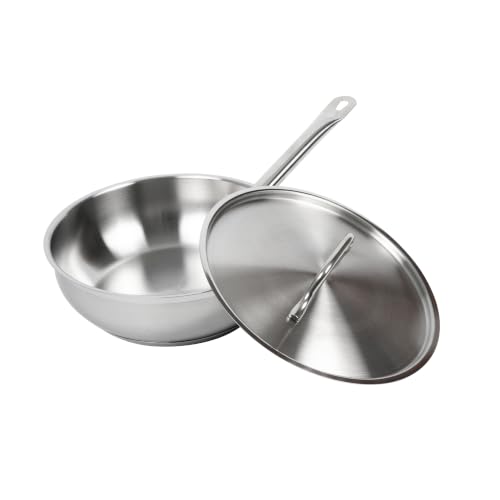
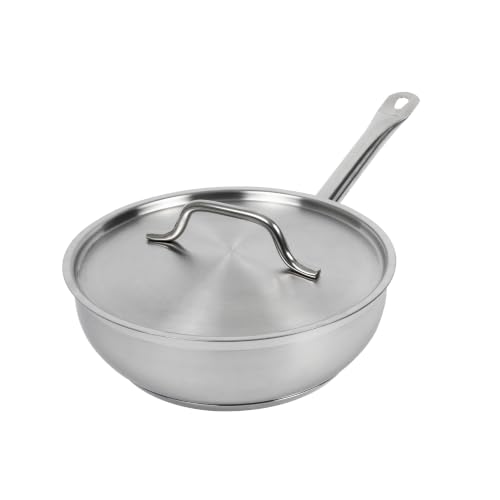
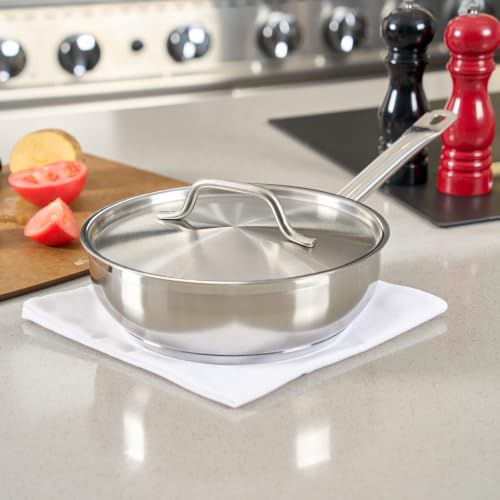
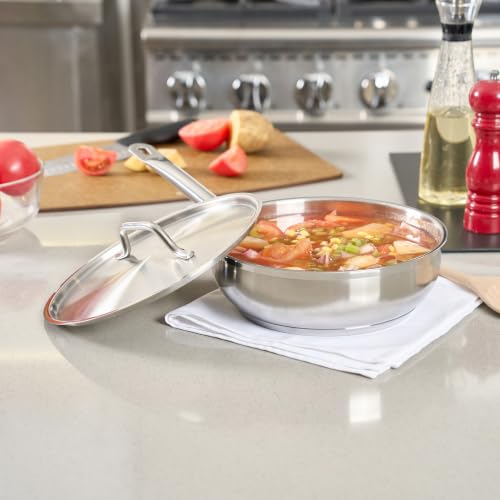
For buyers watching their budget but still wanting a functional saucier, this Restaurantware pan delivers more than you’d expect at this price. On paper, it’s a standard 3-quart stainless steel saucier with an aluminum-clad base, which means decent heat distribution, owners consistently report it performs reliably for everyday sauces, small batches of risotto, or reheating soups without scorching. The wide cooking surface and curved sides make stirring easy, and the induction compatibility is a real plus for modern kitchens.
That said, it doesn’t have the refined balance or premium feel of higher-end models. Some reviewers note the handle heats up more than they’d like, and the fit of the lid isn’t always snug. But for the price, it’s a solid entry point. I’d pick this over a cheap saucepan any day if you’re building out a starter set or need a no-frills workhorse.
Product photos
Cuisinart 1 Qt Pour Saucier

Strengths
- Perfect for tiny batches
- Drip-free rim
- Affordable
Trade-offs
- Too small for family use
- Basic handle design
- Limited versatility
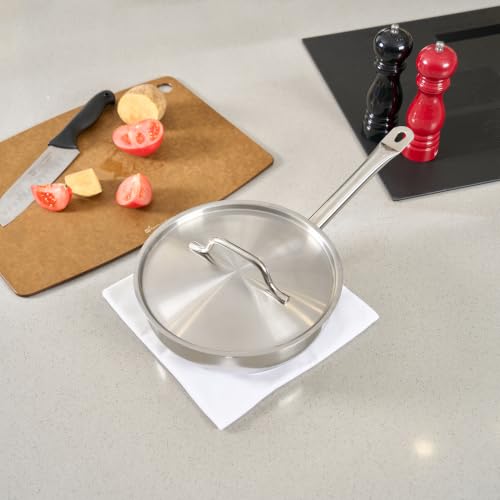
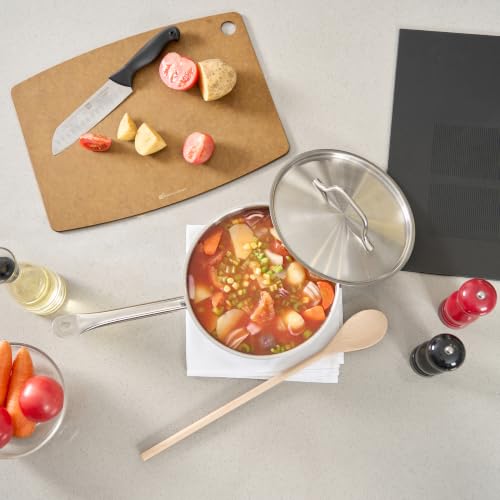
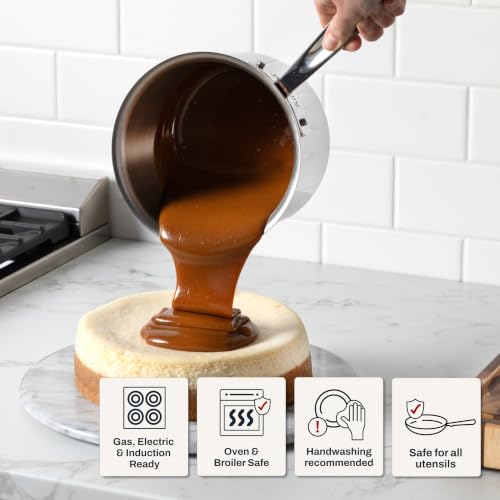
At just 1 quart, this Cuisinart saucier is the smallest on the list, and that’s its entire purpose. It’s ideal for delicate tasks like reducing a demi-glace, warming butter for dipping, or making a single serving of custard without fear of overflow. The aluminum-encapsulated base performs well for its size, and the tapered rim earns consistent praise for drip-free pouring, which matters when you’re working with expensive reductions or finishing sauces.
But its size is also its limitation. This isn’t a pan for family meals or even side dishes, it’s a specialist tool. I’d compare it to a paring knife in your cookware drawer: not used daily, but invaluable when you need it. The price is hard to beat for a dedicated small-batch pan, and the stainless build means it won’t react with acidic ingredients.
Product photos

All-Clad 2 Qt D3 Saucier

Strengths
- Superior heat control
- Drip-free pouring
- Made in USA
Trade-offs
- Handwash only
- No helper handle
- Expensive
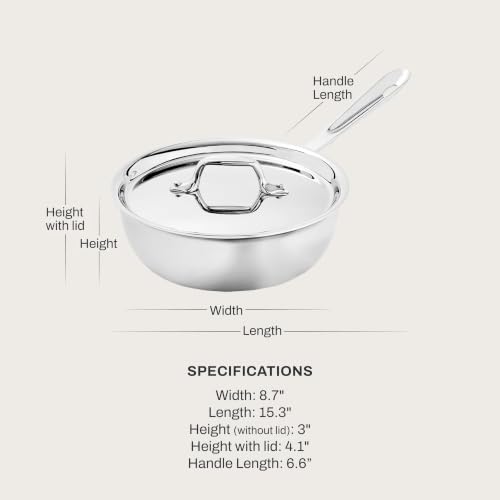
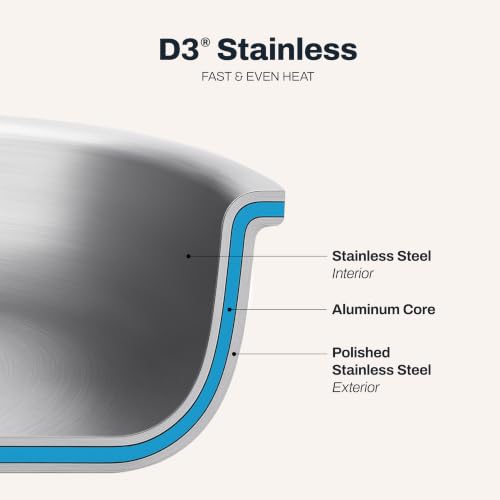
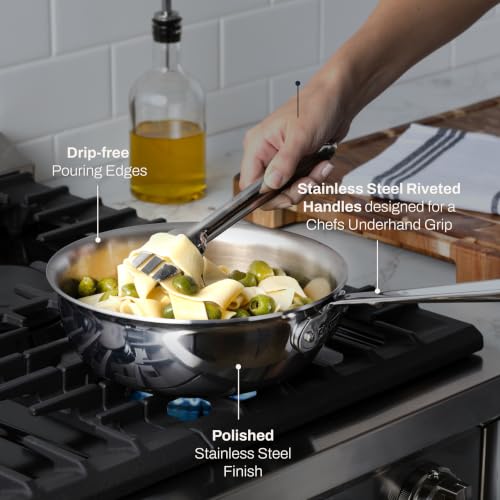
All-Clad’s 2-quart D3 saucier is a precision instrument, ideal for cooks who value control over volume. The tri-ply bonded construction is legendary for even heating, and in this size, it’s perfect for emulsifying a hollandaise or reducing a wine pan sauce without fear of hot spots. The rounded base keeps ingredients in constant motion, and the flared edge makes pouring clean and accurate, a detail professionals appreciate.
Made in the USA with decades of engineering behind it, this pan feels balanced and durable. Compared to the Misen or Made In models, it’s less about raw capacity and more about finesse. Owners consistently praise its responsiveness and long-term durability. I’d recommend this as the go-to for technique-focused cooking, especially if you’re refining your sauce game. It’s not the largest, but it’s the most precise.
Product photos

How We Chose These saucier pans
My approach to evaluating saucier pans, as with all cookware at CookwareCanvas, began with a detailed comparison of published specifications and features. I then weighed owner reviews from a variety of retailers alongside expert opinions from established cooking publications. This research-led comparison, rather than a hands-on lab test, allowed me to build a picture of real-world performance and durability. Ultimately, I ranked these pans based on how well they met the needs of a typical home cook.
For saucier pans specifically, heat distribution and control were paramount. A well-designed saucier needs to maintain consistent temperatures for delicate reductions and prevent scorching. Equally important was the quality of the handle – a comfortable, stay-cool handle greatly enhances usability. Finally, capacity played a key role; while smaller sauciers are ideal for precise work, many cooks will appreciate having a larger vessel for batch cooking or making sauces for a family. If you’re looking for versatility in a slightly larger pan, consider our guide to the best sauté pans.
Specifications reliably indicate construction quality – the number of layers in a clad pan and the type of stainless steel are good indicators of performance. However, owner feedback proved invaluable in assessing real-world issues like handle comfort and ease of cleaning. Reputation also factored in; brands with a long history of producing quality cookware, like All-Clad stainless steel, generally command a premium for a reason.
How To Choose The saucier pans
A good saucier pan is a surprisingly specific tool, and choosing the right one can elevate your sauce-making – and beyond.
A quality saucier pan distinguishes itself with a rounded bottom and straight, high sides. This design isn’t just aesthetic; it encourages constant movement of ingredients during stirring, preventing sticking and ensuring even heating. Look for fully-clad construction (stainless steel bonded to an aluminum core) for responsiveness, a comfortable and secure handle, and compatibility with your cooktop.
Gauge the Gauge: Stainless Construction
The heart of a saucier, like most quality cookware, is its construction. Don’t settle for a pan with a simple stainless steel base; fully-clad stainless steel – where layers of aluminum are bonded between stainless steel – is what you want. This distributes heat far more evenly, eliminating hot spots and making it much easier to control the temperature of delicate sauces. Five-ply construction, like you see in the Misen and Made In pans, is excellent, but even a good three-ply (like the All-Clad pans) will be a significant step up from basic options. Remember, a heavier bottom generally correlates with better heat retention and distribution, though weight isn’t everything.
Size Matters (and So Does Shape)
Saucier pans aren’t about volume like a stockpot; they’re about control. A 3-quart size is a sweet spot for most home cooks. It’s large enough for a batch of béchamel or a small pot of soup, but not so large that it’s unwieldy. If you frequently cook for a crowd, the Le Creuset 3.5 Qt Saucier is a good option. Conversely, if you often halve recipes or primarily make sauces for one or two people, consider a smaller 1- or 2-quart model like the Cuisinart.
Here’s a quick guide to sizing: * 1-2 Quart: Ideal for single servings, reductions, or melting butter. * 3 Quart: The most versatile size for everyday sauce-making and small batch cooking. * 3.5+ Quart: Better for larger families or when you need to make a substantial amount of sauce at once.
Handle and Heat: Usability and Safety
A comfortable, stay-cool handle is crucial. Stainless steel handles, while durable, can get hot, so look for designs with air gaps or those made from materials that naturally resist heat transfer. Riveted handles are also a must; welded handles are more prone to loosening over time. Beyond the handle itself, consider the overall balance of the pan. A well-balanced pan feels more secure and easier to maneuver, especially when stirring a thick sauce. If you’re looking for all-purpose pans that can do a little bit of everything, a comfortable handle is even more important.
Don’t underestimate the importance of a good handle. A secure, comfortable grip makes all the difference when you’re whisking a roux or reducing a sauce for an extended period.
Finally, if you’re already invested in a premium brand, exploring their saucier options is a smart move. For example, if you appreciate the quality and performance of All-Clad cookware, checking out their saucier pans is a logical next step – they are known for their precision and durability.
Saucier Pans Compared
Here’s a comparison of key specifications for the saucier pans featured.
| Product Name | Capacity (Qt) | Material | Construction | Diameter (in) | Oven Safe (°F) |
|---|---|---|---|---|---|
| Made In 5 Qt Stainless Saucier | 5 | Stainless Steel | 5-Ply | 11.8 | N/A |
| Made In 3 Qt Stainless Saucier | 3 | Stainless Steel | 5-Ply | 10 | N/A |
| Misen 3 Qt 5-Ply Saucier | 3 | Stainless Steel | 5-Ply | N/A | 800 |
| Le Creuset 3.5 Qt Saucier | 3.5 | Stainless Steel | Tri-Ply | N/A | 500 |
| Restaurantware 3 Qt Saucier | 3 | Stainless Steel | Aluminum-Clad | N/A | N/A |
| Cuisinart 1 Qt Pour Saucier | 1 | Stainless Steel | Encapsulated | N/A | N/A |
| All-Clad 2 Qt D3 Saucier | 2 | Stainless Steel | Tri-Ply | N/A | 600 |
Frequently Asked Questions
What material is best for a saucier pan?
Stainless steel is generally the best material for a saucier pan, especially when it’s fully-clad with an aluminum core; this combination offers excellent heat distribution and durability, preventing hot spots that can ruin delicate sauces.
Are saucier pans and saucepans interchangeable?
While both can be used for making sauces, a saucier pan’s rounded bottom and straight sides are specifically designed to promote constant stirring and prevent sticking, unlike the sloped sides of a traditional saucepan.
What size saucier pan should I buy if I often make reductions?
A smaller, 1- or 2-quart saucier pan is ideal for reductions, as the smaller surface area encourages quicker evaporation and provides more control over the process.
Can I use a saucier pan on an induction cooktop?
Most high-quality stainless steel saucier pans are induction compatible, but it’s always best to check the manufacturer’s specifications to confirm, as some may not have a magnetic stainless steel base. If you’re also looking for versatile cookware for induction, exploring 12-inch sauté pans is a good idea.
How important is the handle on a saucier pan?
The handle is extremely important. A comfortable and securely riveted handle is essential for maintaining control and preventing accidents, particularly when stirring thick sauces for extended periods.
The Bottom Line
Choosing a saucier pan often comes down to balancing control with convenience. For the vast majority of home cooks, the Made In 3 Qt Stainless Saucier strikes the best balance of performance, capacity, and build quality. Its five-ply construction ensures even heating, and the thoughtful design makes it a pleasure to use.
If you’re on a tighter budget, the Cuisinart 1 Qt Pour Saucier is a fantastic entry point, especially for smaller kitchens or those who primarily make sauces in single servings. For cooks who regularly prepare larger meals or appreciate the prestige of a heritage brand, the Le Creuset 3.5 Qt Saucier delivers exceptional performance and durability. If you’re also in the market for versatile everyday cooking, exploring options for 10-inch stainless pans can expand your kitchen capabilities.
Ultimately, the best saucier pan isn’t about chasing the highest specs or the trendiest features. It’s about finding a pan that feels comfortable in your hand, heats evenly, and inspires you to create delicious sauces and meals. Prioritize a fully-clad construction, a secure handle, and a size that suits your cooking style – those fundamentals matter far more than any individual detail.
