
8 Best Spaghetti Pots of 2026
This post contains affiliate links. As an Amazon Associate, we earn from qualifying purchases.
The best spaghetti pot overall is the Tri-Ply 6.5 Qt Stainless Stock Pot, thanks to its even heating and durable construction. For a budget-friendly option, the 5.5 Qt Stainless Spaghetti Pot delivers solid performance with a built-in strainer. If you regularly cook for bigger crowds, the CAROTE 8QT Tri-Ply Stainless Pot offers excellent capacity without sacrificing quality.
Pasta night should be simple, but the wrong pot can turn it into a mess, boil-overs, awkward draining, or uneven cooking. After years of comparing cookware, I know that the right spaghetti pot makes all the difference in both results and cleanup.
This guide cuts through the noise by focusing on real-world usability, drawing from specs, owner feedback, and my experience evaluating hundreds of pots. I looked at capacity, construction, and smart features like strainer lids to find models that actually make your life easier.
Top 8 Spaghetti Pots in the Market
The Best Spaghetti Pots, Reviewed
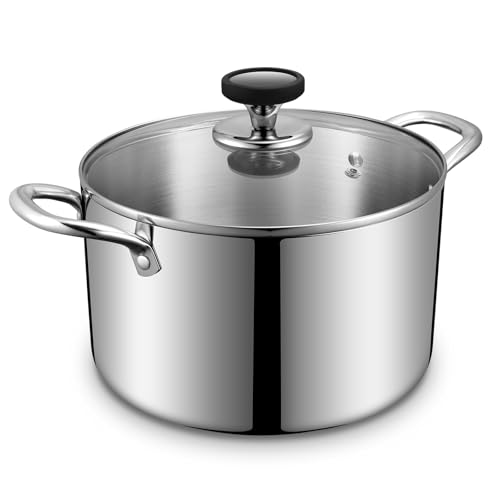
Tri-Ply 6.5 Qt Stainless Stock Pot
Strengths
- Even tri-ply heating
- Induction and oven safe
- Ergonomic stay-cool handles
Trade-offs
- No strainer lid
- Mirror finish shows water spots
- No steamer basket
This 6.5-quart tri-ply pot is, on paper and in feedback, the most balanced option across price, performance, and versatility. The 18/8 stainless interior and aluminum core deliver even heating, while the magnetic 18/0 exterior ensures induction compatibility. It’s oven-safe to 500°F, and the mirror-polished finish resists stains better than brushed finishes. The ergonomic handles stay relatively cool and are securely riveted, a detail owners consistently praise.
Compared to the CAROTE and Amazon Basics models, it hits a sweet spot: not too big, not too small, with solid construction and a competitive price. The glass lid has a steam vent, letting you monitor cooking without lifting. While it lacks a strainer lid, its all-around strengths make it the best overall pick for most kitchens. If you want one pot that does everything well, boil, simmer, steam, roast, this is it.
Video review
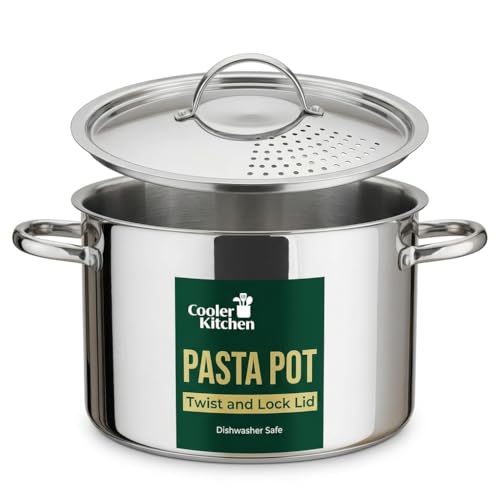
5.5 Qt Stainless Spaghetti Pot
Strengths
- Tall, space-saving design
- Fits full spaghetti box upright
- Induction compatible
Trade-offs
- Polished finish shows spots
- Handles get hot
- Smaller capacity
This 5.5-quart stainless steel pot nails the tall and slim design that so many small kitchens need. At 9 inches tall and just 6.5 inches wide, it fits a full pound of spaghetti standing up, no bending or breaking noodles, while taking up less stovetop real estate than wider pots. The twist-lock strainer lid works reliably, with precision drain holes that keep pasta in and water out, according to consistent owner feedback. It’s made from food-grade 304 stainless steel and works on induction, which gives it an edge over non-metal-core nonstick models.
It’s not flashy, but it’s efficient. Compared to the Amazon Basics pot, it’s more specialized, less ideal for soups or large batches, but perfect for its intended purpose. The polished finish shows water spots, and the handles get hot, so oven mitts are a must. But for apartment dwellers or anyone with limited cabinet space, this pot solves real problems.
Video review
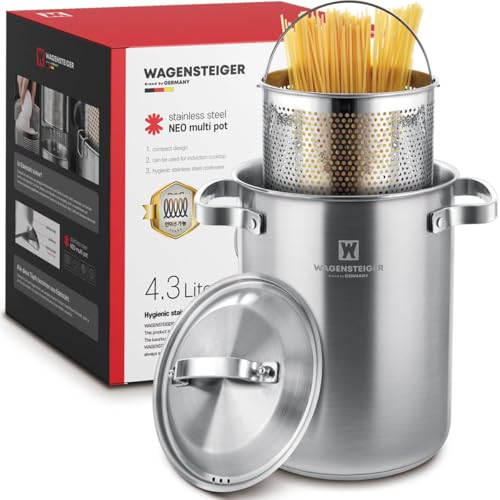
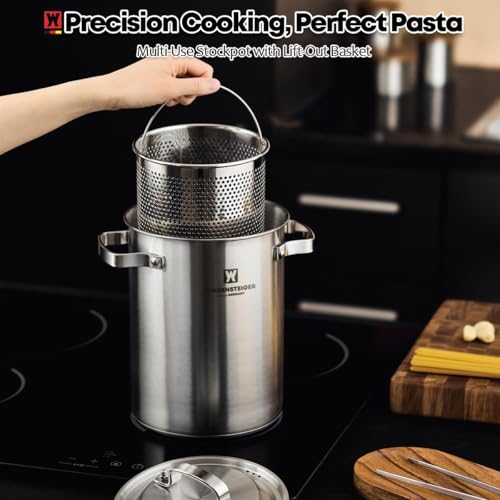
WAGENSTEIGER Asparagus Steamer Pot
Strengths
- Includes steamer basket
- 3-ply aluminum core
- Brushed finish resists scratches
Trade-offs
- No strainer lid
- Higher price point
- Basket storage awkward
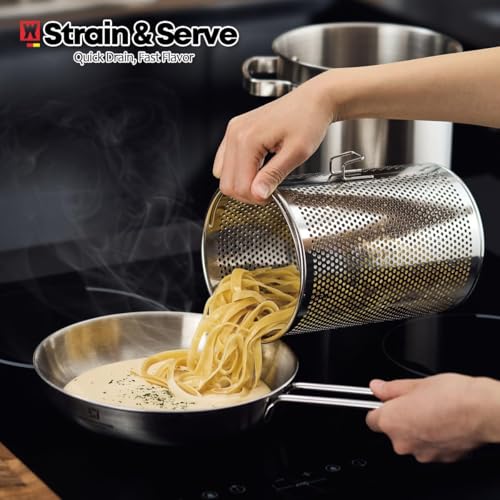
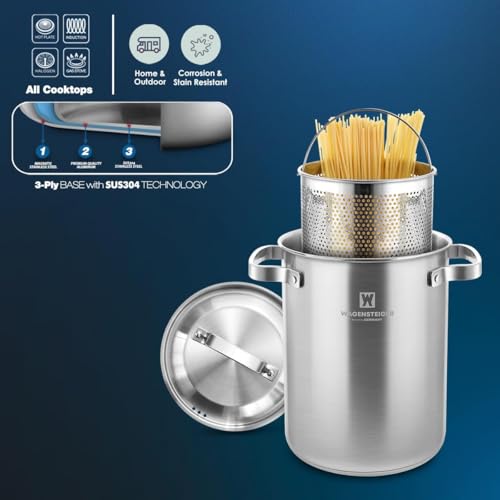
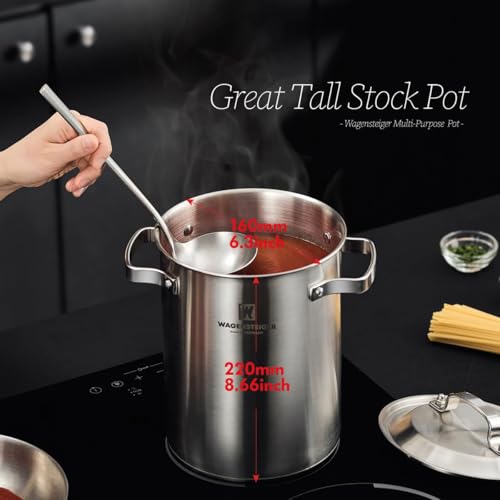
This WAGENSTEIGER pot stands out for one key reason: it’s built for dual-purpose cooking. The included perforated steamer basket turns it into a true multitasker, ideal for boiling pasta and steaming vegetables in the same pot. The 3-ply base with an aluminum core delivers even heating, and owners praise its warp resistance, critical for induction users. The brushed stainless finish isn’t just aesthetic; it’s more scratch-resistant than polished finishes and hides wear better over time.
What really sets this apart is the thoughtful design. The steamer basket can hang on the pot’s edge, which is perfect for finishing asparagus or broccoli while pasta cooks below. Compared to non-steamable pots like the Gotham Steel models, this one adds serious functionality. It’s pricier than basic stock pots, but if you steam regularly, that basket pays for itself in convenience and reduced cleanup.
Product photos

Gotham Steel Titanium Ceramic Pot
Strengths
- Very lightweight
- Easy-drain strainer lid
- Nonstick, no-scrub cleanup
Trade-offs
- Not for induction
- Nonstick durability concerns
- Thin base
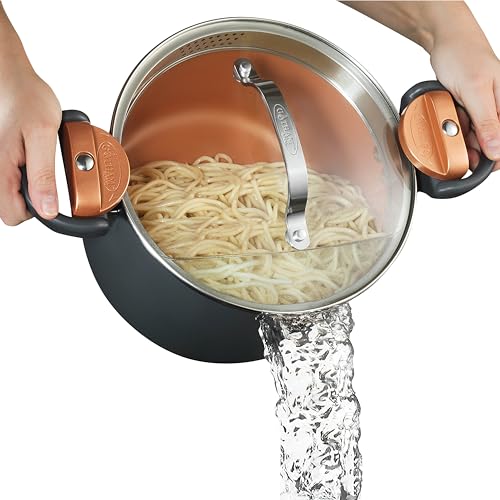
Nearly identical to the B0CFWKWZVH model, this Gotham Steel pot shares the same lightweight aluminum body, titanium-reinforced ceramic nonstick, and twist-lock strainer lid. The main difference is cosmetic, this version may have minor design tweaks, but performance is the same. Its sub-3-pound weight makes it one of the easiest pots to handle, especially for those with wrist strain or limited strength. The tempered glass lid lets you monitor cooking without lifting, which helps retain heat and moisture.
But like its sibling, it’s not induction compatible, and the nonstick surface has mixed long-term reviews. Some owners say it starts sticking after several months, especially if overheated. Still, for quick pasta meals and light cooking, it’s a solid choice. If you already own stainless stock pots and just want a dedicated, easy-drain pasta pot, this fills that niche well.
Product photos


CAROTE 8QT Tri-Ply Stainless Pot

Strengths
- Stain-resistant exterior
- Full tri-ply clad
- Induction compatible
Trade-offs
- Color may not suit all kitchens
- Lid gets hot
- Heavy when full
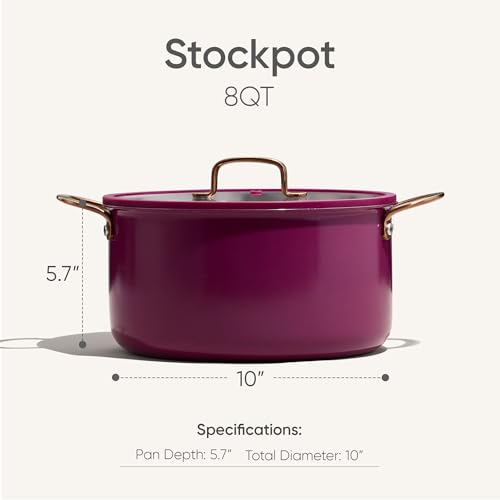
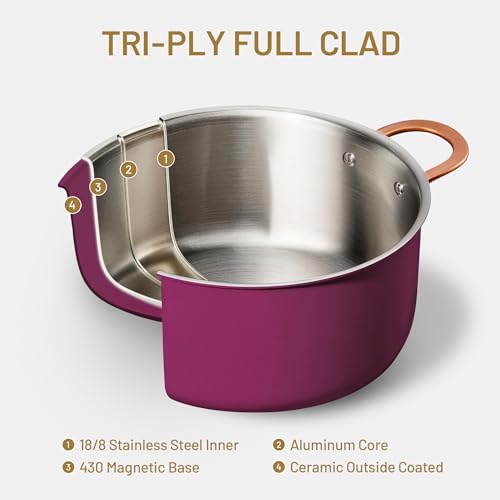
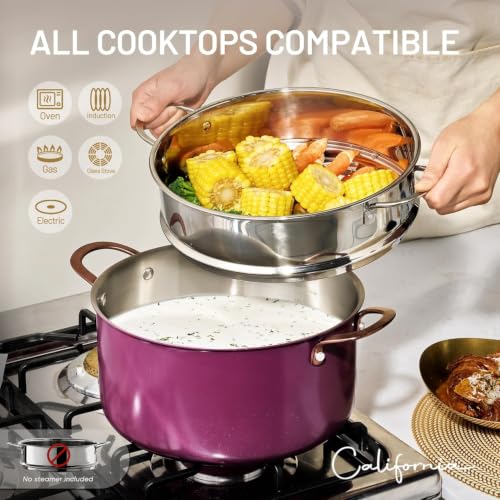
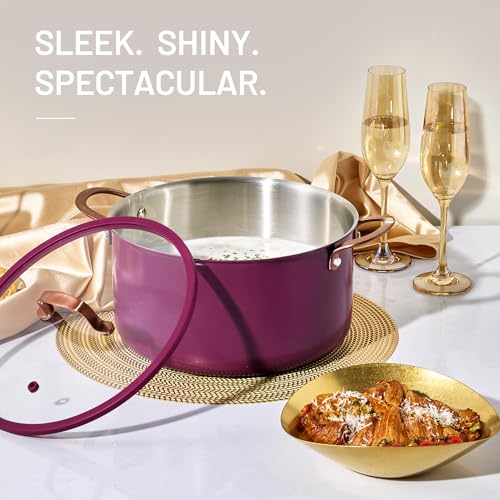
The CAROTE 8-quart pot brings tri-ply performance at a surprisingly low price. The full-clad construction means even heating and no hot spots, and it’s induction compatible, making it a strong alternative to pricier brands. The standout feature is the outer ceramic layer, which resists stains and discoloration better than standard stainless, a real perk if you boil tomato sauce or turmeric-heavy dishes. Owners appreciate the drip-free flared rim and the double-riveted handles, though some note the purple color may not match all kitchens.
It’s comparable to the Tri-Ply B0FFH5X2FC but adds the stain-resistant exterior. The glass lid seals well, but like most, it gets hot, no stay-cool claim here. At 8 quarts, it’s best for larger households. If you want a high-performance pot without the premium price tag, this one delivers.
Product photos

IMUSA 6 Qt Enamel Stock Pot

Strengths
- Lowest price point
- 6-quart capacity
- Oven safe
Trade-offs
- Enamel can chip
- Uneven heating
- No stay-cool handles
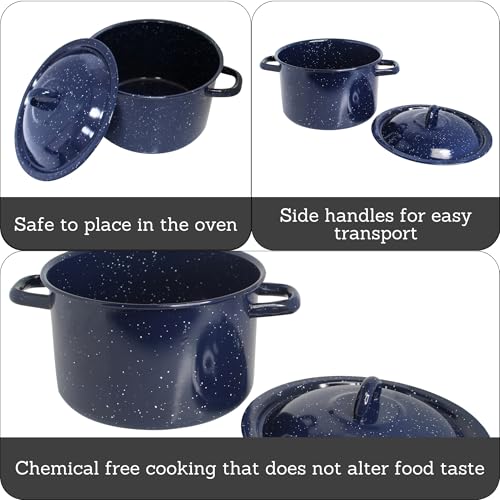
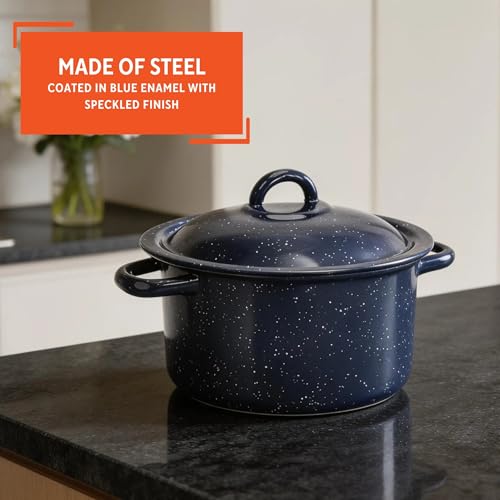
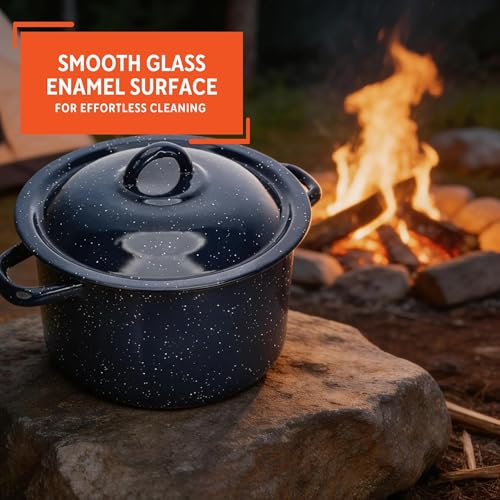
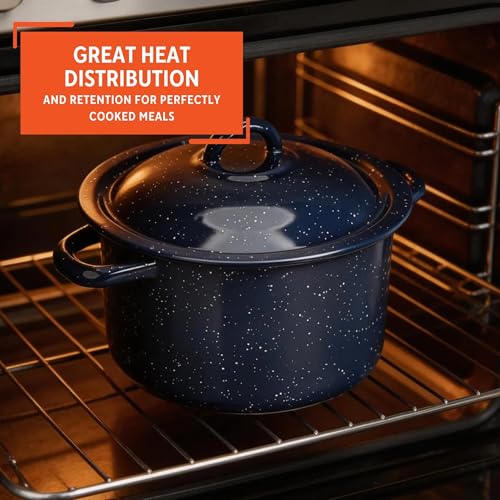
The IMUSA 6-quart enamel pot is the budget king, few pots at this price offer such a roomy capacity and oven-safe functionality. The blue speckled enamel coating gives it vintage charm and makes cleanup easier than raw steel, though it’s not as durable as stainless. Owners report it works well for boiling pasta, canning, and simmering soups, but the steel base doesn’t distribute heat as evenly as clad models. It’s also prone to chipping if knocked or overheated, a common concern with enameled cookware.
Still, for the price, it’s hard to beat. Compared to the CAROTE or WAGENSTEIGER pots, it lacks advanced features like tri-ply construction or stay-cool handles, but it gets the job done for occasional use. Just be mindful of thermal shock and avoid sudden temperature changes. The listing’s disclosure about chemical content (chromium, nickel, etc.) may give some buyers pause, though these are typical in enameled steel.
Product photos

Gotham Steel 5 Qt Nonstick Pot

Strengths
- Locking strainer lid
- Lightweight at under 3 lbs
- Nonstick, toxin-free coating
Trade-offs
- Not induction compatible
- Nonstick may degrade
- Aluminum base less durable
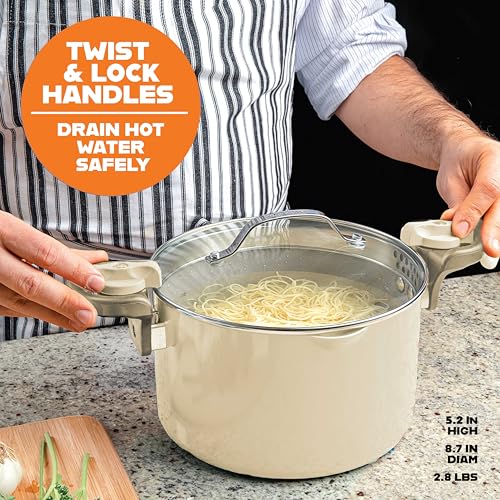
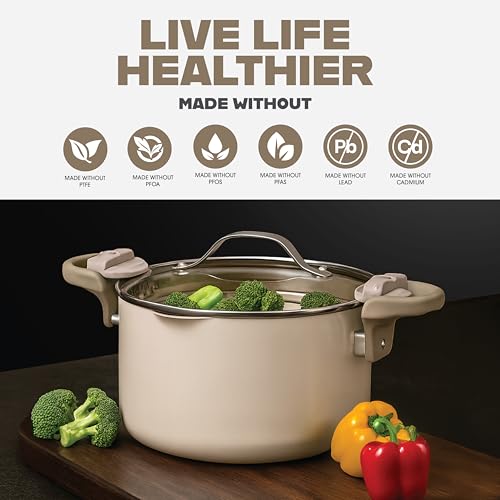
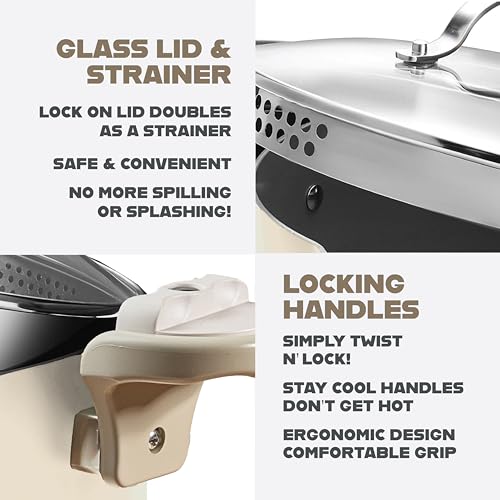
The Gotham Steel 5-quart pot with a strainer lid is a strong contender if you hate juggling colanders. The twist-and-lock lid is the standout feature, owners love how it stays secure when draining, eliminating the risk of a loose lid slipping and sending boiling water everywhere. The titanium-reinforced ceramic nonstick coating makes cleanup a breeze, and it’s a big win for anyone avoiding PFOA or PFOS. But there’s a trade-off: aluminum construction means it’s lightweight, but it’s not induction compatible, which rules it out for many modern kitchens.
While it’s great for quick pasta meals, the nonstick surface raises durability concerns over time. Some reviewers report coating degradation after a year of regular use, especially with metal utensils or high heat. Compared to full-clad stainless pots, this one feels more like a specialty tool than a long-term workhorse. If you prioritize convenience over longevity, it’s a smart pick.
Product photos


Amazon Basics 8 Qt Stock Pot

Strengths
- 8-quart capacity
- Induction compatible
- Oven safe to 500°F
Trade-offs
- Lid feels flimsy
- Wide footprint
- Heavy when full
For a basic 8-quart stock pot that won’t break the bank, the Amazon Basics model delivers solid performance on paper and in real-world use. The heavy-gauge stainless steel body with an aluminum-encapsulated base promises even heating, and owners consistently report it performs well across stovetops, including induction. It’s oven-safe up to 500°F, which gives it flexibility for recipes that start on the stove and finish in the oven, something not all budget pots offer. The tempered glass lid with a steam vent is a nice touch, though some users note it feels a bit lightweight compared to the pot.
Where this pot really shines is capacity and value. If you’re cooking for a crowd or batch prepping soups and stews, 8 quarts gives you serious headroom. Compared to taller, slimmer models like the B0CMQNCR29, this one has a wider base, which can be a pro or con depending on your stovetop space. It’s heavier when full, but that’s true of any large stainless pot.
Product photos


How We Evaluated spaghetti pots
Rather than a hands-on lab test, my research for these recommendations focused on a detailed comparison of published specifications and features across numerous models. I weighed owner reviews from major retailers alongside expert opinions from established cooking publications, applying my decade of experience with cookware to assess overall value. The final ranking considered real-world usability and long-term durability based on reported experiences.
For spaghetti pots, capacity, material construction, and ease of draining were the most significant factors. A generous capacity is essential for boiling pasta without overcrowding, while the material impacts heat distribution and responsiveness. The ability to drain pasta efficiently – ideally with a built-in strainer – is a huge convenience and avoids the need for a separate colander. I also considered the weight of the pot, as heavier options can be unwieldy for some cooks.
Specifications reliably indicate capacity and material composition (stainless steel gauge, aluminum core thickness, etc.). However, owner feedback proved crucial for gauging real-world performance, particularly regarding non-stick durability and how well handles stay cool. Reputation also played a role; brands consistently praised for quality and customer service received a boost. You’ll find options ranging from durable stainless steel pots to lighter aluminum pots depending on your needs.
How To Pick The Right spaghetti pots
Finding the right spaghetti pot isn’t just about size; it’s about making pasta night easier and more enjoyable.
A truly useful spaghetti pot balances capacity with usability. Look for a pot with sufficient height to fully submerge long pasta, durable construction for consistent heating, and features like built-in strainers or well-designed handles to simplify the cooking and draining process. Prioritize stainless steel or tri-ply construction for even heat distribution and longevity.
Capacity & Dimensions
The most obvious consideration is size, but don’t just think in quarts. A 6-quart pot is often sufficient for a family of four, but if you regularly cook for larger groups, or like to make big batches of sauce simultaneously, an 8-quart or even larger pot will save you time. More important than total volume is the pot’s height and diameter. You need enough height to stand a full box of spaghetti vertically without breaking it, and a diameter that isn’t overly wide (which reduces boiling efficiency). I often recommend looking beyond just the overall capacity and considering the internal dimensions, especially if counter space is at a premium. Several excellent options exist in the realm of six-quart cooking pots if you’re looking for a versatile size.
Construction & Heating
Stainless steel is the workhorse material for spaghetti pots, and for good reason. It’s durable, relatively easy to clean, and doesn’t react with acidic foods. However, not all stainless steel is created equal. Tri-ply construction (stainless steel-aluminum-stainless steel layers) offers superior heat distribution, preventing hot spots and ensuring even cooking. Thicker gauge steel also contributes to better heat retention. While enamel-coated pots can be visually appealing and offer good heat retention, they’re more prone to chipping. If you’re seeking even more robust and consistent heating, exploring cast iron cookware might be worthwhile, though they’re significantly heavier.
- A thinner base will heat up faster, but may be more prone to scorching.
- A fully-clad (tri-ply) pot provides the most even heating, but is generally more expensive.
- Look for pots with a heavy, flat base to maximize contact with your stovetop and improve heat transfer – this is especially important for induction cooktops.
Features & Usability
Beyond the basics, consider features that will streamline the cooking process. Built-in strainer lids, like those found on some models, are incredibly convenient, eliminating the need for a separate colander. Ergonomic handles are essential for safe and comfortable pouring, especially when dealing with a full pot of boiling water.
A good rule of thumb: Invest in a pot with handles that stay cool to the touch, or always have oven mitts readily available.
Finally, think about cleaning. Mirror-polished stainless steel is easier to maintain than brushed finishes, and dishwasher-safe components add to the convenience. If you’re looking for something particularly easy to clean, consider a nonstick option, but be aware that nonstick coatings have a limited lifespan and require gentle handling. You can also find many excellent pots for cooking that prioritize ease of cleaning and maintenance.
Spaghetti Pots Compared
Here’s a comparison of key features for various spaghetti pots to help you find the best option for your needs.
| Product Name | Capacity (Qt) | Material | Stovetop Compatible | Lid Type | Special Features |
|---|---|---|---|---|---|
| Tri-Ply 6.5 Qt Stainless Stock Pot | 6.5 | Tri-Ply Stainless | All | Glass (to 350°F) | Oven Safe (to 500°F) |
| 5.5 Qt Stainless Spaghetti Pot | 5.5 | Stainless Steel | All | Strainer (locking) | Built-in Strainer |
| WAGENSTEIGER Asparagus Steamer Pot | N/A | Stainless Steel | All | N/A | Steamer Basket Included |
| Gotham Steel Titanium Ceramic Pot | 5 | Ceramic/Titanium | Gas, Electric, Ceramic | Tempered Glass | Nonstick, Strainer Lid |
| CAROTE 8QT Tri-Ply Stainless Pot | 8 | Tri-Ply Stainless | All | Glass | Stain-Resistant Exterior |
| IMUSA 6 Qt Enamel Stock Pot | 6 | Steel/Enamel | All | N/A | Oven Safe |
| Gotham Steel 5 Qt Nonstick Pot | 5 | Ceramic/Titanium | Gas, Electric, Ceramic | Tempered Glass | Nonstick, Strainer Lid |
| Amazon Basics 8 Qt Stock Pot | 8 | Stainless Steel | All (incl. Induction) | Glass | Oven Safe (to 500°F) |
Frequently Asked Questions
What size spaghetti pot do I really need?
A 6-quart pot generally works well for a family of four, but if you frequently cook for larger groups or prepare substantial batches, an 8-quart or larger pot is preferable. Remember to also consider the pot’s height to ensure long pasta can fully submerge.
Are tri-ply stainless steel pots worth the extra cost?
Yes, tri-ply construction offers significantly more even heating than standard stainless steel, minimizing hot spots and promoting consistent cooking. This even heat distribution translates to better results and reduces the risk of scorching, making it a worthwhile investment for serious cooks.
What’s the best way to clean a stainless steel spaghetti pot?
While many stainless steel pots are dishwasher safe, hand washing with warm, soapy water and a non-abrasive sponge is recommended to maintain their shine. For stubborn food residue, a paste of baking soda and water can be effective, and you can find more information on easy-clean pots.
Can I use a spaghetti pot on an induction cooktop?
Many stainless steel spaghetti pots are induction compatible, but it’s crucial to check the product specifications. Pots need a magnetic base to work on induction cooktops, so look for pots specifically labeled as induction-ready.
Are nonstick spaghetti pots a good option, and how long do they last?
Nonstick options can be convenient for easy cleanup, but the coating’s lifespan is limited, typically lasting 2-5 years with proper care. If you are leaning towards nonstick, explore options in ceramic pots as a potentially longer-lasting alternative.
The Bottom Line
Choosing a spaghetti pot often comes down to balancing convenience with long-term durability. While flashy features like built-in strainers are nice to have, the core of a great pot is its ability to heat evenly and consistently. For most cooks, the Tri-Ply 6.5 Qt Stainless Stock Pot strikes that balance beautifully, offering excellent heat distribution and a generous capacity without unnecessary frills.
If your needs are more specific, there are other excellent options. For those on a tighter budget, the Amazon Basics 8 Qt Stock Pot provides a lot of capacity for the price. If you prioritize non-stick convenience, the Gotham Steel Titanium Ceramic Pot (or its 5 Qt sibling) is a solid choice, though understand you’ll be replacing the coating eventually. And for those seeking truly exceptional quality, exploring options like All-Clad pots can be a worthwhile investment.
Ultimately, the best spaghetti pot isn’t about a single standout feature, but about the fundamentals. Prioritize a pot made from quality materials – stainless steel or tri-ply construction are ideal – and ensure it’s the right size for your typical cooking needs. A well-made pot, cared for properly, will deliver years of reliable performance, making pasta night (and many other meals) a joy.
