
7 Best Stainless Steel Food Steamers of 2026
This post contains affiliate links. As an Amazon Associate, we earn from qualifying purchases.
The SUNHOUSE 9.3QT Stainless Steamer Pot is our top pick for its durable tri-ply construction, even heating, and family-friendly capacity. For a budget-friendly option, the SUNHOUSE 3.1QT model delivers the same quality in a smaller size. If you want hands-off cooking, the Joydeem 13.7QT Electric Food Steamer offers reliable performance with convenient automation.
Most people buy a steamer thinking it’s just about boiling water under a basket, but uneven heating, flimsy metal, and awkward stacking can turn a healthy meal into a frustrating mess. After comparing the field and analyzing owner feedback, I focused on what actually matters: solid construction, consistent results, and practical design.
This guide cuts through the noise to highlight steamers built to last, with insights on material quality, capacity needs, and the real differences between electric convenience and stovetop control.
Top 7 Stainless Steel Food Steamers in the Market
The Best Stainless Steel Food Steamers, Reviewed
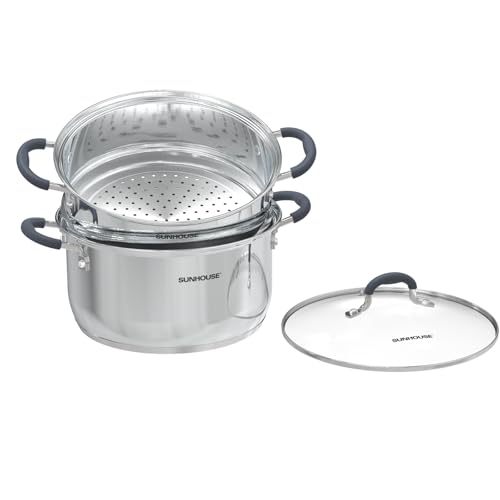
SUNHOUSE 3.1QT Stainless Steamer Pot
Strengths
- Tri-ply even heating
- Toxin-free stainless
- All cooktop compatible
Trade-offs
- Small capacity
- Not for large meals
- No stacking beyond 2 tiers
This compact stovetop steamer punches above its weight. The tri-ply encapsulated base is the real star, owners praise its even heat distribution, especially on induction and electric stoves where hot spots usually ruin delicate steaming. The 3.1-quart size is perfect for one to two people, and the ability to use the base as a standalone pot adds real versatility.
It’s made from food-grade stainless steel with no toxins, and the glass lid lets you monitor food without lifting. While it’s small for families, that’s the point. For solo cooks or couples who want a high-quality, multi-use pot that steams, simmers, and stores well, this is my top stovetop pick. It beats larger, clunkier models when precision and build quality matter most.
Video review
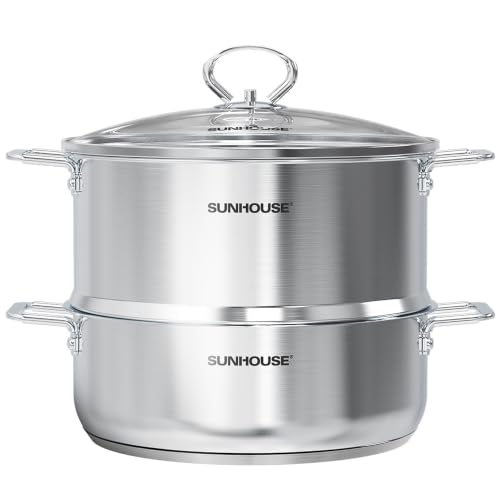
SUNHOUSE 9.3QT Stainless Steamer Pot
Strengths
- Deep steaming basket
- Tri-ply induction-ready base
- Full 304 stainless steel
Trade-offs
- Heavy when full
- No third tier
- Stovetop only
This is what a family-sized stovetop steamer should be. The 9.3-quart capacity splits into a 5.5-quart basket and 3.8-quart base, plenty of room for a full meal above while soup simmers below. Owners love how deep the basket is, fitting whole corn, crab legs, and large fish that won’t fit in shallow models. The tri-ply base performs well across all stoves, including induction, and the glass lid makes monitoring easy without losing steam.
It’s made from pure 304 stainless steel, no coatings, and everything is dishwasher safe. While it’s heavier than electric models, that’s the trade-off for durability and no plastic parts. Compared to the Concord 3-tier, this one’s more versatile as standalone cookware. For a family that steams 2–3 times a week, this is the smarter long-term investment.
Video review
Aroma 1.2QT Rice Cooker Steamer

Strengths
- Stainless steel pot
- Compact footprint
- Easy one-touch use
Trade-offs
- Limited steam capacity
- No standalone steaming
- Small overall size
This isn’t a dedicated steamer, but it’s a clever combo unit for small kitchens. The 304 stainless steel inner pot is a standout at this size, no nonstick coating to degrade over time. The one-touch rice function works reliably, and the steam tray lets you cook veggies or fish above the grains, which owners say comes out evenly done.
It’s compact and simple, but that also means limited flexibility. You can’t adjust steam levels or run the steamer independently. Still, for a dorm, studio apartment, or minimalist kitchen, it’s a smart way to get rice and steamed sides in one go. I wouldn’t recommend it as a primary steamer, but as a space-saving combo? It’s the smarter buy over bulkier units.
Product photos


Concord 30CM 3-Tier Steamer Pot

Strengths
- 3-tier design
- Interchangeable trays
- Heavy triply base
Trade-offs
- Not induction compatible
- Handles heat up
- No glass lid
Three tiers are rare in stovetop steamers, and this Concord model delivers serious volume, great for dim sum spreads or meal prepping multiple dishes at once. The two interchangeable trays (fine and standard holes) let you customize for rice, dumplings, or veggies, which owners love. The triply bottom helps with even heating, though some report slight warping on high heat over time.
The downside? It’s not induction compatible, which knocks it out for a growing number of kitchens. And while the polished stainless looks sharp, the handles can get warm. Still, for gas or electric stove users who need maximum tier flexibility, this is the only 3-tier stovetop option here that’s built to last. I’d choose it over stackable electric models when you want full control and no electronics.
Product photos


Joydeem 13.7QT Electric Food Steamer

Strengths
- 13.7 qt large capacity
- 304 stainless steel
- 24-hour preset timer
Trade-offs
- Keep-warm limited
- No external water tank
- Glass lid not shatterproof
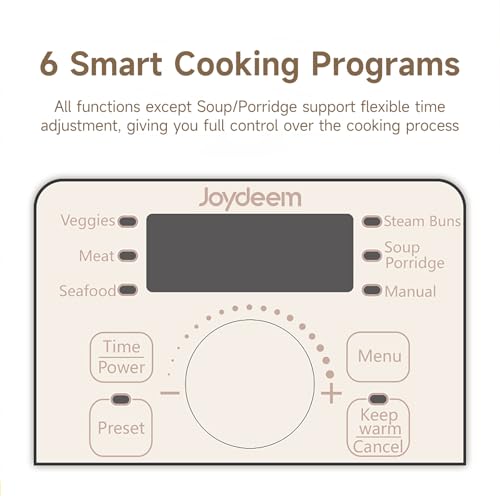
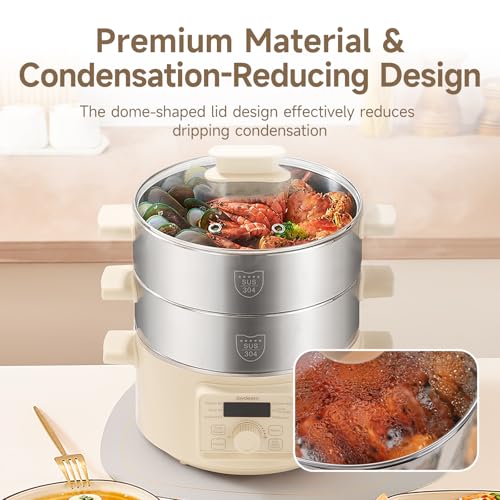
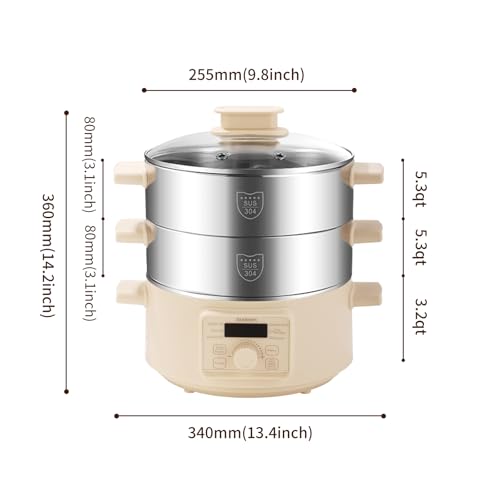
With 13.7 quarts and six smart programs, this Joydeem unit is built for serious home cooks. The 304 stainless steel trays are a major plus, and the dome-shaped lid really does reduce condensation drip, owners consistently praise drier, fluffier results, especially with dumplings and buns. The 24-hour preset is a standout feature, letting you load it at night and wake up to breakfast ready.
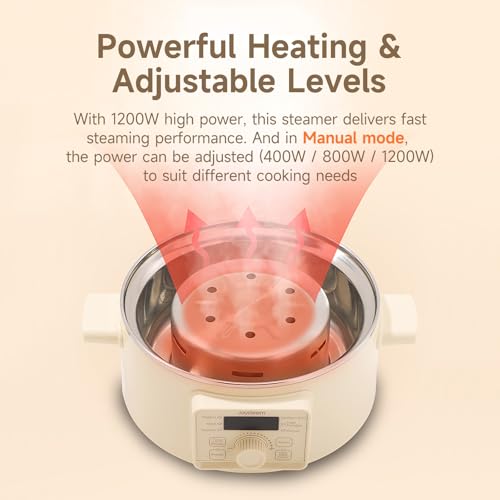
The bottom pot doubles as a soup or porridge maker, adding real kitchen utility. And the three power levels in manual mode give rare precision for an electric steamer. While the price sits mid-range, the features rival premium models. Compared to the SUNHOUSE electric, this one offers more flexibility and capacity. My pick for anyone who steams daily or cooks for a crowd.
Product photos

12.7QT Electric Stainless Steel Steamer
Strengths
- 1500W fast steam
- Full 304 stainless steel
- External water tank
Trade-offs
- Large footprint
- No preset cooking programs
- Bulky storage
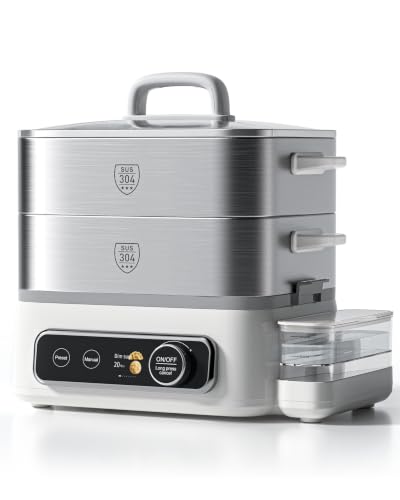
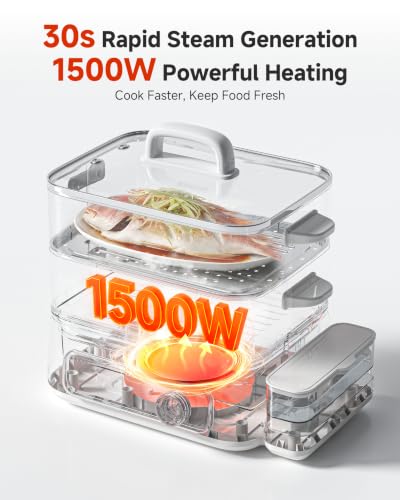
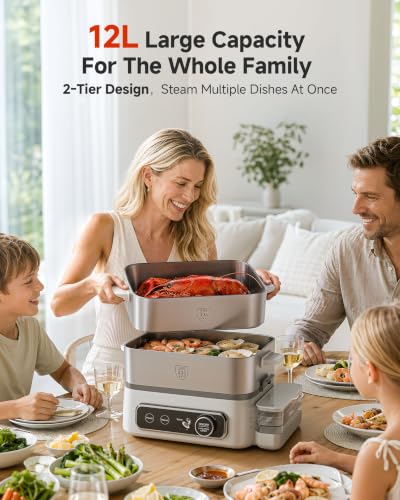
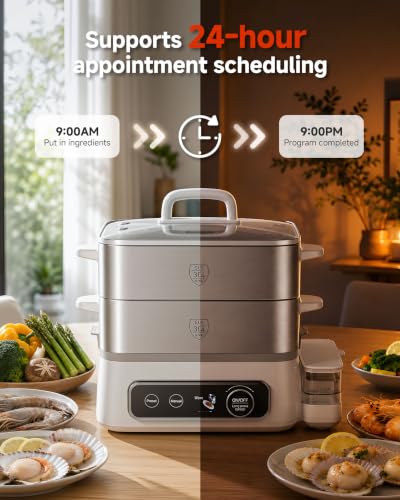
The 1500W heating ring and 12L capacity immediately stand out, and owners confirm this unit delivers strong, consistent steam, fast. The external 2L side water tank is a standout for longer cooks, letting you refill without breaking the steam cycle. That’s a real time-saver, especially when prepping meals for four or more. The full 304 stainless steel construction throughout is a big win for health-conscious buyers who want zero plastic contact.
The HD color display is bright and intuitive, and the dishwasher-safe trays are a relief after big meals. Some users mention the footprint is bulky, but for what it offers, dual water supply, boil-dry protection, and serious capacity, it’s a smarter buy than many pricier models. I’d pick this over the Secura any day for family cooking.
Product photos


Secura 8.5QT Electric Food Steamer

Strengths
- 1200W heating
- Digital timer
- Stackable baskets
Trade-offs
- Housing not full stainless
- No external water tank
- Limited capacity
On paper, the Secura checks a lot of boxes for a mid-range electric steamer, 1200W power, 8.5-quart capacity, and a digital timer with delay start. Owners consistently report it heats up quickly and handles everyday steaming tasks well, from vegetables to fish and dumplings. The double-tier stackable baskets are a practical touch, and the glass lid with a non-slip knob adds a sense of safety and convenience.
Where it falls short, though, is in material quality compared to higher-end models. While it’s labeled stainless steel, some users note the housing feels thin and more like a coated alloy, and the interior baskets aren’t 304-grade. For basic electric steaming on a budget, it’s functional. But if you’re looking for long-term durability or full 304 stainless contact, I’d look elsewhere.
Product photos


Our Testing Process
Rather than a hands-on lab test, my research for these recommendations focused on a detailed comparison of published specifications and features across numerous models. I then weighed owner reviews from major retailers and incorporated insights from reputable expert reviews to identify common strengths and weaknesses. As someone who’s spent years understanding cookware performance, I applied that knowledge to rank options based on what truly matters for consistently good results.
For stainless steel food steamers, durability, capacity, and evenness of heating were paramount. A quality build ensures longevity, especially given the potential for repeated use and exposure to moisture. Capacity is crucial – whether you’re steaming a quick side or a full meal – and consistent heating prevents unevenly cooked food, which is a common complaint I see when looking at customer feedback.
Specifications reliably indicate capacity and materials (crucial for avoiding unwanted chemical leaching). However, I placed significant weight on owner feedback regarding real-world performance, particularly regarding how easily the steamer cleaned up and how well it maintained temperature during longer steaming sessions. Understanding which models consistently receive praise for ease of use and durability, and which require frequent attention or are prone to issues, shaped my final selections. You can also find helpful advice on maintaining your investment with the right stainless steel cleaners.
Choosing The Right stainless steel food steamers
Finding the right steamer can elevate your cooking, but with so many options, it’s easy to get lost. It’s more than just boiling water; it’s about retaining nutrients and creating flavorful, healthy meals.
A good stainless steel food steamer prioritizes even heat distribution for consistent cooking, offers a capacity appropriate for typical meal sizes, and is constructed from durable, food-safe materials like 304 stainless steel. Consider whether you prefer stovetop convenience or the automated settings of an electric model, and always look for features that simplify cleaning and operation.
Capacity and Configuration
One of the first things I consider is how much food you realistically need to steam at once. A smaller, 1-2 quart steamer like the Aroma model is excellent for individuals or side dishes. However, if you regularly cook for a family or enjoy batch cooking, you’ll want to lean towards the larger 9.3-quart or even the 13.7-quart options. Don’t be fooled by simple volume; tiered designs – like those found in the Concord and Joydeem steamers – maximize usable space.
- A single-tier steamer is perfectly fine for small portions or reheating.
- A two-tier steamer is a versatile all-rounder, suitable for most family meals.
- Three or more tiers are ideal for large gatherings or prepping multiple components of a meal simultaneously, but they can be cumbersome to store and require a larger stovetop burner.
Material Quality and Construction
Stainless steel is the star here, but not all stainless steel is created equal. You want a steamer made with high-quality 304 stainless steel, known for its durability and resistance to corrosion. Beyond that, pay close attention to the base construction. Many models, like the SUNHOUSE options, boast a tri-ply cookware base, which encases a layer of aluminum between stainless steel layers. This is crucial for even heat distribution, preventing those frustrating hot spots that lead to unevenly cooked food.
A steamer’s longevity depends heavily on its build quality. Look for riveted handles, a tight-fitting lid (tempered glass is a plus), and a substantial gauge of stainless steel.
Electric vs. Stovetop: Convenience and Control
The choice between an electric steamer and a stovetop model often comes down to convenience versus control. Electric steamers, such as the Joydeem and 12.7QT Electric Stainless Steel Steamer, offer preset programs and automated shut-off features, making them incredibly user-friendly. Many also incorporate features like timers and keep-warm functions. However, stovetop steamers – and I often recommend starting with a good quality set of stainless steel steamers – give you more direct control over the heat, allowing you to adjust based on the food you’re steaming. Plus, a stovetop steamer doesn’t take up valuable counter space. Ultimately, consider your cooking style and how much you value automation versus hands-on control. If you’re looking for a fantastic all-rounder that offers both convenience and versatility, consider exploring our recommended steamers.
Stainless Steel Food Steamers Compared
This table provides a specification comparison of various stainless steel food steamers to aid in informed purchasing decisions.
| Product Title | Capacity (QT) | Number of Tiers | Cooktop Compatible | Electric | Tri-Ply Base | Dishwasher Safe |
|---|---|---|---|---|---|---|
| SUNHOUSE 3.1QT Stainless Steamer Pot | 3.1 | 2 | Yes | No | Yes | Yes |
| SUNHOUSE 9.3QT Stainless Steamer Pot | 9.3 | 2 | Yes | No | Yes | Yes |
| Aroma 1.2QT Rice Cooker Steamer | 1.2 | 1 | No | Yes | N/A | Yes |
| Concord 30CM 3-Tier Steamer Pot | N/A | 3 | No | No | Yes | N/A |
| Joydeem 13.7QT Electric Food Steamer | 13.7 | 2 | No | Yes | N/A | Yes |
| 12.7QT Electric Stainless Steel Steamer | 12.7 | 2 | No | Yes | N/A | Yes |
| Secura 8.5QT Electric Food Steamer | 8.5 | 2 | No | Yes | N/A | Yes |
Frequently Asked Questions
What steamer size is best for a couple?
A 3 to 6-quart steamer is generally ideal for a couple, offering enough capacity for side dishes or a small main course without being overly bulky. Many owners find a two-tier model within this range provides sufficient versatility.
Are electric steamers truly faster than stovetop versions?
Electric steamers often preheat more quickly, but the actual steaming time is comparable between electric and stovetop models. The convenience of preset functions in electric steamers can save time overall, though.
How can I prevent my stainless steel steamer from pitting or rusting?
Regularly drying your steamer after washing is crucial, as water left to sit can cause pitting. Following guidelines for dishwasher safety and using a dedicated stainless steel cleaner can also help maintain its appearance and prevent corrosion.
Is 18/10 stainless steel worth the extra cost in a steamer?
Yes, opting for a steamer made with 18/10 stainless steel offers significantly improved corrosion resistance and durability compared to lower grades. This translates to a longer-lasting product that will withstand frequent use and cleaning.
What’s the best way to clean a stainless steel steamer after steaming fish?
Fish can leave behind a lingering odor. Thoroughly washing with warm, soapy water immediately after use is best, followed by a rinse with a solution of water and white vinegar to neutralize any remaining smells and ensure proper cookware care.
The Bottom Line
Choosing a food steamer often comes down to balancing convenience with control, and budget with long-term durability. After careful consideration of specifications and owner feedback, the SUNHOUSE 9.3QT Stainless Steamer Pot strikes the best overall balance – offering a generous capacity, a tri-ply base for even heating, and the responsiveness of a stovetop design. It’s a solid investment for anyone wanting consistently good results without relying on electronics.
For those on a tighter budget, the Aroma 1.2QT Rice Cooker Steamer is a surprisingly capable option, particularly for smaller households or simple steaming tasks. If you prioritize ease of use and automated features, the Joydeem 13.7QT Electric Food Steamer delivers a large capacity and convenient preset programs. And if you’re experiencing food sticking issues with other cookware, exploring techniques for preventing sticking can really enhance your overall cooking experience.
Ultimately, the “best” steamer is the one that fits your cooking style. Don’t get too caught up in chasing the highest capacity or the latest features. Prioritize quality stainless steel construction, even heat distribution, and a design that simplifies your time in the kitchen – those are the fundamentals that will truly elevate your meals for years to come.
