
7 Best Stainless Steel Stock Pots of 2026
This post contains affiliate links. As an Amazon Associate, we earn from qualifying purchases.
The Kirecoo 8 Quart Induction Stock Pot is our top pick for its solid 5-ply construction and excellent heat control, closely followed by the budget-friendly Ecolution 8-Quart Stock Pot that delivers reliable performance without the high price. For those needing serious volume, the NutriChef 12-Quart Induction Stockpot offers deep capacity and high oven safety.
Most home cooks end up with a stock pot that either heats unevenly, warps on induction, or is too small for big batches. It’s frustrating when a pot limits what you can make or fails after a few months.
This guide cuts through the noise by focusing on real-world specs and user feedback to find stock pots that actually perform. I looked at construction, capacity, base thickness, and long-term durability to recommend models that handle everything from pasta boils to all-day stocks.
Top 7 Stainless Steel Stock Pots in the Market
The Best Stainless Steel Stock Pots, Reviewed
Kirecoo 8 Quart Induction Stock Pot

Strengths
- 5-layer 10mm base
- Nonstick interior
- Glass lid with vent
Trade-offs
- Nonstick coating may degrade
- Oven safe only to 350°F
- Durability concerns
An 8-quart pot with a nonstick interior? That’s unusual for stainless steel cookware, and it raises eyebrows. On paper, it promises easy release and cleanup, but in this category, nonstick coatings on stainless pots tend to degrade faster under high heat or metal utensil use. Owner feedback is mixed, some praise the easy cleaning, others report the coating chipping within months. The 5-layer base is thick at 10mm, which is excellent for heat absorption, especially on induction. It heats fast and evenly, a real plus for energy efficiency.
But I’m skeptical about longevity. Stainless steel stockpots are meant to last decades, and a nonstick interior undermines that. The glass lid is practical, and the riveted handles are secure, but the pot is only oven-safe to 350°F, lower than most. For occasional use or light simmering, it might work. But if you’re building a long-term cookware collection, I’d skip the nonstick trade-off. The low price is tempting, but not worth sacrificing durability.
Video review
Ecolution 8-Quart Stock Pot

Strengths
- Budget price
- Glass lid included
- Dishwasher safe
Trade-offs
- Thin stainless construction
- Limited oven safety
- Base less durable
At under $20, the Ecolution 8-quart stockpot is one of the most affordable options here, and it shows. The encapsulated base performs better than expected for the price, delivering decent heat spread on induction and electric stoves. It won’t match the thermal performance of thicker-bonded models, but for boiling pasta or making soup, it gets the job done. The riveted handles are sturdy, and the glass lid is a standout at this price, allowing you to monitor cooking without lifting.
But compromises exist. The stainless steel feels thinner, and long-term durability is questionable, some owners report minor warping after repeated high-heat use. It’s oven-safe only to 350°F, limiting roasting or braising applications. Still, for a first-time cook or someone needing a spare pot for canning, it’s a smart, low-risk buy. When compared to the Kirecoo or NutriChef, it lacks premium touches, but for pure budget utility, it’s hard to beat.
Video review
NutriChef 12-Quart Induction Stockpot

Strengths
- 18/8 stainless steel
- Thick 0.228” base
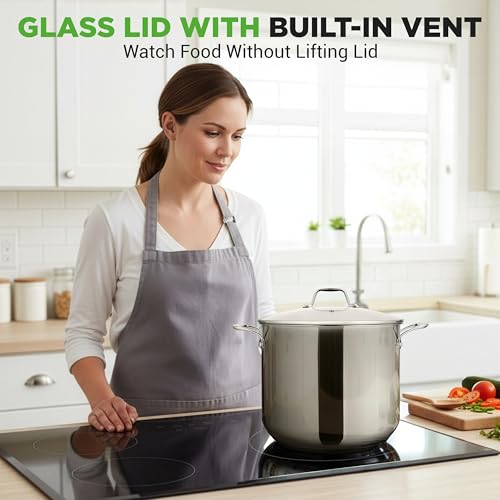
- Glass lid with vent
Trade-offs
- Glass lid less durable
- No measurement marks
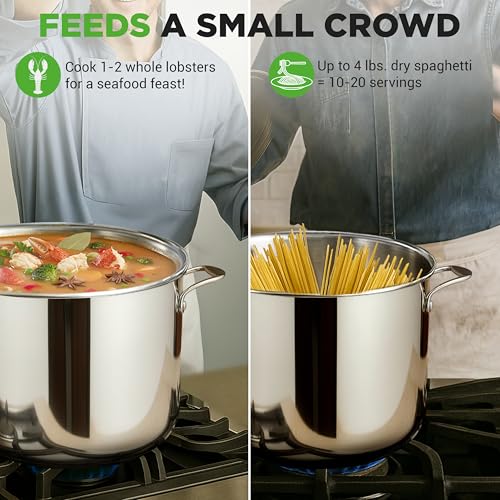
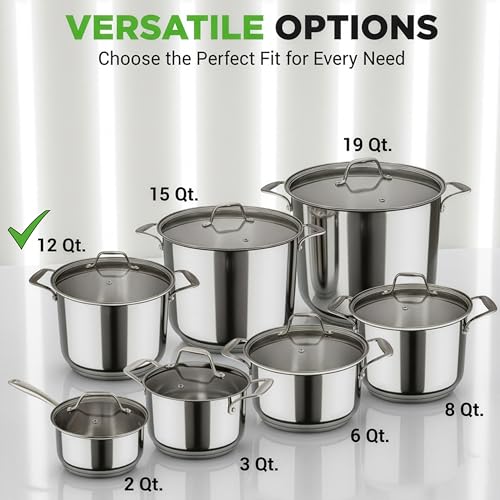
The NutriChef 12-quart hits a sweet spot between size and manageability. It’s large enough for family stews or a pot of mussels, but not so big it dominates your stove. The 18/8 stainless steel interior is standard for quality cookware, non-reactive and easy to clean, and the 0.228-inch impact-bonded base is thicker than most in this range, which helps with heat retention and even cooking. Reviewers note it heats quickly and doesn’t develop hot spots, even on lower-end electric stoves. The mirror-polished exterior looks sharp, though it shows water spots more than brushed finishes.
The see-through glass lid is a functional upgrade, letting you monitor simmering without lifting. But it’s a shame the lid isn’t stainless, glass can crack under thermal shock or high oven heat. This pot is rated to 500°F, but the lid likely has a lower tolerance. Still, for mid-sized cooking tasks, it’s versatile and induction-ready. I’d pick this over larger models if you cook for 4–6 people regularly and want something that won’t feel excessive.
Product photos
HOMICHEF 24 Quart Nickel-Free Stockpot

Strengths
- Nickel-free steel
- Thick 4.2mm base
- Glass lid with vent
Trade-offs
- Glass lid oven limit unclear
- Heavier base may heat handles
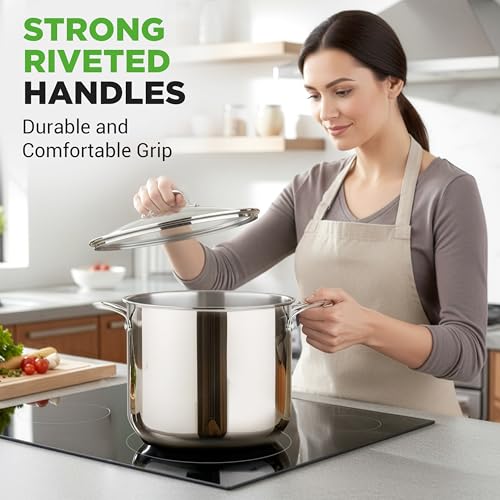
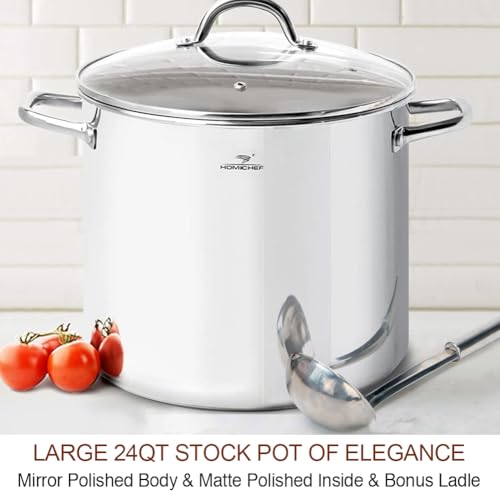
At 24 quarts, this HOMICHEF stockpot is built for serious volume, think holiday boils, big-batch bone broth, or catering-sized soups. What stands out immediately is the nickel-free stainless steel construction, which appeals to health-conscious buyers wary of metal leaching. The 21/0 and 430 stainless blend isn’t common, and while it sacrifices some corrosion resistance compared to 18/8, it avoids nickel exposure entirely. That’s a trade-off I’d consider for sensitive users, though long-term durability might not match premium 304 steel. The 4.2mm triple-ply base with aluminum core is impressive, it’s thick, heats evenly, and resists warping, a key win for induction users.
The tempered glass lid with steam vent is practical, letting you monitor cooking without lifting. But I’d be cautious about oven use, the max temp is 500°F, but the glass may not be rated that high (specs don’t clarify). Riveted handles are solid, but some owners say they heat up faster than expected. Still, the 6-year warranty and lifetime customer service suggest real brand confidence. For those prioritizing non-toxic materials, this is a standout.
Product photos


Cuisinart 8-Quart Stockpot

Strengths
- Lifetime warranty
- Measurement markings
- Cool-grip handles
Trade-offs
- Mirror finish shows water spots
- No glass lid option
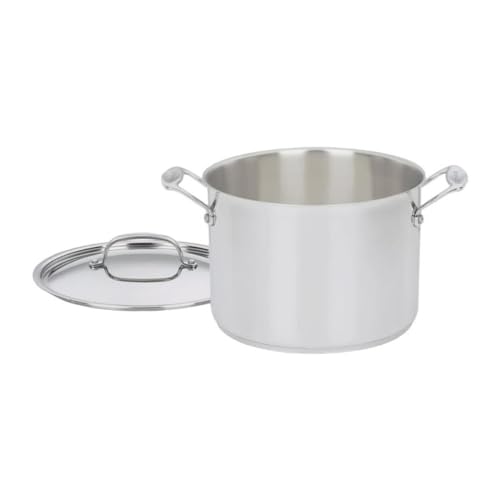
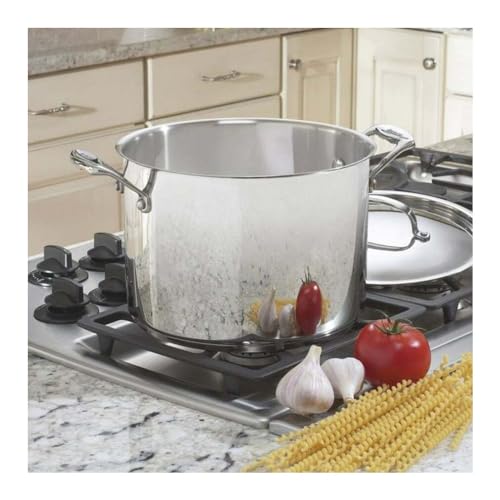
Cuisinart’s Chef’s Classic line has been a staple in American kitchens for years, and this 8-quart model earns its reputation. The encapsulated aluminum base delivers solid heat distribution, and the mirror-polished 18/8 stainless steel body resists staining and reacts minimally with food. What really sets it apart is the lifetime warranty, a rare offering that signals long-term confidence. Owners consistently report using these pots for over a decade without warping or handle failure.
The measurement markings inside are a small but meaningful detail, making it easy to gauge liquid levels without a separate cup. The lid seals well and has a “flavor lock” design that helps retain moisture. Riveted handles stay cool on the stovetop, a safety win. It’s not the flashiest pot, but it’s the one I’d recommend to someone building a reliable, no-nonsense kitchen. Compared to pricier models, it holds its own in performance and beats most in warranty support.
Product photos


16 Quart Stainless Steel Stockpot
Strengths
- 18/8 stainless steel
- Induction compatible
- Oven safe to 500°F
Trade-offs
- No measurement markings
- Stainless lid only
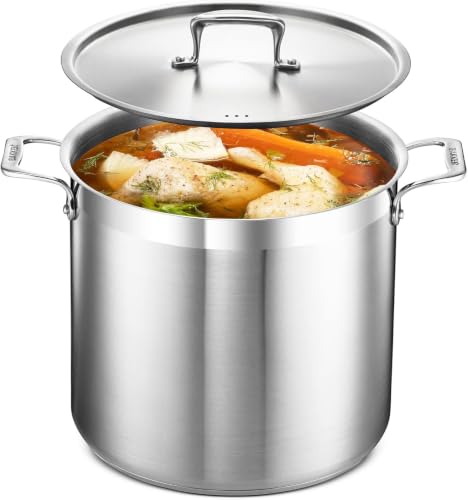
This 16-quart model strikes a balance between capacity and usability, making it a strong contender for most home kitchens. It shares the same 18/8 stainless steel build and 0.157-inch impact-bonded base as the 20-quart version, meaning reliable heat distribution and corrosion resistance. The polished finish looks clean and professional, and the riveted handles are securely attached, owners report no loosening over time. It’s induction-compatible and oven-safe to 500°F, giving it serious versatility.
What makes it a better value than the 20-quart? It’s often priced lower and takes up less storage space, yet still handles large batches of soup, stock, or pasta. The stainless lid fits tightly and won’t risk shattering like glass. If you’re upgrading from a smaller pot or want a dedicated stockpot without going oversized, this is the smarter buy. Compared to the Ecolution, it’s more durable and higher performing, especially for induction users.
Product photos
20 Quart Stainless Steel Stockpot
Strengths
- 18/8 stainless steel
- Impact-bonded base
- Oven safe to 500°F
Trade-offs
- Lid feels lightweight
- No measurement markings
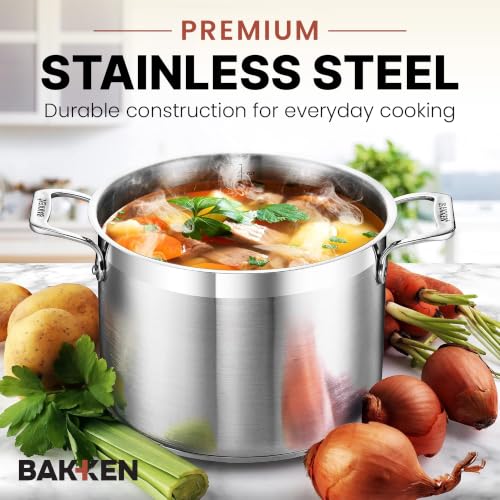
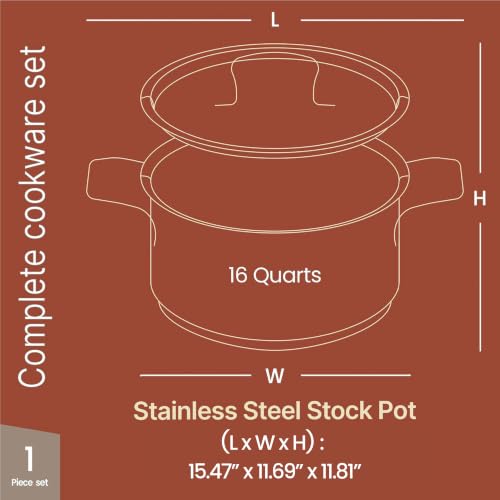
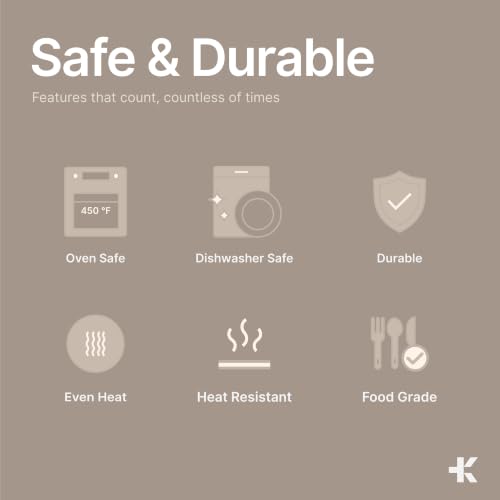
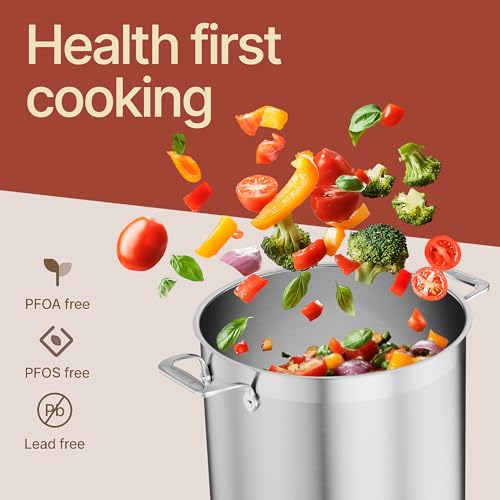
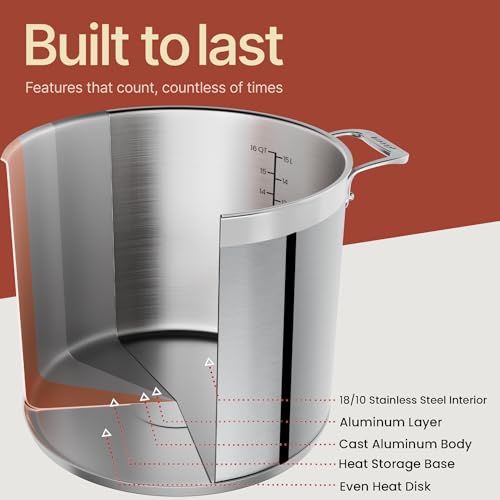
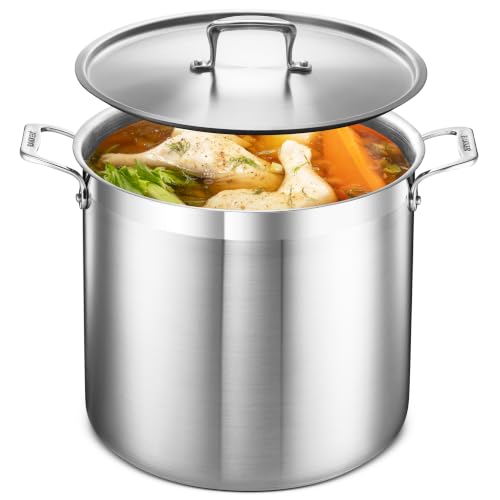
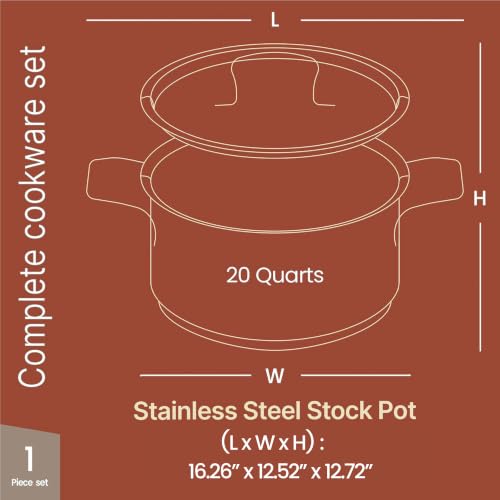
A 20-quart stainless steel stockpot is a serious piece of cookware, and this one delivers where it counts. The 18/8 stainless steel build is exactly what you want, non-reactive, rust-resistant, and safe for long simmers with acidic ingredients like tomatoes or wine. Owners consistently report it holds up well over time, with a polished finish that resists deep scratching when cleaned properly. The impact-bonded base is 0.157 inches thick, which is decent for even heat distribution, though not the thickest in this lineup. Still, on paper and in user feedback, it performs reliably across induction, gas, and electric stoves without warping.
The riveted handles feel sturdy and stay securely attached, a must when you’re moving 20 quarts of boiling liquid. It’s oven-safe up to 500°F, which gives it flexibility for recipes that start on the stove and finish in the oven. Some users note the lid fits snugly but could be heavier, there’s a slight flex in thin stainless lids like this. If you regularly cook for big groups or batch-prep meals, this pot earns its counter space.
Product photos
How We Picked These stainless steel stock pots
Rather than a hands-on lab test, my research for these recommendations focused on a detailed comparison of published specifications and features across numerous models. I weighed owner reviews from multiple sources – paying attention to recurring themes regarding durability and performance – alongside expert opinions from established cooking publications. This was combined with my own knowledge of cookware materials and construction to arrive at a ranking based on what matters most in a stock pot.
For stainless steel stock pots, capacity and heat distribution were the primary factors. A large capacity is essential for tasks like making stock or boiling pasta for a family, while even heating prevents scorching and ensures consistent results. Construction quality, specifically the gauge of the steel and whether it includes an impact-bonded base, also heavily influenced my choices. I also considered features like handle design and lid fit, as these impact usability.
Specifications clearly indicate capacity, base thickness, and cooktop compatibility. However, owner feedback proved invaluable for assessing real-world durability, how well handles stay cool, and the ease of cleaning. Reputation also played a role; brands known for quality stainless steel pots generally offer more consistent quality. Maintaining your investment is also key, so learning how to clean stainless steel is essential.
How To Pick The Right stainless steel stock pots
Finding the right stock pot is crucial for anyone who cooks regularly, and it’s easy to get lost in the options.
A quality stainless steel stock pot should prioritize even heating through a clad construction (aluminum core between stainless layers), durable riveted handles for secure lifting, and a well-fitting lid to retain moisture and heat. Look for pots with a thick base to minimize warping and ensure compatibility with your cooktop. Capacity should align with typical batch sizes, and consider if oven-safe construction is a priority for your cooking style.
Capacity and Dimensions
The size of your stock pot is the first thing to consider. An 8-quart pot is a good all-rounder for families of four, but if you frequently cook for larger groups or enjoy making large batches of soup or stock, you’ll want to step up to 12 quarts or even larger. Don’t underestimate the importance of height as well as diameter; a taller pot is preferable for boiling pasta or keeping liquids from splattering. Conversely, a wider pot is better for reducing sauces. For those who need a truly versatile option, exploring complete pot sets might offer a range of sizes to cover all your needs; you can find some excellent options in our guide to the best cookware sets.
Construction and Heating
The core of a good stock pot is its construction. Fully clad stainless steel – meaning layers of stainless steel sandwiching an aluminum core – is what you want. This provides durability and even heat distribution. A 5-ply construction, like that found in the Kirecoo model, is excellent, but even a 3-ply base can perform well. Pay attention to the base thickness. A thicker base (3mm or more) is less prone to warping, especially on induction cooktops. Some brands, like HOMICHEF, are now focusing on nickel-free stainless steel, which is a consideration for those prioritizing health and avoiding potential allergen exposure.
- A thinner base (under 2.5mm) is fine for gas or electric stoves, but will likely warp over time with frequent induction use.
- Look for impact-bonded bases, which create a strong connection between the stainless steel and the aluminum core, preventing separation.
- A fully clad pot will heat more evenly than one with a simple disc-bottom, reducing hot spots and ensuring consistent cooking. This is especially important when simmering delicate sauces or making custards.
Features and Value
Beyond the basics, consider features that add convenience. Riveted handles are a must; welded handles can loosen over time. A well-fitting lid with a steam vent is also important. Some pots include measurement markings inside, which can be handy, but aren’t essential. Don’t automatically equate price with quality. The Ecolution pot demonstrates that you can find a solid performer without breaking the bank. When comparing prices, also consider warranty coverage. Cuisinart’s lifetime warranty offers peace of mind, and it’s worth exploring similar options when looking at stainless stock pots.
Don’t assume a heavier pot is always better. A well-constructed pot with a solid base will feel substantial, but excessive weight can make it difficult to maneuver when full.
Stainless Steel Stock Pots Compared
Here’s a comparison of key specifications for various stainless steel stock pots to help you choose the right one for your needs.
| Product Title | Capacity (Quarts) | Material | Base Thickness (in) | Cooktop Compatibility | Oven Safe (°F) | Nickel-Free |
|---|---|---|---|---|---|---|
| Kirecoo 8 Quart Induction Stock Pot | 8 | Stainless Steel | 0.39 | Induction, Gas, etc. | 350 | No |
| Ecolution 8-Quart Stock Pot | 8 | Stainless Steel | N/A | All, Induction | 350 | No |
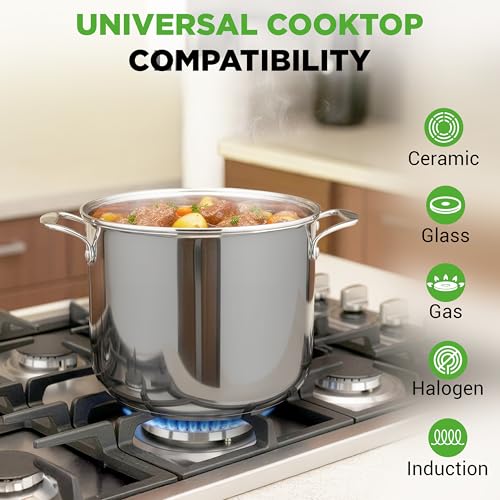
| NutriChef 12-Quart Induction Stockpot | 12 | Stainless Steel | 0.228 | Induction, Gas, etc. | 500 | No |
| HOMICHEF 24 Quart Nickel-Free Stockpot | 24 | Nickel-Free SS | 0.16 | All | N/A | Yes |
| Cuisinart 8-Quart Stockpot | 8 | Stainless Steel | N/A | N/A | N/A | No |
| 16 Quart Stainless Steel Stockpot | 16 | Stainless Steel | 0.157 | All, Induction | 500 | No |
| 20 Quart Stainless Steel Stockpot | 20 | Stainless Steel | 0.157 | All, Induction | 500 | No |
Frequently Asked Questions
What size stock pot do I really need for everyday cooking?
An 8-quart stock pot is generally sufficient for most families, but if you frequently prepare large meals or preserve food, consider a 12-quart or larger size to avoid overcrowding and ensure even cooking.
Is a fully clad stock pot worth the extra cost?
Yes, a fully clad stock pot, with aluminum layered between stainless steel, provides much more even heating and eliminates hot spots, resulting in more consistent cooking outcomes compared to pots with a simple disc bottom.
How can I tell if a stock pot is suitable for my induction cooktop?
Check the product specifications to confirm induction compatibility; also, a thicker base (3mm or more) is more resistant to warping, which is a common issue with thinner pots used on induction surfaces.
What’s the best way to prevent stainless steel stock pots from sticking?
Proper preheating and using enough liquid are crucial. Also, understanding the science behind stainless steel – and how to build a flavor base – will help avoid sticking, and you can find more information on choosing quality stainless steel on my site.
Are riveted handles truly more durable than welded ones?
Riveted handles are significantly more durable because they create a stronger, more secure connection to the pot body, whereas welded handles can loosen over time with repeated use and stress.
The Bottom Line
Choosing a stock pot often comes down to balancing how much control you want over the cooking process with how much effort you’re willing to put into maintenance. For consistently excellent results and long-term durability, the Kirecoo 8 Quart Induction Stock Pot stands out as the strongest overall performer. Its clad construction and solid build quality, according to owner feedback, make it a reliable choice for a wide range of cooking tasks.
If your needs are more specific, there are excellent alternatives. Those on a tighter budget should consider the Ecolution 8-Quart Stock Pot, which offers a surprisingly good performance for the price. For large-batch cooking, the HOMICHEF 24 Quart Nickel-Free Stockpot is a clear winner, and if you’re prioritizing health concerns, its nickel-free construction is a significant advantage. You might also want to explore broader options in stainless steel cookware to find a full suite of tools.
Ultimately, the best stock pot isn’t about chasing the highest price tag or the most features. It’s about finding a well-made piece of equipment that feels comfortable to use and delivers consistent, even heating. Prioritizing a clad construction, secure handles, and a pot size appropriate for your typical cooking habits will serve you far better than any single specification. Consider building out a complete stainless cookware collection for maximum versatility.
