
7 Best Steel Saucepans of 2026
This post contains affiliate links. As an Amazon Associate, we earn from qualifying purchases.
The Cuisinart 1.5Qt Multiclad Pro Saucepan stands out as the best overall steel saucepan thanks to its fully-clad construction and high-quality 18/10 stainless steel. For those on a budget, the Michelangelo 1Qt & 2Qt Saucepan Set delivers strong performance with tempered glass lids and solid build. If you’re after maximum versatility, the EWFEN 1Qt, 2Qt, 3Qt Saucepan Set covers all your bases with a full range of sizes.
Choosing the right steel saucepan isn’t just about picking a pot that looks good on the stove. Too many people end up with warped pans, loose handles, or uneven cooking because they overlooked construction details. After comparing the field and analyzing owner feedback, I focused on models that deliver consistent heat, solid build quality, and real kitchen value. This guide cuts through the noise to highlight the saucepans that actually perform, based on specs, materials, and what users report over time.
Top 7 Steel Saucepans in the Market
The Best Steel Saucepans, Reviewed
Farberware 2 Qt Stainless Saucepan

Strengths
- Full cap aluminum base
- Induction compatible
- Snug-fitting lid
Trade-offs
- Handle heats up
- Mirror finish shows marks
- Oven safe only to 350°F
This Farberware hits a sweet spot between price and performance. The full cap base, stainless over thick aluminum, delivers even heating that owners say rivals more expensive sets. It’s induction-compatible, dishwasher-safe, and the mirror finish resists staining well. The handle is comfortable and securely riveted, though not quite as ergonomic as some.
Compared to the Cuisinart Chef’s Classic, it’s lighter and more affordable, yet still delivers solid results. The bell-shaped lid fits snugly and the rolled rim helps with pouring, though not as cleanly as a tapered spout. For most home cooks, this is the easy pick if you want reliability without overspending.
Video review
Michelangelo 1Qt & 2Qt Saucepan Set

Strengths
- 18/10 stainless steel
- Oven safe to 600°F
- Induction compatible
Trade-offs
- Glass lids heavy
- No pour spout
- Mirror finish shows smudges
This set offers a rare combo: true 18/10 stainless steel, tri-ply base, and induction compatibility at a bargain price. The impact-bonded aluminum base is thick enough to prevent warping and deliver even heat, and owners report it performs well on induction, better than many pricier rivals. The mirror finish stays shiny, and the double-riveted handles feel secure.
Compared to the CAROTE, it feels more robust and better balanced. The glass lids are sturdier, and the oven-safe rating up to 600°F gives it an edge. For the price, it’s one of the smarter buys if you want non-toxic, durable cookware without sacrificing performance.
Video review
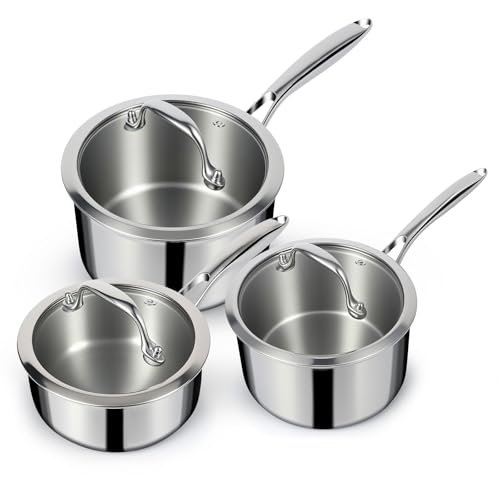
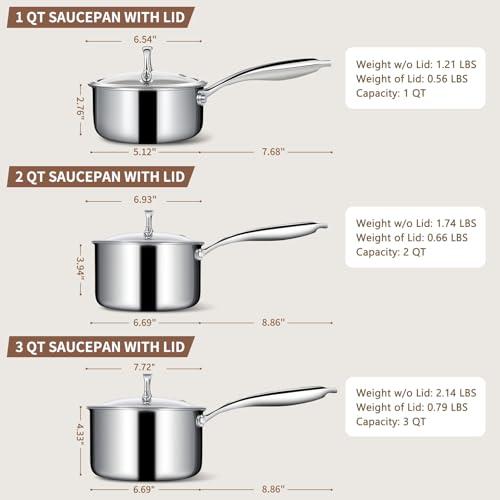
EWFEN 1Qt, 2Qt, 3Qt Saucepan Set
Strengths
- Three versatile sizes
- Stay-cool handles
- Even heat distribution
Trade-offs
- Glass lid assembly risk
- Lids not oven safe
- Knobs may melt
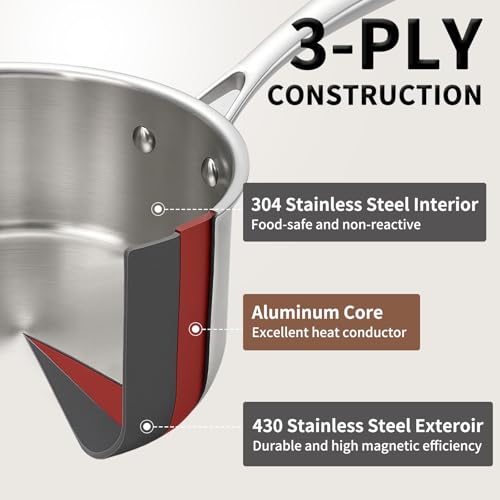
If you need multiple sizes and want consistent performance across them, this EWFEN set makes a strong case. The 3-ply construction with 304 interior and aluminum core delivers even heating that reviewers say rivals more expensive brands. The stay-cool handles are a real win, owners consistently note they stay comfortable even after prolonged cooking.
The glass lids seal well and let you monitor food, though the warning about improper screw installation is a red flag. Several reviews mention cracked lids due to assembly errors. Still, for a family that cooks varied batch sizes, having 1, 2, and 3-quart options in a matched set is a big convenience.
Product photos
CAROTE 1.5Qt Stainless Steel Saucepan
Strengths
- True 3-ply cladding
- Induction compatible
- Flared pour rim
Trade-offs
- Thin-feeling lid
- Knob not oven safe
- Build quality inconsistent
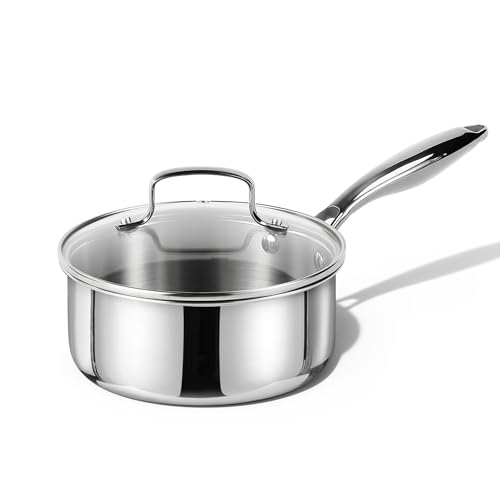
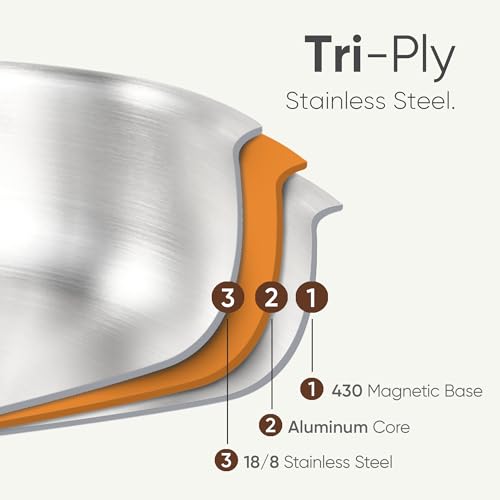
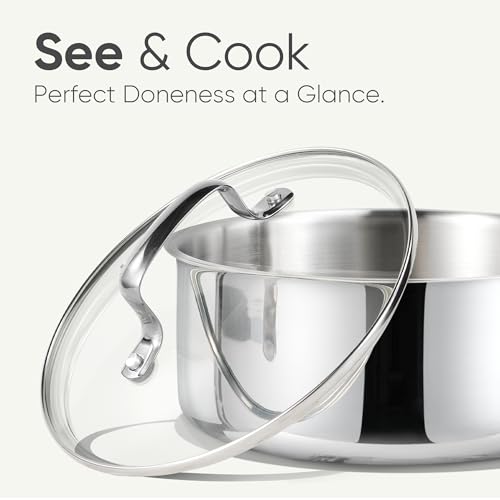
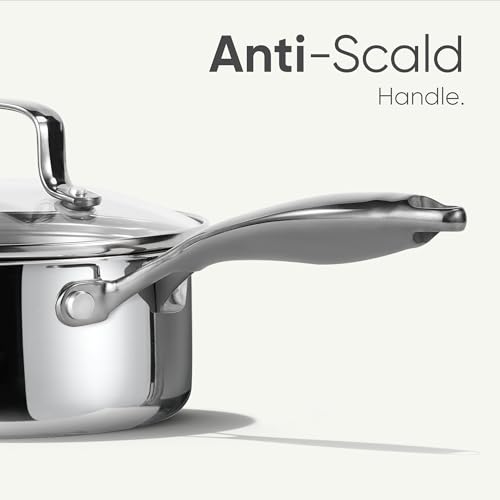
At this price, CAROTE delivers a surprisingly capable 3-ply saucepan. The tri-ply cladding includes an aluminum core that helps spread heat more evenly than most budget pans, and owners report fewer hot spots than expected. It’s induction-ready, oven-safe, and the flared pour rim actually works, fewer drips, cleaner transfers. For warming milk or making small sauces, it holds its own.
But it’s not without trade-offs. While the build is decent, the finish feels a bit thinner than the Cuisinart or Farberware options, and long-term durability is still unproven. Still, for a first-time buyer or someone stocking a small kitchen, it’s hard to beat the value.
Product photos

TeamFar 2 Qt Stainless Steel Saucepan

Strengths
- Lightweight and easy to handle
- Glass lid with vent
- No aluminum core
Trade-offs
- Poor heat distribution
- Thin construction
- Not induction compatible
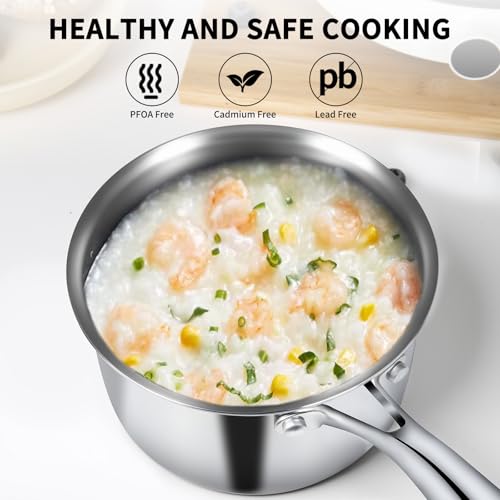
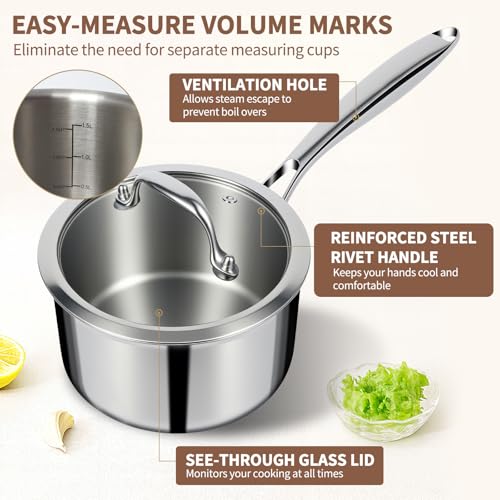
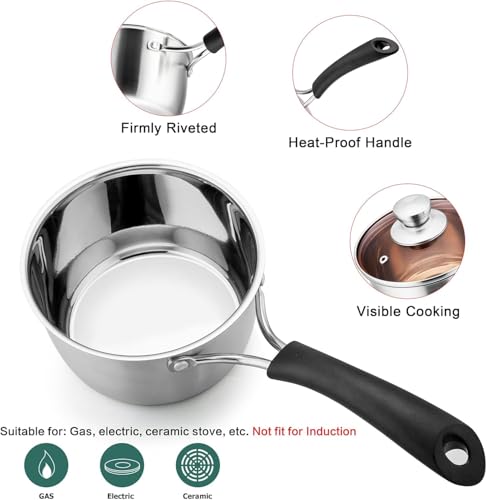
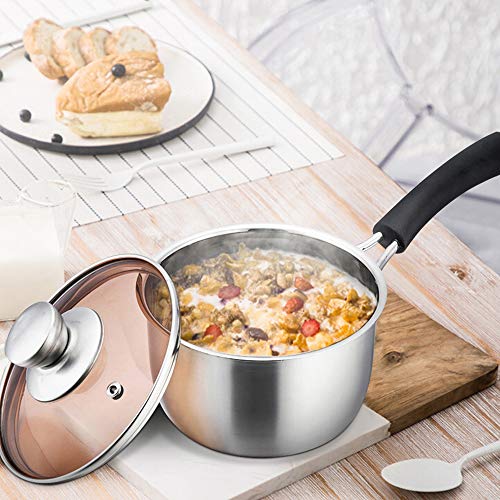
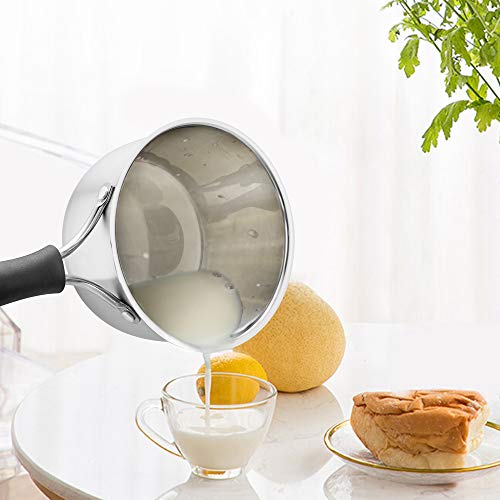
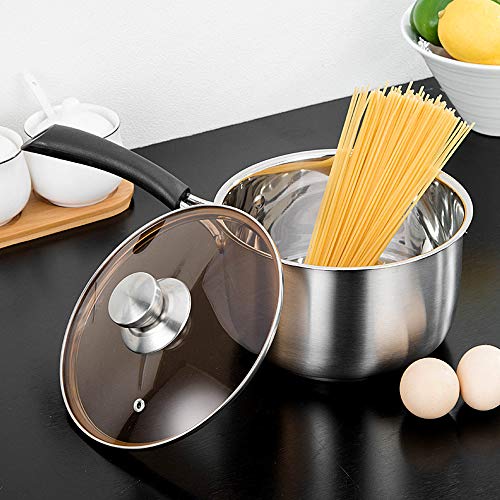
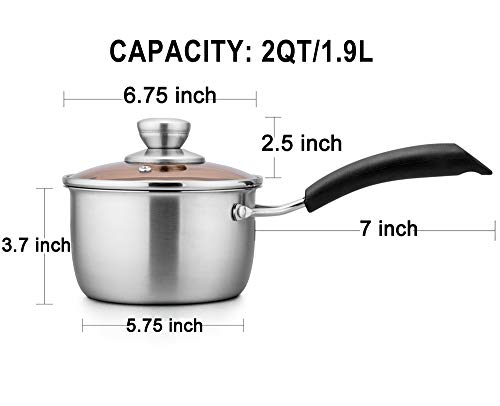
The standout here is the lightweight design, this is one of the easiest 2-quart pans to lift, especially when full. The pure stainless steel build without aluminum core means slower, less even heating, but it’s safe for those avoiding bonded metals. The tempered glass lid with vent hole is a practical touch, letting you monitor food without lifting and losing steam.
But that same simplicity limits performance. Without even a basic aluminum disk, heat distribution is spotty, and reviewers note it struggles with delicate sauces. It’s best for boiling water or reheating, not precision cooking. Still, for a lightweight, non-toxic option under $20, it has its niche.
Product photos
Cuisinart 2-Quart Chef’s Classic Saucepan

Strengths
- Encapsulated aluminum base
- Riveted stainless handle
- Drip-free tapered rim
Trade-offs
- Handle may heat up
- Heavier than some
- No helper handle
This saucepan stands out in the mid-tier stainless steel market with its full aluminum encapsulated base, which on paper means fewer hot spots and more consistent simmering. Owners consistently report solid performance for everyday tasks like heating soups or reducing sauces, and the mirror finish gives it a polished, professional look that holds up well over time. The riveted stainless handle is sturdy, though some users note it can warm up more than expected on high heat despite the ‘cool grip’ claim.
Still, it’s not the most refined tri-ply build in this lineup. Compared to the Multiclad Pro, the heat response is slightly slower, and it lacks the same level of responsiveness on induction. But for those who value durability and a classic aesthetic over ultra-premium cladding, this one delivers reliable results without fuss.
Product photos
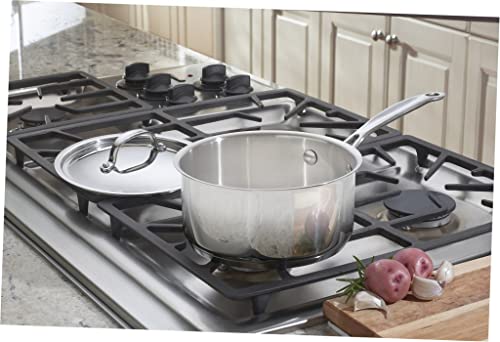
Cuisinart 1.5Qt Multiclad Pro Saucepan

Strengths
- True tri-ply construction
- Oven safe to 550°F
- Riveted cast handle
Trade-offs
- Smaller 1.5-quart capacity
- No pour spout
- Mirror finish shows water spots
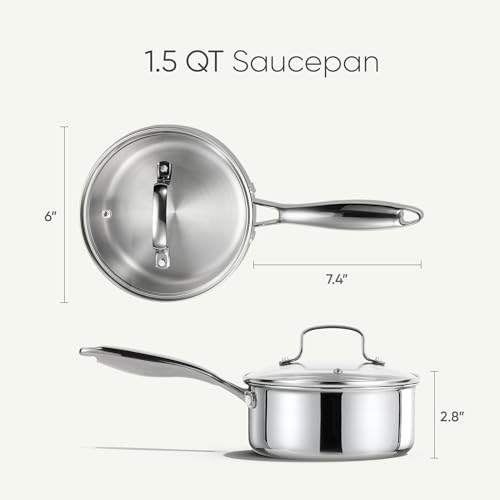
For a sub-$30 saucepan, the Multiclad Pro punches above its weight. The 18/10 stainless interior with a solid aluminum core delivers genuinely even heating, and reviewers frequently praise its responsiveness, especially on electric and induction ranges. The cool-touch handle lives up to its name in most real-world reports, and the secure-fitting lid seals well, making it ideal for delicate reductions or steaming.
When stacked against the Farberware Classic, this one feels more refined in both construction and performance. It’s not quite as heavy-duty as the Cuisinart Chef’s Classic, but it’s more nimble and better balanced. I’d pick this over the larger models if you’re after precision in smaller batches.
Product photos

How We Picked These steel saucepans
Rather than a hands-on lab test, my research focused on a detailed comparison of published specifications and features across numerous models. I weighed owner reviews from multiple retailers alongside expert opinions from established cooking publications. As someone who’s spent years understanding what makes cookware perform, I then ranked these saucepans based on criteria important to home cooks – even heat distribution, durability, ease of cleaning, and overall value.
For steel saucepans, the most crucial factors are construction quality and heat responsiveness. A fully-clad or 3-ply design, where aluminum is layered between stainless steel, is essential for even heating and preventing hot spots. Beyond that, the quality of the steel itself and the handle’s comfort and security significantly impact the cooking experience. Considering these elements dictated the final rankings, as they directly contribute to consistent results and long-term satisfaction.
Specifications reliably indicate construction details like ply count and steel grade (18/10 being a strong indicator of quality). However, real-world performance and longevity are best gleaned from owner feedback. I paid close attention to reports of warping, discoloration, and handle durability. Understanding whether a saucepan truly is stainless steel and induction – and how well it performs on different cooktops – also relied heavily on user experiences. Finding the right stainless steel saucepans requires balancing these data points.
How To Pick The Right steel saucepans
Finding the right saucepan can feel surprisingly complex. There’s a lot more to it than just picking a shiny pot!
A truly useful saucepan distributes heat evenly, feels balanced in the hand, and is constructed from materials that won’t react with your food or degrade over time. Look for fully-clad construction, a well-attached handle, and a lid that fits securely to trap moisture and heat. Consider your cooktop type and desired capacity when making a final decision.
Size and Capacity
The size of saucepan you need is entirely dictated by how you cook. A 1-quart saucepan is perfect for single servings, heating milk, or making small sauces, while a 3-quart model is better suited for soups, larger batches of sauce, or boiling pasta for a couple of people. Don’t automatically assume bigger is better. A heavier, full saucepan of something like béchamel sauce can be unwieldy to stir, and a too-large pan wastes energy. I often recommend starting with a 2-quart as a versatile all-rounder, and adding a smaller and larger one as your needs evolve.
Construction and Materials
Stainless steel is the dominant material for a reason. But not all stainless steel is created equal. You’ll want to look for 18/10 stainless steel cookware, which indicates the chromium and nickel content. These alloys improve corrosion resistance and durability. Understanding the composition of 18/10 steel is key to appreciating its long-term value. Beyond the steel itself, pay attention to how it’s constructed. “Fully-clad” saucepans, where the aluminum core extends all the way up the sides, offer the most even heating. Avoid saucepans with just a disc on the bottom; they are prone to hot spots.
- A disc-bottomed pan is cheaper upfront, but will likely have uneven heating.
- Tri-ply construction (stainless steel-aluminum-stainless steel) is a great balance of performance and price.
- Fully-clad, multi-ply saucepans (like those from Cuisinart’s Multiclad Pro line) offer the best heat distribution but come at a premium.
A saucepan should feel substantial in your hand, not flimsy or lightweight. A well-balanced pan is safer and more enjoyable to use.
Handle and Lid Design
A comfortable and secure handle is essential. Look for handles that are riveted (not welded) to the saucepan body, as rivets provide a much stronger connection. Bakelite or silicone-over-stainless-steel handles offer a cooler grip, but some cooks prefer the classic look and feel of a solid stainless steel handle. The lid is often overlooked, but a well-fitting lid is crucial for retaining heat and moisture. A tempered glass lid allows you to monitor cooking without lifting the lid and losing heat. If you’re considering upgrading, exploring best stainless steel saucepans will show you the range of thoughtful handle designs available.
Steel Saucepans Compared
Here’s a comparison of key specifications for the steel saucepans featured.
| Product Title | Capacity (Qt) | Material (Interior) | Material (Exterior) | Lid Material | Oven Safe (°F) | Induction Compatible |
|---|---|---|---|---|---|---|
| Farberware 2 Qt Stainless Saucepan | 2 | Stainless Steel | Stainless Steel | Stainless Steel | 350 | Yes |
| Michelangelo 1Qt & 2Qt Saucepan Set | 1, 2 | 18/10 Stainless Steel | 18/10 Stainless Steel | Tempered Glass | 600 | Yes |
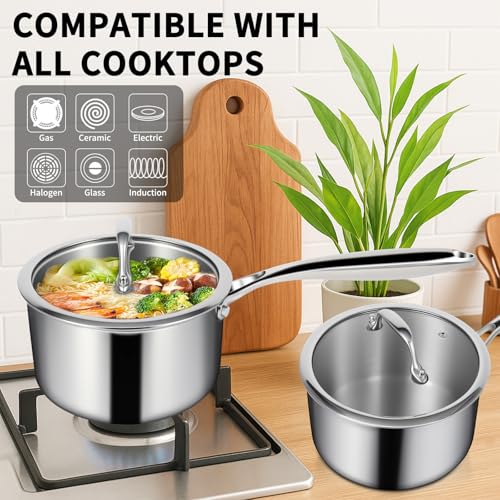
| EWFEN 1Qt, 2Qt, 3Qt Saucepan Set | 1, 2, 3 | 304 Stainless Steel | 430 Stainless Steel | Glass | 500 | Yes |
| CAROTE 1.5Qt Stainless Steel Saucepan | 1.5 | Stainless Steel | Stainless Steel | N/A | N/A | Yes |
| TeamFar 2 Qt Stainless Steel Saucepan | 2 | Stainless Steel | Stainless Steel | Tempered Glass | N/A | N/A |
| Cuisinart 2-Quart Chef’s Classic Saucepan | 2 | Stainless Steel | Stainless Steel | N/A | N/A | N/A |
| Cuisinart 1.5Qt Multiclad Pro Saucepan | 1.5 | 18/10 Stainless Steel | Stainless Steel | Stainless Steel | 550 | Yes |
Frequently Asked Questions
What size saucepan do I really need to start with?
A 2-quart saucepan is the most versatile size for most home cooks, capable of handling tasks from heating liquids to making sauces for small families. You can always add to your collection later if you find yourself frequently needing larger or smaller sizes.
Are there stainless steel saucepans that won’t stick?
While does stainless steel stick, proper preheating and using enough fat or liquid will minimize sticking. Look for pans with a heavy gauge and smooth finish for best results.
What’s the difference between a disc-bottom and fully-clad saucepan?
A disc-bottom saucepan has a layer of aluminum only on the base, leading to uneven heating, while a fully-clad saucepan has layers of metal extending up the sides for consistent heat distribution. The latter is generally preferable, though more expensive.
What does 18/10 stainless steel actually mean?
The “18/10” designation refers to the percentage of chromium (18%) and nickel (10%) in the stainless steel alloy. These elements enhance the steel’s resistance to rust and corrosion, contributing to a longer lifespan for your cookware.
Is tri-ply stainless steel cookware a good value?
Yes, tri-ply stainless steel cookware offers an excellent balance of performance and price. It provides significantly improved heat distribution compared to disc-bottom pans without the premium cost of fully-clad options.
The Bottom Line
Choosing a saucepan often comes down to balancing initial cost with long-term performance. While there are many options available, the Michelangelo 1Qt & 2Qt Saucepan Set represents the best overall value, offering 18/10 stainless steel construction and a tempered glass lid at a reasonable price point. It’s a solid choice for everyday cooking and will provide years of reliable service, especially if you’re building out a complete good stainless steel cookware set.
For those on a tighter budget, the Farberware 2 Qt Stainless Saucepan is a perfectly acceptable starting point. If versatility is your priority, the EWFEN 1Qt, 2Qt, 3Qt Saucepan Set provides a range of sizes to handle almost any task, although the material quality isn’t quite as high as some of the more premium options. Understanding the temperature limits for stainless steel is crucial regardless of which saucepan you select.
Ultimately, the most important factors aren’t a specific brand or price tag, but rather even heat distribution, a comfortable handle, and durable construction. A well-made saucepan that feels good in your hand and heats evenly will make your time in the kitchen more enjoyable and your results more consistent. Investing in quality materials and construction, and paying attention to the features of a good cookware set, will pay dividends for years to come.
