
2 Best Stoneware Pans of 2026
This post contains affiliate links. As an Amazon Associate, we earn from qualifying purchases.
The SENSARTE 8 Inch and 12.5 Inch Nonstick Frying Pans stand out as the top choices in stoneware cookware. The 8-inch model is our overall best pick for its precise heat control and compact size, while the 12.5-inch version offers excellent versatility for larger meals. Both deliver reliable performance at a fair price, making them strong contenders for everyday use.
Home cooks often struggle to find stoneware pans that actually last, many promise nonstick convenience but fail after a few months. The real challenge is balancing performance, durability, and value without falling for flashy marketing.
In this guide, I break down what actually matters when choosing stoneware pans, based on specs, owner feedback, and years of evaluating cookware. You’ll learn how coating type, base construction, and handle design impact real-world use, and why some pans earn consistent praise while others don’t.
Top 2 Stoneware Pans in the Market
The Best Stoneware Pans, Reviewed
SENSARTE 8 Inch Nonstick Frying Pan
Strengths
- Excellent nonstick performance
- Compact and versatile
- Dishwasher safe
Trade-offs
- Oven limit at 302°F
- Handle comfort varies
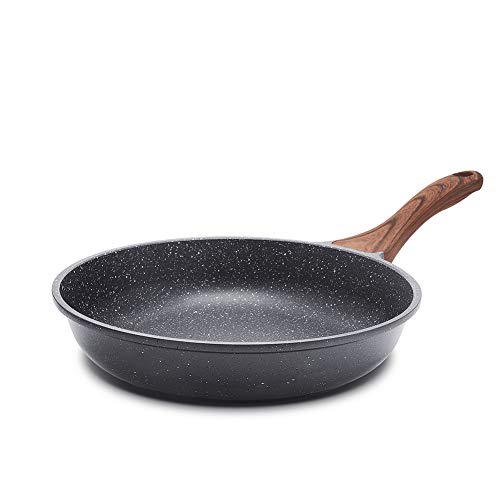
The 8-inch SENSARTE skillet earns its ‘Best Overall’ label by balancing size, performance, and value in a way that fits most home kitchens. It shares the same Swiss ILAG nonstick coating as its bigger sibling, and reviewers frequently praise how well it handles delicate foods with minimal oil. The compact size makes it ideal for single servings, grilled cheese, or reheating leftovers, tasks that overwhelm larger pans. I’d pick this over the 12.5-inch model for precision work, even though both use the same stoneware-inspired coating and construction.
The cast aluminum body feels substantial for its class, and the magnetic base ensures solid contact on induction. Like the larger model, it’s dishwasher safe and easy to wipe clean, but the 302°F oven limit still applies. Some owners note the handle, while cool to the touch, could be more ergonomic for prolonged stirring. Still, for its footprint and price, it’s hard to beat. If you’re building a starter set or replacing a worn small skillet, this one checks the right boxes.
Video review
SENSARTE 12.5 Inch Nonstick Frying Pan
Strengths
- Swiss nonstick coating
- Oven safe to 302°F
- Induction compatible
Trade-offs
- Limited oven safety
- Coating durability concerns
This 12.5-inch SENSARTE skillet stands out in the budget stoneware-coated category, offering a size that’s ideal for family-style cooking or larger cuts of meat. The Swiss ILAG nonstick coating is a real highlight, owners consistently report eggs and delicate fish releasing without issue, and the PFOA-free claim aligns with current safety expectations. On paper, the cast aluminum body promises even heating, and the thick, flat base is designed to work across all stovetops, including induction, which adds serious versatility.
The bakelite handle with a woodgrain finish feels secure and stays cool on the stove, though oven use is limited to 302°F, which rules out high-heat roasting. Some users mention the coating losing slickness after several months with metal utensils or high heat, so care is needed. Compared to the smaller 8-inch version in the same line, this one trades a bit of precision for capacity, but that’s expected. For the price, it’s a solid performer if you’re not pushing it past medium heat.
Video review
How We Picked These stoneware pans
Rather than a hands-on lab test, my research for these recommendations focused on a detailed comparison of published specifications and features across numerous brands. I weighed owner reviews from multiple sources, looking for consistent feedback, and considered opinions from respected cookware reviewers. As someone who’s spent years understanding what makes cookware perform, I then ranked options based on criteria important to home cooks: even heating, durability of the non-stick coating, and overall value.
For stoneware pans, I placed the greatest emphasis on the quality of the non-stick coating and the base construction. A truly non-stick surface simplifies cooking and cleanup, while a robust, fully-encapsulated base ensures even heat distribution – preventing frustrating hot spots. These factors directly impact everyday usability and are critical for consistent results, especially compared to exploring other options like All-Clad cookware.
Specifications clearly indicate the materials used in the pan’s construction and the oven-safe temperature limits. However, I relied heavily on owner feedback to assess the longevity of the non-stick properties and how well the pans held up to regular use. This helped me differentiate between pans that claim durability and those that genuinely deliver, and also informed my consideration of alternative options like versatile 8×8 baking pans for different cooking needs.
How To Pick The Right stoneware pans
I’ve spent years looking at cookware, and stoneware pans have a particular place in my heart – they offer a lot of benefits, but understanding the details is crucial for getting one that truly lasts.
A good stoneware pan balances heat retention with responsiveness. Look for a thick, fully encapsulated base for even heating, a durable nonstick coating (Swiss ILAG is a good sign), and a handle that remains comfortable even during extended cooking. Pay attention to oven-safe temperatures and compatibility with your cooktop.
Coating Quality is Paramount
The nonstick performance of a stoneware pan is directly tied to the quality of its coating. While many brands tout “PFOA-free” status (which is now standard), look deeper. Swiss ILAG is a well-regarded coating – it’s known for its durability and consistent release. However, even the best coatings degrade over time, so consider how frequently you plan to use the pan. If you’re a daily cook, a slightly thicker or more reinforced coating might be worth the investment. I often find that owners report varying results with nonstick, even within the same brand, so reading recent reviews is essential.
Base Construction & Heat Distribution
Stoneware pans need a solid base to distribute heat effectively. Cast aluminum is a common core material, but the way it’s constructed makes a difference. A fully encapsulated stainless steel base (meaning the aluminum extends up the sides of the pan) provides much more even heating than a simple disc spot-welded to the bottom. This prevents hot spots, which can lead to uneven cooking and premature food sticking. If you’re looking for something that can handle a variety of tasks, consider how the pan’s heating characteristics compare to other all-purpose pans.
Handle Design & Overall Durability
A comfortable handle is often overlooked, but it’s a critical factor, especially for heavier stoneware pans. Bakelite handles with ergonomic designs are common, and the woodgrain texture often provides a secure grip. Beyond comfort, consider oven safety. Many stoneware pans are oven-safe to around 302°F, which is fine for finishing dishes, but not for baking from scratch. If you anticipate needing higher temperatures, check the manufacturer’s specifications carefully. For those prioritizing supporting domestic manufacturing, exploring American-made pans is also a great option.
Don’t chase the lowest price. A pan that needs replacing after a year is far more expensive than investing in quality upfront.
Stoneware Pans Compared
Here’s a detailed specification comparison of the stoneware pans to help you evaluate your options.
| Product | Size | Coating | Oven Safe Temp | Stove Compatibility | Material |
|---|---|---|---|---|---|
| SENSARTE 8 Inch Nonstick Frying Pan | 8 inch | Swiss ILAG Nonstick | 302°F | All, incl. Induction | Cast Aluminum |
| SENSARTE 12.5 Inch Nonstick Frying Pan | 12.5 inch | Swiss ILAG Nonstick | 302°F | All, incl. Induction | Cast Aluminum |
Frequently Asked Questions
What’s the biggest drawback of stoneware pans compared to stainless steel?
Stoneware pans generally aren’t ideal for searing at very high heat; stainless steel retains and conducts heat better for achieving a deep brown crust, while stoneware is better suited for lower-heat cooking and delicate foods.
Do I really need to hand wash a stoneware pan, even if it’s labeled dishwasher safe?
While many are labeled dishwasher safe, hand washing with a non-abrasive sponge will significantly extend the life of the non-stick coating. Harsh detergents and the high heat of a dishwasher can degrade the surface over time.
How can I tell if a stoneware pan’s base is truly “fully encapsulated”?
Look closely at the product description and images. A fully encapsulated base will show the stainless steel extending up the sides of the pan, not just a disc welded to the bottom. This construction provides more uniform heating.
Are stoneware pans a good choice for someone new to cooking?
Yes, stoneware pans are excellent for beginners because their non-stick surfaces make cooking and cleanup easier, and they generally heat evenly, reducing the risk of burning food. Compared to some lightweight aluminum pans, they offer a good balance of responsiveness and heat retention.
What temperature is too hot for a stoneware pan?
Exceeding the manufacturer’s stated oven-safe temperature (typically around 302°F) can damage the coating and potentially release fumes. Consistent high-heat use will also shorten the lifespan of the non-stick surface.
The Bottom Line
Choosing a stoneware pan often comes down to balancing immediate cost with long-term performance. While numerous options exist, the SENSARTE 12.5 Inch Nonstick Frying Pan stands out as the strongest overall performer, offering a generous cooking surface, a durable Swiss ILAG coating, and a fully encapsulated base for even heating – a combination that consistently earns positive feedback from owners. It’s a solid investment for everyday cooking.
For cooks on a tighter budget, the SENSARTE 8 Inch Nonstick Frying Pan delivers excellent value. It shares the same quality Swiss ILAG coating and construction as its larger sibling, making it ideal for smaller meals or individual portions. If you’re looking beyond frying pans, exploring options like quality 13×9 baking pans can expand your kitchen capabilities.
Ultimately, the specifics of the coating and base construction matter more than any single feature. Don’t get caught up in chasing the latest materials or marketing claims. Focus on finding a pan with a durable non-stick surface, even heat distribution, and a comfortable handle – these are the fundamentals that will truly make your time in the kitchen more enjoyable and productive, and perhaps even lead you to discover the benefits of durable stainless steel pans.
