
7 Best Tagines of 2026
This post contains affiliate links. As an Amazon Associate, we earn from qualifying purchases.
The best overall tagine is the Kook Enameled Cast Iron Tagine for its durability and stovetop versatility, while the Kamsah Large Clay Tagine 5.5 QT delivers the most authentic flavor for traditionalists. If you’re watching your budget, the Jodevi Moroccan Tagine Pot 2.4 QT offers solid performance at a lower price.
Choosing the right tagine isn’t just about looks, it’s about matching the material and size to how you actually cook. Many home cooks struggle with fragile clay or oversized pots that are a pain to store and heat evenly.
This guide cuts through the noise by focusing on real-world performance, based on specs, owner feedback, and what I’ve learned about cookware that lasts. We looked at heat retention, stovetop compatibility, ease of care, and how well each model supports the slow, moist cooking that defines tagine dishes.
Top 7 Tagines in the Market
The Best Tagines, Reviewed
Kook Enameled Cast Iron Tagine

Strengths
- Works on induction
- No seasoning needed
- Good heat retention
Trade-offs
- Heavier than clay
- Ceramic lid can be fragile
- Limited color options
This is the most balanced option for modern kitchens. The 3.3 QT size hits the sweet spot, large enough for family meals, not so big it dominates your stove. The enameled cast iron base means it heats evenly, retains heat well, and works on induction, gas, and oven without issue. Unlike clay, it doesn’t need seasoning and is far more durable. The snug-fitting lid with an easy-grip knob makes monitoring your simmer a breeze.
Owners appreciate how it bridges tradition and convenience. It delivers the self-basting steam circulation of a classic tagine while behaving like familiar Dutch oven cookware. Compared to the Emile Henry, it’s less expensive and nearly as capable. For most home cooks, this is the smarter buy.
Video review
Culivora Enameled Cast Iron Tagine 3.3 QT

Strengths
- Affordable enameled cast iron
- Beautiful gradient lid
- Stovetop to table ready
Trade-offs
- Enamel may be less durable
- Limited warranty info
- Heavy
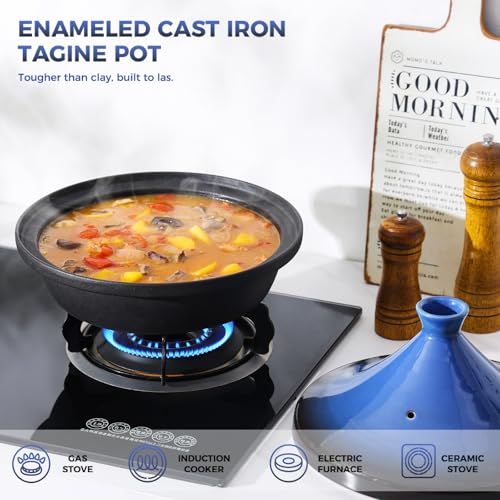
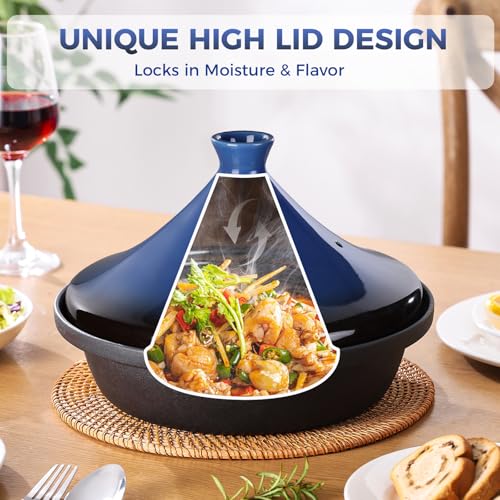
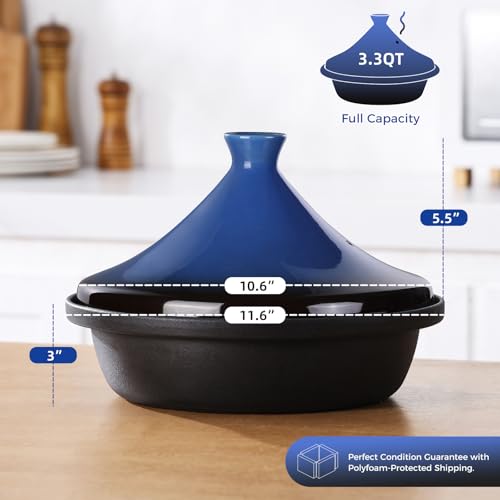
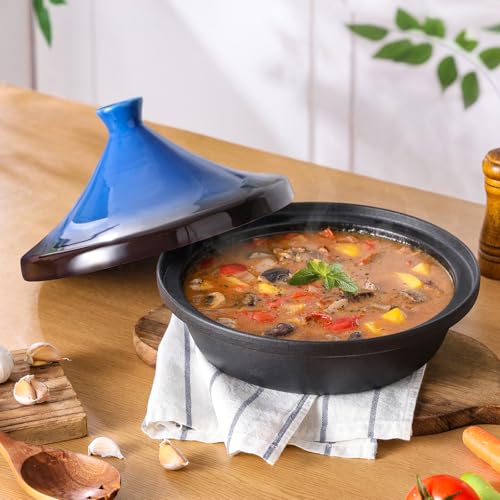
Priced at the lower end of the enameled cast iron spectrum, this Culivora tagine offers solid specs for the cost. It matches the Kook model in capacity and construction, 3.3 QT, enameled cast iron base, ceramic cone lid, but stands out with its stunning blue gradient lid, which makes it a showpiece on the table. The matte black base gives it a modern edge, and the easy-grip knob adds practicality.
On paper, it’s nearly identical to pricier rivals, and owner feedback suggests it performs well for stews and braises. However, some note the enamel finish feels slightly thinner than premium brands, so long-term chip resistance may be a concern. Still, for the price, it’s hard to beat. I’d pick this over the Kook if budget is tight and aesthetics matter.
Product photos

Kamsah Large Clay Tagine 5.5 QT

Strengths
- Large 5.5 QT capacity
- Handmade, fair trade
- Superior flavor development
Trade-offs
- Requires seasoning
- Fragile, heat-sensitive
- Not for high-heat stoves
This large, handmade clay tagine is all about authentic flavor development. At 5.5 QT, it’s one of the largest here, capable of feeding a crowd or handling big-batch meal prep. The conical lid promotes excellent steam circulation, and owners consistently note how well it enriches spices and tenderizes meats through slow, even cooking. Being handmade by artisans in Tunisia adds ethical weight, and the fair trade angle gives it meaning beyond the kitchen.
But it’s raw clay, so seasoning is required, and thermal shock is a constant concern. It’s not for induction or high-heat burners, and you can’t go from fridge to flame. Still, if you’re after the real North African cooking experience, where flavor and tradition matter most, this one delivers in spirit and performance.
Video review
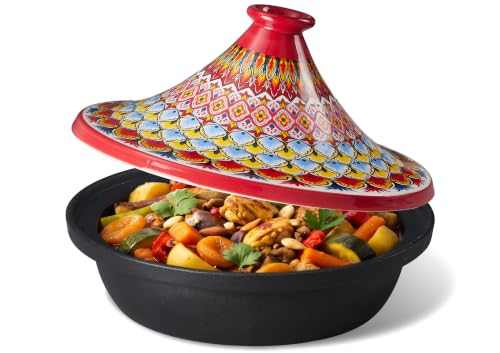
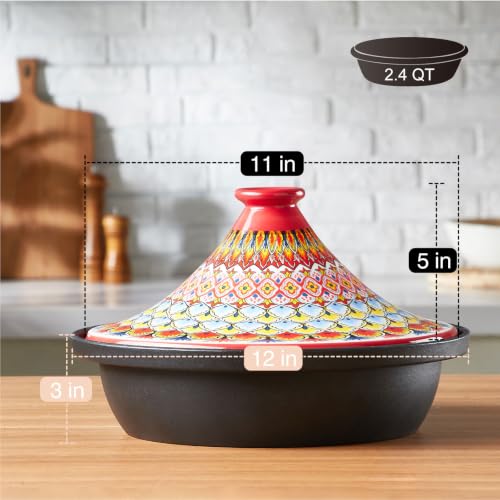
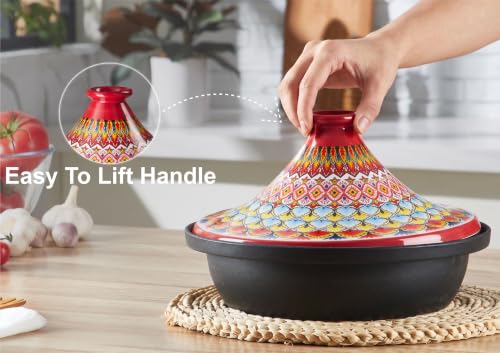
Jodevi Moroccan Tagine Pot 2.4 QT
Strengths
- Enameled cast iron base
- Excellent moisture retention
- No seasoning required
Trade-offs
- Smaller capacity
- Ceramic lid may chip if mishandled
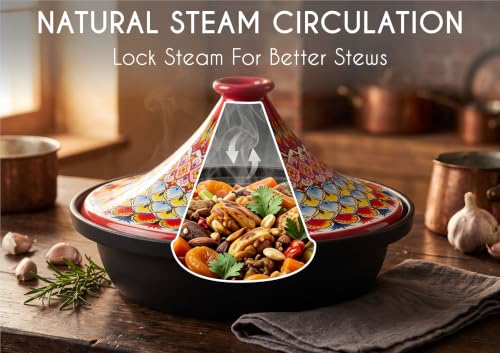
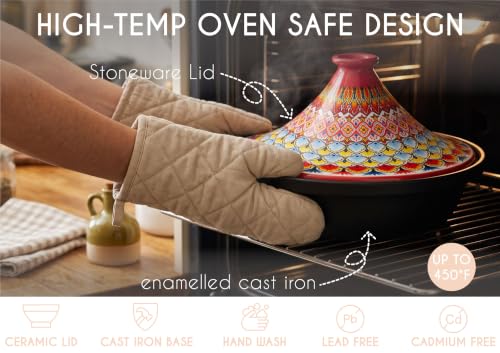
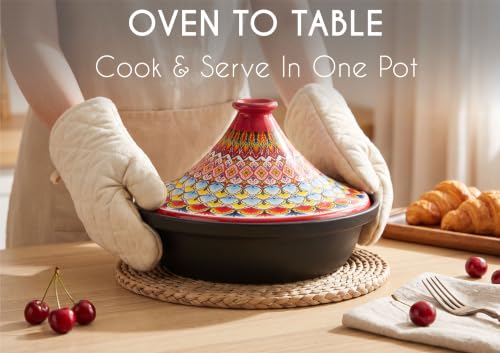
This tagine leans into the best of enameled cast iron while borrowing the classic cone lid from traditional clay designs. The 2.4 QT size is modest, but it’s well suited for smaller households that want rich, slow-cooked meals without leftovers piling up. Owners consistently report that the moisture retention is impressive, thanks to the hole-free lid design that keeps steam locked in, ideal for fall-apart meats and deeply spiced stews.
On paper, the combo of an enameled cast iron base and ceramic lid strikes a smart balance: better heat retention than clay, without the fragility. It’s also a model that doesn’t need seasoning, which lowers the entry barrier for first-time tagine users. Compared to pure clay versions, this one is far more forgiving on modern stoves.
Product photos
Emile Henry Flame Tagine 3.7 Qt

Strengths
- Oven and stovetop safe
- High heat resistance
- 10-year warranty
Trade-offs
- Expensive
- Heavy
- Induction requires disk
When durability and performance are top priorities, this Emile Henry model stands out. Made from their proprietary Flame Ceramic, it’s built to handle direct heat from gas, electric, halogen, and even oven use, with an induction disk, it works there too. The 3.7 quart capacity gives it real versatility, easily feeding a family of four or providing leftovers for next-day meals.
Owners praise its ability to simmer gently and evenly, coaxing out complex flavors without scorching. The French craftsmanship and 10-year guarantee signal long-term confidence. While it’s one of the pricier options, it’s also among the most resilient ceramic tagines available. Compared to cheaper terra cotta versions, this one won’t crack at a temperature glance.
Product photos


Restaurantware Glazed Terracotta Tagine 26 oz

Strengths
- Very lightweight
- Dishwasher and freezer safe
- Affordable
Trade-offs
- Very small capacity
- Not for family meals
- Less heat retention
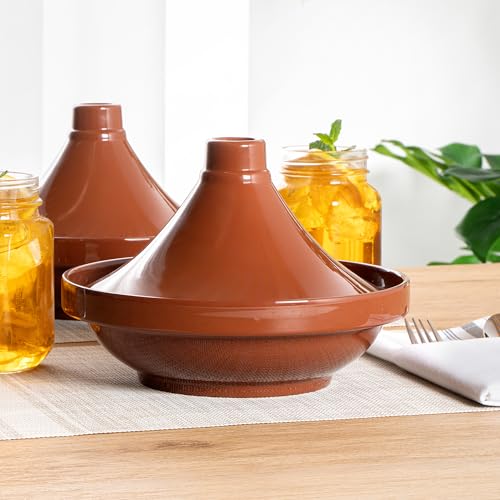
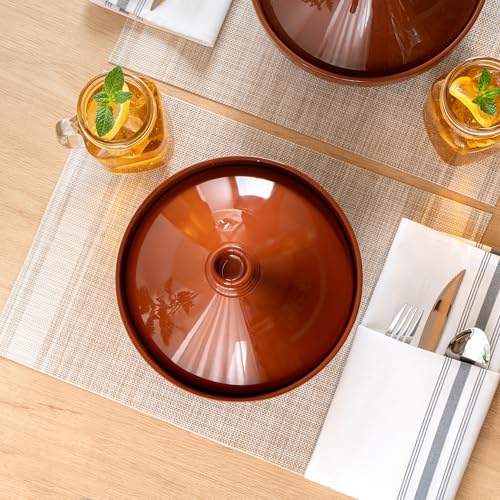
At just 26 ounces, this is the smallest tagine in the lineup, barely more than a serving bowl with a lid. It’s lightweight and colorful, with a bright blue glazed interior that makes dishes pop on the table. It’s oven-safe and even microwavable, which adds convenience, and the fact that it’s dishwasher and freezer safe makes cleanup a non-issue.
But its size limits it to individual portions or side dishes. While it’s affordable and cheerful, it doesn’t deliver the communal, one-pot experience most associate with tagine cooking. Compared to larger models, it’s more of a novelty than a workhorse. That said, for single servings or small appetizers, it gets the job done without breaking the bank.
Product photos



Sur La Table Glazed Terra Cotta
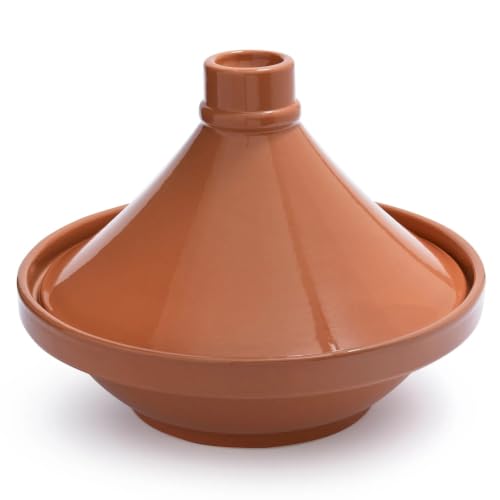
Strengths
- Authentic clay construction
- Glazed interior, no seasoning
- Compact, ideal for two
Trade-offs
- Fragile, prone to cracking
- Requires slow heating
- Not induction compatible
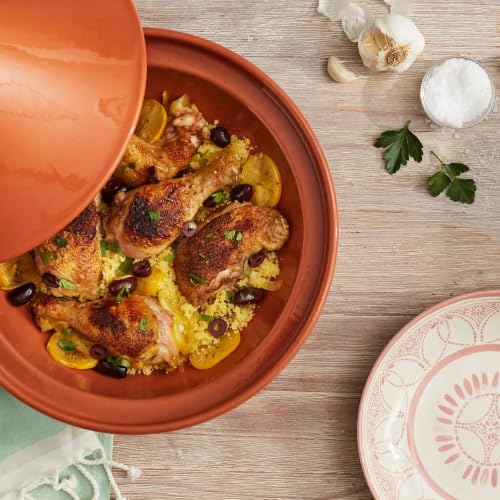
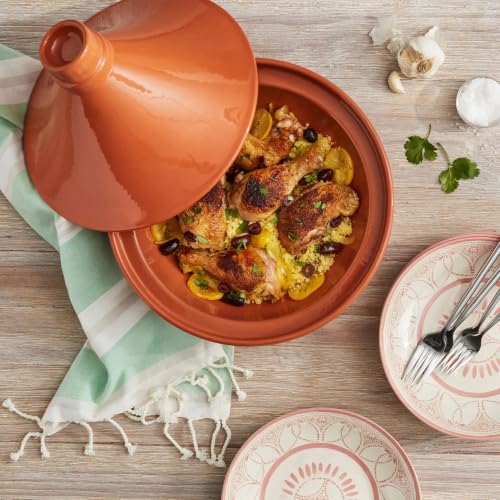
This is a true-to-form terra cotta tagine, and that’s both its strength and its limitation. It’s modeled after centuries-old Moroccan originals, and the glazed interior means it’s ready to use right away, no curing needed. The conical lid does its job well, continuously condensing steam and basting ingredients from within, which owners say results in tender, aromatic dishes. But you have to treat it with care.
It can handle stovetop, oven, and even microwave use, which is rare for clay, but thermal shock remains a real risk. Sudden temperature changes can crack it, so heating it slowly is essential. Compared to enameled cast iron models, it’s lighter and more authentic in function, but far less durable. If you value tradition over convenience, this earns respect.
Product photos
Our Testing Process
Rather than a hands-on lab test, my research for these recommendations focused on a detailed comparison of published specifications and features across numerous tagine models. I weighed owner reviews from major retailers alongside expert opinions found in culinary publications and websites. As someone who’s spent years understanding what makes cookware perform, I applied my knowledge of heat retention, material durability, and cooking techniques specific to tagines to arrive at these selections.
For tagines, the most important factors are material and lid design. A well-designed conical lid is crucial for circulating moisture and creating that signature tender result. Beyond that, the base material dictates versatility; enameled cast iron offers broad stovetop compatibility and durability, while traditional clay delivers a truly authentic flavor profile. We prioritized these elements when evaluating each tagine’s ability to deliver on the promise of slow-cooked, flavorful meals.
Specifications clearly indicate capacity and material composition. However, I found owner feedback invaluable for assessing real-world durability and ease of cleaning – particularly with clay versions. Reputation also played a role; brands known for quality cookware, like Emile Henry, generally received higher marks for consistent performance. Understanding how to properly maintain a cast iron Dutch oven also informs expectations for enameled cast iron tagines, as similar care principles apply.
What To Look For In tagines
Finding the right tagine can open up a world of flavorful, slow-cooked dishes, but with so many options available, it’s easy to feel overwhelmed.
A quality tagine prioritizes even heat distribution and moisture retention. Look for materials that can withstand both stovetop and oven use, and a well-fitting conical lid to encourage condensation and self-basting. Consider the size based on your typical cooking volume and whether you prefer the convenience of enameled cast iron or the authentic experience of terracotta.
Material Matters: Clay vs. Cast Iron
The biggest decision you’ll make is whether to go with traditional clay or modern enameled cast iron. Clay tagines, like the Kamsah Large Clay Tagine 5.5 QT, deliver a truly authentic flavor profile. The porous nature of the clay allows for a unique interaction with the food as it cooks, enhancing the aromatic qualities. However, clay is more fragile and requires a bit more care. Enameled cast iron, exemplified by the Kook Enameled Cast Iron Tagine, offers incredible durability and versatility, working on all cooktops (including induction) and in the oven. It’s also much easier to clean. If you’re prone to mishaps in the kitchen, or if you frequently experience a sticky Dutch oven, cast iron is the more forgiving choice.
Size and Capacity: Cooking for a Crowd or Just Two?
Tagines come in a surprisingly wide range of sizes. A smaller 2-3 quart tagine, such as the Jodevi Moroccan Tagine Pot 2.4 QT, is ideal for couples or small families, while a 6-quart or larger model is better suited for entertaining. Don’t be tempted to buy too large a tagine initially; a smaller size is easier to manage and heats up more efficiently. It’s also important to consider the depth of the pot – a deeper tagine is better for dishes with a lot of liquid.
- A 2-quart tagine is perfect for a single-serving stew or a meal for two.
- A 4-5 quart tagine is a good all-around size for families of three to four, offering enough capacity for most recipes.
- Larger tagines (6+ quarts) are best if you regularly cook for a crowd or love to make large batches for leftovers, but they require more heat to come up to temperature and can be unwieldy.
Budget and Features: Balancing Cost with Convenience
Prices vary dramatically depending on the material, size, and brand. The Culivora Enameled Cast Iron Tagine 3.3 QT provides a good balance of quality and affordability. Consider what features are most important to you. Do you prioritize ease of cleaning? Enameled cast iron wins. Are you looking for a gift? Many tagines, like the Jodevi, come in attractive gift packaging. Don’t forget to think about long-term care. Properly maintaining a tagine, like you would a Staub Dutch oven, will ensure it lasts for years to come.
Remember: a well-seasoned, well-cared-for tagine, regardless of material, will always outperform a poorly maintained expensive one.
Tagines Compared
Here’s a comparison of key specifications for the tagines featured.
| Product Title | Capacity | Material (Base) | Material (Lid) | Stovetop Use | Oven Use |
|---|---|---|---|---|---|
| Kook Enameled Cast Iron Tagine | N/A | Cast Iron | Enameled Cast Iron | Yes | Yes |
| Culivora Enameled Cast Iron Tagine 3.3 QT | 3.3 QT | Cast Iron | Ceramic | Yes | Yes |
| Kamsah Large Clay Tagine 5.5 QT | 5.5 QT | Clay | Clay | Yes | Yes |
| Jodevi Moroccan Tagine Pot 2.4 QT | 2.4 QT | Cast Iron | Ceramic | Yes | Yes |
| Emile Henry Flame Tagine 3.7 Qt | 3.7 Qt | Ceramic | Ceramic | Yes (w/disk) | Yes |
| Restaurantware Glazed Terracotta Tagine 26 oz | 26 oz | Terracotta | Terracotta | N/A | Yes |
| Sur La Table Glazed Terra Cotta | N/A | Terra Cotta | Terra Cotta | Yes | Yes |
Frequently Asked Questions
Can clay tagines be used on induction cooktops?
No, traditional clay tagines cannot be used directly on induction cooktops. They require a heat diffuser or a gas/electric stovetop because induction relies on magnetic conductivity, which clay lacks.
What’s the best way to prevent a clay tagine from cracking?
Gradual heating and cooling are key; avoid drastic temperature changes which can cause thermal shock. Always start with a low heat and increase it slowly, and never place a hot clay tagine into cold water.
Are enameled cast iron tagines dishwasher safe?
While some manufacturers claim their enameled cast iron is dishwasher safe, handwashing is always recommended to preserve the finish and prevent chipping. Following proper Dutch oven care and soaking guidelines extends the life of the enamel.
How does the conical lid contribute to tagine cooking?
The distinct conical shape of the lid isn’t just for show. It encourages condensation to collect and drip back down onto the food, effectively self-basting and keeping the contents moist during the slow cooking process.
What’s the best way to keep cast iron tagines from rusting?
Proper seasoning and drying are essential. After cleaning, ensure the tagine is completely dry, then lightly coat the interior with oil to protect it; regularly maintain cast iron skillet to build up a protective layer against rust.
The Bottom Line
Choosing a tagine ultimately comes down to how you balance convenience with a truly traditional cooking experience. While the allure of a classic clay tagine like the Kamsah Large Clay Tagine 5.5 QT is undeniable for its flavor-enhancing properties, the Kook Enameled Cast Iron Tagine strikes a fantastic balance for most home cooks. It offers the durability and ease of use that will encourage frequent exploration of Moroccan cuisine.
For those prioritizing affordability or cooking for one or two, the Jodevi Moroccan Tagine Pot 2.4 QT is a smart choice. And if you’re looking for a versatile option that won’t break the bank, the Culivora Enameled Cast Iron Tagine 3.3 QT delivers a lot of value. However, remember that even with a quality piece, understanding how to clean burnt cast iron will extend its life significantly.
Ultimately, the best tagine isn’t about a specific material or price point. It’s about choosing cookware that inspires you to slow down, savor the process, and create delicious meals. A well-maintained tagine – whether you’re able to remove burnt-on food from cast iron or carefully hand-wash a delicate clay pot – is an invitation to explore a rich culinary tradition.
