
8 Best Tamago Pans of 2026
This post contains affiliate links. As an Amazon Associate, we earn from qualifying purchases.
The TECHEF Japanese Omelette Pan is our top pick for its even heating and durable nonstick surface, with the Iwachu Iron Tamagoyaki Omelette Pan as a standout for cast iron lovers who want superior heat retention. For budget-conscious cooks, the Oleex Tamagoyaki Pan Set delivers solid performance and useful extras without breaking the bank.
Most home cooks struggle to find a tamago pan that actually works well for layering delicate omelets without sticking or hot spots. After years of researching cookware and analyzing what separates reliable tools from the rest, I focused on real-world performance factors like nonstick longevity, heat distribution, and build quality.
This guide cuts through the noise by comparing specs, owner feedback, and material pros and cons, so you can choose a pan that fits your cooking style and lasts.
Top 8 Tamago Pans in the Market
The Best Tamago Pans, Reviewed
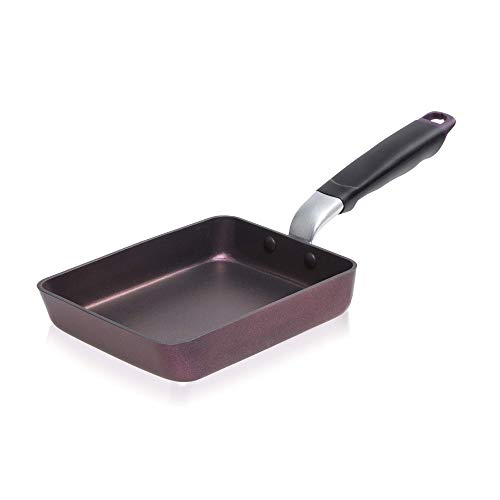
TECHEF Japanese Omelette Pan (Purple)
Strengths
- Even heat distribution
- Reinforced nonstick coating
- Sloped front for easy rolling
Trade-offs
- Not oven-safe beyond 350°F
- Handle can get warm
- Limited color options
This is the one I’d pick for most home kitchens. TECHEF nails the balance of performance, durability, and price. The forged 3004 aluminum base heats evenly and resists warping, even on induction. The 3-layer reinforced Teflon coating is slick and long-lasting, and the sloped front makes rolling eggs intuitive. Owners love how it handles repeated use without flaking or scratching, especially compared to cheaper nonstick pans.
It’s also dishwasher-safe and oven-safe to 350°F, which adds real convenience. The medium size (7.5 x 5.5 inches) is ideal for 1–2 servings, and the Korean-made build feels solid. Against the HexClad, it’s less flashy but more practical for daily egg cooking. Against the Orcela or LISOS, it’s clearly in a higher tier of durability.
Video review
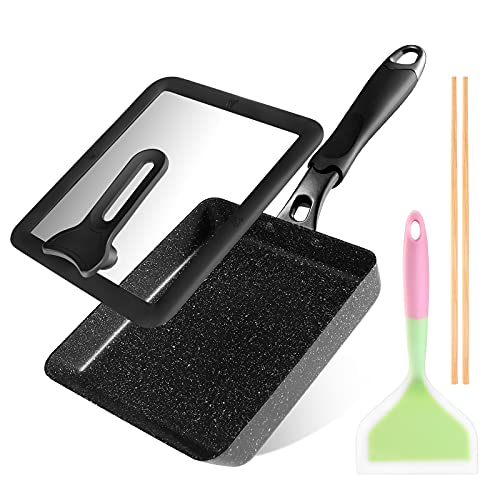
HAPPI STUDIO Tamagoyaki Pan with Lid
Strengths
- Comes with lid and tools
- PFOA-free stone coating
- Comfortable handle
Trade-offs
- Coating less scratch-resistant
- Not oven-safe
- Lid storage awkward
HAPPI STUDIO stands out by including a lid, rare in this category, and it makes a difference. The lid helps cook eggs more evenly and reduces splatter, which owners love. The Maifanite stone coating offers solid nonstick performance and is PFOA-free, while the 7×6 inch size strikes a good balance between capacity and control. The heat-resistant handle is comfortable, and the pan works on all stovetops.
But the coating isn’t as durable as TECHEF’s or HexClad’s. Some users report minor scratching after a few months, especially with metal tools. Still, for the price, the included tools and lid make this a strong all-in-one pick. It’s not the longest-lasting pan, but it’s one of the most convenient.
Video review
Oleex Tamagoyaki Pan Set 5×7 Inches

Strengths
- Comes with full tool set
- Compact and easy to store
- PFOA-free nonstick
Trade-offs
- Pan build is lightweight
- Handle not as durable
- Coating may degrade with sharp tools
What makes Oleex stand out isn’t the pan, it’s the extras. The 5×7 inch square pan is lightweight with a decent nonstick surface, but it’s the included tools that elevate this set. The silicone spatula, oil brush, chopsticks, and even a musubi mold mean you’re getting a full tamagoyaki starter kit. Reviewers love the convenience, especially those new to Japanese cooking. The pan itself is average in build, aluminum with a composite wood handle, but it gets the job done on all stovetops.
Still, compared to the TECHEF or HexClad, the pan feels thinner and less durable. But if you’re just starting out and want everything in one box, this is a strong value. The nonstick coating holds up well for eggs, though I wouldn’t push it with metal utensils.
Product photos


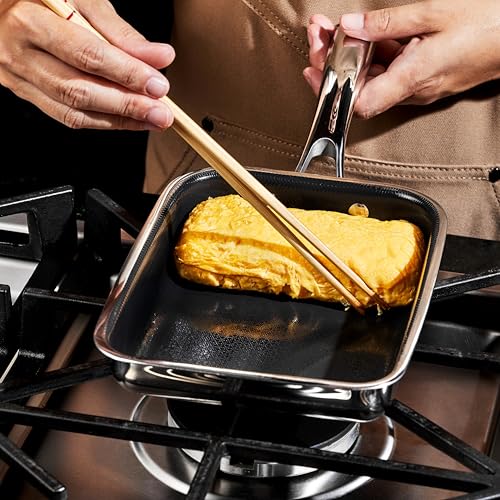
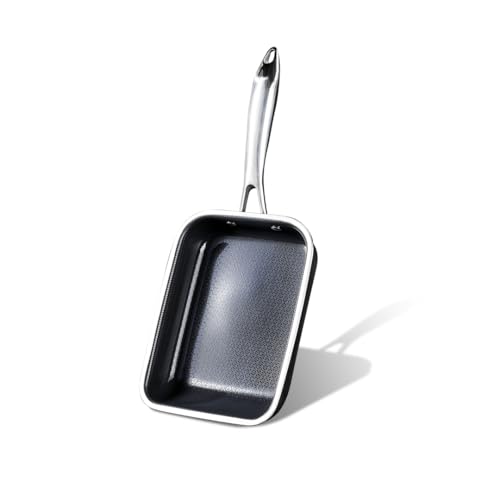
HexClad Japanese Tamagoyaki Egg Pan

Strengths
- Extremely durable hybrid surface
- Oven-safe to 900°F
- Induction and dishwasher safe
Trade-offs
- High price point
- Heavier than average
- Overkill for occasional use
HexClad brings its signature hybrid tech to the tamagoyaki pan, and it shows. The tri-ply construction, aluminum sandwiched between stainless steel, laser-etched with a hexagonal nonstick surface, delivers on durability and performance. This pan handles high heat without warping, cleans easily, and resists scratches better than standard nonstick. Owners consistently report it lasts longer than ceramic or Teflon-coated pans, especially with metal utensils.
It’s also oven-safe up to 900°F, which is wild for a nonstick pan. The 6×8 inch size is ideal for even layering, and the weight, just over 2 pounds, gives it stability without being cumbersome. Yes, it’s the most expensive here, but for a pan that blends the best of stainless, cast iron, and nonstick, it’s worth the investment if you cook often.
Product photos


LISOS Ceramic Tamagoyaki Pan

Strengths
- PFOA-free ceramic coating
- Solid wood handle
- Good heat distribution
Trade-offs
- Handle may loosen over time
- Pan body slightly thin
- Not oven-safe
LISOS goes all-in on ceramic coating, and it shows. The non-stick performance here is strong, especially for delicate egg layers that need to roll without tearing. The 2.5mm aluminum body heats quickly and evenly, and owners praise how well it performs across gas, induction, and electric stoves. I appreciate the solid wood handle, it’s comfortable and stays cool, but the detachable design feels a bit flimsy over time. Some users report wobbling after repeated use, which could affect control during flipping.
That said, this pan punches above its price. It’s not the thickest build in the category, but for the money, it offers solid durability and a PFOA-free surface that’s easy to clean. Compared to the TECHEF or HexClad, it lacks the premium heft, but it’s a smart pick if you want ceramic without overspending.
Product photos
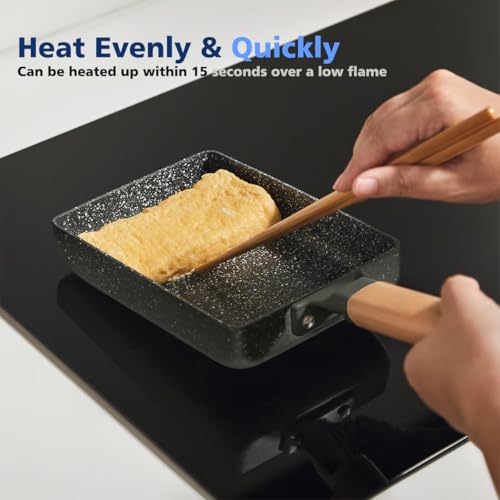

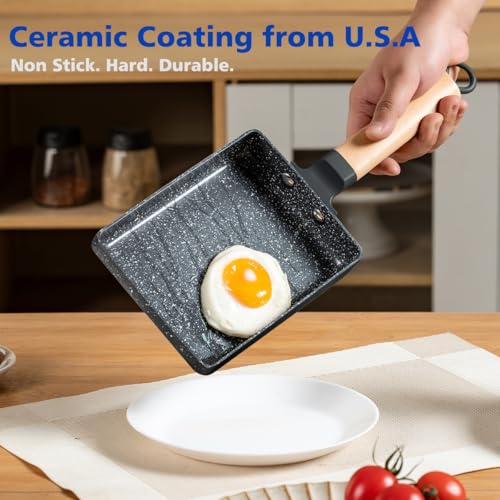

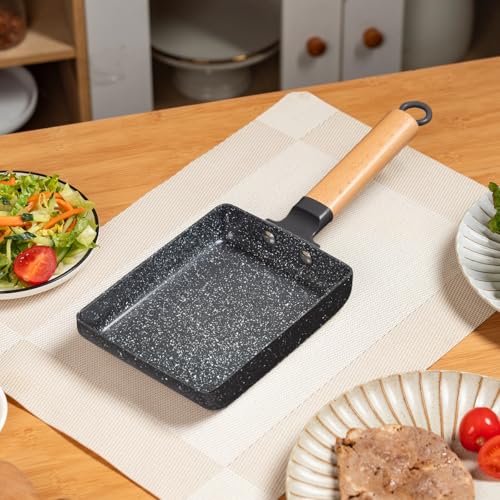
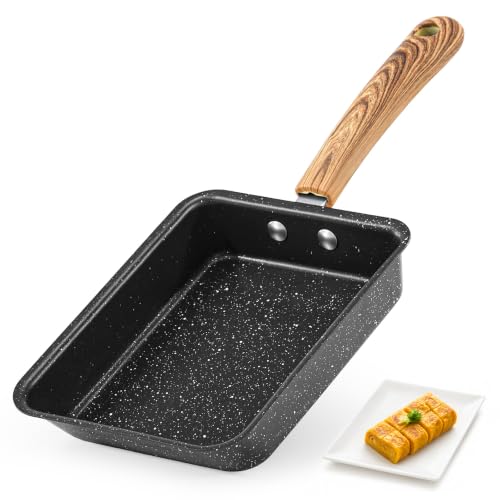
Orcela Tamagoyaki Pan 6 x 8 Inch
Strengths
- Extremely affordable
- Lightweight and easy to handle
- Works on all stoves
Trade-offs
- Thin construction
- Coating less durable
- Not for high-heat cooking
At this price, Orcela is hard to ignore. For under $15, you get a functional square tamagoyaki pan that works on all stovetops, including induction. The nonstick surface is basic but effective for eggs and pancakes, and the ergonomic handle stays cool. It’s not built to last a decade, owners note the coating can wear faster than pricier models, but for occasional use, it’s perfectly capable.
Where it falls short is precision. The edges aren’t as crisp as the TECHEF or HexClad, and the thinner base can lead to minor hot spots. But if you’re testing the waters with tamagoyaki or need a backup pan, this is the smart budget play. No frills, no fuss.
Product photos

Iwachu Iron Tamagoyaki Omelette Pan
Strengths
- Excellent heat retention
- Durable cast iron build
- Traditional rectangular shape
Trade-offs
- Heavy and awkward to flip
- Requires seasoning
- Not ideal for beginners
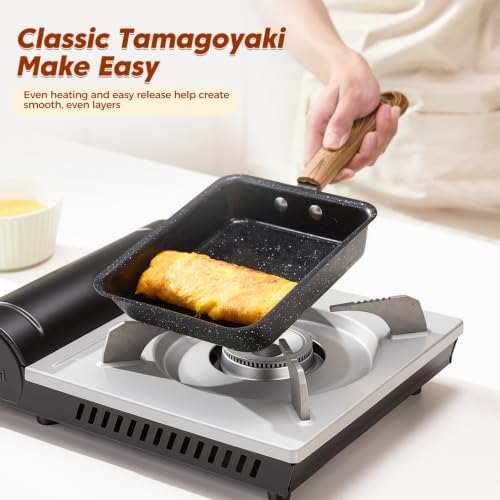
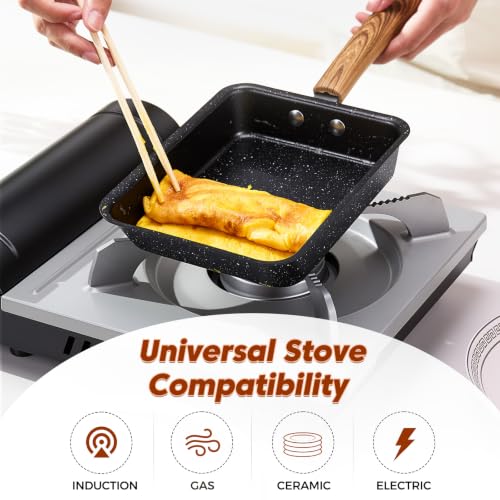
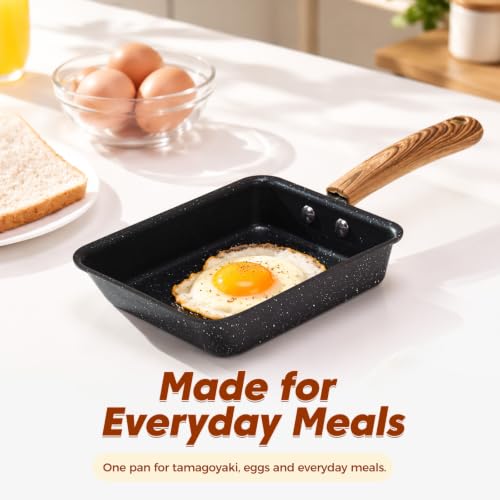
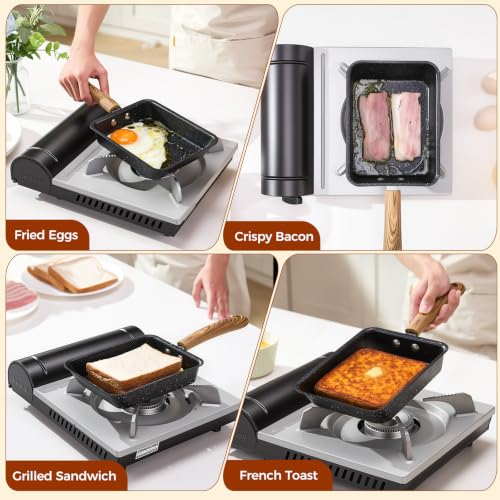
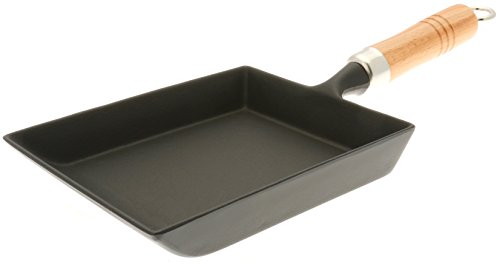
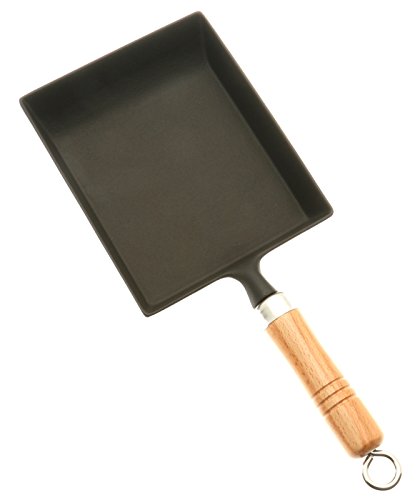
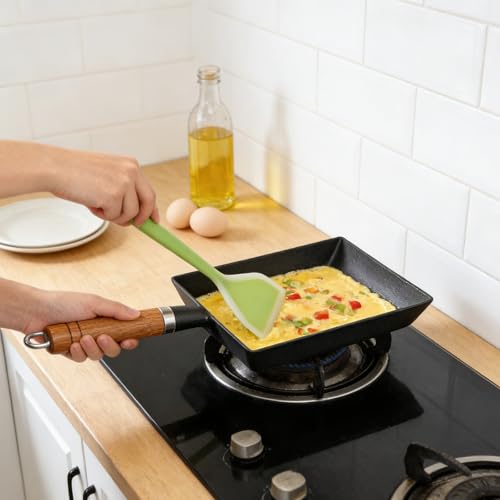
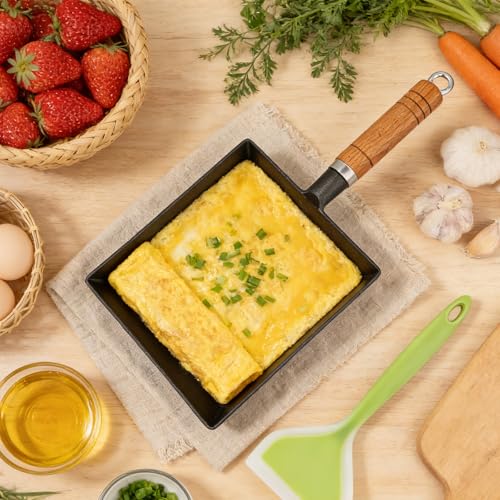
Cast iron in a tamago pan? That’s bold. Iwachu’s Iron Tamagoyaki Pan leans hard into tradition, and on paper, it delivers what purists want: excellent heat retention and a naturally non-stick surface over time. This is the kind of pan that improves with use, developing seasoning like a well-loved skillet. Owners consistently report success with delicate layering, thanks to the even warmth the cast iron provides. But it’s heavy, much heavier than aluminum or ceramic counterparts, and that can make the rolling technique trickier, especially for beginners.
Still, this isn’t a pan for quick weeknight eggs. It’s a commitment piece. The rectangular shape is spot-on for authentic tamagoyaki, and the build quality is rugged. But it demands hand-drying and careful maintenance, like any cast iron. Compared to nonstick options, it’s less forgiving upfront, though more durable long-term.
Product photos
JBESUHI Cast Iron Tamagoyaki Pan Set
Strengths
- Large cooking surface
- Includes useful accessories
- Natural non-stick when seasoned
Trade-offs
- Very heavy and bulky
- Requires seasoning
- Overkill for small households
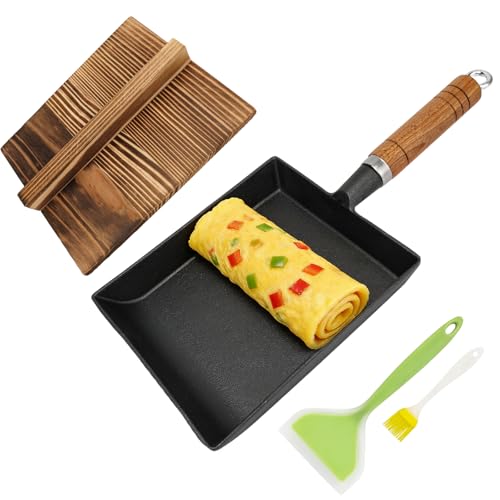
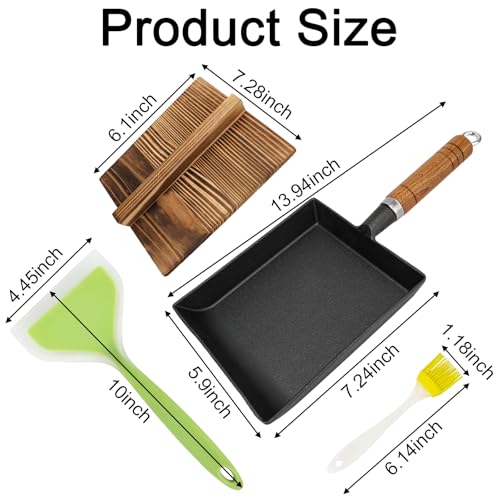
This is the largest tamagoyaki pan here, nearly 14 inches long, so it’s built for families or meal prep. The cast iron delivers even heating and natural non-stick properties over time, and the set includes a wooden lid, silicone spatula, and oil brush, which adds real value. Owners appreciate the lid for trapping heat and speeding up cooking, especially with thicker layers.
But the size is a double-edged sword. It’s too big for small stovetops or single servings, and the weight makes flipping a challenge. It’s also unseasoned out of the box, so you’ll need to prep it before first use. Still, for cast iron fans who want a dedicated large-format tamagoyaki pan, this delivers.
Product photos
Our Testing Process
My approach to evaluating tamago pans, as with all cookware here at CookwareCanvas, began with a thorough comparison of published specifications and features. I then weighed owner reviews from major retailers alongside expert opinions found in dedicated cooking publications. Given the specialized nature of these pans, I focused on details beyond what you’d find in a review of, say, standard frying pans. This research-led comparison allowed me to rank options against clear criteria, rather than a hands-on lab test.
For tamago pans, three factors stood out as most critical: the quality of the nonstick coating, the pan’s ability to distribute heat evenly, and the overall build quality for durability. A good nonstick surface is essential for preventing sticking and achieving those beautiful, layered omelets. Even heat distribution is key to consistent cooking, and the material – whether aluminum, cast iron, or ceramic – significantly impacts this. Finally, a well-constructed pan will stand up to repeated use and cleaning.
Specifications reliably indicate the materials used and pan dimensions, helping assess heat conductivity and overall size. However, I relied heavily on owner feedback to gauge the longevity of nonstick coatings and how well the pans performed with everyday use. Many users shared experiences with warping, handle comfort, and how easy the pans were to clean – details not always apparent from a spec sheet. If you’re considering other types of egg pans, you might also find our guide to non-stick egg pans helpful.
What To Look For In tamago pans
Choosing the right tamago pan can really elevate your Japanese cooking, but there’s more to it than just a square shape.
A quality tamago pan delivers even heating for consistent layers, a reliably nonstick surface for easy release, and a shape designed specifically for rolling and forming tamagoyaki. Material impacts heat retention and responsiveness, while handle comfort and included accessories enhance usability. Look for pans compatible with your cooktop and considered for their long-term durability.
Material Matters
The material of your tamago pan significantly impacts its performance. While many options exist, from ceramic to stainless steel, cast iron and aluminum alloys are the most common. Cast iron, like the Iwachu Iron Tamagoyaki Omelette Pan, excels at heat retention, meaning each layer cooks evenly and holds its shape beautifully. However, it requires seasoning and more diligent care to prevent rusting. Aluminum, often seen in models like the TECHEF Japanese Omelette Pan, heats quickly and evenly, but generally doesn’t retain heat as well. Look for heavier-gauge aluminum (3004 is a good indicator) for added stability and resistance to warping.
Nonstick Performance and Safety
A truly nonstick surface is vital for tamagoyaki, where delicate layers can easily tear. While traditional Teflon coatings are effective, concerns about PFOA have led to many brands offering PFOA-free alternatives. However, even “safe” coatings wear down over time. Consider the coating’s construction; multiple layers, as seen in the TECHEF pan, generally offer improved durability. Ceramic coatings, like those in the LISOS Ceramic Tamagoyaki Pan, are another option, but can sometimes lack the same longevity as well-maintained Teflon. Ultimately, the best pan depends on your preferences and willingness to maintain the surface.
- A truly slick surface makes the first roll the easiest. Don’t underestimate this.
- Consider the long-term cost. Replacing a cheaper pan with a worn-out coating annually can exceed the price of a higher-quality, more durable option.
- Look for pans with reinforced coatings. These often include proprietary technologies designed to improve scratch resistance and extend the life of the nonstick surface, making them excellent pans for many tasks.
Size, Accessories, and Versatility
Tamago pans aren’t one-size-fits-all. Smaller pans (around 7×5 inches) are ideal for single servings or smaller omelets, while larger ones (8×8 inches or larger, like the JBESUHI Cast Iron Tamagoyaki Pan Set) are better suited for families or more substantial portions. Beyond size, consider included accessories. Some sets, like the Oleex Tamagoyaki Pan Set, include spatulas, oil brushes, and even Musubi makers, offering exceptional value.
A good rule of thumb: if you’re just starting out, a set with accessories can save you money and ensure you have the right tools on hand.
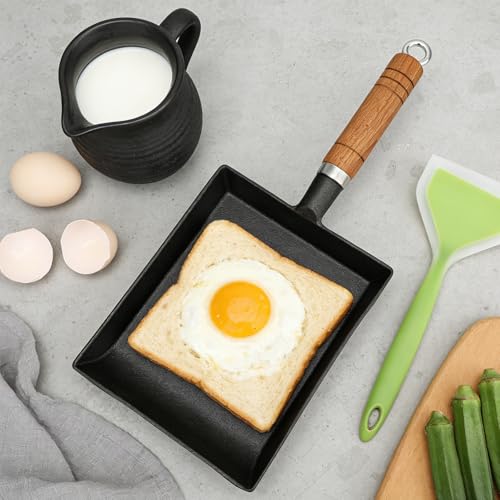
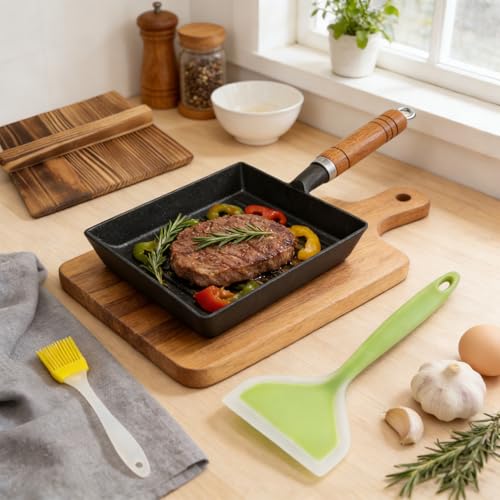
Finally, think about versatility. While designed for tamagoyaki, many of these pans are suitable for other tasks. You can use them for small frying pans for eggs, pancakes, or even searing small portions of protein, making them a useful addition to any kitchen, especially if space is at a premium.
Tamago Pans Compared
Here’s a comparison of key specifications for popular tamago pans to help you choose the right one for your needs.
| Product Title | Size (Length x Width) | Material | Coating | Lid Included? | Accessories Included | Oven Safe (Max °F) |
|---|---|---|---|---|---|---|
| TECHEF Japanese Omelette Pan | 7.5 x 5.5 / 8.5 x 8.5 in | Aluminum | Teflon | No | No | 350 |
| HAPPI STUDIO Tamagoyaki Pan | 7 x 6 in | Maifanite Stone | Nonstick | Yes | Spatula, Chopsticks | N/A |
| Oleex Tamagoyaki Pan Set | 5 x 7 in | N/A | Nonstick | No | Plate, Brush, Spatula, Chopsticks, Mold | N/A |
| HexClad Japanese Tamagoyaki Egg Pan | 6 x 8 in | Stainless Steel / Aluminum | HexClad (Hybrid) | No | No | 900 |
| LISOS Ceramic Tamagoyaki Pan | N/A | Aluminum Alloy | Ceramic | No | No | N/A |
| Orcela Tamagoyaki Pan | 6 x 8 in | N/A | Nonstick | No | No | N/A |
| Iwachu Iron Tamagoyaki Omelette Pan | N/A | Cast Iron | N/A (Bare Cast Iron) | No | No | N/A |
| JBESUHI Cast Iron Tamagoyaki Pan Set | 13.94 x 5.9 in | Cast Iron | N/A (Bare Cast Iron) | Yes | Spatula, Brush | N/A |
Frequently Asked Questions
What size tamago pan should I buy for a beginner?
A smaller pan, around 7×5 inches, is ideal for beginners; it’s easier to manage the rolling process and requires less oil. Learning on a smaller surface builds technique before moving to larger portions.
Can I use metal utensils on a nonstick tamago pan?
Generally, no. Even with reinforced coatings, metal utensils will eventually damage the nonstick surface. Opt for silicone or wooden spatulas to protect the coating and extend its lifespan, especially if you’re looking at mini pans for tamago.
Are cast iron tamago pans difficult to maintain?
Yes, cast iron requires more maintenance than other materials. Regular seasoning is crucial to prevent rust and maintain the nonstick properties, but the payoff is exceptional heat retention and durability.
What’s the difference between Teflon and ceramic nonstick coatings?
Teflon offers superior initial nonstick performance, but ceramic is often marketed as a safer alternative. However, ceramic coatings typically don’t last as long and may lose their nonstick qualities more quickly with frequent use, making it a choice for those seeking perfect single-egg pan options.
Can a tamago pan be used for other types of cooking?
Absolutely. Beyond tamagoyaki, these pans work well for cooking small pancakes, searing individual servings of fish, or making omelets. Many find them useful as smallest nonstick pans for those smaller jobs.
The Bottom Line
Ultimately, choosing a tamago pan comes down to balancing convenience with long-term performance. If you want something that’s ready to go right out of the box and requires minimal upkeep, the TECHEF Japanese Omelette Pan offers a solid nonstick experience at an accessible price. However, if you’re willing to invest a bit more time in care and maintenance, you’ll likely find the lasting quality and even heating of the Iwachu Iron Tamagoyaki Omelette Pan to be a worthwhile investment.
For those seeking specific features, the market offers excellent alternatives. If you’re looking for a complete set to get started, the Oleex Tamagoyaki Pan Set provides exceptional value with its included accessories. And for cooks who also want something versatile enough for other tasks, the HexClad Japanese Tamagoyaki Egg Pan’s hybrid stainless steel and aluminum construction makes it a strong contender, especially if you already invest in [premium cookware].
At the end of the day, the best tamago pan isn’t about chasing the latest technology or highest price tag. It’s about finding a pan that feels comfortable in your hand, heats evenly, and, most importantly, inspires you to create delicious, layered tamagoyaki. Focusing on those core qualities will serve you far better than any single specification ever could.
