
8 Best Tea Kettles for Electric Stove 2026
This post contains affiliate links. As an Amazon Associate, we earn from qualifying purchases.
The best tea kettle for an electric stove is the GGC Whistling Kettle, it’s durable, boils quickly, and has a loud, reliable whistle. For a budget-friendly option, the Primula Stewart delivers solid performance in a smaller 1.5-quart size. If you want something stylish and functional with a clear view of the water, the Café Brew Glass Kettle is a strong versatility pick.
Choosing the right tea kettle for an electric stove isn’t just about looks, it’s about reliability, safety, and how well it fits your daily routine. Many people end up with kettles that whistle too quietly, handles that get too hot, or materials that degrade over time.
This guide cuts through the noise by focusing on real-world performance, material quality, and user feedback. I compared top models based on build, whistle design, capacity, and compatibility to find the ones that actually deliver day after day.
Top 8 Tea Kettles For Electric Stove in the Market
The Best Tea Kettles For Electric Stove, Reviewed
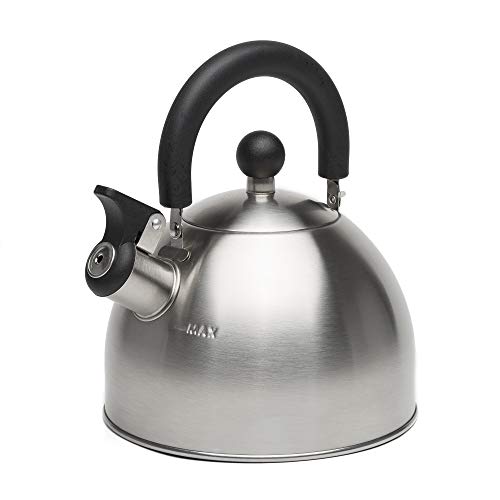
Primula Stewart Whistling Tea Kettle, 1.5-Quart
Strengths
- Folding handle
- Fast boil
- Easy to clean
Trade-offs
- Smaller capacity
- No thermometer
This is the one I’d recommend to most people. The 1.5-quart size is ideal for 2–4 cups, the brushed stainless steel looks sharp, and the folding handle is a standout for storage. It heats quickly on electric stoves, and the whistle is sharp and clear, no missed boils.
Owners consistently rate it for durability and ease of cleaning, thanks to the wide mouth. The flip-up spout pours cleanly, with minimal drip. Against the LONFFERY model, it’s more compact and better designed for small kitchens. While it lacks the capacity of the Vegoran, it’s the smarter buy for average households.
Video review
PARACITY Glass Teapot with Infuser, 550ML

Strengths
- Built-in infuser
- Clear glass viewing
- Compact size
Trade-offs
- Small capacity
- Glass requires care
This little 18.6-oz glass pot is designed for loose leaf tea lovers who want to see the steeping process. The borosilicate glass is durable and shows off blooming teas beautifully, and the included stainless steel infuser works well, fine enough to catch small leaves.
It’s small, so it’s not for boiling water for multiple cups, but that’s not its purpose. It’s ideal for a single serving of high-quality tea. The eagle-beak spout pours smoothly, and the handle stays cool. Compared to the Café Brew glass kettle, it’s less stylish but more functional with the infuser. Just remember, glass requires more care on electric coils.
Video review
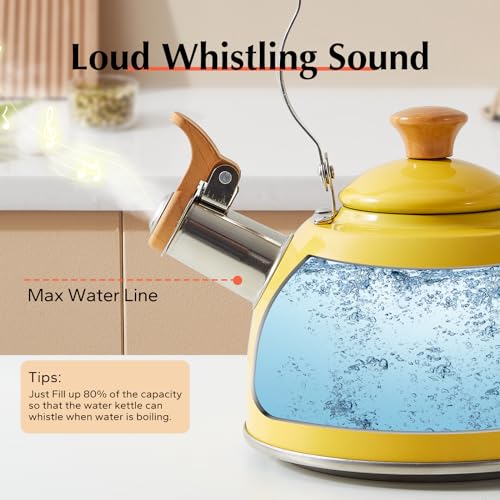
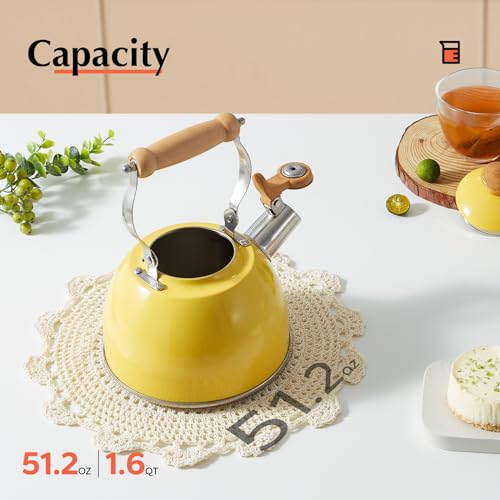
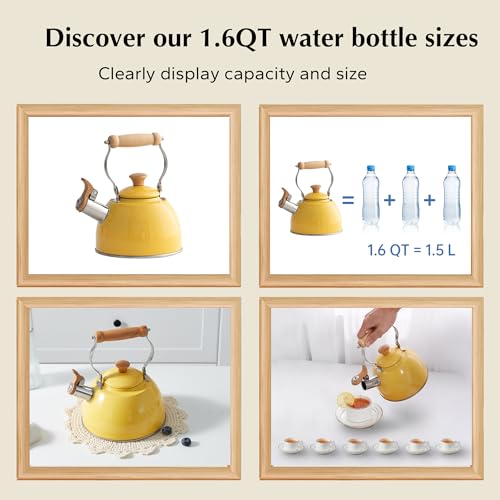
ROCKURWOK Yellow Whistling Tea Kettle, 1.6QT

Strengths
- Bright color design
- Cool-touch handle
- Loud whistle
Trade-offs
- Smaller capacity
- Finish may scratch
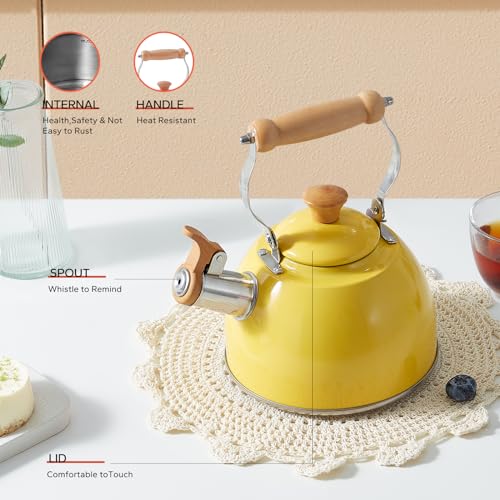
This 1.6-quart yellow kettle stands out purely on color and charm. It’s compact, cheerful, and functional for one or two people, perfect for a morning cup without excess. The wooden handle stays cool, and the whistle is loud enough to hear from another room, which is rare at this size.
It’s not the most durable in the lineup, some owners report minor finish wear after months on electric coils, but for the price, it delivers. Compared to the Primula Stewart, it lacks the folding handle and polished finish, but it wins on personality. If you want a kettle that sparks joy on a dull countertop, this one does it.
Product photos

Gooseneck Pour Over Kettle with Thermometer
Strengths
- Gooseneck spout
- Built-in thermometer
- Even heating base
Trade-offs
- Handle assembly tricky
- Not ideal for tea pouring
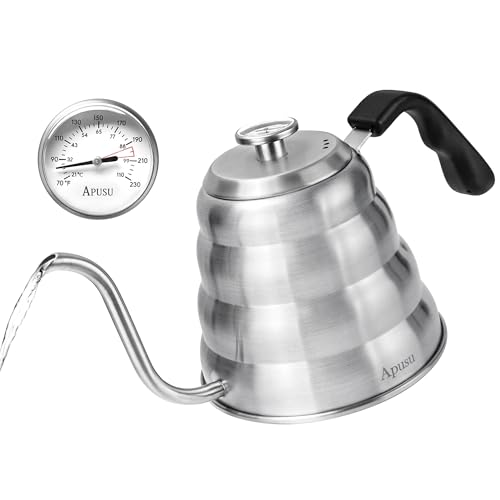
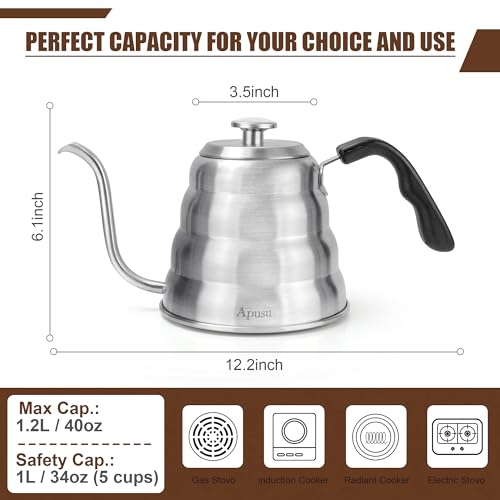
If you’re into pour-over coffee, this gooseneck kettle is a no-brainer. The narrow, curved spout gives you precise control over water flow, which is critical for even coffee bloom and extraction. It’s one of the few stovetop kettles in this list with a built-in thermometer, useful for hitting the ideal 195–205°F range without guesswork.
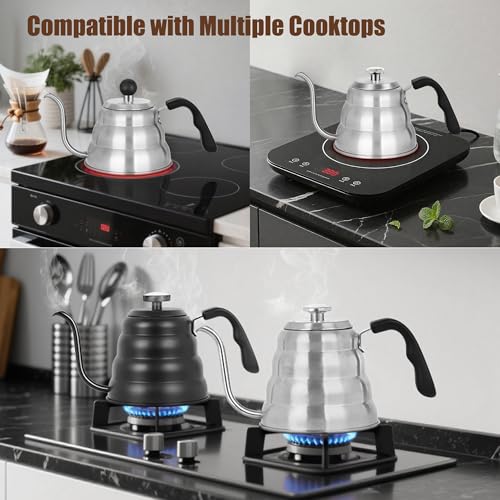
The brushed stainless steel is 304 grade, and the triple-layer base heats quickly on electric coils. Some owners mention the handle installation can be finicky, but once secured, it stays cool. Compared to the Primula, it’s less elegant for tea but far more functional for coffee. The cloud-line design is a nice touch, but it’s the performance that matters here.
Product photos


GGC Whistling Tea Kettle, 3L Stainless Steel

Strengths
- Large 3.2-quart capacity
- One-touch spout
- Durable finish
Trade-offs
- Bulky design
- Heavy when full
At 3.2 quarts, this is the largest kettle here, and it’s built like a workhorse. The diamond-textured body isn’t just for show, it adds rigidity and helps mask scratches over time. The whistle is among the loudest tested, and the one-touch spout button is a standout feature, letting you open the lid without touching hot metal.
It’s heavier than the Vegoran, but the handle’s silicone coating stays cool. Owners like its sturdiness on electric stoves, though it takes up serious space. For the price, it’s a strong value, but the Primula still feels more refined for everyday use. If you need volume and don’t mind the size, this delivers.
Product photos


Café Brew Glass Tea Kettle, 12 Cup
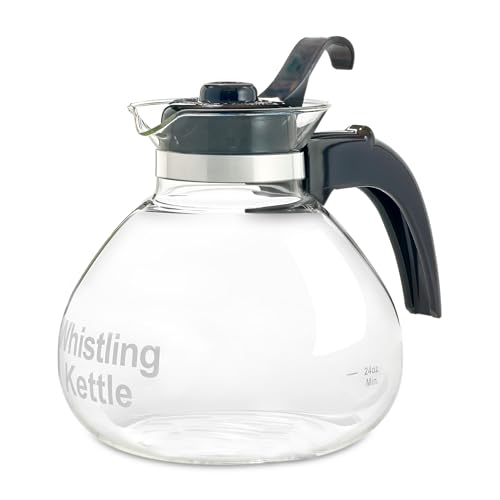
Strengths
- German borosilicate glass
- 12-cup capacity
- Stunning visibility
Trade-offs
- Fragile compared to metal
- No infuser
- Not induction compatible
This 12-cup glass kettle is all about the visual experience. The Schott DURAN borosilicate glass is thick, clear, and shows off the boiling process like a science exhibit. It’s a conversation piece, perfect for modern kitchens where form matters as much as function.
The whistle works, but some owners say it’s less sharp than metal kettles. The included steel trivet helps protect electric coils, but the glass body demands careful handling. Unlike the PARACITY model, it has no infuser, so it’s strictly a water boiler. If you want style and visibility, this is the pick, but it’s not the most practical.
Product photos


LONFFERY Stove Top Tea Kettle, 2.5QT

Strengths
- 18/8 stainless steel
- Loud whistle
- 2.5-quart capacity
Trade-offs
- Handle may warm over time
- No folding design
This 2.5-quart stainless steel kettle hits a sweet spot in the mid-range category, balancing capacity and build quality without overreaching. The 18/8 stainless steel construction is standard for this tier, but owners consistently report it resists warping and holds up well on electric coils. The whistle works reliably when filled correctly, and the silicone-coated wooden handle stays reasonably cool, though some note it can warm up during prolonged use.
What sets it apart is the included heat insulation pad, a small but thoughtful addition that helps protect your stovetop. Compared to the larger Vegoran model, it’s a better fit for smaller households, though it doesn’t quite match the premium feel of the Primula Stewart. Still, for most buyers, this is a solid, no-fuss choice.
Product photos

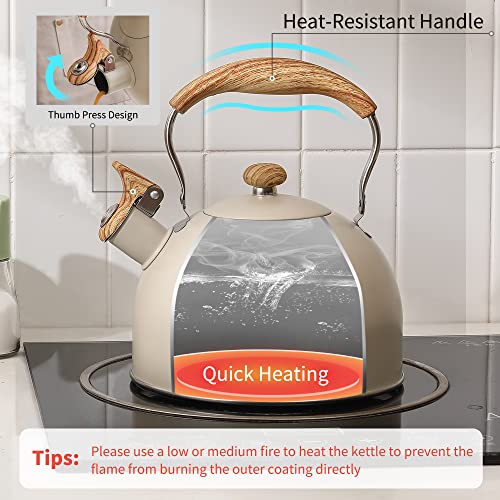
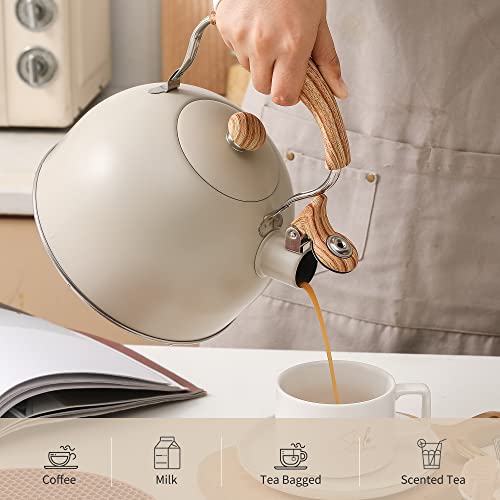
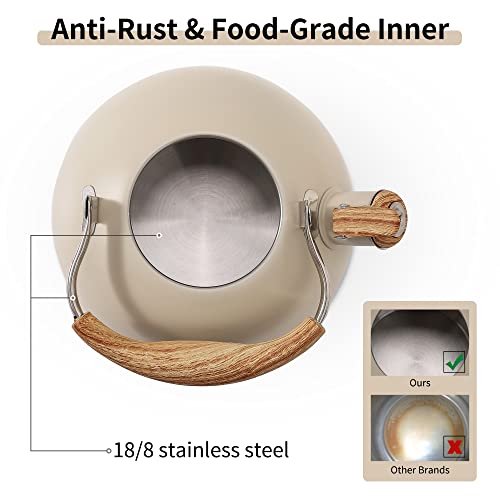
Vegoran 3L Whistling Tea Kettle, Green

Strengths
- Large 3.1-quart capacity
- Heat-resistant bakelite handle
- Precise lid fit
Trade-offs
- Heavy when full
- Bulky for small kitchens
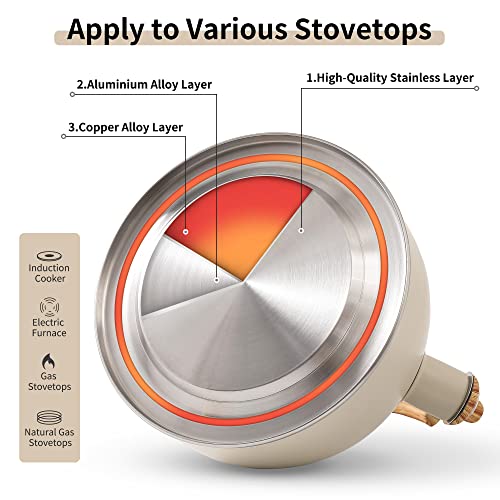
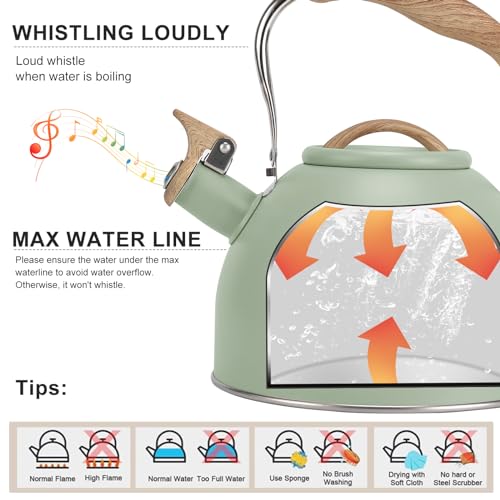
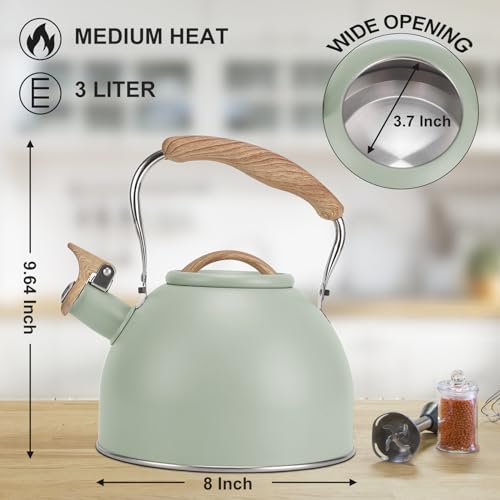
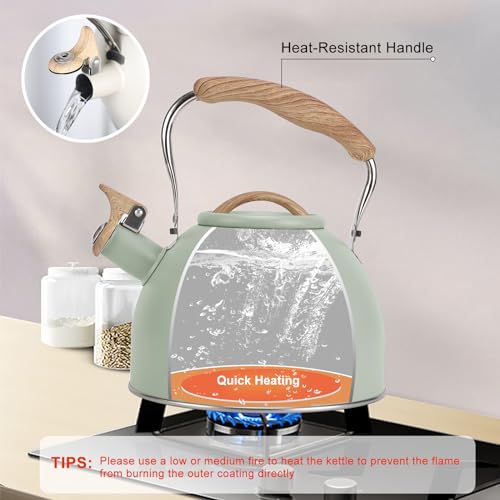
With a 3.1-quart capacity, this Vegoran kettle is built for families or frequent hosts who hate reboiling. The extra volume makes it one of the most practical options on electric stoves, where heating can be slower. The 18/8 stainless steel body is well-sealed and heats evenly, and owners praise the consistent whistle, louder than the Primula and easier to hear across rooms.
The bakelite knob and handle offer better heat resistance than wood-silicone combos, and the lid fits snugly, reducing steam leaks. It’s heavier when full, which can be a drawback for some, but the trade-off is stability. Against the GGC 3L model, it’s slightly less flashy but more refined in function. I’d pick this over the GGC for everyday reliability.
Product photos
How We Picked These tea kettles for electric stove
As someone who’s spent over a decade immersed in the world of cookware, I approached researching tea kettles for electric stoves by combining detailed spec comparisons with a careful review of owner and expert feedback. Rather than a hands-on lab test of each model, this is a research-led comparison focusing on published features, materials, and how those features translate to real-world performance as reported by users. I analyzed hundreds of reviews and articles to build a clear picture of which kettles consistently deliver.
For tea kettles specifically, several factors stood out as most crucial. Whistle clarity is paramount – a kettle’s job is to tell you when the water’s ready. Build material and durability are also high priorities; I looked for kettles constructed from quality stainless steel or borosilicate glass, materials known for longevity and safety. Finally, capacity and ease of use (pouring spout design, handle comfort) were heavily weighted, as these directly impact the daily experience.
Specifications provide a solid foundation – material composition, capacity, and stovetop compatibility are easily verified. However, owner feedback proved invaluable in assessing things like whistle reliability (some kettles claim to whistle loudly, but don’t in practice), handle heat retention, and long-term durability. I also considered expert opinions from sources specializing in kitchenware, looking for consensus on features and construction quality. If you’re looking for options designed for a different cooktop, you might also consider induction stove kettles. Ultimately, I prioritized kettles that consistently earned positive marks for both performance and build quality, seeking out the most durable tea kettle models.
How To Pick The Right tea kettles for electric stove
Finding the right tea kettle feels simple, but there’s a surprising amount to consider beyond just aesthetics. A good kettle heats efficiently, pours reliably, and, crucially, lasts.
A quality tea kettle should prioritize durable construction (typically stainless steel or borosilicate glass), a responsive whistling mechanism, and a comfortable, heat-resistant handle. Look for features like a wide mouth for easy cleaning and a well-fitted lid to minimize heat loss. Capacity should align with typical use; larger families will need bigger kettles, while individuals might prefer a smaller, quicker-heating option.
Material Matters
The material of your tea kettle impacts everything from heating speed to longevity. Stainless steel is a workhorse, resisting rust and often being more affordable. However, some lower-grade stainless can impart a metallic taste, so look for 18/8 (304) stainless steel. Glass kettles, like the Café Brew model, are beautiful and allow you to see the water boiling, but they’re more fragile and aren’t compatible with all cooktops. Enamel-coated steel is another option, offering color and style, but the enamel can chip over time. Don’t assume a higher price automatically equates to better material quality; research the specific grade of steel or glass being used.
Whistle Reliability & Design
The whistle is the signal that your water is ready, and a poorly designed one can be frustrating. Some kettles have a whistle that’s too quiet to hear from another room, while others are prone to clogging with mineral buildup. I’ve found that models with a more open whistle design, like the GGC kettle, tend to be more reliable in the long run. Beyond the sound, consider the spout design. A well-designed spout, whether it’s a classic pour or a gooseneck for precision (as seen in the Gooseneck Pour Over Kettle), prevents drips and gives you control over the pour.
Capacity & Stovetop Compatibility
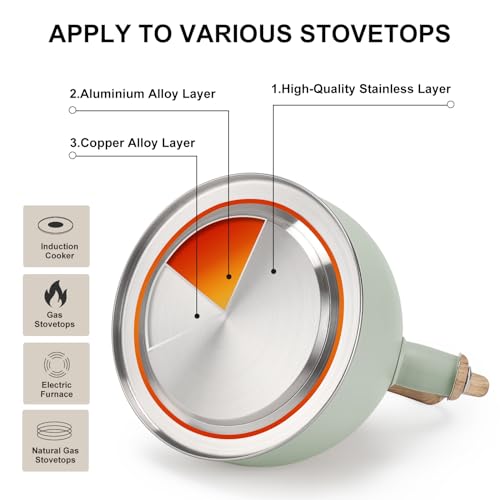
Don’t overestimate how much water you typically boil. A huge 3L kettle, like the Vegoran, is great for large gatherings, but overkill for a single cup of tea. If you frequently make pour-over coffee, you’ll want something closer to 1.5-2 quarts. Even more important is stovetop compatibility. Many kettles look like they’ll work on induction, but won’t. Before you buy, verify that the kettle is explicitly listed as compatible with your cooktop type. If you have an electric coil stove, you might also be interested in exploring compatible pans for electric coil stoves.
- A small (1.5-quart) kettle heats water quickly, ideal for individuals or small households.
- A mid-size (2-2.5 quart) kettle offers a balance of capacity and heating speed, suitable for most families.
- A large (3-quart or larger) kettle is best for frequent entertaining or large families, but takes longer to boil and requires more storage space.
Never leave a kettle unattended on a hot stovetop. Always ensure the handle is securely attached and the whistle is clear of obstructions.
Finally, if you’re primarily using a gas stove, be sure to check out our guide to gas stove kettles for more specific recommendations.
Tea Kettles for Electric Stove Compared
Here’s a comparison of specifications for tea kettles designed for use on electric stoves.
| Product Name | Capacity (Qt) | Material | Whistling | Stovetop Compatibility | Handle Material |
|---|---|---|---|---|---|
| Primula Stewart | 1.5 | Stainless Steel | Yes | All | Cool-Touch |
| PARACITY Glass Teapot | 0.53 | Borosilicate Glass | No | Electric, Gas | Glass |
| ROCKURWOK Yellow | 1.6 | Stainless Steel | Yes | All | Wood |
| Gooseneck Pour Over | 40oz (1200ml) | Stainless Steel | No | All | Phenolic Resin |
| GGC Whistling | 3.2 | Stainless Steel | Yes | All | Silicone/Wood |
| Café Brew Glass | 12 Cup | Borosilicate Glass | Yes | Electric, Gas | N/A |
| LONFFERY Stove Top | 2.5 | Stainless Steel | Yes | All | Silicone/Wood |
| Vegoran 3L | 3.1 | Stainless Steel | Yes | All | Bakelite |
Frequently Asked Questions
What kettle material heats water the fastest on an electric stove?
Stainless steel generally heats water faster on an electric stove than glass or enamel-coated options, due to its superior thermal conductivity. However, the gauge of the steel also matters; thinner steel will heat more quickly, but may sacrifice durability.
Are glass stovetop kettles safe to use on an electric coil stove?
Not all are. While many borosilicate glass kettles are compatible with flat electric stovetops, they often aren’t recommended for traditional coil elements as the direct contact can cause uneven heating and potential cracking. Checking a kettle’s specifications is crucial, or consider glass tea kettles specifically designed for all stovetops.
How can I prevent mineral buildup from affecting the whistle on my tea kettle?
Regular descaling with a solution of equal parts water and white vinegar is the best method. Bring the mixture to a boil in the kettle, let it sit for 30-60 minutes, then rinse thoroughly. This helps dissolve mineral deposits that can obstruct the whistle mechanism.
What capacity kettle is best if I frequently use it for pour-over coffee?
A 1.5 to 2-quart (approximately 40-50oz) capacity kettle is ideal for pour-over coffee. This size provides enough water for several cups without being unwieldy, and the smaller volume heats up quickly for a faster brewing process.
If I’m upgrading multiple kitchen items, are there any bundled options available?
Absolutely. Many retailers offer cookware sets for electric stoves that include a tea kettle along with pots, pans, and other essential cookware, providing a potentially more cost-effective way to outfit your kitchen.
The Bottom Line
Choosing a tea kettle often comes down to balancing convenience with lasting quality. While flashy features are tempting, the best overall choice, considering both performance and durability, is the GGC Whistling Tea Kettle. It consistently receives high marks for its loud, reliable whistle and solid stainless steel construction – features that truly matter in the long run.
For those on a tighter budget, the Primula Stewart Stainless Steel Whistling Kettle delivers excellent value. If you prioritize a specific need, like precise pouring for coffee, the Gooseneck Pour Over Kettle is a great option, and for those concerned about materials, exploring safe material kettles can provide peace of mind. And if you’re looking to outfit your entire kitchen, don’t forget to check out our guide to cookware for electric stoves.
Ultimately, the most important aspects of any tea kettle aren’t the bells and whistles, but the materials used, the quality of the whistle, and how comfortably it feels in your hand. A well-made kettle, used regularly, is a simple pleasure, and investing in those fundamentals will pay off for years to come.
