
8 Best Thermometers for Blackstone Griddle 2026
This post contains affiliate links. As an Amazon Associate, we earn from qualifying purchases.
The Etekcity Lasergrip 774 is the best overall thermometer for Blackstone griddles, delivering fast, reliable surface readings. For those on a budget, the Blackstone Infrared Thermometer with Probe offers solid performance and added versatility. If you want maximum precision and dual lasers, the TempPro TempScan 16:1 stands out.
Cooking on a griddle means dealing with intense, uneven heat, and guessing your surface temperature leads to stuck food, flare-ups, or undercooked meals. A lot of people waste money on thermometers that look good on paper but fail when you need them most. This guide cuts through the noise, focusing on models that deliver real accuracy and durability based on specs and owner feedback. I looked at response time, distance-to-spot ratio, and long-term reliability to find the ones worth your counter space.
Top 8 Thermometers For Blackstone Griddle in the Market
The Best Thermometers For Blackstone Griddle, Reviewed
Etekcity Infrared Thermometer Laser Gun 774

Strengths
- Backlit LCD
- Good accuracy
- Affordable
Trade-offs
- No probe
- No emissivity adjustment
At just under $20, the Etekcity Lasergrip 774 delivers remarkable value without cutting corners on core performance. Its 12:1 distance-to-spot ratio is standard but effective, and the average-area reading feature, showing temp across the entire target zone instead of a single point, makes it more practical for checking uneven griddle surfaces.
The backlit screen is bright, the trigger response is snappy, and owners consistently praise its reliability for daily cooking and even car checks. It doesn’t have a probe or adjustable emissivity, but for most home users, those are nice-to-haves, not essentials. I’d pick this as the smart all-rounder for kitchens on a budget.
Video review
TempPro TempScan Infrared for Pizza Oven
Strengths
- Fast response time
- MAX/MIN/AVG function
- Backlit screen
Trade-offs
- No probe
- Limited to surface readings
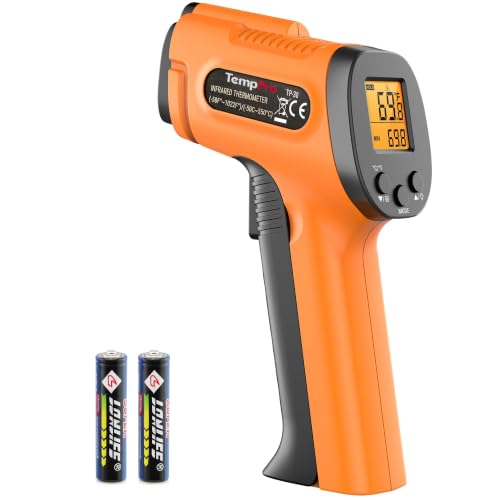
This model is tuned for griddle accuracy with a focus on surface consistency. The 12:1 ratio and <500ms response time mean it reads fast and fairly precisely, and the MAX/MIN/AVG tracking is useful for monitoring heat distribution across a Blackstone surface before cooking. Owners like using it to find hot spots and verify even preheating.
It’s not flashy, but the backlit screen and auto-off after 90 seconds show thoughtful design. While it lacks a probe, its strength is in surface reliability, especially when paired with emissivity adjustments. For griddle-specific work, it’s a strong contender, even over more expensive models with unnecessary extras.
Video review
TempPro TempScan with 2 Lasers

Strengths
- Dual-laser targeting
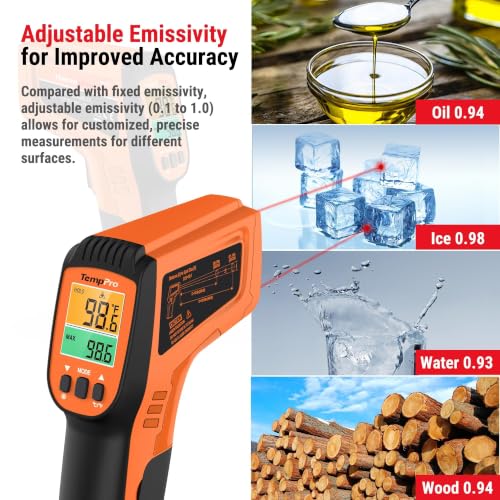
- Adjustable emissivity
- 16:1 distance-to-spot
Trade-offs
- Overkill for basic griddle use
- No meat probe
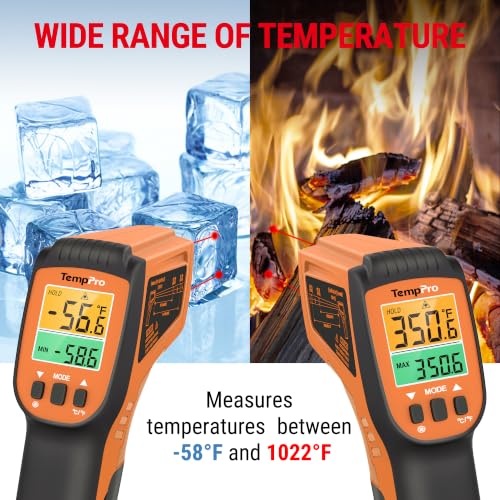
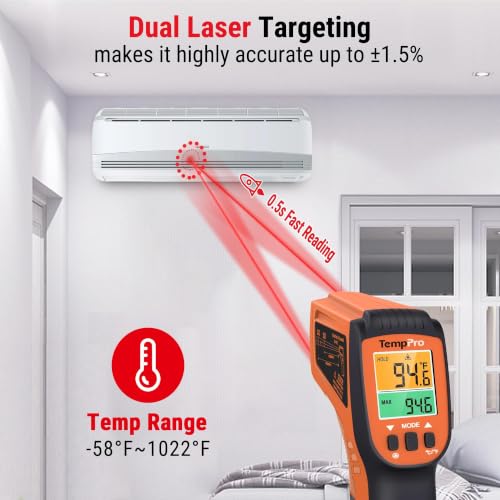
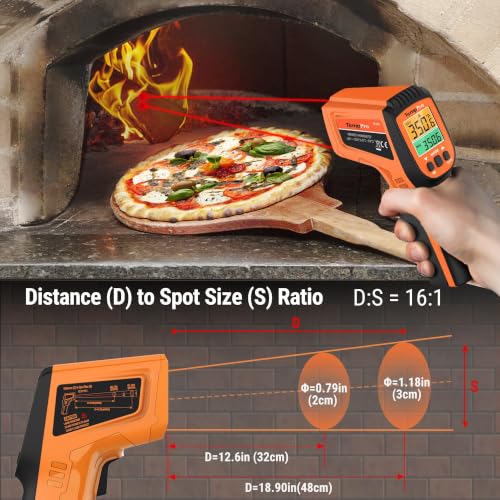
This model stands out with its dual-laser targeting and adjustable emissivity, which on paper should give more precise spot measurements than single-laser rivals. The 16:1 distance-to-spot ratio is stronger than average, meaning it can read smaller areas from farther away, useful when checking hot zones on a crowded griddle. Owners consistently report confidence in its readings, especially when calibrating for different surfaces like cast iron or stainless steel.
It’s clearly built with versatility in mind, crossing into HVAC and auto work, but that doesn’t hurt its kitchen credibility. Compared to cheaper models, it holds its own on accuracy, though the premium price tag makes me question if the average home cook really needs this level of control.
Product photos

Digital Infrared Thermometer Gun for Cooking

Strengths
- Extremely affordable
- Backlit display
- Compact size
Trade-offs
- Inconsistent accuracy
- Fragile build
- No emissivity adjustment
At under $10, this is the cheapest option here, and it shows. It covers the basics, non-contact reading, backlight, and a decent -58°F to 932°F range, but owners report hit-or-miss accuracy, especially on shiny surfaces. The preset emissivity of 0.95 means it struggles with bare metal griddles unless you tape or paint the spot first, which isn’t practical mid-cook.
It’s small and lightweight, and the data hold function is useful, but build quality feels flimsy compared to others. Still, for someone who only griddles occasionally or wants a spare, it might suffice. I wouldn’t trust it for consistent results, but as a backup or gift, it’s not a total loss.
Product photos


TempPro TempScan 2-in-1 with Meat Probe
Strengths
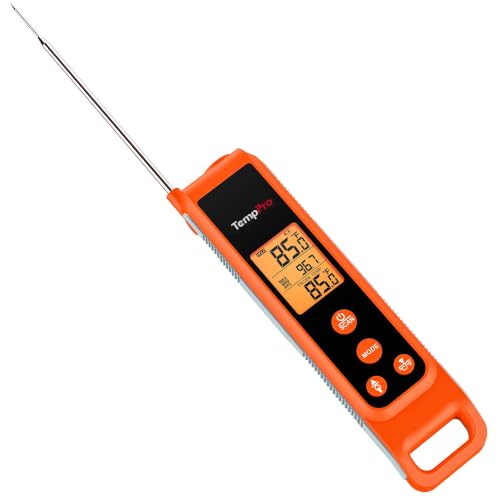
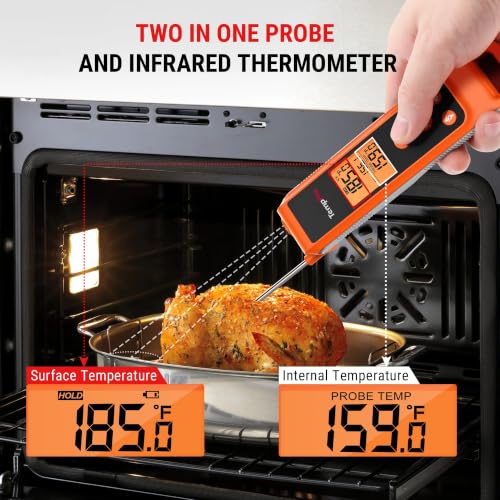
- 2-in-1 infrared and probe
- Motion-sensing on/off
- Magnet and hanging hole
Trade-offs
- Highest price in list
- Bulkier than IR-only models
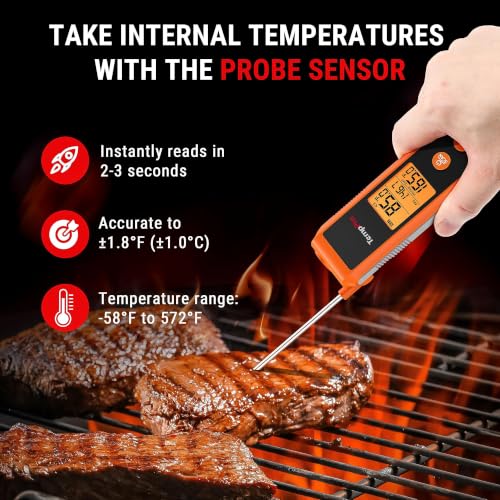
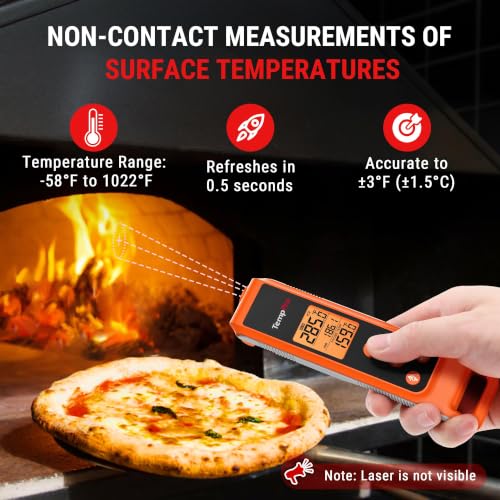
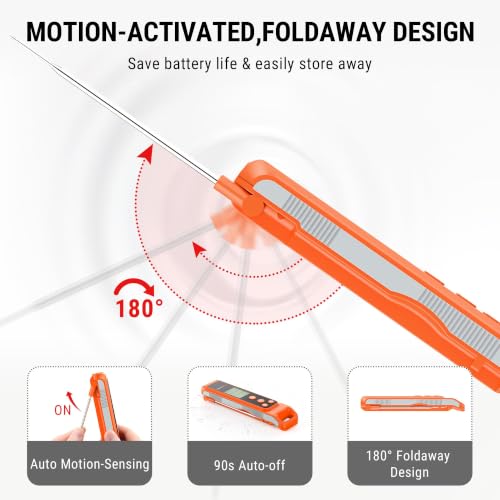
If you want true dual functionality, this is the one to beat. The infrared side handles griddle and oven surfaces with adjustable emissivity, while the fast-response probe gives internal readings in 2–3 seconds with solid precision. The motion-sensing wake/sleep feature is a small luxury, turns on when you lift it, off when you set it down, which saves battery and feels modern.
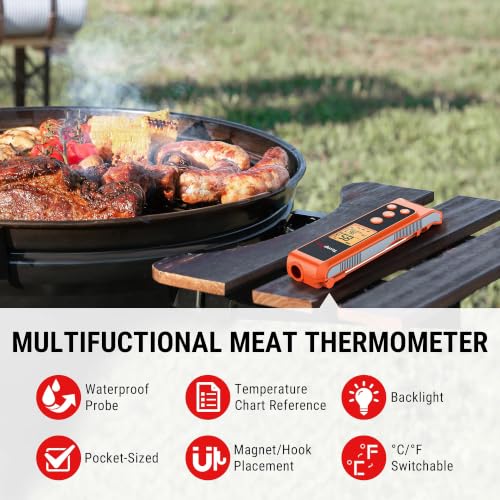
Owners appreciate the magnet and hanging hole for kitchen storage, and the build feels durable. Compared to the Blackstone-branded combo model, this one offers better specs and more flexibility. It’s the most complete package here, even if it’s the priciest.
Product photos
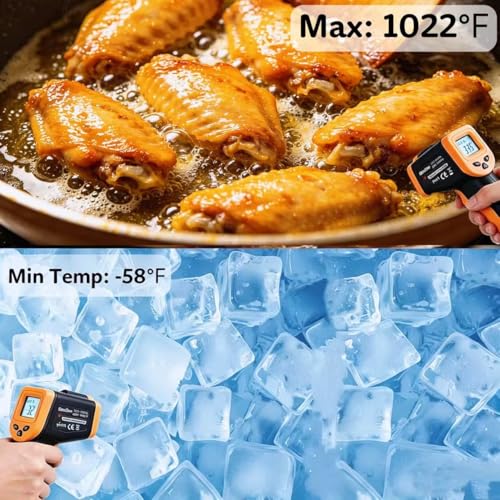
Infrared Thermometer Gun -58℉~1022℉
Strengths
- High max temperature
- Large display font
- Ergonomic grip
Trade-offs
- No emissivity control
- No probe
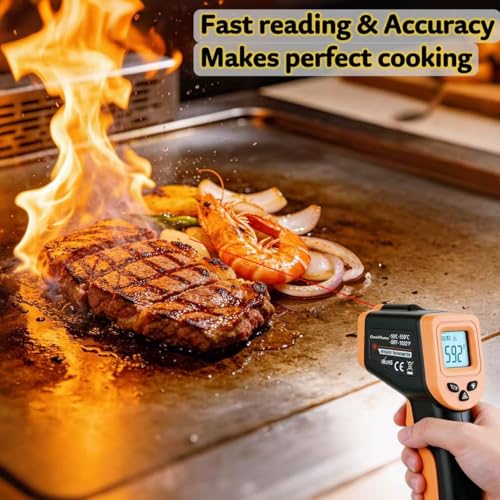
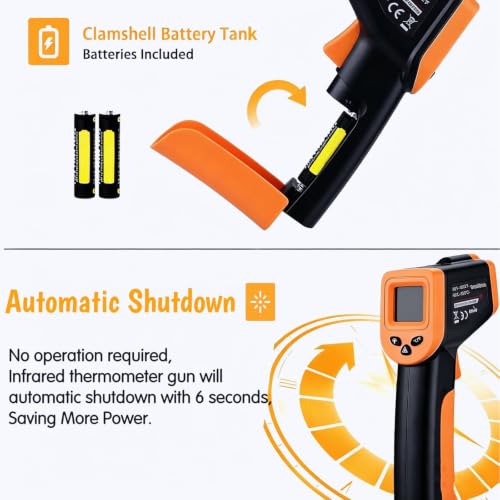
With a top-end range of 1022°F, this unit matches the highest limits in the category, making it a strong pick for anyone pushing heat, think searing griddles or pizza ovens running hot. The larger font on the display is a subtle but meaningful upgrade; owners confirm it reduces squinting, especially at night. The 90-degree battery cover is a surprisingly thoughtful design tweak that makes swaps faster.
It’s built for durability with an ergonomic grip and solid shell, and the wide use cases, from frying to car repair, mean it won’t gather dust. But like others in this tier, it lacks adjustable emissivity, so shiny Blackstone surfaces might throw off readings unless masked.
Product photos


Blackstone Infrared Thermometer with Probe
Strengths
- Includes folding probe
- Branded for griddle use
- Simple operation
Trade-offs
- Limited max IR temp
- Probe accuracy not top-tier
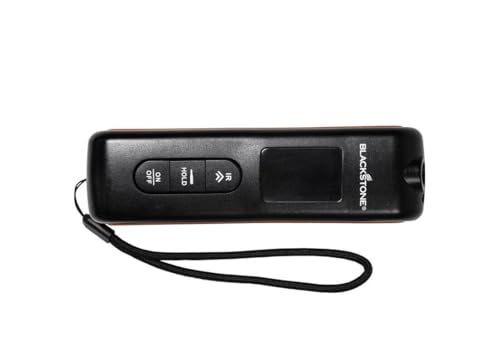
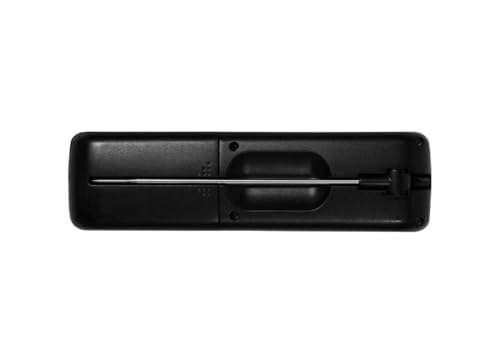
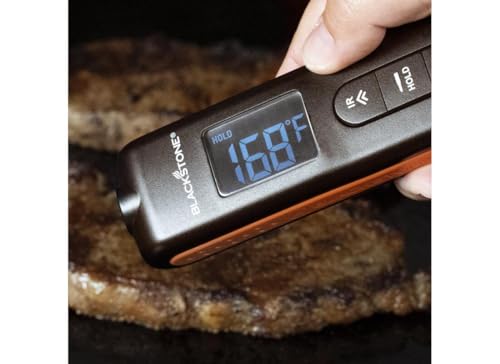
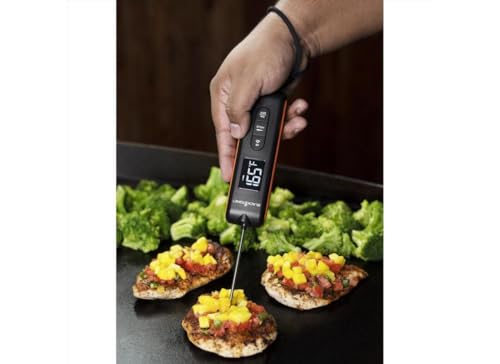
It’s no surprise this one carries the Blackstone name, it’s designed specifically for their griddles, and that shows in its dual functionality. The infrared + probe combo is where it shines, letting you check surface heat and then flip to monitor burger or steak doneness without grabbing another tool. The probe folds neatly, which keeps it compact in a drawer or tool caddy.
While the infrared range tops out at 932°F, slightly below some competitors, it’s more than enough for standard griddle use. Owners appreciate the simplicity and direct utility, though some note the probe isn’t as fast as standalone digital thermometers. Still, for Blackstone owners, this feels like the natural companion.
Product photos


Infrared Thermometer Gun for Griddle
Strengths
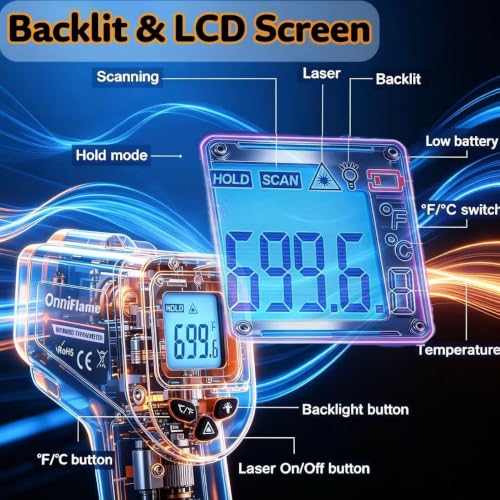
- Backlit LCD screen
- Includes case and batteries
- 2-year warranty
Trade-offs
- No emissivity adjustment
- Average distance-to-spot ratio
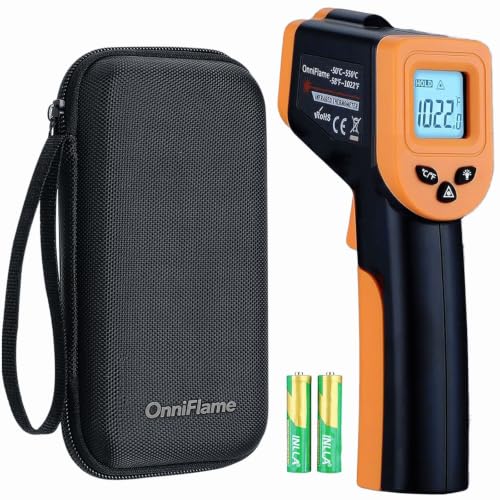
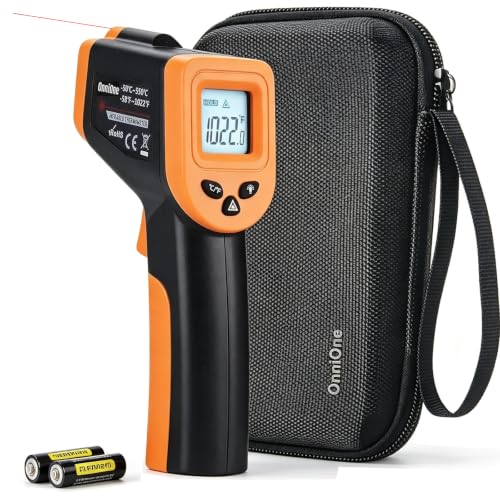
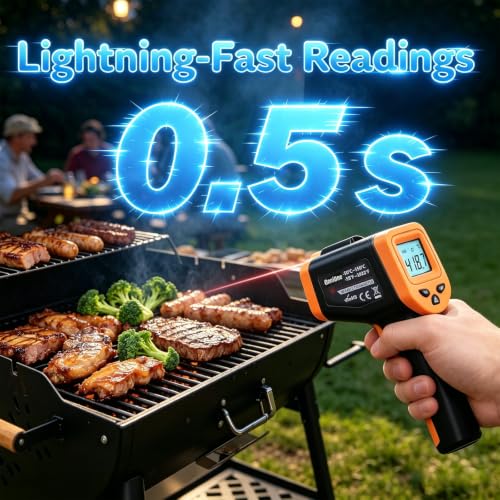
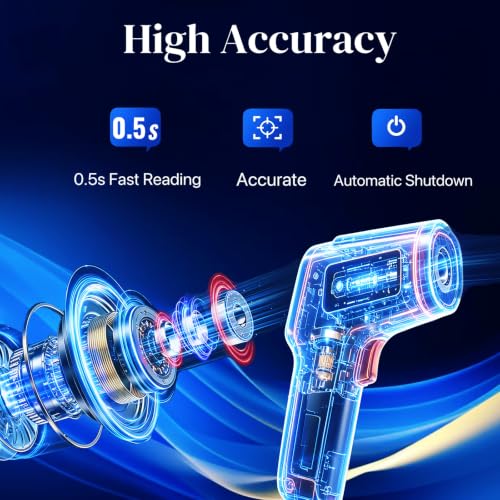
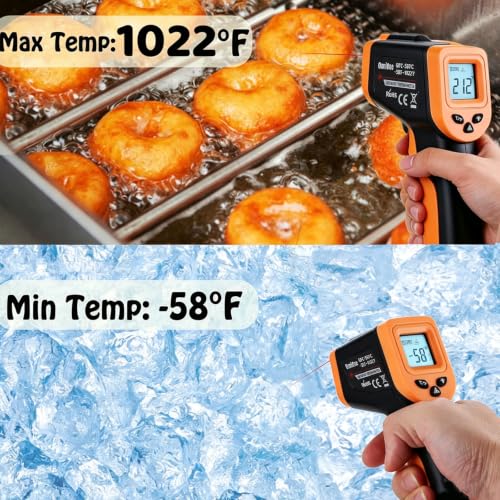
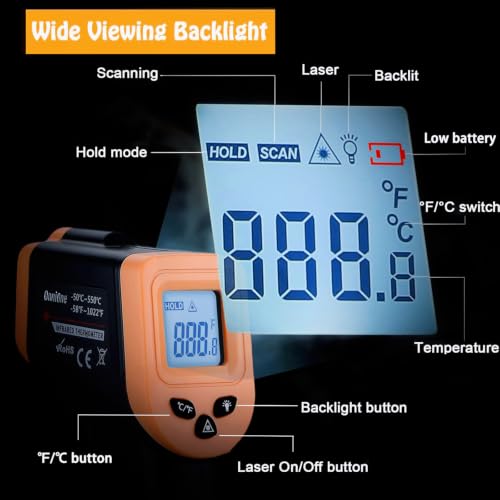
This OnniOne model hits a sweet spot with its backlit screen and included protective case, small touches that make a difference in real use. The ±2°F accuracy is solid for the price, and the 0.5-second response time matches what most high-end units offer. Reviewers note the screen is genuinely easier to read in dim lighting, which matters if you’re firing up the griddle at dawn or in a poorly lit garage kitchen.
It’s a no-frills tool with reliable performance, and the fact that it comes with AAA batteries and a 2-year warranty adds real value. While it doesn’t have advanced features like adjustable emissivity, it gets the job done for griddle work and basic cooking tasks.
Product photos
How We Chose These thermometers for blackstone griddle
We approached this guide by researching the specifications and features of numerous infrared and probe thermometers marketed for griddle use. I then weighed owner reviews from major retailers alongside professional assessments from sites focused on cooking and grilling. My aim was to identify patterns in performance and reliability, factoring in both stated accuracy and real-world usability as described by people actually using these thermometers.
For Blackstone griddle thermometers, consistent surface temperature reading and quick response time were the most important factors. Knowing the griddle’s heat distribution is critical for even cooking, and a fast reading prevents frustrating delays. Accurate internal temperature readings (for models with probes) were also heavily weighted, as ensuring food safety and achieving desired doneness relies on precise measurements.
Specifications reliably indicate a thermometer’s temperature range and response time, but owner feedback was crucial for assessing long-term accuracy and ease of use. I paid close attention to comments regarding battery life, durability, and the clarity of the display. Understanding how well a thermometer holds its calibration over time, something specs don’t reveal, required careful review of user experiences. Don’t forget to keep your griddle in top shape with the best cleaners after each use!
How To Choose The thermometers for blackstone griddle
Finding the right thermometer for your Blackstone griddle isn’t simply about getting a temperature reading; it’s about confidence in your cooking. A good thermometer delivers accuracy, speed, and usability, letting you focus on creating delicious food rather than guessing at heat levels.
A quality thermometer for a Blackstone griddle should offer a wide temperature range, a fast response time (under 0.5 seconds is ideal), and a distance-to-spot ratio of at least 8:1 for accurate surface readings. Adjustable emissivity is a plus, allowing for precise measurements on various materials. Consider whether you need both surface and internal temperature capabilities, and prioritize models with clear, easy-to-read displays.
Understanding Distance-to-Spot Ratios
The distance-to-spot ratio is crucial for surface temperature accuracy. This ratio tells you how far away the thermometer can be from the surface while still accurately measuring the target area. A higher ratio (like 16:1) means you can measure from a greater distance, which is helpful for hot surfaces. Don’t assume a higher ratio always means better; for a griddle, a 12:1 ratio often strikes a good balance between distance and pinpoint accuracy. I’ve seen many cooks struggle with inaccurate readings simply because they didn’t understand this basic principle.
Prioritizing Accuracy and Features
Accuracy is paramount, and you’ll want to look beyond just the stated temperature range. Models with adjustable emissivity are incredibly valuable. Emissivity is a material’s ability to radiate heat, and different surfaces (like seasoned steel versus polished chrome) have different emissivity values. Being able to adjust for this ensures a more precise reading. If you’re serious about achieving consistent results, consider investing in a thermometer that offers both infrared and probe functionality. Many cooks find that having both capabilities makes tackling a wide range of recipes much easier, and it’s why I often recommend checking out some essential tools to really elevate your griddle game.
- A basic infrared thermometer is sufficient for quickly checking griddle surface temperatures.
- A model with a probe adds versatility for checking the internal temperature of meats, candies, or oils, providing more complete control over the cooking process.
- Features like MAX/MIN/AVG temperature readings can be surprisingly useful for monitoring temperature fluctuations over time, especially when smoking or slow-cooking, giving you valuable data to refine your technique.
Remember: A temperature gun is only as good as its calibration. While most come pre-calibrated, it’s good practice to occasionally verify accuracy against a known temperature source.
Balancing Budget and Functionality
While high-end thermometers offer advanced features, you don’t necessarily need to spend a fortune to get a reliable tool. There are excellent budget-friendly options available that provide accurate readings and essential functionality. However, be wary of extremely cheap models, as they often sacrifice accuracy and durability. I often suggest starting with a mid-range option like the Blackstone Infrared Thermometer, and then expanding your toolkit with recommended Blackstone accessories as your needs evolve. Don’t forget to consider the convenience of features like auto-shutoff and a backlit display, particularly if you frequently cook outdoors or in low-light conditions.
Thermometers for Blackstone Griddle Compared
Here’s a comparison of key specifications for thermometers designed for use with Blackstone griddles.
| Product Name | Temp. Range (F) | Accuracy (+/-) | D:S Ratio | Laser Targeting | Probe Included |
|---|---|---|---|---|---|
| Etekcity Infrared Thermometer Laser Gun 774 | -58–842 | N/A | 12:1 | Yes | No |
| TempPro TempScan Infrared for Pizza Oven | -58–1022 | 1.5% | 12:1 | Yes | No |
| TempPro TempScan with 2 Lasers | -58–1022 | 1.5% | 16:1 | Yes | No |
| Digital Infrared Thermometer Gun for Cooking | -58–932 | N/A | N/A | No | No |
| TempPro TempScan 2-in-1 with Meat Probe | -58–1022 | N/A | 12:1 | Yes | Yes |
| Infrared Thermometer Gun -58℉~1022℉ | -58–1022 | N/A | N/A | No | No |
| Blackstone Infrared Thermometer with Probe | 0-932 | N/A | N/A | No | Yes |
| Infrared Thermometer Gun for Griddle | -58–1022 | 2°F/2°C | N/A | No | No |
Frequently Asked Questions
What temperature range should I look for in a Blackstone griddle thermometer?
A thermometer with a range of -58°F to 932°F is generally sufficient for a Blackstone griddle, covering everything from low-temperature simmering to high-heat searing. However, models reaching 1022°F offer a wider margin and future-proof your investment, should you explore recipes requiring those higher temperatures.
Is a distance-to-spot ratio of 8:1 good enough for a griddle?
While 8:1 is acceptable, a ratio of 12:1 or 16:1 is preferable for more accurate surface temperature readings. A higher ratio lets you measure from a safer distance and minimizes readings that include the surrounding griddle surface instead of the specific spot you intend to measure.
Can I use any infrared thermometer on my Blackstone griddle?
You can, but not all infrared thermometers are created equal. Look for models specifically marketed for cooking or grilling, as these are more likely to have adjustable emissivity settings to account for the griddle material and provide more precise readings.
Do I really need a thermometer with a probe?
A probe thermometer isn’t essential, but it adds significant versatility. It allows you to accurately check the internal temperature of foods like steaks, chicken, or even candies, ensuring they’re cooked to a safe and desired doneness, something a surface thermometer cannot do.
How do I maintain the accuracy of my infrared thermometer?
While most come pre-calibrated, periodically verifying accuracy against a known temperature source is a good habit. Also, avoid dropping the thermometer and protect it from extreme temperatures and humidity, as these can affect its calibration. Regular care, combined with using the best seasoning oil to maintain a consistent surface, will help ensure reliable readings for years.
The Bottom Line
Choosing a thermometer for your Blackstone griddle often comes down to how much control you want versus how much you’re willing to spend. While a simple infrared thermometer gets the job done for surface temps, the TempPro TempScan 2-in-1 with Meat Probe offers the best combination of features and accuracy for most cooks, giving you the confidence to tackle any recipe. It’s a bit more of an investment, but that versatility is well worth it for anyone serious about griddle cooking.
For those on a tighter budget, the Etekcity Infrared Thermometer Laser Gun 774 is a solid choice. It delivers reliable surface temperature readings and a handy laser pointer, and it’s a great starting point for getting comfortable with using a thermometer on your griddle. If you’re primarily focused on maintaining a consistent griddle temperature and aren’t concerned with probing meats, this is an excellent option. Don’t forget to keep your griddle surface protected by using the best oil for seasoning and cooking.
Ultimately, the specs matter less than understanding how your griddle heats and how food cooks on it. Consistent temperature control is about practice and observation. A good thermometer is a tool to help you learn those things, but it’s no substitute for paying attention and understanding the fundamentals of heat management – and proper seasoning to avoid rust causes.
