
7 Best Titanium Cookware Sets of 2026
This post contains affiliate links. As an Amazon Associate, we earn from qualifying purchases.
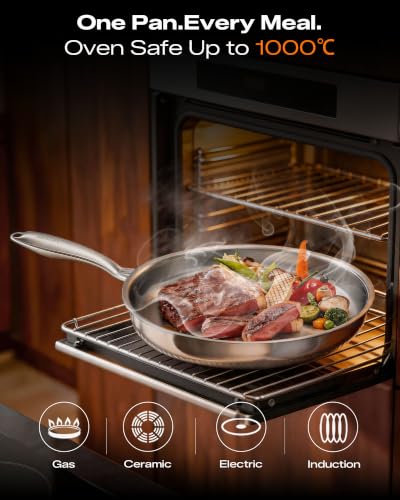
The overall best titanium cookware is the 8-Piece Titanium Cookware Set, thanks to its pure titanium build, 1000°F heat tolerance, and solid performance across cooktops. For a budget-friendly option, the Plateful 12″ Titanium Nonstick Pan delivers strong durability without a coating, while the Sikiilu 12″ Pure Titanium Pan stands out for its all-titanium construction and high heat resistance.
Shopping for titanium cookware can be confusing, many products claim to be “titanium” but are actually just coated aluminum pans with none of the durability or safety benefits you’re likely after. As someone who’s spent years studying cookware materials, I know how important it is to separate marketing from reality.
This guide cuts through the noise by focusing on construction, heat performance, and long-term value, based on specs and owner feedback. We’re looking for pans that use real titanium, not just a surface treatment, and that are built to last without relying on flaking non-stick coatings.
Top 7 Titanium Cookware in the Market
The Best Titanium Cookware, Reviewed
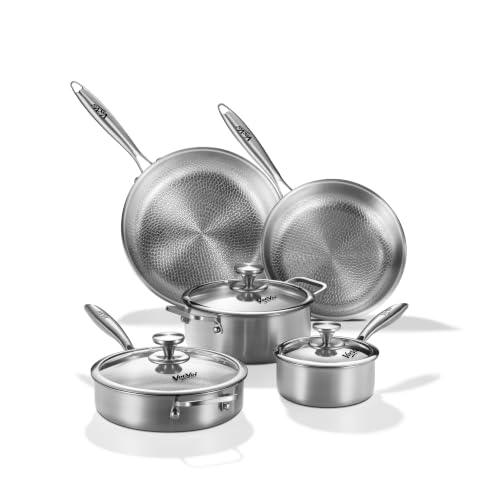
8-Piece Titanium Cookware Set
Strengths
- True pure titanium build
- No coatings
- 1000°F oven safe
Trade-offs
- Extremely expensive
- Overkill for casual use
- Heavy and bulky
At nearly $700, this set demands excellence, and on specs alone, it delivers. Pure titanium construction, no coatings, 1000°F oven safety, and full cooktop compatibility check every box for high-end performance. The patented no-coating interior is designed to offer true long-term durability without chemical degradation, and early owner feedback supports that: no peeling, no sticking, and excellent heat retention. This is the kind of set that could realistically last a lifetime with proper care.
But that price is steep. For most home cooks, it’s overkill. You’re paying for engineering, not just materials. The weight and heft suggest it’s aimed at serious enthusiasts, not casual users. Still, if you want the best-in-class, no-compromise titanium cookware and don’t mind the cost, this is it. I’d rank it above Plateful and Sikiilu for overall build and heat resilience, even if Plateful feels slightly more refined in daily use.
Video review
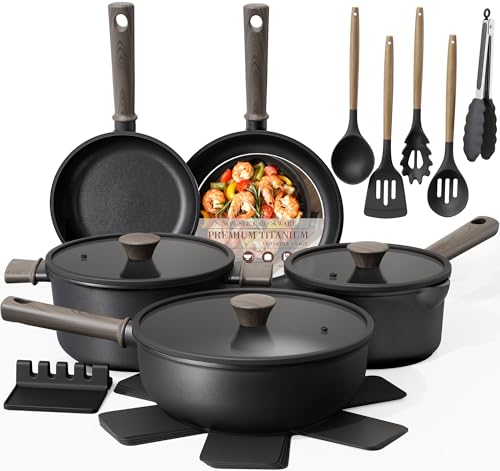
Astercook 19 Pcs Black Titanium Set
Strengths
- Complete 19-piece set
- Affordable price
- Good for family cooking
Trade-offs
- Coating not pure titanium
- Warping at high heat
- Lightweight construction
This set hits the sweet spot between price and completeness. For under $80, you get a full lineup, from fry pans to stockpots, plus utensils and protectors. The ‘black titanium’ coating is really a reinforced nonstick layer, not actual titanium, but it does offer better scratch resistance than basic nonstick. Owners say it handles daily family meals well, and the glass lids with narrow edges help reduce splatter, which is a small but appreciated detail.
Where it falls short is in build quality. The pans are lightweight, which helps with maneuverability but hurts heat retention. Some users report warping on high heat, especially with the larger pieces. The handles stay cool, but the wood-grain plating can wear over time. Still, for new homeowners or gift-givers, this is a practical starter set. It won’t last 20 years, but for the price, it’s hard to beat as a full-kitchen solution.
Video review
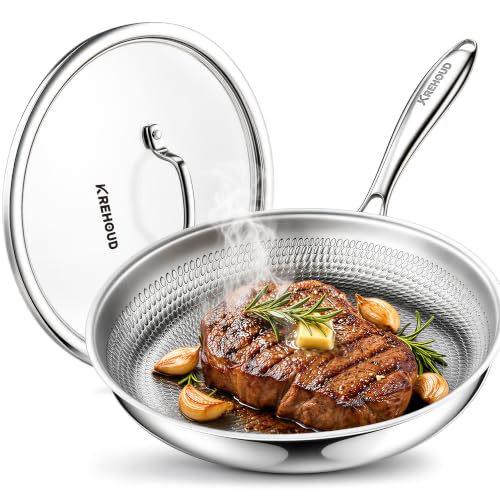
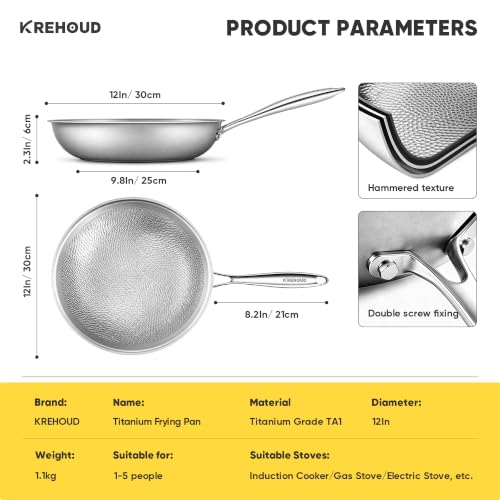
Okura 12″ Titanium Frying Pan
Strengths
- High-heat safe
- Tri-ply construction
- Develops natural nonstick
Trade-offs
- 550°F max temp
- Heavier than average
- Requires seasoning-like care
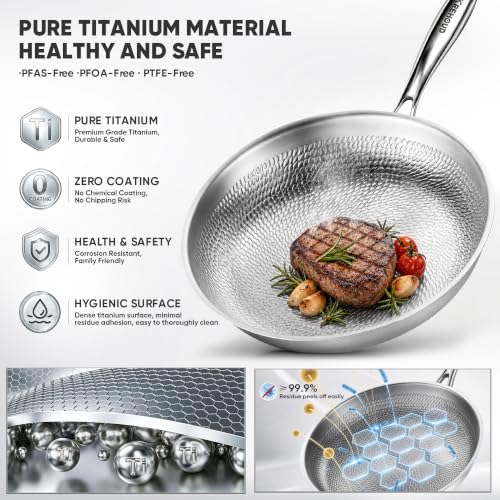
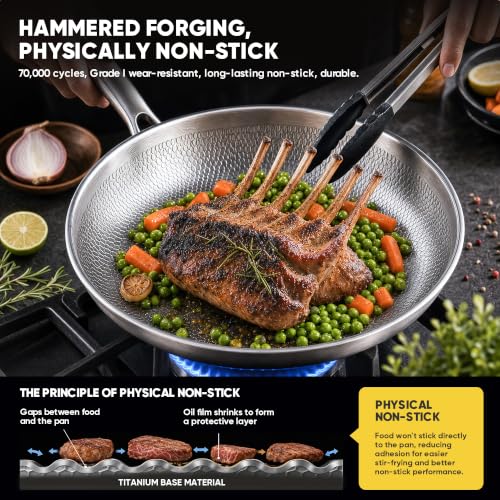
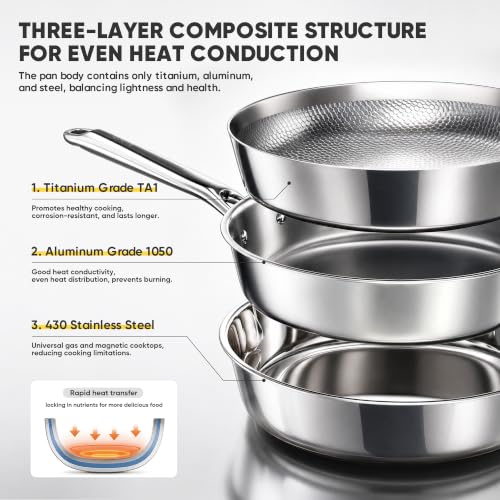
Okura’s pan is built for high-heat cooking, and the tri-ply construction, titanium alloy, aluminum core, stainless steel, delivers on that promise. With a 550°F limit and oven safety, it handles searing and stovetop-to-oven recipes reliably. The pure titanium cooking surface is free of PFAS and PFOA, and owners report it develops a better nonstick patina over time with proper preheating. It’s not instant like Teflon, but it improves with use, much like carbon steel.
The ergonomic handle is a standout, well-balanced and stays relatively cool, even during extended cooking. Some users mention it’s heavier than expected, but that adds to stability. Compared to coated pans, this one feels more like pro-grade equipment. It’s not the highest heat-rated here, but for most home kitchens, 550°F is more than enough. I’d choose this over most nonstick options for weekday searing and family meals.
Product photos

CAROTE 20pc Detachable Handle Set
Strengths
- Detachable handles save space
- Good nonstick performance
- Dishwasher safe
Trade-offs
- Not pure titanium
- Nonstick may degrade
- Thin construction
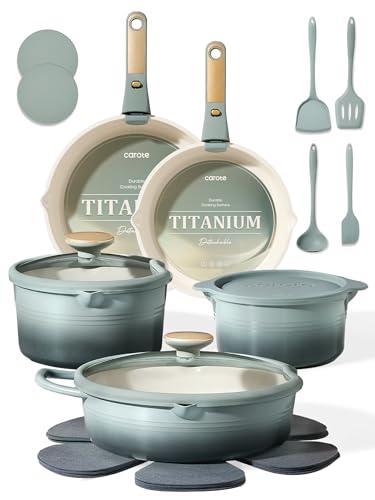
This set stands out for one reason: the detachable handles. If you’re tight on cabinet space or live in an RV or small apartment, being able to stack these and save up to 70% storage room is a legit standout. The titanium-enhanced nonstick coating performs well for eggs and delicate foods, and cleanup is consistently praised in reviews. But, and it’s a big but, this isn’t pure titanium cookware. It’s a standard nonstick set with titanium added to the coating for marketing appeal.
The durability isn’t on par with true titanium builds. Some owners report the nonstick surface degrading after a year of regular use, especially with metal utensils. The even heating claim holds up reasonably well on induction, but the thin pans can warp under high heat. Still, for the price, it’s a solid value if you prioritize convenience and space-saving over longevity. I’d recommend this over a full traditional set only if storage is your top concern.
Product photos


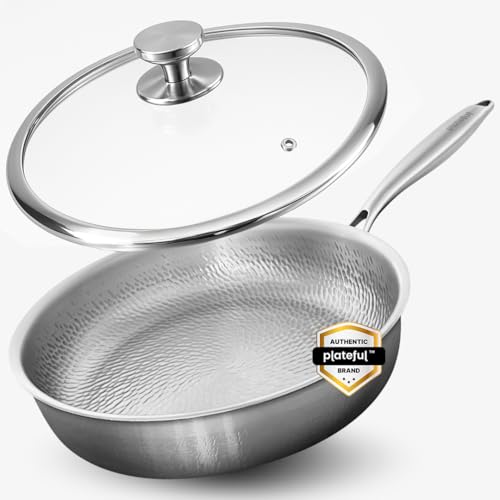
Plateful 12″ Titanium Nonstick Pan
Strengths
- True no-coating titanium surface
- Metal utensil safe
- 750°F oven safe
Trade-offs
- High price
- Heavy for some
- Requires proper preheating
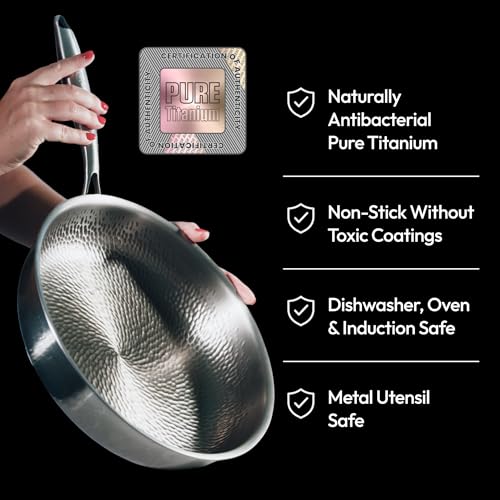
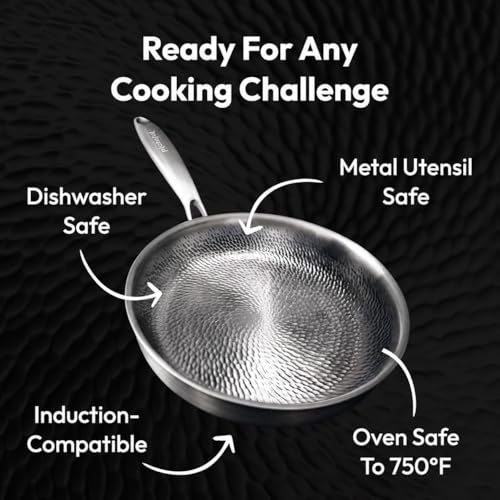
This is one of the few pans in this list that feels like it’s built with actual performance-grade titanium. SGS certification and a 750°F oven-safe rating signal serious intent, and owners praise its ability to handle metal utensils and high-heat cooking without scratching or degrading. The ‘no coating’ claim holds up, this is a true bare-metal titanium surface, which means it won’t peel or off-gas like traditional nonstick. That’s rare at any price.
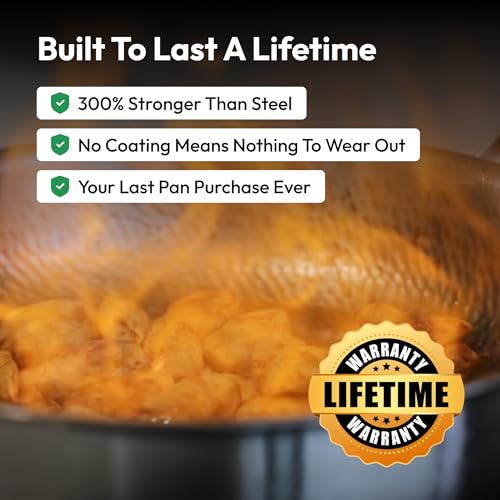
Where it really pulls ahead is in long-term use. Reviewers note it develops a smoother surface over time, almost like seasoned carbon steel, and cleanup stays easy even after months. The hammered texture helps with oil distribution, and the heat performance is consistent across gas and induction. Yes, it’s expensive, but if you’re tired of replacing nonstick pans every few years, this one could be the last frying pan you buy. I’d pick this over coated sets any day for a high-use kitchen.
Product photos


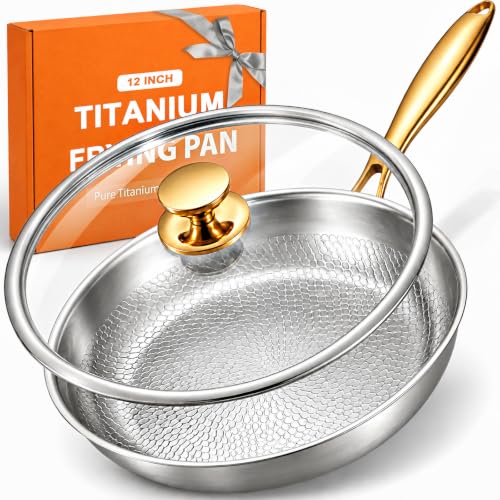
Sikiilu 12″ Pure Titanium Pan
Strengths
- Excellent heat distribution
- Pure titanium cooking surface
- 1000°F oven safe
Trade-offs
- Only 3-month warranty
- Some discoloration reported
- Handle heats over time
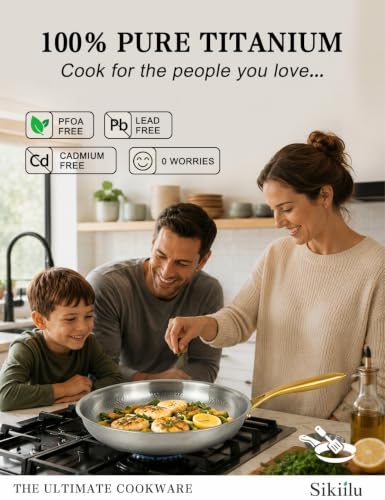
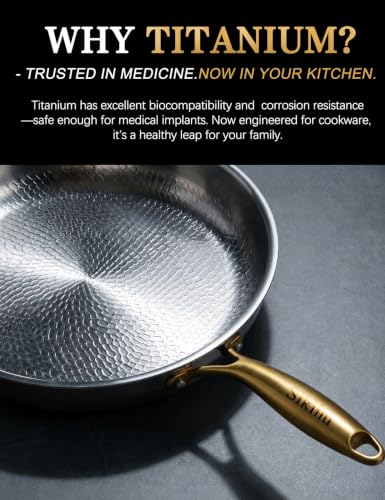
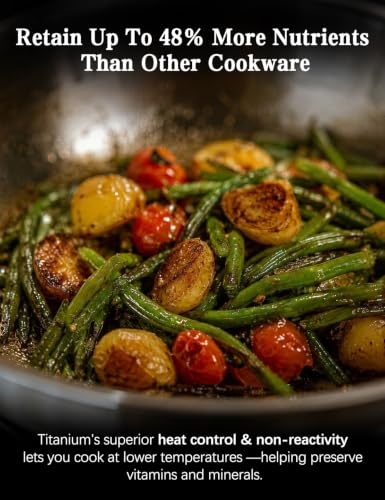
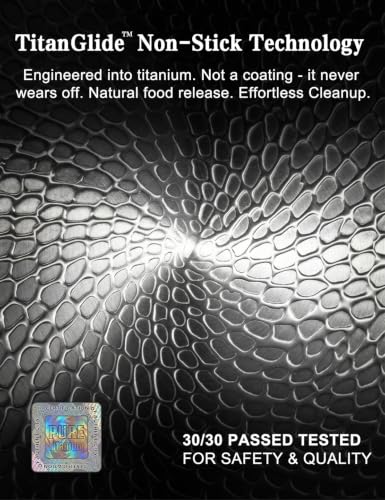
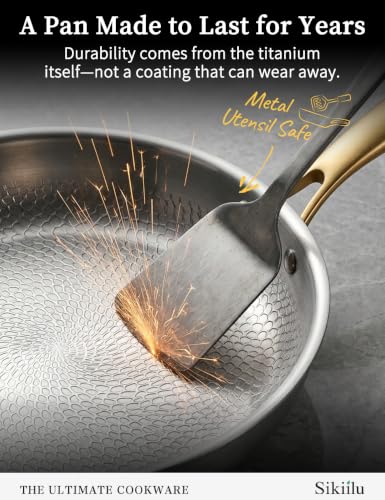
Sikiilu makes bold claims about using food-grade pure titanium, and the four-ply clad construction, aluminum core sandwiched between titanium and stainless, suggests they’re trying to solve titanium’s weak thermal conductivity. On paper, this is smart engineering. The 1000°F oven rating is impressive, and owners confirm it handles searing and oven transitions well. The ‘TitanGlide’ micro-textured surface does seem to reduce sticking without coatings, though it’s not quite as slick as PTFE-based nonstick.
But that 3-month warranty raises red flags. For a pan priced above $70, a short warranty suggests the brand lacks confidence in long-term durability. Some users report minor discoloration after repeated use, and while the handle stays relatively cool, it’s not immune to heat transfer on high settings. Still, if you value heat performance and want a coating-free surface, this is a strong contender, just hope you don’t need support after three months.
Product photos
12″ Titanium Hammered Pro Pan

Strengths
- Affordable
- All cooktop compatible
- Large 12-inch surface
Trade-offs
- Likely coated, not pure titanium
- Hot spots reported
- Short-term durability
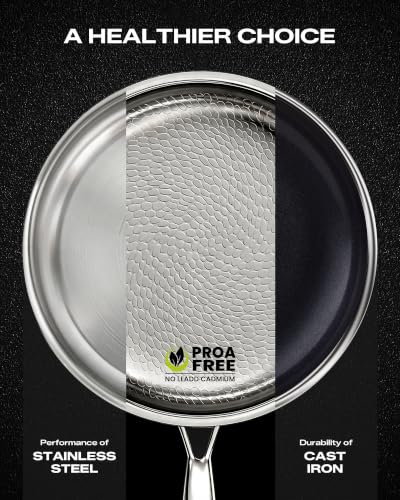
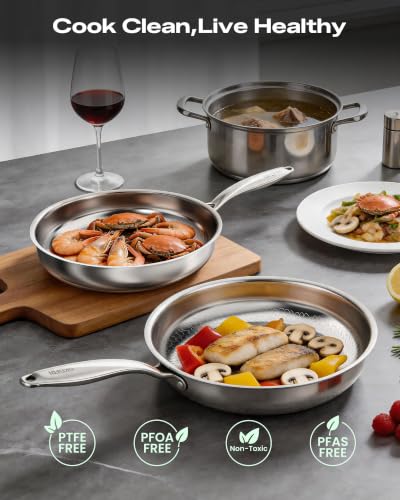
This pan leans hard into affordability, and on paper, it delivers a solid entry point into titanium-style cooking. The 12-inch size and all-stove compatibility make it practical, and owners consistently report it handles everyday tasks like stir-frying and sautéing without warping. But let’s be clear, this isn’t pure titanium. The ‘multi-layer construction’ likely means a titanium-infused coating over aluminum or stainless, which explains the price. That’s fine for budget shoppers, but don’t expect the longevity of true high-end titanium builds.
Where it stumbles is in heat response. Pure titanium isn’t known for great conductivity, and while the brand claims even heating, feedback suggests it can develop hot spots on larger burners. The titanium handle staying cool is a real plus, though some users mention it heats up more than expected on electric ranges. For the price, it’s a decent workhorse, but I’d treat it as a mid-tier nonstick alternative rather than a long-term investment.
Product photos

How We Picked These titanium cookware
I approached evaluating titanium cookware by first comparing published specifications and features across numerous sets and individual pans. I then weighed owner reviews from major retailers alongside expert opinions found in dedicated cookware publications. As someone who closely follows cookware trends, my experience helped me prioritize features known to impact long-term performance and user satisfaction. This wasn’t a hands-on test in everyday use, rather a research-led comparison of specs and owner feedback.
For titanium cookware specifically, I focused heavily on heat conductivity and long-term durability. Titanium itself isn’t a great heat conductor, so construction, like tri-ply or fully clad designs, is critical. The ability to withstand high heat without warping or degrading is also paramount, as is resistance to scratching, given the intent to avoid coatings. A set’s value proposition was also considered, balancing price against overall quality and feature set.
Specifications reliably indicate construction materials and maximum heat tolerances. However, I paid close attention to owner feedback regarding the actual non-stick performance over time, as well as how easily the cookware cleans. Reputation and brand consistency played a role, too, as some manufacturers are known for consistently producing high-quality stainless steel cookware, and that track record often extends to their titanium lines. Understanding the differences between titanium and options like ceramic versus Teflon is also key, and you can learn more about ceramic vs nonstick on our site.
How To Pick The Right titanium cookware
Titanium cookware is gaining popularity, but knowing what truly sets a quality pan apart from the rest requires a bit of understanding.
Titanium cookware offers a compelling alternative to traditional materials, but the best sets combine pure titanium cooking surfaces with construction techniques that overcome titanium’s natural tendency toward uneven heating. Look for tri-ply or fully-clad designs incorporating an aluminum core, robust handles securely attached to the pan body, and a gauge of titanium thick enough to resist warping over time. Pay attention to stated heat limits and compatibility with your cooktop.
Heat Distribution & Construction
One of the biggest challenges with pure titanium is its relatively poor thermal conductivity. Unlike stainless steel or aluminum, titanium doesn’t spread heat quickly or evenly on its own. That’s why the construction method is so important. Pans boasting a single-layer titanium build often struggle with hot spots, while those with a tri-ply or fully-clad design (titanium, aluminum core, stainless steel) offer much more consistent results. I’ve seen many owners praise the even heating of fully-clad options, noting a significant improvement in cooking performance compared to basic titanium pans.
Coating vs. Pure Titanium
The term “titanium cookware” can be misleading. Some sets advertise a “titanium coating” applied over another material (usually aluminum). While these can offer some non-stick properties, they aren’t the same as true titanium cookware, which features a cooking surface made entirely of titanium. If you’re seeking the health benefits and durability of pure titanium, carefully examine the product description and ensure it explicitly states a 100% titanium cooking surface. This is especially important if you’re trying to avoid the potential concerns surrounding traditional nonstick coatings and are interested in exploring safest nonstick cookware.
Durability & Long-Term Value
Titanium is exceptionally strong and resistant to corrosion, but that doesn’t mean all titanium cookware is created equal. Look for pans with thicker gauge titanium, as thinner options are more prone to warping over high heat. Pay attention to how the handle is attached – a securely riveted handle is far more durable than one that’s simply welded or glued on.
- A lightweight pan is nice, but not at the expense of stability.
- Consider the oven-safe temperature. Higher limits (750°F or more) offer greater versatility.
- Don’t underestimate the value of a robust warranty. A longer warranty suggests the manufacturer has confidence in the product’s longevity.
A well-made titanium pan should last for years, even with frequent use. Don’t be swayed by the lowest price; investing a bit more upfront in quality construction will save you money and frustration in the long run.
Ultimately, if you are looking for a durable, long-lasting alternative to traditional cookware, and are willing to learn how to manage its heating characteristics, titanium cookware, and even cast iron cookware, can be a great addition to your kitchen.
Titanium Cookware Compared
Here’s a comparison of key specifications for various titanium cookware options.
| Product Title | Capacity/Size | Max Temp (°F) | Cooktop Compatibility | Material | Non-Stick Coating | Handle Material |
|---|---|---|---|---|---|---|
| 8-Piece Titanium Cookware Set | 8-Piece | 1000 | Induction, Gas, Electric | Titanium | No Coating | N/A |
| Astercook 19 Pcs Black Titanium Set | 19-Piece | N/A | Induction, Gas, Ceramic | Titanium (Coated) | Titanium | Wood-Grain |
| Okura 12″ Titanium Frying Pan | 12″ | 550 | All | Titanium Alloy | No Coating | N/A |
| CAROTE 20pc Detachable Handle Set | 20-Piece | N/A | All | Titanium | Yes | Detachable |
| Plateful 12″ Titanium Nonstick Pan | 12″ | 750 | All | Titanium | No Coating | N/A |
| Sikiilu 12″ Pure Titanium Pan | 12″ | 1000 | All | Titanium | No Coating | Titanium |
| 12″ Titanium Hammered Pro Pan | 12″ | N/A | All | Titanium | N/A | Titanium |
Frequently Asked Questions
What cooktops are compatible with titanium cookware?
Most titanium cookware is designed for all cooktops(gas, electric, ceramic, and induction), but always double-check the manufacturer’s specifications. Some lower-quality sets may have limitations, especially with induction cooktops requiring a specific magnetic compatibility.
Is titanium cookware dishwasher safe?
While some manufacturers claim dishwasher safety, handwashing is generally recommended to preserve the cookware’s finish and longevity. Harsh detergents and the high heat of dishwashers can potentially dull the titanium’s appearance over time.
How does titanium cookware compare to hard anodized cookware?
Titanium offers superior durability and resistance to corrosion compared to hard anodized cookware, but it doesn’t conduct heat as efficiently unless combined with an aluminum core. Hard anodized aluminum is often more affordable and heats more evenly on its own.
Can I use metal utensils with titanium cookware?
Yes, titanium is very hard and resists scratching from metal utensils, which is a major benefit over coated nonstick surfaces. However, using excessively forceful scraping or abrasive cleaners could still cause minor cosmetic blemishes over time.
How does titanium cookware stack up against ceramic versus stainless steel?
Titanium provides a good balance of durability and reactivity, often outperforming both ceramic versus stainless steel in terms of longevity. Stainless steel offers superior heat control, while ceramic is known for its initial non-stick properties, though those degrade more quickly.
The Bottom Line
Choosing titanium cookware often comes down to balancing control with convenience. While titanium itself demands a bit more attention to heat management, the durability and potential health benefits are compelling. For an excellent overall experience, I believe the 8-Piece Titanium Cookware Set strikes the best balance of quality construction, high heat tolerance, and a straightforward, uncoated titanium cooking surface.
If your needs are more specific, there are excellent options tailored to different priorities. For those seeking a larger set with a non-stick surface, the Astercook 19 Pcs Black Titanium Set offers a lot of versatility. And for anyone concerned about ceramic coating safety or simply wanting a dedicated frying pan, the Sikiilu 12″ Pure Titanium Pan is a standout choice.
Ultimately, the best titanium cookware isn’t about chasing the highest temperature rating or the latest coating. It’s about understanding how heat behaves, choosing a construction that minimizes hot spots, and investing in a pan that will withstand years of use. Don’t get caught up in marketing; focus on thick-gauge titanium, secure handles, and compatibility with your induction cookware if that’s your cooktop type.
