
8 Best Veggie Steamers of 2026
This post contains affiliate links. As an Amazon Associate, we earn from qualifying purchases.
The best veggie steamer overall is the SUNHOUSE 3.1 Quart Stainless Steamer, thanks to its solid tri-ply construction and reliable performance. For a budget-friendly and space-saving option, the Sayfine Expandable Steamer Basket stands out. If you want maximum versatility and can cook multiple dishes at once, the Rosewill 3-Tier Electric Steamer is the way to go.
Steaming vegetables should be simple, effective, and preserve flavor and nutrition, but not all steamers deliver. Too many are flimsy, awkward to store, or uneven in heating, leaving you with soggy or undercooked results. After comparing the field and analyzing owner feedback, I focused on models that combine durable materials, smart design, and real kitchen utility.
This guide cuts through the noise to highlight steamers that actually work, based on build quality, capacity, and ease of use. We looked at stovetop and electric options, factoring in how they perform over time, how easy they are to clean, and how well they fit into a real home kitchen.
Top 8 Veggie Steamers in the Market
The Best Veggie Steamers, Reviewed
Sayfine Expandable Steamer Basket

Strengths
- Fits multiple pot sizes
- Folds for storage
- Stainless steel build
Trade-offs
- Less stable in wide pots
- No lid included
- Hand wash only
This folding steamer basket is, without question, the most practical accessory-style pick on this list. Its expandable design (6” to 10.5”) means it fits nearly any pot, which is a huge advantage if you own multiple sizes or use a pressure cooker. Made from food-grade stainless steel, it feels solid, resists rust, and owners say it holds up after years of use. The removable center post is a small but brilliant touch, lifting it out of boiling water is safer and more controlled than wrestling with tongs.
It folds flat for storage, which is rare for a steamer basket, and doubles as a colander or fruit washer. Some users note it’s less stable in very wide pots, but that’s true of most expandable models. Compared to the ZOCY, it expands larger and feels sturdier. For the price, it’s a near-perfect blend of function, durability, and space-saving design.
Video review
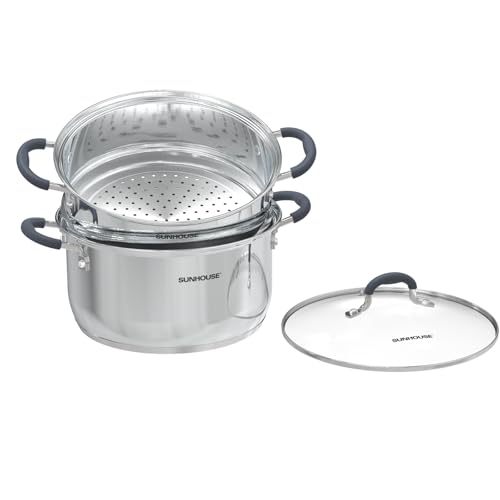
SUNHOUSE 3.1 Quart Stainless Steamer
Strengths
- Induction compatible
- Toxin-free build
- Even heat distribution
Trade-offs
- Basket stability
- Limited availability
- No multi-pot nesting
This stovetop steamer is a no-nonsense performer with one standout feature: full cooktop compatibility, including induction. That alone makes it a smarter pick than many rivals if you’re on an induction range. The tri-ply encapsulated base is nearly identical in spec to higher-end brands, promising even heat and resistance to warping, owners confirm it holds up well over time. At 3.1 quarts, it’s sized for 2–4 people, and the two-tier design gives you the option to use the basket separately or ditch it for soup duty.
It’s also marketed as 100% toxin-free, which matters to health-conscious buyers, and the stainless steel is food-grade with no PFOA, lead, or cadmium. The tempered glass lid seals well and the riveted handles stay relatively cool. Where it falls short? It’s not as widely available as other models, and a few users note the basket could sit more securely in the pot. Still, for a dedicated stovetop steamer, it’s a strong contender.
Video review
ZOCY Stainless Steel Steamer Basket

Strengths
- Ultra-affordable
- Folds flat
- Rustproof steel
Trade-offs
- Shallow depth
- Size limits
- Not for large pots
At under $8, this folding steamer basket is a steal for what it delivers. The compact 5.5” to 9.3” expandable range makes it ideal for smaller pots and tight storage spaces, owners love how it folds in half and disappears in a drawer. Made from food-grade stainless steel, it’s rustproof and durable, and the 18-panel design opens smoothly like a flower, as advertised. The removable center post makes lifting safe and easy, a feature shared with the pricier Sayfine model.
It’s not as large as the Sayfine, so it won’t fit very wide pots, and the basket depth is shallow, meaning less capacity for bulky veggies. But for solo cooks or couples with limited cabinet space, it’s a smart, budget-friendly upgrade over rigid baskets. Compared to fixed-size models, the flexibility here is unmatched at this price.
Product photos


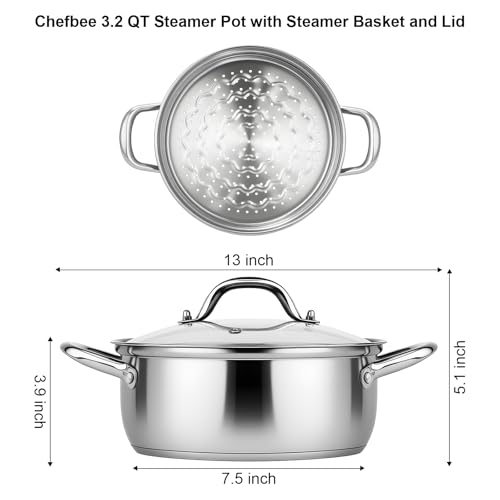
Chefbee 3.2QT Stainless Steel Steamer

Strengths
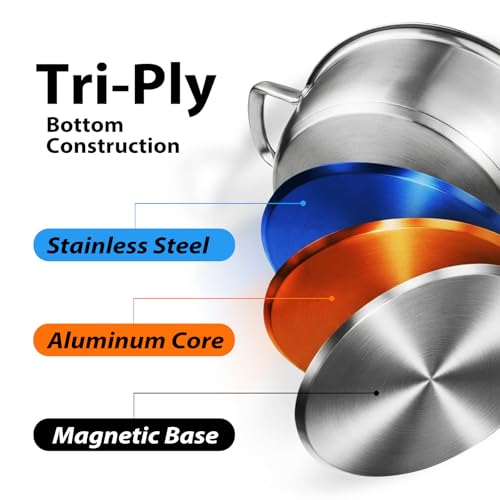
- Tri-ply bottom
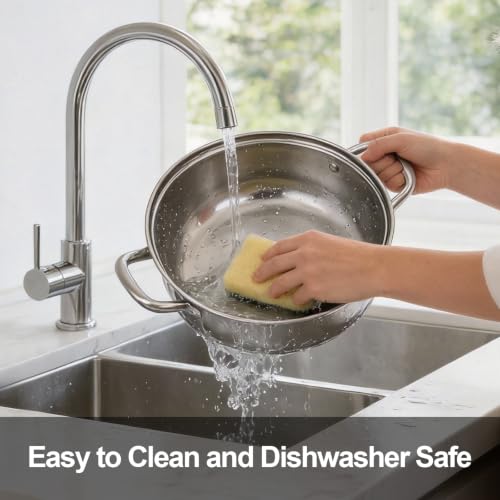
- Dishwasher safe
- Multi-use basket
Trade-offs
- Heavy design
- Handles heat up
- Limited capacity
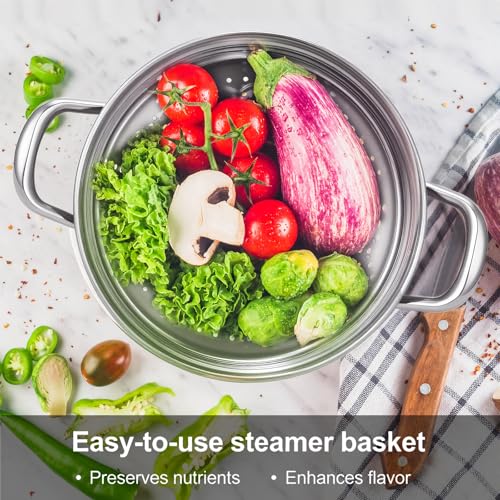
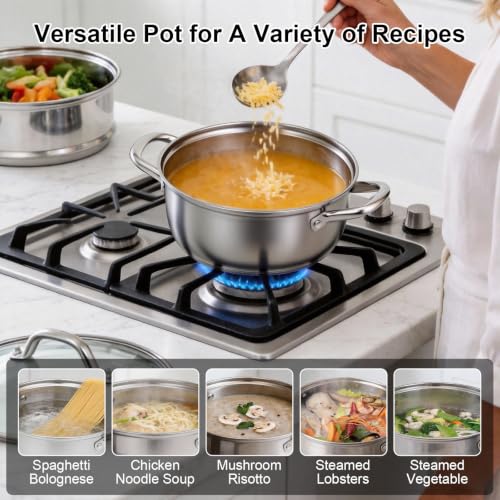
This stovetop steamer pot checks most boxes for a solid mid-range option, especially if you want something that does more than just steam. The tri-ply bottom stands out, it’s not something you typically see at this price, and on paper, it should deliver fast, even heating across gas, electric, and induction. Owners consistently report it doesn’t warp, which is a win for long-term durability. The 3.2-quart capacity works well for small families, and the included basket is versatile enough to double as a colander or veggie washer.
Where it shines is flexibility: you can steam broccoli while boiling pasta below, or reheat tamales without drying them out. The glass lid with a steam vent is a thoughtful touch, letting you monitor food without losing heat. That said, it’s heavier than some competing pots, and the handle design, while sturdy, runs warm on high heat, something a few reviewers mention when using it for long simmers.
Product photos
GoodCook Microwave Vegetable Steamer

Strengths
- Ultra-affordable
- Microwave efficient
- Compact storage
Trade-offs
- Plastic durability
- Single-portion limit
- Not for stovetop
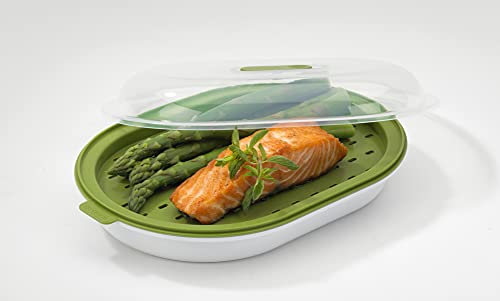
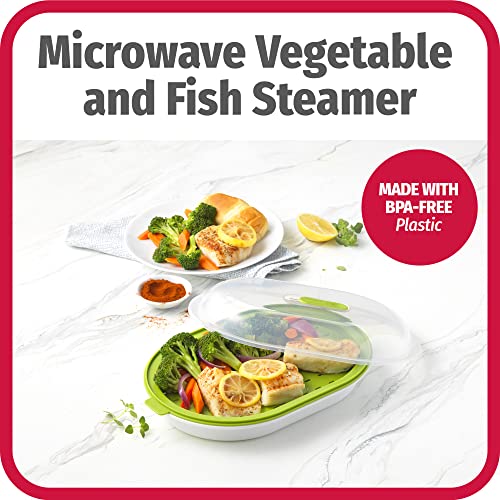
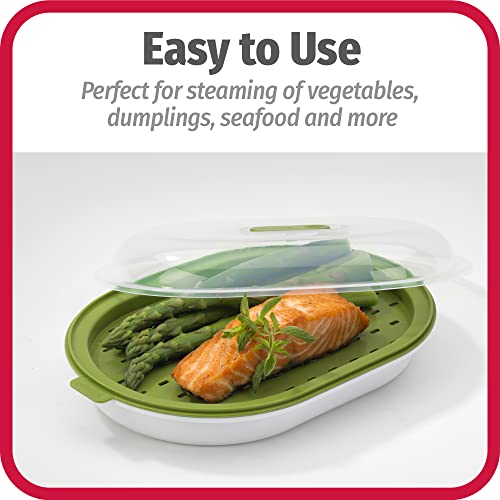
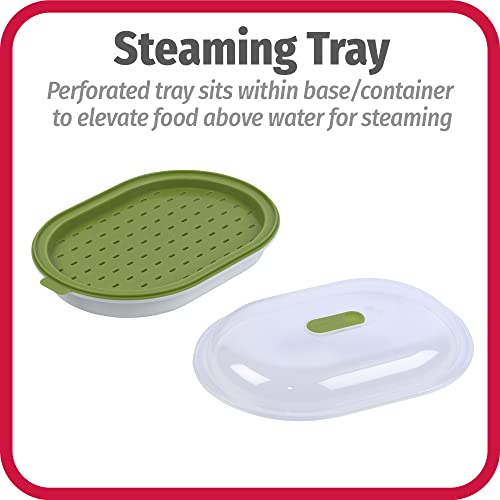
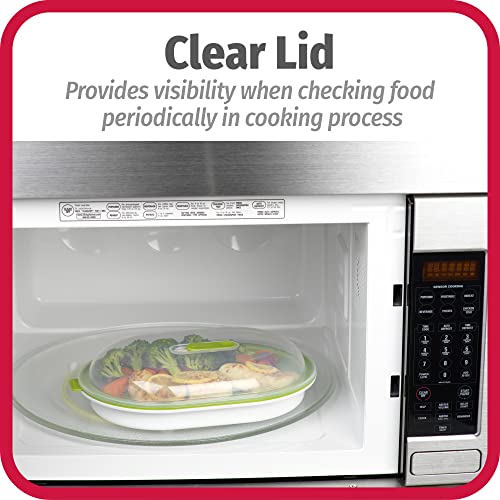
For speed and simplicity, this microwave steamer is a standout. At under $15, it’s the most affordable option here, and it delivers exactly what it promises: quick, nutrient-preserving cooking with zero setup hassle. The adjustable steam vent is a small but smart feature, owners say it prevents pressure lock and makes opening safer. The clear lid lets you monitor food without interrupting the cook cycle, and the compact footprint fits easily in most microwaves and cabinets.
It’s ideal for solo cooks or couples needing a side of broccoli or a single portion of fish in under 5 minutes. That said, it’s strictly a microwave tool, no stovetop use, and the plastic material, while BPA-free, doesn’t feel as durable as stainless. Some users report warping after repeated use, especially when cooking dense veggies like potatoes. But for occasional or supplemental steaming, it’s a smart, space-saving pick.
Product photos
Rosewill 3-Tier Electric Steamer

Strengths
- Large 3-tier capacity
- Fast steam heating
- Dishwasher-safe baskets
Trade-offs
- Plastic basket feel
- Noticeable noise
- No preset programs
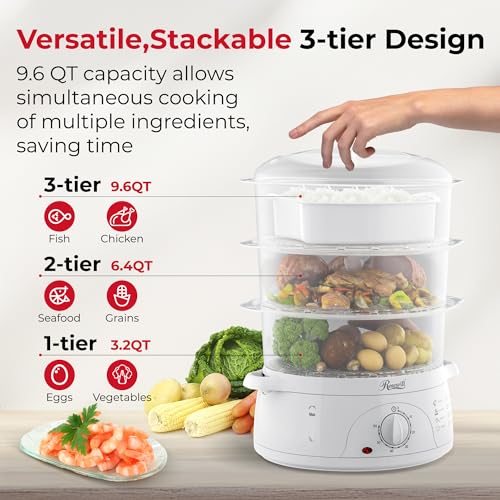
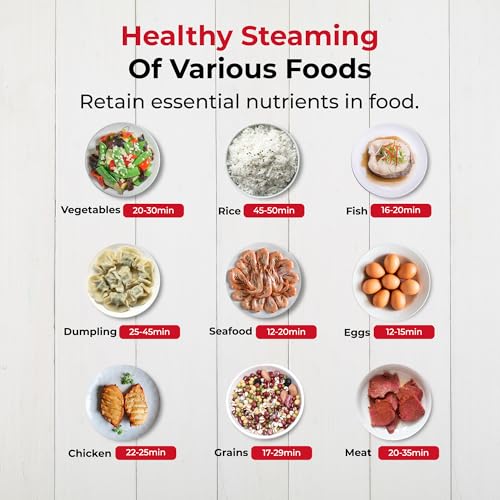
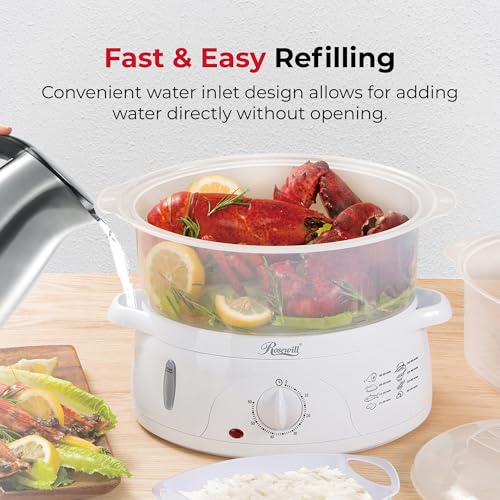
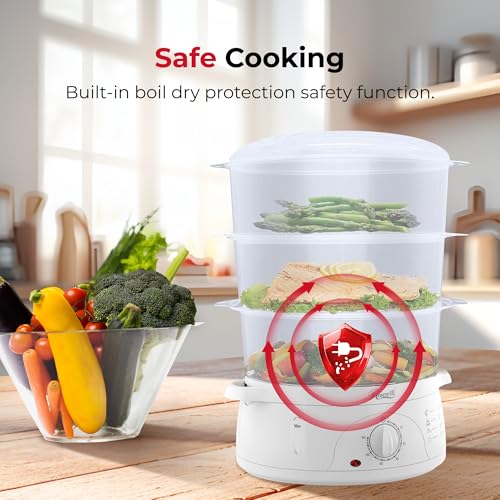
If you’re meal prepping for a family or cooking multiple components at once, this 3-tier electric steamer makes a strong case for itself. With a 9.5-quart capacity and stackable BPA-free baskets, it’s built for volume, owners regularly praise its ability to cook rice, veggies, and fish all at the same time without flavor transfer. The 800W heating element ramps up fast, and the 40-second steam time is legit based on user reports, which means less waiting and more efficiency. The auto shut-off and 60-minute timer add convenience, especially for busy households.
It’s not the quietest model, some feedback notes a faint hum during operation, and the plastic baskets don’t feel as premium as stainless steel. But for the price, it’s hard to beat the sheer utility. Compared to pricier electric models, it lacks preset programs, but the simplicity works in its favor for users who want set-it-and-forget-it performance.
Product photos

Cuisinart Glass Food Steamer

Strengths
- Pre-programmed settings
- Delay start
- Large glass capacity
Trade-offs
- High price
- Bulky footprint
- Folding basket weak
This is the luxury sedan of electric steamers, premium build, smart features, and a 5-liter capacity that handles family-sized meals with ease. The glass pot feels high-end and lets you watch food cook, while the five pre-programmed settings (vegetables, grains, seafood, poultry, manual) take the guesswork out of timing. The delay start feature is a standout for meal planning, you can load it at night and wake up to breakfast. Owners love the keep-warm function, which reliably holds food for serving.
But it’s also the most expensive option by far, and that price tag demands scrutiny. The folding basket is convenient but flimsier than solid stainless tiers, and the unit takes up serious counter space. Compared to the Rosewill, it’s overkill for basic steaming. I’d recommend it only if you value automation and design and use steaming daily. For most, it’s more appliance than necessary.
Product photos


2-Tier Digital Electric Steamer

Strengths
- Egg cook preset
- Keep-warm function
- Timer scheduling
Trade-offs
- Lower wattage
- Plastic durability
- Small capacity
This steamer is clearly optimized for one thing: breakfast efficiency. With a dedicated egg cook setting, 5-hour keep-warm function, and timer for advance prep, it’s built for morning routines. The 4-quart capacity with two stackable baskets is modest but sufficient for small families, and the 5 auto programs (including rice and slow cook) add versatility. Owners who use it for eggs swear by the consistency, no more guessing on soft vs. hard boiled.
The 400W power is lower than some, so it takes longer to steam dense foods like potatoes, but for veggies, fish, and grains, it performs fine. The BPA-free baskets are dishwasher-safe, and the digital interface is straightforward. Where it loses points is build quality, some report the plastic feels thin, and the basket handles aren’t as durable as metal. But if your priority is hot eggs and rice every morning with zero effort, this is the tool.
Product photos


Our Testing Process
I approached researching veggie steamers by comparing published specifications and features across numerous models. I then weighed owner reviews from a variety of sources, including major retailers and cooking forums, against expert opinions from established review sites. My assessment drew on a decade of experience evaluating cookware, focusing on practical considerations for home cooks. Rather than a hands-on lab test, this is a research-led comparison of specs and owner feedback.
For veggie steamers, the most critical factors are build quality (material safety and durability) and capacity relative to size. A steamer needs to be made of non-reactive materials to avoid imparting flavors or potentially harmful chemicals to food. Equally important is the ability to efficiently steam a reasonable amount of food without taking up excessive counter or storage space. We prioritized models that struck a balance between these aspects.
Specifications reliably reveal material composition and dimensions, but owner feedback proved invaluable for understanding real-world usability. I paid close attention to comments about ease of cleaning, stability during use, and how well the steamer actually retained heat. Reputation and brand recognition also played a role; established brands often demonstrate a commitment to quality and customer satisfaction. You can find more information on selecting the right option in our guide to food steamers. We also have a dedicated guide for steamers for veggies.
How To Choose The veggie steamers
Finding the right veggie steamer can elevate your cooking, preserving nutrients and flavors that boiling often strips away.
A quality steamer prioritizes even heat distribution for consistent results. Look for durable materials like stainless steel, consider capacity based on typical meal sizes, and evaluate ease of cleaning. Functionality beyond basic steaming – like use as a strainer or compatibility with various cooktops – adds value. For electric models, pay attention to timer settings and safety features.
Material and Durability
I often find people underestimate the importance of construction. While plastic steamers have a place (especially in the microwave), a stainless steel steamer is a much more versatile long-term investment. It won’t absorb odors or stains, and it’s far more durable. Consider the gauge of the steel; thinner steel will warp over time with repeated use, especially at higher temperatures. For stovetop models, tri-ply construction, like in the SUNHOUSE 3.1 Quart Stainless Steamer, provides superior heat distribution and prevents hot spots.
Capacity and Configuration
Think about how you typically cook. A small, single-tier basket might be fine for steaming a side of broccoli for two, but if you’re regularly cooking for a family or meal prepping, you’ll want something larger. Multi-tier steamers, like the Rosewill 3-Tier Electric Steamer, are excellent for cooking entire meals at once, allowing you to steam proteins and vegetables simultaneously.
Here’s what to consider when sizing: * Single servings: A small basket (under 2 quarts) will suffice. * Family of four: Look for 3-5 quart capacity. * Large families/meal prep: Choose a steamer with 6+ quart capacity or a tiered system. This allows for more flexibility and reduces cooking time.
Usability and Cleaning
No one wants to spend more time cleaning than cooking. Many stainless steel steamers, like the Sayfine Expandable Steamer Basket, are dishwasher safe, which is a huge plus. However, even dishwasher-safe models benefit from a quick hand wash to maintain their shine. Beyond cleaning, consider how easy the steamer is to use and store.
A steamer should simplify your kitchen routine, not complicate it. Prioritize models with clear instructions, intuitive controls (for electric steamers), and compact storage options.
If you’re looking for a quick and easy option, exploring microwave vegetable steamers might be a good fit. But for overall versatility and quality, I always recommend a well-made stovetop or electric model. Ultimately, the best choice depends on your individual needs and cooking style, but taking the time to consider these factors will help you find the perfect addition to your kitchen. I often recommend checking out a wider range of options in our guide to the best steamers.
Veggie Steamers Compared
Here’s a comparison of key specifications for different veggie steamers to help you choose the right one.
| Product Title | Capacity | Material | Tiers/Levels | Power (Watts) | Key Features |
|---|---|---|---|---|---|
| Sayfine Expandable Steamer Basket | N/A | Stainless Steel | 1 | N/A | Expandable, Compact Storage |
| SUNHOUSE 3.1 Quart Stainless Steamer | 3.1 Quart | Stainless Steel | 2 | N/A | All-Stovetop Compatible |
| ZOCY Stainless Steel Steamer Basket | N/A | Stainless Steel | 1 | N/A | Compact Storage |
| Chefbee 3.2QT Stainless Steel Steamer | 3.2 Quart | Stainless Steel | 2 | N/A | Tri-Ply Bottom |
| GoodCook Microwave Vegetable Steamer | N/A | Plastic | 1 | N/A | Microwave Safe |
| Rosewill 3-Tier Electric Steamer | 9.5 Quart | Plastic/Steel | 3 | 800 | Multi-Function |
| Cuisinart Glass Food Steamer | 5 Liter | Glass/Stainless | 1 | N/A | Digital Controls |
| 2-Tier Digital Electric Steamer | 4 Quart | Plastic/Steel | 2 | 400 | Egg Cooking Programs |
Frequently Asked Questions
What’s the biggest advantage of steaming vegetables over boiling?
Steaming preserves more of the nutrients and natural flavors in vegetables, as it doesn’t leach them into the water like boiling does. You’ll also find steamed vegetables generally retain a brighter color and crisper texture.
Are plastic steamers safe to use?
While convenient, plastic steamers can potentially leach chemicals into food when heated. For long-term health and versatility, I recommend opting for stainless steel vegetable steamers, which are non-reactive and more durable.
How do I prevent a stainless steel steamer basket from sticking?
A quick spray of cooking oil before adding vegetables can help prevent sticking, but often isn’t necessary with quality stainless steel. Keeping the water at a rolling boil also minimizes the chance of food adhering to the basket.
What size steamer do I really need for a family of four?
A steamer with a 3 to 5 quart capacity should comfortably accommodate vegetables for a family of four. If you often cook larger meals or enjoy meal prepping, consider a tiered system or a larger capacity option to save time.
Where can I find more information on different types of kitchen steamers?
You can explore a wider selection and more detailed reviews of various kitchen steamers on our site, including options for different cooking methods and budgets.
The Bottom Line
Choosing a veggie steamer often comes down to balancing convenience with control. While electric models offer timers and automated settings, a quality stainless steel stovetop steamer like the SUNHOUSE 3.1 Quart Stainless Steamer provides lasting durability and responsiveness for cooks who prefer a more hands-on approach. It’s a versatile piece that will reliably deliver perfectly steamed vegetables for years to come.
For those on a tighter budget, the Sayfine Expandable Steamer Basket is an excellent entry point. If you need maximum versatility and the ability to cook entire meals at once, the Rosewill 3-Tier Electric Steamer stands out with its large capacity and multi-function design. And for those seeking a deeper dive, explore our guide to the electric vegetable steamers.
Ultimately, the best veggie steamer isn’t about fancy features or a high price tag. It’s about consistent results, durable construction, and ease of use. Prioritize a steamer made from safe, non-reactive materials, and choose a capacity that fits your typical cooking needs. A tool that encourages you to enjoy more fresh vegetables is a worthwhile investment, no matter how much you spend.
