
Can Ceramic Cookware Go in the Dishwasher? A Washing Guide
This post contains affiliate links. As an Amazon Associate, we earn from qualifying purchases.
Most ceramic cookware can go in the dishwasher only if it is 100% ceramic through and through, like Xtrema or Mikasa Bone China. Ceramic-coated pans, the kind with a silica layer over aluminum, are labeled “dishwasher safe” but lose their non-stick performance in months under detergent abrasion and heated drying cycles. Hand washing a ceramic-coated pan extends its usable life by two to three times.
That split between solid ceramic and ceramic-coated is where every owner’s question actually lives. The label “dishwasher safe” is a durability test, not a recommendation. For a coated pan, it means the item won’t melt or crack immediately. It says nothing about whether the non-stick surface will survive 50 cycles.
What follows: the physical reason dishwashers wreck coatings, the two brands built for machine washing, the exact hand-wash method that adds years, and what to do with gold-banded china, antique pottery, and everything else you’re nervous about.
Key Takeaways
- 100% solid ceramic cookware (Xtrema, some bone china) is dishwasher-safe. The material is fired at over 1600°F and is non-porous; detergent and heat don’t degrade it.
- Ceramic-coated pans (Caraway, HexClad, most “non-stick ceramic”) are not. The coating is a thin silica layer bonded to metal. Dishwasher detergent acts as a gentle sandblaster, dulling the finish within months.
- Hand washing doubles or triples a coated pan’s life. Research cited by Asai cookware shows machine washing cuts a 1–3 year lifespan down to months.
- Always skip the heated dry cycle for any delicate item. The 150°F+ air can soften precious metal bands on china and stresses all coatings.
- Wood, cast iron, copper, and antique/hand-painted items never go in. Dishwasher pressure and caustic detergent will crack, warp, or fade them.
The 100% Ceramic vs. Ceramic-Coated Split
This is not a subtle difference. It’s a fundamental divide in what the product is made of, and it decides everything about care. You need to know which one you own.
100% ceramic cookware is pottery. It’s clay, minerals, and water fired into a single, solid piece in a kiln at temperatures between 1600°F and 2500°F. Brands like Xtrema make only this type. Because it’s a monolithic ceramic body, there’s no coating to wear off. It’s inherently non-porous and chemically inert. Detergents and high heat don’t break it down. This is the only kind of ceramic that is genuinely, unconditionally dishwasher-safe for its entire lifespan.
Xtrema 100% ceramic cookware is artisanally crafted from clay, water and numerous minerals before being kiln fired. It is ceramic to its core and not just coated in a ceramic-like substance. – Xtrema manufacturer statement.
Ceramic-coated cookware is a metal pan, usually aluminum, sprayed with a silica-based sol-gel coating like Thermolon. This is what brands like Caraway, GreenPan, and most “ceramic non-stick” pans use. The coating is a thin layer, often just microns thick, bonded to the metal. It provides the slick surface but is the vulnerable part. This is what most people own when they ask this question.
| Type | Core Material | Coating | Dishwasher Safe? | Why |
|---|---|---|---|---|
| 100% Ceramic | Solid ceramic body | None | Yes | Non-porous, fired at extreme heat. Detergents cannot degrade it. |
| Ceramic-Coated | Aluminum or Steel | Silica-based layer (e.g., Thermolon) | Labeled Yes, Practically No | Detergent abrasion and heat degrade the thin coating bond. |
The manufacturer’s “dishwasher safe” claim for coated pans is a test of immediate failure. It means the pan won’t delaminate on cycle one. It does not mean the non-stick performance will survive. This gap between marketing promise and owner experience fuels entire community discussions, like those in the HexClad Facebook group where owners vehemently advise against the dishwasher despite the label.
If you are shopping for new ceramic cookware sets, this distinction is your first filter. Do you want the convenience of machine washing? Then a 100% ceramic set is your target. If you prefer the lighter weight and faster heat response of coated pans, you are signing up for hand washing.
Why the Dishwasher Damages Ceramic Coatings
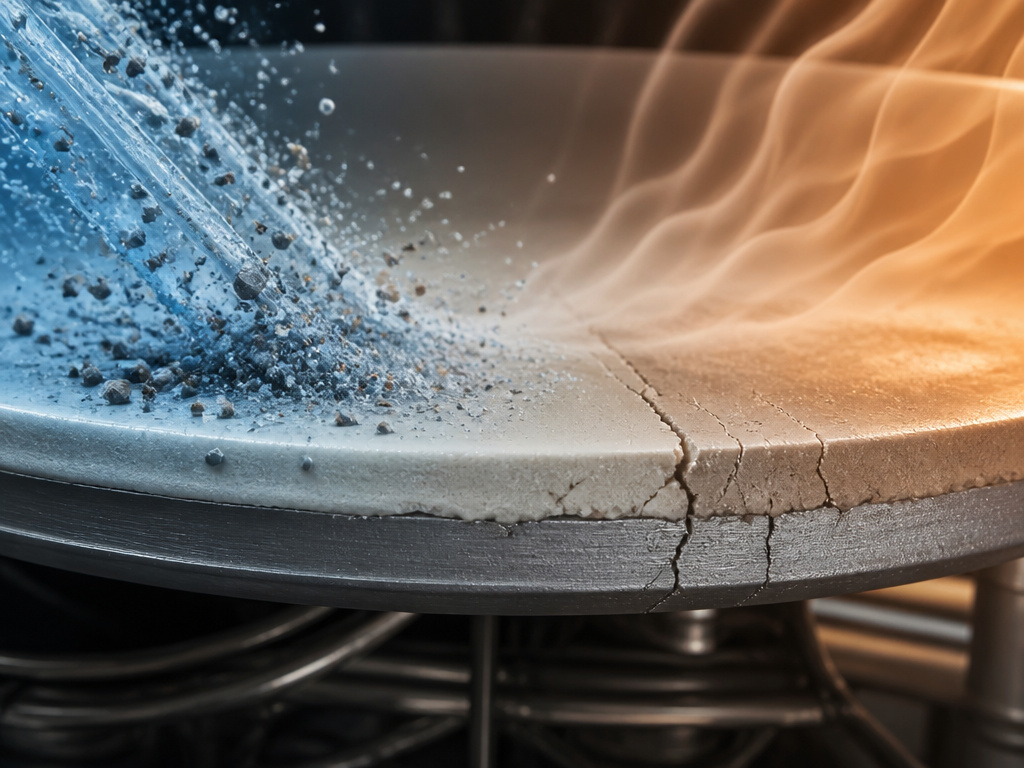
It’s a combination of chemical abrasion and thermal stress. Dishwasher detergent is alkaline and contains mild abrasives to scrub off food. These same abrasives microscopically scour the smooth ceramic coating with every cycle. You won’t see deep scratches, but the surface loses its polished slickness. Food starts to stick.
The heated drying cycle is the second attacker. It blasts air at 150–170°F onto the pan. This repeated thermal expansion and contraction stresses the bond between the ceramic coating and the metal substrate. Over time, micro-fractures form. The pan might not peel, but its non-stick efficiency drops.
Hand washing boosts your pan’s life by two to three times compared to the dishwasher, according to research. – Asai cookware manufacturer blog, stating the quantified lifespan trade-off.
This is the core non-commodity insight. The question isn’t “can it?” but “at what cost?” The cost for a ceramic-coated pan is most of its functional lifespan. This is why even the best ceramic pans require a specific care ritual.
How to Hand Wash Ceramic Cookware (The Right Way)
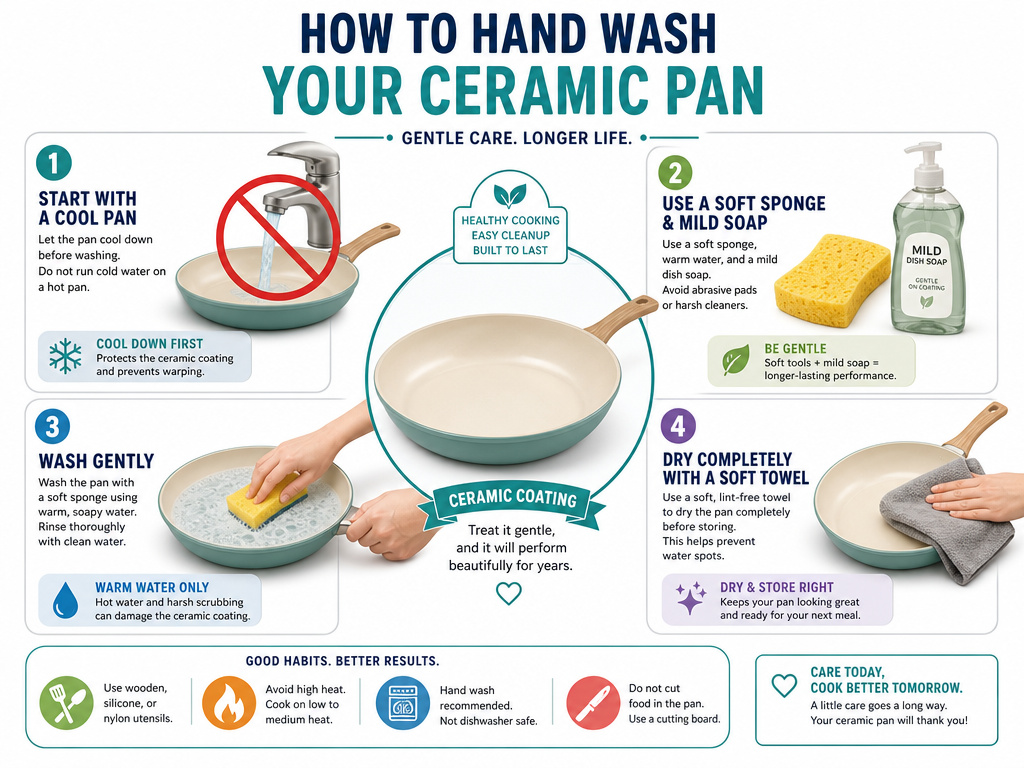
This takes two minutes and it’s the single most important thing you can do for any ceramic-coated pan. The goal is to clean without abrasion and to avoid thermal shock.
- Let the pan cool completely. Never put a hot ceramic pan under cold water or on a cold granite counter. The sudden temperature change can cause the ceramic to crack. This rule applies to both solid and coated types.
- Use a soft sponge and mild dish soap. Avoid scrubby pads, steel wool, or abrasive cleansers. A drop of regular dish soap is fine.
- Wash under warm water. Use your hand or the soft side of the sponge to wipe away residue. For stuck-on food, soak the pan in warm, soapy water for 10 minutes first.
- Dry immediately with a soft towel. Don’t let it air dry. Water spots can etch the surface over time, and towel drying ensures no moisture is left against the coating.
This method preserves the ceramic coating and is the foundation of cleaning ceramic cookware for longevity. Pair it with the right utensils for ceramic cookware, wood or silicone, to prevent scratching during cooking.
What About Dishes, Mugs, and Bone China?
The rules shift when you move from cookware to tableware. Items like plates, mugs, and fine china are designed for different stresses.
Mikasa Bone China and similar high-fired dinnerware are 100% ceramic and are dishwasher-safe. Mikasa states their bone china (without metallic accents) is safe for dishwasher, microwave, and oven up to 400°F. The same principle applies: solid ceramic withstands the machine.
When washing gold- or platinum-banded dinnerware in the dishwasher, use a gentle cycle and turn off the dishwasher before the drying cycle… The high temperature of the heated drying cycle can cause the precious metal bands to soften. – Mikasa care instructions.
This is a critical edge case. The china itself is fine, but the decorative metal is not. Always skip the heated dry for any item with metallic accents, and place them securely so they don’t rattle.
Everyday ceramic mugs and plates are almost always dishwasher-safe. They are thick, glazed, and mass-produced to endure it. The risk here is cosmetic, patterns may fade over hundreds of cycles. If it’s a cheap mug, don’t worry. If it’s a hand-painted heirloom, wash it by hand.
The “Never Ever” List for Dishwashers
Your dishwasher manual has this list. Bosch, Siemens, and Gaggenau all state the same prohibitions. These materials will be destroyed.
- Wooden Items: Cutting boards, utensils, bowls. The water causes swelling and cracking, and the heat warps them.
- Cast Iron: The detergent strips the seasoned coating, and the iron will rust.
- Copper, Tin, or Pewter: The chemicals in detergent will tarnish and pit the metal.
- Crystal or Delicate Glass: The high-pressure spray can chip them, and they can crack from thermal shock.
- Sharp Knives: The dishwasher dulls the blade edge by banging it against other metal.
- Insulated Mugs: The vacuum seal can be compromised.
- Antique, Hand-Painted, or Hand-Made Pottery: The glaze is often less durable, and the paint will absolutely fade.
These items don’t get a “sometimes” pass. The damage is cumulative and predictable. Hand wash them.
Ceramic Cookware Dishwasher Decision Flow
Still unsure about a specific item? Follow this sequence.
- Identify the item type. Is it 100% solid ceramic or ceramic-coated? Check the manufacturer’s website or product description. Words like “pure ceramic,” “100% ceramic,” or “clay body” indicate solid. “Ceramic non-stick,” “granite coating,” or “thermolon” indicate a coating.
- Check for decorative elements. Does it have gold rims, painted designs, or glued-on handles? If yes, hand wash.
- Consider age and value. Is it an expensive pan you hope to use for years, or a cheap plate you can replace? The more valuable, the more reason to hand wash.
- When in doubt, hand wash. This is always the safer choice for longevity. The two-minute wash beats replacing a $80 pan after one year.
For those investing in best ceramic cookware, this flow chart is the maintenance manual. It turns a vague worry into a clear action.
Frequently Asked Questions
Are all ceramic pans dishwasher safe?
No. Only 100% solid ceramic pans are truly dishwasher-safe for long-term use. The vast majority of “ceramic” pans on the market are ceramic-coated aluminum, and while they may survive the dishwasher physically, their non-stick performance will degrade rapidly. Always verify the construction.
How can I tell if my pan is 100% ceramic or ceramic-coated?
Check the weight and the product description. A 100% ceramic pan like one from Xtrema will feel like heavy pottery and the manufacturer will explicitly say “100% ceramic” or “solid ceramic.” A ceramic-coated pan is much lighter (it has an aluminum core) and marketing will focus on “ceramic non-stick coating” or mention a coating name like Thermolon.
My ceramic-coated pan says “dishwasher safe.” Why shouldn’t I use it?
The label indicates the pan won’t crack or melt. It does not guarantee the non-stick coating will remain effective. Dishwasher detergent is abrasive and the high-heat drying cycle stresses the coating-to-metal bond. Using the dishwasher will shorten the pan’s functional non-stick lifespan from years to months.
Is bone china dishwasher safe?
Yes, bone china like Mikasa’s is a type of high-fired ceramic and is dishwasher-safe. However, you must turn off the heated drying cycle if the china has gold or platinum bands, as the extreme heat can soften the precious metal. Use a gentle cycle and allow the pieces to cool before handling.
Can I put my ceramic pan in the oven if it’s dishwasher-safe?
Oven safety and dishwasher safety are separate ratings. A pan can be one and not the other. Always check the manufacturer’s specified oven-safe temperature, which is often higher than dishwasher heat. Many 100% ceramic pans and some coated pans are oven-safe ceramic up to 400-450°F. Verify this on the product’s packaging or website.
The Bottom Line
The dishwasher question exposes the real divide in ceramic cookware. Solid ceramic earns its machine-washable badge. Ceramic-coated pans carry a technical permission that costs them their usefulness.
Your move is simple. If you own a coated pan, wash it by hand. You’ll get two to three years of good service instead of one season of frustration. If you hate hand washing and are shopping, buy a 100% ceramic line like Xtrema. You pay more upfront but get true dishwasher durability.
For everything else, your grandmother’s hand-painted plate, the good knife, the wooden spoon, the answer was always no. The machine is for the mundane. The things you care about live outside it.
