
Can Lodge Dutch Oven Go in Dishwasher? | Finish Safety Guide
This post contains affiliate links. As an Amazon Associate, we earn from qualifying purchases.
A Lodge enameled Dutch oven is technically dishwasher safe, but the manufacturer explicitly prefers hand washing to preserve the piece’s glossy finish. The enamel can withstand the heat and water, but abrasive detergents and physical jostling will dull the exterior and risk chipping over time, with noticeable gloss loss appearing after about two years of regular cycles.
That “technically safe” line is a warranty hedge, not a recommendation. It means Lodge won’t void your warranty if you use the dishwasher, but they’ve documented exactly what will happen if you do: rust can form on the bare iron rim, citrus-based cleaners will dull the gloss, and the cookware’s appearance will degrade faster.
What follows is the breakdown of that manufacturer fine print, the three physical risks every cycle introduces, and the hand-wash method that takes two minutes and keeps your pot looking new for a decade.
Key Takeaways
- Lodge states enameled cast iron is “technically, dishwasher safe” but “prefer[s] hand washing to preserve the piece’s finish.” This is a durability warning, not an endorsement.
- The primary damage from dishwashers is cosmetic: abrasive detergents and high heat gradually dull the glossy enamel finish, with visible differences often appearing after two years of regular use.
- Rust develops specifically on the unenameled cast iron rim if it’s not dried thoroughly, a common result of dishwasher cleaning and air-drying.
- For stuck-on food, boil a baking soda solution in the pot or use Lodge’s branded enamel cleaner, never use metal utensils or abrasive scouring pads.
- The cooking performance of a dulled enamel pot remains unchanged, but its resale value and aesthetic appeal drop significantly.
What Lodge Officially Says (And What They Don’t)
Go to Lodge’s care page and you’ll find a carefully worded statement: “Technically, enameled cast iron is dishwasher safe, but we prefer hand washing to preserve the piece’s finish.This is a qualified no.
The word “technically” is doing the heavy lifting. It means the materials can survive the cycle without immediate catastrophic failure. The porcelain enamel is fused to the cast iron at over 1500°F; it won’t melt or dissolve in your dishwasher. But “preserve the piece’s finish” is the real point. They are telling you the dishwasher will not preserve it. They document the consequences just below that line.
“If rust develops around the rim, it may be that the pan has been in a damp area. Leaving pans on a draining board to drip dry or cleaning in the dishwasher can cause a rust deposit.”
That’s a direct causal link from their primary source. The dishwasher environment, lingering moisture and aggressive detergents, is cited as a direct cause of rust on the unprotected iron rim. This is a documented failure mode they see from dishwasher use.
Furthermore, they warn against citrus-based cleaners because they “can dull the enamel’s exterior gloss.” Most premium dishwasher detergents contain citric acid or other acidic components for spot-free drying. You are essentially bathing your pot in a substance the manufacturer says will damage its appearance.
The Three Real Risks of Dishwasher Cleaning

Putting a Lodge Dutch oven in the dishwasher causes cumulative, predictable damage. The risks aren’t equal; they layer on over dozens of cycles.
| Risk | Mechanism | Timeline & Outcome |
|---|---|---|
| Finish Dulling | Abrasive detergent powders and high-temperature water (140–160°F in sanitize cycles) microscopically scour the glossy enamel surface. | Gradual loss of shine becomes noticeable after 1–2 years of regular washing. The pot cooks the same but looks worn. |
| Rust on the Rim | The rim is often bare cast iron. Dishwasher moisture sits against it during the dry cycle, and air-drying afterward prolongs exposure. | Orange-brown deposits can appear in as little as a few months if the rim is never towel-dried. |
| Chipping & Impact Damage | The pot jostles against other dishes, racks, or utensils during the wash cycle. This is a risk factor, not a guarantee. | A single impact can chip the enamel, creating a sharp edge and exposing the iron underneath to rust. |
The first two are virtual certainties with repeated use. The gloss loss is why side-by-side comparisons of lids, one hand-washed, one dishwasher-cleaned for years, show a stark difference. The hand-washed lid looks new; the other looks hazy and tired.
Where this goes sideways: Assuming “dishwasher safe” means “no downside.” The downside is slow, cosmetic, and irreversible. Your pot will lose its luster long before it loses its ability to braise short ribs.
This is where understanding your dishwasher safety for Dutch ovens requires reading both the cookware and appliance manuals. Dishwasher manuals, like those from Bosch and GE, specify they are for cleaning “household dishware… Rated as dishwasher safe.” They list detergents like Cascade Platinum or Finish Quantum. None of them promise to preserve a ceramic gloss finish. Their job is to sanitize, not to pamper.
How to Hand Wash Your Lodge Dutch Oven (The 2-Minute Method)
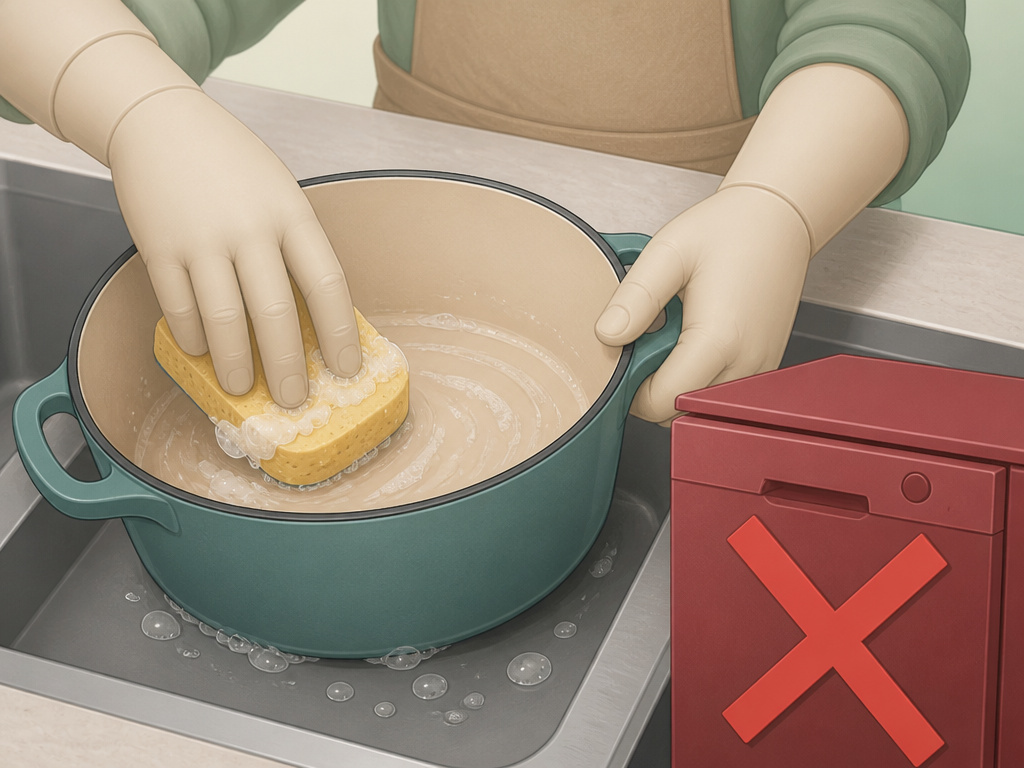
Hand washing here is a quick, protective ritual. You avoid every risk on the table above.
- Let it cool, then soak. Never shock hot cast iron with cold water. Let the pot cool to warm. If food is stuck, fill it with warm, soapy water and let it sit for 15-20 minutes. This is a safe alternative to aggressive soaking a Dutch oven for days, which can risk water seeping under the enamel if the finish is compromised.
- Use gentle tools. A soft sponge, a nylon brush, or a non-scratch scrubber is all you need. Pair it with a mild, non-citrus dish soap. This is the core of proper cleaning methods for enameled cast iron.
- Dry it thoroughly, especially the rim. This is the non-negotiable step. Use a towel to dry the entire pot, inside and out. Pay particular attention to the bare iron rim. Run the towel around it until it’s completely dry. This single action prevents 90% of rust issues.
- Store it with the lid off. Don’t trap moisture. Store the pot with the lid ajar or use a cloth pot protector between the pot and lid if you must stack them.
For standard messes, that’s it. For tougher jobs, you have two proven paths that don’t involve the dishwasher.
Solving Stuck-On Food and Stains
Even with the best methods for a scorched Dutch oven, enamel can stain. A little staining is normal and doesn’t affect performance. For stubborn residue:
- The Baking Soda Boil: Add 2 cups of water and 4 tablespoons of baking soda to the pot. Bring to a gentle boil for a few minutes, then let it cool. The alkaline solution loosens burnt-on food.
- Use a Dedicated Cleaner: Lodge’s own Enameled Cast Iron Cleaner or a trusted ceramic cookware cleaner is formulated to lift stains without abrasives. For persistent brown enamel discoloration, Lodge suggests a dilute bleach soak (3 tbsp bleach per quart of water, soak for 2-3 hours, then rinse thoroughly).
Never use metal utensils, scouring pads, or abrasive cleansers like standard Bar Keepers Friend on the enamel. They will scratch it.
Lodge vs. Other Brands: Is This Just a Lodge Thing?
No. This “technically safe but not recommended” stance is industry-wide for enameled cast iron. Le Creuset and Staub say the same. The physics are identical: porcelain enamel over iron.
The difference is often in the rim design. Some high-end brands fully enamel the rim, eliminating that rust vector. Lodge typically leaves the rim bare, which makes thorough drying imperative. This design choice makes Lodge more vulnerable to a specific common damage issue if neglected, but it doesn’t change the core advice.
The consensus among professionals who use these pots daily is uniform. They hand wash. The dishwasher is for the occasional accidental cycle, not the weekly routine.
When You Might Consider the Dishwasher (And How to Do It)
There is one scenario: a large, busy family meal where the pot is needed again quickly and the alternative is leaving it crusty on the counter for hours. If you must use the dishwasher, minimize the damage.
- Run it solo or with soft items. Don’t let it bang against plates or metal utensils. Use the top rack if it fits.
- Skip the sanitize cycle. Use a normal or light wash cycle with lower temperature.
- Use a detergent without citric acid. This is harder to find, but look for “gentle” or “finish-safe” formulas.
- Remove and dry immediately. As soon as the cycle ends, take the pot out and towel-dry it completely. Do not let it air-dry inside the machine.
Think of this as emergency protocol, not standard operating procedure. Every cycle adds to the cumulative dulling effect.
Frequently Asked Questions
Will the dishwasher ruin my Lodge Dutch oven?
It won’t “ruin” it in the sense of making it unusable. The primary damage is cosmetic, dulling the glossy finish, and potential rust on the rim. Its cooking performance will remain intact for years, but its appearance will degrade. For many, that diminished look equates to a damaged Dutch oven.
How do I remove rust from the rim?
If you see orange spots, act quickly. Scrub the rim with a nylon scrubber and dish soap until the rust is gone. Dry it impeccably. Then, rub a tiny amount of cooking oil (canola, vegetable) onto the bare iron rim with a paper towel. This thin oil layer acts as a barrier against moisture. Reapply this oil after every few washes.
Does Lodge enameled cast iron need seasoning?
No. This is a crucial difference from bare cast iron. The enamel surface is non-porous and does not require or benefit from seasoning a Dutch oven. Applying oil to the cooking surface and baking it will only create a sticky, gummy layer that attracts dirt and causes food sticking.
What’s the best way to clean burnt-on food without a dishwasher?
The baking soda boil method outlined above is the safest and most effective. For a full guide on tackling tough messes, see our dedicated resource on cleaning scorched food.
Before You Go
The dishwasher question reveals a bigger principle: cookware care is about preserving your investment over decades, not just cleaning it for tomorrow. A Lodge Dutch oven is a workhorse, but its beauty is fragile.
Hand washing takes two minutes. It preserves the gloss, prevents rust, and keeps your pot looking as good as it cooks. The dishwasher is a shortcut that charges a slow, invisible fee against the finish. After seeing the difference side-by-side, the hazy lid versus the glossy one, the choice becomes simple. Dry the rim. Put the detergent away. Keep that pot looking new.
