
Dutch Oven on the Stove: How to Use It Safely & Correctly
This post contains affiliate links. As an Amazon Associate, we earn from qualifying purchases.
You can put most Dutch ovens on the stove. The cast iron or enameled cast iron pot is designed for direct heat from gas, electric, and induction burners. The critical exception is electric Dutch ovens, the removable pot is stove-safe, but the electrical housing unit is not and will be destroyed if placed on a burner.
That distinction between the pot and its base is where a $200 appliance fails in under a minute. It’s printed in the manual, and almost no one reads it.
What follows is a breakdown of the three specs that decide stove safety: your Dutch oven’s material, its knob and handle composition, and whether it has a plug. We’ll cover the exact temperature limits from manufacturer manuals, the physical reason thermal shock cracks enamel, and how to spot the one model type that should never see a flame.
Key Takeaways
- Electric Dutch ovens have a split identity. The removable enamel pot (like on the All-Clad SD922D51 or MasterPro MPDUTCHOVEN) is safe for stovetops and ovens. The plastic control housing is not, placing it on heat melts the electronics.
- Material dictates the limit. Bare and enameled cast iron Dutch ovens are typically oven-safe to 500°F (260°C) and work on all stovetop types, including induction. Always verify your specific model’s manual.
- Thermal shock is a crack, not a scratch. Pouring cold liquid into a searing-hot pot or slamming a hot lid into sink water creates instant, uneven contraction. The enamel or iron can fracture within seconds, ruining the pot.
- The knob is the weak link. While the cast iron body handles high heat, plastic or phenolic knobs on lids often have a lower limit (around 390–480°F). For high-heat baking, use a stainless steel knob.
The Short Answer: Stove Compatibility by Material
The rule is simple: if your Dutch oven is made of cast iron or enameled cast iron, it is almost certainly safe for stovetop use. This includes gas flames, electric coils, glass-ceramic smoothtops, and induction cooktops. The Cuisinart manual states its enameled cast iron is “suitable for all range tops: gas, electric, ceramic or induction.”
Manufacturers design these pots for direct heat. The thick walls distribute heat evenly, preventing hot spots that warp thinner metals. Your primary job is to match the heat level to the task. A low-medium setting is sufficient for simmering and braising. You only need medium-high to bring liquids to a boil.
Common mistake: Cranking the burner to high for searing. Cast iron holds heat incredibly well. A medium-high flame gets the surface to the correct searing temperature (around 400-450°F) without wasting energy or overheating the handle.
The real question isn’t about the pot’s body. It’s about everything attached to it.
The Critical Exception for Electric Models
This is where the generic advice fails. Electric Dutch ovens, like the All-Clad 5Qt. Model (SD922D51) or the MasterPro 5.5L (MPDUTCHOVEN), are hybrid appliances. They have a removable cast iron or enameled pot that sits inside a separate electrical housing unit with controls and a heating element.
The manuals are explicit on the split: * The pot is stove and oven-safe. The All-Clad guide states the “removable cast iron pot and lid are oven-safe and can be used on a gas burner, electric burner, or induction plate.” The MasterPro manual echoes this: “Enamel pot is suitable for gas stovetop, gas oven or electric oven.” * The base unit is not. Both manuals warn: “The electrical housing unit is not suitable for stovetop, gas oven, or electric oven use.”
Placing the plastic and electronic control box on a hot burner melts the housing, fries the circuitry, and voids the warranty instantly. It’s an unrecoverable error. The design lets you sear meat on the stove, then move the pot to the electric base for slow cooking, not the other way around.
| Dutch Oven Type | Pot Stovetop Safe? | Base Unit Stovetop Safe? | Primary Use Case |
|---|---|---|---|
| Traditional Cast Iron | Yes (all burners) | N/A (no base unit) | Browning, braising, baking, frying |
| Enameled Cast Iron | Yes (all burners) | N/A (no base unit) | Acidic dishes, easy cleaning, all-purpose |
| Electric Dutch Oven | Yes (removable pot only) | No (will melt/break) | Sauté-to-slow-cook convenience |
Stovetop Safety: The Three Non-Negotiables
Assuming you have the right type of Dutch oven on the burner, three specific practices prevent damage. These aren’t suggestions; they’re the mechanics of how these materials fail.
1. Avoid Thermal Shock at All Costs
Thermal shock is the fastest way to ruin an enameled Dutch oven. It occurs when different parts of the material expand or contract at drastically different rates.
Where this goes sideways: Pouring a cup of cold stock into a pot you just used to sear a roast at 450°F. The temperature differential can exceed 400 degrees in a second. The enamel coating, fused to the iron underneath, cannot flex that quickly. It develops hairline cracks or chips outright. Once the glaze is compromised, rust follows.
The fix is gradual temperature changes. If you need to add liquid to a hot pot, use warm or hot liquid. When cleaning, let the pot cool completely before washing. Never take a scorching-hot lid and run it under the tap.
2. Never Heat It Empty
This rule protects both your cookware and your stovetop. Cast iron is a phenomenal heat battery. With no food or liquid inside to absorb that energy, all the heat transfers into the metal itself.
The bottom can exceed safe temperatures, potentially damaging the enamel finish or, in extreme cases, warping the iron base. On electric glass cooktops, this can also cause thermal cracking. The Cuisinart manual is blunt: “Never leave an empty pan over a hot burner; doing so could ruin the cookware and cause damage to the stovetop.”
Always have at least a thin layer of oil or liquid in the pot before applying heat.
3. Know Your Knob’s Temperature Limit
The pot can handle 500°F. The knob on the lid might not. Many lids come with plastic or phenolic (a type of heat-resistant plastic) knobs that have a maximum safe temperature, often between 390°F and 480°F.
If you’re using your Dutch oven for high-heat baking, like artisan bread at 475°F, that knob can warp, melt, or discolor. The solution is to check your manual and, if necessary, replace the plastic knob with a stainless steel one for high-heat applications. It’s a $15 part that saves a $50 lid.
How to Use a Dutch Oven on Each Stovetop Type
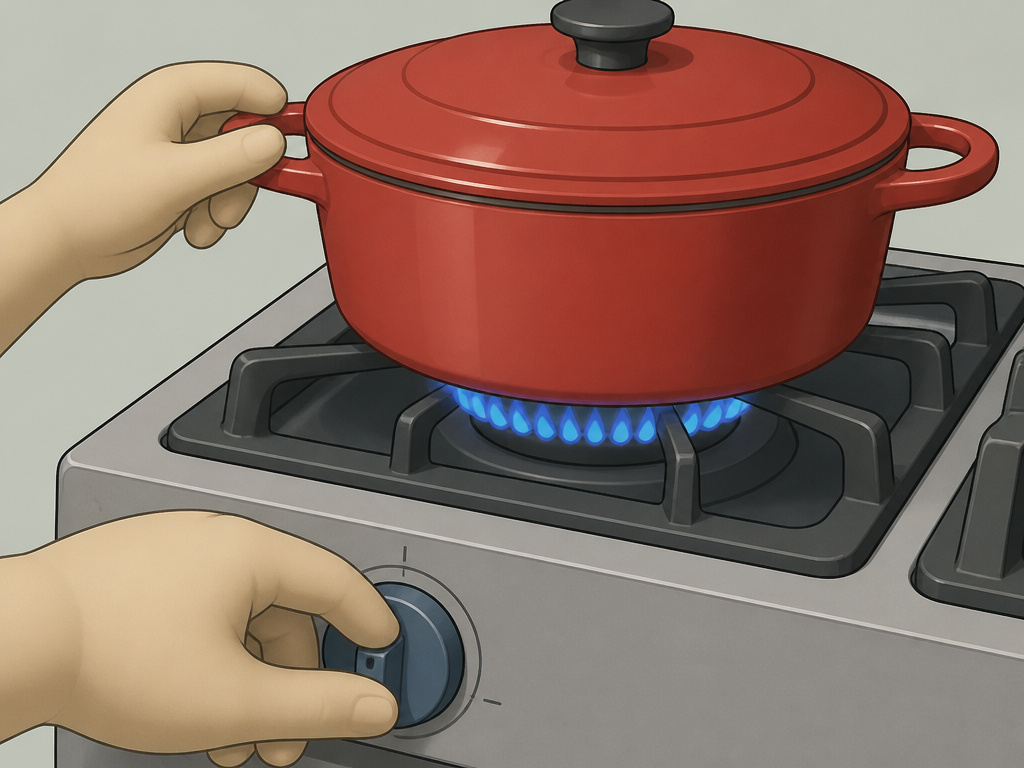
The principles are the same, but the execution varies slightly by heat source.
Gas Burners
The open flame provides immediate, responsive heat. The key is to match the flame size to the pot’s base. Don’t let flames lick up the sides of the pot, as this can overheat and damage the enamel or burn off seasoning on bare cast iron. Use a low to medium flame for steady cooking.
Electric Coil & Ceramic Smoothtops
These elements heat up and cool down slowly. Start on a medium setting to bring the pot to temperature. Cast iron retains heat so well that you can often reduce the heat to low once the pot is hot. Avoid dragging the pot across a glass surface, as grit can scratch it.
Induction Cooktops
Induction is a perfect partner for cast iron. It creates heat directly in the pot’s metal through magnetic fields, making it incredibly efficient. Any cast iron or enameled cast iron Dutch oven with a magnetic base will work. The pot heats up fast, so start on a lower power setting than you think you need. The even magnetic field also minimizes hot spots.
For a deep dive on this specific technology, our guide on induction compatibility covers the magnetic tests and best practices.
The Step-by-Step Guide for Stovetop Success
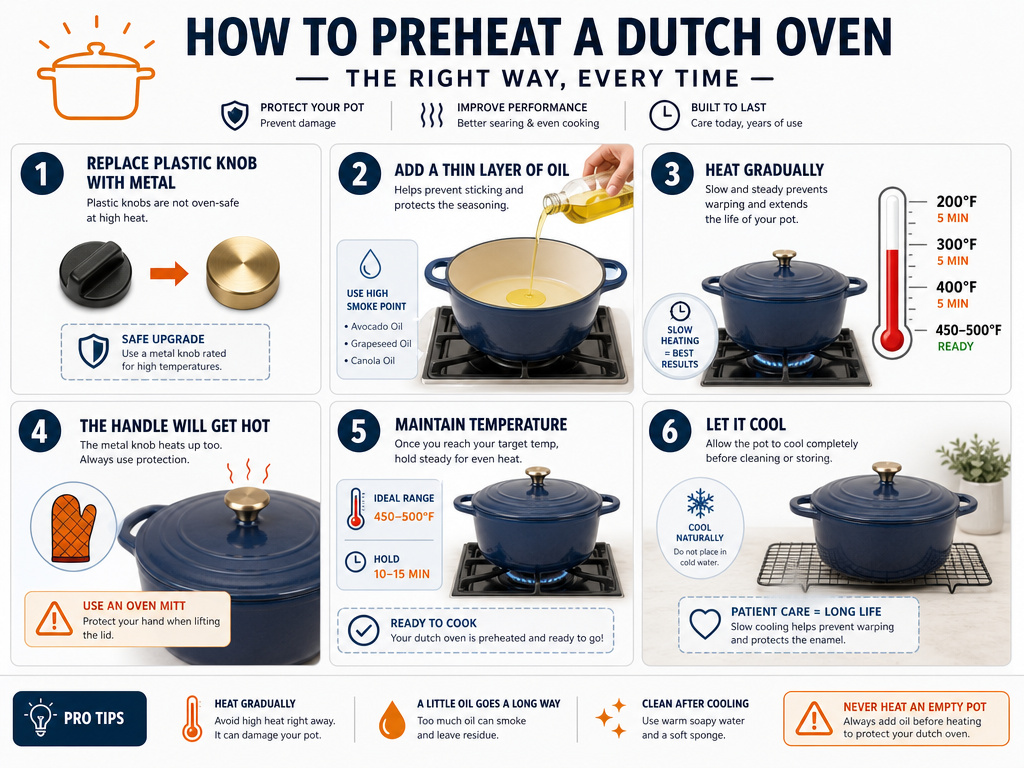
Follow this sequence to go from cold stove to finished dish without a hitch.
- Check the knob. Before heating, verify your lid’s knob material. If it’s plastic and you plan to go over 400°F, remove it or replace it with a metal one.
- Add your fat or liquid. Never begin with a dry pot. Add oil for searing, or your cooking liquid for braising.
- Start low, then adjust. Place the pot on a cold burner. Turn the heat to a medium setting. Let the pot come to temperature gradually over 3-5 minutes. You can feel the handle warm up.
- Cook with patience. Cast iron’s heat retention means it responds slowly. If the food is cooking too fast, don’t just crank the heat down, move the pot off the burner for a minute, then return it to a lower setting.
- Handle with extreme care. Use dry, high-quality oven mitts. The handles get as hot as the pot itself. A wet potholder transfers heat straight to your skin through steam.
- Cool completely before cleaning. Let the pot cool on the stovetop or on a trivet. Once it’s room temperature, you can begin the cleaning process.
I won’t recommend boiling water as a first test. Yes, you can boil water in a Dutch oven, but it’s inefficient for the task. The thick walls take too long to heat up. Use it for what it’s best at: developing deep, complex flavors through browning and slow simmering.
Dutch Oven on Stove vs. Standard Pot: Why the Difference?
You might wonder why the rules feel stricter than for a standard stainless steel pot. It comes down to mass and material. A Dutch oven is a heavyweight champion built for long, slow cooking and high-heat baking, not just boiling pasta.
Its thick walls provide unparalleled heat retention, which is why it’s terrible at quick temperature changes. A thin pot can cool down fast. Three pounds of cast iron cannot. This fundamental Dutch oven function is its greatest strength and its main point of vulnerability on the stove.
Understanding its material composition, whether it’s bare cast iron or has a glass-like enamel coating, tells you exactly how to treat it. That knowledge is more useful than any single tip.
Frequently Asked Questions
Can you put a Dutch oven on an electric stove?
Yes. Enameled and bare cast iron Dutch ovens work perfectly on electric coil and ceramic glass cooktops. Use a medium setting and avoid heating the empty pot. For electric appliance Dutch ovens, only the removable pot is safe for the stove; the control base is not.
What is the maximum temperature for a Dutch oven on the stove?
The stovetop itself isn’t the limiting factor; the cookware’s oven-safe rating is. Most quality Dutch ovens are rated for oven temperatures up to 500°F (260°C), which is far hotter than any stovetop cooking requires. The knob or handle may have a lower limit.
Can a Dutch oven go from stove to oven?
This is one of its best features. You can sear meat on the stovetop, then transfer the same pot directly into the oven to finish braising. Ensure your lid’s knob is oven-safe to the same temperature. This seamless transition is a core Dutch oven cooking principle.
Is a Dutch oven good for frying?
Absolutely. Its high sides and excellent heat stability make it ideal for deep frying. The cast iron maintains a steady temperature even when you add cold food, leading to crispier results. Use a thermometer to monitor the oil temperature.
How do I know if my Dutch oven is induction compatible?
If a magnet sticks strongly to the bottom, it will work on an induction cooktop. Almost all cast iron and enameled cast iron Dutch ovens are magnetic. For more details, see our full guide on Dutch oven on induction cooktop compatibility.
The Bottom Line
Most Dutch ovens belong on the stove. Your enameled Lodge, your Le Creuset, your Staub, they’re built for it. The single biggest risk is owning an electric model and not reading the manual that says the base unit melts.
Remember the split: the heavy pot is your workhorse for the stove and oven. The attached plastic and electronics are not. Treat thermal shock as the instant killer it is, know your knob’s limit, and you’ll use the same pot for decades. That’s the whole point of buying one.
