
The Best Way to Clean a Griddle: Try the 300°F Salt Scrub
This post contains affiliate links. As an Amazon Associate, we earn from qualifying purchases.
To clean a griddle, you match the method to the griddle type and soil level. For a daily clean on a warm surface, scrape debris, wipe with a damp cloth, and apply a thin coat of oil. For a deep clean on carbon steel or cast iron, heat to 300°F, cover with coarse salt and oil, scrub with a bench scraper or chainmail, then re-season. Never use steel wool or abrasive cleaners on non-stick surfaces, and never flood a hot griddle with cold water.
The 300°F threshold is the temperature where polymerized grease and carbonized food residue soften enough to be scraped off without damaging the underlying seasoning on a raw steel surface. Go cooler, and you’re just grinding hard carbon into the metal.Go hotter, and you risk warping thinner electric griddle plates.
What follows is a breakdown of three cleaning tiers: the 60-second post-cook wipe, the weekly scrub for moderate buildup, and the full reset for neglect or rust. We’ll walk through the tools each method needs, the manufacturer specs that override general advice, and the one mistake that turns a minor clean into a major restoration project.
Key Takeaways
- Heat is your primary cleaning tool. A warm surface (150-200°F) lets you scrape off grease; a hot surface (300°F) lets a salt-and-oil paste lift carbon.
- Your griddle’s surface dictates your tools. Use nylon scouring pads on ceramic non-stick, brass brushes on seasoned steel, and bench scrapers on heavy carbon steel.
- Soap is sometimes okay. Modern dish soap is fine for a ceramic non-stick griddle but can strip the seasoning from a raw steel or cast iron surface if used frequently.
- Dry it completely. Every manufacturer manual ends with “dry thoroughly.” Water left on raw steel causes flash rust within hours.
- Finish with oil. A post-clean, ultra-thin coat of neutral oil protects the surface until the next cook, whether it’s non-stick or seasoned steel.
The Daily Wipe-Down vs. The Deep Clean
Your cleaning routine splits into two distinct jobs with different tools and goals. Confusing them is how you end up with a sticky film or a damaged surface.
The daily clean is about food safety and preventing buildup. You’re removing loose debris and residual grease before it polymerizes into a hard, glossy shell. The deep clean is corrective. It addresses that shell, or worse, rust.
Where this goes sideways: Letting the griddle cool completely before scraping. Grease solidifies into a waxy, stubborn layer around 120°F. If you wait until the griddle is cold, you’ll need the deep clean method two weeks sooner.
For a daily clean:
- Turn off the heat. Let the griddle cool for 5-10 minutes until it’s warm to the touch but not hot (about 150-200°F).
- Use a metal scraper or stiff spatula to push all debris into the grease management channel or hole.
- Wipe the entire surface with a few damp paper towels or a cloth. For a ceramic non-stick griddle, a drop of mild dish soap is acceptable per KitchenAid’s guidance.
- Dry immediately with a fresh towel.
- Apply a very thin coat of a high-smoke-point oil (canola, grapeseed) with a paper towel. This protects raw steel and maintains non-stick performance.
For a deep clean: You’re tackling baked-on carbon, sticky residue, or light surface rust. This is where the Masterbuilt 1050 griddle manual provides a definitive method: the 300°F salt scrub.
| Cleaning Level | Target | Core Method | Tools Needed |
|---|---|---|---|
| Daily / Post-Cook | Loose food, liquid grease | Scrape & wipe while warm (150-200°F) | Metal scraper, damp towels, paper towels |
| Weekly / Moderate Buildup | Thin polymerized grease, slight stickiness | Paste scrub (baking soda or salt + oil) | Nylon brush, Scotch-Brite pad, bench scraper |
| Deep Clean / Corrective | Carbonized crust, sticky patches, light rust | Thermal breakdown (300°F salt & oil scrub) | Bench scraper, chainmail, coarse salt, tongs, gloves |
The weekly method uses a pastelike abrasive. For a sticky griddle from overcooked sugars or poor cleaning, a baking soda paste (3 parts baking soda, 1 part water) left overnight works. For a raw steel griddle, a paste of coarse salt and a little oil scrubbed at a lower heat can lift gunk without damaging seasoning.
Tools & Materials: What You Actually Need
Skip the specialty cleaners. A well-stocked drawer has 90% of what you need. The other 10% is knowing which tool pairs with which surface.
The Non-Negotiables:
- A Good Metal Scraper: Not a flimsy plastic one. A stiff, rectangular metal blade gets under debris without rounding the edges. This is your first line of defense.
- Absorbent Paper Towels: The cheap, sturdy kind. You’ll use them for wiping, drying, and oiling.
- High-Smoke-Point Oil: Canola, grapeseed, or avocado oil. Avoid olive oil for seasoning, it can get sticky.
The Surface-Specific Tools:
- For Ceramic or Standard Non-Stick: A Scotch-Brite Non-Scratch Scrub Sponge or Dobie pad. Presto’s manuals explicitly recommend these nylon mesh pads. Never use metal scouring pads or abrasive powders.
- For Seasoned Steel or Cast Iron: A stiff brass-bristle brush. Brass is softer than steel, so it scrubs carbon without gouging the seasoning. A Weber guide suggests this for post-cook scrubbing on hot surfaces.
- For Heavy Carbon Buildup: A bench scraper and chainmail scrubber. The scraper shears off thick crust; the chainmail abrades the remaining film without removing base seasoning.
While the griddle is still hot, remove all food particles using a brass brush. Wait for the griddle to cool to a medium heat before rubbing the surface lightly with vegetable oil. DCS/Weber Griddle Care and Cleaning Manual
That quote captures the ideal daily sequence. The brass brush on hot carbon works. The oil applied while warm bonds to the surface.
How to Deep Clean a Carbon Steel or Cast Iron Griddle
This is the reset button. Use it when your griddle has a patchy, sticky, or crusty surface, or if you see the first signs of orange dust (surface rust). The Masterbuilt method is the gold standard because it uses heat to do the work.
Before you start: The griddle will be at 300°F. Have heat-resistant gloves, long tongs, and a safe place to put the hot, greasy salt scrapings (a foil-lined sheet pan works).
- Heat the Griddle. Ignite your grill or turn on your electric griddle. Set the temperature to 300°F (149°C). Let it fully preheat, this can take 15-20 minutes for a large outdoor griddle.
- Apply Abrasive. Cover the entire cooking surface with a layer of coarse kosher salt or sea salt. Pour a small amount of cooking oil over the salt.
- Scrub. Using a bench scraper or your chainmail scrubber (held with tongs!), work the oily salt into every inch of the surface. The salt acts as a gentle abrasive, and the heat keeps the underlying grease soft. You’ll see the salt turn gray and clump as it absorbs grease and carbon.
- Remove Debris. Scrape all the dirty salt off the griddle and into your disposal container.
- Deglaze (Optional). For any remaining film, carefully add a small amount of warm water to the hot surface. It will sizzle and steam. Immediately scrub with chainmail or a wad of paper towels held with tongs. This steam-loosens the last bits.
- Dry and Re-Season. Turn off the heat. Dry the griddle thoroughly with towels. While it’s still warm (not hot), apply a very thin coat of oil over the entire surface. This prevents flash rust and starts rebuilding the seasoning layer.
This process removes rust by abrasion and creates a clean, bare-metal surface ready for fresh seasoning. If you skip the final oiling step, you’ll likely see new rust by morning.
Electric & Non-Stick Griddle Cleaning Specifics
 A Presto electric griddle isn’t a Blackstone. The surfaces and heating elements demand different care. The core rule: never immerse the control unit or heating element in water.
For Presto-style Electric Griddles:
- Unplug and let cool completely.
- Remove the drip tray and wash it separately.
- Wash the griddle plate in warm, soapy water. Presto’s manuals explicitly approve soap for their non-stick surfaces.
- For stuck-on food, use a nylon mesh scouring pad (again, Presto names Scotch-Brite). Apply firm pressure if needed, but no metal pads.
- Rinse, dry thoroughly, and reassemble.
Common mistake: Putting an electric griddle plate in the dishwasher. Even if it fits, the intense heat and detergent jets can degrade the non-stick coating over time. Hand-washing preserves the finish.
When soap is forbidden: Some high-end or chrome-infused griddles (noted in KitchenAid materials) specify no soap, as it can dull the specialized finish. For these, use hot water and a non-abrasive pad. When in doubt, your owner’s manual is the final word.
Addressing Rust, Stickiness, and Discoloration
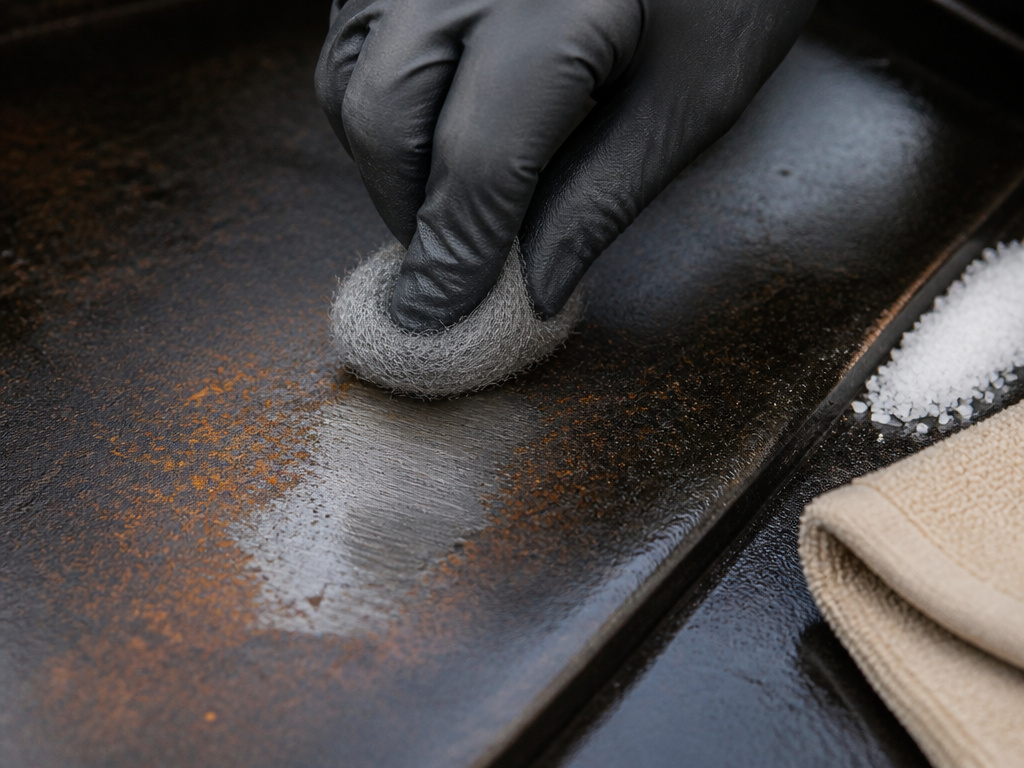 These cleaning outcomes are diagnostic clues. Each points to a breakdown in your routine.
Rust: Orange or red speckling means water met bare steel. For light rust on griddle surfaces, the deep clean salt scrub above will remove it. For deeper pitting, you may need to sand the area lightly with fine steel wool before re-seasoning. The real fix is always perfect drying and a protective oil coat.
Stickiness: A tacky surface usually means one of two things: using a low-smoke-point oil for seasoning (like olive oil) or incomplete carbonization of grease during cooking. The fix is the same: a thorough deep clean to strip the sticky layer, followed by re-seasoning with a neutral, high-heat oil.
Black Discoloration: A griddle turns black in the center because that’s the hottest zone. Polymerized oil and carbon create a black, slick coating, that’s good seasoning on raw steel. Blotchy black or rainbow patterns on stainless steel are usually heat tints (oxidation) and are purely cosmetic. A stainless steel cleaner can reduce them, but they don’t affect cooking.
| Problem | Likely Cause | Immediate Fix | Long-Term Prevention |
|---|---|---|---|
| Surface Rust | Moisture on bare steel | Salt scrub at 300°F; re-season | Dry thoroughly after every clean; apply thin oil coat |
| Sticky Patches | Low-smoke-point oil or incomplete cleaning | Deep clean to strip layer; re-season with neutral oil | Use canola/grapeseed oil; clean while surface is still warm |
| Baked-On Crust | Grease polymerized over multiple cooks | Deep clean salt scrub | Scrape thoroughly after each use before grease cools |
| Discoloration (Stainless) | High-heat oxidation | Stainless steel cleaner & polish | Accept it as normal; it doesn’t impact function |
If you face persistent Blackstone rust or stickiness, the issue is almost always in the seasoning or storage step, not the cleaning step. A proper seasoning a griddle process creates a barrier cleaning should preserve.
Frequently Asked Questions
Can you use soap on a griddle?
Yes, but only on modern ceramic or PTFE non-stick surfaces. Manufacturers like Presto and KitchenAid permit mild dish soap for their non-stick electric griddles. Never use soap on a raw carbon steel or cast iron griddle you are trying to season, it will strip the protective oil layer.
How do you clean a griddle without ruining the seasoning?
Clean while the griddle is warm (150-200°F), using a metal scraper and a brass brush. Avoid excessive water. After drying, immediately apply a microscopically thin coat of neutral oil. This removes debris while reinforcing the seasoning, not stripping it.
Why is my griddle sticky after cleaning?
You likely didn’t remove all the old, polymerized grease, or you used a low-quality oil that didn’t fully bond. A sticky surface requires a corrective deep clean with the 300°F salt scrub to remove the old layer, followed by a fresh, proper seasoning process.
How often should you deep clean a griddle?
For heavy weekly use, plan a deep clean every 4-6 weeks. For occasional use, you might only need it once or twice a season. Let the surface be your guide: if food starts sticking or the surface looks blotchy and uneven, it’s time for a reset.
What’s the best way to store a griddle?
After its final clean and oil coat, store it in a dry place. For outdoor griddles, a fitted waterproof cover is essential. Never store a griddle while it’s even slightly damp, or you are guaranteeing a future rust removal project.
The Bottom Line
Cleaning a griddle is about maintaining a functional, non-stick, rust-free cooking surface. The daily habit, scrape, wipe, dry, oil, takes two minutes and prevents ninety percent of problems.
When you do need the heavy artillery, remember the number: 300°F. That heat turns a salt scrub into a restorative treatment, not just a cleaning. Your specific griddle’s manual holds the final say, especially for electric models. Whether it’s a Presto, a Blackstone, or a built-in DCS, the principles are the same: heat, the right abrasive, and a finish of oil protect your investment and guarantee your next batch of pancakes won’t stick.
