
A Step-by-Step Guide on How Do You Clean Ceramic Cookware
This post contains affiliate links. As an Amazon Associate, we earn from qualifying purchases.
Clean ceramic cookware with warm soapy water, a soft sponge or cloth, and a soak for stubborn messes. Avoid abrasive cleaners, steel wool, metal scrubbers, and chlorine bleach. Never immerse a hot pan in cold water. While some brands label pans as dishwasher-safe, hand washing preserves the non-stick coating for years.
The 30-minute soak is the hinge point. Kyocera’s manual specifies that time for burnt food. Skip it, and you’ll scrub harder than the coating can take. The rest is about matching your mess to the manufacturer’s approved tool, a melamine sponge, a nylon pad, or an oxygen-based bleach, and knowing which moves void the warranty.
What follows is a breakdown of the daily clean, the soak rule, and the specific cleaners that work without damage. You’ll also see the head-to-head on dishwashers, drawn from eight different care manuals, and a table that matches your problem to the fix that keeps the pan in service.
Key Takeaways
- Soak burnt-on food in hot water for 30 minutes before washing, scrubbing a dry, stuck mess scratches the ceramic.
- Never put a hot ceramic pan in cold water or fill it with cold liquid. The thermal shock can warp the metal core and crack the coating.
- Avoid dishwashers despite “dishwasher-safe” labels. Harsh detergent salts and phosphates degrade the non-stick layer over repeated cycles.
- For a carbonized layer of oil (a slick, sticky film), use an oxygen-based non-chlorinated bleach as directed by Kyocera. Chlorine bleach damages the coating.
- Use only wood, silicone, nylon, or bamboo utensils. Metal tools scratch and void warranties.
The Daily Clean: Warm Water, Soap, and a Soft Sponge
For everyday cleaning after the pan has cooled, the method is universal. Rinse the cookware in warm water to remove loose food and grease. Wash with a mild dish soap and a soft sponge, non-abrasive cloth, or nylon scrubber. Rinse thoroughly and dry with a towel before storing.
Common mistake: Letting food residue sit overnight. Grease and sugars polymerize into a hard, bonded layer by morning. What wipes away after dinner needs a nylon pad after breakfast.
This routine is non-negotiable for brands like IKEA, whose manuals state “Always wash the product by hand after use.” The goal is to prevent the need for heavier interventions. A quick wipe preserves the factory-fresh surface.
Why Abrasives and Metal Tools Are Instant Coating Killers
Ceramic non-stick coatings are harder than traditional PTFE but are still a thin, glass-like layer fused to metal. Abrasives grind microscopic grooves into that glass.
Steel wool, coarse scouring pads, and abrasive powders (like some baking soda pastes) act like sandpaper. They don’t just scratch; they create a textured surface where food bonds more easily next time. Once scratched, the pan loses its slick release and stains faster. Every manufacturer care guide reviewed prohibits them.
Metal utensils pose the same threat during cooking. A fork, whisk, or spatula with a metal edge concentrates force on a tiny point. The Forged Aluminum Ceramic Cookware manual states using metal utensils “may damage the ceramic surface over time and void the warranty.” Use silicone, nylon, wood, or bamboo instead. This is a primary rule for ceramic-safe utensils.
The coating’s hardness is a benefit against accidental scrapes, not a license to treat it like stainless steel. Protect it like you would a cast iron seasoning.
Tackling Burnt-On Food and Carbonized Layers
When the daily clean fails, you face two distinct problems: burnt-on food and carbonized oil. Their fixes are different.
Burnt-on food is charred bits of meat, pasta, or vegetables stuck to the surface. The universal first step is a soak.
Soak the pan in hot water for 30 minutes before washing. This is not a suggestion, it’s the specific time listed in the Kyocera Advanced Ceramics care manual. The water loosens the bond without force.
After soaking, use a soft sponge or a nylon scrub pad. For tougher spots, a melamine foam sponge (like a generic Magic Eraser) is approved by Bialetti for “tougher burns.” Gently scrub; the foam abrades the residue, not the coating. Rinse well.
A carbonized layer is different. It’s a slick, polymerized film of oil or fat that builds up over time, often from high-heat cooking or using aerosol cooking sprays. The pan feels sticky, and food starts to stick even on a seemingly clean surface. Kyocera’s manual addresses this directly.
Where this goes sideways: Using chlorine bleach on a carbonized layer. Kyocera states “Do not use any abrasive cleaners including, chlorine bleach. It is OK to use an oxygen-based non-chlorinated bleach.”
For this, use an oxygen-based bleach (like OxiClean) according to the product’s directions, followed by a thorough wash. This breaks down the oil without corrosive damage. For general cleaning enamel cookware, the rules are similar but the material is more tolerant of gentle pastes.
| Problem | What It Is | Safe Solution | Tool/Method |
|---|---|---|---|
| Burnt Food | Charred food bits stuck to surface | Hot water soak | Soak for 30 minutes, then soft sponge or nylon pad |
| Stubborn Burnt Residue | Food fused after overheating | Mild abrasive clean | Melamine foam sponge (Bialetti-approved) |
| Carbonized Oil Layer | Slick, sticky polymerized oil film | Oxygen-based cleaner | Oxygen-based non-chlorinated bleach (Kyocera-approved) |
| Surface Dulling/White Deposits | Mineral deposits or coating haze | Mild detergent scrub | Nylon pad with warm water & mild liquid detergent (Scoville method) |
The Dishwasher Debate: What the Manuals Really Say
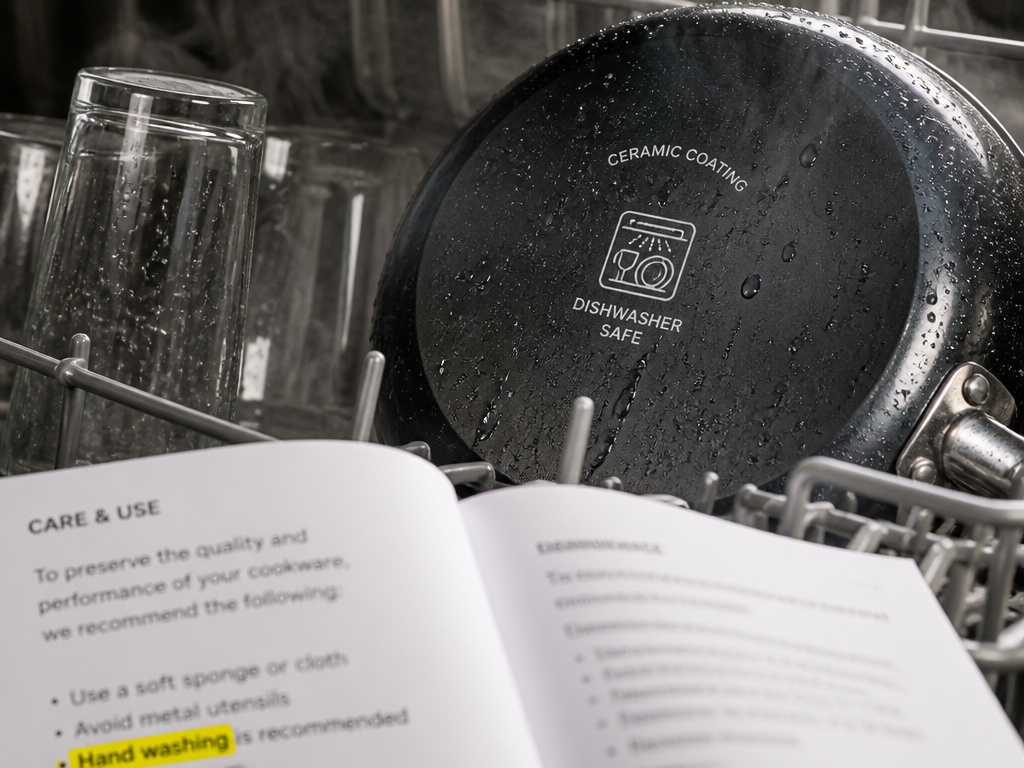 Most ceramic cookware carries a “dishwasher-safe” icon. Read the fine print. The consensus from the care documents is a reluctant yes paired with a strong recommendation to hand wash.
- GreenPan says its Thermolon™ coating is “dishwasher safe (except in case of a wooden handle)” but adds that “ceramic non-stick coatings can break down in the dishwasher due to the high salt content, bleach and phosphates of some dishwashing detergents.”
- Nuwave (Duralon® Blue) states: “While… Cookware can be washed in the dishwasher, the harsh detergents can shorten the lifespan of the cookware.”
- Scoville says the cookware is “suitable for dishwasher use” but “recommend[s] washing by hand… As this will prolong the Neverstick+ coating.”
- Forged Aluminum Ceramic Cookware notes: “natural aluminum will discolor when placed in a dishwasher.”
The dishwasher’s combination of caustic detergent, high heat, and prolonged water immersion is a stress test. It accelerates the natural wear on the coating and can cause discoloration on aluminum rims or rivets. For the longest service life, treat the dishwasher as an occasional convenience, not the standard. This is a key part of ceramic cookware dishwasher guidelines.
Handling Specific Materials and Edge Cases
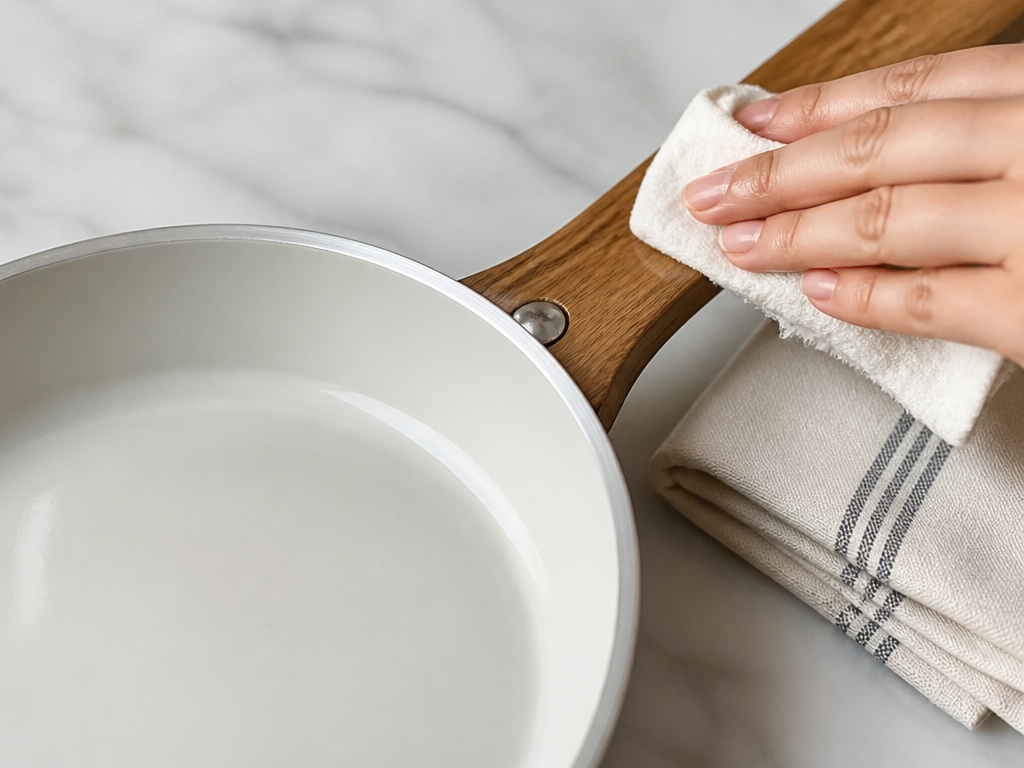 Not all ceramic cookware is a simple pan. Handles, rims, and bases introduce complications.
Wooden Handles: If your pan has a wooden handle, it is not dishwasher safe. The wood will crack, warp, and degrade. Always hand wash. GreenPan explicitly excludes wooden handles from its dishwasher-safe claim.
Bare Aluminum Rims/Rivets: Many pans have exposed aluminum around the edge or where handles attach. GreenPan notes these “can discolor in the dishwasher, but this will not affect the performance.” It’s cosmetic.
Stainless Steel Bases & Rivets: Pans with stainless steel components, like some Bialetti lines, may show “flash rust” or discoloration in the dishwasher from other items. It cleans off with a stainless steel cleaner and doesn’t affect safety.
Stacking for Storage: Never stack ceramic pans directly on top of each other. The Duralon® Blue guide advises placing “towels or paper towels between each cookware to prevent scratching or damage to the coating.” A scratched exterior doesn’t hurt performance but looks poor. Consider it part of general clean pots and pans storage.
Manufacturer-Approved Cleaners and What to Avoid
When you need more than soap, choose from this short list of vetted options. Deviating risks the warranty.
| Product Type | Brand/Manual Mention | Use For | Do Not Use With |
|---|---|---|---|
| Melamine Foam Sponge | Bialetti, Kyocera | Tougher burns, carbonized layer | Do not use dry or with excessive force |
| Nylon Scrubbing Pad | Scoville, Magma | Surface dulling, white deposits, general stuck-on food | Steel wool or metal scrubbers |
| Soft Scrub® Cream Cleanser | Forged Aluminum Ceramic Cookware | Extreme cases of burnt grease/food residue | Abrasive powders like Comet |
| Oxygen-Based Non-Chlorinated Bleach | Kyocera | Carbonized layer of fat or oil | Chlorine bleach (like regular Clorox) |
| Vinegar & Water Solution | Duralon® Blue | General cleaning, mineral spots | Do not boil the solution in the pan |
What to avoid categorically:
- Chlorine bleach
- Oven cleaner
- Steel wool and metal scrubbers
- Abrasive cleaning powders (e.g., Bar Keepers Friend on the ceramic surface, it’s for bare metal only)
- Aerosol cooking sprays (they create gummy residue that carbonizes)
These substances etch or bond to the coating. Using them is the fastest way to a sticky, useless pan. For other materials, the rules differ; see cleaning aluminum cookware for specifics.
The Thermal Shock Rule: Never Mix Hot and Cold
This is a safety and durability rule every manual emphasizes. Never immerse hot ceramic cookware in cold water. Never run cold water into a hot pan. The Duralon® Blue instructions are absolute: “NEVER immerse hot cookware in water. This can damage the Duralon coating and may cause the pan to warp.”
Why? The ceramic coating and the metal substrate expand at different rates when hot. A sudden temperature drop causes extreme stress. The metal core can warp permanently, leaving the pan with a wobble. In severe cases, the ceramic coating can crack or delaminate. Always let the pan cool to room temperature on a rack or trivet before washing. This also applies to its oven safe use, let it cool before cleaning.
Restoring Performance and When to Season
Ceramic coatings slowly lose their peak non-stick performance over years of use. High heat accelerates this. If food starts sticking slightly despite proper cleaning, you can often restore release.
Re-seasoning is simple and recommended by brands like Tramontina (Forged Aluminum). After cleaning, dry the pan thoroughly. Apply a very thin layer of a high-smoke-point oil (like canola or grapeseed) to the interior with a paper towel. Heat over medium heat for 2-3 minutes until the oil just starts to smoke, then let cool and wipe out any excess. This bonds a micro-layer of polymerized oil to the ceramic, boosting release. It’s a simpler process than the initial seasoning ceramic cookware for cast iron.
If the coating is visibly scratched, deeply stained, or food sticks consistently even after seasoning, the coating is compromised. Continued use will only worsen it. At that point, consider replacement. For your next purchase, research best ceramic cookware that balances durability and performance.
Frequently Asked Questions
Can you use baking soda to clean ceramic cookware?
Most manuals do not list baking soda as an approved cleaner. In paste form, it can be mildly abrasive. While some home cooks use it, it carries a risk of scratching if scrubbed. Safer, manufacturer-listed options are a melamine sponge for stuck food or an oxygen-based bleach for a carbonized layer.
Why does my ceramic pan have white spots or a cloudy film?
These are usually mineral deposits from hard water or detergent residue. Scoville’s manual recommends cleaning the area “with a nylon pad soaked in warm water and mild liquid detergent.” A vinegar-water solution can also help dissolve minerals. Rinse thoroughly after washing to prevent this.
How do you remove stubborn stains from ceramic cookware?
For colored stains (like turmeric), a soak with hot water and a drop of dish soap often works. For persistent stains, use a manufacturer-approved gentle abrasive like a melamine foam sponge. Avoid harsh chemicals. Some staining is normal and does not affect performance.
Is Bar Keepers Friend safe for ceramic cookware?
No. Bar Keepers Friend is an oxalic acid-based abrasive cleaner designed for bare metals like stainless steel and copper. It is too abrasive for ceramic non-stick coatings and will damage the surface. Use the milder tools listed in the manufacturer guides.
Can you use cooking spray on ceramic cookware?
No. Most manuals, including the Forged Aluminum guide, explicitly say “Do not use nonstick aerosol cooking sprays.” They leave a sticky residue that burns on and creates a carbonized layer. Use a small amount of liquid oil instead.
How long does ceramic cookware last?
With proper care, hand washing, using correct utensils, avoiding high heat and thermal shock, a good ceramic pan should maintain excellent non-stick performance for 2-5 years of regular use. The coating will gradually wear, but gentle treatment extends its life significantly compared to dishwasher abuse.
The Bottom Line
Cleaning ceramic cookware is about patience and using the right tool for the job. Soak for 30 minutes. Hand wash with a soft sponge. Never shock a hot pan. Skip the dishwasher for the long haul. When you need more power, reach for the melamine sponge or oxygen bleach the manuals name, not the abrasive under your sink. This preserves the coating so your easy-clean pans stay that way. A ceramic pan isn’t ruined by cooking; it’s ruined by cleaning the wrong way.
