
Aluminum vs Ceramic Cookware Comparison: Which Is Better?
This post contains affiliate links. As an Amazon Associate, we earn from qualifying purchases.
Ceramic and aluminum cookware are better for different jobs. Ceramic-coated pans offer a PTFE-free non-stick surface ideal for low-fat cooking and eggs, but their coating decomposes if overheated. Hard-anodized aluminum provides superior, even heat conduction for searing and sauces, and its electrochemically hardened surface resists scratching and leaching, even with acidic foods. The better choice hinges on your stove’s heat control and whether you prioritize a pristine non-stick surface or lifelong durability.
That breakdown is the short answer. The long one involves a 1970s import scandal, a specific chemical threshold, and a durability cliff that most marketing copy skips. You aren’t just picking a pan. You’re picking a maintenance schedule, a heat ceiling, and a set of chemical interactions that play out every time you cook tomatoes.
What follows: the two critical safety mechanisms, a direct performance comparison with named winners, and the three kitchen scenarios that make the decision for you.
Key Takeaways
- Ceramic coatings are inert at normal temps but decompose when overheated, sometimes within months. Aluminum’s risk is leaching, controlled by anodization and avoided by skipping acidic foods in raw pots.
- Hard-anodized aluminum conducts heat 16 times better than stainless steel, making it the undisputed winner for even searing and responsive temperature control.
- A ceramic-coated pan’s non-stick performance degrades measurably within 2-3 years with daily use, regardless of brand. Anodized aluminum’s surface lasts a decade or more.
- Always verify ceramic cookware is labeled lead-free and food-safe, especially for imported items or souvenirs, due to historic heavy metal contamination.
- For high-heat cooking like searing steaks, anodized aluminum is the only rational choice. For delicate, low-fat cooking like eggs or fish, a quality ceramic non-stick pan is the better tool.
The Core Safety Difference: Leaching vs. Decomposition
The safety debate isn’t about which is “toxic.” It’s about two distinct failure modes with different triggers and timelines. Understanding the mechanism is the only way to use either material safely.
Aluminum’s challenge is leaching, metal ions migrating into food. The concern is dose over time. A 2023 literature review notes a Specific Release Limit (SRL) for aluminum is set at 5 mg per liter. The body excretes small amounts, but chronic exposure, particularly from worn or pitted cookware used for acidic foods, is what health agencies monitor.
Common mistake: Cooking tomato sauce or lemon chicken in a raw, unanodized aluminum pot. The acid accelerates ion transfer, potentially exceeding the SRL and giving the food a metallic taste.
The fix is either a protective layer or avoiding reactive foods. Hard anodized aluminum is electrochemically processed to create a thick, inert oxide surface that prevents contact between food and raw metal. It’s why experts consider anodized aluminum safety a non-issue for most cooking. If you use raw aluminum, reserve it for boiling water, steaming vegetables, or cooking grains, tasks with neutral pH.
Ceramic’s challenge is coating decomposition. The ceramic layer itself is typically a silica-based polymer, inert under normal use. The risk appears at high temperature. According to an American Ceramic Society safety investigation, overheating these pans can cause the coating to break down, potentially releasing particles and degrading the non-stick surface. This can happen “sometimes within months of purchase.”
The safety profiles diverge completely. Aluminum asks you to manage chemical reactivity. Ceramic asks you to manage thermal abuse.
A 50-Year-Old Warning on Heavy Metals
The “ceramic is natural” marketing line glosses over a critical industrial history: glazes and pigments. This isn’t theoretical. FDA Import Alert 52-08 still exists today because of excessive, potentially toxic cadmium found in pigments used to color the interior of enamel cookware manufactured overseas in the 1970s.
The FDA prohibited those imports then, and the alert remains active. This is why ceramic cookware safety for any item not made in a country with strict regulations (like the U.S., Canada, or the E.U.) is not guaranteed. Souvenir pottery, craft fair mugs, or imported ceramic bowls with decorative interiors may contain lead or cadmium in their glazes.
| Material & Source | Primary Hazard | Trigger | How to Mitigate |
|---|---|---|---|
| Uncoated Aluminum | Aluminum ion leaching | Acidic or salty foods (tomatoes, wine, citrus) | Use for neutral foods only; upgrade to hard-anodized. |
| Ceramic Coatings (Low-Quality) | Heavy metal (Pb, Cd) leaching | Any food contact, if glaze is non-compliant | Buy only lead-free, food-safe labeled items from regulated markets. |
| Ceramic Coatings (All) | Coating decomposition | Overheating on high burner | Never preheat an empty pan; use medium heat. |
The rule is simple. Only purchase ceramic that is explicitly labeled for food contact. If a piece has holes for hanging or is marked “decorative,” it’s not a serving dish. This due diligence is your first filter.
Performance & Durability Face-Off
Safety sets the floor. Performance decides what you actually enjoy using every day. Here, the materials have opposite strengths.
Heat Conductivity & Responsiveness: Aluminum Wins
Aluminum is a champion heat conductor. It moves energy from your burner across the entire pan surface quickly and evenly. This means no hot spots that burn your pancake center while the edges are raw. This is why premium stainless steel pans often have an aluminum core or disk, it borrows this trait. For tasks requiring precise temperature control, like making a delicate beurre blanc or getting a perfect sear on a steak, aluminum cookware or its anodized cousin is the superior tool.
Non-Stick Performance & Release: Ceramic Wins (Initially)
A new, high-quality ceramic-coated pan provides excellent food release with minimal oil. Eggs slide, fish fillets flip cleanly. This is the main appeal of ceramic non-stick sets. However, this performance is a surface trait, not a bulk material property. It wears.
Durability & Lifespan: Anodized Aluminum Wins
This is the trade-off. The ceramic coating is a thin, sprayed-on layer. Even with careful use, wooden utensils, hand-washing, no stacking, the non-stick efficacy will diminish. Microscopic scratches and wear reduce its slipperiness over 2-3 years of regular use. The pan remains safe, but it becomes a “some-stick” pan.
Anodized aluminum, in contrast, has its hardened surface integrated into the metal itself. It resists scratching, doesn’t react with foods, and won’t wear away. A well-made anodized pan from a brand like Calphalon can last for a decade or more, becoming a kitchen workhorse. Its non-stick properties are more about food release from a slick, hardened surface than a sacrificial coating.
Where this goes sideways: Stacking ceramic-coated pans inside each other. The metal rim of one pan will scrape the coating of the pan below, creating the first chips that accelerate wear. Store them separately or use pan protectors.
Ceramic vs. Aluminum: Which to Buy When?
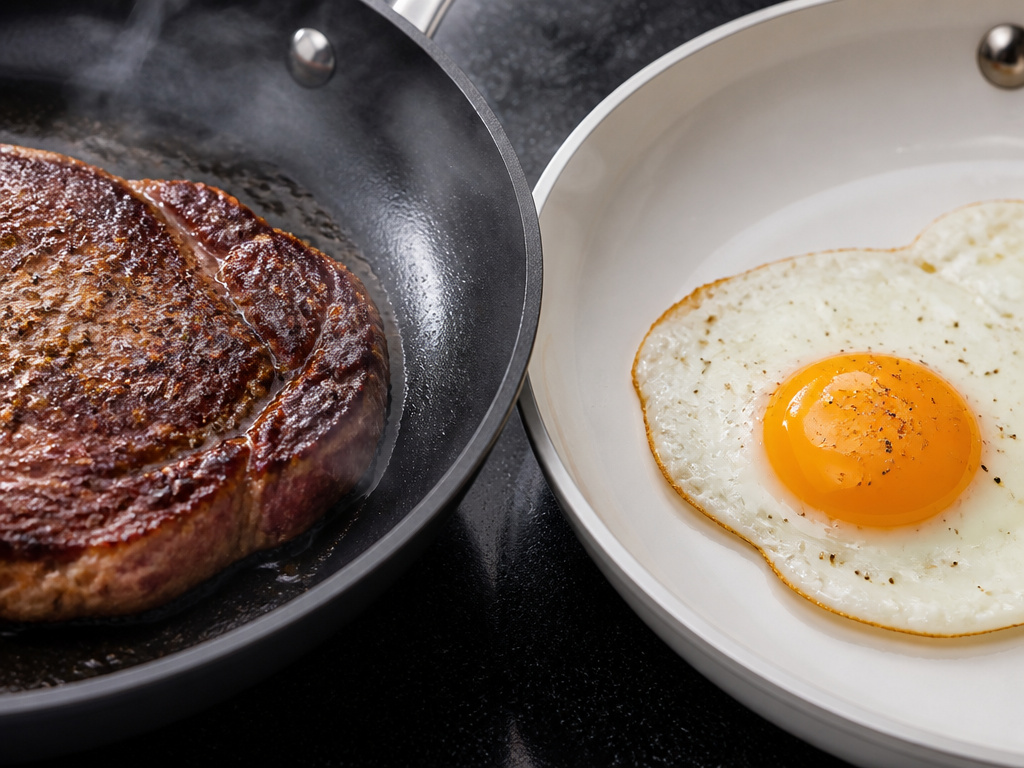 Stop looking for a universal winner. Your cooking style, stove type, and patience for maintenance dictate the answer. Use this breakdown to assign jobs.
Choose Hard-Anodized Aluminum If…
- You cook with high heat (searing, stir-frying).
- You frequently make pan sauces, deglaze, or work with acidic ingredients.
- You want a pan that will last a decade, not a few years.
- You have an induction cooktop (ensure it’s labeled induction-compatible).
- You dislike the idea of a coating that can wear off.
The best aluminum cookware for most home cooks is the hard-anodized variety. It marries aluminum’s performance with a durable, non-reactive finish.
Choose Ceramic-Coated Cookware If…
- You primarily cook delicate foods like eggs, fish, or crepes and want easy release.
- You are committed to cooking with very little oil or fat.
- You are comfortable replacing a pan every few years as performance declines.
- You have a gas or electric stove and can reliably control medium heat.
- You want to avoid PTFE (traditional Teflon) entirely.
For this role, invest in a well-reviewed set from a brand known for coating durability, like GreenPan. Our guide to the best ceramic cookware sets compares these top performers.
The Hybrid Approach: Why Not Both?
Most functional kitchens aren’t monogamous. The practical solution is to own both types, assigned to their ideal tasks. * Use a hard-anodized aluminum skillet for searing meats, roasting vegetables, and making sauces. * Use a ceramic-coated non-stick pan for eggs, omelets, and fish. This approach gives you peak performance for every job and extends the life of your ceramic pan by limiting its use.
Care Instructions That Actually Matter
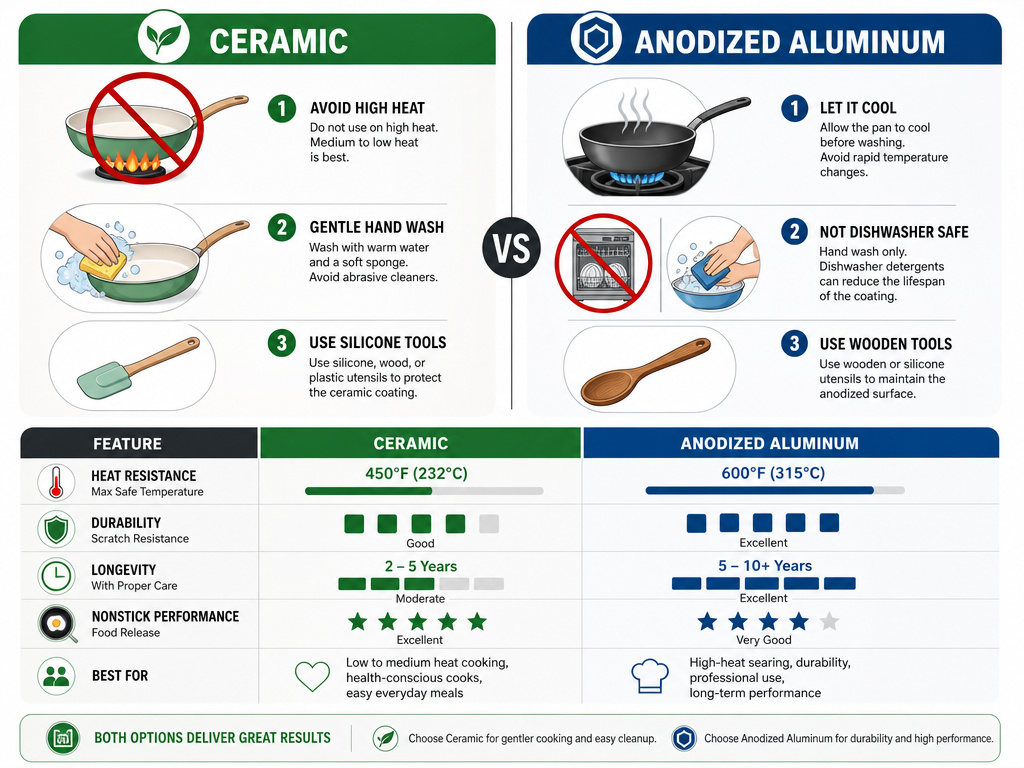 Manufacturer instructions are often vague. These specifics determine your cookware’s lifespan.
For Ceramic Coatings:
- Never preheat an empty pan. Add a small amount of oil or butter to a cold pan, then heat it over medium to medium-low. High heat on an empty pan is the fastest route to coating breakdown.
- Hand-wash only. Use a soft sponge, mild detergent, and avoid abrasive scrubbers. Dishwasher detergents are too harsh and will dull the coating over cycles.
- Use the right tools. Silicone, nylon, or wood only. Even a single scrape from a metal spatula can compromise the surface. For detailed cleaning ceramic cookware methods that preserve the coating, follow a dedicated guide.
For Anodized Aluminum:
- Let it cool before washing. Plunging a hot pan into cold water can cause warping over time.
- Abrasion is still an enemy. While resistant, use nylon or wood utensils to preserve the slick finish. You can use a dishwasher, but hand-washing is gentler.
- For stuck-on food, soak in warm, soapy water. Avoid steel wool or harsh powdered cleansers.
| Aspect | Ceramic-Coated | Hard-Anodized Aluminum |
|---|---|---|
| Best For | Low-fat cooking, delicate foods | High-heat searing, even cooking, acidic foods |
| Heat Conductivity | Good (depends on metal core) | Excellent |
| Non-Stick Longevity | 2-5 years with care | 10+ years; surface is permanent |
| Reactivity | Inert (if coating intact) | Non-reactive (anodized surface) |
| Max Oven Safe Temp | Usually ~400-450°F | Often 500°F or higher |
| Critical Care Rule | Never overheat empty; use soft tools | Avoid thermal shock; use non-metal tools |
Frequently Asked Questions
Is ceramic-coated cookware safer than Teflon?
For the specific concern of PTFE (Teflon) fumes from overheating, yes. Ceramic coatings do not contain PTFE. However, both types have safety considerations, ceramic can decompose when overheated, and Teflon can release fumes. Proper use is key for both.
Does aluminum from cookware cause Alzheimer’s disease?
According to major public health bodies like the CDC and WHO, there is no conclusive evidence linking aluminum from dietary sources (including cookware) to Alzheimer’s. The primary health guidance is to avoid excessive intake, which is mitigated by using anodized aluminum or avoiding cooking acidic foods in uncoated pans.
Can I use metal utensils on hard-anodized aluminum?
It’s not recommended. While the anodized surface is very hard and scratch-resistant, metal utensils can still eventually mar the finish. Using nylon, wood, or silicone utensils preserves the pan’s surface and non-stick properties for the long term.
Why did my ceramic pan start sticking after a year?
This is the expected wear profile of the coating. Microscopic abrasion from cooking, cleaning, and even food particles gradually reduces the coating’s slickness. It doesn’t mean the pan is unsafe, just that its peak non-stick performance is temporary. Proper ceramic cookware care can slow this process.
What is the difference between ceramic and hard-anodized cookware?
Ceramic cookware refers to a metal pan (usually aluminum) with a sprayed-on, silica-based non-stick coating. Hard-anodized cookware is an aluminum pan that has been electrochemically treated to convert its surface into a hard, inert, and non-porous oxide layer. One is a coating; the other is a transformed surface of the metal itself.
The Bottom Line
Stop searching for a single perfect pan. Aluminum cookware, especially the hard-anodized kind, is your durable, high-performance engine for most cooking, it handles heat, lasts years, and won’t react with your food. Ceramic-coated cookware is your specialized tool for effortless eggs and fish, with the understanding it’s a consumable item with a shorter service life.
Your decision point is your own behavior. If you can manage medium heat and accept replacing a pan every few years, a good ceramic non-stick pan like a GreenPan model is a worthwhile specialty tool. If you want one pan to rule them all for a decade, buy a high-quality hard-anodized aluminum skillet from Calphalon or a similar brand and learn to cook with it. The best kitchen uses both, each for what it does best.
