
What is a Dutch Oven? Cooking Principles & Common Pitfalls
This post contains affiliate links. As an Amazon Associate, we earn from qualifying purchases.
Dutch oven cooking is a moist-heat method that uses a heavy, lidded pot to trap steam and circulate heat for even, slow cooking. The pot itself, typically cast iron, enameled cast iron, or ceramic, retains heat exceptionally well, turning tough cuts tender and creating deep, concentrated flavors in dishes like stews, braises, and bread.
That description covers the classic tool. The reality on your stove is more specific. A Dutch oven is a category split by material, heat source, and a list of manufacturer warnings that, if ignored, turn a $300 pot into a decorative paperweight.
What follows: the three mechanical principles that make the method work, the irreconcilable care divide between seasoned and enameled iron, and the exact mistakes that crack lids, strip coatings, and void warranties. By the end, you’ll know which type fits your kitchen and the non-negotiable rules for keeping it functional.
Key Takeaways
- The lid is the engine. A tight seal and self-basting spikes trap steam, which converts to condensation that drips back onto the food, basting it continuously.
- Never heat an empty enameled Dutch oven. The sudden temperature spike against the glass-like coating causes thermal shock and permanent spiderweb cracks.
- Electric Dutch ovens like the MasterPro MPDUTCHOVEN have a critical limitation: the electrical base unit cannot go on a stovetop or in a conventional oven, only the removable enamel pot can.
- For outdoor charcoal cooking, use the diameter-based formula from Montana State University: oven diameter in inches, plus three briquettes for the top, minus three for the bottom, to hit 325°F.
- Seasoned cast iron and enameled cast iron require opposite cleaning protocols. Soap strips seasoning but cleans enamel safely.
The 3 Core Principles of Dutch Oven Cooking
Forget versatility for a moment. The method works because of three physical interactions between the pot, the lid, and the heat.
First, the heavy material, usually cast iron, absorbs heat slowly and releases it evenly. This prevents hot spots that scorch a stew’s bottom. Second, the fitted lid creates a nearly sealed environment. As moisture from the food evaporates, it hits the cooler lid surface and condenses. Pots like the Le Creuset signature line have 26 convex points cast into the underside of the lid to channel this condensation so it drips back evenly across the food, not just around the edges.
A Dutch oven’s lid is a condensation engine. The trapped steam hits the cooler metal, liquifies, and falls back onto the food in a continuous self-basting cycle. This is why you can braise a pork shoulder for six hours without it drying out.
Third, the entire system retains heat so well that once you reach a simmer, you can often turn the burner down to its lowest setting. The pot does the work, not the flame. This principle of Dutch oven cooking is why it excels at breaking down collagen in tough meats over long, gentle cooks.
Cast Iron vs. Enameled: The Care Divide
The single biggest decision is whether you buy traditional bare cast iron or enameled cast iron. This choice dictates every cleaning, storage, and preheating step that follows.
A cast iron Dutch oven is a single piece of iron. Its non-stick surface is a polymerized layer of oil called seasoning. This coating can wear, scratch, and rust. An enameled cast iron Dutch oven, like those from Staub or Le Creuset, is cast iron coated in a durable, glass-like enamel. The color is baked into that coating. It won’t rust and doesn’t require seasoning, but the enamel can chip or crack from impact or thermal shock.
Their care manuals are opposites.
| Aspect | Seasoned Cast Iron | Enameled Cast Iron |
|---|---|---|
| Preheating | Can be heated empty. | Never heat empty. Add oil or food first. |
| Cleaning | Avoid soap. Use hot water, scrub, dry immediately, oil. | Use warm, soapy water. Nylon scrubbers only. |
| Stovetop Max Heat | High heat is fine (for searing). | Medium-high max. Avoid extreme high heat for oil. |
| Acidic Foods | Can degrade seasoning over long cooks. | Safe; enamel is inert. |
| Storage with Lid On | Can trap moisture and cause rust. | Safe; prevents dust. |
Common mistake: Washing seasoned iron with soap. Dish soap strips the thin layer of polymerized oil that makes the surface non-stick. You’ll know it happened when food starts sticking fiercely and the surface looks dull grey instead of black.
Enamel’s weakness is sudden temperature change. Taking a hot pot and running cold water over it is a guaranteed way to crack the interior coating. Let it cool on the stove for at least 30 minutes first. The same rule applies in reverse: don’t take a Dutch oven straight from the fridge to a hot burner. Let it come to room temperature for twenty minutes.
How a Dutch Oven Works (And Where Electric Models Differ)
The function of a Dutch oven is straightforward in a traditional model. You use the same vessel on the stovetop to brown meat, then transfer it to the oven to finish braising. This oven-safe Dutch oven capability is a key advantage over a standard pot.
Electric Dutch ovens, like the MasterPro MPDUTCHOVEN, change this equation. According to its manual, the unit has two parts: a removable enamel pot and an electrical housing unit with heating elements and controls.
The manual is explicit: “The electrical housing unit for the enamel pot is not suitable for stovetop, gas oven or electric oven use.” The enamel pot alone is oven-safe. This means you cannot sear meat on the stove in the electric base, then move the whole appliance to the oven. You must sear in the pot on a separate burner, then place the pot into the electric unit to slow cook. It’s a different principles of Dutch oven cooking workflow.
Furthermore, the manual warns, “Do not heat the enamel pot directly on an open fire i.e. Campfire.” This directly contradicts the outdoor use of a traditional camp Dutch oven with legs. Electric models are indoor appliances.
Heat Sources and Temperature Control
Your heat source dictates the technique. Indoors, you control a knob. Outdoors, you count briquettes.
For outdoor Dutch oven cooking with charcoal, the Montana State University Extension provides a reliable formula. For a 12-inch oven, you want 325°F. The rule is “3 up, 3 down.” Take the oven’s diameter (12 inches), add three for the top (15 briquettes), and subtract three for the bottom (9 briquettes). That’s 24 coals total.
Where this goes sideways: Ignoring wind. A breeze fans coals, raising temperature unpredictably. The Montana guide says to rotate the oven 90 degrees every 7 to 20 minutes and use a windbreak. Otherwise, your stew burns on one side in under an hour.
Indoors, the rules are about gradual heating. Whether using gas, electric, or induction, start at a medium setting. Let the heavy pot warm up for 3-5 minutes before adding oil or food. This prevents warping and ensures even heat distribution from the start.
What Can You Actually Cook in a Dutch Oven?
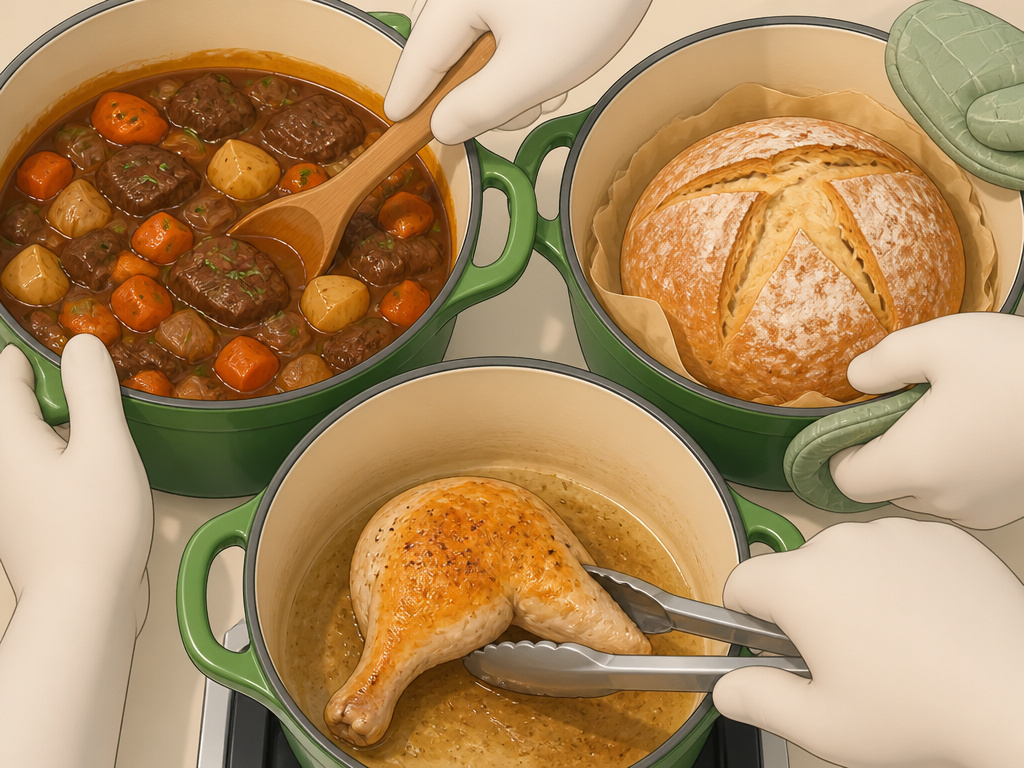 The list is short only if you lack imagination. The pot’s talents are braising, stewing, baking, frying, and simmering.
Braising and Stewing: This is the classic. Brown beef chuck, add aromatics and liquid, cover, and simmer low and slow. The tight lid and even heat make it foolproof.
Bread Baking: A preheated Dutch oven replicates a professional steam-injected oven. The lid traps the dough’s moisture for a explosive oven spring and crackly crust.
Deep Frying: The high walls and heat retention make it ideal for frying chicken or doughnuts. Use a thermometer and remember the enamel high-heat warning.
Soup and Rice: It’s an excellent, if heavy, soup pot. The even heat prevents scorching a roux or a rice pilaf.
The versatility of a Dutch oven is why many cooks treat it as a primary pot. You can start a pasta sauce on the stove and finish it in the oven if you’re multitasking. The difference from a standard pot is this dual-fuel capability and the mass that holds a steady temperature.
The 5 Non-Negotiable Care Rules
 Care is the tax you pay for using a tool that can last a century.
- Cool Before Cleaning. This is the enamel rule. A hot pot hit with cold water cracks. Let it cool to warm.
- Know Your Scrubbing Tool. For enamel, use nylon or a soft sponge. For seasoned iron, use a stiff brush or chainmail scrubber. Never use steel wool or abrasive pads on either.
- Dry It Completely. Seasoned iron rusts in minutes. Dry it on a warm burner, then apply a whisper-thin coat of oil. Enamel just needs a towel dry.
- Store Smart. Keep the lid ajar on seasoned iron to allow air circulation. You can store enameled pots with the lid on.
- Respect the Warranty. Brands like Le Creuset have lifetime warranties that do not cover thermal shock, impact damage, or misuse like using metal utensils. The MasterPro electric model has a 12-month guarantee that excludes damage from not following the manual.
Skip any of these, and you’re buying a new pot sooner than you planned.
Frequently Asked Questions
Is a Dutch oven just a slow cooker?
No. A Dutch oven and crock pot serve similar functions but work differently. A Dutch oven uses direct, active heat from a burner or oven for better browning and flavor development. A slow cooker uses low, indirect heat over a longer period with less evaporation, often resulting in a wetter final dish.
Can you use a Dutch oven on an induction cooktop?
Yes, if it’s magnetic. Enameled cast iron and bare cast iron work perfectly on induction. Check the manufacturer’s specs, but most major brands like Staub are induction-ready. The heavy base provides excellent stability.
What’s a good substitute for a Dutch oven?
Heavy Dutch oven substitute is a large, oven-safe heavy-bottomed pot with a tight-fitting lid. A cast iron skillet covered tightly with foil can work for braises in a pinch. The goal is to replicate the mass and sealed environment.
Why is my enameled Dutch oven staining?
Brown stains on light enamel are usually protein or mineral deposits from hard water. A paste of baking soda and water left overnight, then scrubbed gently, usually lifts them. Avoid bleach, which can damage the coating over time.
How do I re-season a cast iron Dutch oven?
Strip any rust with vinegar and steel wool (this is the only time abrasives are allowed). Rinse, dry thoroughly on a burner, then apply a thin layer of a high-smoke-point oil (like grapeseed) to the entire pot. Bake it upside-down in a 450°F oven for one hour. Let it cool in the oven.
Before You Go
A Dutch oven is a simple tool governed by simple, strict rules. Its value isn’t in its price tag but in its decades of service, if you follow the manual.
Choose enameled for easy care and no rust, but respect its thermal limits. Choose traditional cast iron for ultimate durability and high-heat searing, but commit to the seasoning ritual. Avoid the hybrid electric models unless you fully understand their stovetop limitation. For most home cooks, a 5.5-quart enameled Dutch oven from a reputable brand is the default pick. It covers the vast majority of recipes without the maintenance headache.
Now go preheat it properly, and never look at a stew the same way again.
