
What a Pre Seasoned Cast Iron Skillet Is & Why It Matters
This post contains affiliate links. As an Amazon Associate, we earn from qualifying purchases.
A pre-seasoned cast iron skillet is one that has been coated with a thin layer of oil and baked at high heat by the manufacturer before sale. This process, called polymerization, bonds the oil to the iron, creating a hard, protective base layer that prevents rust and provides a foundation for a natural non-stick surface. Brands like Lodge use soy-based oil, while Field Company uses organic grapeseed oil. This factory layer means the pan is ready for its first cook after a simple wash.
That factory-applied layer is not magic. It’s a starter coat, a foundation. Your job isn’t to build on a bare, rust-prone surface, but to nurture this initial layer into something durable and slick through cooking. The difference between a pre-seasoned skillet and a vintage heirloom is just a few dozen meals and the right maintenance habits.
What follows: a breakdown of what that factory oil actually is, the three things you must do before your first cook, the maintenance rule that contradicts old advice, and the one cleaning tool that makes all the difference.
Key Takeaways
- Factory pre-seasoning is a polymerized oil layer, not a wet coating; it bonds to the iron to prevent rust and give you a head start.
- You must wash a new pre-seasoned skillet with hot water and mild soap to remove factory dust and oils, then dry it thoroughly before using.
- The best maintenance is cooking, not frequent oven re-seasoning, which can create a brittle, flaky coating.
- A slightly textured surface, maintained with a chain mail scrubber, helps new seasoning layers adhere better than a perfectly smooth one.
- Pre-seasoned skillets from Lodge, Field Company, and Tramontina use different oils (soy-based or grapeseed), but all follow the same polymerization principle.
How Does Factory Pre-Seasoning Work?
The term “pre-seasoned” refers to a controlled industrial process. At the foundry, clean cast iron skillets are sprayed with a thin layer of specific oil and then baked in large ovens at temperatures exceeding 450°F. This heat triggers polymerization.
Polymerization is a chemical reaction where heat transforms liquid oil into a solid, plastic-like coating that bonds at a molecular level to the porous iron surface. This layer is what manufacturers refer to when they say the skillet is “ready to cook.”
This isn’t just oil wiped on the pan. As Field Company states, the pre-seasoning “is no longer oil but has been converted to a polymer (a hard seasoning layer) and bonded to the iron.” That bonded layer is inert, stable, and provides a protective barrier against moisture, which is why these skillets can be shipped without immediate rusting.
Different manufacturers use different oils based on cost, availability, and performance. Lodge uses a soy-based vegetable oil, while Field Company uses multiple coats of organic, cold-pressed grapeseed oil. Tramontina also uses soybean oil. The choice affects the initial layer’s characteristics slightly, but the end goal—a bonded polymer base—is the same.
This process gives you a crucial advantage: you start with a protected pan. You skip the initial, most vulnerable phase of seasoning a skillet where bare iron can flash-rust if not perfectly dried. Your foundation is already laid.
Your First 3 Steps with a New Pre-Seasoned Skillet
Your skillet is ready to cook, but it is not ready to cook straight from the box. There are three non-negotiable steps before you turn on the burner.
- Wash with warm water and mild soap. This removes any industrial dust, protective coatings, or oils used in shipping. The old myth that soap ruins seasoning is false for modern, gentle soaps and a polymerized layer. Tramontina explicitly advises a first wash with soap. Rinse thoroughly.
- Dry it completely—and then keep drying. This is the step that prevents rust. Water is the enemy. Towel-dry aggressively, then place the skillet on a low stovetop burner for 3-5 minutes until all residual moisture evaporates. You should feel no cool spots.
- Apply a microscopic layer of oil. While the pan is still warm (not hot), add a few drops of a neutral, high-smoke-point oil like canola or grapeseed. Wipe it over the entire surface, inside and out, with a paper towel. Then, take a clean towel and buff until it looks dry. This leaves a molecule-thin layer that will polymerize during your first cook, beginning to build your personal seasoned cast iron.
Common mistake: Skipping the initial wash or the heat-dry step. Factory dust can burn onto the surface, and hidden moisture in the iron’s pores will cause spotting rust within 24 hours, even if the surface looks dry.
After these steps, your skillet is truly ready. For your first few cooks, choose dishes that are kind to new seasoning: cornbread, sautéed vegetables, or pan-seared meats with a bit of fat. Avoid long-simmered acidic foods like tomato sauce for the first month.
Pre-Seasoned vs. Stripped & Re-Seasoned: A Performance Comparison
Is the factory layer as good as one you apply yourself? It depends on your goal. The factory coat is uniform, durable, and perfectly adequate. A home-applied seasoning, built over time, often becomes more personalized and slick, but it requires more initial work.
| Aspect | Factory Pre-Seasoning | Home-Applied Seasoning (on stripped iron) |
|---|---|---|
| Initial Rust Protection | Excellent; bonded polymer layer. | None until first coat is applied; iron is vulnerable. |
| Initial Non-Stick | Moderate; a good foundation but not fully non-stick. | Very low until multiple layers are built. |
| Uniformity | Highly uniform, machine-applied. | Can be uneven depending on technique. |
| Time Investment | Minutes (wash, dry, oil). | Hours (strip, multiple oven curing process cycles). |
| Long-Term Outcome | Becomes identical to home-seasoned with use. | Becomes identical to pre-seasoned with use. |
The table shows the real difference is in the starting line, not the finish line. A pre-seasoned skillet gets you cooking immediately. A stripped skillet requires you to cure cast iron from scratch, which is a project in itself. For 95% of cooks, the factory layer is the correct choice.
The best pre-seasoned cast iron skillets from reputable brands have this process down to a science, providing a consistent, reliable starting point.
The Right Way to Maintain the Factory Layer
 Maintenance is where most advice goes wrong. The goal is not to constantly add thick new layers, but to protect and gradually augment the base you have.
Cook, don’t just season. Every time you cook with fat, you are performing a mini-seasoning cycle. This builds thin, strong, interlocking layers. America’s Test Kitchen recommends using just ½ teaspoon of vegetable oil for a stovetop seasoning touch-up on a 12-inch skillet—a testament to how thin the layer should be.
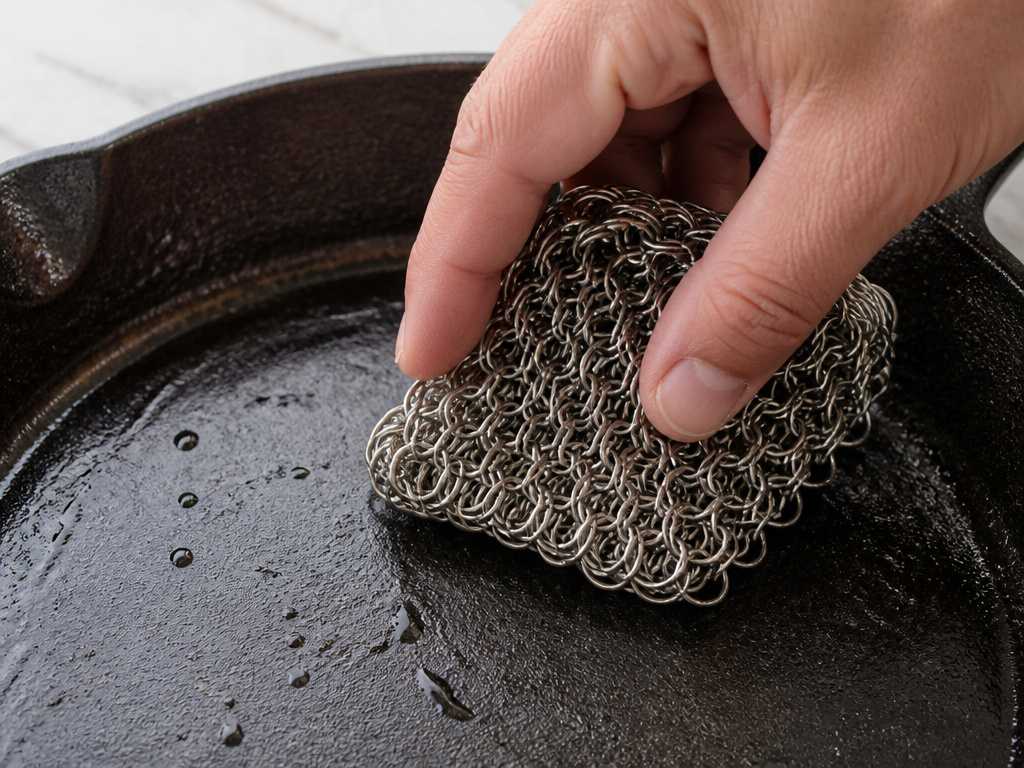
Clean correctly. Wash your skillet while it’s still warm with hot water. Use a stiff brush or, for stuck-on bits, a chain mail scrubber. Field Company advocates for chain mail because it scours off loose carbonized food without damaging good seasoning, leaving the microscopic texture new oil needs to grip. Dry immediately and completely on the stove, then apply that whisper-thin coat of oil before storage.
Re-season only when necessary. Do not make oven re-seasoning a monthly ritual.
Where this goes sideways: Frequent oven seasoning creates a thick, brittle layer that flakes off like old paint because it doesn’t bond well to the layers beneath. It’s a common cause of a sticky skillet.
Reserve the full oven curing process for rehab: if you encounter rust, strip the pan entirely, or buy a vintage piece. For daily skillet maintenance, the stovetop method is sufficient.
Common Pre-Seasoned Skillet Mistakes
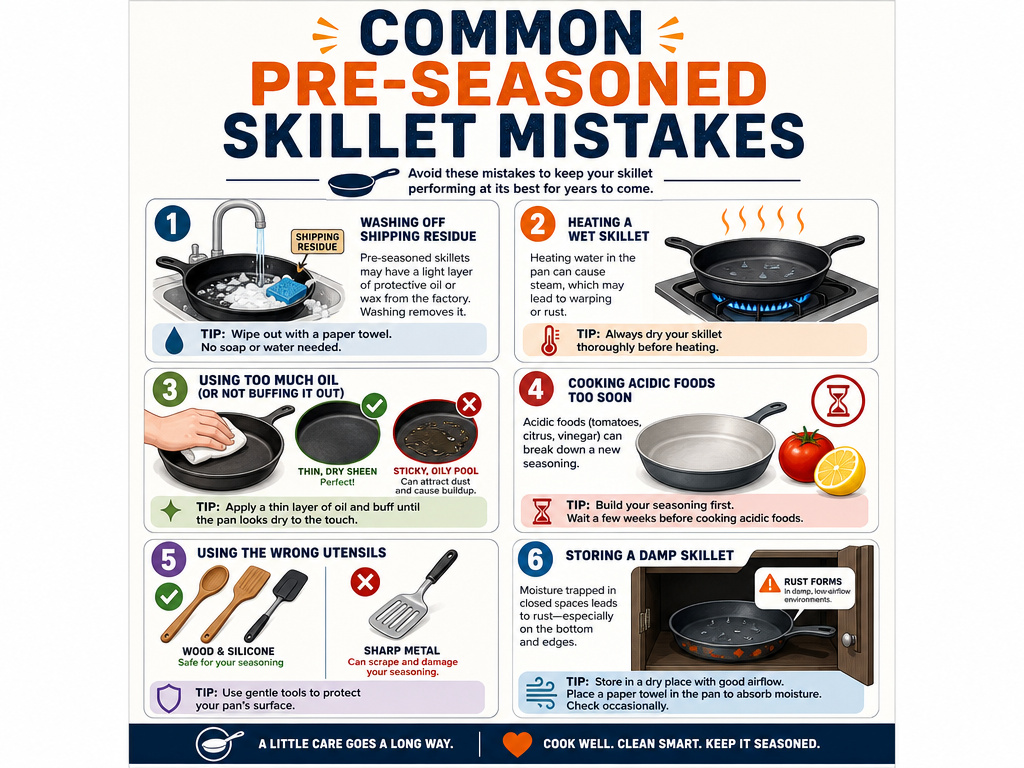 New owners often misinterpret the “ready to use” label. Here are the pitfalls that lead to rust, stickiness, and frustration.
- Not washing it first. You must remove shipping residues. Soap is fine.
- Air-drying or towel-drying only. Evaporating water leaves behind minerals and can hide moisture in pores. Heat is non-negotiable.
- Using too much oil for maintenance. A sticky pan is an oily pan. If your skillet feels tacky, you used too much oil and it didn’t polymerize. Buff it until it looks dry.
- Cooking acidic foods too soon. Tomatoes, wine, and vinegar can degrade the thin initial factory layer. Wait until your skillet has a darker, more established patina.
- Using the wrong tools. Metal utensils are fine on a well-bonded factory layer, but avoid sharp fish spatulas that can scrape. Start with wood or silicone.
- Storing it damp. This is the fastest route to rust. Never put a lid on a slightly damp skillet.
If you see orange spots, that’s rust. Don’t panic. Scrub the spot with vinegar and a scouring pad, rinse, dry, and apply a thin layer of seasoning oil. If food starts sticking persistently, your seasoning is thin. Cook a few batches of oily vegetables or give it a dedicated stovetop seasoning session.
What Oils Are Used and Does It Matter?
The factory oil is a practical choice, not a mystical one. Lodge and Tramontina use refined soybean oil. Field Company uses grapeseed oil. These are chosen for their high smoke points and reliable polymerization.
For your at-home maintenance, you can use any high-smoke-point oil: canola, vegetable, grapeseed, or even flaxseed (though it can be brittle). The best oil is one you have that fits this category. Avoid butter, olive oil, or animal fats for seasoning—they have low smoke points and can burn or go rancish.
Does the factory oil matter for allergies? Lodge addresses this: the soybean oil is refined at such high temperatures that allergenic proteins are destroyed. The polymer layer is chemically different from the original oil. For virtually all users, it poses no risk.
Frequently Asked Questions
Can I use soap on a pre-seasoned cast iron skillet?
Yes. Modern dish soap is mild and will not strip the polymerized seasoning layer. Manufacturers like Tramontina explicitly say you may use “mild, soapy water.” The old rule against soap applied to lye-based soaps, which haven’t been common for decades.
Do I need to season my pre-seasoned skillet in the oven before using it?
No. The whole point of pre-seasoning is that this step is done for you. Oven seasoning a new pan is redundant and, if done too often, can create a brittle top layer that flakes. Wash, dry, oil, and start cooking.
Why does my new pre-seasoned skillet have a spot that looks different?
This is often a hanging mark from the factory seasoning conveyor. As Lodge notes, it might look like a small bare or lighter spot, often on the rim or helper handle. It’s not rust, just an area where the oil didn’t carbonize as deeply. It will even out with use and poses no problem for cooking or the proper appearance of your skillet.
How long until my pre-seasoned skillet becomes non-stick?
It develops its natural non-stick properties gradually. You’ll notice improvement after a dozen cooks, but a truly robust, slick surface that can handle eggs without fuss often takes a few months of regular use. It gets better every time you cook.
Can I cook acidic foods in a pre-seasoned skillet?
Not immediately. Wait until the skillet has a darker, well-built patina from a month or so of cooking. Acidic ingredients like tomatoes or lemon juice can break down thin seasoning layers, potentially giving food a metallic taste and damaging the non-stick surface you’re building.
The Bottom Line
A pre-seasoned cast iron skillet is a modern convenience that removes the hardest part of cast iron ownership: the vulnerable start. That black finish is a baked-on polymer shield, a head start provided by the maker. Your job is not to redo their work but to advance it. Wash it, heat-dry it every single time, cook often with fat, and clean it with a chain mail scrubber. Avoid the oven for routine maintenance. In a few months, that factory layer will have transformed into your own legendary, slick cooking surface. The skillet you buy is just the iron. The skillet you use becomes the heirloom.
