
What Is a Pre-Seasoned Wok? The Essential Guide You Need
This post contains affiliate links. As an Amazon Associate, we earn from qualifying purchases.
A pre-seasoned wok is a carbon steel or cast iron wok that has received a high-temperature heat treatment at the factory, often leaving a blue or black oxide layer. This “bluing” prevents rust but is not a non-stick cooking surface. You must still apply a layer of polymerized oil, true seasoning, before your first stir-fry. Treating a pre-seasoned wok as ready-to-cook is the most common mistake new owners make.
That oxide layer is the whole point of the factory process, and misunderstanding it leads directly to a sticky, rust-prone pan. Manufacturers call it “pre-seasoned” because they’ve done the first, rust-proofing step. They leave the second, non-stick step for you.
What follows is the breakdown most product pages skip: the physical difference between bluing and seasoning, the single wash that can strip a wok bare, and the three cooking rules that build a real patina in weeks, not years.
Key Takeaways
- Factory “pre-seasoning” is usually a high-temperature bluing process that creates a protective iron oxide layer to prevent rust, it is not a non-stick, polymerized oil coating.
- You must still perform an oil-based seasoning on a pre-seasoned wok. The only exception is if the manufacturer explicitly states the wok is kiln-seasoned and ready for immediate cooking.
- Wash a new pre-seasoned wok once with hot, soapy water to remove protective shipping oils, then never use soap on it again if you want the patina to build.
- A sticky surface after home seasoning means you used too much oil. The fix is to scrub it off and start over with a thinner coat.
- The patina develops through cooking, not just seasoning. Cook fatty, salty foods frequently during the first few weeks to build the base layer quickly.
The Two-Step Reality of ‘Pre-Seasoned’
Most brands are not lying. They are using a technical definition that doesn’t match a home cook’s expectation. When you unpack a wok labeled “pre-seasoned,” you see a dark gray or blue-black surface. That color comes from a high-temperature treatment called bluing.
Bluing is a dry, oil-free heating process that oxidizes the steel’s surface, converting it to magnetite (Fe3O4). This blue-black iron oxide layer is hydrophobic and protects against red rust (Fe2O3), but it offers almost no non-stick properties for cooking.
This is the “pre” in pre-seasoned. It is step one of a two-step process. Step two is applying and polymerizing a thin layer of oil, which bonds to this blued surface to create the slick patina you actually cook on. A manufacturer like Yosukata states this directly: their woks are “already pre-seasoned but still need to be seasoned.” Confusing the two steps means your food will stick ferociously on that first cook.
| Step | Process | Result | Common Misconception |
|---|---|---|---|
| 1. Bluing (Factory “Pre-Season”) | Heating bare steel to 450–500°F+ in air, no oil. | Blue/black iron oxide layer (magnetite). Prevents rust. | Believed to be a “non-stick coating” ready for cooking. |
| 2. Oil Seasoning (Your Job) | Applying a thin fat layer heated past its smoke point. | Polymerized oil layer bonded to steel. Creates non-stick patina. | Thought to be optional or just for “maintenance.” |
The takeaway is mechanical. Bluing changes the steel’s chemistry to accept oil. Seasoning deposits a carbonized plastic-like layer on top of that receptive surface. Skipping step two is like priming a wall but never painting it.
What to Do With Your ‘Ready-to-Cook’ Wok
The label says “ready to use.” The box might even have a sticker on it. Ignore that for five minutes. Your first job is to remove any residual factory oils, which can smell and taste foul, and prepare the blued surface for its first real layer of cooking fat.
Here is the sequence that works, pulled from manufacturer advice and the repairs it prevents.
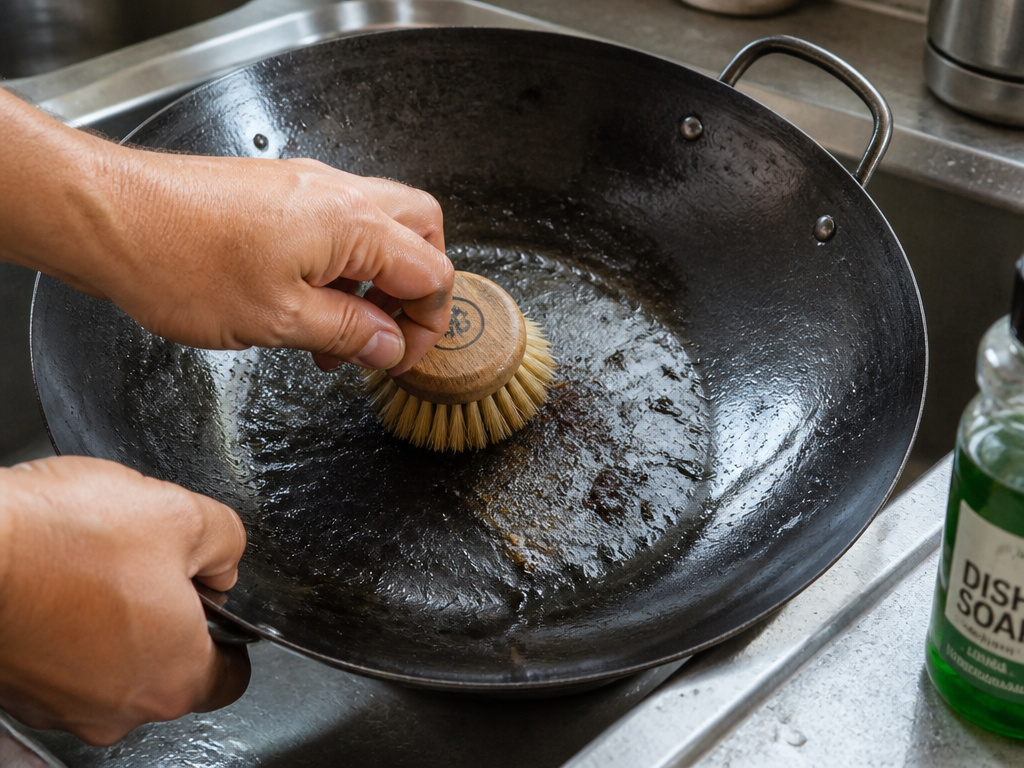
- Scrub with soap, once. Use hot, soapy water and a stiff brush or scrubber on the entire wok, inside and out. This strips the thin protective oil applied for shipping. Rinse thoroughly.
- Dry it completely, immediately. Bare, blued steel flash-rusts in minutes if left wet. Use a towel, then place it on a burner over low heat for 60 seconds to evaporate every trace of moisture.
- Apply the thinnest possible oil coat. Pour a teaspoon of high-smoke-point oil (canola, grapeseed, soybean) onto a folded paper towel. Wipe the entire interior. Then, take a clean paper towel and buff aggressively as if you’re trying to remove all the oil. The surface should look satin, not shiny.
- Heat until smoking. Place the wok over medium-high heat. Heat it until the oil just begins to smoke, then tilt and rotate so the smoke travels over the entire cooking surface. Kill the heat and let it cool completely.
Common mistake: Using too much oil during seasoning. A thick coat will polymerize into a sticky, tacky layer that attracts food and carbonized gunk. The wok should look and feel dry after you buff it.
That’s one layer. For a new wok, two or three layers create a stronger base. Just repeat steps 3 and 4, letting the wok cool between cycles. The color will darken slightly each time.
Bluing vs. Seasoning: Why the Distinction Matters
If you treat bluing as seasoning, you get two predictable failures. The first is immediate: food sticks to the bare oxide layer. The second takes longer: without the protective polymerized oil layer, the bluing can degrade, especially if you make the common error of washing with soap regularly.
- Bluing protects against rust. It’s a sacrificial layer. Acids, salts, and abrasion wear it down over time. A polymerized oil coating sits on top, taking the daily wear so the bluing beneath stays intact.
- Seasoning creates non-stick. The patina is a built-up composite of carbonized fats. It fills the microscopic pores of the blued steel, creating a smoother, hydrophobic surface that food releases from easily.
This is why the care instructions diverge after that first wash. To maintain the bluing, you must preserve the oil seasoning on top of it. This leads to the seemingly archaic rule: no soap. Modern dish soaps are mild, but they are still detergents designed to break down oils. Regular use will slowly degrade your patina, exposing the blued layer to moisture and acids, which leads to rust spots and stickiness.
The best tool for cleaning a seasoned wok is a bamboo brush and hot water. For stubborn bits, boil water in the wok and gently nudge them loose with a spatula. Dry it on the stove and apply a micro-thin coat of oil before storage. This routine maintains the oil layer that protects the factory bluing.
How to Build the Patina Fast (The Right Way)

A wok’s true non-stick character doesn’t come from the initial seasoning. It comes from cooking. The polymerization that happens when you sear pork belly or stir-fry garlic in oil deposits micro-layers that fill in the surface.
For the first two weeks, choose recipes that give the patina a fighting chance. Avoid long-simmered tomato sauces or wine-based deglazing. Instead, cook these:
- Stir-fries with marinated meats (the oil and protein help)
- Pan-fried dumplings or potstickers
- Deep-frying (like spring rolls or chicken)
- Cooking bacon or rendering fatty pork
After each cook, clean with the bamboo brush and hot water only. Dry thoroughly on the stove. While it’s still warm, wipe the interior with a drop of oil on a paper towel. This “post-cook seasoning” is what transforms a gray factory wok into a jet-black kitchen workhorse within months.
Where this goes sideways: Storing the wok while it’s even slightly damp. Trapped moisture between the oil layer and the steel creates orange rust spots within 48 hours. Always heat-dry.
Fixing Common Pre-Seasoned Wok Problems
You followed the steps and something still looks or feels wrong. Here are the likely causes and the physical fixes.
Problem: The surface is sticky or tacky.
Cause: Too much oil during the seasoning step. The excess couldn’t fully polymerize and left a semi-cured, resin-like layer.
Fix: Scrub the sticky area back to bare metal with a bit of soap and a stiff brush. Dry completely, then re-season using half the oil you used the first time.
Problem: Orange rust spots appear.
Cause: Incomplete drying after washing or cooking. Moisture penetrated a thin spot in the seasoning and oxidized the iron beneath.
Fix: Use steel wool or a scrub brush to remove all rust until you see bare metal again. Dry the wok, then apply 1–2 layers of seasoning specifically over the repaired area.
Problem: Food still sticks after seasoning.
Cause 1: The wok wasn’t hot enough before adding food. A properly preheated wok causes water droplets to skitter across the surface.
Cause 2: The seasoning layer is still too thin and young. It needs more cooking cycles.
Fix: Always preheat your wok over medium-high heat for 2–3 minutes before adding oil. Then, commit to cooking those initial fatty foods to build the base.
Pre-Seasoned vs. Bare Wok: Which Should You Buy?
This choice often comes down to your confidence level and the specific brand. A pre-seasoned wok from a quality maker like Yosukata or Misen guarantees the bluing step was done correctly with controlled heat, reducing the risk of warping. Their 1.5mm to 2mm steel is also less likely to warp than a cheap, thin wok you might blue yourself on a home burner.
A bare carbon steel wok is often cheaper. It requires you to perform both the bluing and oil seasoning yourself. This isn’t difficult, but it involves heating a dry wok until it turns through a spectrum of colors (straw, blue, purple, gray), which can be smoky and requires good ventilation.
For most home cooks, a pre-seasoned carbon steel wok is the better starting point. The factory has handled the tricky bluing step, providing a stable, rust-resistant base. Your job is simplified to applying the oil seasoning and then cooking. It removes one variable from the process.
Frequently Asked Questions
Is a pre-seasoned wok really non-stick?
No, not initially. The factory “pre-seasoning” (bluing) provides zero non-stick properties. It only becomes non-stick after you apply a polymerized oil coating and then build up a patina through cooking. The “pre-seasoned” label refers to rust prevention, not cooking performance.
Do I need to wash a new pre-seasoned wok?
Yes, exactly once. Wash it with hot, soapy water to remove the protective shipping oils that can smell and affect flavor. Dry it immediately and thoroughly. After this initial wash, avoid soap to preserve the seasoning you will build.
Can I use soap on my seasoned wok?
It’s not recommended for regular cleaning. While modern dish soaps are mild, they are designed to break down oils and will gradually degrade your hard-earned patina. For daily cleaning, use a bamboo brush and hot water only. Reserve soap for stripping a sticky seasoning job or removing major carbon buildup.
Why did my pre-seasoned wok rust?
Rust means water contacted the bare steel. The most common causes are: not drying the wok completely after washing (always heat-dry on the stove), storing it in a humid place, or damaging the seasoning layer with acidic foods or abrasive scrubbing, which exposed the blued layer underneath to moisture.
How long does it take to build a good patina?
You can get a serviceable, semi-non-stick surface after 2–3 good seasoning layers and a week of frequent cooking. A deep, black, resilient patina like those seen in professional kitchens takes 6–12 months of regular use. The patina never stops evolving and improving.
The Bottom Line
A pre-seasoned wok is a head start, not a finished product. The factory’s bluing process gives you a rust-proof canvas. Your job is to paint it with polymerized oil through careful seasoning and, more importantly, through cooking. Skip that second step and you’ll fight sticking and rust indefinitely.
Start by washing off the shipping oils. Season it with a coat of oil so thin it looks dry. Then, cook often, especially fatty foods, and clean it gently without soap. Dry it with heat every single time. That sequence turns the manufacturer’s promise into a pan that lasts a lifetime.
