
How to Set High Pressure on Your Power Pressure Cooker XL
This post contains affiliate links. As an Amazon Associate, we earn from qualifying purchases.
The high-pressure setting on a Power Pressure Cooker XL is the “Canning” button, which locks the pressure at 80 kilopascals (kPa). That’s equivalent to 11.6 pounds per square inch (PSI). This setting is designed for safe food preservation and is the unit’s maximum operating pressure for processing.
The manual’s spec sheet is clear: this 80 kPa ceiling is the line between normal operation and the safety shutdown. It’s also the altitude line, the setting is certified for safe canning only up to 2,000 feet above sea level. Go higher, and the physics of boiling water change enough that 80 kPa may not destroy botulism spores.
What follows is the breakdown of that 80 kPa setting: why it’s the high mark, how to use it correctly, and the specific models (PPC770, PPC772, PPC780, PPC790) that share this limit.
Key Takeaways
- The “Canning” button is the dedicated high-pressure setting, locking the cooker at 80 kPa (11.6 PSI).
- This pressure is sufficient for safe food preservation only at altitudes up to 2,000 feet. Above that, you need to adjust processing times or use a different method.
- The unit can take up to 17 minutes to reach this full pressure before the cook timer starts.
- Never fill the inner pot past the MAX line, and always ensure the rubber gasket is clean and seated for a proper seal.
- The Power Pressure Cooker XL has a safety working pressure range of 80-90 kPa where safety mechanisms engage to prevent over-pressurization.
The High-Pressure Setting: Canning Mode at 80 kPa
Forget adjustable dials. On a Power Pressure Cooker XL, high pressure is a single, fixed program.
Pressing the “Canning” button on the digital control panel sets the appliance to its maximum working pressure of 80 kilopascals. Every relevant model manual, for the PPC770, PPC772, PPC780, and PPC790, lists this same specification in its unit specs table. This translates to 11.6 pounds per square inch, which is the standard pressure required to safely process low-acid foods like vegetables, meats, and fish for home canning.
The “CANNING” button sets the pressure. A kPa setting of 80 is equal to 11.6 lb. PSI. At up to 2,000 ft. Above sea level, the Power Pressure Cooker XL with a kPa 80 setting will produce sufficient pressure and heat to safely process all foods for canning. . Power Pressure Cooker XL Manual
This is the core of what a pressure cooker is, a sealed vessel that raises the boiling point of water. At 80 kPa, the temperature inside reaches approximately 115-116°C (239-241°F), hot enough to destroy harmful microorganisms like Clostridium botulinum.
Understanding the Pressure Ranges: Working vs. Safety
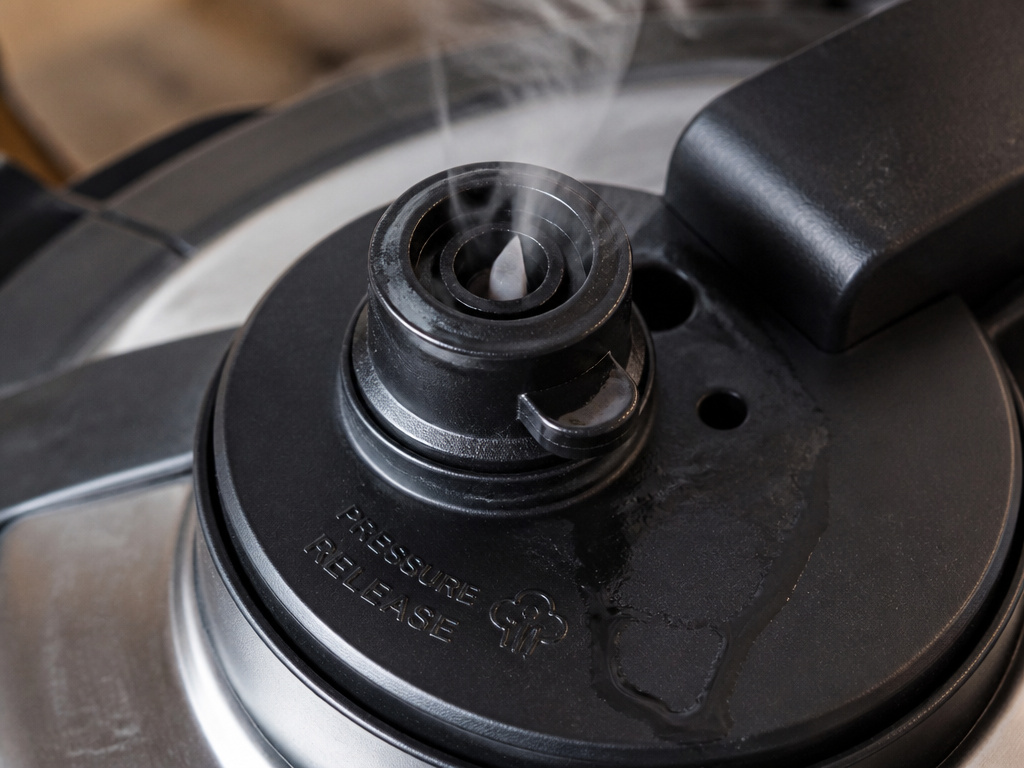
The 80 kPa mark is a boundary between two defined operating zones. Knowing both is critical for safe use.
| Pressure Range | kPa | Status | What It Means |
|---|---|---|---|
| Working Pressure | 0–80 kPa | Normal Operation | The cooker builds and maintains pressure for cooking. The “Canning” mode operates at the top of this range. |
| Safety Working Pressure | 80–90 kPa | Safety Buffer | If pressure exceeds 80 kPa, built-in safety devices (like the backup pressure release) engage to prevent the pot from reaching dangerous levels. |
| Over-Pressure | Above 90 kPa | Failure Point | The primary and secondary safety systems have failed. This should never happen with proper use and maintenance. |
The working pressure is where all your cooking happens. The safety working pressure is the unit’s emergency buffer. It’s why you must keep the pressure release valve and steam vent clean, a single grain of rice lodged in there can block the primary safety vent and force the cooker into its backup range prematurely.
This safety design is a key part of how a pressure cooker works, relying on redundant mechanisms to manage steam.
Where this goes sideways: A dirty or damaged rubber gasket. If the seal is compromised, the cooker will struggle to reach 80 kPa. It will leak steam continuously, the preheat phase will stretch past 20 minutes, and your food won’t process correctly. You’ll hear the hiss and see moisture around the lid.
How to Use the High-Pressure Canning Setting
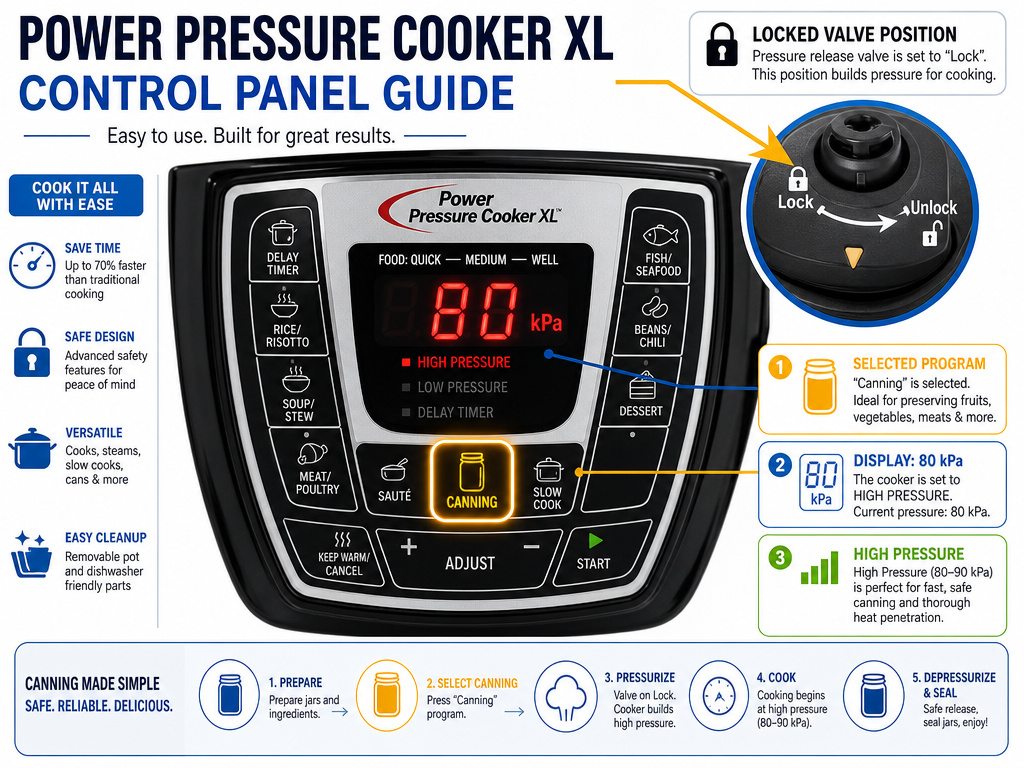
Using the Canning program is straightforward, but each step has a consequence if rushed. This isn’t a mode for improvisation.
-
Prepare the Cooker. Wash the inner pot, lid, and rubber gasket with warm, soapy water before first use. A proper seal is non-negotiable. For canning, place the three-layer rack in the bottom of the pot. This keeps jars off the direct heat.
-
Add Liquid. This is the fundamental water requirement for any pressure cooking. For canning, add the water specified in your tested recipe, usually 2 to 3 cups. Never fill the inner pot above the MAX line, and ensure no food residue blocks the steam vent or pressure release valve.
-
Load Jars and Secure Lid. Place filled, hot jars on the rack. Secure the lid by aligning the arrow on the lid with the unlock symbol on the base and turning the handle clockwise until it clicks. Rotate the pressure release valve to the Lock position.
-
Select ‘Canning’ and Wait. Press the “Canning” button. The display will show a default time and a rotating animation, indicating it’s building pressure. This phase can take up to 17 minutes. The cook timer will not start counting down until full 80 kPa pressure is reached inside.
-
Process and Release. Once the timer counts down to zero, the cooker will beep. You must now release the pressure. For canning, always use the natural release method, turn the cooker off and let the pressure drop on its own for at least 10 minutes, or until the float valve drops. Then, carefully rotate the pressure release valve to Vent. Never force the lid open while the float valve is up.
The long preheat is normal. It’s the time needed to boil the water, drive out all the air, and build a pure steam environment at 80 kPa. Impatience here leads to under-processed food.
The Critical Altitude Limit for Canning
The 80 kPa setting has a geographic asterisk. The manufacturer explicitly states it is sufficient for safe canning only up to 2,000 feet above sea level.
This is a safety limit based on food science. As altitude increases, atmospheric pressure decreases, and water boils at a lower temperature.At 80 kPa, the temperature inside the cooker is already fixed. If you’re at 5,000 feet, the relative pressure inside the pot compared to the outside atmosphere is lower, which can mean the effective processing temperature is no longer lethal to pathogens.
If you live above 2,000 feet, you cannot rely on the Power Pressure Cooker XL’s built-in Canning program alone for safe preservation. You must consult altitude-adjusted canning guides from authorities like the National Center for Home Food Preservation and increase processing times accordingly. For some, a dedicated, adjustable stovetop canner is the simpler choice.
Model-by-Model Specifications
While the high-pressure setting is consistent, the models differ in power and capacity. These specs explain why a larger model might reach pressure slightly faster.
| Model Number | Capacity | Rated Power | Working Pressure | Safety Working Pressure |
|---|---|---|---|---|
| PPC770 | 6 QT | 1000W | 0-80 kPa | 80-90 kPa |
| PPC772 | 8 QT | 1300W | 0-80 kPa | 80-90 kPa |
| PPC780 | 8 QT | 1300W | 0-80 kPa | 80-90 kPa |
| PPC790 | 10 QT | 1400W | 0-80 kPa | 80-90 kPa |
The higher-wattage elements in the 8QT and 10QT models (1300W and 1400W) can bring water to a boil faster than the 6QT’s 1000W element. However, all models must still complete the same process of air removal and steam buildup, so the total preheat time difference is often just a minute or two.
These are all electric pressure cookers, a category that includes popular brands like the Instant Pot. The main difference between Instant Pot and pressure cooker models like these is often the interface and number of smart programs, but the core high-pressure physics are identical.
Safety Precautions and Maintenance
High-pressure cooking is safe when you respect the machine’s limits and keep it clean. One missed step can turn the safety buffer into your normal operating zone.
- Never Force the Lid. If the lid won’t open, pressure is still inside. Forcing it can cause a steam explosion. Use the natural release method and wait for the float valve to drop completely.
- Clean After Every Use. This includes the rubber gasket, the pressure release valve, and the steam vent. The manual warns that a tiny piece of food debris can clog these safety devices. A clogged valve is what pushes the cooker into its 80-90 kPa safety range.
- Inspect the Gasket. Look for cracks, tears, or a permanent set that prevents a tight seal. A worn gasket will cause constant steam release during the pressurizing phase, meaning it never reaches 80 kPa.
- Use Adequate Liquid. Without sufficient water, the cooker cannot generate the steam needed to build pressure. The heating element will cycle on high, potentially burning food onto the bottom of the pot without ever engaging the pressure system.
Before you start: The lid and steam are hot enough to cause severe burns. Always open the lid away from your face and body. Use tongs to move the pressure release valve. Ensure the condensation collector is empty and properly attached to catch overflow.
These precautions are the same safety mechanisms you’d follow for any modern electric pressure cooker. The goal is to keep the operation within the 0-80 kPa working range, where the built-in controls are designed to manage everything.
Troubleshooting Common High-Pressure Issues
Sometimes the cooker doesn’t behave as expected. Here’s how to diagnose problems related to reaching or maintaining the 80 kPa high-pressure setting.
| Symptom | Likely Cause | Immediate Fix |
|---|---|---|
| Cooker never seals; steam leaks constantly from lid. | Damaged or misaligned rubber gasket; food debris on rim. | Replace gasket or clean sealing surfaces. Ensure lid is locked fully. |
| Float valve never rises; cooker doesn’t pressurize. | Insufficient liquid; release valve is in “Vent” position. | Add at least 1 cup of liquid. Turn release valve to “Lock”. |
| Pre-heat phase exceeds 20 minutes. | Overfilled pot; cold ingredients; low wattage outlet. | Don’t exceed MAX line. Use hot liquid. Plug directly into wall outlet. |
| Steam shoots from pressure release valve during cooking. | Overfilled pot; starchy foods foaming. | Use less liquid. Use natural release for foamy foods. |
| Error code or beeping after start. | Overheating sensor; defective lid sensor. | Unplug, let cool completely. Check lid is seated correctly. |
Many issues trace back to seal integrity or the venting process. A small, steady stream of steam during the initial 2-3 minutes of heating is normal as air is purged. Continuous, forceful venting after that means the seal has failed.
If you consistently have problems reaching pressure, the unit may be failing. When shopping for a replacement, consult reviews for best electric pressure cookers or specific Instant Pot models to compare reliability and features.
Frequently Asked Questions
Can I use the “Pressure Adjust” button for high pressure?
No. The Pressure Adjust button on models that have it typically allows you to lower the pressure for specific cooking modes (like “Steam” or “Soup”), but it cannot increase the pressure above the preset maximum for each program. The “Canning” program is locked at 80 kPa.
What’s the difference between “Quick Release” and “Natural Release”?
Quick release vs natural release is about timing and food texture. Quick release manually vents steam immediately, stopping cooking fast. Natural release lets pressure drop on its own over 10-30 minutes. For canning and foods that foam (like beans, grains, or soups), you must use natural release to avoid clogging the valve with food particles.
Is 80 kPa high enough for all pressure canning?
It is high enough for the recipes and jar sizes approved for electric pressure cookers, but only at altitudes up to 2,000 feet. Above that, the effective processing temperature decreases. You must follow altitude-adjusted processing times, which often means longer cook times, not higher pressure.
My Power Pressure Cooker XL is beeping and won’t start. What’s wrong?
The most common cause is an improperly seated lid. Unplug the cooker, ensure the rim and gasket are clean, and re-lock the lid firmly until it clicks. Also check that the float valve is not stuck in the up position from a previous use.
Can I cook regular meals on the “Canning” setting?
You can, but it’s overkill. The 80 kPa setting cooks food very quickly and can turn delicate ingredients to mush. Use the dedicated “Poultry,” “Meat/Stew,” or “Manual” settings for everyday cooking, which operate at lower pressures (typically 40-70 kPa) for more controlled results.
The Bottom Line
The high-pressure question for a Power Pressure Cooker XL has a single, numerical answer: 80 kPa, engaged by the “Canning” button. That setting is a tool for a specific job, safe food preservation within a strict altitude window. Respect the 17-minute preheat, the 2,000-foot limit, and the absolute need for a clean seal. Keep the machine clean, especially the small safety ports, and it will hold that 80 kPa line reliably. For everything else, from pot roast to beans, the other programs offer more flexibility at lower pressures.
