
How a Perfectly Seasoned Blackstone Griddle Should Look
This post contains affiliate links. As an Amazon Associate, we earn from qualifying purchases.
A properly seasoned Blackstone griddle should have a black, shiny, and even surface. The color is a deep, matte-to-semi-gloss black, not brown or patchy. This black layer is a polymerized oil coating that feels smooth to the touch and creates a permanent non-stick barrier. The official Blackstone manual for the 36″ Model #1554 states it directly: “A black, shiny griddle is a well-seasoned griddle.”
That black finish is the end goal, but the journey there has specific visual checkpoints. The initial seasoning process transforms the raw steel through heat and oil. You start with a bare metal surface, watch it change color as it heats, and apply thin layers until the smoking stops. The final look is the proof of a chemical bond, not just a coat of grease.
What follows is a breakdown of the three visual cues that signal a successful seasoning job, the common variations you’ll see (and which ones are okay), and the exact steps to fix a surface that looks dull, sticky, or rusty. By the end, you’ll be able to look at any griddle top and know if it’s ready to cook or needs another round.
Key Takeaways
- A fully seasoned surface is black and shiny, not brown or sticky. The black color comes from polymerized oil bonded to the steel.
- Edges and corners often stay lighter after initial seasoning. This is normal, they receive less direct heat and will darken with regular cooking and maintenance oiling.
- A sticky or tacky feel means too much oil was used. The fix is to heat the griddle on high for 10-15 minutes, scrape off the gummy residue, and re-season with a very thin layer.
- Coastal or humid climates demand more frequent seasoning. The manuals note these conditions may require heavier oils and more coats to prevent surface rust.
- Seasoning is continuous. The Blackstone 28″ Model #1517 manual says it clearly: “Season is a continuous process. Over time and the more often you season your griddle top, the more shiny, black and non-stick it will become.”
The 3 Visual Signs of a Perfectly Seasoned Blackstone
You are looking for a specific combination of color, sheen, and texture. Missing one usually points to a problem in the seasoning process.
A well-seasoned Blackstone griddle has a uniform, deep black color with a satin or semi-gloss shine. The surface should feel smooth and dry to the touch, not oily or tacky. This polymerized layer, created by heating oil past its smoke point, is chemically bonded to the metal and provides rust protection and non-stick performance.
1. The Color: Deep, Consistent Black
The primary visual indicator is color. Raw carbon steel is a light, silvery gray. After the first round of seasoning, it will turn a golden or light brown. This is the first polymerization stage. After three to four rounds, as specified in the Model #1517 manual, that brown should deepen into a consistent black.
This isn’t a painted-on black. It’s a built-up layer of carbon from the oil bonding to the metal. If your surface is still streaky brown or has light patches, the seasoning is incomplete. The center of the griddle, directly over the burners, will always darken first. The outer edges lag behind, this is normal and not a defect.
2. The Sheen: Shiny, Not Glossy
A properly bonded seasoning has a characteristic shine. It’s not a wet, glossy look like a coat of fresh oil. It’s a drier, satin-like sheen that reflects light evenly. This shine is the polymer layer itself. If the surface looks dull, dry, or chalky, it often means the seasoning was burned off by excessive heat. The manual for Model #1554 mentions this: “areas on the cooking surface that have a dull and dry look” indicate overheating, requiring re-greasing and heating.
A sticky sheen is the opposite problem. It signals uncured oil sitting on top of the polymer. This happens when you apply too much oil during the seasoning steps. The oil can’t fully polymerize and turns into a gummy residue.
3. The Texture: Smooth and Dry
Run your fingers over a cool, seasoned griddle. The ideal texture is smooth, almost like glass. You should not feel any grit, raised spots, or tackiness. A dry feel confirms the oil has fully cured. Any tackiness means the layer is too thick and didn’t fully polymerize. This sticky film will collect food debris and smoke during your next cook.
| Visual Cue | What It Should Be | What It Often Means If Wrong |
|---|---|---|
| Color | Uniform black | Patchy brown = incomplete seasoning. Blotchy = uneven oil application. |
| Sheen | Satin shine | Dull/dry = burned-off seasoning. Glossy/sticky = too much oil. |
| Texture | Smooth & dry | Gritty = old food/debris. Tacky = uncured oil. |
What If Your Griddle Looks Different? (A Visual Troubleshooting Guide)
Not every seasoning job turns out picture-perfect on the first try. Here are the most common variations and your repair plan for each.
The Surface is Sticky or Gummy
This is the number one issue after initial seasoning. You followed the steps, but the griddle feels tacky and looks blotchy brown instead of black.
Cause: You used too much oil. The Blackstone manuals are explicit: use a “very thin, even coating.” A thick layer can’t fully polymerize before it starts to cook into a gummy, partially cured mess. This is why your griddle gets sticky.
Fix: Don’t panic. The Model #2309 manual has the solution: “If there is a brownish residue or too much oil was used, turn the griddle on high for 10-15 minutes, scrape off thickened/partially cooked oil, and re-season with a very thin layer of oil.” Heat it, scrape it clean with your metal spatula, let it cool, and start a fresh, thin coat. This time, pretend you’re trying to wipe all the oil off, the residue is enough.
The Edges and Corners Are Still Light
Your griddle center is a beautiful black, but the outer three inches are still a golden brown. Is it ruined?
Cause: This is completely normal. The edges and corners receive less direct, concentrated heat from the burners. The Model #1517 manual addresses this directly: “The corners and edges may not darken as much due to less direct heat.”
Fix: No fix is needed. This is not a failure. As you use the griddle, applying a thin layer of maintenance oil after each clean-up will gradually darken these areas. The seasoning will even out over multiple cooks. It’s a feature of the heating pattern, not your technique.
Where this goes sideways: Assuming light edges mean a bad seasoning job and sanding the whole surface down. You’ll strip the perfectly good center seasoning and have to start completely over.
The Surface Has Rust Spots
You see orange or reddish-brown speckles, often after storage or a rain shower.
Cause: Moisture contacted the bare steel. This happens if the griddle was put away damp or if the seasoning layer was thin or compromised. The importance of seasoning a griddle is primarily rust prevention.
Fix: Scour the rust off immediately. The Model #1554 manual says to use “steel wool or sandpaper.” For light surface rust, a Blackstone pumice stone or even a scrubbing pad works. You must remove all rust until you see bare metal again. Then, dry the area thoroughly and re-season that spot with at least two full coats, feathering the oil into the surrounding seasoned area.
The Color is Dull and Dry
The griddle looks matte black but has no sheen. It might feel almost chalky.
Cause: This is usually from overheating, leaving the griddle on high with no food or oil on it. Extreme heat can break down the polymer layer, leaving a dry, carbonized surface that has lost its bonded oils.
Fix: The manual’s advice is simple: “simply grease and reheat the griddle.” Apply a very thin coat of your best seasoning oil, heat it until it just starts to smoke, then let it cool. This re-hydrates and repairs the damaged polymer. One or two rounds should restore the sheen.
The Ongoing Process: How Your Griddle’s Look Evolves
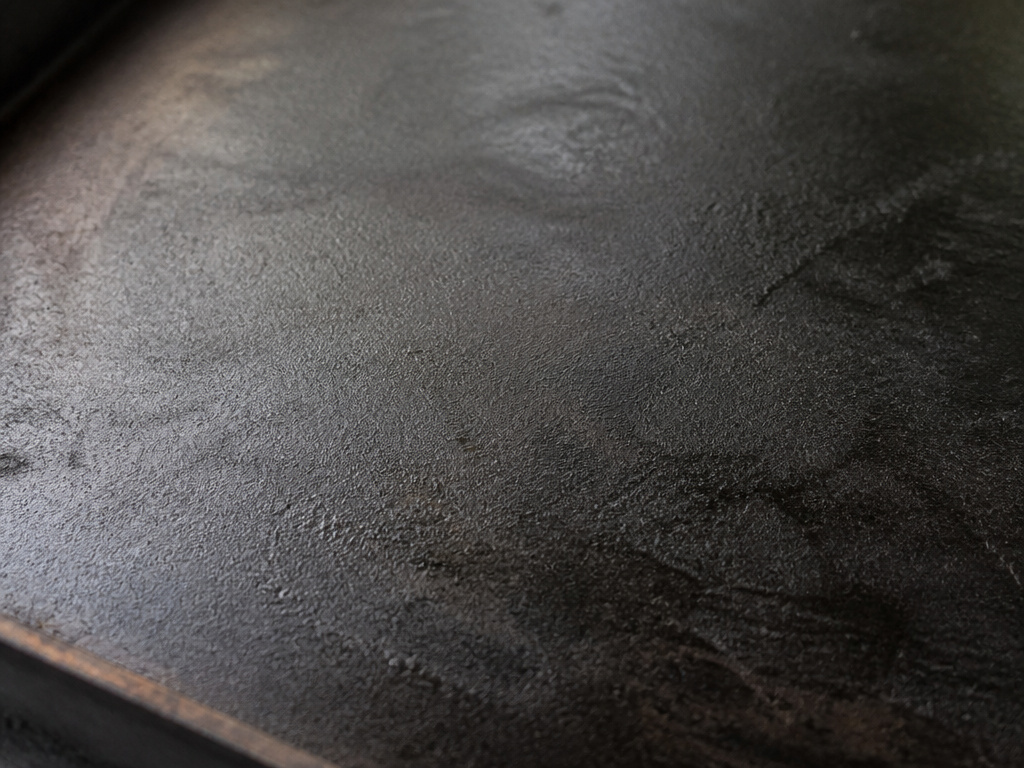
That initial jet-black finish is just the beginning. A griddle’s appearance changes with use, and that’s a sign of health, not decay.
From “New Black” to “Cooking Black”
After your first successful burger cook, the surface won’t look factory-fresh. It will have slight grease patterns, maybe a faint discoloration from tomatoes or onions. This is the “cooking black” patina. It’s a richer, more varied black than the initial uniform coat. This patina is where the real non-stick magic lives. Each time you cook with fats and apply a thin post-cook seasoning, you’re adding micro-layers to that polymer base.
The manual’s statement that “seasoning takes time and repeated use” means the visual perfection of your grandmother’s cast iron comes from years of this cycle, not one afternoon of work.
Climate’s Visible Impact
Your location writes itself onto the griddle’s surface. The manuals single out “humid or coastal climates” as needing special attention. In these areas, the seasoning layer fights a constant battle against moisture in the air. The visual result can be a quicker loss of sheen or more frequent tiny rust specks along the very edges.
The fix is proactive: use a heavier, more stable oil like flaxseed or coconut oil for your maintenance coats, and season it slightly more often. The visual cue to re-season isn’t just rust, it’s when the surface starts to look thirsty and dull.
Choosing Your Oil: How It Affects the Final Look
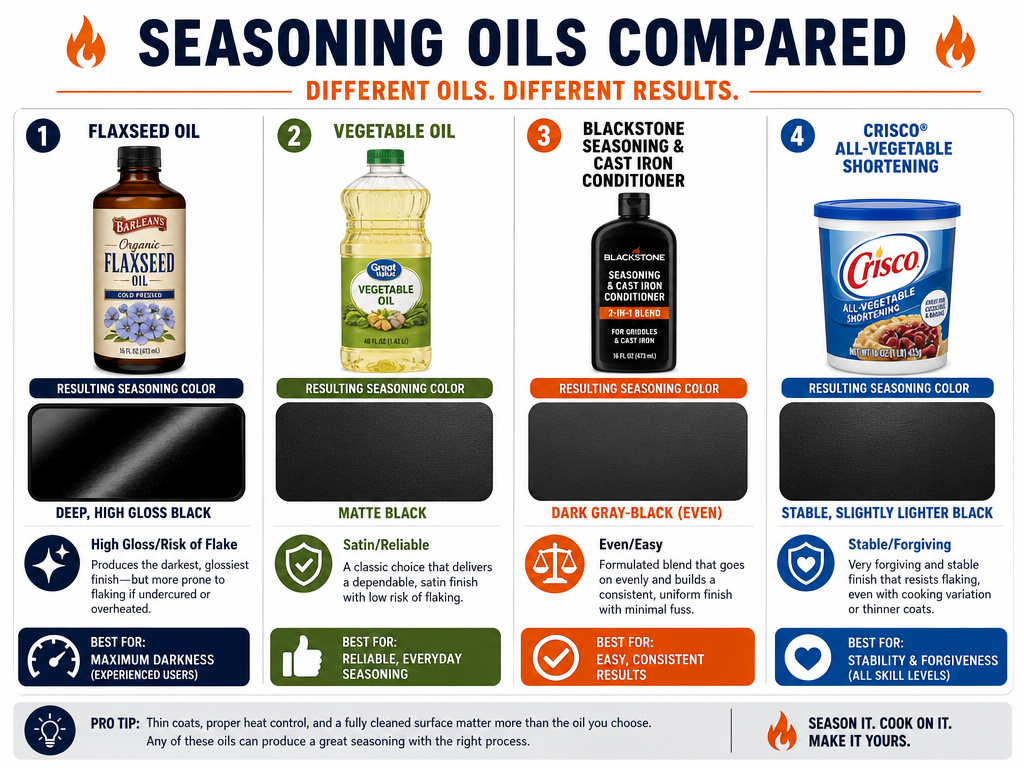
The oil you pick influences the color, durability, and sheen of your seasoning. All oils polymerize, but they do it at different speeds and with different visual results.
- Flaxseed Oil: Creates a hard, durable layer that tends to be a very dark black with a strong shine. It’s also prone to flaking if applied too thickly. It’s a high-reward, high-risk choice for the visual perfectionist.
- Vegetable/Canola Oil: The standard. It produces a reliable black patina with a good satin shine. It’s forgiving and easy to find, making it the default for most owners.
- Blackstone Griddle Seasoning & Cast Iron Conditioner: This proprietary blend is formulated for the job. The company says it provides “superior protection” between uses. In practice, it tends to build a consistent, even black coat without stickiness. It’s designed to enhance the benefits of seasoning with less guesswork.
- Crisco (Shortening): The Model #1554 manual explicitly recommends shortening like Crisco for initial seasoning. It creates a very even, slightly lighter black layer that is exceptionally stable and non-stick. It’s a classic for a reason. You can absolutely season a griddle with Crisco for a fantastic result.
| Oil Type | Best For | Visual Result | Risk If Too Thick |
|---|---|---|---|
| Flaxseed | Durable, dark finish | Very dark black, high gloss | Flaking, brittle layer |
| Vegetable | Everyday ease | Reliable black, satin shine | Can turn gummy if over-applied |
| Blackstone Blend | Simplified maintenance | Consistent even black | Less risk; designed for thin application |
| Crisco | Initial seasoning | Even, stable black layer | Minimal; very forgiving |
Your oil for seasoning choice matters, but technique matters more. A thin coat of vegetable oil beats a thick coat of the most expensive flax oil every time.
Frequently Asked Questions
Why is my seasoned griddle not black?
If your griddle is brown or bronze after following the steps, you likely didn’t apply enough heat cycles. The manual specifies 3-4 rounds of oiling and heating until the smoke stops. Each cycle darkens the layer. Brown means the polymerization process hasn’t completed. Do two more rounds with a paper-thin layer of oil.
Is it okay if my griddle looks splotchy?
Slight splotchiness is normal, especially early on. Dramatic splotches, think dark black next to light silver, usually mean uneven oil application. You missed a spot. Next time, use a cloth or paper towel to spread the oil meticulously. For existing splotches, just focus extra seasoning cycles on the lighter areas.
How do I know if the black color is seasoning or burnt food?
Seasoning is bonded to the metal. Burnt food sits on top. Scrape the surface firmly with your metal spatula. A seasoned layer will feel smooth and uniform under the blade; you won’t dislodge flakes. Burnt carbon will scrape off as black dust or flakes. If it’s burnt food, clean it off with hot water and a scraper, then apply a thin coat of oil.
Can a griddle be too black?
No. The black color is the polymer layer itself. A darker black typically indicates a thicker, more robust layer of protection. The only “too black” scenario is if the black is actually thick, flaky carbon buildup from not cleaning off food debris. That feels crusty, not smooth. A proper seasoning black is part of the metal.
Before You Go
A Blackstone griddle’s appearance tells its story. A uniform black shine means you’ve built a durable, non-stick polymer shield. Sticky brown patches call for a heat-and-scrape reset. Light edges just ask for patience and a little extra oil during your next cook.
Remember the core visual check: black, shiny, smooth. That’s the trifecta. Don’t chase instant perfection. The manual’s own advice is your guide, seasoning is a continuous process that improves with time and use. Your first perfect smash burger will taste just as good on a griddle that’s 90% black as it will on one that’s 100%. Keep the layers thin, the heat consistent, and the oil handy. The mirror finish will come.
