
Why Does My Wok Rust? The Main Cause & How to Prevent It Now
This post contains affiliate links. As an Amazon Associate, we earn from qualifying purchases.
Your wok rusts because its iron-containing material, carbon steel or cast iron, oxidizes when exposed to moisture. The trigger isn’t always a sloppy wash; it’s often an invisible film of condensation from other pans, a humid storage spot, or air-drying instead of heat-drying. A manufacturer’s 10-year warranty on carbon steel versus a 2-year warranty on non-stick carbon steel tells you which material is built to last.
That warranty difference is a durability map. Carbon steel, when cared for, is nearly indestructible.But its care hinges on one non-negotiable rule: moisture control. Most guides tell you to dry your wok. They don’t tell you that drying it on a rack isn’t enough if your kitchen air holds humidity, or that a brand-new wok can flash-rust overnight from the steam of a drying pot next to it.
What follows is the breakdown most articles skip: the three specific moisture sources that cause rust, the physical reason each one wins, and the exact sequence to not only fix a rusty wok but build a seasoning layer that actively shields the metal. This is maintenance, not mystery.
Key Takeaways
- Rust forms when water molecules meet bare iron in carbon steel or cast iron, triggering oxidation. A thin film of condensation from other dishes is the most common overlooked source.
- Always heat-dry your wok on the stove after washing. Towel-drying leaves microscopic moisture that oxidizes overnight in humid air.
- Avoid the dishwasher for carbon steel and cast iron, despite some manufacturer labels saying it’s okay. The prolonged, high-humidity cycle guarantees flash rust.
- High-acid foods like tomato sauce can degrade your wok’s protective seasoning layer, exposing the raw metal underneath to moisture and rust.
- A rusty wok is always salvageable with steel wool, soap, and re-seasoning. The pan’s structure isn’t damaged, only its surface.
The One Moisture Source You Can’t See
You wash your wok, towel it dry, and put it away. Two days later, you find a constellation of orange specks. The culprit is the air itself, or more precisely, the water vapor already in it.
Condensation from other pots and pans is the stealth rust agent. A new wok can flash-rust overnight from the ambient humidity of a recently run dishwasher or the evaporating water on a rack of clean dishes.
This is the edge case that breaks the standard “dry it well” advice. Carbon steel and cast iron are porous at a microscopic level. When the relative humidity in your kitchen climbs above 60%, common near sinks, dishwashers, or in basements, that moisture settles on any cool metal surface. Your wok, even if dry to the touch, acts as a condensation magnet.
The fix isn’t just drying; it’s displacing the humid air. That’s why the single most effective step is heat.
| Moisture Source | How It Causes Rust | The Fail-Safe Fix |
|---|---|---|
| Washing & Air-Drying | Towel leaves a micro-film; humid air oxidizes it within hours. | Heat on stove until all water evaporates (1-2 minutes on medium). |
| Dishwasher Cycle | Prolonged 65°C+ steam and detergent strip seasoning, leaving bare, wet metal. | Hand wash only. Use a drop of soap, scrub, rinse, then immediate heat-dry. |
| Ambient Condensation | Humidity from other drying dishes settles on the wok’s surface overnight. | Store in a dry, ventilated cabinet, not under the sink or on a damp dish rack. |
| Cooking High-Acid Foods | Acids like tomato or wine slowly dissolve the polymerized oil layer (seasoning). | Reseason immediately after cooking a long-simmered acidic dish. |
The Misen care guide is blunt: “Hand wash only, cleaning your wok in the dishwasher can cause it to rust.” Ken Hom‘s FAQ says dishwasher use is “advisable” if you dry it immediately after. The community consensus from actual wok owners sides with Misen. The dishwasher’s environment is a perfect rust incubator, and trusting yourself to pull a scalding-hot wok out the second the cycle ends is a gamble you’ll lose more often than not.
How to Diagnose Your Rust (And What It’s Telling You)
Not all rust is created equal. The pattern and location point directly to the failure in your routine.
A dusting of fine, orange-brown specks across the entire cooking surface points to ambient moisture or condensation. This is the “I dried it but my kitchen is humid” rust. It’s superficial and the easiest to fix.
Patchy rust, especially along the upper walls or bottom exterior, signals improper storage. This happens when a wok is stored nested with another slightly damp pot, or placed in a closed cabinet with poor airflow. The moisture gets trapped.
Heavy, flaky rust concentrated in the center of the wok is usually from cooking acidic foods without re-seasoning. The acid eats through the protective layer, and any residual water from cleaning attacks the exposed spot first.
Where this goes sideways: Assuming a little rust means the wok is ruined. The rust you see is only surface oxidation. The underlying steel is almost always intact. Panicking and throwing it away wastes a decades-worth piece of cookware.
The health question comes up every time. Is it safe? Surface rust on cookware is iron oxide. In the small amounts you’d encounter from a kitchen mishap, it’s not toxic. You’ll scrub it off before cooking again. The concern is taste and the deterioration of your seasoning, not immediate poisoning.
If you’re dealing with deep pitting or rust that seems to flake off in chunks, you’re still okay. It just means you need a more aggressive scrub with steel wool before re-seasoning. The rust removal process is the same.
The 5-Step Fix for a Rusty Wok (Scrub to Season)
This is a reset. You’re stripping the compromised layer and building a new, stronger one.The tools are simple: steel wool, dish soap, a high-smoke point oil, and a stove.
Step 1: Scrub with steel wool and soap. Use a coarse scouring pad or #0 steel wool with a drop of dish soap. Scrub the entire wok, inside and out, under hot running water. Apply real pressure. You’re removing all rust and any flaky, old seasoning. Rinse until the water runs clear and the metal feels smooth to the touch with no gritty patches.
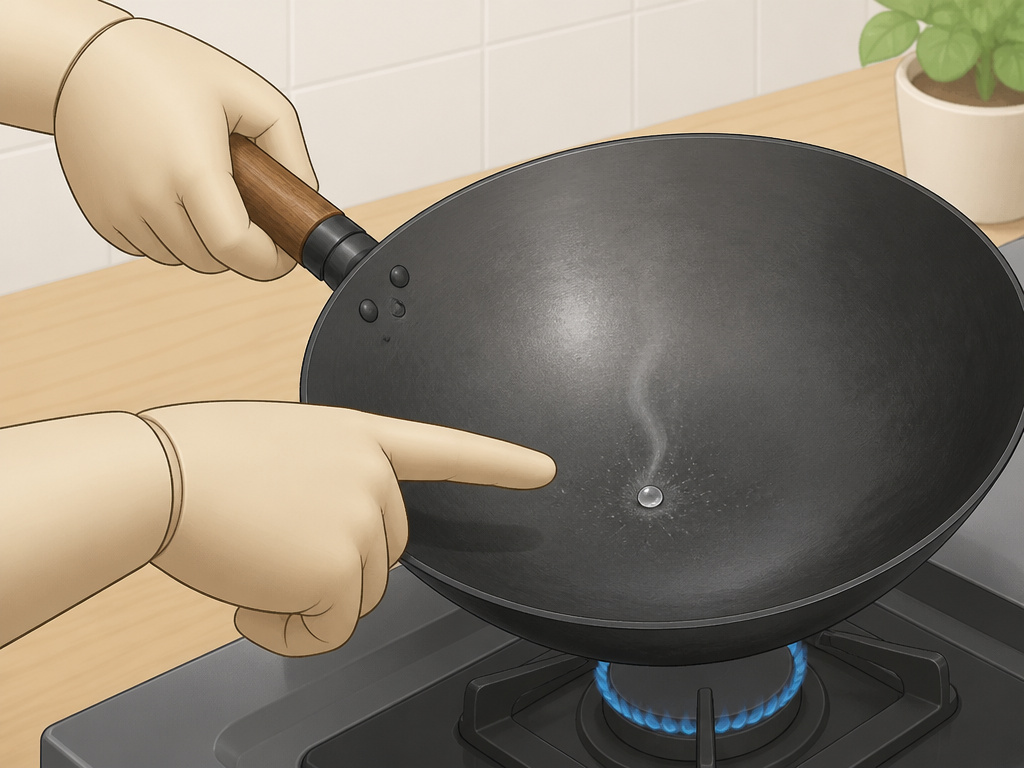
Step 2: Heat-dry completely. Place the bare, wet wok over medium-high heat. Move it around to dry every spot. Heat it until every hint of steam is gone and the metal is hot and dry. This drives off all moisture and opens the pores of the metal for seasoning.
Step 3: Apply the thinnest possible oil layer. With the wok still on medium heat, add about a teaspoon of a high-smoke point oil like canola, grapeseed, or soybean oil. Use a wad of paper towels and tongs to wipe the oil over every surface, inside, outside, handle. Then, use a clean paper towel to wipe almost all of it off. The wok should look barely damp, not shiny or oily. This is the most common mistake: too much oil creates a sticky, uneven layer.
Step 4: Polymerize the oil. Keep the wok on medium heat. It will begin to smoke lightly. Watch as the oil darkens and bonds to the metal, turning from shiny to matte. This takes 5-10 minutes. Once the smoking mostly stops and the wok has a uniform color, turn off the heat and let it cool completely.
Step 5: Repeat. One layer is a start, not a finish. For a durable, non-stick base, repeat steps 3 and 4 at least two more times. Three thin layers beat one thick one every time. This step-by-step wok seasoning guide dives deeper into the chemistry.
Prevent Rust Before It Starts
Fixing rust is straightforward. Preventing it is smarter. Your strategy changes based on your wok’s material and your kitchen’s environment.
For a carbon steel wok, your entire routine is about creating and maintaining its seasoning. This polymerized oil layer is its raincoat. – Wash: Use hot water, a soft sponge, and a tiny drop of soap if needed. Scrub off food bits. – Dry: Immediately place over low heat for 1-2 minutes until bone-dry. The Ken Hom manual specifies this: “place over low heat for 1 to 2 minutes until no water droplets are visible.” – Store: Keep it in a dry cabinet with the lid off. Never store it while still warm, as that traps evaporating moisture.
For a stainless steel wok (like the Sit-Connect model with a 3-year guarantee), rust is far less common but not impossible if the grade is low. The care is simpler: wash, dry, and store. Its 250°C heat resistance means you can heat-dry it aggressively.
For a non-stick wok (like a Ken Hom model with a Whitford coating), rust isn’t the primary worry, coating damage is. Hand-wash to preserve the surface. The shorter warranty (2 years for non-stick carbon steel vs. 10 for plain carbon steel) hints at the coating’s finite lifespan.
| Wok Material | Biggest Rust Risk | Critical Prevention Step | When to Intervene |
|---|---|---|---|
| Carbon Steel | Ambient humidity, acid foods | Mandatory heat-drying after every single wash. | At first sign of dull, dry patches on the seasoning. |
| Cast Iron | Water immersion, damp storage | Same as carbon steel; ensure full drying of rim. | When the surface feels rough or looks orange. |
| Stainless Steel | Low-quality grades, chloride | Dry thoroughly; avoid long soaks in salty water. | If pitting or spotting appears near welds. |
| Non-Stick Coated | Coating chip exposing base metal | Never use metal utensils; hand-wash gently. | If base metal is visible through a chip or scratch. |
Your kitchen’s location matters. A coastal or very humid climate demands more vigilance. In those environments, after heat-drying, give your wok a final ultra-thin coat of oil before storage, the same “wipe on, wipe off” method used in seasoning. This leaves a microscopic protective barrier.
Carbon Steel vs. Cast Iron: A Rust Resistance Check

Both contain iron. Both rust. But their density and typical seasoning give them slightly different failure points.
Carbon steel is lighter and often has a smoother surface. Its seasoning can be more fragile, especially in the early stages. It’s more susceptible to that flash rust from condensation because its thinner walls heat and cool quickly, creating ideal conditions for moisture to condense.
Cast iron is thick and heavy. Its seasoning, once established, is notoriously durable. Its rust risk is more about sheer neglect, being left wet in a sink or stored in a damp basement. The rust on cast iron also tends to be slower-forming but chunkier.
The revival process for both is identical: scrub, dry, reseason. The principles for preventing cast iron rust are the same dogma: no water baths, always heat-dry. The main difference is that a cast iron skillet’s weight makes the post-wash heating step more cumbersome, which is exactly why people skip it, and find rust.
Frequently Asked Questions
Is a rusty wok safe to cook with?
After you’ve completely removed the rust and re-seasoned the wok, it is perfectly safe. Do not cook on a rusty surface. The iron oxide itself isn’t highly toxic in small amounts, but it will impart a metallic taste and ruin your food. Always scrub and reseason first.
Can I use soap on my carbon steel wok?
Yes. This is an outdated myth. Modern dish soaps are mild and will not strip off a well-polymerized seasoning layer. Using too little soap and leaving food residue is a bigger problem, as that gunk traps moisture against the metal. Wash it well.
Why did my brand new wok rust immediately?
This is almost always due to the “condensation from other pans” scenario. The new metal is often bare or lightly oiled. If you washed it, didn’t heat-dry it thoroughly, and stored it near other damp dishes, ambient humidity triggered flash rust overnight. It’s not a defect.
How often should I re-season my wok?
There’s no calendar schedule. Re-season when the surface looks dry, patchy, or dull, or if food starts sticking noticeably. For most home cooks who use their wok weekly, a quick stove-top maintenance seasoning every few months is plenty. After cooking acidic dishes, do a quick thin oil coat and heat.
Does a non-stick wok rust?
The non-stick coating itself doesn’t rust. However, most non-stick woks have an aluminum or carbon steel base beneath the coating. If the coating chips or scratches deeply enough to expose that base metal, and that spot gets wet, it will rust. This is why the warranties are shorter.
What’s the best oil for seasoning and rust prevention?
Use a oil with a high smoke point: canola, grapeseed, soybean, or avocado oil. These polymerize effectively at stove-top temperatures. Avoid olive oil or butter, their low smoke points create a sticky, inefficient layer. For pure rust prevention after drying, the same oils work; you just need a vanishingly thin film.
Before You Go
Rust isn’t a verdict on your wok; it’s a report card on your moisture control. The metal is fine. Your system just needs a tweak.
The actionable takeaway is a five-word routine: Wash, Rinse, Heat-Dry, Store. Lock that in, and you’ll likely never see orange spots again. If you do, you now have the scrub-and-reseason drill. A carbon steel wok like the Misen or a well-made cast iron piece is a lifetime tool. Its longevity is literally in your hands, dry ones.
