
Defining the Shallow Roasting Pan: How It Enhances Browning
This post contains affiliate links. As an Amazon Associate, we earn from qualifying purchases.
A shallow roasting pan is a low-sided, typically rectangular or oval pan with sides between 1 and 2 inches (2.5 to 5 cm) deep. Its primary job is to expose food to dry, circulating oven heat for browning while catching minimal drippings, making it ideal for whole chickens, vegetables, and other items that don’t release a flood of juices. Choosing one under 2 inches high is the difference between roasted skin and steamed skin.
That depth specification isn’t arbitrary. It’s the mechanical limit that separates roasting from braising or steaming. A pan deeper than 3 inches traps steam around the food, which is why a standard 4-inch casserole dish will give you a soggy chicken bottom every time. The shallow pan’s entire design pushes moisture away so dry heat can do its work.
What follows: the specific measurements that define a shallow pan, the materials that work (and the one that fails for gravy), the clear line between when to use it versus a deep roaster, and the single biggest mistake you can make with any roasting pan lid.
Key Takeaways
- Depth is the defining feature: A true shallow roasting pan has sides 1 to 2 inches high. Anything over 3 inches is a standard roaster and will steam food.
- Skip nonstick for roasting: Nonstick coatings prevent the fond (caramelized drippings) from forming and can’t withstand the high heat needed for deglazing on the stovetop.
- Never roast with the lid on: A covered pan traps steam, which turns roasting into steaming. Your expensive cut of meat will emerge dry and tough, not juicy and brown.
- Match the pan to the food’s juice output: Use a shallow pan for poultry, vegetables, or fish. Switch to a deeper standard roasting pan for a large turkey or a pot roast that releases cups of liquid.
- Aluminum requires a caveat: Plain aluminum reacts with acidic ingredients like lemon juice or wine. Anodized aluminum is a safe, conductive alternative.
The Defining Depth of a Shallow Roasting Pan
Forget shape for a moment. The only number that matters is sidewall height.
A shallow roasting pan has sides between 1 and 2 inches (2.5 to 5 cm) tall. This is consistently cited across manufacturer specs and cooking guides as the threshold for the category. A standard roasting pan starts at 3 inches and can go up to 12 inches deep.
This low profile serves one purpose: maximum exposure to dry, circulating air. Roasting is a dry-heat cooking method. The oven’s hot air needs to wrap around the food to evaporate surface moisture and trigger the Maillard reaction—the chemical process that creates browning and complex flavor. A deeper wall acts as a barrier, trapping evaporating moisture and creating a steamy microclimate. That’s braising territory.
Your oven’s internal measurements are the second number to check. A typical shallow roasting pan is often 16 inches long. With permanently extended handles, that can add another 3 inches. If your oven interior is 19 inches wide, that pan becomes a dangerous, scraping fit. Always account for handle length and wall thickness.
| Pan Type | Typical Side Height | Primary Function | What Happens If Too Deep |
|---|---|---|---|
| Shallow Roasting Pan | 1–2 inches | Dry-heat roasting, browning | Food steams, skin softens, browning fails |
| Standard Roasting Pan | 3+ inches | Containing large, juicy roasts (turkey, ham) | Correct for the task; necessary for drippings |
| Casserole Dish / Dutch Oven | 4–6 inches | Braising, stewing, wet-cooking methods | Designed to trap moisture and steam |
Why Shallow Sides Matter for Roasting
The physics are simple. Moisture is the enemy of crisp skin and concentrated flavor.
In a shallow pan, evaporating juices quickly vaporize in the wide, open oven air. In a deep pan, those juices pool and simmer, surrounding the bottom half of your food with steam. This is why a chicken roasted in a 9×13 casserole dish always has a pallid, rubbery underside. The shallow pan isn’t just a different shape—it’s a different cooking environment.
The right pan also decides your side dish strategy. That space around your protein isn’t wasted. It’s prime real estate for vegetables, which will roast in the rendered fats instead of boiling in juices.
Where this goes sideways: Roasting a turkey in a pan that’s too shallow. A 20-pound bird can release over a cup of liquid during cooking. A 2-inch pan will overflow, causing a smoky, dangerous mess in your oven. That’s the job for a deeper standard roasting pan.
Materials: What a Shallow Roasting Pan Should (and Shouldn’t) Be Made Of
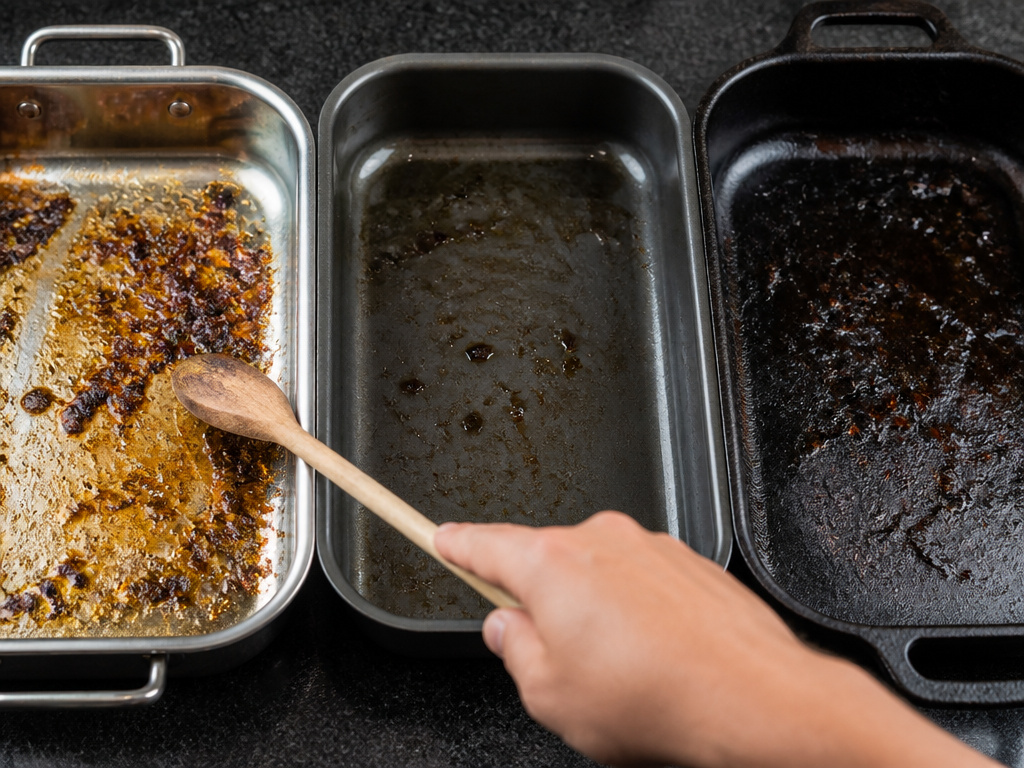 Your material choice directly impacts browning, cleanup, and whether you can make a pan sauce.
Stainless Steel (Tri-Ply or Multi-Ply): This is the default recommendation for a reason. It’s durable, oven-safe to high temperatures, and non-reactive. The aluminum or copper core sandwiched inside provides even heating. Most importantly, it can go from a 450°F oven directly onto a stovetop burner for deglazing. Those browned bits (fond) stuck to the pan are flavor gold for gravy.
Anodized Aluminum: An excellent conductor of heat, often at a lower price point than stainless. The anodizing process hardens the surface and seals the aluminum, making it non-reactive. This means you can safely use lemon or wine in the pan.
Cast Iron & Enameled Cast Iron: These provide superb, steady heat but are exceedingly heavy. Lifting a loaded enameled cast iron roaster is a two-handed, high-risk operation. They are better suited for braising where their heat retention shines.
Common mistake: Buying a nonstick shallow roasting pan. The coating prevents fond from forming. If you try to deglaze it on high heat, you’ll burn the drippings and damage the coating. You sacrifice the sauce to save five minutes on scrubbing.
The debate over roasting pan materials often misses this point: if you can’t use the pan to make a sauce, you’re losing half the meal’s potential.
The Lid Debate: Never, Ever Roast With It On
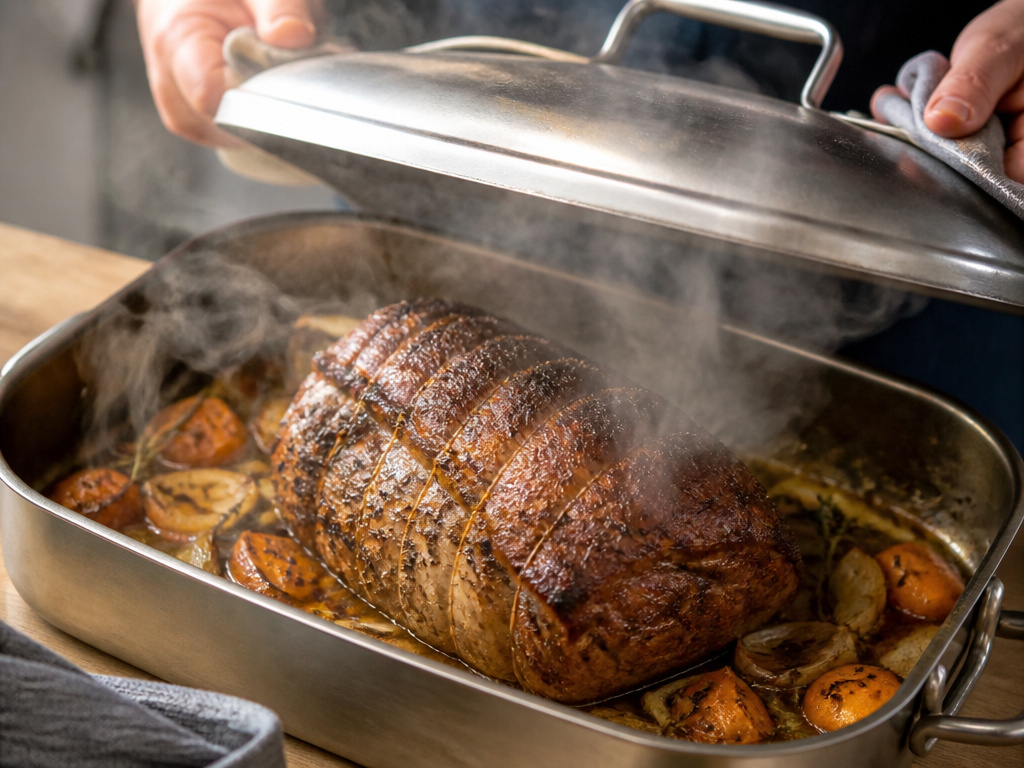 This is the most critical rule in this guide.
If your pan comes with a lid, that lid is for storage, or for converting the pan into a vessel for stews or pot roast on the stovetop. It is not for roasting in the oven.
“You can easily ruin a gorgeous, expensive roast by cooking it with the cover on! … Meat will steam not roast and will come out dry and tough.” — Spend With Pennies
A covered pan creates a sealed, humid environment. The food steams in its own juices. The surface never dries out, so it never browns. You end up with a gray, tough piece of meat that tastes boiled, not roasted. The promise of a roasting pan lid is moisture retention, but roasting achieves juiciness through controlled drying and caramelization, not through steam.
If you’re worried about over-browning, tent the meat loosely with aluminum foil halfway through cooking. Do not seal it.
What to Cook in a Shallow Roasting Pan
This pan excels with foods that benefit from all-around exposure to heat and don’t flood the pan.
- Whole Chicken or Game Hens: The classic use. The low sides allow the skin on the back and sides to crisp.
- Vegetable Roasts: Potatoes, carrots, Brussels sprouts, asparagus. They brown evenly and don’t release much liquid.
- Whole Fish: A large, whole fish like salmon or branzini fits perfectly and cooks quickly.
- Sheet-Pan Style Dinners: A shallow pan can often stand in for a half-sheet pan for recipes like sausage and peppers or baked frittatas.
It is not the right tool for a large holiday turkey, a pork shoulder, or a pot roast. These items need the deep walls of a standard roaster to contain their copious juices. For everyday dishes to cook, the shallow pan is your most versatile oven tool.
Shallow Roasting Pan vs. Common Alternatives
You don’t always need a dedicated pan. But know the trade-offs.
Baking Sheet (Half-Sheet Pan):
- Pros: Excellent air circulation, great for vegetables and small proteins.
- Cons: No lip to contain any juices (will spill into your oven), too lightweight for a heavy chicken which can warp it.
- Verdict: Use it for dry vegetables, not for a whole chicken.
Casserole Dish (9×13 Glass or Ceramic):
- Pros: Contains all juices.
- Cons: Deep sides steam food, glass is a poor conductor leading to uneven cooking.
- Verdict: Never use it for roasting. It’s for baked pasta and cobblers.
Disposable Aluminum “Roasting” Pan:
- Pros: None for roasting.
- Cons: Flimsy, terrible heat conduction, dangerously flexible when loaded.
- Verdict: Do not use. They are a safety hazard with a heavy roast and guarantee poor results.
Selecting the Right Size and Features
Size is about the food, not the oven. The goal is about an inch of space between the food and the pan’s sides.
- Small (14-inch): Fits birds up to 12 lbs. Good for two chickens or a large vegetable roast.
- Medium (16-inch): Fits birds up to 16 lbs. The most versatile single size for most households.
- Large (18-inch): For turkeys up to 20 lbs. This is getting into standard roaster depth territory.
The rack is non-negotiable. A roasting rack elevates the food, allowing hot air underneath and preventing the bottom from stewing in fat. Look for a rack that fits snugly and is sturdy enough not to tip. Some stainless steel roasting pans come with a V-shaped rack, which is particularly stable.
Handles should be sturdy and riveted, not welded. Test the grip. If you’re considering a pan for stovetop use to make gravy, ensure the handles are oven-safe but also stay cool enough to grip.
Care and Cleaning
The best pans develop a patina of use. Don’t fear the browned-on spots.
- Deglaze for Easy Cleaning: After removing the food, add a cup of water or broth to the hot pan and place it on a stovetop burner. Bring to a simmer and scrape with a wooden spoon. This lifts most stuck-on bits and starts your gravy.
- Soak with Baking Soda: For stubborn grease, sprinkle the pan with baking soda, add just enough vinegar to make a paste, and let it sit for 30 minutes before scrubbing with a non-abrasive pad.
- Avoid the Dishwasher: The high heat and harsh detergent can dull the finish on stainless steel and degrade anodized aluminum over time. Hand washing preserves the pan.
For truly burnt-on food, the baking soda paste method is more effective and less abrasive than harsh chemical cleaners.
Frequently Asked Questions
Can I use a shallow roasting pan for a turkey?
You can, but only for a very small turkey (under 12 pounds). A standard-sized turkey will release too much juice for a 2-inch pan, risking an overflow and oven fire. For a turkey, you need a deep roasting pan.
Is a shallow roasting pan the same as a baking pan?
No. A baking pan (like a 9×13) is typically made of glass or ceramic, which heats unevenly and is designed for wetter batters and casseroles. A roasting pan is metal, designed for high-heat browning, and almost always includes a rack.
Can I put my shallow roasting pan on the grill?
Yes, if it is all-metal (stainless steel or aluminum). This is a great method for indirect-heat roasting when you don’t want to heat the kitchen. Ensure your grill is stable and you have safe, heat-proof gloves. Never use a pan with plastic handles or components for grill use.
What’s the best overall shallow roasting pan?
For most home cooks, a 16-inch tri-ply stainless steel pan with a sturdy, matching rack is the lifetime buy. Brands like Cuisinart MultiClad Pro or All-Clad offer this configuration. It conducts heat evenly, goes from oven to stove, and won’t react with your food.
Can I use an electric roaster pan in a conventional oven?
Almost never. Electric roaster pans often have plastic handles, temperature controls, and non-stick coatings not rated for direct oven heat. Check the manufacturer’s manual first. Assuming oven safety for an appliance not built for it can cause melting, smoke, or fire.
The Bottom Line
A shallow roasting pan is a specific tool for a specific job: browning food with dry heat. Its 1-to-2-inch depth is the key feature that makes it work. Choose stainless steel or anodized aluminum, always use a rack, and never—ever—use the lid for roasting. Skip the nonstick versions. For a whole chicken, vegetables, or a sheet-pan dinner, it’s the right pan. For a juicy turkey or a braise, reach for something deeper. Get the depth right, and the browning follows.
