
Can You Boil Water in a Wok | The Heat Limit That Decides
This post contains affiliate links. As an Amazon Associate, we earn from qualifying purchases.
Yes, you can boil water in a wok. It handles water for steaming, cleaning, or boiling ingredients. The real limit is heat, not the task itself. A carbon steel or stainless steel wok boils water fine. A non-stick wok risks damaging its coating if boiled dry or left on high heat empty. The wok’s shape makes it less efficient than a pot, but it gets the job done.
That heat limit is where most guides stop. They don’t explain why a wok can warp if you boil it wrong, or why some manufacturers explicitly warn against high-heat boiling for specific models. The wok’s thin, wide shape is designed for fast oil heating, not for holding a steady, rolling boil for thirty minutes.
What follows: a breakdown by material, the correct water volume for steaming pulled from actual manuals, the commercial kitchen trick that cuts water use by 75 percent, and the one scenario where boiling water is the worst thing you can do to a new wok.
Key Takeaways
- Carbon steel and stainless steel woks are built for high heat and can boil water safely. Cast iron works but is heavy and slow.
- Non-stick woks have a strict temperature ceiling, often around 250°C. Boiling water is safe, but letting the pan boil dry will exceed that limit and ruin the coating.
- For steaming, use just enough water to simmer. The Sunbeam DiamondForce manual specifies a MIN heat setting to prevent bubbling over. The Breville BEW820 needs a 750ml refill every half hour.
- Never boil a new wok empty as a “first use” ritual. Some stainless models require boiling water two or three times to remove manufacturing residues before any cooking.
- Commercial wok stoves use massive water flow for cooling. The EPA WaterSense wok stove guide notes switching to air-cooled models or simple behavior changes can cut water use by 75 percent.
The Short Answer: Yes, With Conditions
You can absolutely bring water to a boil in a wok pan. The function isn’t the problem. The physics of the wok’s design and the limits of its material are what introduce risk.
A wok’s thin, sloped walls are engineered for rapid heat transfer and quick evaporation, exactly what stir-frying demands. This same design makes it less ideal for prolonged, energy-intensive boiling compared to a thick-bottomed stockpot.
Boiling water for three minutes to steam dumplings? Perfectly fine. Maintaining a rolling boil for forty minutes to make stock? It’ll work, but it’s inefficient and hard on an electric coil stove because the curved base makes poor contact. The water will take longer to heat, and you’ll waste energy.
The critical variable is your wok’s material. That dictates the maximum safe temperature and how you should manage the heat source.
Material Matters: What Your Wok is Made Of
Not all woks are equal for boiling. Your wok material is the deciding factor for safety and longevity.
Carbon Steel & Cast Iron: The Workhorses
These are the traditional champions. A carbon steel wok can handle the direct, high heat needed to bring water to a boil quickly. Its thin walls conduct heat fast. A cast iron skillet or Dutch oven can also boil water, but its mass means it heats and cools slowly, it’s overkill for the task.
Why-Layer: Carbon steel has a high thermal conductivity. Heat moves rapidly from the burner through the metal into the water, minimizing hot spots that could cause warping. The pre-existing seasoning on a wok (a polymerized oil layer) is not harmed by boiling water; it’s the high, dry heat afterward that can damage it.
Stainless Steel: The Modern Utility Player
A stainless steel wok is also fully capable of boiling water. Its multi-ply construction often includes an aluminum or copper core for even heating. The primary caution here is from manufacturers themselves.
Where this goes sideways: Boiling a new stainless wok empty. One manufacturer’s manual for a premium model explicitly states to “boil the product two or three times with water to remove any manufacturing residues” before first cooking use. If you skip this and cook food first, you risk ingesting those residues.
Non-Stick Coated Woks: The Temperature-Capped Option
You can boil water in a non-stick wok, but you must respect its ceiling. Most coatings degrade above 250°C.
| Wok Material | Boil Water? | Key Risk | Max Safe Temp (Approx.) |
|---|---|---|---|
| Carbon Steel | Yes | Warping if heated empty | 600°C+ |
| Cast Iron | Yes | Slow heating, heavy | 500°C+ |
| Stainless Steel | Yes | Residue on new pans | 500°C+ |
| Non-Stick | Yes, carefully | Coating failure | 250°C |
Why-Layer: Non-stick coatings like Teflon begin to break down and release fumes around 260°C. A rolling boil of water caps at 100°C, which is safe. The danger comes during pre-heating or if the water boils off completely. An empty non-stick wok on a high burner can hit dangerous temperatures in under two minutes.
Steaming vs. Boiling: What Are You Actually Doing?
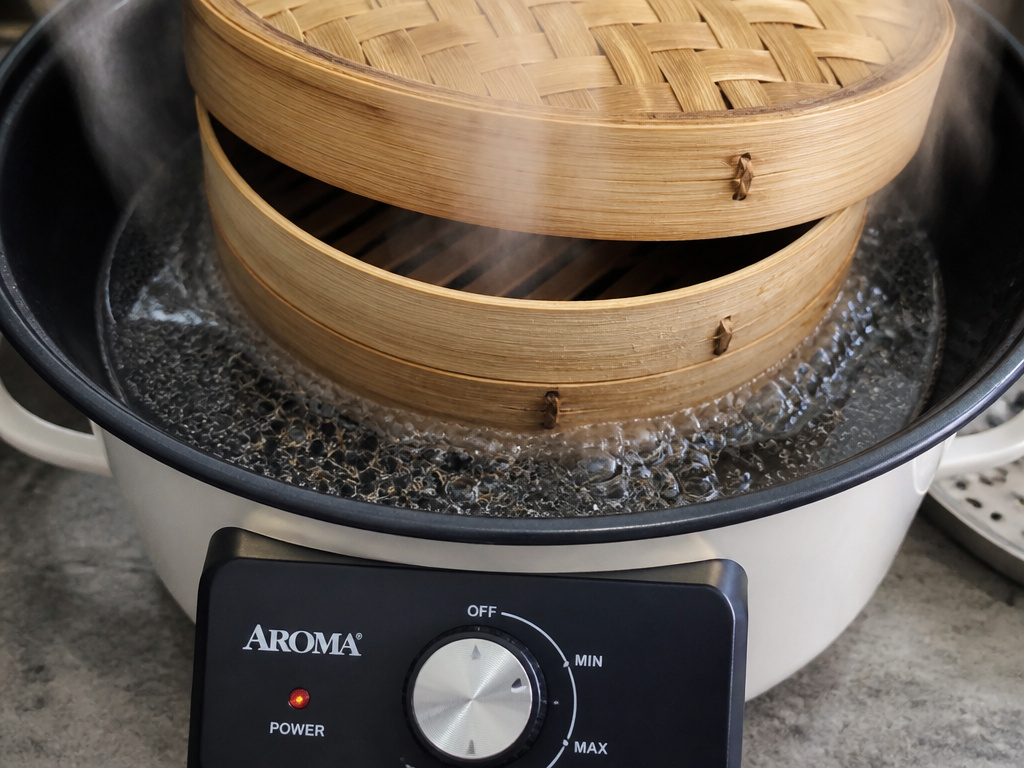
Most home cooks boil water in a wok for one purpose: steaming. This is a gentle, simmering boil, not a violent roil. Manufacturer instructions are very specific here.
The Sunbeam DiamondForce Professional 7.5L manual is clear. It says to place food “over simmering water or stock” and warns: “If the heat is too high it may cause the liquid to bubble up over the food. MIN heat setting should be sufficient.”
That’s your rule. Use the lowest heat that maintains a steady steam. A MIN heat setting prevents water from splashing your food and maintains a consistent temperature.
For longer steaming jobs, water volume matters. The Breville BEW820 electric wok manual instructs: “If steaming for over half an hour, refill the wok using the water pouring window on the steaming tray.” It starts with 750ml (about 3 cups). This prevents the wok from boiling dry, which is the real hazard.
Easy to miss: Electric woks like the Breville BEW820 or Tefal WO400852 have safety timers. The Tefal manual notes a “maximum usage time within a 2 hour period is one hour.” Boiling water for an extended blanching session could trip this internal cutoff.
How to Boil Water in a Wok Correctly (Step-by-Step)
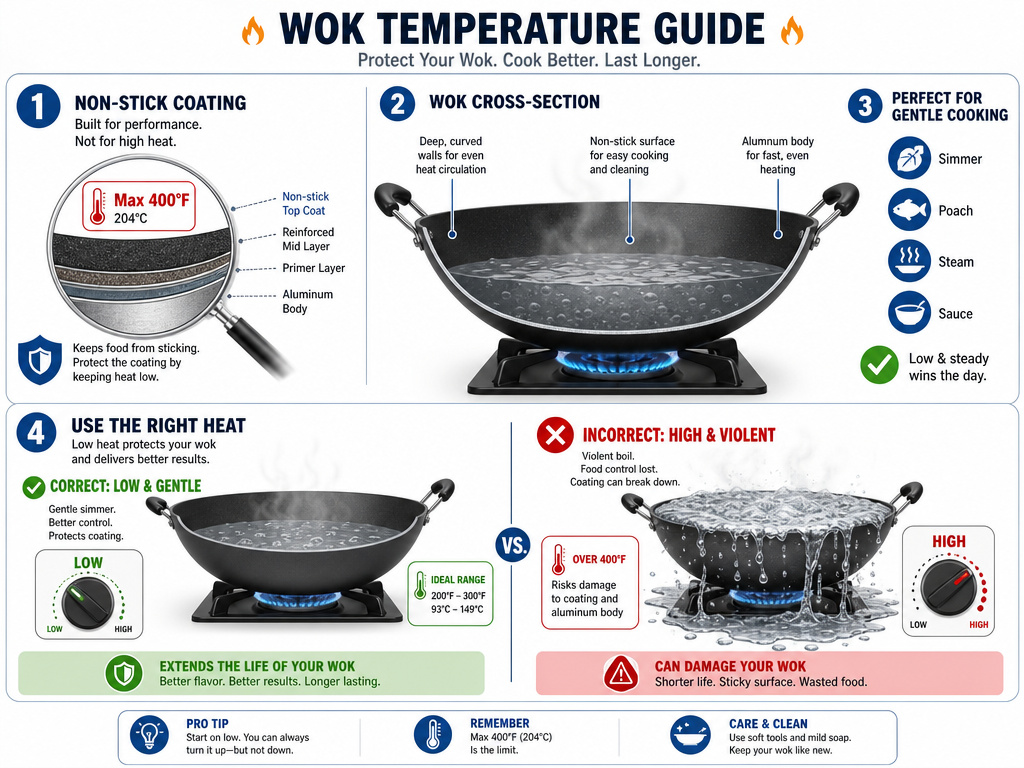
Follow this sequence to boil water for steaming, cleaning, or parcooking without damaging your wok pan.
- Check your wok’s material and coating. If it’s non-stick, confirm the maximum heat rating (often on the packaging or handle). Do not use high heat.
- Add cold water to the wok. For steaming, add enough so the water level sits 1-2 inches below the steaming basket. Too much water will touch the food.
- Place the wok on a burner that matches its base size. A small coil under a large wok creates an intense hot spot in the center, which can warp carbon steel during heating.
- Turn the heat to medium-high to start. Bring the water to a simmer, small bubbles forming at the edges. For steaming, immediately reduce to the lowest heat that maintains steam (often the MIN setting).
- Add your steaming basket or food. Cover with a lid to trap steam. If boiling for cleaning or blanching, you can leave it uncovered.
- Set a timer for refills. If your task runs longer than 30 minutes, check the water level and add more hot water as needed. Never let it boil dry.
- When finished, turn off the heat and remove the wok. Pour out the water carefully. Do not cool a hot wok by running cold water into it, the thermal shock can warp metal.
Skip step 4’s reduction to low heat, and you’ll have water boiling over, soaking your food and making a mess of your stove. It happens in the first five minutes.
When Boiling Water is a Bad Idea
Boiling water is not a universal solution for wok cleaning or maintenance.
- To Remove Sticky Residue: Boiling water can help loosen burnt-on food. But for a seasoned carbon steel wok, aggressive boiling followed by scrubbing can strip the precious seasoning you’ve built up. Use a soft brush and hot soapy water instead.
- To “Reset” a Rusty Wok: Boiling water will not remove wok rust. It introduces moisture, which is the cause of rust. To address rust, you need to scrub the pan dry, then re-season it with oil and high heat.
- In a Dishwasher Safe Wok: If your wok is labeled dishwasher-safe, boiling water for cleaning is redundant. The dishwasher’s hot water and detergent will do the job. However, verify the label, many carbon steel and cast iron woks are not dishwasher safe.
The worst idea? Boiling water in a wok to try and sterilize it like a medical instrument. It’s unnecessary for home cooking and puts thermal stress on the pan for no benefit.
Commercial Kitchens: A Different World of Water Use
Home wok boiling uses a few cups. In a restaurant, the scale is immense. Commercial water-cooled wok stoves run cooling water continuously at about 1 gallon per minute per burner to prevent the stove deck from warping and to reduce fire risk.
The EPA WaterSense commercial wok standards highlight a simple, profound fix: “Encourage cooking staff to turn off rinse spouts and reservoir taps when not in use. One study found that filling a basin to be used for cooking and cleaning rather than leaving taps running reduced water use by 75 percent.”
That’s a non-commodity insight with real scale. The principle translates home, too. Don’t leave water running. Use only what you need, whether you’re filling a wok or a pasta pot.
Frequently Asked Questions
Can boiling water warp a wok?
Yes, but it’s usually the heat, not the water. Warping happens when one part of the metal heats or cools much faster than another. A high flame on a small burner creates a hot spot in the center while the rim stays cooler. Adding cold water to a scorching-hot wok can also cause a warp. Gentle, even heating prevents it.
Is it better to boil water in a wok or a pot?
For efficiency, a pot is almost always better. A flat-bottomed pot makes full contact with the burner, transferring heat more effectively. A wok’s curved base leaves gaps on electric coils, wasting energy. Use a wok for boiling only when you need its wide surface for steaming multiple items or you’re using it as a multi-tasker.
Can I use my wok like a Dutch oven for soups?
You can, but a Dutch oven is the superior tool. Its thick walls, heavy lid, and straight sides are designed for slow, even simmering and braising. A wok’s sloped sides and thin metal encourage rapid evaporation, which can reduce a broth too quickly and unevenly. For a long-simmered soup, use the dedicated pot.
Does boiling water help season a wok?
No. Wok seasoning is created by polymerizing oil with high heat, creating a slick, non-stick carbon layer. Boiling water does not contribute to this process and can actually strip away young, weak seasoning if you scrub afterward. Season with oil, not water.
I have an electric wok with a Teflon coating. Is boiling safe?
Boiling water is safe, as the temperature is capped at 100°C. The built-in thermostat should prevent overheating. The risk comes if the water boils off and the empty unit continues heating. Always ensure there is water or food in the pan when the power is on.
The Bottom Line
You can boil water in a wok. For quick steaming or blanching, it’s a perfectly valid use. Your success depends on respecting your wok’s material limits and managing the heat.
Reach for your carbon steel or stainless steel wok for these jobs. If you own a non-stick model, keep the heat low and never let it run dry. Remember the manual specifics: a MIN heat setting for steaming, and a 750ml refill every half-hour for long cooks.
For everything else that requires a sustained, rolling boil, making pasta, stocks, or large batches of soup, the humble pot is your more efficient, dedicated tool. A wok’s genius is its versatility, but that doesn’t mean it’s the only pan you should use.
