
Is It Safe to Wash a Cast Iron Skillet with Soap? Find Out
This post contains affiliate links. As an Amazon Associate, we earn from qualifying purchases.
Yes, you can wash a cast iron skillet with modern dish soap. The polymerized oil layer that creates the seasoning is chemically bonded to the iron and cannot be washed away by today’s mild detergents. The real threats are prolonged water exposure, lye-based cleaners, and thermal shock.
The myth that soap destroys seasoning is a relic from when soaps contained lye. That caustic ingredient could strip the protective layer. Modern dish soaps like Palmolive Ultra Pure + Clear are surfactants designed to lift food grease, not break down a baked-on polymer matrix. The science from food chemists and the manuals from manufacturers like Lodge now agree on this.
What follows is a breakdown of the chemistry, the three things that actually damage your pan, and a straightforward cleaning routine that keeps a cast iron skillet non-stick for a century.
Key Takeaways
- Modern dish soap is safe; the “no soap” rule stems from lye-based soaps used decades ago.
- Seasoning is a polymerized oil coating chemically bonded to the iron, not a surface layer soap can remove.
- The dishwasher is the true enemy, causing rust by stripping seasoning through prolonged, hot water exposure.
- Immediate and thorough drying is non-negotiable; air-drying guarantees rust.
- For most cooks, the pan’s heat (400°F in 4 minutes on medium) provides sufficient sterilization, making soap optional but safe.
The Modern Science Behind the Soap Myth
The fear isn’t about soap. It’s about lye.
Historically, soaps were made with sodium hydroxide (lye), a powerful alkali that breaks down fats and oils. That included the fat-based seasoning on a cast iron skillet. A Virginia Tech food scientist, Sean O’Keefe, confirms this origin in a university research on cast iron. He notes the protective layer is polymerized oil, a plastic-like coating formed when fat is heated past its smoke point. This coating is inert.
Modern dish soaps are detergents, not lye-based soaps. They work by surrounding grease molecules with surfactants and rinsing them away. The polymerized seasoning layer is not a grease molecule—it’s a thermoset plastic bonded to the iron. Detergents don’t react with it.
This is why manufacturers have updated their stance. Lodge’s official care page states, “Soap is totally okay!” YETI’s skillet FAQ also gives a green light, noting that any lost sheen returns with your next cook. The consensus isn’t new; it’s just finally overcoming decades of ingrained kitchen folklore.
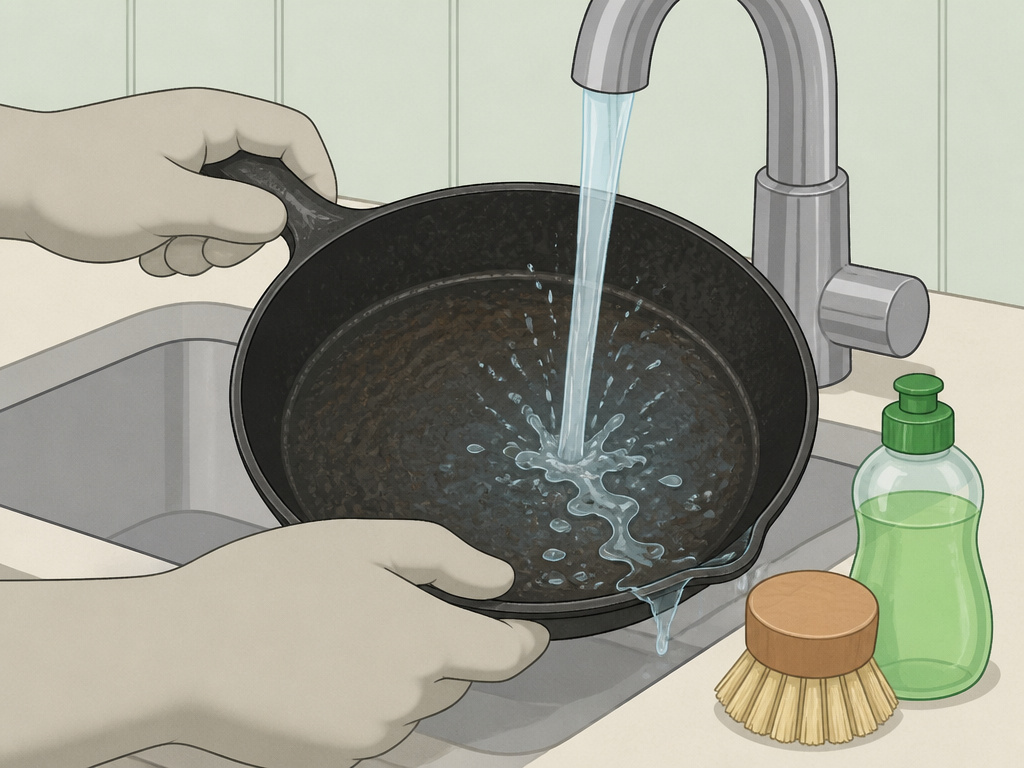
When you’re cleaning a cast iron skillet, the goal is to remove food residue, not the seasoning. A stiff nylon brush and warm, soapy water accomplish that without harm. The key to maintaining cast iron is what you do after washing.
What Actually Ruins Cast Iron? (Spoiler: It’s Not Soap)
Focusing on soap misses the real dangers. Damage comes from water, chemistry, and physics.
| Real Threat | How It Damages | Timeline to Damage |
|---|---|---|
| Soaking / Dishwasher | Prolonged water exposure penetrates microscopic cracks in seasoning, causing iron oxide (rust) to form. | Rust spots appear within 24 hours of air-drying. |
| Lye & Oven Cleaner | Sodium hydroxide actively breaks the polymer bonds of the seasoning layer, stripping it completely. | Strips seasoning in 1-24 hours of exposure. |
| Thermal Shock | Sudden temperature change (hot pan under cold tap) creates stress fractures in the iron. | Can warp or crack the skillet immediately. |
| Abrasive Metal Pads | Steel wool or chainmail scrubs can gouge the seasoning layer, exposing bare iron. | Creates weak spots that rust during the next wash. |
The dishwasher is the worst offender. It combines all the bad actors: prolonged hot water, aggressive detergent jets, and a steam cycle that prevents drying. This is a guaranteed path to a rusting cast iron skillet. This is why guides on how to clean your skillet never include the dishwasher cycle.
Common mistake: Letting a washed pan air-dry. Water evaporates slowly, leaving enough time for oxidation to begin on any unseasoned spot, like the rim or the bottom. Dry it with a towel, then heat it on the stove for two minutes.
Acidic foods are a conditional threat. Simmering tomato sauce for hours in a new or thinly seasoned cast iron skillet can degrade the seasoning. In a well-established pan, it’s usually fine. But if you see a metallic taste or notice the surface turning dull, you’ve found your limit.
The 5-Minute, No-Stress Cleaning Routine
This isn’t a ritual. It’s a quick, effective system that prevents cast iron damage.
- Cool Slightly, Then Rinse. Don’t plunge a 500°F pan into cold water. Let it cool until the handle is warm. Add a little warm water to the pan to loosen debris.
- Scrub with Soap (If You Want). Use a dab of modern dish soap and a stiff nylon brush or a Dobie pad. For stuck-on bits, use coarse kosher salt as a gentle abrasive with a drop of water.
- Rinse and Dry Immediately. Rinse thoroughly with warm water. Dry every inch with a towel—inside, outside, handle, and bottom. This is the single most important step to prevent rust.
- Apply a Micro-Thin Oil Coat. Pour a few drops of a neutral oil (canola, vegetable) onto a paper towel. Wipe the entire skillet, then use a clean towel to buff off all excess. The surface should look satin, not glossy.
- Store in a Dry Place. Don’t stack it while damp. Leave it on the stove or in a ventilated cupboard.
Where this goes sideways: Skipping the buffing step after oiling. A sticky, oily film doesn’t polymerize; it turns rancid. Your next cook will start with gummy, smoking oil that attracts carbon gunk.
This routine aligns with the essential cast iron care steps that build longevity. For a pan that’s already compromised, you’ll need to look at methods for rust removal and the seasoning process.
When You Should Use Soap (And When You Can Skip It)
 Soap is a tool, not a commandment. Use it strategically.
Use soap when:
- You’ve cooked fish, pungent aromatics, or anything with strong lingering odors.
- There’s visible greasy residue after a water rinse.
- You’re preparing to reseason the skillet and need a perfectly clean base.
- The pan was used by someone else and you’re unsure of its last cleaning.
You can confidently skip soap when:
- You’ve just cooked bacon or seared a steak and only have fond (the browned bits) left. Boiling a little water in the pan will loosen it.
- The pan is well-seasoned and you’ve cooked something simple like grilled cheese or pancakes.
- You’re in a hurry and the pan looks clean after a wipe.
Lodge’s own care PDF offers a telling note: the cookware reaches 400°F in four minutes on medium heat and is sterile at 212°F. For many cooks, the heat of the next use is sanitizer enough. This makes soap a choice for cleanliness, not a mandatory step for safety. A detailed cookware care manual from Wirecutter supports this pragmatic approach.
The Real Enemies of Cast Iron
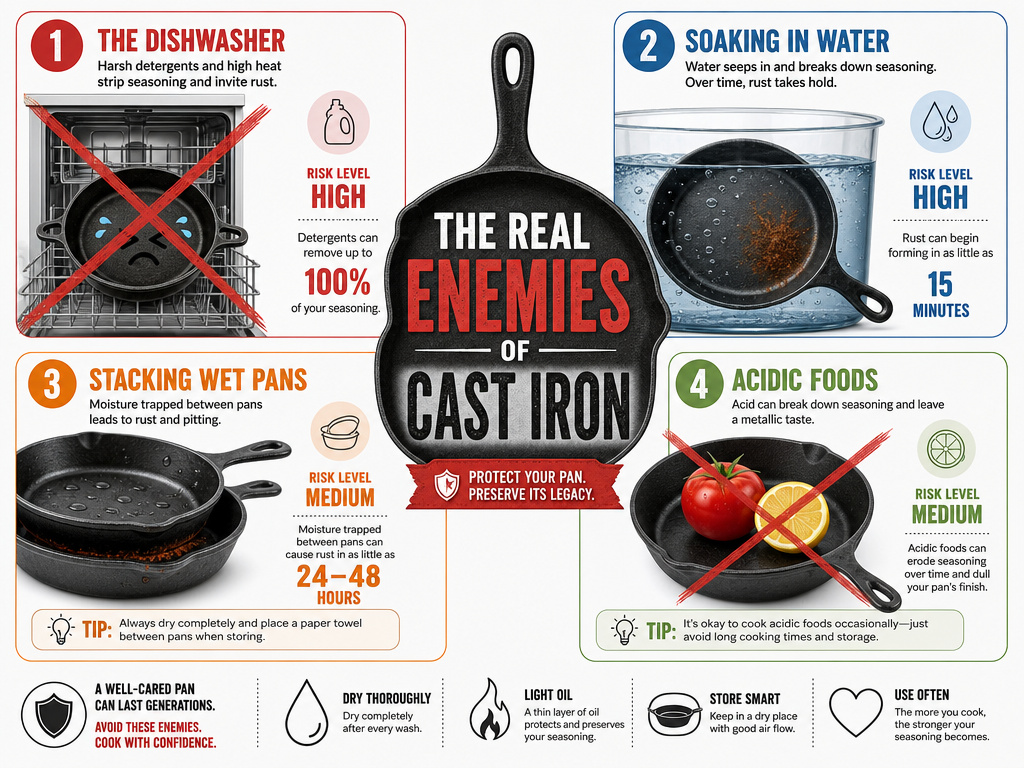 Understanding what to avoid is simpler than memorizing rules. Here’s the short list.
- The Dishwasher. This is the fastest way to ruin a cast iron skillet. The combination of heat, water, and detergent for an hour is catastrophic.
- Soaking. Even a 30-minute bath can lead to rust, especially on the unseasoned bottom or rim. This is the core harm of soaking.
- Storage While Damp. Trapped moisture under another pan guarantees rust.
- Cooking Acidic Foods Too Soon. In a new pan, wait until the protective coating is dark and slick before making long-simmered tomato sauce.
If you avoid these four things, your pan will be incredibly forgiving. Minor mistakes like occasional soap use or a slightly sticky oil coat are easily corrected. Major mistakes like rust require a restart via scrubbing off rust and reseasoning.
Troubleshooting: Sticky Residue, Rust, and Sticking Food
Your pan will talk to you. Here’s how to interpret the signals.
Problem: Sticky or Gummy Surface
- Cause: Too much oil was applied during the post-wash coat and not buffed off.
- Fix: Heat the empty pan on the stove until it just starts to smoke. Wipe it out with a dry paper towel. The heat will polymerize the excess.
Problem: Red or Orange Rust Spots
- Cause: Water contacted bare iron and was allowed to sit. This is why you never put cast iron in the dishwasher.
- Fix: Scrub the spot vigorously with a paste of coarse salt and water or a dedicated Lodge Rust Eraser. Rinse, dry completely, and apply a thin coat of oil. If rust is widespread, a full rust removal and reseasoning is needed.
Problem: Food Sticking Suddenly
- Cause: The seasoning layer has worn thin or been damaged, often by abrasive scrubbing or acidic foods.
- Fix: Give the pan 1-3 rounds of oven seasoning. This rebuilds the polymerized oil coating. Also, ensure you’re preheating the pan properly before adding food.
Most issues stem from moisture management or an inconsistent seasoning layer. A New York Times debunking common cooking misconceptions article reinforces that these problems are mechanical, not mystical.
Frequently Asked Questions
Does soap remove the seasoning from cast iron?
No, not if the seasoning is properly polymerized. Modern dish soap lacks the lye that historically damaged seasoning. It cleans food residue from the surface of the seasoning without breaking down the bonded oil layer itself.
Why do so many people say not to use soap?
The rule is a holdover from a time when household soaps contained lye. That ingredient could strip seasoning. The advice was valid then but became folklore, persisting long after soap formulations changed.
Is a dishwasher ever okay for cast iron?
No. Every manufacturer, including Lodge and YETI, explicitly warns against it. The prolonged, hot, soapy bath will strip seasoning and cause rust. Hand washing is the only safe method.
How do I remove stubborn, stuck-on food without soap?
Add about an inch of water to the pan and bring it to a simmer on the stove. Use a wooden spatula to scrape the bottom. The thermal expansion loosens most stuck bits. For carbonized spots, use coarse salt as a scrubber.
What’s the best way to dry a cast iron skillet?
Dry it thoroughly with a towel first. Then, place it on a burner over low heat for 2-3 minutes to evaporate any residual moisture. This heat cycle is the final guard against rust.
Can I use steel wool or a metal scrubber?
It’s not recommended for routine cleaning. Metal abrasives can scratch and thin the seasoning layer, creating weak points. Use nylon brushes or non-abrasive scrubbers. Reserve steel wool for removing rust during a restoration.
Before You Go
Wash your cast iron skillet with soap if it needs it. The science and the manufacturers are clear. Your real job is to keep water from sitting on the iron. Dry the pan completely, every time. A quick stove-top heat cycle after toweling is the habit that makes a pan last for generations. Forget the dogma. Focus on the chemistry of the polymerized coating and the physics of water and iron. That’s the whole game.
