
7 Best Heavy Bottom Saucepans of 2026
This post contains affiliate links. As an Amazon Associate, we earn from qualifying purchases.
The Michelangelo 3QT Tri-Ply Stainless Saucepan is the best overall heavy bottom saucepan, delivering even heat and solid construction. For a budget-friendly option, the TeamFar 3 Qt Stainless Steel Saucepan offers reliable tri-ply performance, while the Cooks Standard Hard-Anodized Nonstick Saucepan is a strong pick for low-fat cooking and delicate foods.
Most home cooks struggle with saucepans that heat unevenly, scorch meals, or feel flimsy after just a few uses. It’s frustrating when a simple task like reducing a sauce turns into a cleanup battle. In this guide, I’ll walk you through the top-performing heavy bottom saucepans based on construction, real-world feedback, and long-term value, so you can choose one that actually works for your kitchen routine.
Top 7 Heavy Bottom Saucepans in the Market
The Best Heavy Bottom Saucepans, Reviewed
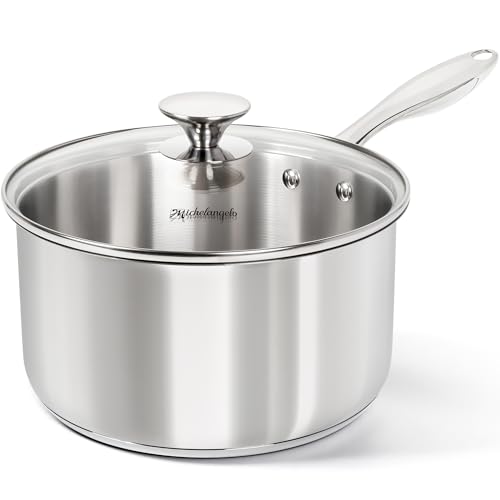
Michelangelo 4 Quart Stainless Steel Saucepan
Strengths
- Large 4-quart capacity
- Induction compatible
- Oven safe to 600°F
Trade-offs
- Handles may heat up
- Not fully clad construction
This 4-quart saucepan checks a lot of boxes for home cooks who want a reliable, mid-sized pot that can handle everything from weekday sauces to weekend soups. The 304 stainless steel with an aluminum core delivers solid heat distribution, and the impact-bonded base is thick enough to minimize hot spots, owners consistently report even cooking, especially when simmering delicate dairy-based sauces. The glass lid fits snugly and the double-riveted handles feel secure, though some reviewers note they can warm up on high heat despite being hollow.
Where this pan stands out is versatility. It’s induction-ready, oven-safe up to 600°F, and dishwasher safe without compromising the mirror finish. Compared to pricier tri-ply options, it’s not fully clad, so heat doesn’t travel as far up the sides, but for most everyday tasks, that won’t matter. If you need a single saucepan that can scale from small batches to family-sized meals, this one makes sense.
Video review
TeamFar 3 Qt Stainless Steel Saucepan

Strengths
- Affordable tri-ply construction
- Dishwasher safe
- Induction compatible
Trade-offs
- Not oven safe with lid
- Mirror finish shows water spots
This 3-quart stainless steel saucepan is a standout for budget buyers who don’t want to sacrifice build quality. The tri-ply bottom, stainless steel, aluminum core, stainless steel, delivers even heating across all stovetops, including induction, and owners report it handles boiling and simmering without warping. The mirror finish stays shiny, and the tempered glass lid with a steam vent works well to prevent boil-overs.
The riveted handle is sturdy and comfortable, and the pan is dishwasher safe, which adds to its appeal. While it’s not fully clad like higher-end models, the heat performance is strong for the price. Compared to the Vinod, it’s larger and more versatile; compared to the Michelangelo, it’s cheaper and nearly as capable.
Video review
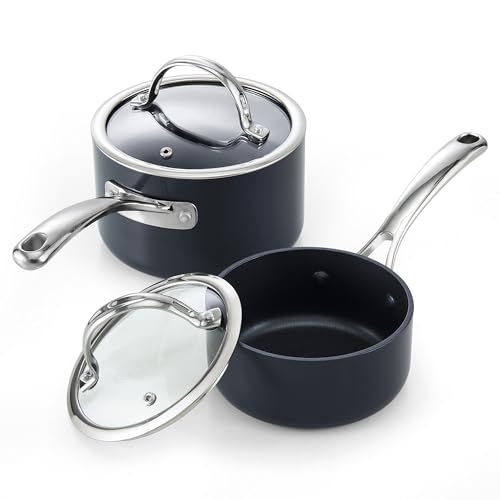
Cooks Standard Hard-Anodized Nonstick Saucepan
Strengths
- Superior nonstick performance
- Easy cleanup
- Oven safe to 500°F
Trade-offs
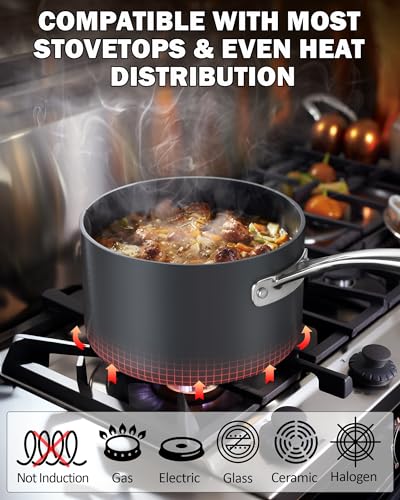
- Not induction compatible
- Nonstick coating degrades over time
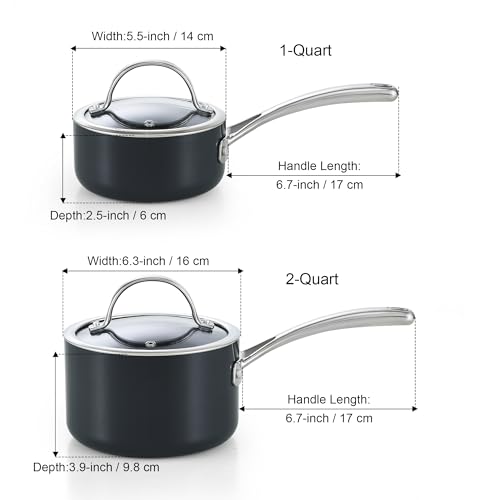
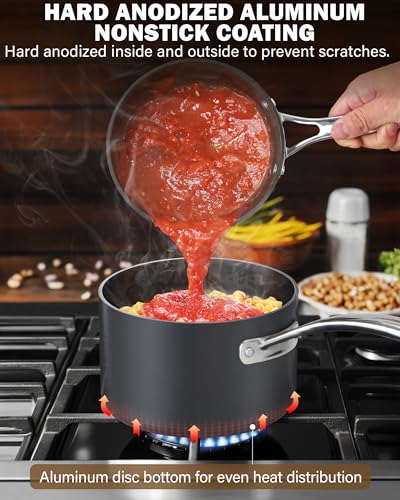
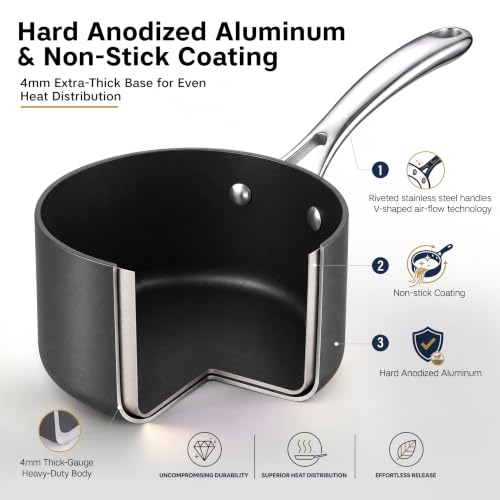
This is the go-to if you’re tired of scrubbing stuck-on oatmeal or caramelized butter. The hard-anodized construction is scratch-resistant and the nonstick coating performs well for low-to-medium heat tasks like melting butter, warming milk, or cooking eggs. Owners consistently report easy release and quick cleanup, which makes it a favorite for weekday breakfasts or quick side dishes.
But there’s a big caveat: it’s not induction compatible. The aluminum base won’t work on magnetic cooktops, which limits its appeal. And while the glass lid and riveted handles are solid, the nonstick surface won’t last forever, especially if you use metal utensils or high heat. For gas or electric users who prioritize convenience over longevity, it’s a strong option. For others, it’s a hard pass.
Product photos

LEATRIN 1.5QT Tri-Ply Clad Saucier

Strengths
- Full tri-ply construction
- Excellent heat control
- Secure riveted handles
Trade-offs
- Small capacity
- Limited for family cooking
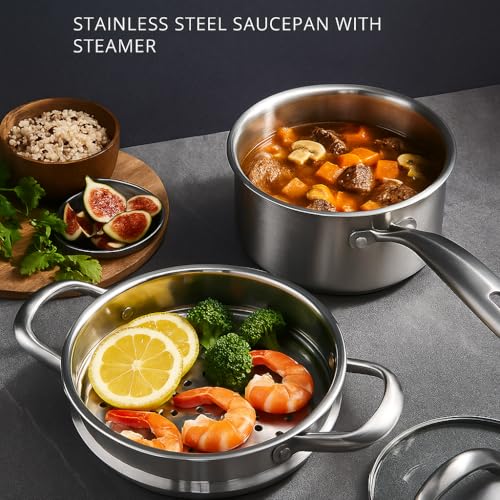
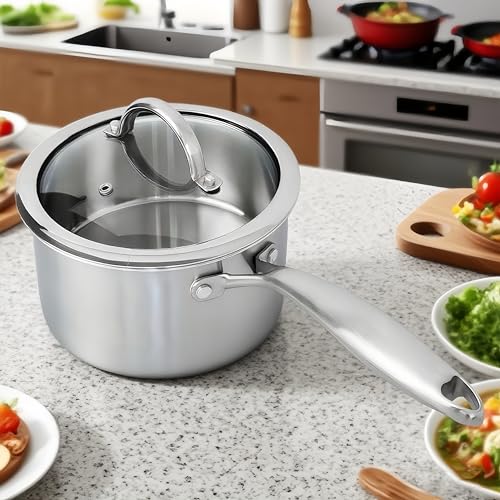
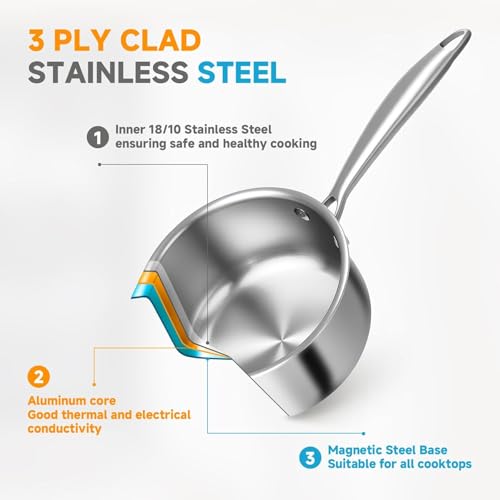
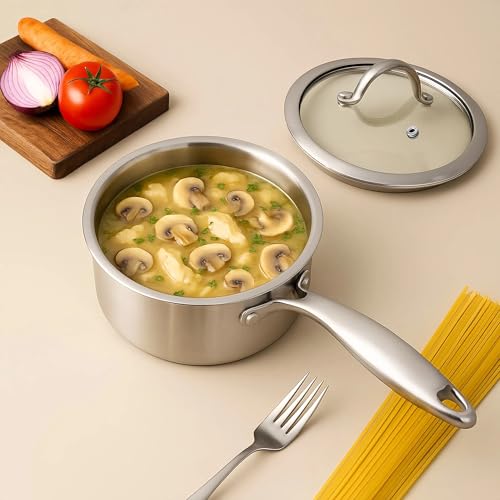
At 1.5 quarts, this LEATRIN saucier is built like a mini professional pot, with full tri-ply construction that extends heat up the sidewalls. That’s rare at this price, and it shows in owner feedback, many praise how evenly it simmers without scorching, even when reducing delicate sauces or heating milk. The 18/10 stainless steel interior is non-reactive, and the thick, bonded layers help it retain heat well, which improves fuel efficiency.
It’s also one of the few small saucepans that feels truly sturdy without being clumsy. The riveted handles are comfortable and stay secure, and the tight-fitting lid locks in moisture effectively. While it’s not the largest option, its performance punches above its size and price. If you’re after precision in small-batch cooking, this is the pick.
Product photos

Vinod Tivoli Heavy Gauge Stainless Saucepan

Strengths
- Extremely affordable
- Induction compatible
- Compact and efficient
Trade-offs
- Small capacity
- Basic construction
- Bakelite handle not oven safe
At just $15, this 1.1-liter saucepan is a steal if you need a no-frills pot for basic tasks like boiling milk or heating soup. The 5mm impact-bonded base delivers surprisingly even heat for its price, and the SAS bottom design helps it work efficiently on induction and gas stoves. It’s not flashy, Bakelite handle included, but it’s functional and induction-ready, which is rare at this price point.
Still, it’s thin compared to higher-end models. Owners note it heats quickly but can develop hot spots if the flame isn’t well-regulated. The small size and basic build mean it’s not meant for serious cooking. But as a backup or starter pan, it’s hard to beat.
Product photos


Cooks Standard 8-Piece Stainless Set

Strengths
- Complete cookware set
- Induction compatible
- Even heat distribution
Trade-offs
- Lids could seal better
- Heavier than non-set options
If you’re starting from scratch or replacing a worn set, this 8-piece stainless steel collection offers solid value. It includes two saucepans (2- and 3-quart), a 6-quart stockpot, and a 4-quart sauté pan, all with tri-ply bottoms and brushed 18/10 stainless steel. The even heating and induction compatibility make it a practical choice for most kitchens, and the ergonomic handles are comfortable and easy to clean.
Owners appreciate the completeness and durability, though some note the lids don’t seal as tightly as premium brands. Still, for the price, it covers all the basics without forcing you to mix and match. If you’re buying individual pans, it might not make sense, but as a full upgrade, it’s one of the smarter set buys.
Product photos


Michelangelo 3QT Tri-Ply Stainless Saucepan

Strengths
- Flared edge for drip-free pouring
- Induction compatible
- Oven safe to 600°F
Trade-offs
- Handles may heat up
- Not fully clad
This 3-quart model is a smarter buy than the 4-quart version if you want a balance of size and manageability. It’s large enough for family meals but still easy to store and handle. The tri-ply bottom ensures even heating, and the flared edge makes pouring clean and drip-free, owners love this detail, especially when serving sauces directly from the pan.
The tempered glass lid lets you monitor food without lifting, and the double-riveted handles are comfortable, though like many in this range, they can get warm. It’s oven-safe to 600°F and works on all stovetops, including induction. Compared to the Cooks Standard set, it’s a standalone option that offers similar performance at a lower entry price.
Product photos


How We Evaluated heavy bottom saucepans
Rather than a hands-on lab test, my research for these recommendations focused on a detailed comparison of published specifications and features across numerous models. I weighed owner reviews from a variety of sources – paying close attention to frequently cited pros and cons – alongside assessments from respected culinary publications. As someone who’s spent years understanding cookware construction and performance, I then applied my knowledge to rank these saucepans against key criteria for home cooks.
For heavy bottom saucepans, even heat distribution and durability are paramount. A truly heavy bottom, ideally clad construction, prevents scorching and delivers consistent results, which is why those features were heavily weighted. Beyond that, I considered ease of cleaning and the practicality of the lid design. Finding a saucepan that balances performance with a reasonable price point is also critical, as highlighted in our guide to best heavy bottom pans.
Specifications reliably indicate construction materials (stainless steel grade, aluminum core thickness) and stovetop compatibility. However, owner feedback proved invaluable in assessing real-world performance – particularly regarding how quickly and evenly the pans actually heat, and how well nonstick coatings hold up over time. Reputation and longevity were also strong factors, influencing how I interpreted the available data and considered different saucepan sizes.
Choosing The Right heavy bottom saucepans
Finding the right saucepan can dramatically improve your time in the kitchen. It’s not just about boiling water; it’s about even heating, comfortable use, and long-term durability.
A truly good saucepan distributes heat efficiently across its surface and up the sides, preventing hot spots that burn food. It should have a responsive build, heating up quickly and maintaining consistent temperatures, and be constructed from materials that won’t react with acidic ingredients. Look for sturdy handles and a well-fitting lid to maximize performance.
Gauge the Gauge: Bottom Construction Matters
The base of a saucepan is where the magic happens. Thin bottoms mean uneven heating and a higher risk of scorching, while a substantial base ensures consistent results. Tri-ply construction (stainless steel, aluminum core, stainless steel) is a sweet spot, offering excellent heat distribution without the weight of fully clad options. Many budget-friendly models use impact-bonded discs, which are good, but generally don’t extend up the sides of the pan like tri-ply. Don’t automatically equate “heavy” with quality, but a pan that feels flimsy is a red flag. I often see folks overlook this critical aspect, focusing instead on aesthetics.
Material Choices: Stainless Steel vs. Nonstick
Stainless steel is incredibly durable, non-reactive, and can handle high heat. It’s my preferred material for most sauces and reductions where fond development is desired. However, it requires a bit more attention to prevent sticking. Nonstick, like that found in the Cooks Standard Hard-Anodized Nonstick Saucepan, is fantastic for delicate foods like eggs or milk-based sauces, but it has a limited lifespan and requires careful use (no metal utensils!). If you’re looking for a wider range of options, check out our guide to the best stainless saucepans.
- A stainless steel saucepan is an investment that, with proper care, will last decades.
- Nonstick pans are convenient for certain tasks, but expect to replace them every few years.
- Hard-anodized aluminum offers a good balance of durability and nonstick performance, but isn’t induction compatible.
Size and Features: What Will You Actually Cook?
Don’t fall into the trap of buying a saucepan you won’t use. A 3-quart saucepan is the most versatile size for most home cooks, suitable for everything from heating soup to making a small batch of pasta sauce. If you frequently cook for a larger family, a 4-quart or even 6-quart option might be worthwhile. Beyond size, consider the lid. A tight-fitting glass lid lets you monitor cooking without losing heat. Cool-grip handles are a bonus, but not essential.
A good rule of thumb: invest in one high-quality 3-quart saucepan before expanding your collection. You’ll likely find it covers 80% of your needs.
If you’re still unsure where to start, exploring heavy bottom saucepans can help narrow down your choices and discover models with features suited to your cooking style. Ultimately, the best saucepan is the one you’ll reach for again and again.
Heavy Bottom Saucepans Compared
Here’s a comparison of key specifications for several heavy bottom saucepans to help you choose the right one.
| Product Title | Capacity (Qt) | Material (Body) | Bottom Construction | Lid Material | Induction Compatible? | Oven Safe (°F) |
|---|---|---|---|---|---|---|
| Michelangelo 4 Quart Stainless Steel Saucepan | 4 | Stainless Steel | Aluminum Core | Glass | Yes | 600 |
| TeamFar 3 Qt Stainless Steel Saucepan | 3 | Stainless Steel | Tri-Ply | Glass | Yes | N/A |
| Cooks Standard Hard-Anodized Nonstick Saucepan | N/A | Hard-Anodized Aluminum | N/A | Glass | No | 500 (pot), 350 (lid) |
| LEATRIN 1.5QT Tri-Ply Clad Saucier | 1.5 | Stainless Steel | Tri-Ply | N/A | Yes | N/A |
| Vinod Tivoli Heavy Gauge Stainless Saucepan | N/A | Stainless Steel | Impact Bonded | N/A | Yes | N/A |
| Cooks Standard 8-Piece Stainless Set | 2, 3, 6, 4 | Stainless Steel | Aluminum Disc | Stainless Steel | Yes | 500 |
| Michelangelo 3QT Tri-Ply Stainless Saucepan | 3 | Stainless Steel | Tri-Ply | Glass | Yes | 600 (pot), 350 (lid) |
Frequently Asked Questions
What’s the difference between tri-ply and impact-bonded stainless steel?
Tri-ply construction, with layers of stainless steel and aluminum, offers more consistent heat distribution up the sides of the pan than impact-bonded, which typically has an aluminum disc only on the base. While both are good options, tri-ply generally provides better overall performance.
Can I use metal utensils in a nonstick saucepan?
No, you should avoid metal utensils with nonstick coatings. They can scratch and damage the surface, reducing its nonstick properties and potentially releasing particles into your food. Stick to silicone, nylon, or wooden utensils instead.
Are heavy bottom saucepans worth the extra cost?
Generally, yes. A heavier bottom provides more even heating and reduces the risk of scorching, leading to better cooking results. Investing in a quality saucepan, especially one with a clad construction, will likely improve your cooking experience and the longevity of the pan.
How can I tell if a saucepan is truly induction compatible?
Look for clear labeling on the packaging or product description stating it’s induction compatible. A magnet test can also help; if a magnet strongly sticks to the bottom of the pan, it’s likely suitable for induction cooktops. However, always confirm with the manufacturer’s specifications.
Where can I find more information about choosing high-performing saucepans?
If you’re looking for a wider perspective on cookware quality, exploring guides to best quality saucepans can offer in-depth comparisons and insights into features that matter most.
The Bottom Line
Choosing a heavy bottom saucepan often comes down to balancing how much control you want over the cooking process with how much effort you’re willing to put into maintenance. For most home cooks, I believe the Michelangelo 4 Quart Stainless Steel Saucepan strikes the best overall balance. It offers excellent heat distribution, durable construction, and a generous capacity, making it a reliable workhorse in any kitchen.
If you’re on a tighter budget or primarily need a saucepan for simple tasks, the TeamFar 3 Qt Stainless Steel Saucepan is a fantastic option. And for those who prioritize the convenience of nonstick – particularly for delicate foods – the Cooks Standard Hard-Anodized Nonstick Saucepan delivers solid performance, though it will require eventual replacement. You’ll find more options in our best saucepans guide.
Ultimately, the most important factors aren’t a specific gauge or material, but rather how consistently the pan heats and how well it feels in your hand. Don’t get lost in the details; focus on finding a saucepan that inspires you to cook, and that you’ll enjoy using for years to come. Consider also whether you’re looking for saucepans with lids to help retain heat and moisture.
