
Do You Season a Wok Every Time? How to Protect Your Patina
This post contains affiliate links. As an Amazon Associate, we earn from qualifying purchases.
No, you do not perform a full, high-heat seasoning on your wok every time you use it. That would burn off the patina you’re trying to build. Instead, you maintain it with a quick, thin coat of oil after each cleaning and drying. A full re-seasoning is only needed when the surface becomes sticky, blotchy, or shows rust.
The distinction between maintenance and full re-seasoning is where most guides get fuzzy. Maintenance is a 30-second wipe. Re-seasoning is a 30-minute heat cycle. Confusing them leads to a gummy, uneven surface or, worse, a pan that rusts in your cabinet because you thought a wipe was enough.
What follows is the split: the daily oiling habit that replaces soap, the three physical signs that demand a full oven session, and the manufacturer specs that explain why your oil choice matters more than the frequency.
Key Takeaways
- Maintain, don’t re-season daily. After each use, clean, dry thoroughly, and apply a whisper-thin layer of oil before storage. This protects the existing patina.
- Re-season only when you see sticky patches, rust, or major bare spots. These are failures of the polymerized layer that a wipe can’t fix.
- Use high-smoke point oils (400–475°F / 204–246°C). Canola, grapeseed, and sunflower oil polymerize correctly; olive oil will gum up.
- Pre-seasoned woks skip the initial marathon. Brands like Misen ship ready-to-cook, but they still need the post-use oiling ritual.
- Acidic foods and dishwashers are the fast track to re-seasoning. They strip the polymerized layer, forcing a full recovery.
What “Seasoning” Actually Means (It’s Two Jobs)
Most people use one word for two different processes. That’s why the question “do you season every time?” feels confusing.
Seasoning as creation is the initial, high-heat polymerization. You coat raw carbon steel with oil and heat it past the oil’s smoke point. The fatty acids cross-link and bond to the metal, forming a hard, slick layer of polymerized oil. This is what you do to a brand-new, gray wok or one you’ve stripped back to bare metal. The Masterbuilt Karbon Steel™ Wok manual calls for baking at 400°F (204°C) for one hour to achieve this. You don’t do this every day.
Seasoning as maintenance is the protective oiling after cleaning. After you wash and dry your wok, you rub a microscopically thin layer of oil over the cooking surface. This oil sits on top of the existing polymerized layer, guarding against ambient moisture and minor abrasion. It’s a shield, not a new foundation. This is the step you do every time.
A well-maintained wok’s patina builds with each cook. The goal is to add microscopic layers of polymerized fat from cooking, not from the oven. Daily oven sessions would carbonize that maintenance oil into a brittle, flaky crust.
The confusion costs people their patina. They either over-heat and create a sticky mess, or they under-protect and find rust.
The Daily Habit vs. The Full Re-Season
Your wok care splits into two calendars: the daily ritual and the occasional repair. Get the daily one right, and the repair visits become rare.
| Action | Frequency | Purpose | What Happens If You Skip |
|---|---|---|---|
| Post-Clean Oil Wipe | After every use | Protects patina from moisture & minor abrasion | Surface may develop flash rust in humid environments within 24-48 hours. |
| Stovetop Heat-Dry | After every wash | Ensures all moisture is evaporated before oiling | Water droplets trapped under oil cause rust spots. |
| Full Oven/Stovetop Re-Season | Only when triggered | Rebuilds damaged or missing polymerized layer | Stickiness persists, rust spreads, food bonds to bare metal. |
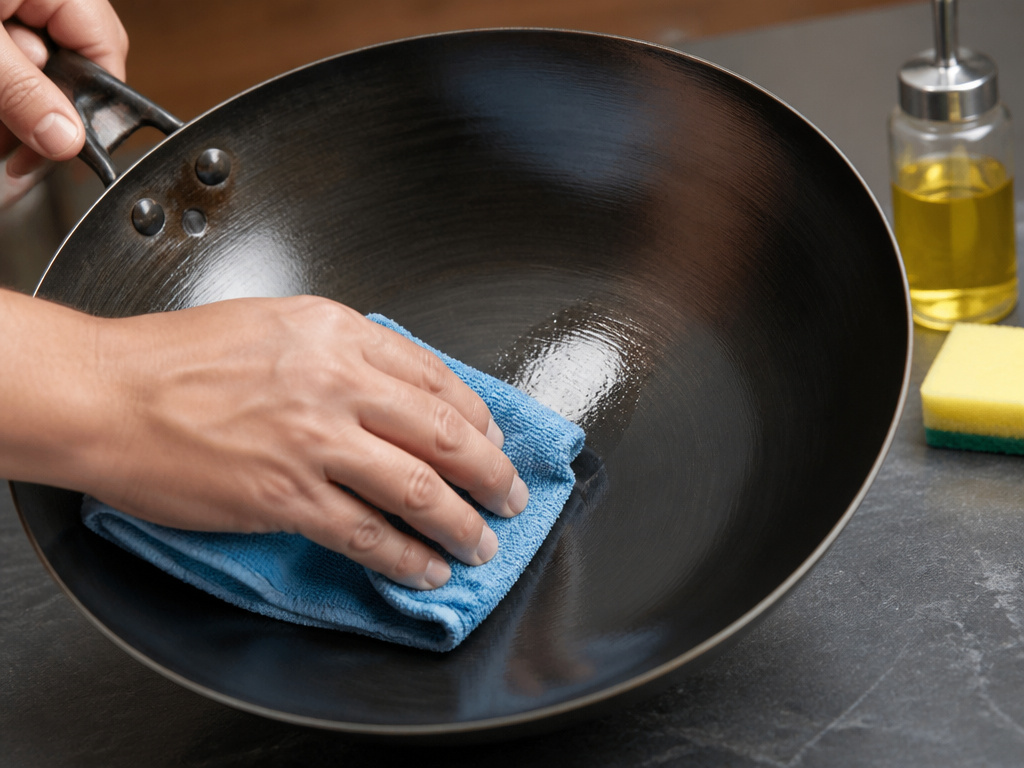
The daily routine takes two minutes. Wash with hot water and a soft sponge. Place the wok on a burner over medium heat until all water evaporates and the metal is warm to the touch. Take it off the heat, let it cool for a moment, then apply a few drops of oil on a paper towel. Wipe the entire interior, then use a clean towel to buff off every visible trace of oil. The surface should look and feel dry, not slick.
That’s it. Store it. This is the “seasoning” you do every time.
The Three Triggers for a Full Re-Season
You only need to break out the oven or take the wok through a high-heat bluing process when you see one of these three physical signs. They indicate the foundational polymerized layer has failed.
- Sticky or Gummy Patches. This is the classic sign of too much oil during maintenance. If your wok feels tacky days after you’ve oiled it, the oil never fully polymerized. It’s just sitting there, going rancid. The Masterbuilt manual’s tip is direct: “Wok should not be sticky to the touch. If sticky, simply heat and cool your wok until the desired coating texture is achieved.” That means a full re-season to burn off the gunk and start fresh.
- Rust Spots. Carbon steel rusts when bare metal meets water and oxygen. If you see orange speckles, your maintenance oil layer was too thin, missed a spot, or water wasn’t fully dried. Don’t panic. As the manual says, “Simply scrub away the rust and re-season your wok.” Use a mild abrasive like salt or a dedicated scrubber, dry it completely, and then do a full seasoning session on the affected area or the entire interior.
- Large, Bare Metal Areas or Severe Flaking. This usually follows a major mistake: cooking a tomato sauce, deglazing with wine and letting it sit, or running it through the dishwasher. Acid and prolonged contact with soap strip polymerization. When the dark patina is gone in large sections, showing the lighter metal beneath, you need to re-season the entire cooking surface.
Where this goes sideways: Trying to fix a sticky wok with another thin coat of oil. The new oil just adds to the gummy pool. You must remove the sticky layer with soap and a scrub first, then re-season with high heat.
How a Pre-Seasoned Wok Changes the Rules
Some modern woks, like the Misen Carbon Steel Wok, ship with a factory-applied seasoning. The company states it’s “ready to use right out of the box.” This is a genuine kiln-baked polymerized layer, not just a rust-preventative oil coating.
If you have a pre-seasoned wok, you skip the initial, multi-round seasoning marathon. Your first step is a simple wash with warm, soapy water to remove any dust, then a thorough dry. After that, you jump straight to the daily maintenance routine: cook, clean, dry, apply a protective oil coat.
The factory layer is your foundation. Your job is to protect it and let it build from there with each stir-fry. The frequency of full re-seasoning is the same—only when the triggers above appear. The advantage is you get a non-stick surface from day one without the hour of oven work.
The Right Oil and Why Its Smoke Point Matters
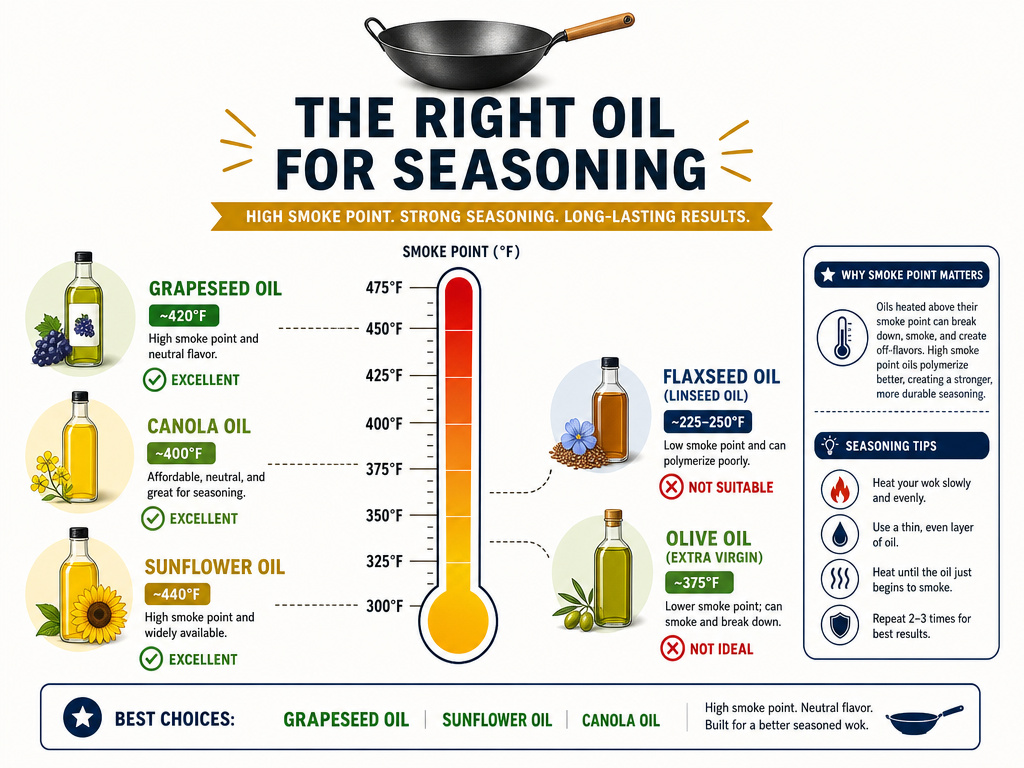
The “thin layer of oil” advice is useless if you use the wrong oil. Polymerization requires heat above the oil’s smoke point. If your oil smokes at 350°F but you only heat the wok to 300°F during maintenance, you’re just adding grease, not bonding it.
For a full seasoning a wok session, you need an oil with a high smoke point. The Masterbuilt manual specifies oils with a smoke point of 400°F – 475°F (204C – 246C), naming canola, sunflower, vegetable, flaxseed, grapeseed, or soybean oil. It explicitly warns against avocado, coconut, or olive oil.
For daily maintenance oiling, the same rules apply. You’re not actively polymerizing it that moment, but if any residual oil does get heated during the next cook, you want it to polymerize nicely, not turn to gunk. This is why seasoned wok owners keep a bottle of grapeseed or canola oil specifically for maintenance.
| Oil Type | Approx. Smoke Point | Good for Seasoning? | Note |
|---|---|---|---|
| Grapeseed | 420°F (216°C) | Yes | Neutral flavor, high smoke point. A top choice. |
| Canola | 400°F (204°C) | Yes | Widely available, inexpensive. |
| Sunflower | 440°F (227°C) | Yes | Excellent high heat performance. |
| Flaxseed | 225°F (107°C) | No (per manual) | Low smoke point, prone to flaking. |
| Olive Oil | 375°F (191°C) | No (per manual) | Smoke point too low; will create a sticky, uneven coat. |
Choosing a seasoning oil is the first concrete decision in the process. Getting it wrong guarantees a substandard result no matter how perfect your technique.
The Step-by-Step Recovery for a Damaged Wok
When your wok hits one of the three triggers, here is the full recovery process. This is the complete re-seasoning you do a handful of times a year at most.
- Scrub It Clean. For stickiness or rust, wash the wok with warm, soapy water and a stiff brush or mild abrasive. You must remove all compromised seasoning and rust. For severe cases, use a paste of coarse salt and a little oil as a gentle scrub. Rinse and dry completely.
- Dry Over Heat. Place the clean wok on your largest burner over medium-high heat. Swirl it around until every part of the interior is bone-dry and hot to the touch. This also begins the “bluing” process, where the steel oxidizes and darkens, improving oil adhesion.
- Apply a Paper-Thin Oil Coat. With the wok off the heat but still warm, use a towel to apply a few drops of your high-smoke point oil. Wipe it over the entire interior, then aggressively buff with a clean, dry towel. The goal is to leave only a microscopic film. If it looks shiny or wet, you used too much.
- Polymerize the Oil. Choose your method:
- Oven Method: Place the wok upside down on the middle rack. Bake at 400°F (204°C) for 1 hour. Let it cool completely in the oven. This is the method specified in the Masterbuilt manual and gives the most even heat.
- Stovetop Method: Heat the oiled wok over medium-high heat until it starts to smoke lightly. Tilt and rotate so the smoke coats the entire interior. Keep heating until the smoking stops and the wok has a uniform, matte appearance. Let it cool.
- Repeat Once (Optional). For a brand-new wok or one stripped to bare metal, a second round creates a more durable base. For a minor repair, one round is often enough.
- Return to Maintenance. Once cooled, your wok is re-seasoned. Immediately return to the daily habit: cook, clean, dry, apply a protective oil coat.
This process fixes the problem. Then you go back to forgetting about it, armed with the simple daily wipe that prevents the problem from coming back.
Frequently Asked Questions
Do you oil a wok after every use?
Yes, but with a critical distinction. You apply a microscopically thin, almost buffed-off layer of oil after cleaning and completely drying the wok. This is a protective barrier, not an attempt to re-polymerize the surface every day. The wok should look and feel dry, not greasy.
How often should you re-season a carbon steel wok?
There’s no schedule. You re-season a carbon steel wok only when the seasoning fails—when you see stickiness, rust, or large bare patches. With proper daily maintenance, a well-used wok might go a year or more without needing a full re-season. Infrequently used woks may need it more often if the maintenance oil coat wasn’t sufficient.
Can you use soap on a seasoned wok?
Yes, for occasional deep cleaning or to remove sticky residue. Modern dish soaps are mild and won’t strip a well-polymerized seasoning layer. The old rule came from lye-based soaps. The real enemy is soaking or abrasive scrubbing, which can mechanically damage the patina. For daily cleaning a seasoned wok, hot water and a soft sponge is usually enough.
Why is my seasoned wok sticky?
sticky wok is almost always caused by using too much oil during maintenance or re-seasoning. Excess oil can’t fully polymerize and remains as a semi-liquid, gummy layer. The fix is to wash it with soap to remove the sticky oil, dry it thoroughly, and perform a correct, thin-coat re-seasoning with high heat.
The Bottom Line
You don’t season a wok every time. You maintain it every time with a dry-heat and a vanishingly thin oil wipe. This two-minute ritual is what builds a legendary patina and prevents rust. A full, high-heat re-seasoning is a repair job for when that maintenance fails or the layer gets damaged.
Listen to the pan. A smooth, matte-black surface means keep doing what you’re doing. Stickiness, rust, or bare spots mean stop, scrub, and re-season. Your wok’s performance hinges on knowing the difference between daily care and occasional repair. Get that right, and the wok lasts a lifetime, improving with every use.
