
What Is Cast Aluminum Cookware? Essential Facts Explained
This post contains affiliate links. As an Amazon Associate, we earn from qualifying purchases.
Cast aluminum cookware is pots, pans, and bakeware made by pouring molten aluminum into a sand or metal mold. The process creates a single, thick piece of metal with excellent heat retention and even heating. Its composition is regulated by standards like the 1946 NIST CS134-46, which limits impurities like copper and nickel to minimize staining and corrosion during normal use.
That standard is the line between the reliable cookware in your kitchen and the problematic pieces made from uncontrolled scrap metal. The difference concerns both durability and what can migrate from the pan into your food over time.
What follows: the simple physics of why cast aluminum heats so evenly, the specific alloy limits that keep it safe, and the two cooking scenarios where even a high-quality pan warrants extra caution.
Key Takeaways
- Cast aluminum’s thick walls and porous structure give it superior heat retention compared to thin, stamped pans, making it ideal for tasks like searing and baking.
- Reputable manufacturers adhere to material standards that strictly limit impurities; cookware made from unregulated scrap metal can leach heavy metals like lead and cadmium.
- The anodizing process electrochemically hardens the surface, creating a non-stick, non-reactive layer that prevents aluminum from transferring into acidic foods.
- Pressure cooking in aluminum significantly accelerates metal migration compared to standard stovetop use, according to peer-reviewed research.
- For daily stovetop cooking with non-acidic foods, a well-maintained cast aluminum pan is a safe, high-performance tool. For long simmers with tomatoes or wine, switch to stainless steel or enameled cast iron.
What’s the difference between cast and stamped aluminum?
You can feel the difference before you even turn on the stove. Pick up a cast aluminum skillet, it has a substantial, rigid heft. A stamped aluminum pan feels thin and light, and it often flexes slightly under pressure. This isn’t just about weight; it’s about thermal mass.
Stamped aluminum is made by pressing a sheet of metal into shape with a giant die. It’s fast and cheap, producing the thin pans common in budget sets. They heat up and cool down almost instantly. Cast aluminum is poured as a liquid into a mold, then solidifies. The resulting piece is thicker and has a slightly porous, granular structure at a microscopic level.
That granular structure acts like a sponge for heat. It absorbs energy from the burner and releases it slowly and evenly across the entire cooking surface, eliminating the dramatic hot spots that cause food to burn in the center of a thin pan.
This makes cast aluminum the default for commercial baking sheets and pizza stones, any application where steady, even heat is non-negotiable. A stamped pan warps over high heat; a cast pan shrugs it off. The trade-off is responsiveness. If you need to slam from a boil to a simmer, cast aluminum’s heat retention works against you. It will stay hot longer.
The Manufacturing Process: How It’s Made
The journey from raw metal to a finished pan starts with melting. Aluminum ingots, along with specific alloying elements like silicon or magnesium, are melted in a furnace at around 660°C (1220°F). This molten metal is then poured into a pre-formed mold.
There are two main molding methods. Sand casting uses a compacted sand mold to create the shape. It’s a traditional method that leaves a characteristic rough texture on the pan’s exterior. Die casting uses a reusable steel mold, allowing for smoother surfaces and more intricate detail. After cooling and solidifying, the rough pan, called a casting, is removed from the mold.
The casting is then “finished.” This involves grinding off the rough sprue (the channel where the metal was poured), sanding or machining the cooking surface to a smooth finish, and often attaching handles made from a different material, like stainless steel or phenolic resin, which stay cool on the stovetop. For anodized aluminum cookware, the pan then undergoes an electrochemical bath that transforms the surface layer into an extremely hard, non-reactive ceramic.
Material Composition and Safety Standards
Not all aluminum is the same. The safety and performance of your cookware hinge on the specific alloy, the recipe of aluminum and other elements, that was melted down.
In 1946, the U.S. National Bureau of Standards published Commercial Standard CS134-46 to bring order to the market. This voluntary standard, accepted by major manufacturers from Griswold to Club Aluminum, established strict limits on impurities for the first time. Its purpose was to “minimize staining and corrosion under conditions of normal use.”
The standard is remarkably specific. It permits alloying with silicon, magnesium, zinc, titanium, chromium, and manganese. But it caps other elements: copper at 0.3%, nickel at 0.1%, iron at 1.0%, and any other single element at 0.05%. You can read the full government cookware material standard online.
| Element | Maximum Allowable % (NIST CS134-46) | Why It Matters |
|---|---|---|
| Copper | 0.3% | Adds strength but can cause staining and increase reactivity with acidic foods. |
| Nickel | 0.1% | A common allergen; high amounts indicate lower-grade or scrap metal sources. |
| Iron | 1.0% | Naturally occurs in aluminum ore; affects hardness and corrosion resistance. |
| Other Elements (each) | 0.05% | Prevents the use of unknown or harmful scrap metal additives. |
Modern equivalents, like Europe’s EN 601 standard, continue this principle. A reputable brand’s “cast aluminum” pan uses a known, food-safe alloy. The problem arises with non-branded or informally produced cookware, often in developing markets. A 2020 review in Annals of Science and Technology confirmed that cookware made from scrap metals, like old car parts or electronics, can leach nickel, arsenic, copper, cadmium, and lead. This is the core of aluminum leaching concerns. The pan itself becomes a source of contamination.
Where this goes sideways: Assuming all cast aluminum is created equal. The alloy recipe is everything. A pan meeting an established standard is a kitchen workhorse. One made from mystery scrap is a health gamble.
Performance and Best Uses in the Kitchen
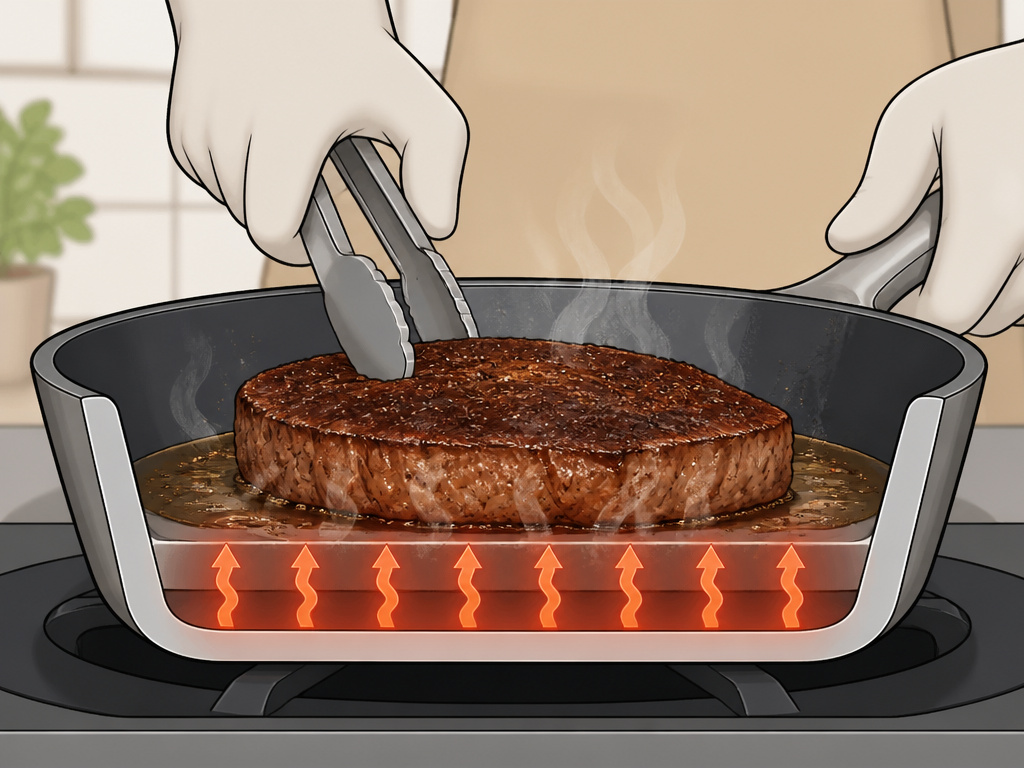 Cast aluminum excels where even, sustained heat is the goal. Its thermal properties dictate its natural strengths.
Searing and Browning: That excellent heat retention means a pre-heated cast aluminum skillet won’t cool down dramatically when you add a steak. It maintains the high temperature needed for a proper Maillard reaction, creating a superior crust. This is a key point in the ceramic vs aluminum debate, ceramic coatings on thin aluminum can’t match this brute-force thermal mass.
Baking and Roasting: This is its undisputed kingdom. Commercial bakeries use thick cast aluminum sheet pans for a reason. They distribute oven heat perfectly, preventing burnt bottoms and promoting even rising. A cast aluminum roaster will cook a turkey more evenly than a thin stainless steel version.
Sauces and Simmering: Here, you must match the pan to the food. For a long-simmered tomato sauce or a wine-based braise, the acidity can react with bare aluminum over time, potentially giving the food a metallic taste and increasing aluminum migration. This is the moment to switch to enameled cast iron or stainless steel. For neutral tasks like boiling potatoes or steaming vegetables, it’s perfectly fine.
The Anodized Advantage: This electrochemical process solves the reactivity problem. It thickens the natural oxide layer on the aluminum’s surface into a hard, inert ceramic coating. This makes the pan non-stick, incredibly scratch-resistant, and completely non-reactive. You can simmer tomatoes in hard anodized cookware without a second thought. The core still provides the even heat of cast aluminum, but the surface is radically upgraded.
Maintenance, Durability, and Downsides
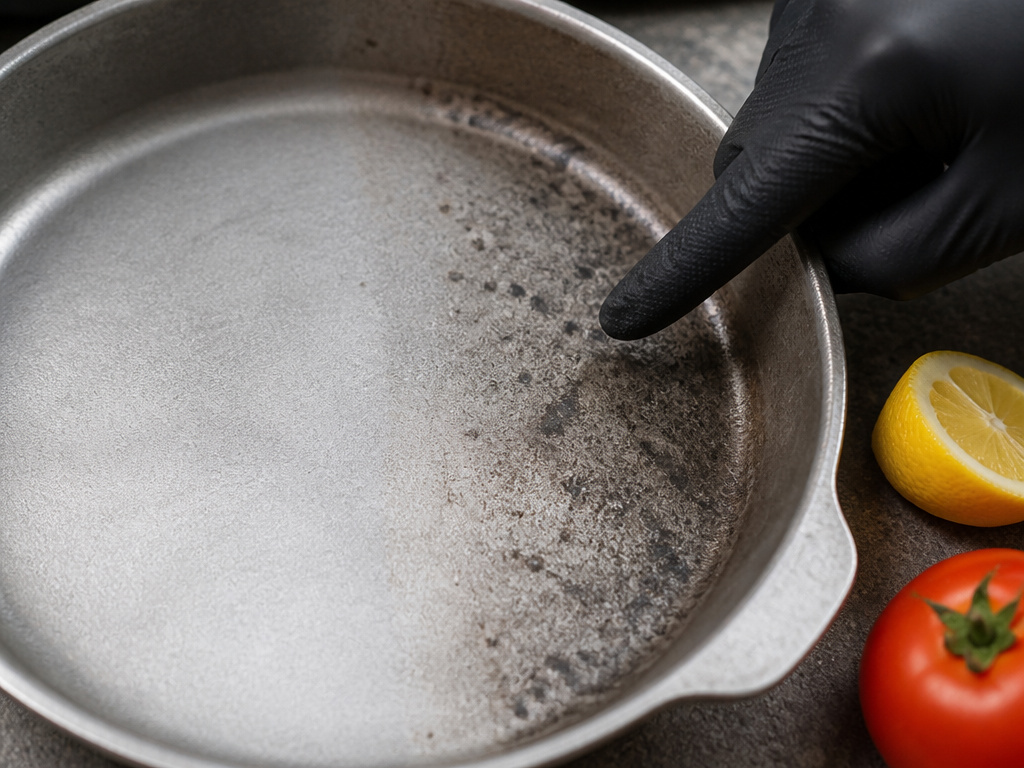 Cast aluminum is durable but not indestructible. Its care routine is simpler than cast iron cookware but requires more attention than stainless steel.
Cleaning: Never use steel wool or harsh abrasive cleaners on bare or anodized aluminum. They will scratch the surface. For bare aluminum, a soft sponge with warm, soapy water is sufficient. For stuck-on food, soak the pan first. For cleaning aluminum cookware that’s anodized, you can be slightly more aggressive, but avoid oven cleaner or bleach, which can damage the coating. Always dry it thoroughly to prevent water spotting.
The Reactivity Factor: This is the primary functional downside. Cooking highly acidic or salty foods (think citrus, tomatoes, vinegar, or long brines) in bare aluminum can cause a small amount of aluminum to transfer into the food and may impart a faint metallic taste. It also can darken or pit the pan’s interior over time. This is a material property, not a deal-breaker. You just choose the right tool for the recipe.
Durability Notes: A high-quality cast aluminum pan will last for decades. However, it can crack or fracture if dropped onto a hard surface from a significant height. Unlike cast iron safety, which is almost purely about weight and rust, aluminum’s failure mode is impact. The handles, if riveted, can also loosen over many years of use, but this is repairable.
Cast Aluminum vs. Other Common Materials
Choosing cookware is about matching material properties to your cooking style. Here’s how cast aluminum stacks up.
| Material | Best For | Heat Conductivity | Reactivity | Maintenance |
|---|---|---|---|---|
| Cast Aluminum | Even searing, baking, roasting | Excellent | Reactive (unless anodized) | Low; hand-wash recommended |
| Stamped Aluminum | Quick, responsive cooking, budget sets | Excellent | Reactive | Very low; often dishwasher safe |
| Stainless Steel | Acidic foods, deglazing, durability | Poor (needs aluminum/clad core) | Non-reactive | Low; very durable, dishwasher safe |
| Cast Iron | High-heat searing, oven-to-table | Good, but slow to heat | Non-reactive (when seasoned) | High; seasoning required, hand-wash only |
| Hard-Anodized Aluminum | Non-stick performance, acidic foods | Excellent | Non-reactive | Medium; hand-wash, avoid metal utensils |
The Non-Stick Question: Traditional non-stick coatings (like Teflon) are often applied to cast aluminum bodies. This combines even heating with easy food release. However, the coating wears out eventually and can’t be used at very high heats. Ceramic non-stick coatings are another option, offering higher heat tolerance but often less durability.
Induction Compatibility: Bare aluminum is not magnetic and will not work on an induction cooktop. However, many manufacturers add a magnetic stainless steel plate to the bottom of cast aluminum pans to make them induction-ready. Always check the manufacturer’s specification.
Safety and Health Considerations: A Data-Driven Look
The question of aluminum cookware safety hinges on dose and source. The body excretes small amounts of aluminum efficiently. Health Canada notes that the amount leached from cookware meeting modern standards contributes a very small fraction to total dietary intake.
However, research highlights specific risk multipliers. A key finding from the PMC leaching assessment study is that pressure cookers increase element migration significantly compared to traditional pots. The combination of high heat, pressure, and extended cooking time creates a much more aggressive environment. If you use an aluminum pressure cooker, limit cooking cycles and avoid highly acidic contents.
The condition of the cookware matters deeply. Health Canada explicitly advises against using worn, pitted, or deeply scratched aluminum pots. Those imperfections dramatically increase the surface area exposed to food, accelerating transfer. This is why proper aluminum cookware care is a safety practice, not just cosmetic.
For the average home cook using a quality pan for typical stovetop cooking, the exposure is negligible. The real risk resides in two places: chronically cooking acidic dishes for hours in bare aluminum, and using cookware of unknown, scrap-metal origin. Your best defense is to buy from reputable brands that adhere to published material standards and to understand the limits of the material in your hands.
Frequently Asked Questions
Is cast aluminum cookware safe?
Yes, when it is produced to a recognized material standard (like the old NIST CS134-46 or modern EN 601) and used appropriately. Avoid cooking acidic foods like tomatoes or citrus for extended periods in bare aluminum, and do not use cookware that is visibly pitted or worn. Anodized cookware safety is higher, as the process creates a non-reactive barrier.
Can cast aluminum go in the oven?
Almost always, yes. Cast aluminum handles high oven temperatures very well. The limiting factor is usually the handle material. If the handles are made of aluminum or stainless steel, they are oven-safe. If they are coated with rubber or plastic, check the manufacturer’s rating, typically up to 350°F or 175°C.
How do I season cast aluminum cookware?
You don’t season bare cast aluminum like you would traditional cast iron. Aluminum doesn’t hold a polymerized oil seasoning in the same way. Some manufacturers recommend a one-time “conditioning” by coating the pan with oil and heating it to fill microscopic pores, but this is for corrosion protection, not non-stick properties. For a non-stick surface, you need an applied coating or to choose an anodized version.
Why is my aluminum cookware turning dark?
This is normal oxidation. Exposure to air and heat causes aluminum to form a thin layer of aluminum oxide on its surface. This layer is actually protective and prevents further corrosion. You can remove dark spots with a paste of cream of tartar and water or lemon juice, but it will likely re-form. It does not affect performance or safety.
Is cast aluminum better than non-stick?
They are different tools. Cast aluminum refers to the body material and its heating properties. “Non-stick” refers to a surface coating (often applied to an aluminum body). A cast aluminum pan provides superior, even heat for browning. A non-stick coating provides easy food release and cleaning. Many high-end best aluminum cookware sets use a cast aluminum body with a durable non-stick coating to get both benefits.
Before You Go
Cast aluminum cookware is a testament to simple, effective engineering. Its value lies in its brute-force heat distribution and affordability. The safety narrative is a spectrum defined by the alloy in the pan and the food you put in it.
Stick with known brands that use controlled alloys. Reserve your bare aluminum pieces for neutral foods and high-heat jobs like searing and baking. For acidic long cooks, switch to stainless steel or enameled iron. And if you want the heating performance of aluminum without the reactivity, hard anodized aluminum is the logical upgrade. It’s a material that rewards informed use.
