
Can You Boil Water in a Cast Iron Skillet? The Safe Method
This post contains affiliate links. As an Amazon Associate, we earn from qualifying purchases.
You can boil water in a cast iron skillet, but the answer hinges entirely on whether your pan is enameled or traditionally seasoned. Enameled cast iron, like pieces from Le Creuset or Staub, has a fused glass coating that handles boiling and simmering without issue. Traditional seasoned cast iron relies on a baked-on layer of polymerized oil; boiling water for more than 10-15 minutes at a rolling boil actively degrades this seasoning, leading to rust and flaking within a few uses.
That split is where most online advice goes wrong. It treats all cast iron as one material, but enameled and seasoned pans are as different as a non-stick fry pan and a carbon steel wok. One is designed for wet cooking; the other isn’t.
What follows: a breakdown of the two pan types, the chemistry of why water attacks seasoning, the exact time and heat thresholds that trigger damage, and what to do if you’ve already seen flakes in your stew.
Key Takeaways
- Enameled cast iron is built for boiling; its glass coating is impervious to water. Check your pan’s manual. KitchenAid’s states it’s oven-safe to 500°F and fine for boiling.
- In seasoned cast iron, boiling is a cleaning trick. The turbulent, hot water that loosens stuck-on food also loosens your hard-earned seasoning. Keep it under 15 minutes.
- The damage isn’t instant. A single short boil won’t ruin your pan. The risk is cumulative weakening, which shows up as patchy, dull spots or black flakes in your food after several incidents.
- If you see flakes, stop boiling and re-season. Flaking means the polymerized oil layer has detached. Scrub it smooth and apply a fresh coat of oil baked at 450°F for an hour.
- For pasta, beans, or long-simmered soups, use a different pot. A stainless steel stockpot or an enameled Dutch oven is the right tool for the job.
What Type of Cast Iron Do You Have?
Your first step is identification. The care instructions for these two materials are opposites, and using the wrong one will either needlessly restrict you or quietly damage your pan.
Enameled cast iron has a smooth, often white or colored, glass-like coating fused to the iron at extreme heat. Brands like Le Creuset, Staub, and many KitchenAid pieces are enameled. The coating is non-porous, doesn’t require seasoning, and is chemically inert. The KitchenAid manual is explicit: “No seasoning is required before use. The cast iron cookware has a porcelain enamel coating that does not require seasoning.” You can boil, simmer, and deglaze with wine in these pans without a second thought. Their only real enemy is thermal shock, don’t take a scorching hot pan and plunge it into a sink of cold water.
Traditionally seasoned cast iron is the classic black skillet or Dutch oven from brands like Lodge or antique finds. Its cooking surface is bare iron protected by layers of polymerized oil, a cured coating you build and maintain. This pan excels at searing, frying, and baking cornbread. It is not the best tool for extended boiling. This is the pan the rest of this guide is for.
Where this goes sideways: Assuming a “cast iron Dutch oven” is always seasoned. Many modern ones are enameled. Look at the interior, if it’s shiny and any color but black, it’s almost certainly enameled and safe for boiling.
How Does Boiling Water Damage Seasoning?
Seasoning isn’t just oil baked onto metal; it’s a chemical transformation. When you heat oil on iron at a high enough temperature (around 450°F), the fat molecules cross-link and bond to the metal in a process called polymerization. This creates a hard, slick, semi-plastic coating that sticks to the pan and shields the iron from moisture.
Heating oiled cast iron to 450°F for one hour causes polymerization, bonding the oil to the iron. Repeating this two to three times builds a durable, protective layer that prevents rust and provides a natural non-stick surface.
Boiling water attacks this layer in two ways: heat and mechanical action.
The temperature of boiling water (212°F) is far below the polymerization temperature, but it’s still enough to heat and soften the hardened oil matrix. More critically, the constant, turbulent motion of a rolling boil acts like a mild, continuous scrub. It hydrates and mechanically lifts the polymerized oil from the microscopic pores in the iron’s surface.
Think of how you clean a really dirty pan: you soak it in hot water or simmer water in it to loosen the grime. You’re doing the same thing to your seasoned skillet’s protective coating. The result isn’t immediate catastrophic failure. It’s a gradual weakening. The seasoning becomes patchy, loses its sheen, and eventually releases as those dreaded black flakes into your food.
Safe Simmering vs. Damaging Boil: The Time & Heat Thresholds
Not all wet cooking is equally harmful. A gentle simmer for a chili is different from a vigorous, rolling boil for pasta. The line depends on intensity and duration.
| Activity | Heat Level | Max Safe Time (Seasoned Iron) | Why It’s (Mostly) Safe |
|---|---|---|---|
| Gentle Simmer | Low bubble, 190-205°F | 60+ minutes | Minimal turbulence; the liquid’s fat content (in stews, chili) helps protect the seasoning. |
| Vigorous Simmer | More bubbles, ~210°F | 30 minutes | Increased turbulence starts to mechanically stress the seasoning layer. |
| Rolling Boil | Rapid, constant bubbles | 10-15 minutes | Maximum heat and turbulence; actively degrades seasoning with each minute. |
The 10-15 minute rule for a rolling boil isn’t arbitrary. It’s the point where the mechanical stripping action overtakes the coating’s adhesion. If you’re boiling water to sterilize something or blanch vegetables, keep it brief. If you’re cooking a pound of pasta that needs 12 minutes, use a stainless steel pot.
Common mistake: Boiling water to clean a skillet. Yes, it loosens food. It also loosens seasoning. Do it once in a blue moon if you must, not as a regular practice.
What If You Already Boiled Water and See Flakes?
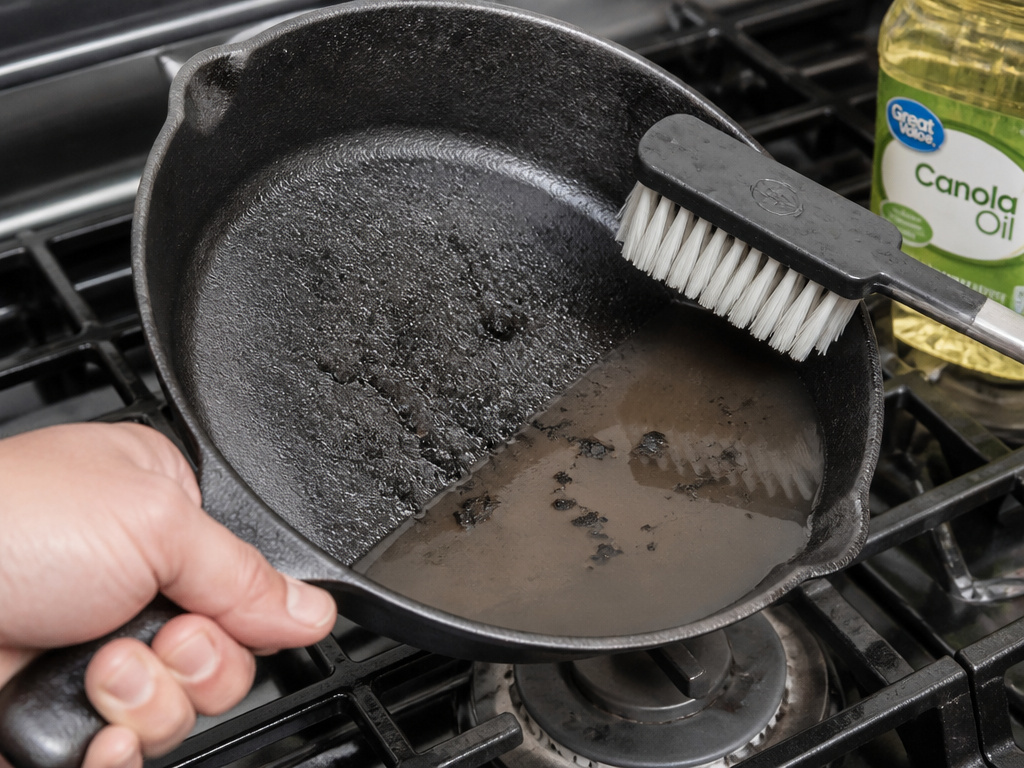 Don’t panic. You haven’t ruined a skillet beyond repair. You’ve just worn down the top layer of seasoning. Here’s your triage process:
- Empty and cool the pan. Let it come down to warm, not cold.
- Scrub gently. Use a nylon brush or scrubber with a drop of dish soap (modern soap is fine) and warm water. The goal is to remove any loose, flaky material. Don’t attack the intact seasoning around it.
- Dry it immediately and thoroughly. This is the critical step to prevent rust. Place it on a stove burner over low heat for a few minutes until all moisture evaporates.
- Apply a thin coat of oil. While the pan is still warm, rub a tiny amount of a high-smoke-point oil (canola, grapeseed, flaxseed) over the entire interior surface.
- Wipe it out. Use a fresh paper towel to buff the oil layer until it looks almost dry. This leaves a microscopic film.
- Consider a full re-season. If the flaked area is large or the pan looks blotchy, it’s time for an oven seasoning process. Apply oil, wipe it dry, and bake it upside-down at 450°F for an hour. Let it cool in the oven.
Your pan will be fine. This is routine cast iron maintenance.
The Right Pot for the Job: When to Use Something Else
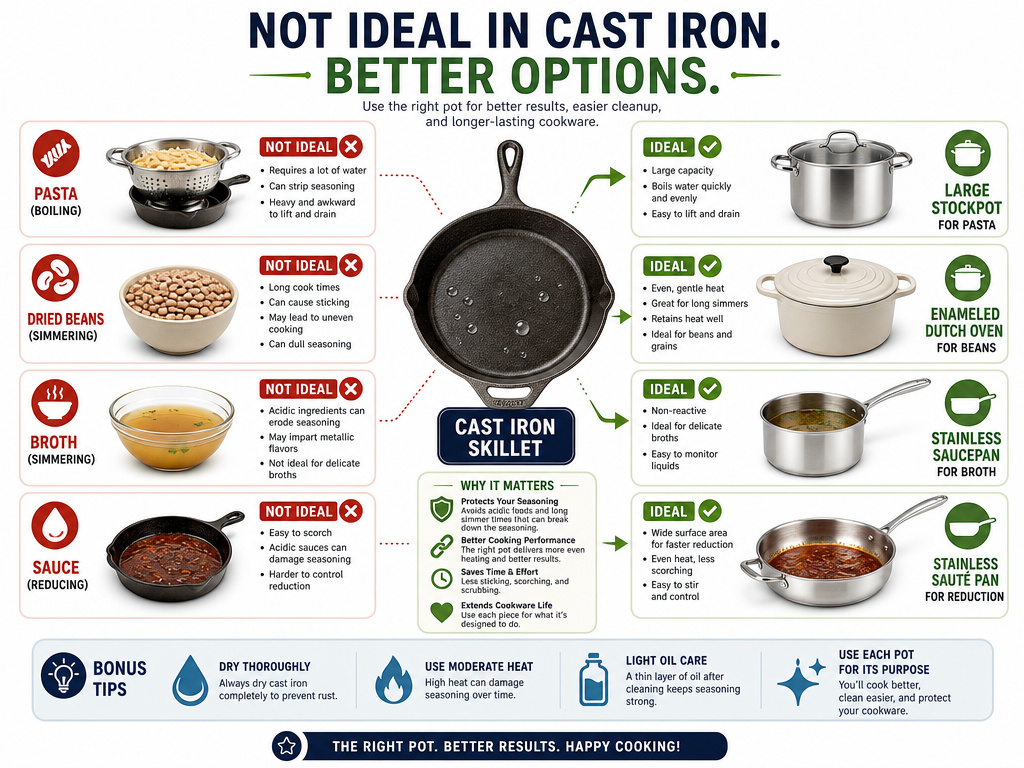 A seasoned cast iron skillet is a kitchen workhorse, but even workhorses have limits. Knowing when to reach for another pot is a sign of good kitchen sense, not a failure of your pan.
- Pasta: Requires gallons of water at a rolling boil for 10-20 minutes. Use a large stainless steel or enameled stockpot.
- Dried Beans: Long simmering (1-2+ hours) in watery broth. An enameled Dutch oven or a slow cooker is ideal.
- Clear Soups & Broths: Extended simmering with high water content and little fat. A stainless steel saucepan works best.
- Reducing a Large Amount of Liquid: Boiling down several cups of stock or wine for a sauce. The prolonged exposure is harsh on seasoning.
For dishes like chili, thick stews, or braises, your seasoned cast iron Dutch oven is often perfect. The liquid is usually at a gentle simmer, and the dish contains ample fats and oils that help buffer the seasoning.
Frequently Asked Questions
Can you boil water in cast iron to clean it?
You can, but you shouldn’t make it a habit. Boiling water is an effective way to loosen stubborn, stuck-on food because it attacks the bonds holding that food to the pan, unfortunately, those are the same kinds of bonds holding your seasoning to the pan. Doing this repeatedly is a sure way to end up with a patchy, weak seasoning layer that requires more frequent maintenance.
Why does my food turn black when I simmer something?
Those black specks are flakes of your seasoning that have detached from the pan’s surface. It’s a direct sign that the simmering (or boiling) action, potentially combined with acidity from ingredients like tomatoes, has compromised the polymerized oil layer. It’s not dangerous to eat, but it means your pan needs some care.
Is enameled cast iron really okay for boiling?
Yes, absolutely. The Virginia Tech food science article on cast iron myths notes that enameled cast iron, like Le Creuset, is the better choice for long-simmered acidic foods. The vitreous enamel coating is fused to the iron in a kiln; it’s a glass surface that doesn’t react with water, acid, or anything you cook in it. Just avoid thermal shock.
How can I tell if my seasoning is damaged from boiling?
Look for visual changes. Healthy seasoning is dark, even, and has a slight satin sheen. Damaged seasoning will appear patchy, with dull or lighter gray spots where the coating has thinned or lifted. You may also feel roughness where flakes have begun to detach. Run your finger over the dry surface, it should feel smooth, not gritty or flaky.
Can I fix a cast iron skillet that rusted from boiling water?
Yes, rust is always fixable. Scrub the rust away thoroughly with steel wool or a stiff brush under running water. Dry it completely over heat, then immediately apply a thin coat of oil. You will almost certainly need to perform a full oven re-seasoning cycle (or three) to rebuild a robust protective layer and prevent rust from returning.
The Bottom Line
Boiling water in a seasoned cast iron skillet is a question of degree, not an absolute ban. A short, occasional boil won’t destroy it, but making a habit of it will steadily damage the seasoning you’ve worked to build. For extended, watery cooking, the right tool is an enameled pot or a stainless steel saucepan. Your seasoned cast iron is unparalleled for creating a sear, frying chicken, or baking a perfect cornbread. Use it for those jobs, and it will last for generations with simple, consistent care.
