
What Is a Dutch Oven Made Of? Materials & Build Explained
This post contains affiliate links. As an Amazon Associate, we earn from qualifying purchases.
A Dutch oven is made of one of three core materials: cast iron (often coated in ceramic enamel), bare cast iron, or die-cast aluminum. The classic, heavy-duty version is sand-cast iron, melted and poured into molds. Enameled versions fuse a glass-based ceramic coating to that iron in a high-temperature kiln. Modern electric or lightweight models use pressure die-cast aluminum with a non-stick or ceramic interior.
That material choice isn’t just about weight. It dictates the pot’s heat retention, how you clean it, its reaction to acidic foods, and its lifespan. An enameled cast iron Dutch oven and a bare cast iron one are siblings, but they live by different rules in your kitchen.
What follows: a breakdown of each primary material, the exact manufacturing steps that turn raw metal into a pot, and the specific performance trade-offs you sign up for with each type. By the end, you’ll read a product description and know exactly what you’re getting, and what you’re not.
Key Takeaways
- Cast iron is the traditional core, prized for its incredible heat retention and even heating, but requires seasoning to maintain a natural non-stick surface and prevent rust.
- Ceramic enamel is a glass coating fused to cast iron or aluminum; it prevents rust, resists acids, and eliminates seasoning, but can chip or scratch from impact or metal utensils.
- Aluminum die-casting creates lighter, more affordable pots with excellent heat conductivity, often paired with a ceramic or non-stick interior, but they lack the thermal mass for long, slow braises.
- The manufacturing method matters: sand-casting creates the classic textured surface, while pressure die-casting allows for thinner, more precise walls and features like an integrated 7.5mm thick base.
- Lid design is part of the material system. Enameled lids often have specially designed condensation points (like the 26 convex points on a MasterPro lid) that continuously baste your food.
The Core Materials: Cast Iron, Ceramic, and Aluminum
Your Dutch oven‘s behavior, how it heats, what it can cook, how you care for it, starts with what it’s made of. The three main players are cast iron, ceramic enamel, and aluminum. Most pots use a combination.
Cast iron is an alloy of iron and carbon, melted and poured into a sand mold. Once cooled, the rough casting is smoothed, creating a porous surface that holds onto oil during seasoning. This porous structure is what gives bare cast iron its legendary heat retention and even heating, but also makes it prone to rust if not properly maintained.
Bare cast iron is the original. It’s what Francis Staub used when he founded his company in Alsace in 1974. This material soaks up heat and holds it steadily, making it perfect for searing meat and then transitioning to a long, slow oven braise. That same thermal mass is why it’s heavy. The trade-off is maintenance: you must build and maintain a seasoned layer of polymerized oil on its surface to prevent rust and create a natural non-stick finish.
Ceramic enamel isn’t a standalone material; it’s a coating. It’s a powdered glass formula sprayed onto cast iron (or sometimes aluminum) and fired at around 1500°F. This fuses the coating to the metal, creating a durable, non-porous surface. The enamel on a Lodge or Le Creuset pot does three jobs: it seals the iron from moisture and rust, it creates a naturally non-reactive surface for cooking tomatoes or wine, and it adds color.
The Hawkins manual is blunt about enamel’s limits: “The ceramic coating may scratch or chip during use, these are not defects and are not guaranteed.” A chip exposes the iron beneath, which can rust. A smooth, glossy enamel is easy to clean but can stain. A matte, sand-colored enamel (like Le Creuset’s “Signature” interior) hides stains better but can be slightly less slick.
Aluminum, specifically pressure die-cast aluminum, is the modern entry. Here, molten aluminum is forced under high pressure into a steel mold. This allows for thinner, more consistent walls and intricate shapes, like the integrated extra-thick base on the Hawkins Die-Cast Dutch Oven. Aluminum heats quickly and evenly, but it lacks the heat-holding “flywheel” effect of cast iron. It’s often paired with a ceramic or non-stick interior coating, making it a low-maintenance, lighter-weight option.
| Material | Best For | The Trade-Off |
|---|---|---|
| Bare Cast Iron | High-heat searing, slow oven braises, building a custom seasoning layer. | Requires regular seasoning; reactive to acidic foods; heavy. |
| Enameled Cast Iron | One-pot meals, acidic sauces (tomato, wine), easy cleaning, no seasoning. | Can chip from impact; glossy interiors may stain; significant investment. |
| Die-Cast Aluminum | Everyday stovetop cooking, quick heating, lighter weight, lower cost. | Less thermal mass for long braises; non-stick coatings wear over time. |
How a Dutch Oven is Manufactured
The journey from raw material to finished pot explains the final product’s cost, weight, and performance. The two primary methods are centuries-old sand-casting and modern die-casting.
Sand-casting is the traditional process for cast iron Dutch ovens. It starts with melting iron, often from a mix of new and recycled sources. This molten iron is poured into a sand mold created from a pattern. Once it cools and solidifies, the sand mold is broken away, revealing a rough casting.
The rough casting is then sandblasted or ground to remove sharp edges and the sandy texture. For enameled models, it’s washed in acid baths to ensure perfect adhesion before the enamel powder is sprayed on and fired.
That textured surface on the bottom of a Lodge skillet? That’s the ghost of the sand mold. After casting, the piece is cleaned, polished, and inspected. For enameled versions, the process adds critical steps: the cast iron is washed in acid baths to etch the surface, then dried. A ground-coat enamel is sprayed on and fired, followed by the colored top-coats. Each layer is fired separately in a kiln. Lids get the same treatment. The final inspection often includes weight tests, lids are struck or weighted to ensure they can withstand a drop.
Pressure die-casting is how aluminum and some composite pots are made. Molten aluminum is injected under high pressure into a precision steel mold, or die. This creates a part with thinner walls, smoother surfaces, and finer detail than sand-casting. The Hawkins Die-Cast Dutch Oven uses this method to create its unique oval shape and that 7.5mm extra-thick base in one piece. After casting, the piece is cooled, removed, and finished, often with a ceramic non-stick coating applied to the interior.
The result is a lighter, more affordable pot that heats efficiently. What it sacrifices is the thermal mass that makes a cast iron Dutch oven so forgiving for a six-hour stew.
Ceramic Enamel: The Workhorse Coating
When you see a colorful Dutch oven, you’re looking at ceramic enamel. This coating is the reason you can deglaze a pan with red wine without worrying about a metallic taste. It’s a glass-based layer fused to the metal substrate.
There are two common types of enamel finish. A smooth, glossy enamel is what you find on the exterior of most colorful pots and the interior of some. It’s easy to wipe clean but can develop faint stains from oils or spices over time. A matte, satin enamel (often in light sand, black, or white) is used for cooking surfaces. It’s slightly more porous at a microscopic level, which helps it hide staining and provides a bit more stick resistance, though it may not be as slick as a well-seasoned bare pan.
Where this goes sideways: Using metal utensils on enamel. A stainless steel spoon won’t hurt seasoned cast iron, but it can scratch or chip enamel. Once the glass coat is compromised, the iron underneath is exposed to moisture and will rust, spreading under the surrounding enamel.
The MasterPro Electric Dutch Oven manual explicitly warns against letting the enamel inner liner get damaged by “hard or sharp objects.” A chip isn’t just cosmetic. It creates a point where rust can start, which can eventually lift more enamel off. For small chips on the cooking surface, you can carefully smooth them with fine sandpaper and keep the area oiled. A chip on the exterior is mostly a cosmetic issue.
Cleaning enamel requires a gentle touch. Abrasive scouring pads or harsh cleaners can dull the glossy finish. For baked-on food, the Lodge manual recommends a baking soda boil: simmer two cups of water with four tablespoons of baking soda for a few minutes, then use a wooden or plastic scraper.
Lid Design and Material Synergy
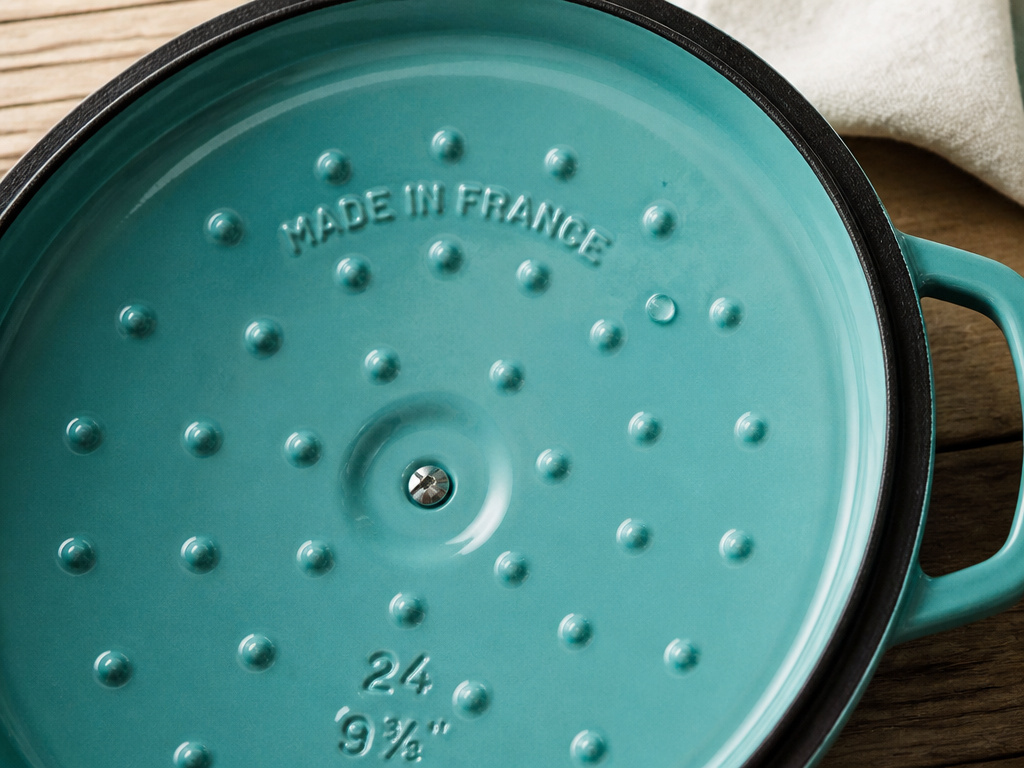 A Dutch oven’s lid is not an afterthought. Its weight, fit, and material are engineered to work with the pot’s body. The tight seal traps moisture, which condenses on the underside of the lid and drips back down, continuously basting the food.
This is where material and design intersect perfectly. Many enameled cast iron lids have self-basting spikes or dimples on their underside. The MasterPro lid, for example, has 26 convex points designed to capture condensation and direct it evenly back onto the food. Bare cast iron lids achieve the same effect through their mass and simple domed shape, condensation forms and drops naturally.
The lid’s knob is another material checkpoint. Phenolic knobs are standard on models rated for oven use up to about 375°F–400°F. For higher oven temperatures (like baking bread at 450°F+), you need a lid with a stainless steel knob. Always check the manufacturer’s rating.
Bare Cast Iron vs. Enameled: The Care Divide
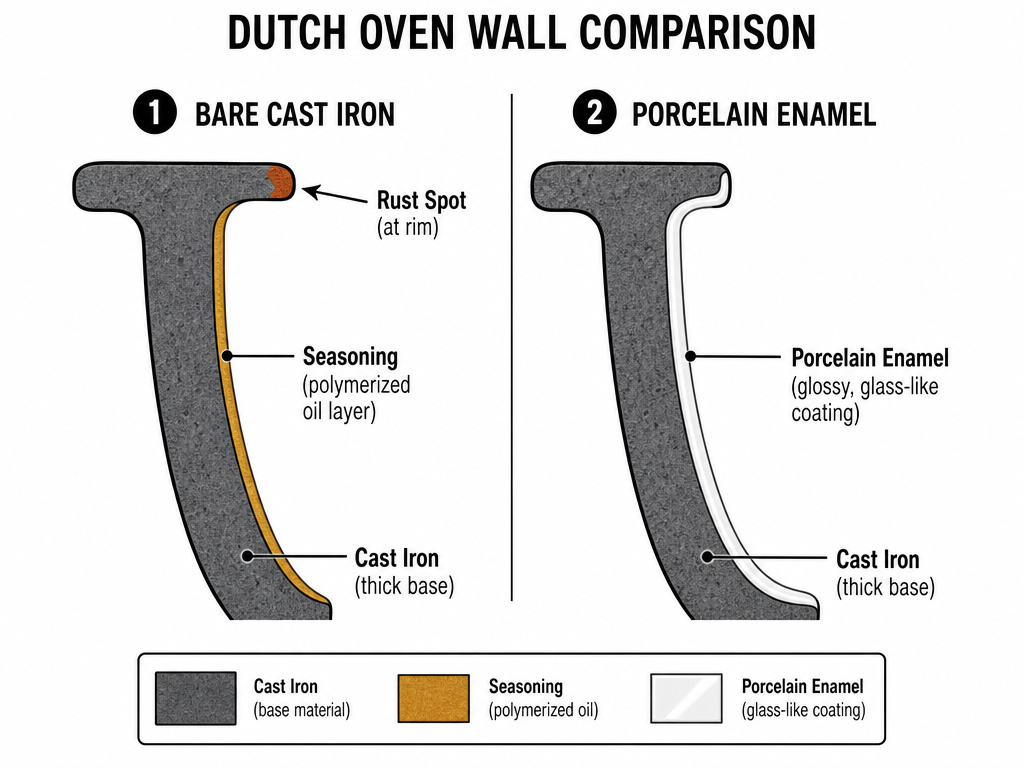 This is the single biggest decision point for most cooks, and it comes down to your willingness to perform maintenance. The materials dictate entirely different care routines.
Bare cast iron requires an active relationship. You build its non-stick surface through seasoning, coating it with a thin layer of oil and heating it until the oil polymerizes, bonding to the iron. This layer protects against rust and improves release. Cooking with it maintains the seasoning. Cleaning means scrubbing with hot water and a brush (no soap, traditionally, though modern mild soap is fine), drying it thoroughly immediately, and sometimes applying a fresh whisper of oil.
Common mistake: Storing food in a bare cast iron pot. The Ship to Shore manual states it plainly: “Do not store food in cast iron cookware.” The acids and salts can break down the seasoning and promote rust, especially at the rim. Transfer leftovers to a different container.
Enameled cast iron is largely passive. There’s no seasoning. You cook, let it cool, wash it with warm soapy water, dry it, and put it away. The enamel is the barrier. The Lodge manual notes that while their enameled pots are technically dishwasher safe, hand washing preserves the finish. The main enemies are thermal shock (don’t plunge a hot pot into cold water) and physical impact.
Storage matters for both, but for different reasons. The Ship to Shore manual advises storing cast iron in a dry, uncovered place, “especially if you live in a humid climate.” A bare iron pot stored with the lid on in a damp cupboard can develop surface rust. An enameled pot is safer, but allowing air circulation is still a good practice.
Electric and Modern Composite Dutch Ovens
The material story expands with electric models and specialized composites. These aren’t just pots; they’re appliances with integrated heating elements.
The MasterPro Electric Dutch Oven is a prime example. It has an enamel cast iron liner pot that sits inside a separate electrical housing unit. This is a critical distinction: the cast iron liner can go on a stovetop or into an oven, but the electrical base cannot. The manual is strict: “The electrical housing unit for the enamel pot is not suitable for stovetop, gas oven or electric oven use.” The material here is chosen for its cooking performance (the enameled cast iron), while the housing is engineered for safety and control.
These models use digital controls to manage temperature and timing for functions like slow cooking, sautéing, and steaming. They offer convenience and precision but at the cost of the traditional pot’s versatility, you can’t use the electric base over a campfire.
Modern composite materials also appear. Some brands use a triple-ply stainless steel body with an aluminum core for even heating, topped with a cast iron or heavy-gauge steel lid. These hybrids aim to blend the even heating of clad stainless with the moisture-sealing weight of a traditional Dutch oven lid.
Frequently Asked Questions
Is a Dutch oven always made of cast iron?
No. While cast iron is the classic and most common material, Dutch ovens can also be made from die-cast aluminum, ceramic, or even thick-gauge stainless steel. The defining features are the thick walls, heavy lid, and ability to go from stovetop to oven, not the material itself.
What is the black coating on a Dutch oven?
On a traditional bare cast iron Dutch oven, the black coating is seasoning, a layer of polymerized oil built up through use. On an enameled model, a black interior is usually a matte, sand-colored enamel that’s been dyed black. This dark enamel is excellent for browning and hides stains well.
Can the enamel on a Dutch oven be repaired?
No, not at home. Once the glass-like enamel coating is chipped or cracked, it cannot be re-fused. Small chips on the cooking surface can be smoothed to prevent cutting and the exposed iron can be kept oiled to inhibit rust, but this is a cosmetic and functional compromise. Major damage typically means replacing the pot.
Why are some Dutch ovens so much lighter?
Significantly lighter Dutch oven is likely made from die-cast aluminum rather than cast iron. Aluminum has much lower density, so a pot can have similar dimensions but weigh half as much. Some brands, like Le Creuset, also claim to use a lighter cast iron alloy, reducing weight per liter.
What does “oven-safe” mean for materials?
“Oven-safe” means all materials in the pot’s construction can withstand the specified temperature. For a Dutch oven, this includes the body metal, any coating, the lid, and the lid knob. Phenolic knobs have a lower heat limit (around 375°F–400°F) than stainless steel knobs (often 500°F+). Always verify the knob’s rating for high-heat baking.
Before You Go
A Dutch oven’s material is its personality. Cast iron is the resilient, high-maintenance classic. Enameled cast iron is the colorful, easygoing workhorse. Die-cast aluminum is the lightweight, modern multitasker. Your choice should match how you cook: if you love project cooking and don’t mind upkeep, bare iron rewards the effort. If you want a grab-and-go pot for weeknight braises, enameled is the default.
Ignore the hype about one material being universally “better.” They’re tools for different jobs. The heavy thermal mass of cast iron is useless if you never make stews, just as the quick heating of aluminum is a drawback if you do. Pick the material that fits the meals you actually make. For most home cooks starting out, a 5.5-quart enameled cast iron Dutch oven covers the widest range of techniques with the least fuss. That’s the one you’ll reach for ten years from now.
