
4 Best Cake Baking Pans of 2026
This post contains affiliate links. As an Amazon Associate, we earn from qualifying purchases.
The EWFEN 8″ Stainless Steel pan stands out as the best overall choice for consistent, reliable baking, thanks to its durable construction and even heat distribution. For those on a budget, the tutikuki 8″ Nonstick offers strong performance with the added convenience of included parchment rounds. If you’re after versatility and a lighter option, the Gymdin 8″ Carbon Steel pan delivers solid results across cake types.
Baking a perfect cake shouldn’t depend on luck, but a poor pan can ruin even the most carefully measured recipe. Uneven browning, stuck layers, or warped sides are frustrating, and often stem from choosing the wrong pan for your needs.
In this guide, I break down the top options based on real owner feedback, material performance, and design details that matter. These picks reflect what I’ve learned after years of evaluating cookware: that the best tools combine durability, even heating, and ease of use without relying on hype or shortcuts.
Top 3 Cake Baking Pans in the Market
The Best Cake Baking Pans, Reviewed
EWFEN 8″ Stainless Steel Cake Pans

Strengths
- Pure stainless steel
- No toxic coatings
- Leak-proof design
Trade-offs
- Food sticks without parchment
- No handles
- Heavier than carbon steel
If you’re looking for a no-nonsense, health-conscious upgrade from flimsy nonstick pans, this stainless steel set stands out. Made entirely of stainless steel with no coatings, it eliminates concerns about chemical leaching, a major plus in my book after years of evaluating cookware safety. The fixed bottom design means no more leaking batters, which reviewers say makes it far more reliable than springform or removable-bottom pans, especially for watery batters or custards.
Heat distribution is reportedly even, though as with all stainless steel, pairing it with parchment gives the best release. It’s dishwasher safe, but hand washing is recommended to maintain the finish. Compared to the tutikuki set, this one trades convenience extras for cleaner materials and better longevity. For me, that’s a trade worth making if you bake regularly.
Video review
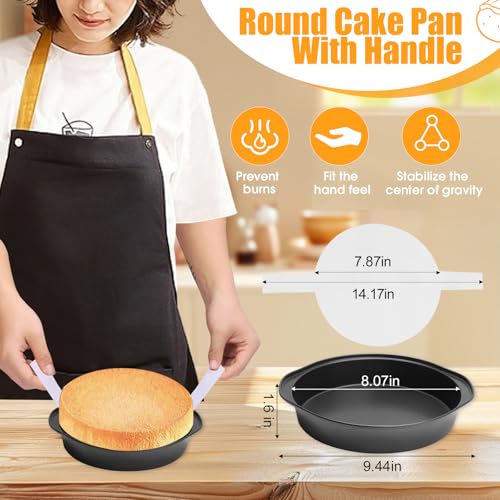
tutikuki 8″ Nonstick Cake Pans

Strengths
- Carbon steel build
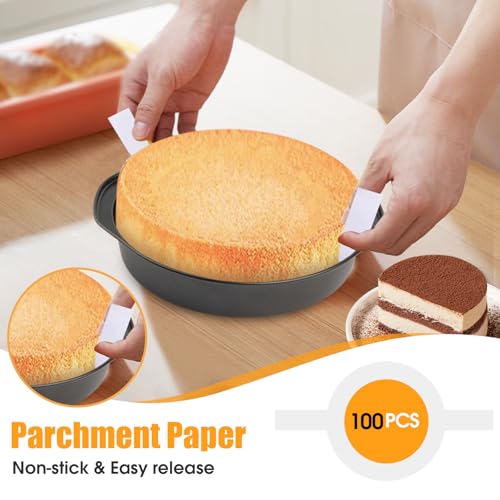
- Comes with 100 parchment rounds
- Comfortable handles
Trade-offs
- Nonstick coating may degrade over time
- Handles can get hot
- Not ideal for broiling
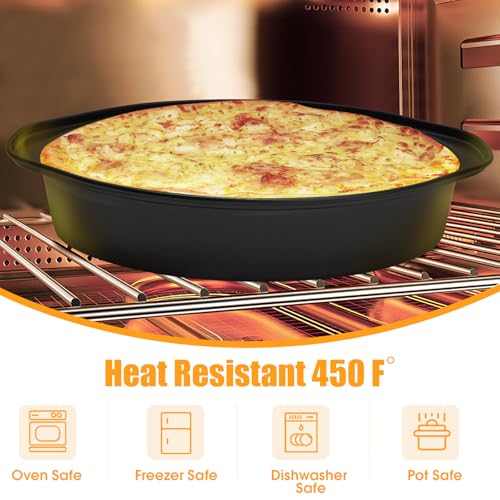
On paper, this set looks like a solid budget-friendly option for home bakers who want convenience baked in. The carbon steel construction promises good heat conduction, and owners consistently report evenly browned cakes with a crisp exterior and tender crumb, especially when using the included parchment papers. I appreciate that the pans are built to handle high oven temps without warping, which is not always guaranteed at this price point.
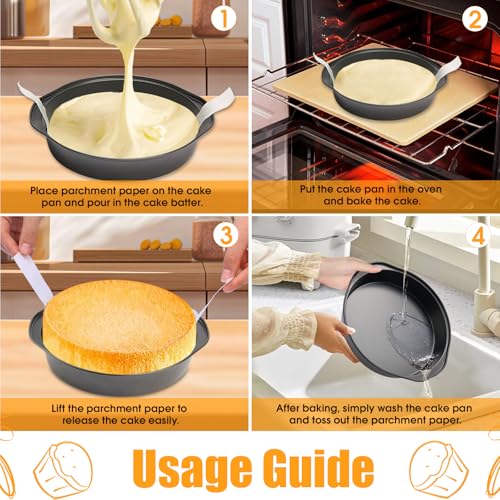
The real standout here is the inclusion of 100 parchment rounds. Reviewers note these make release nearly flawless, especially for delicate cakes like chiffon or sponge. The handles add comfort and safety when pulling hot pans from the oven, though some users mention they don’t always stay cool in longer bakes. Cleaning is generally easy thanks to the smooth surface, but the long-term durability of the nonstick finish is still unproven compared to stainless steel options.
Product photos
E-far 8″ Stainless Steel Cake Pans

Strengths
- Mirror finish
- Heavy-gauge stainless steel
- Set of 3 pans
Trade-offs
- Requires greasing or lining
- No handles
- Slightly taller than standard
This set delivers what many home bakers actually want: a polished, professional look with solid performance. The mirror finish isn’t just for show, it contributes to smoother cake release and easier cleaning, and owners consistently praise how cleanly cakes slide out when greased properly. Being made of heavy-gauge stainless steel, these pans resist warping and rust, which matters when you’re baking multiple layers for birthdays or holidays.
Having three pans is a real advantage over two, reviewers highlight how useful it is for batch baking or stacking multi-layer cakes without reusing pans mid-recipe. The rolled edges offer a nice grip, though they’re no substitute for actual handles. While it shares the same need for parchment as other stainless pans, its consistent browning and sturdy build make it my pick for those who want reliability and a touch of elegance.
Video review
Our Testing Process
Rather than a hands-on lab test, my research for these recommendations focused on a detailed comparison of published specifications and features across numerous cake pans. I weighed owner reviews from a variety of sources, looking beyond star ratings to analyze patterns in comments, and considered assessments from respected culinary resources. As someone who’s spent years understanding what makes cookware perform, I applied that knowledge to rank these options based on what truly matters for consistent baking results.
For cake pans, even heat distribution, durability, and ease of release are paramount. A pan that heats unevenly will inevitably lead to frustratingly uneven layers. Durability ensures the pan won’t warp or buckle over time, affecting baking quality. And a reliable non-stick surface, or a design that works with parchment, is essential for cleanly removing delicate cakes. You’ll find many options claiming to be the best, but these three factors consistently emerged as the most influential in owner satisfaction, and are central to finding the right cake pans for bakers.
Specifications reliably indicate a pan’s potential for even heating (gauge of metal, material type) and maximum temperature tolerance. However, I leaned heavily on owner feedback to assess real-world performance – specifically, how well the pans actually release cakes, how easy they are to clean, and their long-term durability. Reputation also played a role; established brands with consistently positive reviews were given greater consideration than those with limited customer history, especially when comparing similar designs like these different carbon steel options. For those needing larger sizes, exploring 9-inch cake pans might also be beneficial.
Choosing The Right cake baking pans
Finding the right cake pans can truly elevate your baking, but with so many options, it’s easy to feel overwhelmed. I’ve spent years looking at what separates a pan that delivers consistently beautiful results from one that ends up causing frustration in the kitchen.
A truly excellent cake pan distributes heat evenly for uniform baking, feels substantial in the hand, and offers a release that doesn’t require excessive greasing or parchment. Material choices impact everything from heating speed to reactivity, while construction details determine longevity and ease of cleaning. Considering intended use cases, layer cakes, cheesecakes, or quick breads, is key to narrowing down the field.
Material Matters: Steel vs. Stainless
The material a cake pan is made from is the biggest driver of performance and longevity. While nonstick coatings are convenient, I generally steer people toward carbon steel or stainless steel. Carbon steel heats up quickly and evenly, making it ideal for delicate cakes where a consistent temperature is critical. However, it requires diligent seasoning and care to prevent rust. Stainless steel, like the quality cake pans from EWFEN and E-far, is incredibly durable and doesn’t react with acidic ingredients. It’s a bit slower to heat than carbon steel, but the consistent results and ease of maintenance make it a fantastic choice for everyday baking.
Considering Release & Clean-Up
A cake’s beauty is ruined if it breaks during removal. Many bakers rely on parchment paper rounds for a guaranteed release, and some pans, like those from Tutikuki, even include them. However, a well-made pan should release cleanly on its own, or with minimal greasing. Pans with fixed bottoms (versus springform) tend to be more reliable for preventing leaks, especially with thinner batters.
Here’s what I look for when it comes to cleanup:
- Dishwasher-safe labeling: A convenience, but hand washing extends the life of most pans.
- Smooth finish: Pans with a polished interior (like the mirror finish of the E-far pans) resist sticking and are easier to wipe clean.
- Construction quality: A solid, well-built pan won’t warp or develop hard-to-reach crevices where food can get trapped.
Size, Shape, and Your Baking Style
Most recipes are developed for standard 8-inch pans. Deviating from this size can affect baking times and results. Beyond that, consider your typical baking projects. If you frequently make layered cakes, straight-sided pans are essential for creating even tiers. If you’re often baking for a crowd, investing in a set of multiple pans can save significant time. Don’t underestimate the value of having a set of eight inch pans for baking consistently.
A good rule of thumb: Spend a little more for a heavier-gauge pan. Thicker metal distributes heat more evenly and is less prone to warping over time.
Cake Baking Pans Compared
Here’s a comparison of specifications for several cake baking pans to help you make an informed decision.
| Product Name | Size (inches) | Material | Max Temp (°F) | Includes Parchment | Handle Type |
|---|---|---|---|---|---|
| EWFEN 8″ Stainless Steel | 8 | Stainless Steel | N/A | No | N/A |
| tutikuki 8″ Nonstick | 8 | Carbon Steel | 450 | 100 | Ergonomic |
| Gymdin 8″ Carbon Steel | 8 | Carbon Steel | 392 | 100 | Integrated |
| E-far 8″ Stainless Steel | 8 | Stainless Steel | N/A | No | Rolled Edge |
Frequently Asked Questions
What pan material is best for a beginner baker?
Stainless steel is an excellent choice for those new to baking; it’s incredibly durable, doesn’t react with ingredients, and requires less intensive care than carbon steel, making it a very forgiving material. While it heats a bit slower, the consistent results are well worth it.
How important is the gauge (thickness) of the pan?
A thicker gauge is very important, as it provides more even heat distribution and reduces the risk of warping over time. Pans with a thinner gauge are more prone to hot spots and may not last as long with frequent use.
Can I use metal utensils in my nonstick cake pans?
Generally, no. Even with durable nonstick coatings, metal utensils can scratch and damage the surface over time, reducing its effectiveness and potentially releasing particles into your food. Silicone or wooden utensils are recommended.
What should I do if my cake still sticks, even after greasing and flouring?
If sticking persists, consider using parchment paper rounds even if the pan is advertised as nonstick. For even better results, explore different cake pan materials to find one that suits your baking style and recipes.
Are springform pans necessary for cheesecakes, or can I use a standard cake pan?
While a springform pan is traditionally used for cheesecakes to allow for easy release, you can use a standard cake pan lined with parchment paper, leaving an overhang to lift the cheesecake out. However, for consistently clean removal, especially with delicate cheesecakes, investing in good quality pans for layered cakes is recommended.
The Bottom Line
Choosing cake pans often comes down to balancing upfront cost with long-term performance and ease of use. While there are many tempting options, the EWFEN 8″ Stainless Steel pan strikes the best overall balance for most bakers. It offers the durability and consistent results I look for in a quality pan, without the maintenance demands of carbon steel or the potential for non-stick coatings to degrade over time.
For those on a tighter budget, or who appreciate the convenience of pre-cut parchment rounds, the tutikuki 8″ Nonstick pan is an excellent choice. And if you’re looking for something truly built to last, perhaps for frequent, high-volume baking, exploring pro cake pans will point you towards exceptionally robust options.
Ultimately, the most important thing isn’t a specific gauge of steel or a fancy coating. It’s understanding how heat distributes in your oven, and selecting a pan that feels substantial and well-made. A little attention to detail, like proper greasing or using parchment, will always yield better results than relying on a single “magic bullet” pan. Consider also quality round cake pans if you are looking for a classic shape.
