
9 Best Cast Iron Dutch Ovens for Sourdough 2026
This post contains affiliate links. As an Amazon Associate, we earn from qualifying purchases.
The Lodge 6QT Enamel Dutch Oven is the best overall for sourdough, delivering even heat and reliable steam retention. For a budget-friendly option, the Parmedu 5.5QT Enameled Dutch Oven offers solid performance, while the Umite Chef 5QT stands out if you want a versatile pick that includes a proofing basket.
Baking great sourdough at home hinges on having the right vessel, one that holds heat well and traps steam to create that crackling crust and open crumb. Too many Dutch ovens fall short with uneven heating or lids that don’t seal properly, leading to flat loaves or spotty browning.
This guide cuts through the noise by focusing on what actually matters: real-world feedback, build quality, and features that directly impact your bake. I looked at specs and owner experiences to find models that perform consistently, not just in theory.
Top 9 Cast Iron Dutch Ovens For Sourdough in the Market
The Best Cast Iron Dutch Ovens For Sourdough, Reviewed
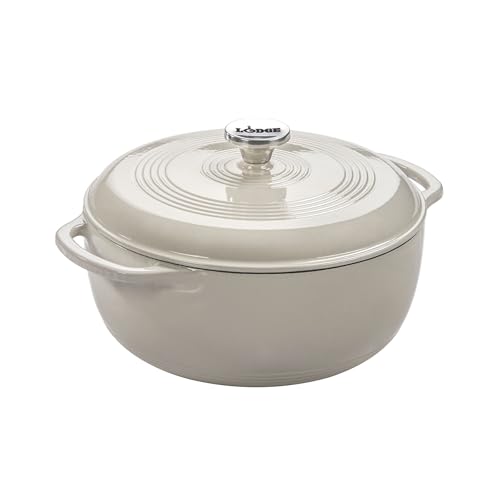
Lodge 6QT Enamel Dutch Oven
Strengths
- Trusted brand reputation
- Superior heat retention
- Durable, long-lasting enamel
Trade-offs
- Heaviest option
- Higher price
- Interior can stain over time
The Lodge 6QT is the best overall choice for most kitchens, not just for sourdough, but for everything. Made by one of the most trusted names in cast iron, it delivers consistent heat retention, a roomy 6-quart capacity, and a durable enamel finish that holds up well over time. The oyster white interior makes it easy to monitor browning, and the wide, stable base prevents tipping. Owners consistently report years of reliable use, even with daily cooking.
Yes, it’s the most expensive here, but you’re paying for proven durability and a brand that stands behind its product. It’s heavier than others, which helps with heat retention but may be awkward for some. Compared to budget models, the difference in thickness and even heating is noticeable. For a single Dutch oven that does it all, this is the one I’d keep in my own kitchen.
Video review
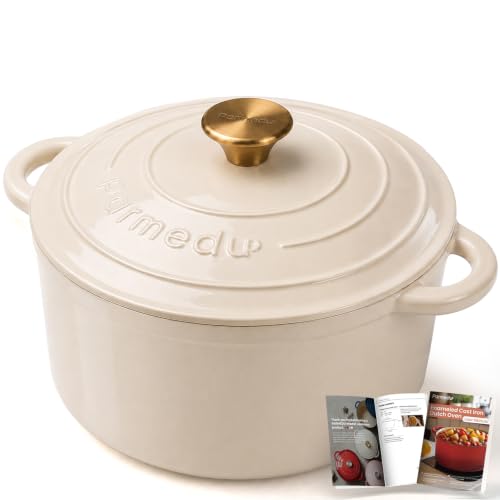
Parmedu 5.5QT Enameled Dutch Oven
Strengths
- Lowest price point
- Good capacity for size
- PFAS-free enamel
Trade-offs
- Thin enamel layer
- Risk of cracking from thermal shock
- Inconsistent quality control
At under $30, the Parmedu 5.5QT pot is the most budget-friendly option here, and surprisingly capable. The extra half-quart over standard 5QT models gives you a bit more room for larger loaves or family-sized meals. It’s made with a multi-layer enamel coating that owners say resists rust and staining better than expected at this price. The heat distribution is even enough for consistent sourdough results, and the tight-fitting lid helps trap steam effectively.
But value comes with trade-offs. The enamel is thinner, so thermal shock is a real risk if you rush cooling. Some users report cracking after improper handling. Also, the color consistency varies between batches. Still, if you’re careful and want a no-frills pot that gets the job done, this is the smarter buy over pricier kits with gimmicky extras.
Video review
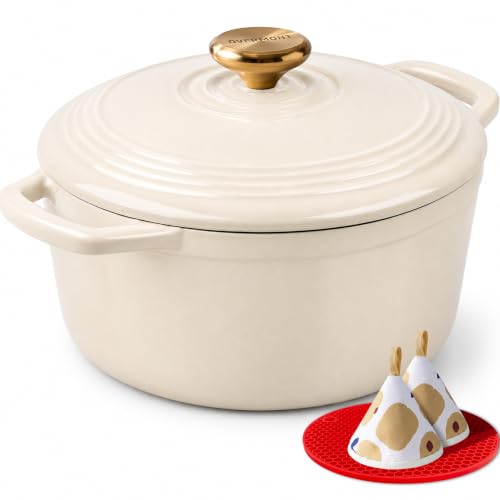
Overmont 5.5QT Enameled Dutch Oven
Strengths
- Excellent steam circulation
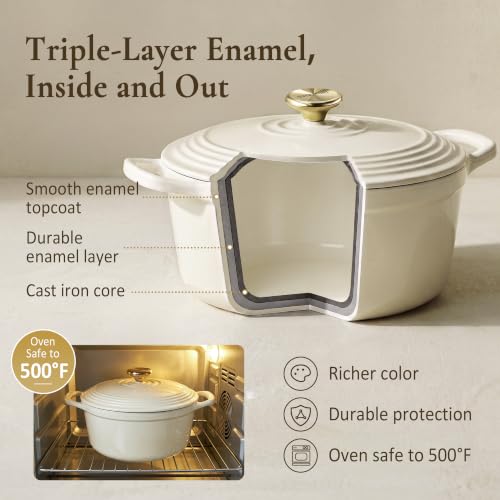
- Triple-layer enamel
- Comes with cookbook and potholders
Trade-offs
- Lid knob not oven-safe at highest temps
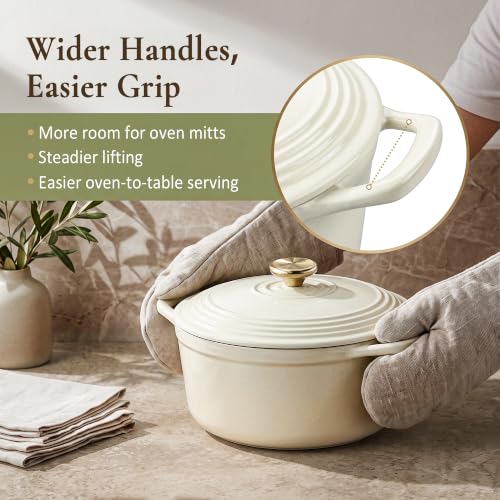
- Slightly bulky handles
- No color variety
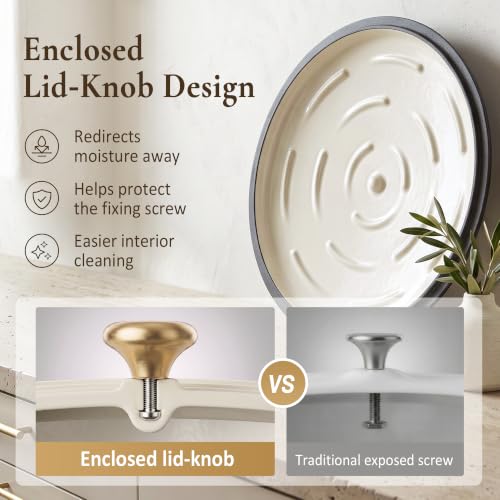
If you’re looking for a Dutch oven that truly excels at sourdough baking, the Overmont model makes a strong case. The 5.5QT size gives enough headspace for proper oven spring, and the triple-layer enamel coating enhances durability while maintaining even heat. Owners highlight the condensation bumps on the lid, they work well to redistribute moisture, which is key for a crispy crust and tender crumb. The heat retention is solid, and it performs reliably across stovetops, including induction.
The included cookbook and cotton potholders add thoughtful touches, especially for gifting. But the real win is the balance between price and performance. It outperforms several pricier models in steam retention and build quality. I’d pick this over the CAROTE or Umite Chef for dedicated bread bakers who also want family meal flexibility.
Product photos
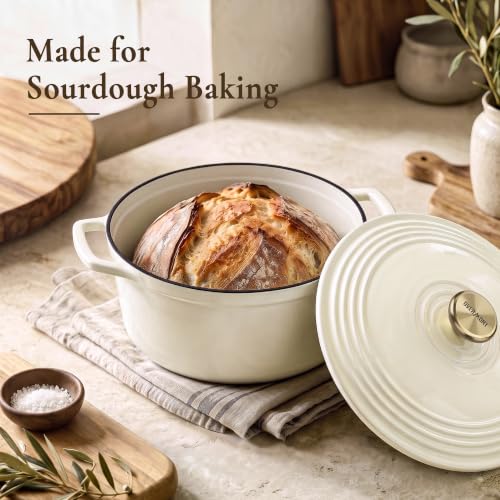
CAROTE 5QT Enameled Dutch Oven

Strengths
- Excellent heat retention
- Self-basting lid design
- Natural non-stick enamel
Trade-offs
- Lid seal could be tighter
- Handles not as ergonomic
- Some enamel chipping reported
CAROTE delivers impressive heat distribution for the price, thanks to its one-piece thick cast iron construction. The 5-quart size is ideal for sourdough and family meals alike, and owners consistently praise how evenly it browns and bakes. The dome lid with raised nodes creates a self-basting effect that works well not just for bread but for stews and roasts, making this a true multi-use pot. The cream white enamel is also more resistant to staining than darker interiors, a small but meaningful detail for long-term use.
It’s not without quirks. Some users report the lid doesn’t seal as tightly as higher-end models, which can slightly reduce steam retention during bread baking. But for most home cooks, the difference is negligible. When you factor in the smooth non-stick enamel and chemical-free glaze, this becomes a strong contender in the mid-tier market.
Product photos
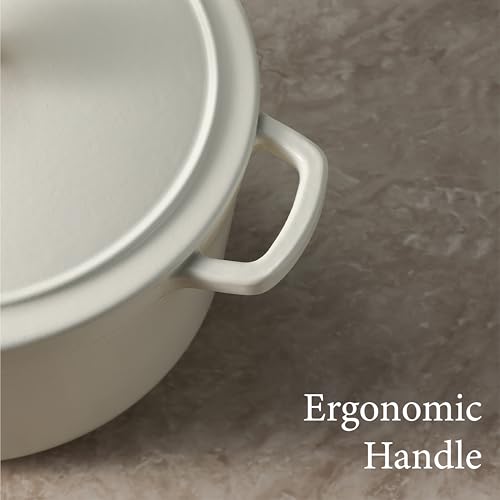
Umite Chef 5QT Enameled Dutch Oven

Strengths
- Great price-to-feature ratio
- Includes cotton potholders
- Wide, secure handles
Trade-offs
- Lid knob not fully oven-safe
- Enamel less durable than premium brands
- Minimal color options
The Umite Chef stands out as the best value package, you get a solid 5QT enameled Dutch oven, a well-designed lid with condensation nodes, and cotton potholders, all at a very competitive price. The thickened walls provide decent heat retention, and the precision-fit lid does a good job locking in moisture, which matters for both sourdough and braises. Owners appreciate the wide stainless steel handles, which stay secure even with oven mitts.
It’s not perfect. The enamel isn’t as durable as Lodge’s, and the lid knob has plastic components that may degrade at high heat. But for the price, it’s hard to beat. Compared to the Parmedu, it feels more refined; compared to the CAROTE, it’s similarly priced but includes useful extras. If you want a no-surprises pot that works well and comes with thoughtful touches, this is the pick.
Product photos


Enameled Dutch Oven with Baking Kit

Strengths
- Full professional toolkit included
- Natural rattan banneton
- Heat-resistant gloves included
Trade-offs
- Pot not as heavy-duty as standalone models
- Some tools feel redundant
- Higher price for included extras
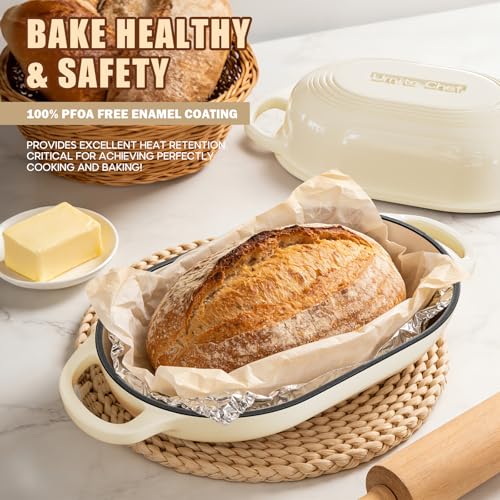
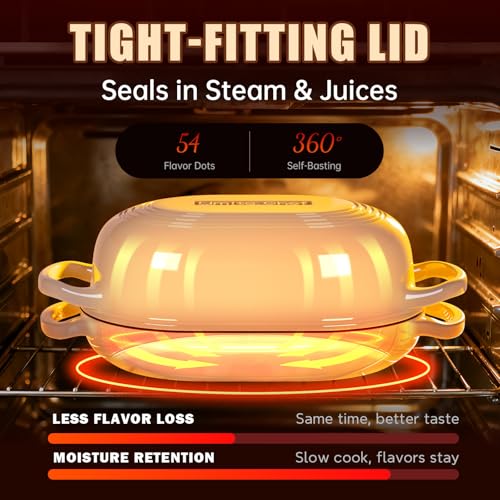
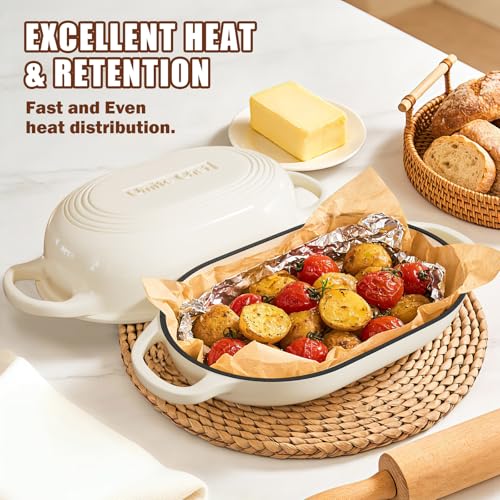
This 9-in-1 kit is hands-down the most complete baking set on the list. From the enameled Dutch oven and rattan banneton to the lame, dough whisk, and heat-resistant gloves, it covers every step of the sourdough process. The 5QT pot performs well for crust development, with the dome lid trapping steam effectively. The inclusion of stainless steel tools and a natural rattan basket adds real value, many kits use flimsy alternatives.
Where it shines is convenience. You can start baking the same day, no extra purchases needed. The pot itself is on par with other mid-tier enameled models, though not quite as thick as Lodge. But for gifting or starting out, the completeness justifies the price. I’d recommend this over the CRUSTLOVE or Armorbear kits for anyone serious about building a sourdough routine.
Product photos


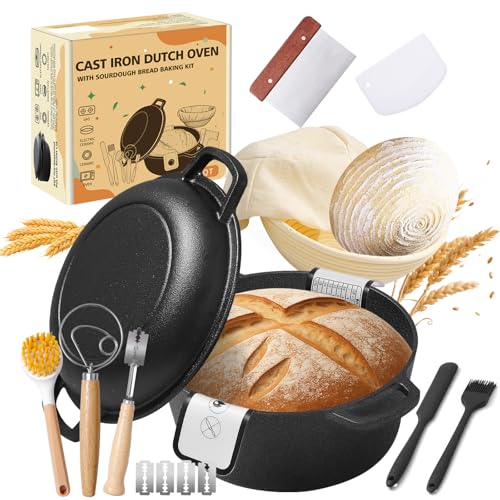
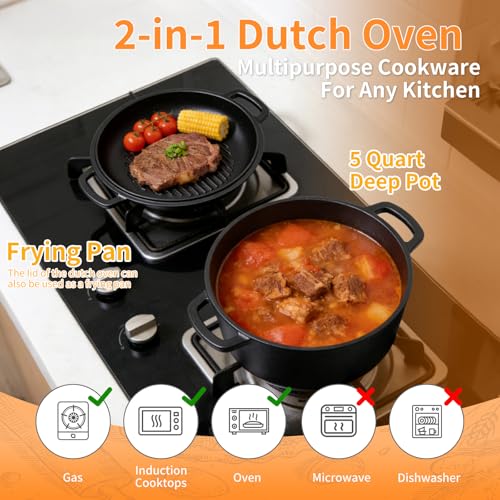
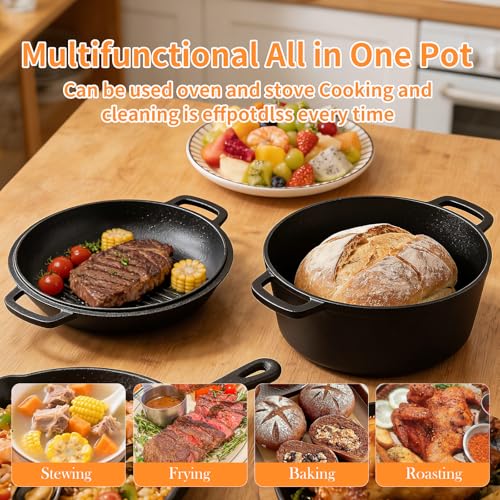
Pre-Seasoned Cast Iron 2-in-1 Dutch Oven
Strengths
- Comes fully equipped
- Lid doubles as skillet
- Naturally non-stick when seasoned
Trade-offs
- Requires ongoing maintenance
- No enamel protection
- Heavier than enameled versions
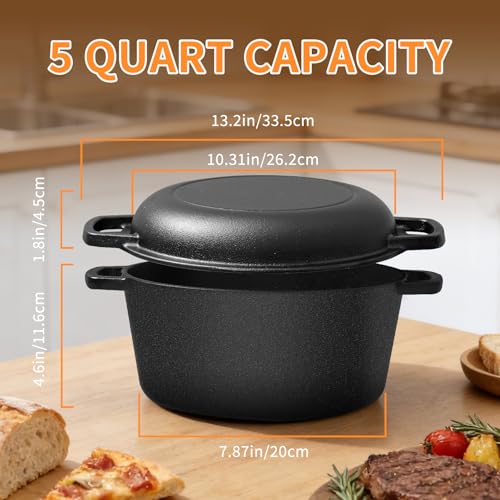
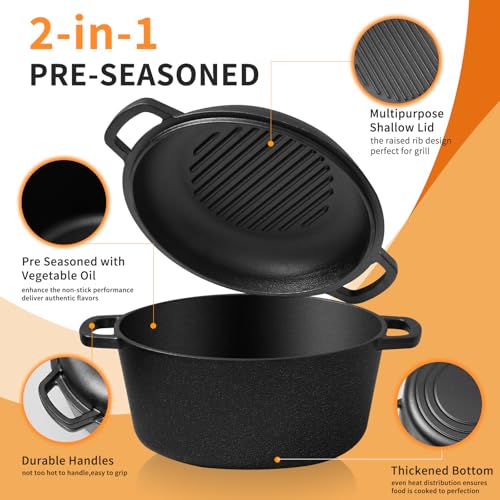
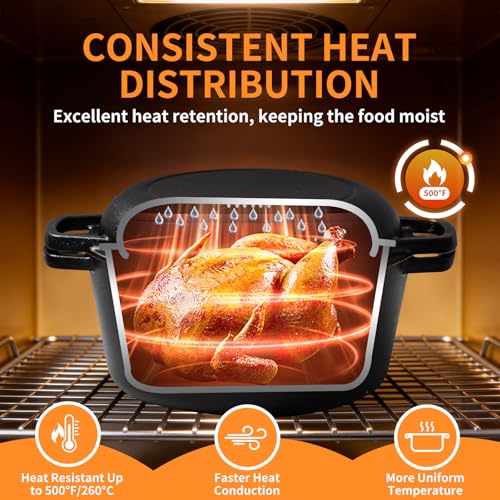
This set stands out for its 2-in-1 versatility, the lid doubles as a functional skillet with grooves that drain fat, which is a clever design for home cooks who want to maximize utility. The pre-seasoned raw cast iron construction means you get the natural non-stick benefits of aged iron right away, and owners praise the crust quality it delivers for sourdough. The heavy base and reinforced walls do an excellent job of heat retention, helping prevent burnt bottoms, a common pain point for new bakers.
What really pushes this over the edge for some is the full toolkit: proofing basket, lame, dough whisk, scraper, and more. It’s one of the few kits where you truly don’t need to buy extras. That said, raw cast iron demands more maintenance than enameled, regular oiling and careful drying are essential to prevent rust. If you’re okay with that, this is a rugged, functional workhorse that grows better with use.
Product photos
CRUSTLOVE 5QT Pre-Seasoned Dutch Oven

Strengths
- Beginner-friendly setup
- Full baking toolkit included
- Pre-seasoned and ready to use
Trade-offs
- Lighter construction
- Inconsistent initial seasoning
- Limited long-term durability
CRUSTLOVE markets this as the ideal entry point for beginners, and based on the included accessories and pre-seasoned finish, it makes sense. The 5-quart pot comes with a banneton, lame, dough whisk, and even a recipe booklet, everything you need to start baking right away. The pre-seasoned surface gets positive feedback for ease of use, and new bakers report fewer sticking issues than expected. The heat distribution is consistent enough for reliable sourdough results, though it doesn’t quite match thicker-walled competitors.
Where it falls short is build refinement. Some owners mention uneven seasoning out of the box and lighter-weight iron compared to Lodge or Staub. It’s functional, but not exceptional. Still, for someone dipping their toes into sourdough, the simplicity and completeness of the kit outweigh the minor flaws. I’d recommend it as a starter set, not a forever pot.
Product photos


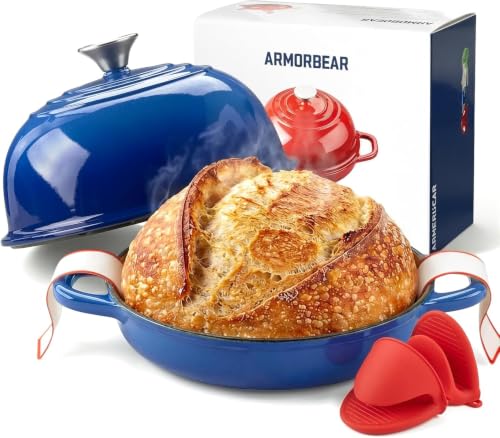
Armorbear 5QT Enameled Sourdough Oven
Strengths
- Strong heat retention
- No seasoning required
- Smooth enamel interior
Trade-offs
- Enamel durability concerns
- Smaller capacity than family-sized models
- Less brand track record
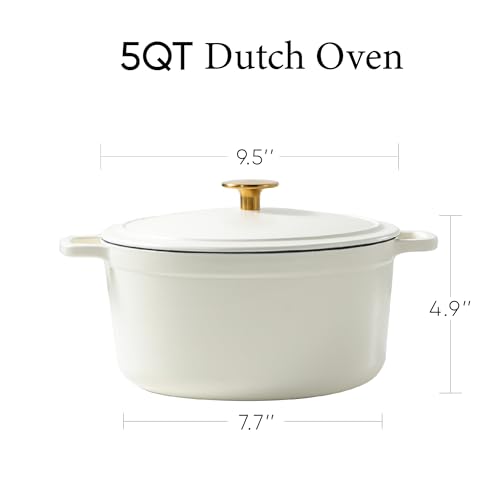
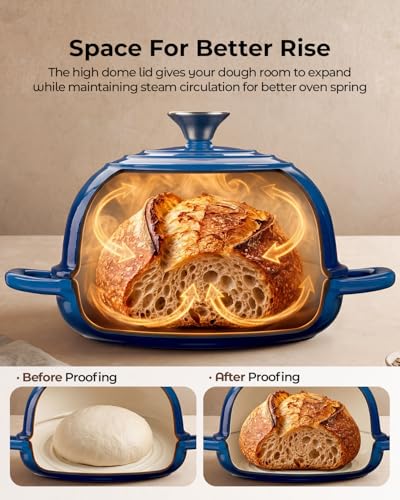
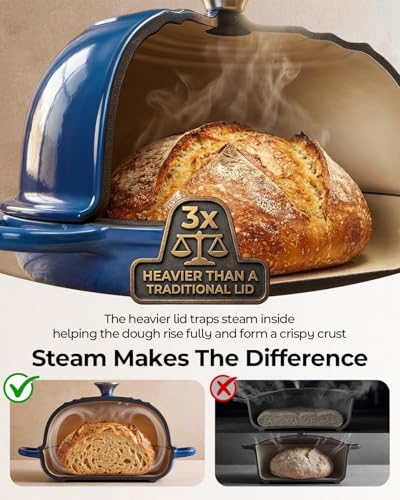
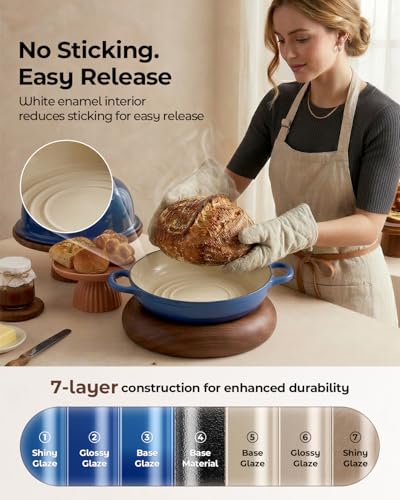
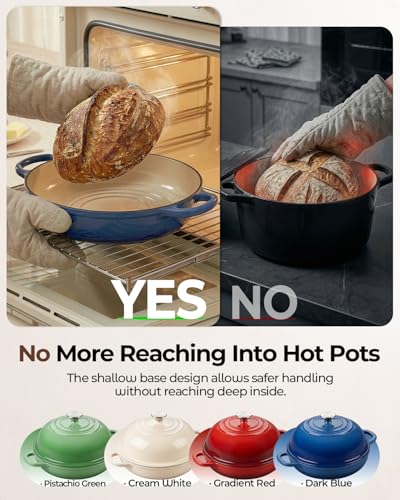
On paper, the Armorbear 9.5-inch Dutch oven looks like a solid pick for sourdough bakers who want a compact, stylish pot with a dome lid designed for optimal oven spring. The 5-quart capacity and 4.92-inch depth are well-suited for standard boules, and the premium cast iron construction promises strong heat retention, critical for that crackling crust. Owners consistently report good results with crust development, and the non-toxic enamel interior eliminates the need for seasoning, which is a win for beginners who want to avoid the maintenance of raw cast iron.
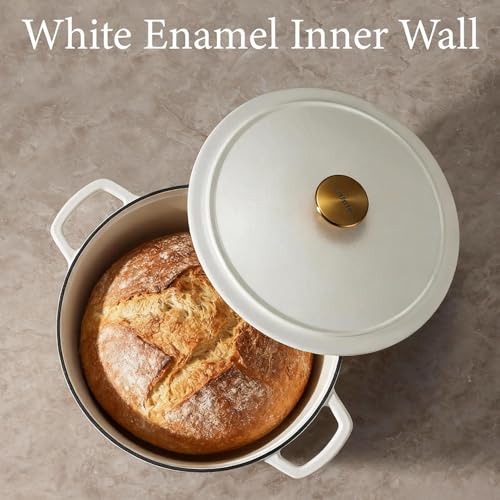
Still, I’d be cautious about long-term enamel durability, especially given the lower price point. While the smooth white interior makes cleanup easier and offers decent non-stick performance, some users note minor chipping after repeated thermal shocks. Compared to more established brands, this one feels like a budget-friendly shortcut, but if you’re careful with preheating and cooling, it can deliver solid performance for the price.
Product photos
How We Evaluated cast iron dutch ovens for sourdough
My approach to evaluating cast iron Dutch ovens for sourdough – and for CookwareCanvas readers – wasn’t about lengthy hands-on testing of each individual pot. Instead, I focused on a research-led comparison of published specifications, features, and, crucially, owner and expert reviews. I weighed performance claims against real-world feedback to determine which models consistently deliver the results sourdough bakers are looking for. Ultimately, I ranked these ovens against clear criteria focused on heat retention, steam trapping, and overall versatility.
For sourdough specifically, even heat distribution and consistent steam retention proved to be the most critical factors. A Dutch oven that doesn’t heat evenly risks a burnt bottom and an underbaked top, while inadequate steam traps hinder oven spring and crust development. Beyond those, capacity (5-6 quarts is ideal for most loaves) and the quality of the enamel coating – its durability and ease of cleaning – significantly impacted the final rankings. You’ll find more general information on best cast iron Dutch ovens in our broader guide.
Specifications reliably reveal construction quality and capacity, but owner feedback provided invaluable insight into real-world performance. I paid close attention to comments regarding enamel chipping, hot spots, and ease of cleanup. While specs detail a pot’s oven-safe temperature, user experiences highlighted which models truly maintained consistent heat over extended baking times. Consulting expert reviews helped validate these trends and identify consistently recommended cast iron Dutch ovens for bread baking.
What To Look For In cast iron dutch ovens for sourdough
Choosing the right cast iron Dutch oven for sourdough baking isn’t simply about size; it’s about understanding how different features impact the final result. A great Dutch oven will deliver consistently excellent bread, but also be versatile enough to handle everyday cooking tasks.
A quality cast iron Dutch oven prioritizes even heat distribution and retention, crucial for achieving a crispy crust and airy crumb in sourdough. Look for heavy-duty construction, a tight-fitting lid to trap steam, and an enamel coating that’s both durable and easy to clean. Consider capacity based on typical batch sizes and oven compatibility.
Capacity and Family Size
The size of a Dutch oven is often stated in quarts, and it’s tempting to simply go bigger. However, a larger pot isn’t always better. For most families (3-5 people) a 5.5-quart model strikes a good balance. A 6-quart option is useful if you frequently cook for larger groups or want to prepare bigger loaves. Smaller 4-quart models exist, but can be limiting for many recipes. Don’t overestimate your needs; a heavier, larger pot can also be more challenging to maneuver.
Enamel Quality and Durability
Enamel coatings aren’t created equal. While they protect the cast iron from rusting and simplify cleaning, cheaper enamels chip more easily. Look for models advertising a multi-layer or triple-layer enamel coating, as these tend to be more resilient. The color of the enamel doesn’t impact performance, but darker shades can sometimes show staining more readily. If you’re considering a variety of options, you might want to explore the best enameled Dutch ovens to compare different brands and finishes.
Lid Design and Steam Retention
The lid is arguably more important than the pot itself when it comes to sourdough. A tight-fitting lid is essential for trapping steam, which is what creates that signature crispy crust. Some lids feature condensation bumps on the underside, which redistribute moisture back onto the dough.
- A simple, flat lid will work, but may require slightly longer preheating to build up sufficient steam.
- Lids with pronounced condensation bumps are excellent at self-basting, but can sometimes be harder to clean.
- Consider the lid’s handle. Is it large enough to grip easily with oven mitts? A sturdy handle prevents accidents and makes handling a hot pot safer.
Ultimately, choosing the right Dutch oven depends on your specific needs and preferences. If you’re new to sourdough, starting with a well-reviewed 5.5-quart model with a good lid is a smart move. For those looking to expand their repertoire, exploring different sizes and features can unlock even more culinary possibilities. Finding the ideal Dutch ovens for sourdough really comes down to understanding what features will best support your baking goals.
Don’t shock the enamel. Always let your Dutch oven cool completely before washing it with cold water. Rapid temperature changes can cause the enamel to crack.
Cast Iron Dutch Ovens for Sourdough Compared
Here’s a comparison of specifications for various cast iron dutch ovens suitable for sourdough baking.
| Product Title | Capacity (QT) | Oven Safe (°F) | Includes Proofing Basket | Lid Feature | Material |
|---|---|---|---|---|---|
| Lodge 6QT Enamel Dutch Oven | 6 | 500 | No | N/A | Enameled Cast Iron |
| Parmedu 5.5QT Enameled Dutch Oven | 5.5 | N/A | No | Heavy, tight-fitting | Enameled Cast Iron |
| Overmont 5.5QT Enameled Dutch Oven | 5.5 | 500 | No | Self-basting bumps | Enameled Cast Iron |
| CAROTE 5QT Enameled Dutch Oven | 5 | 500 | No | Self-basting nodes | Enameled Cast Iron |
| Umite Chef 5QT Enameled Dutch Oven | 5 | 500 | Yes | Airtight | Enameled Cast Iron |
| Enameled Dutch Oven with Baking Kit | 5 | 500 | Yes | N/A | Enameled Cast Iron |
| Pre-Seasoned Cast Iron 2-in-1 Dutch Oven | 5 | N/A | Yes | Lid doubles as skillet | Pre-Seasoned Cast Iron |
| CRUSTLOVE 5QT Pre-Seasoned Dutch Oven | 5 | N/A | Yes | N/A | Pre-Seasoned Cast Iron |
| Armorbear 5QT Enameled Sourdough Oven | 5 | 500 | No | Tight-fitting dome | Enameled Cast Iron |
Frequently Asked Questions
What’s the difference between enameled and pre-seasoned cast iron for sourdough?
Enameled cast iron offers easy cleanup and prevents rusting, but pre-seasoned cast iron, when properly maintained, can develop a naturally non-stick surface over time. Many bakers prefer the convenience of enamel, while others appreciate the traditional qualities of seasoned cast iron – and a wider range of Dutch oven sizes for sourdough are available in pre-seasoned versions.
Is a heavy Dutch oven always better for sourdough?
Generally, yes. A heavier pot means better heat retention and more even baking, which is essential for consistent oven spring. However, consider your strength and oven setup – a pot that’s too heavy can be difficult to handle, and a very thick base might not work well with all stovetops.
Can I use my Dutch oven for anything besides sourdough?
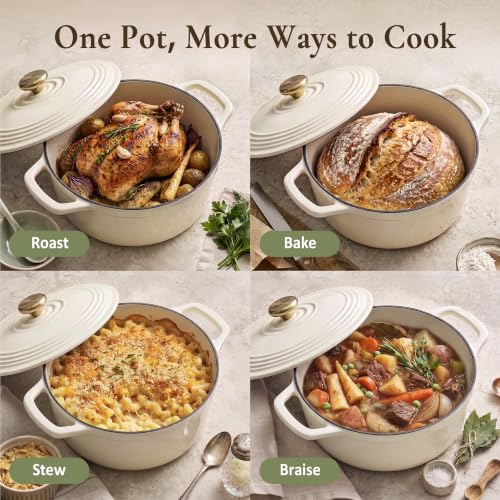
Absolutely. A cast iron Dutch oven is incredibly versatile. You can use it for braising meats, making soups and stews, frying chicken, and even baking desserts. Its ability to retain heat makes it suitable for a wide range of cooking methods.
How do I know if a lid is truly “tight-fitting” for sourdough?
A truly tight-fitting lid will create a good seal, trapping the steam necessary for a crispy crust. Look for lids that have minimal gaps when placed on the pot and create a noticeable resistance when lifting. You can also check owner reviews to see if other bakers report good steam retention.
What’s the best way to clean my enameled cast iron Dutch oven?
Avoid abrasive cleaners, as they can damage the enamel. Hand washing with warm, soapy water is best. For stuck-on food, simmer water in the pot for a few minutes to loosen the residue, and then gently scrub. Don’t shock the enamel with a sudden temperature change.
The Bottom Line
Buying a cast iron Dutch oven for sourdough often comes down to balancing initial cost with long-term performance and convenience. While many options exist, the Lodge 6QT Enamel Dutch Oven consistently receives high marks for its reliability and accessibility. It’s a solid performer that won’t break the bank, making it an excellent entry point for bakers eager to explore the world of sourdough.
For those with specific needs, several alternatives stand out. If you’re looking for a complete package, the Umite Chef 5QT Enameled Dutch Oven, which includes a proofing basket, is a fantastic choice. And for bakers wanting a more specialized shape, exploring optimal oval Dutch ovens can be beneficial, particularly for longer boules.
Ultimately, the most expensive Dutch oven isn’t necessarily the best. Consistent heat retention, a well-fitting lid, and durable enamel are far more important than flashy features. Focusing on those fundamentals – and choosing a size appropriate for your needs – will ensure you’re equipped to bake beautiful, delicious sourdough for years to come, and will serve you well when making other types of Dutch ovens for baking bread.
