
7 Best Copper Pans of 2026
This post contains affiliate links. As an Amazon Associate, we earn from qualifying purchases.
The M MELENTA 11-Piece Copper Ceramic Set stands out as the best overall for its even heating and full kitchen coverage, while the Gotham Steel 10 Inch Hammered Frying Pan is a solid budget pick that delivers reliable nonstick performance without the premium price tag.
Copper pans catch your eye with their shine, but most affordable ones aren’t actually made of solid copper, and that’s okay. The real question isn’t about looks, it’s whether the pan heats evenly, resists sticking, and fits your stovetop and budget.
In this guide, I break down what separates true performance from pretty marketing, using specs, owner feedback, and years of cookware expertise to highlight the picks that deliver where it counts.
Top 7 Copper Pans in the Market
The Best Copper Pans, Reviewed
Ciwete 10-Piece Tri-Ply Stainless Steel Set

Strengths
- Fully clad construction
- Oven safe to 500℉
- Induction compatible
Trade-offs
- Copper is only cosmetic
- No helper handle on large pieces
This set looks like copper but isn’t actually copper cookware, it’s tri-ply 18/10 stainless steel with a mirror-polished copper-tone exterior. On paper, that means you get the durability and even heating of fully clad construction without the sky-high price of real copper. Owners consistently report solid performance across stovetops, including induction, and the even heat distribution helps prevent scorching. The copper finish is strictly aesthetic, but it does add a luxe look that stands out in budget to mid-tier sets.
Where this set shines is versatility and value for a full kitchen lineup. It includes two saucepans, a stockpot, and two frying pans, all oven safe to 500℉ and backed by a 2-year warranty. Compared to true copper or high-end stainless like All-Clad, it won’t have the same thermal responsiveness, but for most home cooks, it’s a smarter, more practical buy. I’d pick this over gimmicky nonstick sets if you want long-term reliability.
Video review
M MELENTA 11-Piece Copper Ceramic Set
Strengths
- Full set with utensils
- Induction compatible
- Pre-assembled and ready to use
Trade-offs
- Coating durability concerns
- Lower heat tolerance
- Lids rated only to 350℉
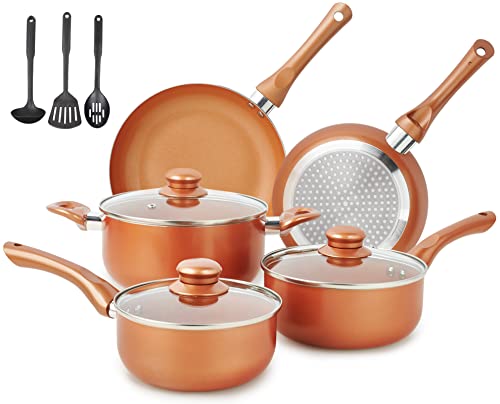
This 11-piece set is one of the most budget-friendly full-line options with a copper look. It includes two frying pans, saucepans, a sauté pot, and utensils, all with ceramic nonstick inside and out. Owners appreciate that everything is induction-ready and comes pre-assembled, which avoids the frustration of DIY setup. The nonstick performance starts strong, and the copper finish adds visual appeal without breaking the bank.
But ceramic coatings at this price rarely last years under daily use. Some reviewers report sticking or coating wear within months, especially when using high heat. It’s a decent starter set for a new apartment or temporary housing, but not a long-term investment. Compared to the Ciwete stainless set, it’s less durable but more appliance-inclusive.
Video review
Gotham Steel 10 Inch Hammered Frying Pan

Strengths
- Induction compatible
- 10-year warranty
- Includes glass lid
Trade-offs
- Ceramic coating degrades over high heat
- Hammered texture traps residue if not cleaned well
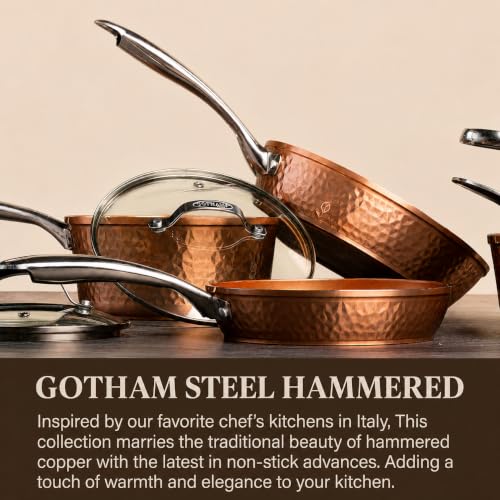
This 10-inch pan stands out in the Gotham lineup because it’s induction-compatible, unlike most of their copper-tone models. That alone makes it a smarter pick for modern kitchens. The Ti-Cerama coating has earned praise for lasting longer than average ceramic nonstick, and owners report it handles metal utensils without immediate damage. The tempered glass lid is a bonus, and the stay-cool handle works as advertised.
It heats evenly for an aluminum pan and transitions well from stovetop to oven. The 10-year warranty is bold for this price tier, though real-world longevity still depends on heat control and cleaning habits. Compared to the 8-inch version, this is the better all-rounder. I’d call this the most balanced single pan in the group, especially if you need induction support.
Product photos


Gotham Steel 8 Inch Copper Frying Pan
Strengths
- Great for small meals
- Effortless cleanup
- Affordable entry point
Trade-offs
- Not induction compatible
- Too small for most main dishes
- No lid included
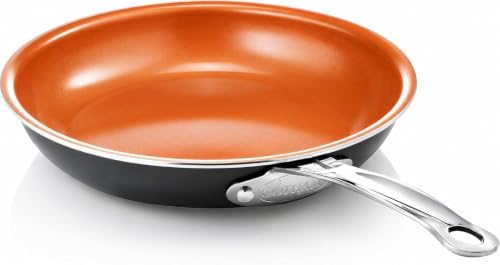
The 8-inch size is ideal for eggs, pancakes, or reheating leftovers, and this pan nails the basics. The ceramic-titanium coating delivers the slick release Gotham is known for, and owners say it outperforms older Teflon pans in both food release and cleanup. It’s lightweight, heats quickly, and the stay-cool handle stays comfortable during short cooking sessions.
But its niche is small, too small for most dinner cooking. It’s also not induction-ready, which limits its usefulness. Compared to the 10-inch model, it lacks versatility. Still, for a dedicated egg pan or small-portion cooking, it’s a solid, low-cost pick. I’d keep this in mind for a secondary pan, not a primary skillet.
Product photos


Gotham Steel 12 Inch Copper Frying Pan
Strengths
- Excellent nonstick release
- Lightweight and easy to handle
- Oven safe to 500℉
Trade-offs
- Not induction compatible
- Handle can loosen over time
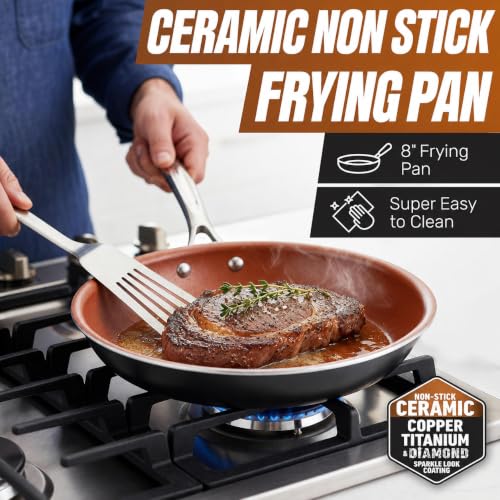
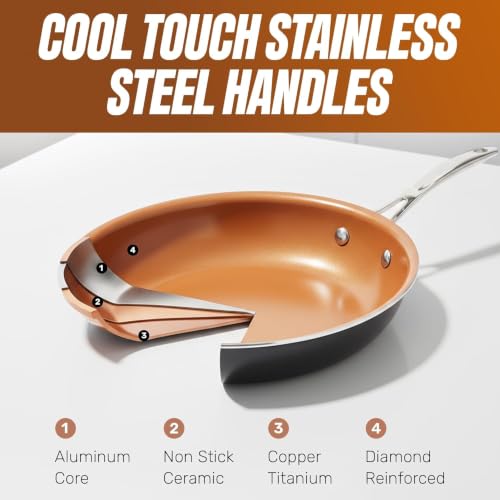
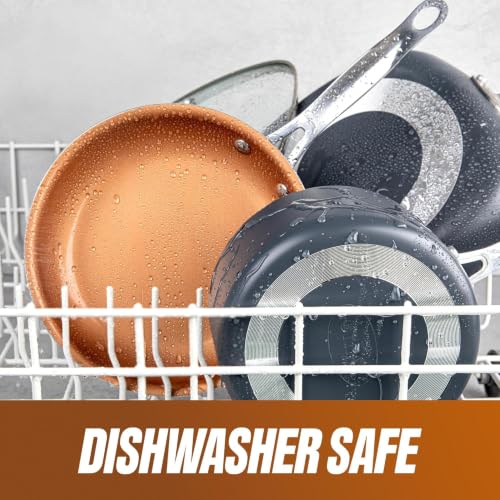
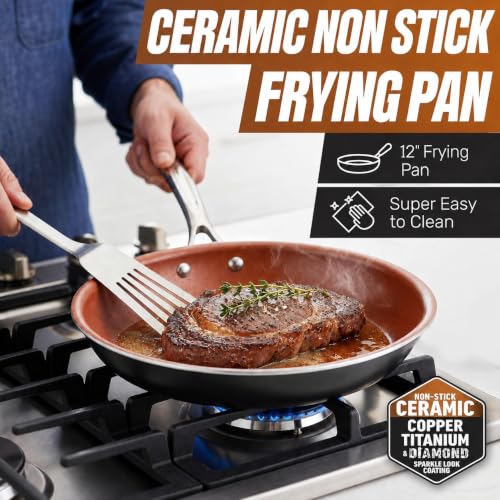
This 12-inch pan delivers what most people actually need from a “copper” pan: a lightweight, nonstick workhorse with a flashy finish. The triple-layer ceramic-titanium coating is where it counts, and reviewers confirm food releases easily, even eggs and sticky sauces. Cleanup is consistently described as effortless, often needing just a wipe or quick rinse. The aluminum base heats fast, though it can develop hot spots on larger burners.
It’s not real copper, obviously, and induction users should skip it, the pan won’t work on magnetic cooktops. But for gas or electric ranges, it’s a solid performer at a low price. Compared to the 8-inch version, this size is more versatile for family cooking. I’d recommend this as a go-to pan for weekday meals where cleanup speed matters as much as cooking ease.
Product photos


Gotham Steel 14 Inch Hammered Frying Pan

Strengths
- Extra large cooking surface
- Strong nonstick performance
- Includes glass lid and helper handle
Trade-offs
- Too large for small kitchens
- Not induction compatible
- Heavy when full
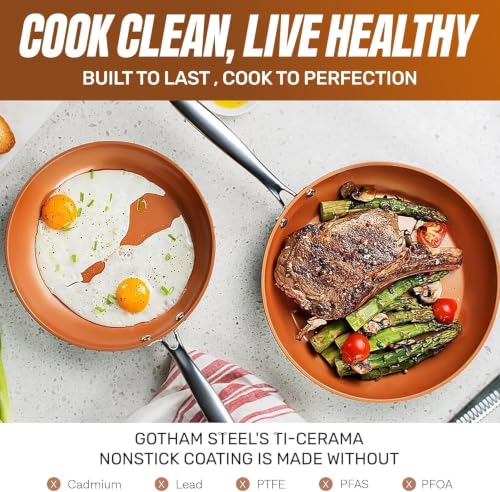
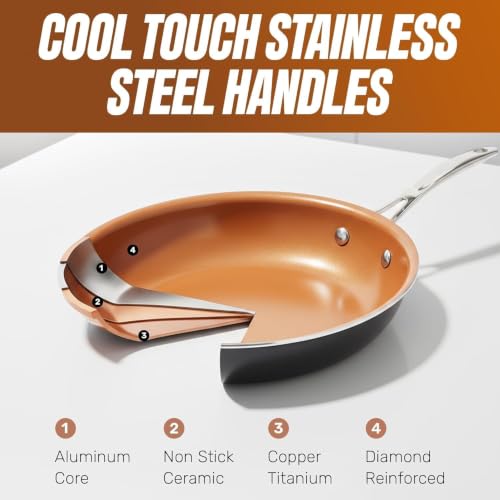
At 14 inches, this pan is built for feeding crowds, and the hammered copper look gives it standout style. The triple-coated ceramic-titanium-diamond surface is marketed as ultra-durable, and owner feedback supports that, it holds up better than basic nonstick under regular use. The glass lid and helper handle make it functional for braising or deep sautés, and the even heating from the aluminum core works well on electric and gas stoves.
But its size is a double-edged sword: it’s too big for small burners and awkward to store. It’s also not induction-ready, which limits its appeal. Compared to the 12-inch Gotham Steel, this one trades maneuverability for capacity. If you regularly cook for four or more, it’s worth the footprint. Otherwise, it’s overkill.
Product photos


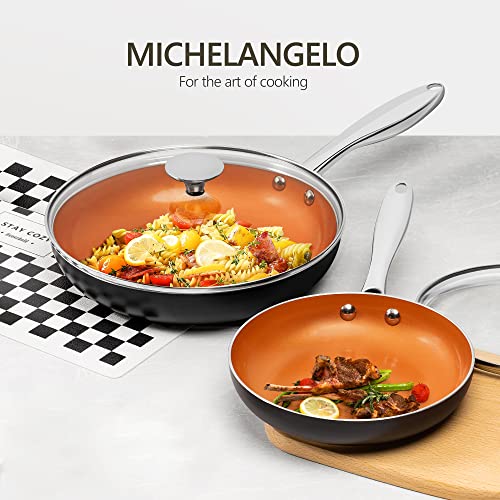
Michelangelo 12 Inch Induction Copper Pan
Strengths
- Induction compatible
- Includes glass lid
- Solid heat conduction
Trade-offs
- Oven safe only to 450℉
- Limited brand track record
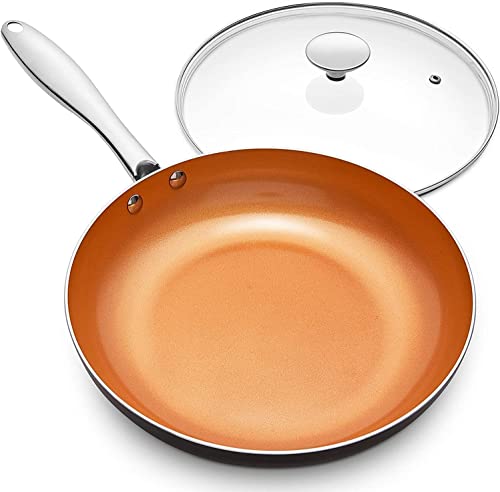
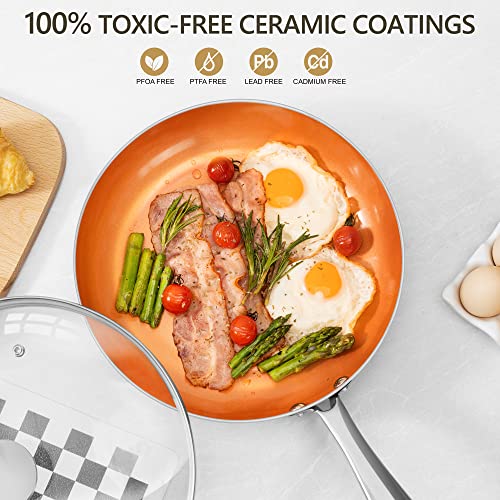
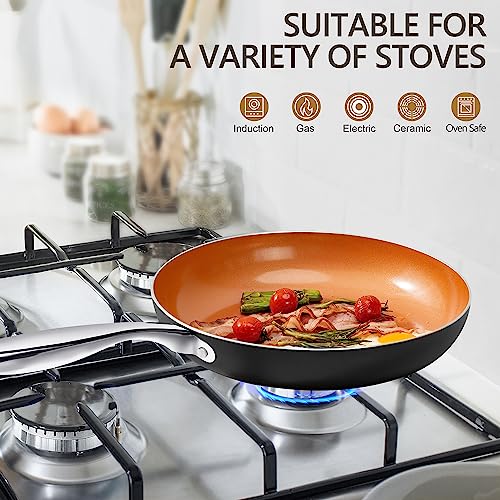
This pan stands out for being induction-compatible and offering a full lid, two features many budget copper-tone pans skip. The ceramic-titanium coating is marketed as multi-layer and scratch-resistant, and owners confirm it handles metal utensils better than expected, at least initially. The aluminum alloy core heats quickly and evenly on induction, which is a win for magnetic cooktop users.
However, oven safety tops out at 450℉, lower than Gotham’s 500℉, and the handle, while comfortable, lacks a full stay-cool guarantee. Compared to the Gotham 12-inch, this one trades a bit of heat ceiling for broader compatibility. If you’re on induction and want a single large pan that just works, this is a strong contender.
Product photos


How We Picked These copper pans
Rather than a hands-on lab test, my research for these recommendations focused on a detailed comparison of published specifications and features across numerous copper pans. I weighed owner reviews from major retailers alongside expert opinions found in established cooking publications. As someone who’s spent years understanding what makes cookware perform, I applied that knowledge to rank these options against criteria important to home cooks – nonstick performance, heating evenness, durability, and value.
For copper pans specifically, even heating and a truly nonstick surface are paramount. These qualities directly impact cooking success and ease of cleanup. I placed significant weight on materials and construction – looking for tri-ply or fully-clad designs where applicable, and assessing the quality of ceramic or titanium coatings. Ultimately, a pan’s ability to deliver consistent results without sticking is what determined its position. Many shoppers also seek out complete sets, so value for money was a key consideration. You can find more information on the best options in our guide to copper cookware sets.
Specifications reliably indicate construction materials and oven-safe temperatures. However, I heavily relied on owner feedback to understand real-world nonstick performance over time, as well as durability issues. Reputation and brand history also played a role; established brands with positive track records generally signal better quality control. It’s also important to understand the safety of copper pans and how to properly care for them, which I took into account when assessing overall value.
Choosing The Right copper pans
Finding the right copper pan requires looking past the beautiful aesthetic and focusing on construction and intended use. It’s easy to get caught up in the look, but performance is what truly matters.
A quality copper pan distributes heat exceptionally well due to copper’s inherent thermal conductivity. Look for fully-clad construction (copper extending up the sides, not just on the base) for even heating, a durable nonstick coating (if desired), and compatibility with your cooktop. Prioritize pans with stainless steel handles securely riveted to the body, and consider the weight – heavier pans generally indicate thicker copper.
Understanding Copper Cladding & Construction
The most significant factor in a copper pan’s performance is how the copper is applied. A fully-clad pan, where copper extends up the sides, offers significantly more even heating than a pan with just a copper base. This prevents hot spots and ensures consistent cooking. Many affordable options use a copper-colored ceramic coating over aluminum; these look the part, but lack the true thermal benefits. If you’re serious about even heat distribution, seeking out pans with a substantial amount of copper, verified in the specifications, is vital. I often recommend looking at the gauge (thickness) of the copper; thicker is better, but also more expensive.
Nonstick vs. Reactive Copper
Copper is a reactive metal, meaning it can interact with acidic foods, potentially imparting a metallic taste and even altering the food’s color. This isn’t necessarily harmful, but it’s a consideration. Many modern copper pans address this with a stainless steel lining on the cooking surface. If you prefer the ease of a nonstick surface, look for pans coated with PTFE, PFOA-free ceramic, or titanium-infused coatings, like those found in the Gotham Steel options. However, keep in mind that even the best nonstick coatings won’t last forever, and require careful handling to maximize their lifespan. Choosing between reactive and non-reactive surfaces ultimately comes down to your cooking style and preferences.
Balancing Budget & Features
Copper cookware can be a significant investment. Fortunately, there’s a wide range of price points. The Ciwete set offers a relatively affordable entry point into tri-ply stainless steel with a copper finish, though the copper is primarily aesthetic. For a single, budget-friendly option, the Gotham Steel pans are popular, but remember those are often ceramic-coated aluminum, not true copper. Consider what you truly need.
- Do you need a full set, or would a single 10-inch frying pan suffice?
- Is induction compatibility essential? (The Michelangelo pan is a great choice if so).
- How important is a lifetime warranty? (Some brands offer limited warranties, but they vary considerably).
Ultimately, prioritizing your cooking needs and being realistic about your budget will lead you to the best choice. If you’re still unsure about whether are copper frying pans good, it’s worth reading a dedicated guide to understand the nuances of this material.
It’s also worth exploring options beyond just frying pans, and looking at copper pots and pans to complete your kitchen collection.
A well-maintained copper pan, even a moderately priced one, will likely outlast cheaper alternatives made from inferior materials. Treat it with care, and it will reward you with years of even heating and beautiful cooking.
Copper Pans Compared
Here is a comparison of key specifications for the copper pans described.
| Product Title | Size | Material | Non-Stick Coating | Oven Safe (°F) | Induction Compatible |
|---|---|---|---|---|---|
| Ciwete 10-Piece Tri-Ply Stainless Steel Set | 8″, 10″ | Stainless Steel | N/A | 500 | Yes |
| M MELENTA 11-Piece Copper Ceramic Set | 8″, 9.5″ | Aluminum | Ceramic | N/A | Yes |
| Gotham Steel 10 Inch Hammered Frying Pan | 10″ | Aluminum | Ti-Cerama | 500 | Yes |
| Gotham Steel 8 Inch Copper Frying Pan | 8″ | Aluminum | Ceramic/Titanium | 500 | No |
| Gotham Steel 12 Inch Copper Frying Pan | 12″ | Aluminum | Ceramic/Titanium | 500 | No |
| Gotham Steel 14 Inch Hammered Frying Pan | 14″ | Aluminum | Ceramic/Titanium | N/A | N/A |
| Michelangelo 12 Inch Induction Copper Pan | 12″ | Aluminum Alloy | Ceramic/Titanium | 450 | Yes |
Frequently Asked Questions
What’s the difference between tri-ply and fully-clad copper pans?
Tri-ply pans have three layers of metal (typically stainless steel-copper-stainless steel), while fully-clad pans extend the copper layer up the sides of the pan. Fully-clad construction provides more consistent heat distribution, but comes at a higher price point.
How do I know if a copper pan is actually worth the cost?
Look for a substantial amount of copper in the construction, confirmed in the product specifications, and read owner reviews regarding heating evenness. A thicker copper layer and fully-clad design generally indicate a higher-quality, more effective pan.
What should I do if my new copper pan starts to stick?
Addressing copper pan sticking often involves ensuring proper seasoning (for uncoated pans) or using the correct cooking techniques and oils for nonstick surfaces. Avoid overheating, and use gentle cleaning methods.
Are all “copper” pans made of the same materials?
No, many affordable options use a copper-colored ceramic coating over aluminum, rather than substantial copper construction. These are visually similar but won’t offer the same heat conductivity or benefits of true copper cookware.
Where can I find excellent copper sauté pans to complement a frying pan?
Many manufacturers offer individual sauté pans in the same lines as their frying pans. Checking the brand’s website or retailers specializing in cookware will showcase the available options for completing your copper cookware collection.
The Bottom Line
Choosing a copper pan often comes down to balancing your budget with your desire for true copper performance. While the allure of a fully-clad copper pan is strong, for most home cooks, the Michelangelo 12 Inch Induction Copper Pan strikes the best overall balance of features, durability, and price. It delivers excellent heat distribution and is a fantastic option for those needing copper on induction compatibility.
If you’re on a tighter budget, the Gotham Steel pans remain a popular choice, especially if you’re primarily seeking a nonstick surface. For a complete set without a huge investment, the Ciwete 10-Piece Tri-Ply Stainless Steel Set offers a good starting point, though you should remember the copper element is largely aesthetic. Those prioritizing a single, high-performing piece should consider exploring quality copper fry pans that focus on substantial copper construction.
Ultimately, the specifications of a pan matter less than how you treat it. Consistent cleaning, proper seasoning (if applicable), and mindful cooking will extend the life of any pan, regardless of price point. Focus on building good cooking habits and understanding your needs, and you’ll find yourself enjoying delicious meals for years to come with the right cookware in your hands.
