
7 Best Copper Pots of 2026
This post contains affiliate links. As an Amazon Associate, we earn from qualifying purchases.
The Viking 10-Piece Hammered Copper Cookware Set stands out as the best overall choice, delivering professional-grade heat control and durable stainless steel lining. For a budget-friendly option, the M MELENTA 11-Piece Set offers decent performance with ceramic non-stick, while the DEMMEX Sugar Pan is ideal for precision candy or syrup work thanks to its unlined, hammered copper construction.
Copper pots look stunning, but not all deliver on their promise of precise, even heating. Too many cut corners with thin copper or flimsy linings, leading to hot spots and frustration. After comparing the field, I focused on construction quality, lining type, and real-world usability, because beautiful pots should perform as well as they look.
This guide breaks down what actually matters: copper thickness, clad vs. bonded construction, and whether tin or stainless steel lining suits your cooking style. These picks are based on specs, owner feedback, and years of evaluating how materials hold up over time.
Top 7 Copper Pots in the Market
The Best Copper Pots, Reviewed
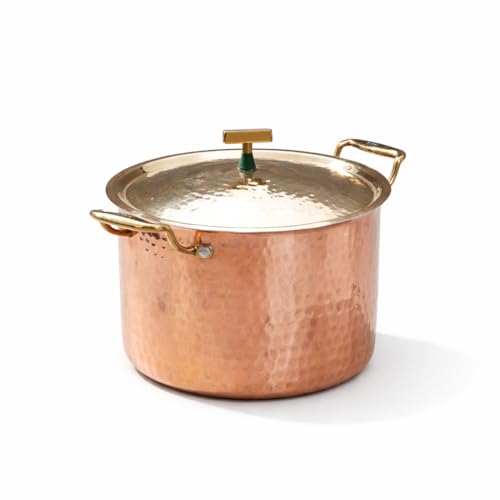
P•TAL 5 Qt Pure Copper Stock Pot
Strengths
- 100% pure copper
- Tin-lined interior
- Heavy bottom
- Naturally non-stick
- Oven-to-table ready
Trade-offs
- Requires high maintenance
- Not induction compatible
- Tin lining wears over time
This is one of the few true copper stock pots you can find at a reasonable price, and on paper, it delivers what serious cooks want from pure copper: rapid, responsive heat with excellent distribution thanks to its heavy-gauge construction. The tin lining keeps it food-safe and naturally non-stick when properly seasoned, which aligns with traditional copper cookware performance. Owners consistently report success with delicate reductions and long-simmered broths, where temperature control really matters.
That said, it demands more care than modern clad or coated pans, hand washing is strongly advised, and the tin interior can degrade if overheated or used with metal utensils. Still, for someone who values craftsmanship and thermal precision over convenience, this pot stands out in a market flooded with copper-colored imposters.
Video review
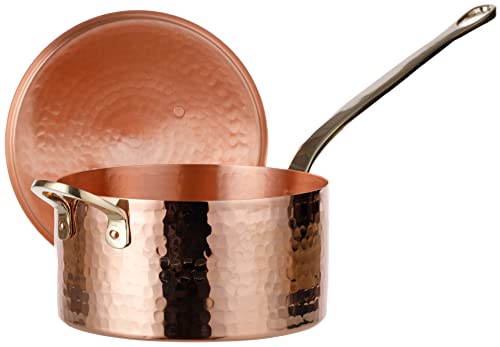
DEMMEX 1.7-Quart Handmade Copper Sugar Pan
Strengths
- 100% unlined copper
- Ideal for sugar work
- Handmade craftsmanship
- Excellent heat control
- Brass helper handle
Trade-offs
- Not for general cooking
- High maintenance
- Reacts with acidic foods
This is the real deal, unlined, 1mm-thick solid copper, handmade in Turkey, designed specifically for sugar work. Pastry experts have relied on unlined copper for centuries because it allows precise monitoring of syrup stages through both touch and visual cues, something lined pots can’t replicate. The thickness ensures steady heat, critical when making caramel or zabaglione, where a few degrees can ruin everything.
But make no mistake: this is a specialist tool. It requires meticulous cleaning, reacts with acidic foods, and isn’t meant for everyday use. Owners love it for desserts but admit it’s overkill for boiling pasta. If you bake often and crave authenticity in confections, this is worth considering. Otherwise, skip it.
Video review
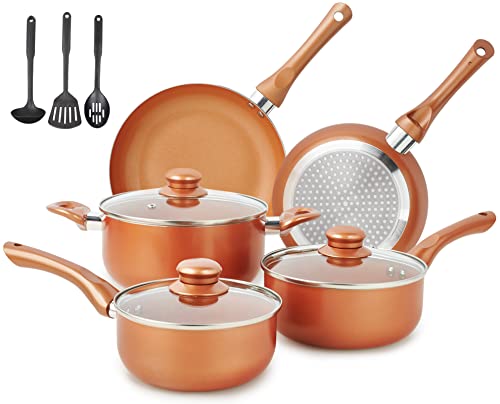
M MELENTA 11-Piece Copper Nonstick Set
Strengths
- Full 11-piece set
- Ceramic non-stick coating
- Induction compatible
- Includes utensils
- Affordable entry point
Trade-offs
- Copper is only exterior
- Coating wears over time
- Handles lack durability
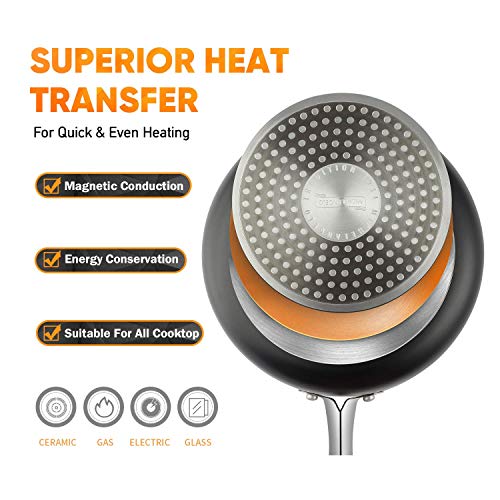
At this price, you’re buying convenience and color, not copper performance. The entire set is clad in ceramic non-stick with a copper-tone finish, meaning the copper is purely cosmetic. That said, for a family needing a full starter kit, skillets, saucepans, saute pot, and utensils, it covers the basics without breaking the bank. The inclusion of nylon tools helps preserve the coating, which owners say lasts longer than expected if used on low to medium heat.
Still, compared to the Michelangelo duo or even the Viking set, this sacrifices build quality for quantity. Handles can feel flimsy, and the glass lids aren’t rated for high oven temps. But if you’re equipping a first apartment or need a gift that looks cohesive, it gets the job done. Just don’t expect it to last beyond a few years of regular use.
Product photos


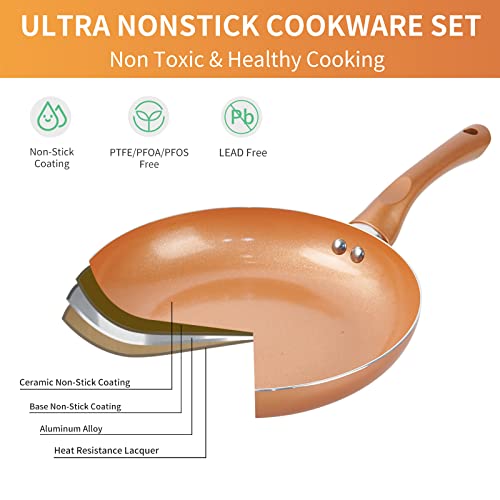
MICHELANGELO 2QT & 3QT Copper Saucepan Set

Strengths
- Ceramic non-stick interior
- Even heat distribution
- Oven safe to 450°F
- PTFE/PFOA free
- Tempered glass lids
Trade-offs
- Copper is only exterior finish
- Non-stick degrades with high heat
- Limited size range
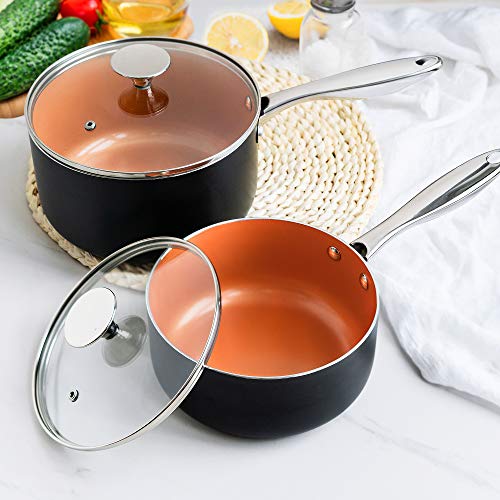
Don’t let the copper finish fool you, this is a ceramic non-stick set through and through, but that doesn’t make it useless. For the price, you get two well-sized saucepans with solid heating performance thanks to their triple-layer base, and the ceramic coating does appear to hold up better than older non-stick types based on owner feedback. I’d pick this for weekday sauce-making or reheating without worrying about sticking or cleanup.
Compared to the M MELENTA budget set, this one feels slightly more focused, just two saucepans, no clutter. But like all ceramic non-stick cookware, longevity depends heavily on how gently you cook. No one should expect these to last a decade like stainless or copper. If you want function over form, this hits a sweet spot.
Product photos


Viking 10-Piece Hammered Copper Cookware Set

Strengths
- 3-ply aluminum core
- Oven safe to 600°F
- Flat, warp-resistant bases
- Vented glass lids
- Sturdy stainless steel
Trade-offs
- Copper is decorative only
- Expensive upfront
- Hand wash recommended
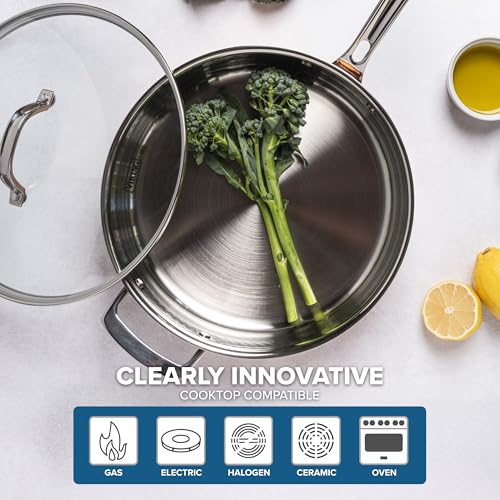
This is a premium stainless steel set with a copper aesthetic, not actual copper cooking surfaces, but it performs like a high-end workhorse. The 3-ply construction (stainless exterior, aluminum core, stainless interior) gives it the kind of consistent heating you need across frying pans, saucepans, and a deep stockpot. What sets it apart is the build quality: vented lids, internal measurements, and oven safety up to 600°F make this genuinely useful for serious cooking.
While it lacks the thermal responsiveness of real copper, it wins in versatility and durability. Reviewers note it’s one of the few sets that maintains flat bases over time, even on electric ranges. Compared to cheaper copper-colored sets, this is built to last. My recommendation? Only go this route if you’re replacing your entire collection and value precision engineering over flashy looks.
Product photos



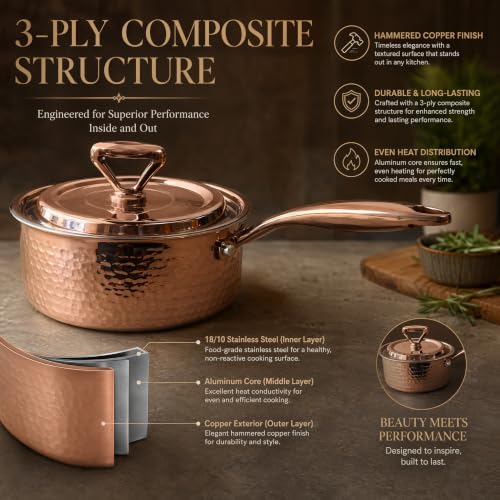
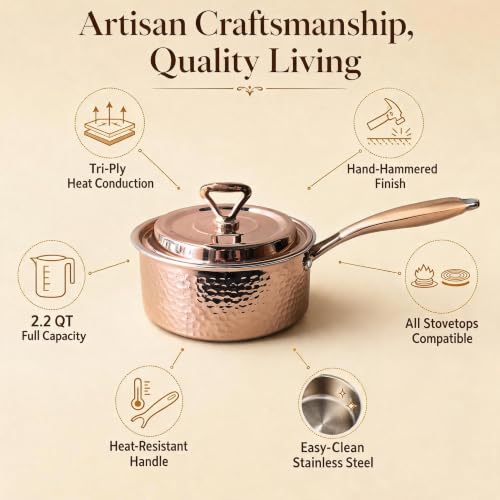
YJX 2.2QT Hammered Copper Rose Gold Saucepan

Strengths
- Induction compatible
- Rose gold hammered finish
- Tri-ply stainless steel
- Dishwasher safe
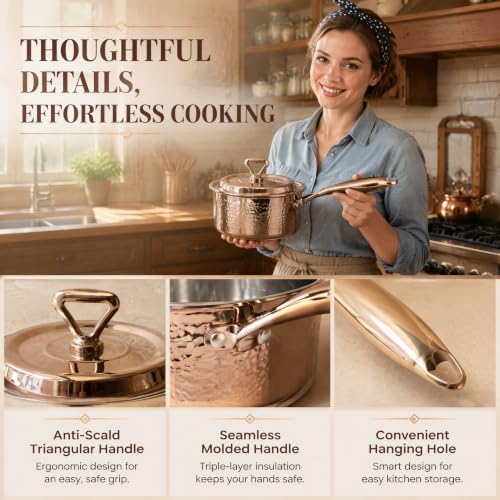
- Balanced handling
Trade-offs
- Decorative copper layer only
- Moderate heat responsiveness
- Limited to single pot use
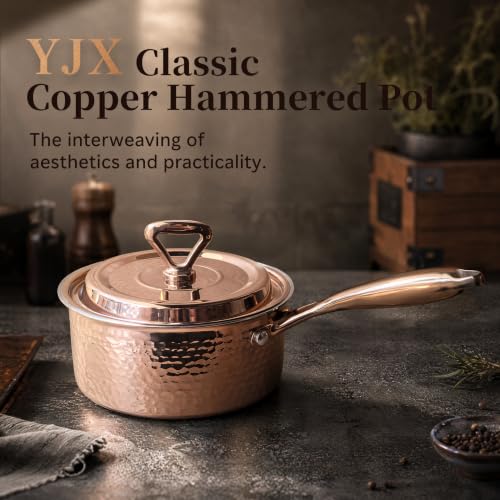
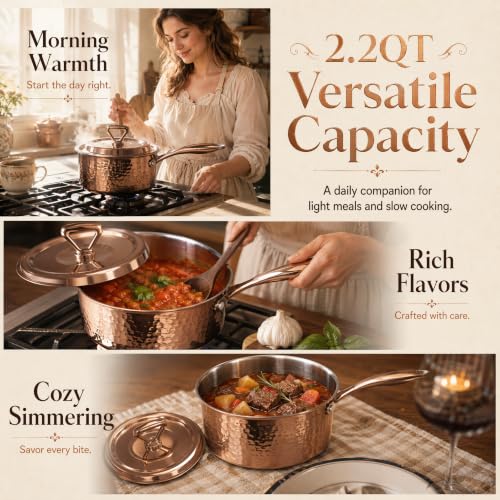
Let’s be clear, this pan looks stunning. The hammered copper rose gold finish turns heads, and the tri-ply construction underneath means it’s not just a showpiece. It has a magnetic base, so it works on induction, and the aluminum core helps spread heat reasonably well. But owners report it’s best treated as a specialty piece: great for creaming butter or warming sauces where appearance matters, less ideal for heavy-duty tasks.
It’s heavier than the Michelangelo or DimyFew options, yet not quite as responsive as pure copper. I’d recommend it primarily for someone who wants elegance without sacrificing all functionality. If your kitchen doubles as a dinner party backdrop, this one earns its place on the stove.
Product photos
DimyFew Flat Bottom Copper Butter Warmer

Strengths
- Compact size
- Induction compatible
- Long heat-resistant handle
- Good for melting tasks
- Flat bottom design
Trade-offs
- Very small capacity
- Thin construction
- Overheats easily
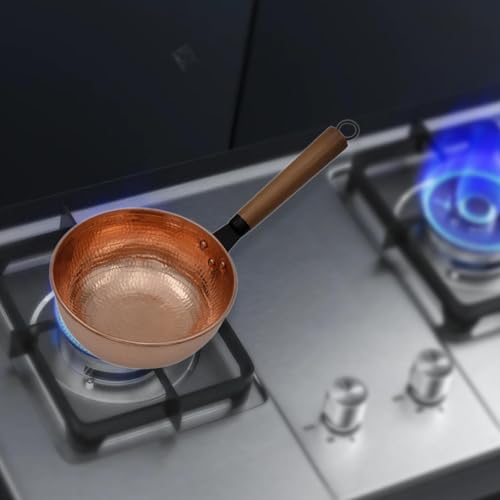
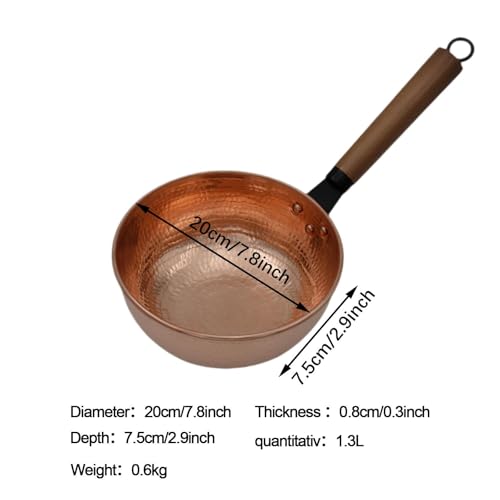
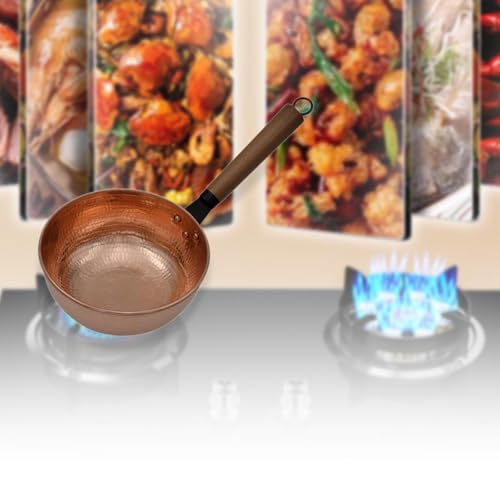
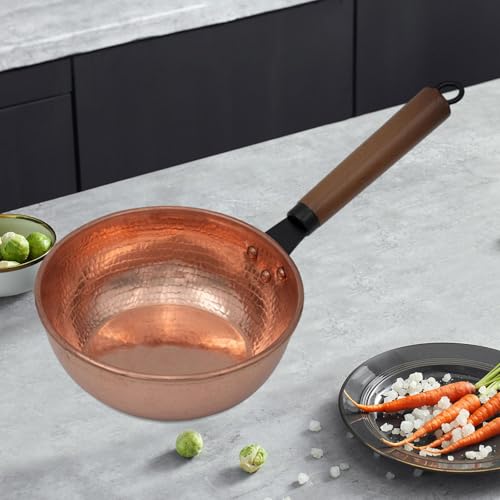
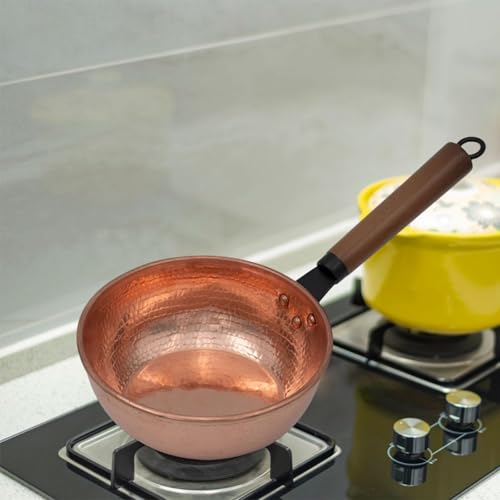
This little copper pot is oddly specific, compact, flat-bottomed, and marketed for butter warming or melting chocolate. It’s induction-compatible, which is rare for copper-toned pans at this level, and the long handle offers decent protection from heat. But owners note it’s too small for most main tasks and tends to overheat quickly due to thin walls.
It might shine as a double boiler insert or for quick egg dishes, but compared to even the 2.2QT YJX or Michelangelo pans, it lacks capacity and stability. I’d only recommend it as a niche tool for someone with limited stovetop space or a dedicated station for finishing sauces. Otherwise, it’s hard to justify over a more versatile option.
Product photos
How We Evaluated copper pots
As someone who’s spent over a decade immersed in the world of cookware, my approach to evaluating copper pots began with a detailed comparison of published specifications and features. I then weighed owner reviews – looking for consistent praise or complaints – against expert opinions from established cooking publications. Rather than a hands-on lab test, this is a research-led comparison of specs and owner feedback, informed by my understanding of how different materials perform in the kitchen.
For copper pots specifically, heat conductivity and responsiveness were paramount. I prioritized pots with thick, heavy-gauge copper construction, as these reliably deliver even heating and precise temperature control. The quality of the lining (typically tin or stainless steel) also factored heavily, as it directly impacts food safety and ease of maintenance. Aesthetically pleasing design was considered, but always secondary to performance.
Specifications reliably reveal construction details – copper thickness, layering, and handle materials – while owner feedback illuminated real-world usability. I paid close attention to reports of sticking, hot spots, and durability issues. Information on whether cleaning copper cookware is recommended, or if handwashing is essential, proved particularly valuable in assessing long-term care requirements. Ultimately, my recommendations are based on finding the best balance between performance, practicality, and value within the available copper sets.
Choosing The Right copper pots
Finding the right copper pots can elevate your cooking, but there’s a lot to consider beyond just the beautiful shine. It’s a category with a wide price range and varying levels of quality, so knowing what to prioritize is key.
Copper cookware’s performance hinges on thickness, lining material, and construction. A heavier gauge copper body (2.5mm or thicker) distributes heat most evenly. Tin linings are traditional for reactivity, but stainless steel linings offer durability and wider usability. Look for fully-clad construction, where copper extends up the sides of the pan, not just on the base.
Gauge and Construction
The thickness of the copper itself is paramount. Thinner copper, like that found in some of the more budget-friendly options, simply won’t deliver the even heating copper is famous for. You’ll notice hot spots and inconsistent cooking. Aim for at least 2.0mm, but 2.5mm or thicker is preferable, especially for larger pots and pans. Beyond thickness, consider how the copper is constructed. Fully-clad cookware – where the copper extends up the sides of the pan – offers superior heat distribution compared to those with just a copper base. This is an investment, but the difference in performance is significant.
Lining Material: Tin vs. Stainless Steel
Traditionally, copper cookware is lined with tin. Tin is non-reactive, making it ideal for delicate sauces and acidic ingredients. However, tin is soft and requires careful maintenance; abrasive cleaners and metal utensils will quickly damage it. Stainless steel linings are a more durable alternative, and while they don’t have quite the same non-reactive properties, modern alloys minimize the risk. Many cooks find stainless steel linings a practical compromise. If you’re interested in learning more about whether copper cookware will work with your existing setup, it’s worth checking out a dedicated guide.
Balancing Budget and Features
Copper cookware spans a huge price range. The M Melenta set, for example, offers an affordable entry point, but the ceramic non-stick coating will likely degrade faster than a well-maintained tin or stainless steel lining. For serious cooks, the Viking set represents a premium investment, offering exceptional durability and performance.
Here’s a quick guide to help you prioritize:
- Occasional Use/Budget Conscious: A smaller, lined piece like the DimyFew butter warmer can be a great starting point.
- Dessert/Candy Making: The DEMMEX sugar pan, with its unlined copper, is specifically designed for this purpose.
- Everyday Cooking/Long-Term Investment: Look for fully-clad construction with a substantial copper gauge and a durable lining (stainless steel is often the most practical choice), even if it means spending more upfront.
Don’t be fooled by appearances. A shiny copper pot with a thin base won’t cook as well as a heavier, more thoughtfully constructed piece, even if it doesn’t gleam as brightly.
If you’re considering adding copper to your kitchen but have an induction cooktop, understanding induction-compatible copper is crucial. Not all copper cookware will work on these surfaces.
Copper Pots Compared
Here’s a comparison of key specifications for the copper pots featured.
| Product Title | Capacity (Qt) | Material | Construction | Non-Stick? | Lid Included? |
|---|---|---|---|---|---|
| P•TAL 5 Qt Pure Copper Stock Pot | 5 | Pure Copper | Heavy Gauge | Yes | No |
| DEMMEX 1.7-Quart Handmade Copper Sugar Pan | 1.7 | Copper | Hammered | No | Yes |
| M MELENTA 11-Piece Copper Nonstick Set | 1.5-3 | Copper + Ceramic | Multi-Ply | Yes | Yes |
| MICHELANGELO 2QT & 3QT Copper Saucepan Set | 2, 3 | Copper + Ceramic | 3-Ply | Yes | Yes |
| Viking 10-Piece Hammered Copper Cookware Set | 2.25-8 | Copper + Steel | 3-Ply | No | Yes |
| YJX 2.2QT Hammered Copper Rose Gold Saucepan | 2.2 | Copper + Steel | Tri-Ply | No | Yes |
| DimyFew Flat Bottom Copper Butter Warmer | N/A | Copper | Flat Bottom | No | No |
Frequently Asked Questions
What’s the biggest difference between a 2mm and 3mm copper pot?
A 3mm copper pot will provide more even heating and better temperature control due to its increased mass and conductivity. While 2mm is acceptable, the thicker gauge minimizes hot spots and delivers more consistent results, especially when cooking delicate sauces.
Are tin-lined copper pots really worth the extra care?
Yes, tin-lined pots are favored by pastry chefs and those making delicate sauces because tin is completely non-reactive. However, they require gentle handling and avoid abrasive cleaners, unlike stainless steel, which is more forgiving.
Can I use any metal utensil with copper cookware?
No, using metal utensils with tin-lined copper cookware will scratch and damage the lining. Stainless steel-lined copper is more durable, but even then, wooden or silicone utensils are recommended to preserve the finish and prevent potential scratching.
What should I do if I notice my copper pan sticking?
If you’re experiencing copper pan sticking, it’s often a sign the pan isn’t fully preheated or the cooking surface isn’t adequately lubricated. Proper preheating and using sufficient fat are essential for preventing food from adhering to the surface.
Is cooking with copper cookware safe?
Yes, copper cookware safety is generally considered safe, provided the copper is lined with either tin or stainless steel to prevent direct contact between the metal and food. Both linings are food-safe and minimize the risk of copper leaching into your dishes.
The Bottom Line
Ultimately, choosing copper cookware comes down to balancing your budget with your cooking ambitions. While a gleaming set is beautiful, performance is driven by the fundamentals, copper thickness and construction quality. For the best overall experience, I believe the Viking 10-Piece Hammered Copper Cookware Set delivers a truly exceptional cooking experience, offering the durability and even heating that makes copper so prized among chefs.
However, you don’t need to spend a fortune to enjoy the benefits of copper. If you’re just starting to explore this cookware category, the DimyFew Flat Bottom Copper Butter Warmer provides a delightful introduction, and for dedicated bakers, the DEMMEX 1.7-Quart Handmade Copper Sugar Pan is an excellent, specialized tool. For those seeking a larger, more versatile set on a tighter budget, the M Melenta 11-Piece Copper Nonstick Set provides a reasonable entry point, though be aware the non-stick coating won’t have the longevity of traditional linings.
At the end of the day, the most important factors aren’t the flashy features or the price tag. Prioritize a substantial copper gauge, a lining (tin or stainless steel) that suits your cooking style, and construction that ensures even heat distribution. Understanding copper frying pan benefits will help you make informed decisions and enjoy years of cooking with this beautiful and responsive material, and knowing whether your copper is oven safe is key to maximizing its versatility.
