
7 Best Japanese Knives for Cutting Vegetables 2026
This post contains affiliate links. As an Amazon Associate, we earn from qualifying purchases.
The HOSHANHO 7″ Nakiri Knife stands out as the best overall for precise, clean vegetable cuts thanks to its high-hardness steel and thin 12-degree edge, while the imarku Nakiri 7 Inch offers a solid budget-friendly option with reliable performance and a comfortable pakkawood handle.
Home cooks often struggle to find a knife that actually makes prep work easier instead of just looking sharp in photos. Many assume all Japanese knives are the same, but small differences in steel, grind, and balance make a huge difference when you’re chopping for dinner.
This guide cuts through the noise by focusing on what really matters for vegetable work, thin blades, durable steel, and comfortable handling. I compared specs and owner feedback across top models to find the ones that deliver consistent performance without requiring a pro-level skill set.
Top 7 Japanese Knives For Cutting Vegetables in the Market
The Best Japanese Knives For Cutting Vegetables, Reviewed
HOSHANHO 7″ Nakiri Knife
Strengths
- Superior steel hardness
- Excellent edge retention
- Ergonomic rosewood handle
Trade-offs
- Requires careful maintenance
- Not dishwasher safe
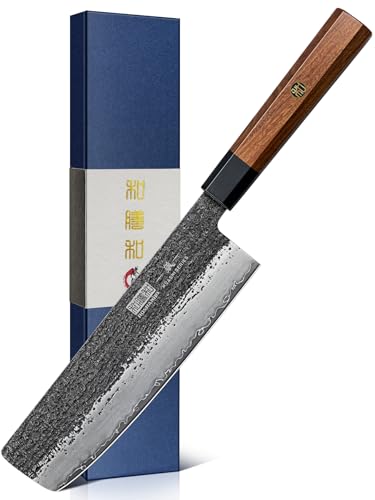
If you’re serious about vegetable prep, this Nakiri should be at the top of your list. The straight edge and 12° double-bevel grind make it a slicing powerhouse, especially for down-cutting tasks like chopping scallions, cabbage, or carrots. Unlike rocking chef’s knives, this one excels at full-board contact cuts, and the 9-layer composite steel with a 10Cr15CoMoV core gives it a Rockwell hardness of 62, rarely seen at this price. That kind of hardness means exceptional edge retention, though it can be slightly more brittle if abused.
Owners praise its balance and the octagonal rosewood handle, which offers a secure, traditional grip that resists moisture and wear. The hammered Tsuchime finish isn’t just for show, it reduces drag and sticking, a real benefit when slicing wet onions or leafy greens. Compared to the imarku Nakiri, this one feels more refined, with better steel and a more durable handle. It’s not dishwasher-safe, but few high-end knives are.
Video review
Chef Knife 7 Inch Santoku

Strengths
- Affordable price
- Decent sharpness
- Stainless steel handle
Trade-offs
- Softer steel
- Shorter edge life
- Basic design
At the lowest price point here, this 7-inch Santoku delivers basic performance without surprises. The 58 HRC steel is decent for the cost, and the 15° edge per side ensures adequate sharpness for everyday slicing. It’s balanced and made with a stainless steel handle, so it’s easy to clean and maintain, though not officially labeled dishwasher-safe like the pricier imarku model.
It won’t match the edge retention of the HOSHANHO or the precision of the Nakiri knives, but for someone just starting out or needing a backup knife, it’s functional. Owners say it holds up well with light use, but it dulls faster under heavy prep. Compared to the $79 imarku Nakiri, this is a no-frills tool, no anti-stick finish, no premium handle, just a simple, usable blade.
Video review
imarku Santoku Knife 7 Inch

Strengths
- Dishwasher safe
- Hollow edge reduces sticking
- Fully sealed steel handle
Trade-offs
- Less refined steel
- Not as sharp out of the box
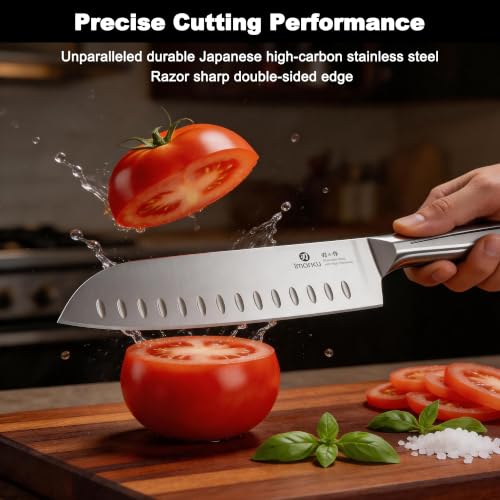
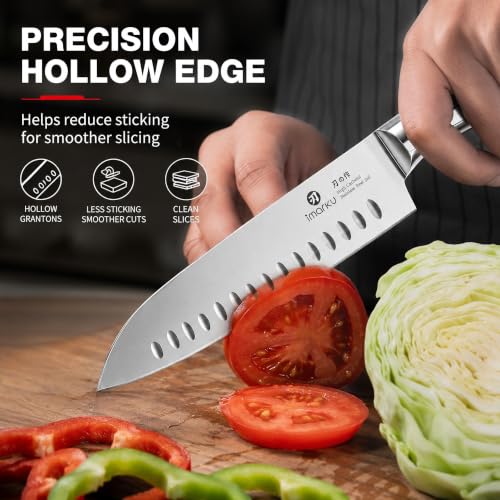
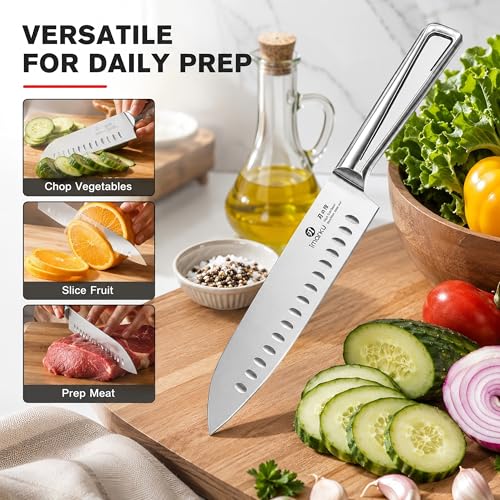
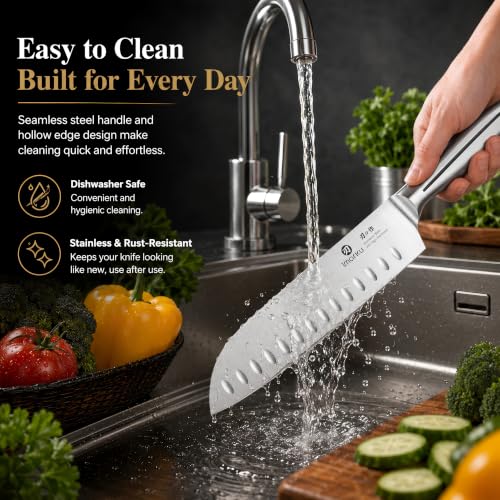
This 7-inch Santoku stands out for one big reason: it’s fully dishwasher safe, a rarity among high-performing Japanese knives. The seamless stainless steel handle eliminates crevices where food and bacteria can hide, making it a hygienic choice for busy kitchens. The hollow-edge design helps with food release, especially useful when slicing potatoes or onions, and the 0.1-inch spine adds enough weight for controlled dicing.
While the steel isn’t as hard as the HOSHANHO models (specs don’t list Rockwell, but it’s likely around 56–58 HRC), it’s still sharp and rust-resistant. Compared to the budget 7-inch imarku knife (B08DFSBW6J), this one feels more substantial and better balanced. It’s not the most refined in terms of fit and finish, but for someone who hates hand-washing knives or wants low-maintenance durability, this is the smarter buy.
Product photos

imarku Nakiri Knife 7 Inch
Strengths
- Excellent anti-stick features
- Comfortable ergonomic handle
- Sharp out of the box
Trade-offs
- Expensive for the steel grade
- Not dishwasher safe
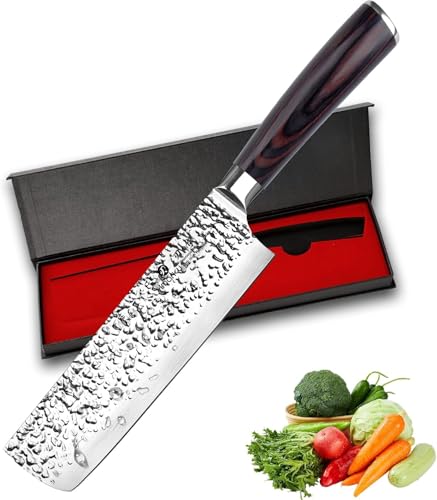
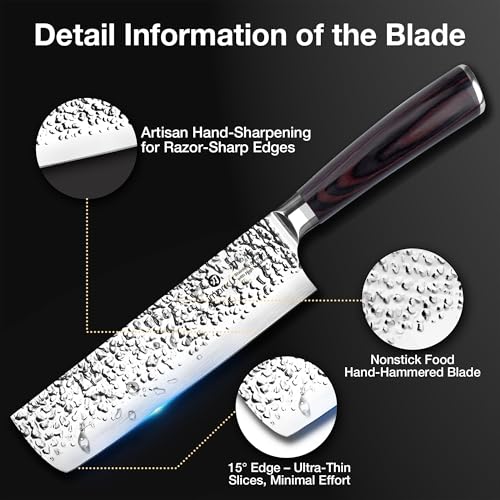
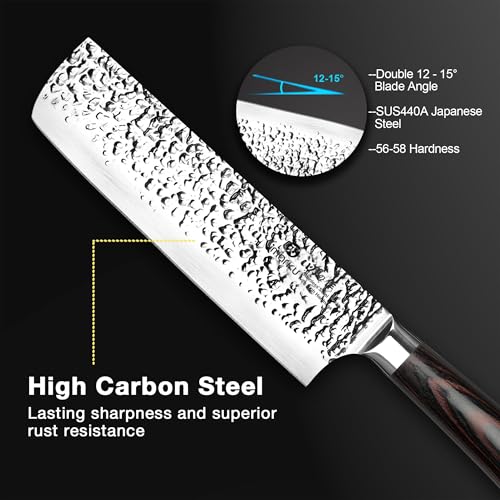
This is the precision machine of the lineup. The 15° edge angle, hammered finish, and hollow-edge design all work together to minimize drag and sticking, critical for high-volume vegetable prep. The high-carbon stainless steel blade resists rust and holds an edge well, and the FSC-certified Pakkawood handle offers a secure, ergonomic grip, even with wet hands.
Compared to the HOSHANHO 7-inch Nakiri, it lacks the ultra-hard 62 HRC steel and layered construction, but it makes up for it in thoughtful details: the mirror-polished spine, hollow scallops, and protective sheath add value. It’s heavier than the 5-inch Santoku and better suited for aggressive chopping. Owners praise its balance and comfort during long prep sessions, though some note the price is steep for the steel used.
Product photos


PAUDIN Nakiri Knife 7 Inch
Strengths
- Great price-to-performance
- Durable steel
- Attractive wave pattern
Trade-offs
- Pakkawood not ideal for wet use
- Less refined edge
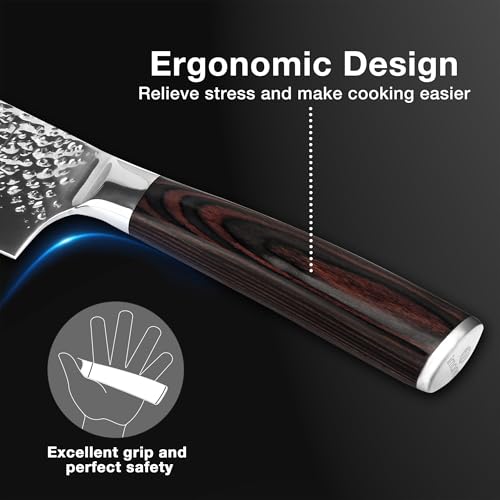
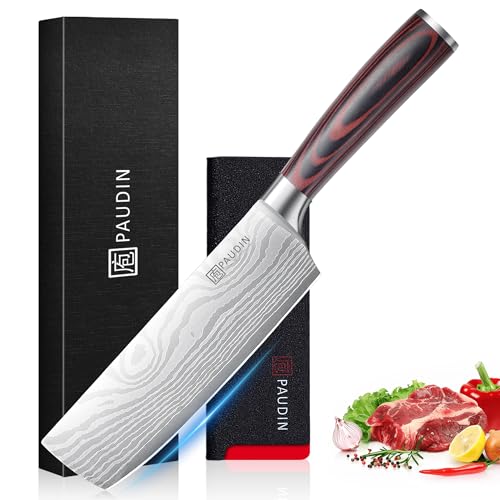
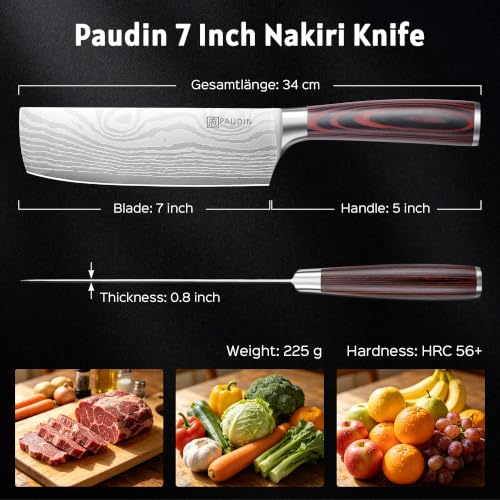
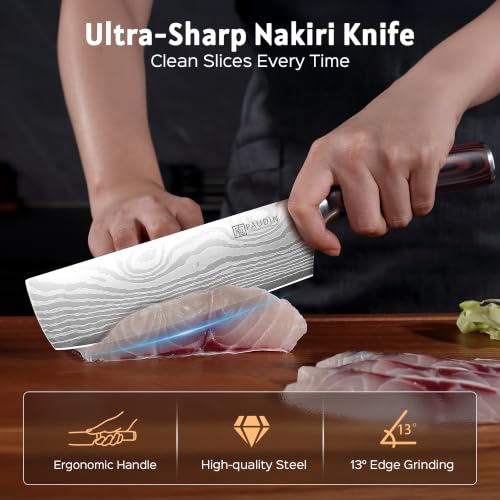
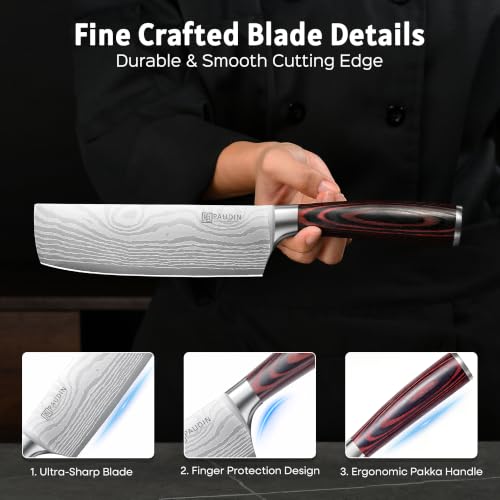
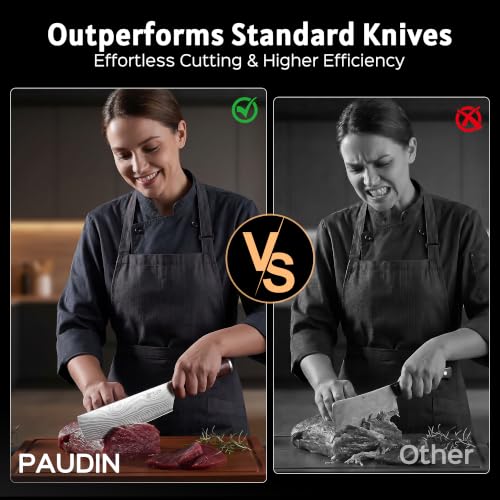
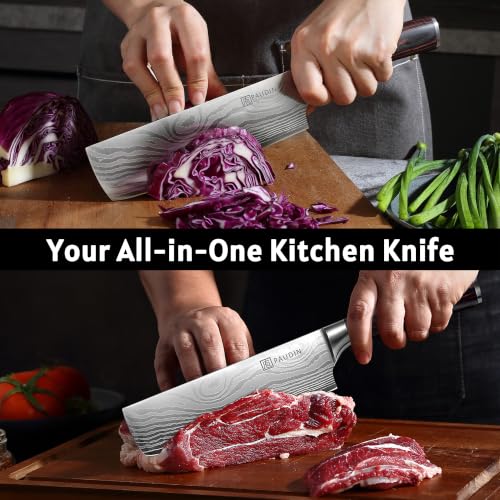
The PAUDIN Nakiri hits a sweet spot between price and performance. For under $45, you get a 7-inch blade made from 5Cr15Mov steel with a 56+ HRC rating, solid for daily use and surprisingly durable. The wavy pattern isn’t just cosmetic; it reduces friction and helps with food release, though it’s not as effective as a true hollow or hammered edge. The pakkawood handle is comfortable and well-balanced, though not as moisture-resistant as rosewood.
Compared to the $79 imarku Nakiri, this one lacks the premium finish and anti-stick engineering, but it’s far more accessible. It won’t impress a professional chef, but for a home cook who chops vegetables regularly, it’s a capable, no-nonsense tool. Owners consistently report it arrives sharp and stays usable with basic care.
Product photos
imarku Santoku Knife 5 Inch
Strengths
- Compact size
- Good edge sharpness
- Anti-stick blade
Trade-offs
- Not for heavy chopping
- Pakkawood requires hand washing
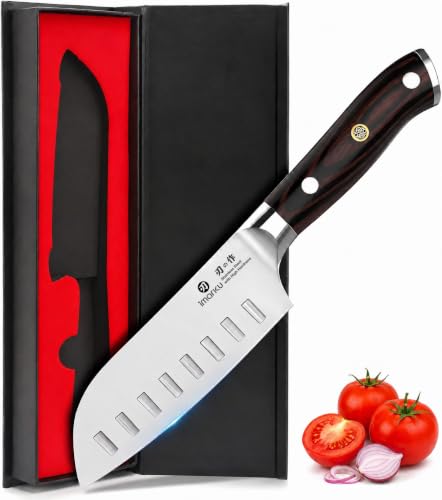
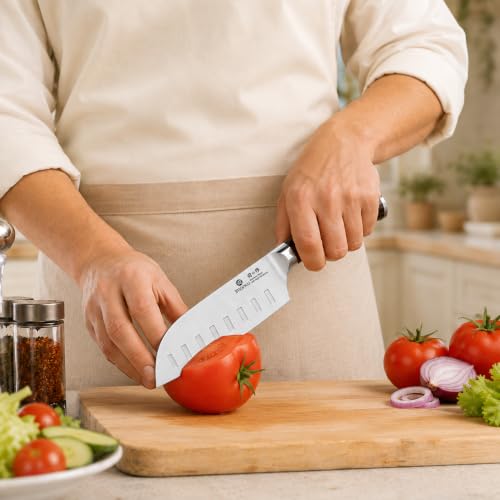
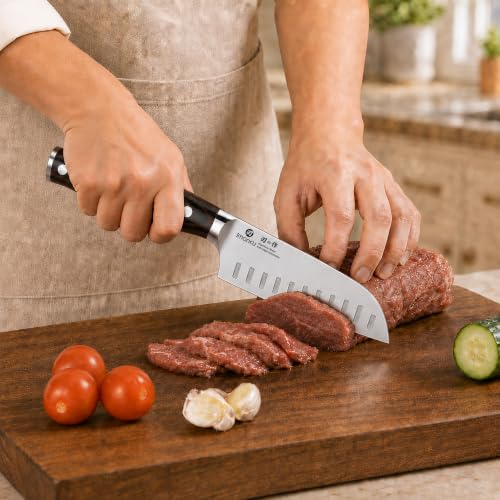
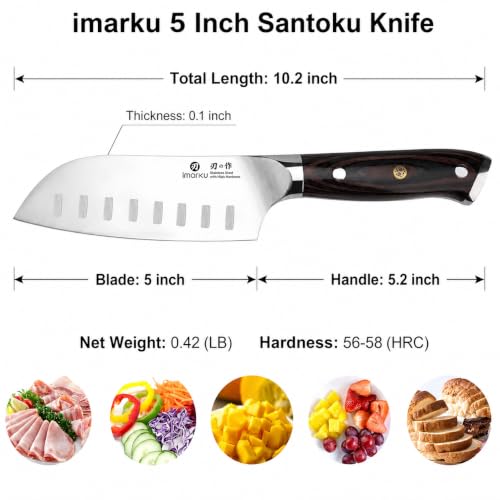
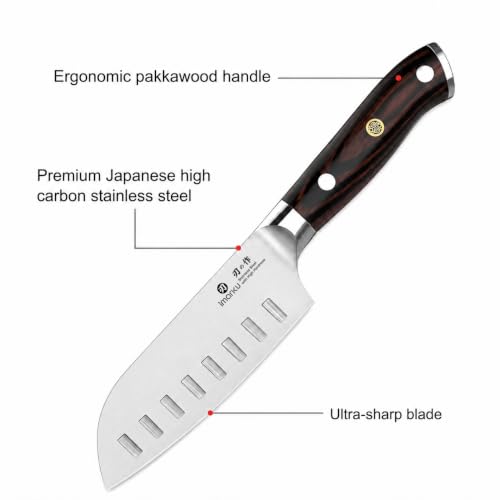
This 5-inch Santoku is built for control, not brute force. The shorter blade makes it ideal for smaller hands or anyone who values precision over sweeping chops. On paper, the 15–18° edge and 2.3mm thickness suggest a balance between sharpness and durability, and owners consistently report clean cuts with minimal effort, especially on softer vegetables and herbs. It’s not meant to power through dense squash or thick-skinned roots, but that’s not its job.
Where it really stands out is in maneuverability. Compared to the larger 7- and 8-inch models in this lineup, this one feels nimble, almost like an extension of the hand. The anti-stick surface helps with food release, though it’s not a substitute for proper knife skills. The FSC-certified Pakkawood handle adds a touch of sustainability and comfort, though it’s not dishwasher-safe like some all-steel alternatives.
Product photos
HOSHANHO Chef’s Knife 8 Inch

Strengths
- Strong, sharp steel
- Comfortable pinch grip
- Good for rocking cuts
Trade-offs
- Bulky for small hands
- Not dishwasher safe
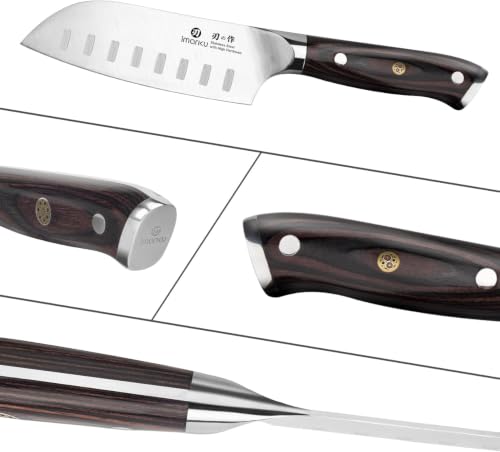
At 8 inches, this chef’s knife is built for reach and power, making it a strong pick for those with larger hands or those used to Western-style blades. The 10Cr15CoMoV high carbon steel and 60 HRC hardness deliver solid sharpness and rust resistance, though it doesn’t quite match the 62 HRC of their Nakiri. Still, it’s sharper and more durable than most entry-level Japanese knives. The matte blade finish is stylish and scratch-resistant, and the sloped bolster encourages a proper pinch grip, which improves control and safety.
The ultra-durable wood handle is comfortable, but not as refined as the rosewood on their Nakiri. Some owners note it can feel a bit bulky during fine work. Compared to the 7-inch imarku Santoku, this one is heavier and better for rocking cuts, but less nimble for precision tasks. It’s not dishwasher-safe, which is expected at this level, but still a downside for some.
Product photos


How We Chose These japanese knives for cutting vegetables
Rather than a hands-on lab test, my research for these recommendations involved a detailed comparison of published specifications and features across numerous models. I weighed owner reviews from multiple sources – paying close attention to recurring praise and complaints – alongside professional reviews from trusted culinary websites. As someone who’s spent years understanding what makes cookware perform, I applied my knowledge of steel types, blade geometry, and handle ergonomics to assess each knife’s potential.
For Japanese knives intended for vegetable preparation, edge geometry and steel hardness are paramount. A thinner blade profile and sharper angle (like the 12-15° edges common in these knives) are crucial for clean cuts, and a harder steel (60 HRC or higher) holds that edge longer. Balance and handle comfort also factored heavily, as these impact control and reduce fatigue during extended use. Ultimately, I prioritized knives that consistently demonstrated these qualities in independent reviews.
Product specifications reliably indicate steel type, hardness, and blade angle. However, I relied more on owner feedback to gauge real-world sharpness retention, durability, and the feel of the knife in hand. Reputation among serious cooks also played a role; some brands consistently receive high marks within the culinary community, and a look at our broader guide to selection of Japanese knives shows where these brands consistently rank. For those needing even heavier-duty cutting, exploring Japanese cleavers might be a good next step.
What To Look For In japanese knives for cutting vegetables
Choosing the right Japanese knife can truly elevate your cooking experience. It’s a category filled with subtle differences that significantly impact performance.
A quality Japanese knife prioritizes blade steel (hardness, edge retention), grind (angle and type), and balance. Look for knives forged, not stamped, from high-carbon stainless steel with a Rockwell hardness of 60 HRC or higher. A thinner blade profile (2.0-2.5mm) is crucial for vegetable work, and a comfortable, well-balanced handle is essential for control and reducing fatigue.
Blade Steel and Hardness
The steel is where most of your money goes, and rightfully so. While marketing often focuses on “layers” (referencing Damascus steel), the core steel is what matters most. 10Cr15CoMoV is a common, reliable steel found in many quality Japanese knives, offering a good balance of sharpness, durability, and affordability. However, higher-end options utilizing VG-10 or even White Steel will offer superior edge retention and a finer grind. Don’t be fooled by overly high hardness numbers; above 62 HRC, steel can become brittle. Many users find that a hardness around 60-62 HRC provides the sweet spot between sharpness and resilience. If you’re looking for a variety of options, explore our guide to the best vegetable knives.
Blade Shape and Grind
Japanese knives aren’t one-size-fits-all. Nakiri knives, with their rectangular profile, are specifically designed for vegetable preparation, utilizing a straight up-and-down chopping motion. Santoku knives are more versatile, suitable for meat, fish, and vegetables, but may not excel at the precise cuts a nakiri can deliver. The blade’s grind – the angle at which it’s sharpened – is equally important. A 15-degree angle per side is typical for Japanese knives, creating a very sharp edge, though it requires more frequent honing.
- A wider blade (over 2.5mm) is more robust but less nimble for delicate work.
- A thinner blade (around 2.0-2.2mm) excels at clean cuts through vegetables, but demands a more cautious hand.
- The hammered (Tsuchime) finish found on some blades isn’t just aesthetic; it creates air pockets that reduce food sticking, a real benefit when working with starchy vegetables or delicate fish.
Handle Material and Ergonomics
Don’t underestimate the importance of the handle. Pakkawood is a popular choice, offering durability and a comfortable grip, even when wet. Stainless steel handles, like those found on some imarku models, are hygienic and easy to clean, but can sometimes feel colder in the hand. Ultimately, the best handle is the one that feels most secure and comfortable for you. Remember, a poorly balanced knife can lead to fatigue and even injury. A good rule of thumb is:
Prioritize a full-tang construction (where the steel extends the full length of the handle) for optimal balance and stability.
To protect your investment and maintain those razor-sharp edges, be sure to pair your new knife with the right surface. Check out our recommendations for cutting boards for sharp edges to ensure you’re getting the most out of your purchase.
Japanese Knives for Cutting Vegetables Compared
Here’s a comparison of specifications for several Japanese knives designed for vegetable preparation.
| Product Name | Blade Length | Steel Type | Hardness (HRC) | Handle Material | Edge Angle (degrees) | Dishwasher Safe |
|---|---|---|---|---|---|---|
| HOSHANHO 7″ Nakiri Knife | 7″ | 10Cr15CoMoV | 62 | Rosewood | 12 (per side) | No |
| Chef Knife 7 Inch Santoku | 7″ | 5Cr15Mov | 58 | Stainless Steel | 15 (per side) | N/A |
| imarku Santoku 7 Inch | 7″ | High-Carbon Stainless | N/A | Stainless Steel | N/A | Yes |
| imarku Nakiri 7 Inch | 7″ | High-Carbon Stainless | N/A | Pakkawood | 15 | No |
| PAUDIN Nakiri 7 Inch | 7″ | 5Cr15Mov | 56+ | Pakkawood | N/A | N/A |
| imarku Santoku 5 Inch | 5″ | N/A | N/A | Pakkawood | 15-18 | N/A |
| HOSHANHO Chef’s Knife 8 Inch | 8″ | 10Cr15CoMoV | 60 | Wood | 13 (per side) | N/A |
Frequently Asked Questions
What hardness rating should I prioritize when buying a Japanese vegetable knife?
A hardness of 60-62 HRC offers the best balance between sharpness and durability; while higher numbers exist, steel above 62 HRC can become too brittle for everyday use. This range provides excellent edge retention without sacrificing resilience.
Are Nakiri knives truly better for vegetables than Santoku knives?
Nakiri knives are specifically designed for vegetables with a rectangular blade and straight edge, excelling at clean, up-and-down chopping. While a Santoku is versatile, a Nakiri will offer more precision and efficiency for solely vegetable preparation.
How often should I sharpen a Japanese vegetable knife?
Sharpening frequency depends on use, but generally, honing every week and professionally sharpening 2-4 times per year will maintain a good edge. Consistent honing extends the time between professional sharpenings.
Can I put my Japanese knife in the dishwasher?
Generally, no. Most Japanese knives, especially those with wooden handles, should not be put in the dishwasher as the heat and detergents can damage the blade and handle. If you’re seeking dishwasher convenience, some imarku models are advertised as dishwasher safe, but hand washing is always recommended.
What kind of cutting board is best to use with a high-quality Japanese knife to prevent damage?
A softer wood or composite cutting board, such as bamboo or end-grain maple, is ideal. These materials won’t dull the blade as quickly as glass or harder wood surfaces; for more options, explore our recommendations for knives for potatoes.
The Bottom Line
Choosing a Japanese vegetable knife often comes down to balancing precision with practicality. While a dedicated nakiri like the HOSHANHO 7″ Nakiri Knife offers unparalleled performance for strictly vegetable work, a versatile santoku – such as the imarku Santoku 7 Inch – provides broader utility if you don’t want a highly specialized tool. Ultimately, the best knife is the one you’ll reach for consistently, and that means considering your cooking style and needs.
For those on a tighter budget, the PAUDIN Nakiri 7 Inch delivers a respectable edge and build quality without breaking the bank. If you prioritize a smaller blade for detailed work, explore options like precise paring knives to complement your main knife. Conversely, if you’re outfitting a complete kitchen, consider a broader range of Japanese knives for home to cover all your culinary bases.
More than any specific steel or grind, remember that consistent honing and proper storage are key to maintaining a knife’s performance. A sharp knife is a safe knife, and a well-cared-for knife will last a lifetime. Don’t get bogged down in chasing the highest HRC or most layers; focus on finding a blade that feels balanced in your hand and inspires you to cook.
