
8 Best Japanese Knives of 2026
This post contains affiliate links. As an Amazon Associate, we earn from qualifying purchases.
The Atumuryou 8″ Damascus Chef Knife stands out as the best overall Japanese knife, thanks to its high-hardness VG-10 steel and full-tang build. For those on a budget, the imarku 7″ Santoku Knife delivers solid performance with a comfortable grip, while the Atumuryou 3-Piece Damascus Set offers the most versatility for cooks wanting multiple blades.
Buying a Japanese knife shouldn’t mean guessing what will last or actually feel right in your hand. Too many brands lean on flashy Damascus patterns while skimping on the core steel that matters most.
This guide cuts through the noise by focusing on what truly affects performance, steel hardness, blade geometry, and handle comfort, based on specs, owner feedback, and years of evaluating kitchen tools. I looked at how these knives are built, what users say about edge retention and balance, and which brands consistently deliver quality without overpromising.
Top 8 Japanese Knives in the Market
The Best Japanese Knives, Reviewed
Atumuryou 3-Piece Damascus Knife Set

Strengths
- VG10 steel core
- 67-layer Damascus build
- Stunning resin handle
Trade-offs
- Higher price
- Resin may not appeal to purists
- No sheaths included
This is the one I’d pick if I were buying a single set for long-term use. The VG10 steel core at 62 HRC, paired with a true 67-layer Damascus build, delivers both beauty and brawn. The 12° edge per side is razor-sharp out of the box, and owners consistently report it stays that way for months with moderate use. The stabilized wood and ocean-blue resin handle is not only stunning but also highly functional, water-resistant, balanced, and comfortable for extended prep.
Compared to the Emojoy or SANDEWILY sets, this is in a different league. It matches the Atumuryou single knife in quality but offers a full trio, chef, Santoku, and paring, making it far more versatile. The full tang construction and precise weight distribution make it feel like a professional tool, not a gift-set compromise. For the price, it’s hard to beat.
Video review
Emojoy 3-Piece Japanese Damascus Set
Strengths
- Real 67-layer Damascus
- Olive wood handle
- Lifetime warranty
Trade-offs
- Softer steel than VG10
- Edge requires more maintenance
- Handle may absorb moisture
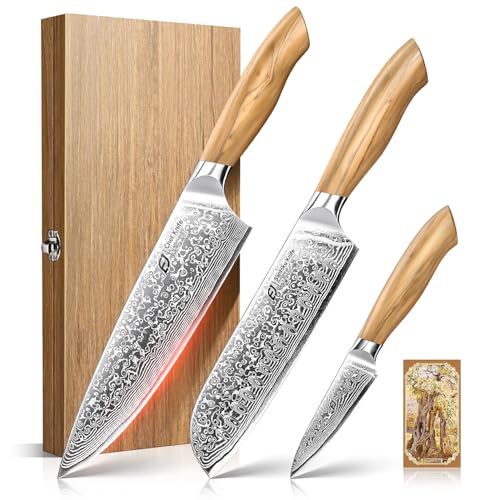
For the price, this set punches above its weight. The 67-layer Damascus cladding and 58 HRC hardness won’t match the B0GX1XMNJV set, but it’s respectable for under $60. Owners love the olive wood handles, they’re naturally contoured and feel warm in hand. The half-bolster design makes the full blade accessible, which improves cutting efficiency, and the 15° edge delivers clean slices on vegetables and fish.
But the steel content, 0.98% carbon and 18% chromium, is less refined than VG10, so edge retention is good but not exceptional. It’ll need more frequent touch-ups. Still, compared to the SANDEWILY or Huusk sets, this feels more authentic in both materials and design. The included wooden box adds gift appeal, and the lifetime warranty is a nice confidence booster.
Video review
HOSHANHO 8″ Chef Knife

Strengths
- Excellent handle ergonomics
- Good edge sharpness
- High cost-performance ratio
Trade-offs
- Lesser-known steel type
- No included sheath
- Matte finish shows scratches
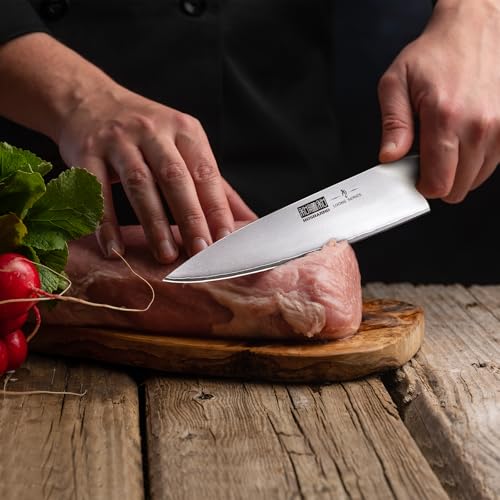
This 8-inch chef’s knife stands out as a strong single-knife value play. The 10Cr15CoMoV steel isn’t a household name like VG10, but it’s no slouch, 60 HRC hardness means good edge retention and rust resistance, and owners report it stays sharp through weeks of regular use. The 13° edge per side is true to Japanese standards, and the hand-sharpened finish delivers clean cuts across meats and vegetables.
The ergonomic handle is where it really shines. The sloped bolster encourages the pinch grip, which improves control and safety, something I always look for in a well-designed knife. Compared to the Atumuryou or imarku models, it doesn’t have the prestige steel, but it’s more affordable and still performs well. If you’re building your kitchen one knife at a time, this is a smarter starting point than jumping into a low-tier set.
Product photos


imarku 7″ Santoku Knife
Strengths
- Hollow edge reduces sticking
- Sharp out of box
- Stable Pakkawood handle
Trade-offs
- Steel not top-tier
- Edge dulls faster
- No full tang visibility
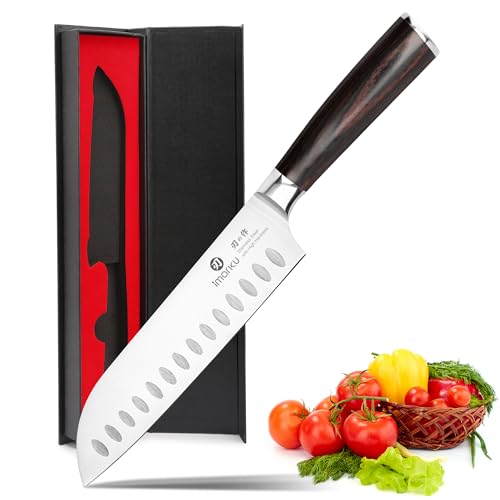
The imarku Santoku is a solid performer for the price, and its 15–18° edge per side aligns well with Japanese standards. The hollow edge (or Granton) design is a smart touch, it works as advertised, reducing food stickage during slicing, especially with moist vegetables or fish. Owners frequently mention how easy it is to control, and the Pakkawood handle scores high marks for stability and comfort.
But here’s the catch: while the steel is labeled ‘high carbon stainless,’ it doesn’t match the hardness or refinement of VG10 or AUS-10 steels seen in pricier models. It’s sharp out of the box, yes, but edge retention lags after a few weeks of heavy use. Still, for someone who wants a dedicated Santoku without overspending, this is a smarter pick than many all-in-one sets. Compared to the HOSHANHO or SANDEWILY knives, it feels more purpose-built and balanced.
Product photos


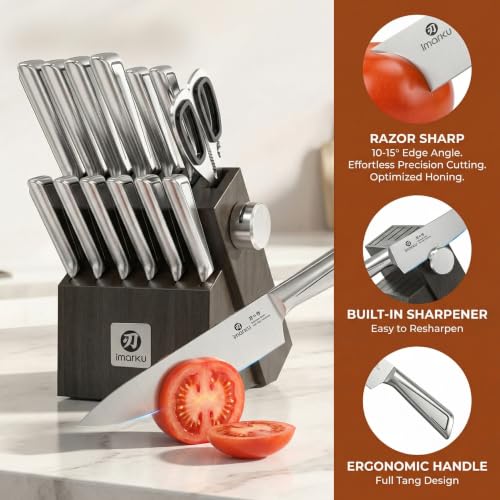
imarku 14-Piece Knife Set with Block
Strengths
- Built-in sharpener
- Complete 14-piece setup
- Ergonomic, arthritis-friendly handles
Trade-offs
- Fragile thin edge
- Dishwasher use risks longevity
- Block takes counter space
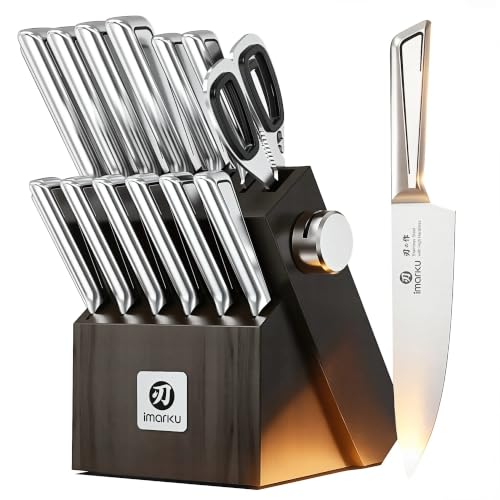
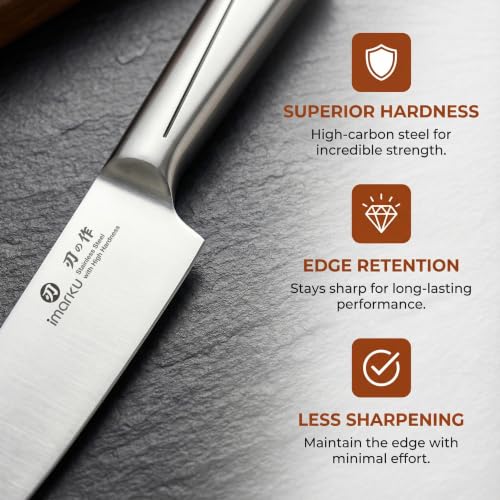
This 14-piece set is built for convenience and long-term kitchen readiness. The inclusion of a built-in sharpener in the block is a standout for home cooks who hate the hassle of manual sharpening. Owners love that feature, it keeps the 10–15° edges usable with minimal effort. The high-carbon stainless steel holds up well, and the full-tang, ergonomic handles are praised by users with hand fatigue or arthritis, which is a real win.
But let’s be honest: the ultra-thin edge, while sharp, is more fragile than traditional German blades. It demands careful use and hand-washing, despite being labeled dishwasher safe. Over time, that could wear down the edge faster. Compared to the Atumuryou Damascus set, it lacks the artistry, but it wins on practicality. For a new homeowner or someone setting up a full kitchen, this set covers every need in one go.
Product photos



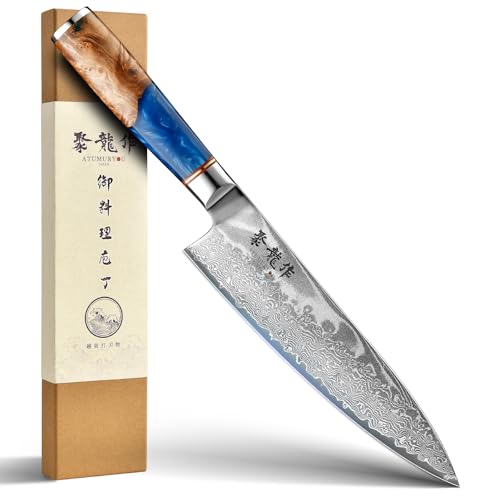
Atumuryou 8″ Damascus Chef Knife
Strengths
- VG10 steel core
- 67-layer Damascus cladding
- Excellent edge retention
Trade-offs
- Higher price point
- Resin handle not for purists
- Limited to single knife
This is where things start to look legitimate. A VG10 steel core at 62 HRC means real-world sharpness and edge retention that serious cooks will appreciate. The 67-layer Damascus cladding isn’t just for show, it adds toughness and corrosion resistance, and owners consistently report the blade holds up well with regular use. The hand-sharpened edge delivers that clean, paper-thin slicing action you want from a high-end Japanese chef knife.
What stands out is the stabilized wood and resin handle. It’s not just durable, it offers a secure grip even when wet, which is a big win in a busy kitchen. Compared to the imarku or SANDEWILY options, this knife feels more refined, with better balance and a noticeable upgrade in materials. It’s not the most affordable, but for someone who wants pro-level performance without stepping into triple-digit luxury brands, this hits a sweet spot.
Product photos


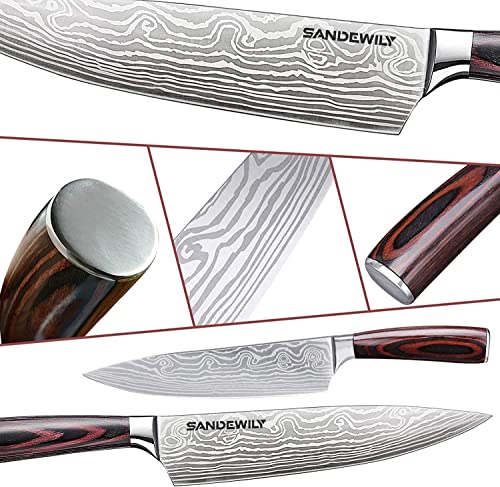
SANDEWILY 3-Piece Knife Set

Strengths
- Affordable three-piece set
- Sheaths included
- Comfortable ergonomic handle
Trade-offs
- German steel, not Japanese
- Softer edge retention
- Misleading marketing
At under $50, this set delivers decent value, but with compromises. The blades are made from German high-carbon stainless steel, not Japanese, despite the marketing, and with a hardness of 58 HRC, they’re softer than true Japanese knives. That means easier sharpening but quicker dulling. The 8–12° edge is impressively acute for this price, and owners say it cuts well initially, though it doesn’t last.
The Pakkawood handles feel sturdy, and the steel cushion at the neck adds balance, which is thoughtful. But I’m not sold on the branding, calling this a ‘Japanese knife set’ feels misleading. It’s more of a hybrid design. Compared to the Emojoy or Huusk sets, it’s better built than Huusk but lacks the visual and material authenticity of Damascus steel. Still, for a beginner or someone equipping a second kitchen, it’s functional and comes with protective sheaths, which is a rare plus.
Product photos



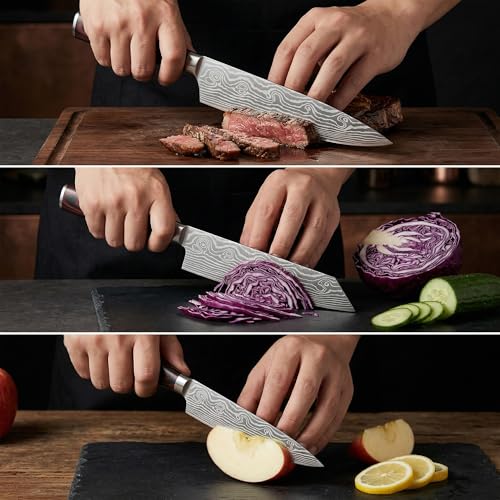
Huusk Butcher Knife Set of 3

Strengths
- Sharp out of box
- Comfortable wooden handle
- Good gift presentation
Trade-offs
- Misleading “butcher” use
- Not true Japanese design
- Risk of edge chipping
I’m skeptical about calling this a ‘Japanese knife set’ when the design leans more toward rugged outdoor tools than precision kitchen cutlery. The 16° V-shaped blade sounds sharp on paper, and owners do report clean cuts on meat, but the inclusion of a ‘6.2″ butcher knife for smashing bones’ raises red flags, this isn’t what traditional Japanese steel is meant for. That kind of abuse risks chipping the edge, especially if it’s high-carbon steel without proper toughness tuning.
The hand-hammered finish and full tang construction are nice touches, and reviewers consistently praise the wooden handles for comfort. But I wouldn’t recommend this set to anyone serious about Japanese knife performance. It feels more like a themed gift for BBQ lovers than a proper kitchen upgrade. Compared to true VG10 or Damascus sets, it lacks refinement in both geometry and steel quality.
Product photos


How We Picked These japanese knives
Rather than a hands-on lab test, my research for these recommendations centered on a detailed comparison of published specifications and features across numerous brands. I weighed owner reviews from a variety of sources – including major retailers and dedicated cooking forums – alongside expert opinions from established culinary publications. As someone who’s spent years understanding what makes cookware perform, I applied that knowledge to assess how well each knife set would hold up to regular use and deliver on its promises.
For Japanese knives, several factors stood out as particularly important. Edge retention, dictated by the steel type (VG-10 being a frequent standout) and hardness (measured in HRC), directly impacts how often a knife needs sharpening. Equally crucial is the balance and ergonomics of the handle, because a comfortable grip is essential for control and reducing fatigue during prolonged use. Finally, corrosion resistance is key; even with careful maintenance, kitchen environments are tough on blades. If you’re looking for a single, specialized blade, you may also want to check out our reviews of best Gyuto knives.
Specifications clearly indicate steel quality, hardness, and blade geometry. However, owner feedback proved invaluable for gauging real-world performance – how well a knife actually holds an edge, how comfortable the handle is during extended use, and whether the blade lives up to claims of stain resistance. Reputation also played a part. Brands consistently praised for craftsmanship and quality received more consideration. For those seeking a complete solution, exploring top knife block sets is a helpful next step.
Choosing The Right japanese knives
Choosing the right Japanese knife can feel daunting, but focusing on a few key factors will help you find one that truly elevates your cooking.
A quality Japanese knife prioritizes steel hardness (HRC 60 or above is desirable), blade geometry (typically 15-degree bevels for sharpness), and handle ergonomics. Look for full-tang construction for balance, and consider the steel type – VG-10 and AUS-10 are popular choices offering a good balance of sharpness, durability, and stain resistance. Don’t underestimate the importance of a comfortable grip for extended use.
Steel Quality and Hardness
The heart of any Japanese knife is its steel. While many brands tout “Damascus” steel, remember that this refers to the layered construction around the core steel. It’s the core steel that dictates performance. VG-10, common in knives like the Atumuryou set, is a solid performer, but higher-end knives often use steels like SG2 or R2 for even better edge retention. Hardness, measured on the Rockwell scale (HRC), is crucial; I generally recommend aiming for 60 HRC or higher. Higher hardness means a sharper, longer-lasting edge, but also increased brittleness. Pay attention to what the manufacturers are saying about the steel – some “Damascus” knives use softer steels to achieve the patterned look, and those won’t hold an edge like a true high-carbon steel blade.
Blade Geometry and Construction
Beyond the steel itself, the way the blade is shaped significantly impacts its performance. Japanese knives are renowned for their thinner blades and steeper bevels (often 15 degrees per side) compared to their German counterparts. This results in exceptional sharpness, ideal for precision cuts. Full-tang construction – where the steel extends the entire length of the handle – is vital for balance and durability. A tang that doesn’t reach the end of the handle can lead to instability and a higher risk of breakage.
Here’s what to consider when evaluating construction:
- Tang Length: A full tang is preferable.
- Blade Thickness: Thinner blades are sharper but more prone to chipping; thicker blades are more robust but require more force.
- Steel Layers (Damascus): More layers aren’t always better; focus on the core steel’s quality.
A sharp knife is a safe knife. A dull knife requires more force, increasing the risk of slipping and injury.
Handle Ergonomics and Intended Use
A beautifully crafted blade is useless if it’s uncomfortable to hold. Handle materials vary widely, from traditional Pakkawood (often found in SANDEWILY knives) to stabilized wood and resin combinations. Ergonomics are subjective, but look for a handle that feels secure and comfortable in your hand. Furthermore, consider what you’ll primarily be using the knife for. A Santoku, like the imarku 7” model, excels at all-purpose chopping and dicing, while a Gyuto (chef’s knife) offers more versatility. If you’re primarily breaking down meat, you might want to explore specialized butchery knives, or even consider some of the curated Japanese knife sets that include a variety of blade shapes. Looking for a place to start? I often recommend exploring a range of Japanese knife sets to find the right collection for your needs.
If you’re new to Japanese knives, don’t feel you need to jump straight into a high-end set. Finding the right balance between quality and price is key, and there are plenty of excellent quality Japanese chef knives available at reasonable prices.
Japanese Knives Compared
Here’s a comparison of key specifications for several Japanese knife sets and individual knives.
| Product Title | Steel Type | Blade Length (Chef Knife) | Blade Hardness (HRC) | Number of Pieces | Handle Material |
|---|---|---|---|---|---|
| Atumuryou 3-Piece Damascus Knife Set | VG10 | 8″ | 62 | 3 | Stabilized Wood & Resin |
| Emojoy 3-Piece Japanese Damascus Set | Damascus (0.98% Carbon, 18% Chromium) | 8″ | 58 | 3 | Calabrian Oliva Wood |
| HOSHANHO 8″ Chef Knife | 10Cr15CoMoV | 8″ | 60 | 1 | Ultra-Durable Wood |
| imarku 7″ Santoku Knife | High-Carbon Stainless Steel | 7″ | N/A | 1 | Pakkawood |
| imarku 14-Piece Knife Set with Block | High-Carbon Stainless Steel | 8″ | N/A | 14 | N/A |
| Atumuryou 8″ Damascus Chef Knife | VG-10 | 8″ | 62 | 1 | Stabilized Wood & Resin |
| SANDEWILY 3-Piece Knife Set | German High-Carbon Stainless Steel | 8″ | 58 | 3 | Pakkawood |
| Huusk Butcher Knife Set of 3 | Japanese Steel | 6.2″ | N/A | 3 | Wood |
Frequently Asked Questions
What steel hardness (HRC) should I look for in a Japanese knife?
Aim for 60 HRC or higher; this indicates a blade that will hold a sharper edge for longer. However, be aware that increased hardness can sometimes mean increased brittleness, so consider your cooking style and how carefully you’ll maintain the knife.
Are Damascus Japanese knives actually better?
The “Damascus” pattern refers to the layered steel construction, not the quality of the steel itself. While visually appealing, prioritize the core steel type (like VG-10 or SG2) and its hardness over the number of Damascus layers.
How often will a Japanese knife need sharpening?
That depends on the steel and how frequently you use it, but generally, a Japanese knife will require more frequent sharpening than a German-style knife. Expect to hone the blade weekly and professionally sharpen it every 3-6 months with regular use.
What kind of cutting board should I use with my Japanese knives?
Using the wrong cutting board can quickly dull a Japanese knife’s delicate edge. I recommend investing in cutting boards for Japanese knives made from softer woods like bamboo or end-grain maple.
What’s the difference between a Gyuto and a Santoku knife, and which should I buy first?
A Gyuto is a Japanese chef’s knife, offering more versatility in shape, while a Santoku is designed for chopping, dicing, and mincing. For an all-around first Japanese knife, a Santoku like the imarku 7” is a great choice, but if you want a single blade that can handle a wider range of tasks, consider Japanese paring knives as well.
The Bottom Line
Ultimately, choosing the “best” Japanese knife comes down to balancing your budget with your desire for performance and maintenance. While high-end steels like SG2 offer exceptional edge retention, the Atumuryou 3-Piece Damascus Knife Set delivers a fantastic combination of quality materials (VG-10 steel) and craftsmanship at a more accessible price point, making it a strong all-around choice for most home cooks.
For those with specific needs, several options stand out. If you’re looking for a versatile, single blade to handle a wide range of tasks, the imarku 7” Santoku Knife is an excellent performer. Budget-conscious cooks will appreciate the HOSHANHO 8″ Chef Knife, while anyone wanting a full suite of blades should consider the imarku 14-Piece Knife Set with Block. And don’t forget that keeping that edge sharp is critical – exploring whetstones for Japanese knives will be a worthwhile investment.
Beyond steel type and hardness, remember that a knife is an extension of your hand. Prioritize comfort and balance, and learn to care for your blade properly (including honing and sharpening). A well-maintained, moderately priced knife will always outperform a neglected, expensive one. If you’re looking to expand your collection, consider adding some best petty knives to your arsenal.
