
8 Best Japanese Petty Knives of 2026
This post contains affiliate links. As an Amazon Associate, we earn from qualifying purchases.
The best Japanese petty knife overall is the KAWAHIRO 5″ Paring Knife, thanks to its VG10 steel core and precise 5-inch blade that handles detail work effortlessly. For a more affordable option, the MITSUMOTO SAKARI 5.5″ Paring offers solid performance with 9Cr18MoV steel and a comfortable rosewood handle.
Most home cooks underestimate how much a well-made petty knife can streamline prep work. It’s the go-to blade for peeling, trimming, and small precision cuts, tasks that feel fussy with a larger knife. After comparing the field and weighing specs, owner feedback, and build quality, I focused on models that deliver real performance without unnecessary frills.
This guide highlights the top performers based on steel quality, balance, and comfort. We looked at blade length, handle design, and real-world durability so you can pick one that fits your hand and kitchen routine.
Top 8 Japanese Petty Knives in the Market
The Best Japanese Petty Knives, Reviewed
KAWAHIRO 5″ VG10 Paring Knife

Strengths
- 62 HRC VG10 core
- Hand-sharpened edge
- Unique handle design
Trade-offs
- May be too decorative for pros
- No sheath
- Limited durability under heavy use
The KAWAHIRO 5-inch stands out as a strong all-around contender, blending high-end specs with thoughtful design. Its 3-layer VG10 core, hardened to 62 HRC, promises excellent edge retention, and owner feedback supports that, many report it staying sharp through weeks of regular vegetable prep. The hand-sharpened edge cuts cleanly, and the compact size makes it ideal for intricate tasks. What really elevates it is the handle: a blend of ruby wood, ebony, and turquoise inlay that’s both striking and ergonomic. It’s clearly built to impress, both in function and presentation.
While it’s priced competitively with other VG10 knives, it doesn’t quite match the forging refinement of Yoshihiro. Still, for the balance of performance, aesthetics, and value, it’s a top pick. If you want a knife that performs well and doubles as a gift, this is my recommendation.
Video review
Yoshihiro 46-Layer Damascus Petty
Strengths
- 46-layer Damascus blade
- Includes wooden saya
- Ambrosia wood handle
Trade-offs
- High price for cosmetic upgrade
- Requires careful maintenance
- Not for heavy use
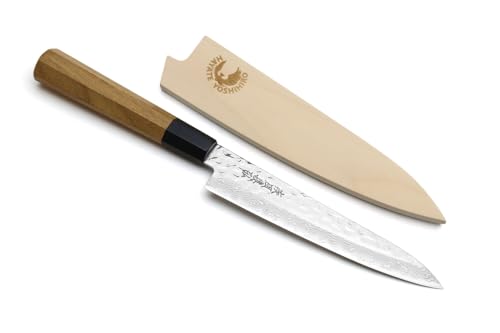
This 6-inch Yoshihiro is the luxury statement of the group. With 46 layers of Damascus steel wrapped around a VG10 core, it’s as close to a work of art as it is a tool. The blade’s hammered finish reduces friction, and the edge comes razor-sharp, owners say it handles everything from delicate herb mincing to small meat cuts with ease. The ambrosia handle, with its natural insect-bored patterns, is lightweight and fits snugly in hand, especially for users who prefer traditional wa-style grips.
It’s also the most expensive here, and while the performance is excellent, the extra layers don’t improve function, just appearance. The included saya (wooden sheath) is a nice touch for storage and presentation. I’d recommend this only if you value craftsmanship and beauty as much as performance. For pure utility, the 16-layer model is the better pick.
Video review
Yoshihiro VG10 16-Layer Petty

Strengths
- VG10 core steel
- Hammered Damascus blade
- Western-style handle
Trade-offs
- No sheath included
- Premium price
- Requires water stones
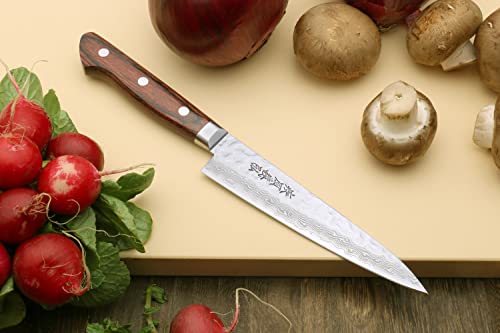
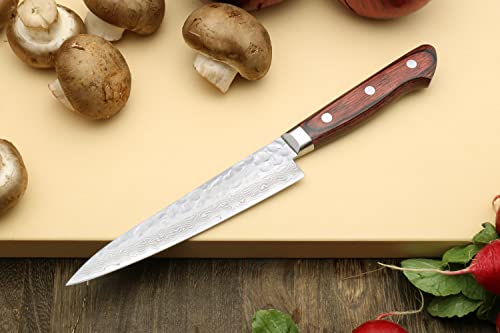
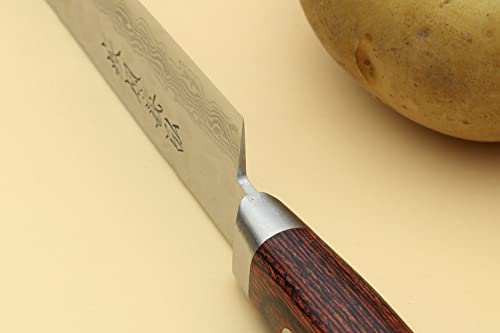
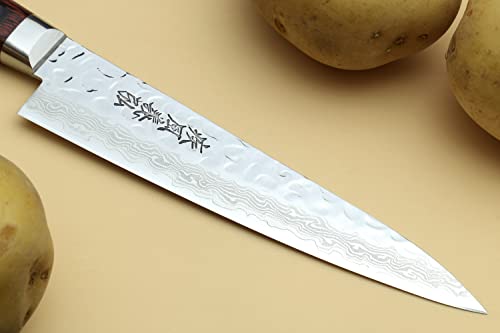
This Yoshihiro 5.3-inch petty knife strikes a smart balance between performance and artistry. With a VG10 core wrapped in 16 layers of hammered Damascus steel, it’s built for sharpness and visual appeal, owners consistently praise its ability to glide through tomatoes and herbs with minimal pressure. The hammered (tsuchime) finish isn’t just for looks; it reduces drag and helps prevent food from sticking, a real advantage during fast-paced prep. The full-tang Western-style mahogany handle offers solid grip and comfort, making it more accessible for users who find traditional wa-handles too slim.
Compared to the higher-layered Yoshihiro model, this one delivers nearly the same cutting performance at a more reasonable price. It’s not the most durable for heavy chopping, but for precision work, it’s hard to beat. I’d pick this over the 46-layer version unless you’re specifically after the visual drama of extra patterning.
Product photos

MITSUMOTO SAKARI 5.5″ Paring
Strengths
- Octagonal rosewood handle
- Hand-forged 3-layer steel
- Includes storage box
Trade-offs
- Steel slightly softer than VG10
- Handle may feel small for large hands
- No sheath for daily carry
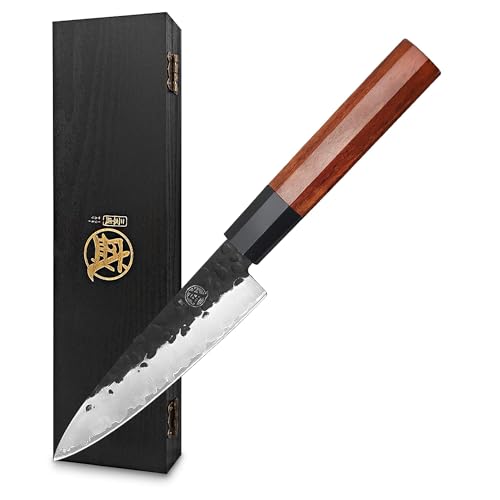
At $43, the MITSUMOTO SAKARI offers impressive specs for the price. The 5.5-inch blade is forged from 3-layer 9Cr18MoV steel, a Chinese stainless high-carbon alloy similar to VG10 but slightly softer (HRC 60±2). It won’t hold an edge quite as long, but it’s easier to sharpen and more forgiving of minor misuse. Owners report solid performance on fruits and vegetables, with good control thanks to the octagonal rosewood handle, which provides clear grip orientation, ideal for quick, repetitive cuts.
It’s not as refined as the KAWAHIRO or Yoshihiro, but it bridges the gap between budget and premium models. The included sandalwood storage box adds a touch of class. For mid-range buyers who want real Japanese craftsmanship without breaking the bank, this is the smarter buy.
Product photos



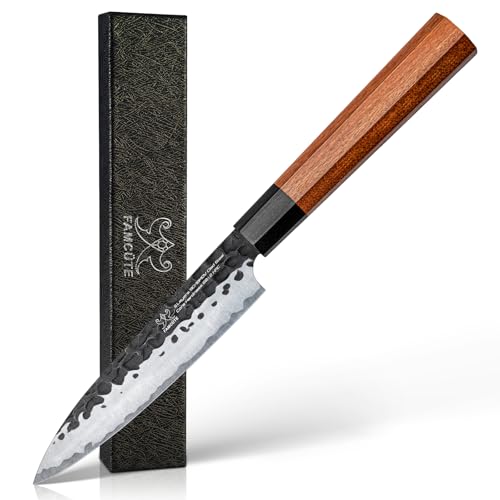
FAMCÜTE 5″ Hand-Forged Petty
Strengths
- Balanced weight
- Rosewood handle
- Good grip
Trade-offs
- Steel not top-tier
- Dimpled blade may trap debris
- Handle may wear over time
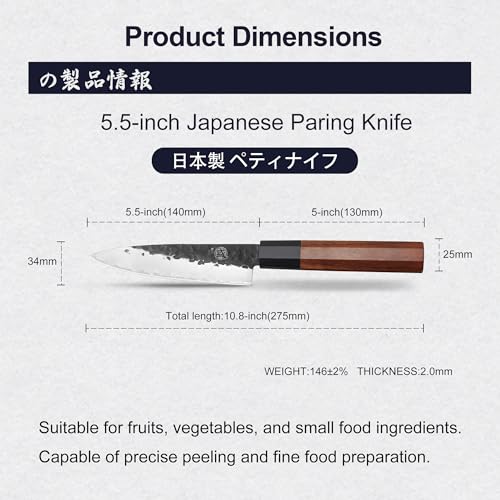
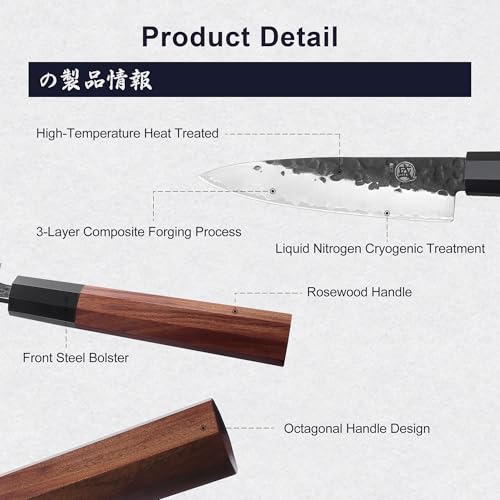
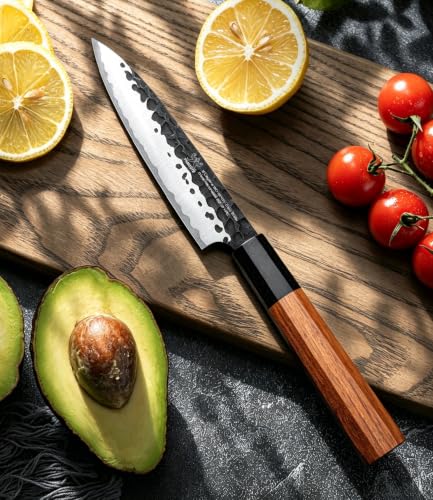
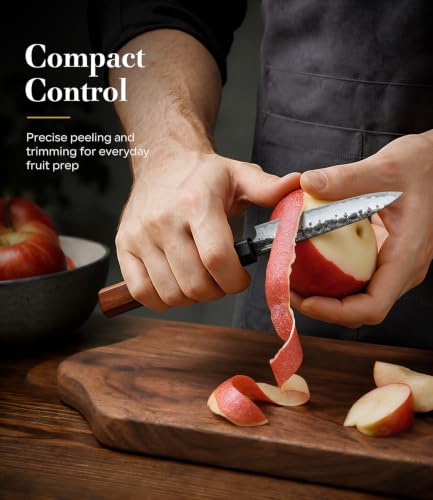
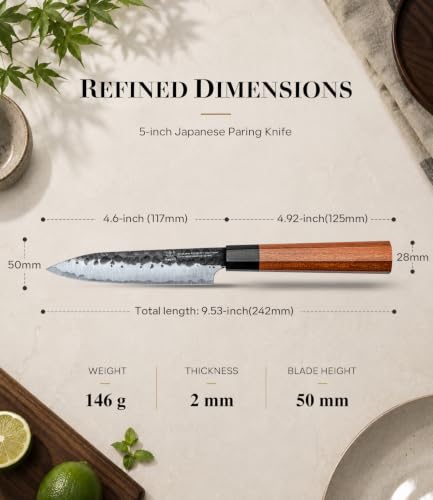
The FAMCÜTE 5-inch knife stands out for its thoughtful ergonomics. The African rosewood handle is polished to a smooth, non-slip finish, and the weight distribution, slightly forward, helps drive the blade through tasks like garlic mincing or herb chopping with less hand fatigue. The 9CR18MOV steel (rated at HRC 58-62) is solid for this price, offering decent sharpness and corrosion resistance, though it won’t match VG10’s edge life. Owners appreciate its balance and comfort, especially during extended prep.
It’s not the most refined blade in terms of fit and finish, but for under $40, it delivers reliable performance and excellent grip. Compared to the Huusk, it feels more substantial and better balanced. If you prioritize comfort and control over flashy looks, this is the better value.
Product photos


Tojiro DP Petty Utility Knife

Strengths
- Cobalt alloy steel
- Lightweight balance
- Durable ECO handle
Trade-offs
- No sheath included
- Blade finish is plain
- Minimalist design may not appeal
The Tojiro DP Petty is a sleeper hit, minimalist in presentation but serious in steel. Built with cobalt-infused stainless alloy, it’s part of Tojiro’s DP series known for professional-grade performance. At nearly 6 inches, it’s longer than most petty knives, giving it more reach for small chopping tasks while still fitting comfortably in hand. The 90g weight strikes a good balance, and the ECO wood handle is durable and moisture-resistant, a practical upgrade over raw wood.
What sets this apart is the blade steel: it’s harder and more wear-resistant than standard stainless, which translates to longer edge life. Owners note it stays sharp longer than many competitors in its class. It’s not flashy, no hammered finish or exotic handle, but for pure function, it’s one of the smarter buys. I’d choose this over flashier models if performance matters more than looks.
Product photos


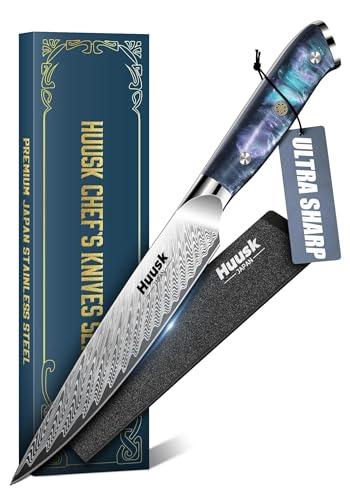
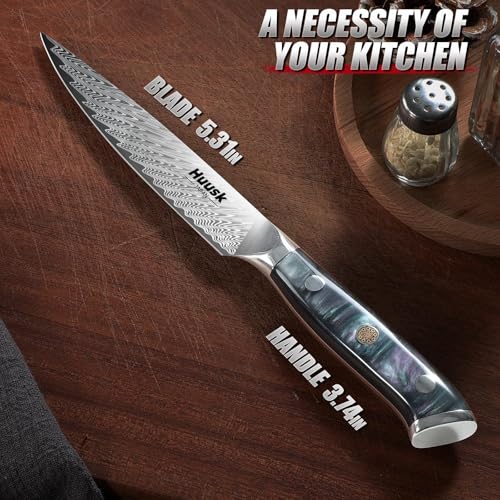
Huusk 5″ Stainless Utility Knife
Strengths
- Low cost
- Resin handle
- Sharp out of box
Trade-offs
- Blade dulls quickly
- Plastic-like feel
- No traditional craftsmanship
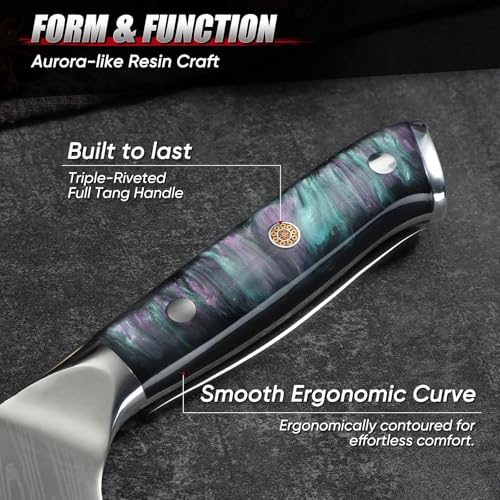
The Huusk 5-inch knife is the most budget-friendly option here, and it shows. The blade is made from high-carbon stainless steel and sharpened to a 15-degree angle, which sounds good on paper, but owners report it dulls faster than expected, especially when cutting dense vegetables. The resin handle is durable and easy to clean, and the half bolster adds a bit of finger protection, but the full-tang construction feels a bit clunky for such a small knife.
It’s decent for light tasks and looks sleek in its gift box, which likely explains its popularity as a present. But compared to the FAMCÜTE or MITSUMOTO, it lacks refinement and longevity. I’d only recommend it as a starter knife or gift for casual users.
Product photos

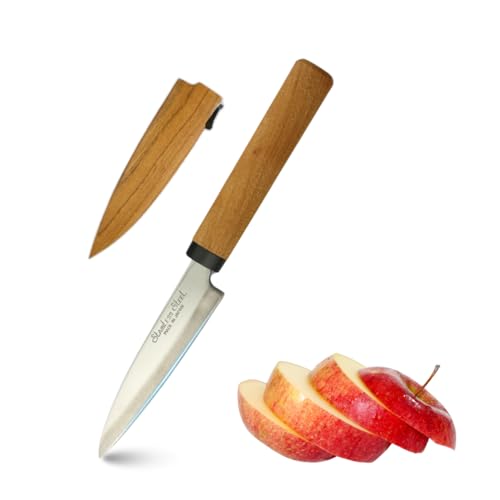
4″ Japanese Paring Knife
Strengths
- Compact size
- Wooden handle
- Includes sheath
Trade-offs
- Limited cutting performance
- Basic steel quality
- Not for heavy tasks
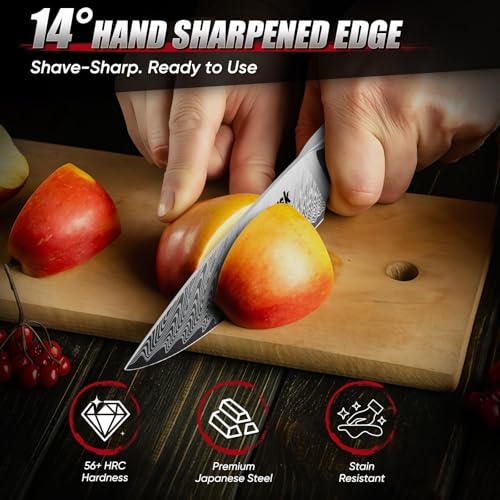
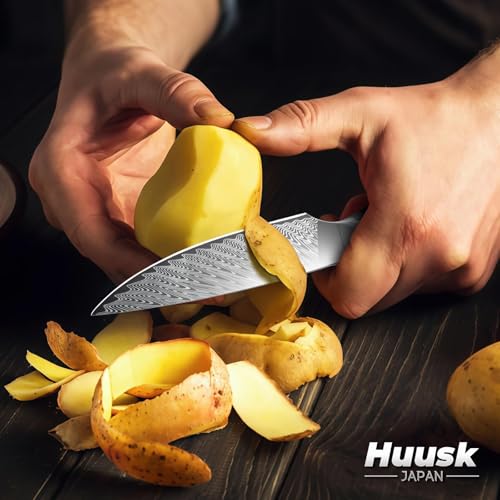
At just 4 inches, this compact knife delivers what it promises: a no-frills, functional tool for light prep work. On paper, the high carbon stainless steel blade and traditional Japanese construction suggest decent edge retention and rust resistance, and owners generally confirm it holds a usable edge for basic tasks like peeling apples or trimming herbs. The wooden handle feels secure in hand, and the included sheath is a thoughtful touch for drawer safety, something not always offered at this price.
Still, this is clearly an entry-level blade. It lacks the refinement and balance of higher-end models, and while it’s sharp out of the box, it won’t match the precision or longevity of VG10 or Damascus steel. It’s best viewed as a budget-conscious option for occasional use, not a daily driver.
Product photos


Our Testing Process
Rather than a hands-on lab test, this research-led comparison focused on compiling and weighing published specifications, owner reviews from multiple sources, and expert opinions within the culinary world. I considered a wide range of models, paying close attention to steel type, blade geometry, handle materials, and overall construction quality. Ultimately, my recommendations are based on identifying which knives consistently receive praise for performance, durability, and value.
For Japanese petty knives, several factors stood out as most impactful. Edge retention – determined by steel composition and heat treatment – is crucial for the precision work these knives excel at. Handle ergonomics and balance also heavily influenced my rankings; a comfortable and controlled grip is essential for detailed tasks. Finally, the quality of the steel itself, particularly VG10 and similar high-carbon alloys, proved to be a strong indicator of overall performance and longevity.
Specifications reliably reveal details like steel hardness (HRC) and blade dimensions, helping assess potential sharpness and maneuverability. However, I heavily weighted owner feedback regarding real-world sharpness, how well the knives held an edge over time, and the comfort of the handle. Reputable chef reviews provided valuable insight into professional applications and long-term durability, allowing me to refine my selections. For those looking to maintain these precision tools, exploring our guide to Japanese knife sharpeners will be invaluable. You can also find a broader overview of the market in our guide to Japanese knives.
How To Choose The japanese petty knives
Finding the right petty knife can transform how you approach smaller kitchen tasks. It’s a tool that often gets overlooked, but one that truly elevates efficiency and precision.
A quality Japanese petty knife balances steel hardness (HRC 58-62 is a good range), blade geometry for clean cuts, and a handle that provides a secure and comfortable grip. Look for knives forged from high-carbon stainless steel like VG10, and consider the handle material based on your preference for weight and feel. Proper maintenance, including regular honing and careful cleaning, is crucial for longevity.
Steel and Blade Construction
The core of any good knife is its steel. While many options exist, VG10 stainless steel repeatedly appears in well-regarded models, and for good reason. It offers a fantastic balance of hardness, stain resistance, and edge retention. Don’t immediately dismiss knives with layered steel (like Damascus) either. The layering can add visual appeal, but more importantly, it can improve flexibility and resistance to chipping. However, the core steel remains the most important factor; a beautifully patterned knife with a soft core won’t hold an edge.
Handle Material and Ergonomics
A comfortable handle is paramount, especially with a knife you’ll be using for detailed work. Japanese knives often come with either traditional Wa-style (octagonal) or Western-style handles. Wa-style handles, often made from wood like rosewood or magnolia, can feel lightweight and offer a unique aesthetic. Western-style handles, frequently constructed from laminated wood or synthetic materials, tend to provide a fuller grip, which some cooks prefer. Consider your hand size and grip style when choosing; if you’re unsure, researching different designs and reading user reviews is a great idea.
- Consider the tang construction. A full tang (where the steel extends the entire length of the handle) generally offers better balance and durability.
- Pay attention to the bolster. A bolster (the transition between blade and handle) can provide a comfortable finger rest, but it can also interfere with a pinch grip.
- Think about long-term care. Wooden handles require occasional oiling to prevent cracking, while synthetic materials are generally more maintenance-free.
Size and Intended Use
Petty knives typically range from 4 to 7 inches in blade length. A smaller knife (around 4-5 inches) excels at intricate tasks like peeling and trimming, making it ideal if you frequently work with small fruits and vegetables. If you find yourself needing a bit more versatility – perhaps for light slicing or even small butchering tasks – a 6-7 inch petty knife might be a better fit. Before settling on a size, think about the types of ingredients you work with most often and where this knife will fit into your existing collection of paring knives.
A dull knife is a dangerous knife. Invest in a quality whetstone and learn basic sharpening techniques to keep your petty knife in peak condition.
Ultimately, the best petty knife is the one that feels most comfortable and natural in your hand. Exploring different options, and potentially considering a wider range of Japanese cutlery sets to see how the petty knife fits into a cohesive collection, will help you find the perfect tool for your kitchen.
Japanese Petty Knives Compared
Here is a comparison of key specifications for several Japanese petty knives.
| Product Title | Blade Length (in) | Steel Type | Handle Material | HRC | Blade Style | Saya Included |
|---|---|---|---|---|---|---|
| KAWAHIRO 5″ Paring Knife | 5 | VG10 | Ruby Wood/Ebony/Turquoise | 62 | N/A | No |
| Yoshihiro 46-Layer Damascus Petty | N/A | VG10 Damascus (46-layer) | Wa-style Octagonal | N/A | Hammered | Yes |
| Yoshihiro VG10 16-Layer Petty | N/A | VG10 Damascus (16-layer) | Mahogany | 60 | Hammered | No |
| MITSUMOTO SAKARI 5.5″ Paring | 5.5 | 9Cr18MoV | Rosewood | 60±2 | N/A | Yes |
| FAMCÜTE 5″ Hand-Forged Petty | 5.31 | 9CR18MOV | African Rosewood | 58-62 | Dimpled | No |
| Tojiro DP Petty Utility Knife | 5.9 | Cobalt Alloy/Stainless | ECO Wood | N/A | N/A | No |
| Huusk 5″ Stainless Utility Knife | 5 | Japanese Stainless | Resin | N/A | N/A | No |
| 4″ Japanese Paring Knife | 4 | High Carbon Stainless | Wood | N/A | Pointed | Yes |
Frequently Asked Questions
What steel hardness (HRC) should I look for in a Japanese petty knife?
A good range for petty knife steel hardness is between 58-62 HRC; this balance provides excellent edge retention while still avoiding excessive brittleness that could lead to chipping. Higher HRC ratings aren’t always better, especially for beginners.
Are Damascus petty knives superior to those with simpler steel compositions?
While visually striking, Damascus layering primarily affects flexibility and aesthetics, not necessarily performance. The core steel is what truly determines a petty knife’s ability to hold an edge, so focus on that first.
How often will I need to sharpen a Japanese petty knife?
Because of the high hardness of the steel, you’ll likely need to sharpen a Japanese petty knife more frequently than a Western-style knife, but less aggressively. Regular honing (several times a month) and sharpening with whetstones for Japanese knives every few months will maintain its performance.
What’s the difference between Wa and Western-style handles, and which is better?
Wa-style handles are traditionally octagonal and often made of wood, offering a lightweight feel, while Western-style handles are usually fuller and made from wood or synthetic materials. The “better” style depends entirely on your hand size, grip preference, and comfort.
Can a Japanese petty knife be part of a larger collection, and are Japanese knife block sets a good option?
Absolutely, a petty knife is a fantastic addition to any kitchen knife collection. If you’re looking to build out a full set, exploring Japanese knife block sets can be a convenient and often cost-effective way to acquire several high-quality knives at once.
The Bottom Line
Choosing a Japanese petty knife often comes down to balancing precision with your budget and comfort. While a beautifully crafted knife with premium steel will undoubtedly offer superior performance, the KAWAHIRO 5″ Paring Knife consistently earns praise for its exceptional sharpness and value, making it our overall recommendation. It delivers impressive edge retention thanks to its VG10 steel, and offers a great experience without the high price tag of some of the more elaborate options.
For those seeking a specific feature, several other knives stand out. If you’re drawn to the artistry of Damascus steel and value a traditional aesthetic, the Yoshihiro 46-Layer Damascus Petty is a beautiful and capable choice. Those looking for an excellent entry point into Japanese cutlery might explore investing in one of the curated Japanese knife collections. And don’t forget the importance of protecting your investment with one of the best cutting boards.
Ultimately, the most important factor isn’t the steel’s HRC or the handle’s material, but how the knife feels in your hand and how well it suits your specific needs. Focus on finding a balance between a comfortable grip, a manageable blade length, and a steel that will hold an edge – then prioritize proper care to ensure it will serve you well for years to come.
